
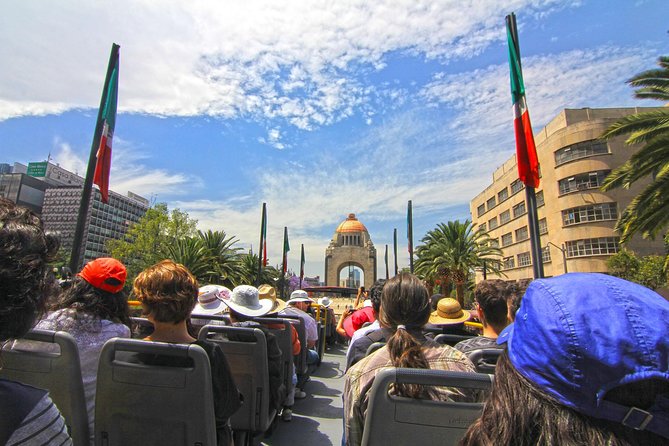
Reviewed · MEXICO CITY HOP-ON HOP-OFF BUS TOURS
Turibus Hop On Hop Off Mexico City Tour
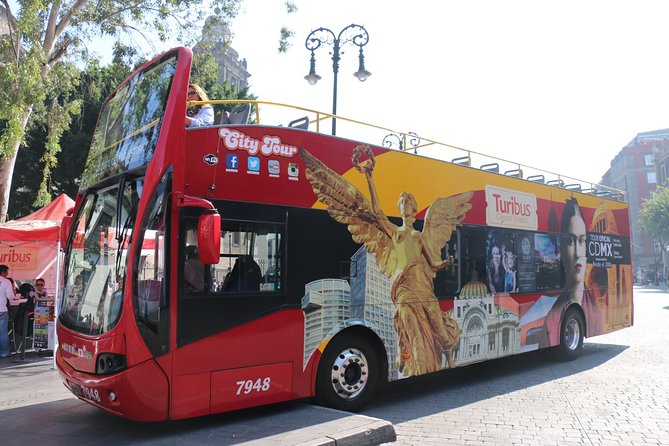
Mexico City is too large for a quick checklist, but the Turibus gives you a useful first look from the upper deck. You can pass from the Zócalo to Reforma, Polanco, Coyoacán, or the Basilica without wrestling with unfamiliar public transit. The four themed routes are the main attraction, though current service limits may affect that promise.
I like the freedom to hop off when a museum or plaza catches your eye, and I like having both open-air and air-conditioned seating. The audio system adds useful context without tying you to a guide. The main concern is reliability: road closures, demonstrations, traffic, Sunday’s Ciclotón, and current route changes can make the full network less predictable than the printed stops suggest.
Key points to know before you board
- Four routes cover very different sides of the city: Historic Center, Polanco, South, and Basilica.
- The Zócalo and Reforma routes are the strongest introduction for first-time visitors, with major monuments and museums close to the stops.
- A single ticket covers the listed routes and stops, but tickets are valid for one operating day, so plan your priorities.
- Current service may be limited: the operator says only the Historic Downtown Route runs from 9 a.m. to 7 p.m. until further notice.
- Sunday morning brings route changes: from 8 a.m. to 2 p.m., some buses use alternate roads during the Ciclotón.
- The coupon booklet adds value if you plan to use its discounts, but it should not be the sole reason to book.
What the Turibus gives you in three hours
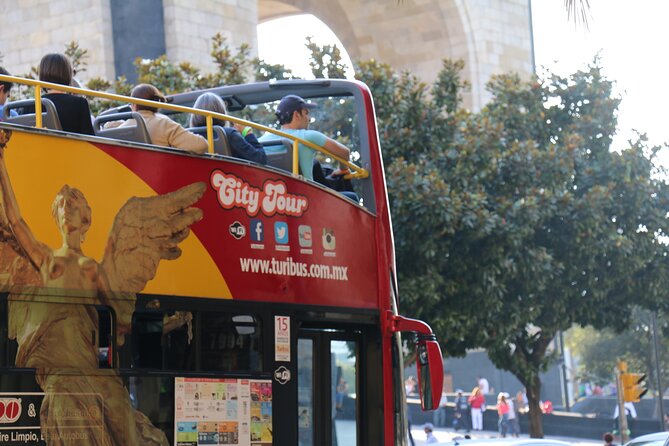
The basic experience takes about three hours, though hopping off turns it into a flexible day of sightseeing. You show your mobile voucher at a stop, receive or use the supplied headphones, and board the next bus serving your route.
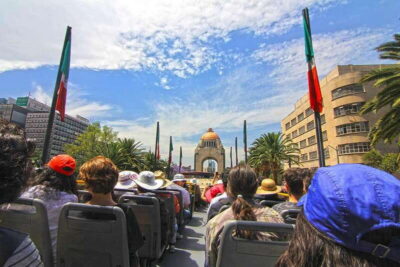
You can sit on the open top for broad views of Mexico City’s avenues and monuments. The lower level is air-conditioned, which matters when sun, traffic, or weather makes the upper deck less comfortable. The audio commentary runs as you pass the sights, and the system supports several languages. English is offered for this experience.
The bus is most useful as a city orientation tool. Mexico City is spread across large districts, and moving between the Historic Center, Polanco, and the southern neighborhoods can take time. The Turibus lets you see how those areas relate before you choose where to spend more time on foot.
The tradeoff is that a hop-on-hop-off bus depends on traffic. Bus delays and reduced frequency can occur without advance notice. Public celebrations, demonstrations, street closures, Covid-19 safety measures, and heavy congestion can also change the service.
More hop-on hop-off bus tickets in Mexico City:
- Mexico City: Hop-on Hop-off Bus Tour
★ 4.0 · 1,043 reviews - Mexico City: Hop-on Hop-off City Tour by Turibus 1-Day Pass
★ 4.1 · 691 reviews - Mexico City: Double Decker Bus Night Tour
★ 3.8 · 373 reviews
Route one: the Historic Center and Reforma
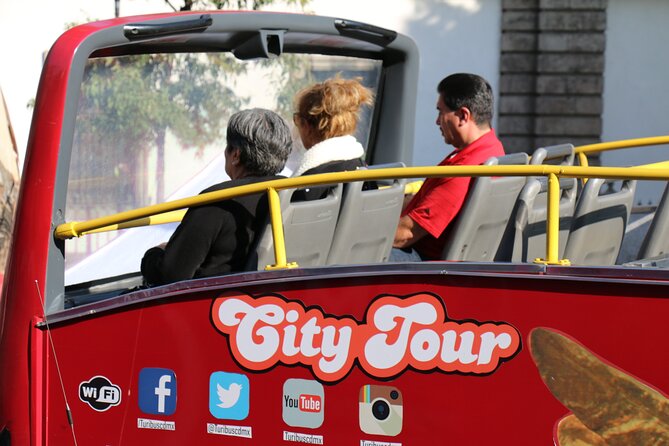
For many people, the Historic Center route is the best use of a first day. It links the central sights with the long ceremonial avenue of Paseo de la Reforma.
The route begins at Auditorio Nacional, near major cultural and city attractions. It continues to the Museo de Arte Moderno, a good stop if modern Mexican art interests you, then heads through La Condesa and the Fuente de Cibeles.
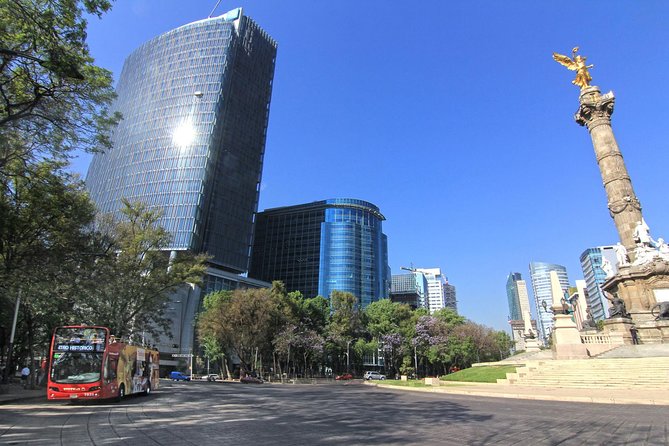
La Condesa is one of the more pleasant places to leave the bus and walk. The route then reaches the Cultural Center Casa Lamm, followed by the Angel of Independence, one of the city’s best-known landmarks. The Angel also appears at another point on the route, so pay attention to the direction and stop sequence before hopping off.
The Reforma section includes Avenida Paseo de la Reforma 222, the Museo de Cera, and the Monument to Cuauhtémoc. These stops make sense for a broad city tour, but you should not expect every stop to be a major attraction on its own. Some are simply useful markers along the avenue.
The bus then moves toward Avenida Juárez 50 and the Zócalo, Mexico City’s main central square. This is the route’s essential stop. From here, you can explore the surrounding streets and historic buildings at your own pace before catching another bus.
The central section continues to Plaza Manuel Tolsá, the Museo Franz Mayer, Plaza de la República, and the Museo San Carlos. The museums are a good reason to hop off, but allow extra time if you plan to enter. A three-hour ride is not enough for a proper museum visit at every stop.
The later stops include Reforma L1, the Angel of Independence again, Paseo de la Reforma at Río de la Plata, and the Museo Nacional de Antropología. The anthropology museum deserves far more time than a quick stop, so I would treat this bus ride as a way to reach it, not as a substitute for visiting it.
The operator currently says that only the Historic Downtown Route is operating, from 9 a.m. to 7 p.m. until further notice. If this remains in place when you book, the historic route becomes the actual experience rather than one part of a four-route ticket. Check the current status before relying on the Polanco, South, or Basilica routes.
Route two: Polanco, museums, and family stops
The Polanco route begins at Auditorio, Bicigratis, then runs through Calle Arquímedes and Avenida Presidente Masaryk. Masaryk is known for upscale shops and restaurants, so this route offers a different side of Mexico City from the central historic streets.
The next stops are Antara and the Museo Soumaya. The museum is one of the route’s strongest reasons to get off, especially if you want a concentrated cultural stop. The route then reaches Hipódromo de las Américas and Papalote Museo del Niño.
This route is a good fit for families, museum fans, and anyone who wants to see Polanco without arranging separate taxis. It is less useful if your main aim is colonial architecture and central plazas. The route’s value depends heavily on it actually running, so confirm availability before building a full day around it.
Route three: Coyoacán, UNAM, and the southern city
The South route starts at Fuente de Cibeles, then passes Mercado Roma and the World Trade Center Mexico City. These first stops show how quickly the city shifts from residential and food-focused districts to large commercial areas.
The route continues to the Monumental Plaza de Toros México, Avenida de la Paz, and Estadio Olímpico Universitario. It then reaches Perisur and Avenida Centro Comercial, useful points if you want shopping or a connection to southern attractions.
The cultural core of the route begins at the Mercado de flores San Ángel, followed by Tlalpa Linares María Isabel, Universum, and University City. The route also passes the Rectoría de la UNAM, an important stop for seeing the university area.
The Alfredo Guati Rojo National Watercolor Museum offers a more specialized museum visit. Then come Coyoacán, the Frida Kahlo Museum, and Aguayo.
Coyoacán and the Frida Kahlo Museum are among the most appealing southern stops, but they need time. If you hop off for the museum, you may not want to squeeze in every other stop on the same route. The practical approach is to choose one main destination, then use the bus for the surrounding view.
The South route can save you the headache of planning separate transportation between Coyoacán, the university, and San Ángel. Still, its many stops cover a wide area, and traffic may stretch the timetable. I would not book this option expecting a precise schedule.
More sightseeing tours in Mexico City:
- Private City Tour in Frida Kahlo, Coyoacan, and Xochimilco
★ 5.0 · 626 reviews - Mexico City: 19 City Highlights Bicycle Tour
★ 5.0 · 425 reviews - Private City Tour Mexico City – Best Rated
★ 5.0 · 402 reviews - Mexico City: 19 City Highlights Bicycle Tour
★ 5.0 · 302 reviews
Route four: the Basilica and northern Mexico City
The Basilica route begins at the Zócalo and heads to Garibaldi Plaza, then Tlatelolco and the Basilica. It ends at the Turibus stop near the Palace of the Counts of Miravalle.
This route is shorter in its listed stop count, but it reaches places with very different character. Garibaldi Plaza is associated with mariachi music, while Tlatelolco offers an important historic and civic setting. The Basilica is the main reason to choose this route.
There is an important qualification. If conditions beyond the operator’s control prevent the bus from reaching the Basilica, the route will go to Plaza de las Tres Culturas instead. That alternative is useful, but it is not the same visit, so keep your plan flexible.
As with Polanco and the South route, confirm that the Basilica service is operating. The current notice about Historic Downtown service may mean the route is unavailable at the time you travel.
How to plan your stops without wasting the ticket
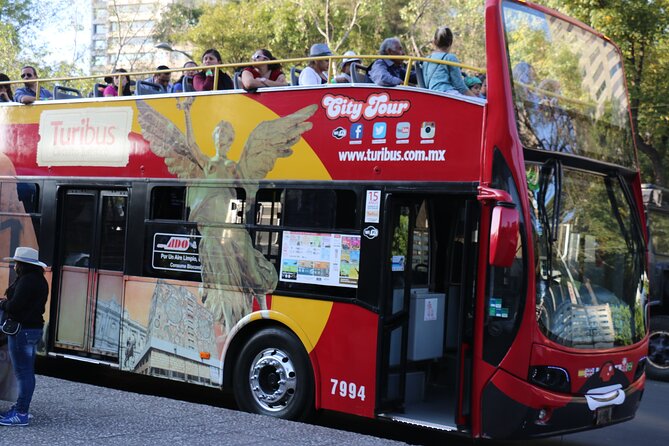
The ticket covers all routes and stops listed in the service, and transportation between stops is included. The supplied route guide and coupon booklet can help you pick targets before you board.
I would not try to complete every route in one day. The cities covered by these lines are too spread out, and each serious museum visit can take much longer than the bus ride itself. Use the ride for orientation, then get off at one or two places that matter most to you.
A practical first plan would be:
- Ride part of the Historic Center route to the Zócalo and Reforma.
- Choose either the Museo Nacional de Antropología or the Museo Franz Mayer, not both if time is tight.
- Use the South route for Coyoacán and the Frida Kahlo Museum only if that route is running.
- Choose Polanco for the Museo Soumaya and Masaryk.
- Choose Basilica for the Basilica, Garibaldi, and Tlatelolco.
The ticket validity needs attention. The information says tickets are valid for one operating day, while booking options may refer to one or two days. Check the exact option you select and do not assume the same ticket automatically covers two full days.
Audio commentary, seating, and comfort
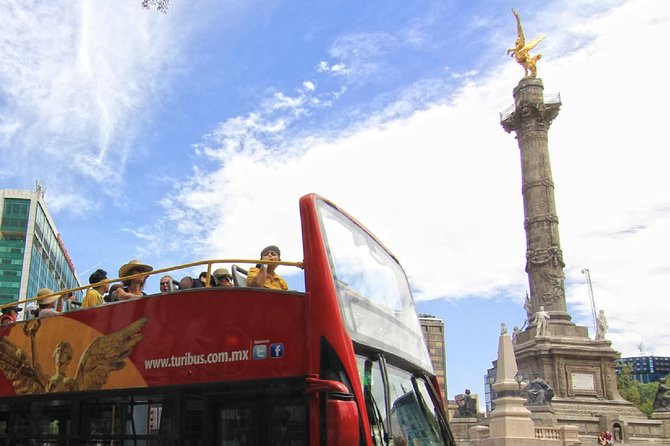
The headphones and digital audio system give you a simple way to follow the city while you ride. This is not a private guided walk, so the commentary will not answer personal questions or adjust its pace to your interests. Its strength is convenience.
I like the choice between the upper deck and the lower air-conditioned section. The top offers the better view, especially along Reforma, but the lower level is the sensible choice when you want shelter or a quieter ride.
Bring the practical basics: water, sun protection, and a charged phone for your mobile voucher. Lunch, drinks, and other services are not included, so plan your own break when you hop off.
Most people can participate, and the service is near public transportation. That makes it easier to use the bus as one part of a larger day rather than as your only way around town.
Sunday closures and other schedule problems
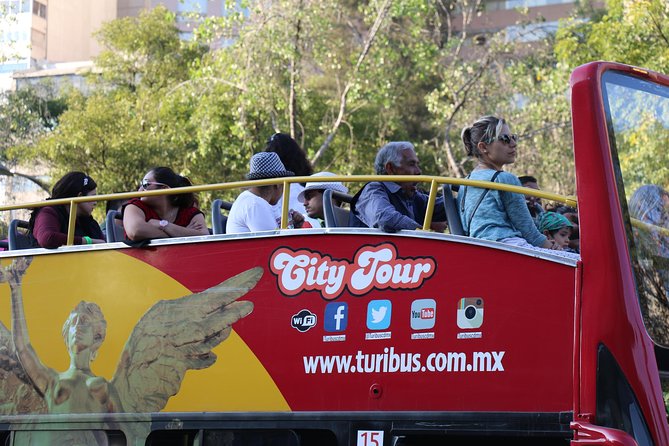
Sunday morning is a special case. From 8 a.m. to 2 p.m., streets close for the Ciclotón, and Turibus uses alternate roads on some tours. The bus may still be useful, but the normal route and timing should not be expected.
Other changes can happen at any time. Events, public celebrations, demonstrations, congestion, road closures, and safety measures may create delays or reduced frequency. The Basilica route also has its own possible change if the bus cannot reach the site.
This is not a reason to reject the tour. It is a reason to avoid using it for a timed appointment. If you have a museum entry or another booking, allow plenty of room between the bus ride and that appointment.
Is the coupon booklet a real benefit?
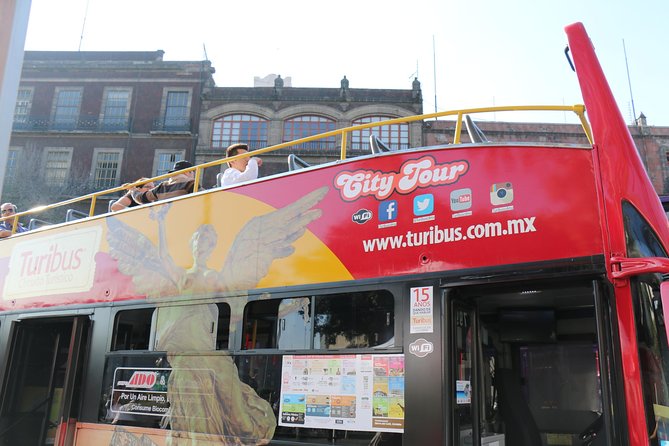
The Mexico City coupon booklet is included with the tour, along with the route guide. Its value depends on the discounts offered and on the activities you would have paid for anyway.
I would treat the booklet as a small bonus, not as the main calculation. The stronger value comes from combining sightseeing and transportation in one ticket. If you plan to use several routes or avoid multiple taxi rides, the ticket can make sense even before the discounts.
If current operations limit you to the Historic Downtown Route, the value changes. In that case, compare the ticket with the amount of central sightseeing you plan to do. A short ride with no hop-offs may not justify the purchase for everyone.
Who should book this Mexico City bus tour?
This is best for a first visit, a short stay, or a day when you want to understand the city’s layout before exploring on foot. It also suits families and anyone who prefers not to arrange separate taxis between distant districts.
You may like it if you want:
- A simple overview of several districts
- English or multilingual audio commentary
- The option to ride outdoors or in air conditioning
- Flexible stops near museums, plazas, and major landmarks
- One ticket for several listed routes when those routes are operating
You may prefer another plan if you need exact departure times, want long guided explanations, or already know the city well. Traffic is part of the experience, and the current Historic Downtown limitation is a serious point to check.
The experience has free cancellation up to 24 hours before the start time for a full refund. Changes or cancellations inside that window are not accepted for a refund.
Should you book the Turibus Mexico City tour?
Book it if you want an easy first look at Mexico City and will use the bus as a flexible sightseeing base. The Historic Center route alone connects the Zócalo, Reforma, museums, and major monuments, while the other routes add Polanco, Coyoacán, the university area, and the Basilica when available.
I would book only after confirming the operating routes for your date. That single check matters more than the coupon booklet or the open-top seat. If the full network is running, the ticket offers a useful way to cover a huge city. If only the central route is operating, it is still handy for orientation, but you should judge the value against the shorter service.
FAQ
How long does the Turibus Mexico City tour last?
The tour is approximately three hours, but hopping off at stops can extend your sightseeing day.
Which routes are available?
The listed routes are Historical Center, Polanco, South, and Basilica. Current service information says only the Historic Downtown Route operates from 9 a.m. to 7 p.m. until further notice, so confirm availability before booking.
Can I hop off and board another bus?
Yes. You can get off at stops along the available routes and board a passing bus to continue.
Is the audio commentary available in English?
Yes. English is offered, and the tour includes a multilingual digital audio system.
Does the ticket cover all routes?
The included service covers all listed routes and stops with a single ticket. The information also says tickets are valid for one operating day, so check the exact booking option and current route service.
Is seating available outdoors?
Yes. You can choose the open top or the lower air-conditioned level.
What happens to the Basilica route if the bus cannot reach the Basilica?
The route may go to Plaza de las Tres Culturas instead if the Basilica cannot be reached for reasons beyond the operator’s control.
Can I cancel for a full refund?
You can cancel at least 24 hours before the experience start time for a full refund. Cancellations or changes made less than 24 hours before the start time are not refunded or accepted.
Just added around Mexico City
- Xochimilco’s Wild Side: Mezcal, Insects & Culture★ 4.9 · 10 reviews
- Xochimilco: Food and Trajinera Ride with Local Women★ 5.0 · 5 reviews
- Xochimilco: Island of the Dolls Tour Games and Drinks★ 5.0 · 25 reviews
- Xochimilco Ecological Tour – Away From the Crowds (3 Hours)★ 5.0 · 15 reviews
- Xochimilco + Coyoacán Combo Full-Day Tour★ 5.0 · 3 reviews
- Xochimilco floating gardens, Coyoacan and UNAM murals★ 4.0 · 6 reviews
- Val´quirico And The City of Angels Puebla From Mexico City★ 5.0 · 3 reviews
- Xochimilco: amanecer en kayak Ciudad de México★ 5.0 · 35 reviews
Mexico City Hop-On Hop-Off Bus Tours, compared.




Browse the lists this tour appears in