
Reviewed · MEXICO CITY BIKE TOURS
Mexico City: 19 City Highlights Bicycle Tour
Mexico City reveals itself best at street level, and this four-hour bicycle tour covers a remarkable amount of ground without turning into a race. You ride through five neighborhoods, stopping at major monuments, parks, museums, and plazas while guides Yibran and Daniela explain what you are seeing.
I especially like the easy pace and careful street crossings, plus the practical food and sightseeing tips shared at the end. The guides also take photos and short videos during the ride, a thoughtful extra. The main caution is simple: this is a city bike ride, so traffic, sunshine, and occasional rough patches are part of the deal. Sunday is the smartest day to book, since major roads close to cars for cycling and walking.
Key points to know before booking
- 19 city highlights in four hours: Cover major sights from Chapultepec to the historic center and Roma Norte.
- Yibran and Daniela guide the ride: Expect clear English, local stories, humor, safety help, and personal recommendations.
- Sunday makes a big difference: Main avenues close to motor traffic, making the route calmer and more enjoyable.
- Good bikes and helmets are included: Equipment is reported to be comfortable and well maintained.
- Photos and videos are a useful bonus: The guides capture riding shots and share them afterward.
- Arrive early for the right bike: Arriving at least 20 minutes ahead gives you a better chance of finding a comfortable frame for your height.
Why a bicycle is a smart way to see Mexico City
At $70 per person, this is not the cheapest way to see Mexico City. It is, however, a strong value if you want a broad first look at the city and do not want to spend your first day piecing together buses, taxis, walking routes, and opening hours.
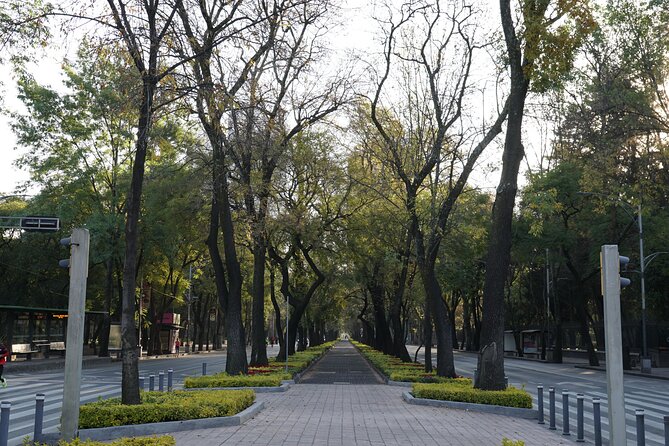
A car can carry you from one sight to another, but it hides the connections between them. On a bike, you notice tree-lined streets, changing neighborhoods, murals, monuments, street activity, and the distance between the historic center and western districts. You also stop often enough to hear the story behind each place.
The route works especially well early in your stay. By the end, you will have a useful mental map of areas you may want to revisit on foot, including Chapultepec, the Centro Histórico, Roma Norte, and the streets around Mexico Park.
This is not a hard cycling event. The pace is described as easy, and the four-hour schedule includes regular stops. You still need to be comfortable riding in a large city, starting and stopping often, and staying with a group while crossing streets.
More sightseeing tours in Mexico City:
- Mexico City: Hop-on Hop-off City Tour by Turibus 1-Day Pass
★ 4.1 · 691 reviews - Private City Tour in Frida Kahlo, Coyoacan, and Xochimilco
★ 5.0 · 626 reviews - Mexico City: 19 City Highlights Bicycle Tour
★ 5.0 · 425 reviews
Starting in Roma Norte at Jalapa 272
The tour begins at Jalapa 272, in Roma Norte. Your guide meets you there with a bicycle, and bikes and helmets are included in the price.
Arrive early. One person who arrived ten minutes before the start could no longer choose a bike that suited their height. Twenty minutes or more is a better target. That extra time also lets you settle the saddle, check the helmet, and begin without feeling rushed.
The tour finishes at Cerrada Orizaba and Coahuila in Roma Norte. Since the start and finish are in the same broad part of the city, the route feels like a large loop rather than a one-way transfer. The exact amount of riding between stops depends on traffic and the group, but the plan is clearly designed to connect major sights efficiently.
Mexico Park and the western city sights
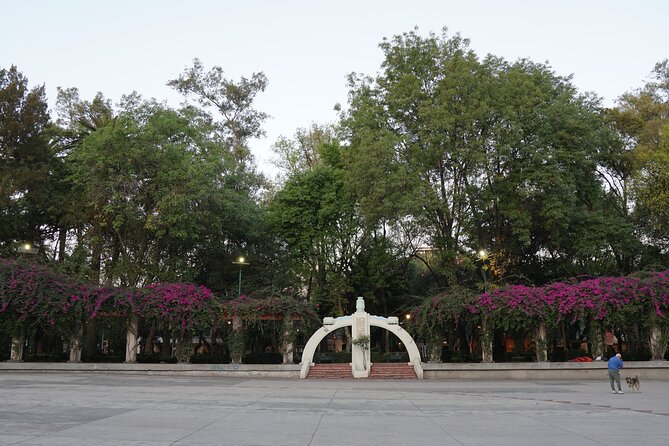
Mexico Park is an easy opening stop. The park gives you a first taste of the leafy streets and public spaces around Condesa and Roma Norte before the route heads toward Chapultepec.
From there, the ride moves to Estela de Luz, a tall modern monument near Chapultepec. It offers a useful contrast with the older monuments later in the day. You are not simply looking at one period of Mexico City; the route places modern civic architecture beside military memorials, imperial-era buildings, Aztec remains, and post-Revolution landmarks.
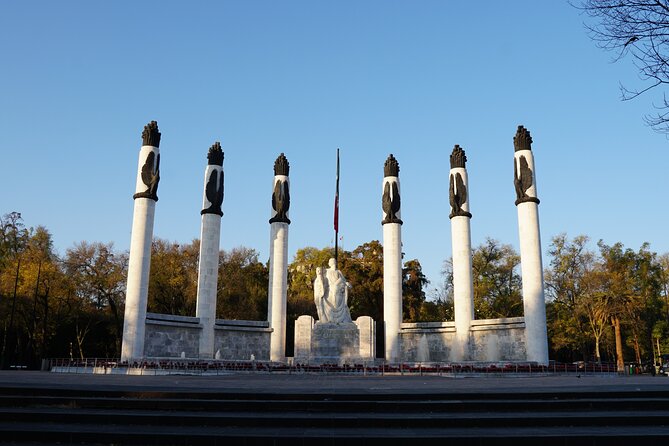
Altar a la Patria follows, then Chapultepec Park. These stops introduce one of the city’s most important open areas. Chapultepec is more than a patch of greenery. It is a major cultural and recreational zone, and the bike makes it possible to see how large the park is without spending much of your day walking from one point to another.
The route then reaches Chapultepec Castle. The tour provides a guided stop and exterior context, but the schedule does not include a full museum visit. If you want to explore the castle’s rooms and collections in detail, plan a separate visit.
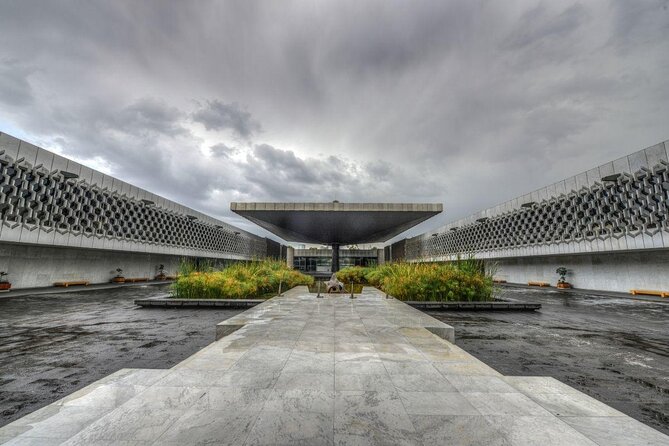
The same applies to the Museo Nacional de Antropología. You will see the museum as part of the route and learn why it matters, but a ten-minute stop is too short for the galleries. That is not a flaw if your goal is orientation. In fact, it helps you decide where to return later for a proper visit.
The Angel and the long ride into the historic center
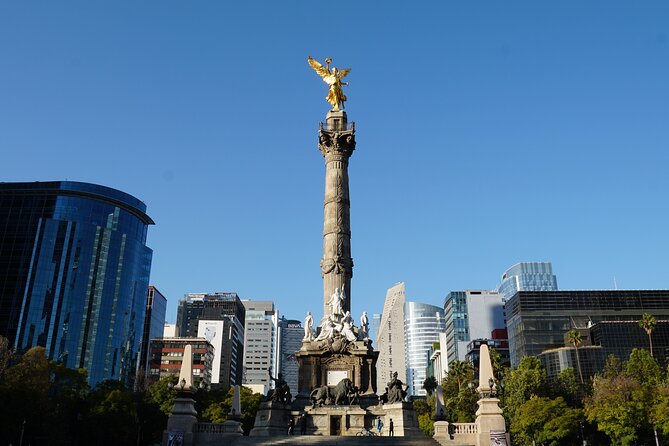
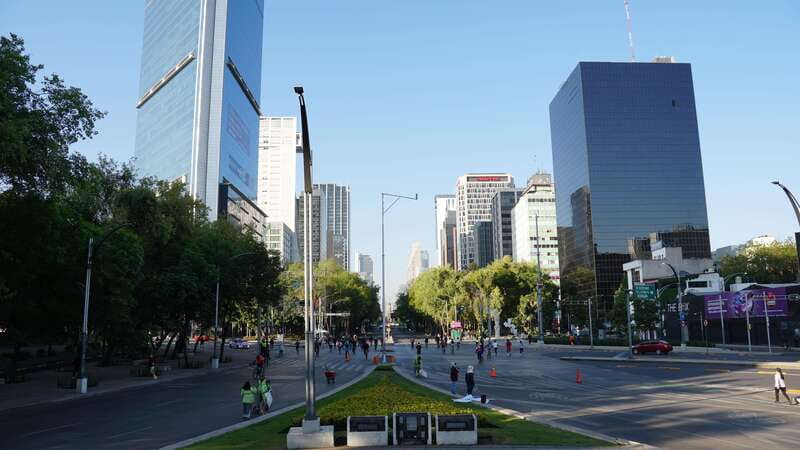
The Angel of Independence is one of Mexico City’s instantly recognizable monuments. It sits along Paseo de la Reforma, the city’s grand central avenue, and makes an excellent photo stop.
This stretch is where Sunday matters most. Main roads close to cars for cyclists, runners, and walkers on Sundays. That changes the feel of the ride. Instead of watching every passing vehicle, you can pay more attention to the avenue, monuments, and people using the road.
Do not assume the whole route will be traffic-free on other days. The guides are praised for watching crossings, keeping the group together, and making safety a priority, but city traffic remains unpredictable. Start any taxi or ride-hailing trip to the meeting point well ahead of time, too. Traffic can make a short map distance take much longer.
From the Angel, the tour continues toward Alameda Central, Mexico City’s oldest public park. It is a natural bridge between the grand avenue and the historic center. The Hemiciclo a Juárez, a white marble monument dedicated to Benito Juárez, is nearby and provides a compact lesson in Mexican political history.
More bike tours in Mexico City:
- Frida Kahlo VIP [Museum Tickets Included] Bike, Markets & Churros
★ 5.0 · 1,072 reviews - Mexico bike tour
★ 5.0 · 407 reviews - Mexico City E-Bike Tour with a taco and churros stop
★ 5.0 · 292 reviews - Mexico City; ART NACO : Murals & Street Art Bike Tour
★ 5.0 · 284 reviews
Alameda Central, Bellas Artes, and Torre Latinoamericana
The Palacio de Bellas Artes is one of the day’s major visual rewards. Its pale exterior and distinctive domed roof make it one of the most photographed buildings in the city. The tour stop gives you time to see it from outside and hear about its place in Mexico City’s cultural life.
Torre Latinoamericana rises nearby. Its sleek vertical form helps you read the historic center from street level, even if you do not go up to the observation deck. The itinerary lists both the tower and Bellas Artes as separate stops, so you get a look at two very different symbols of the same district.
The Alameda and Bellas Artes area can be crowded, especially later in the day. A bicycle gives you speed between sights, but you will still need to slow down around pedestrians and public spaces. The tour’s small group limit, up to ten people, is helpful here. A smaller group is easier to manage at curbs, crossings, and photo stops than a large rolling crowd.
Zócalo and the Templo Mayor area
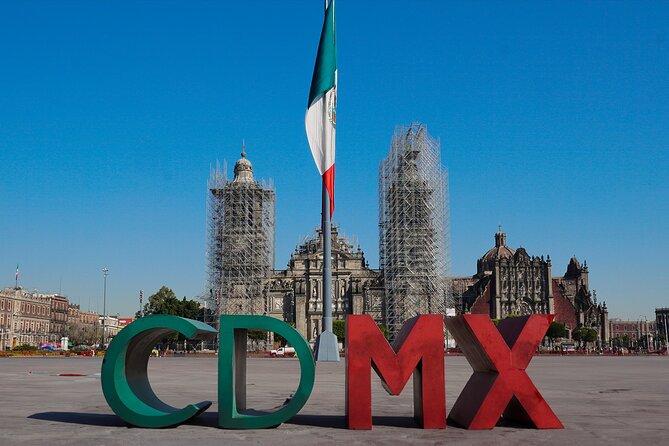
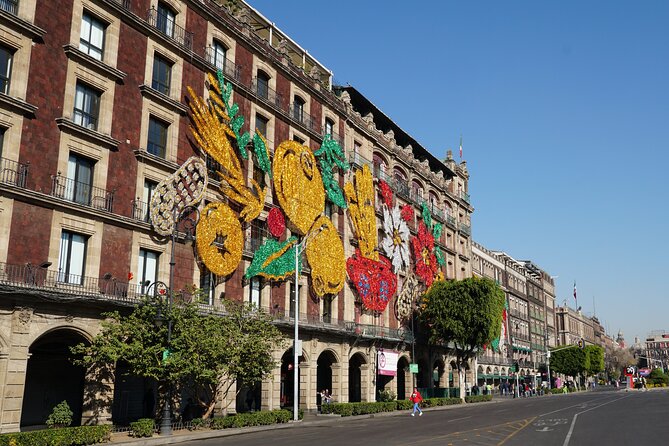
The route continues to the Zócalo, Mexico City’s enormous central square. This is the political and ceremonial heart of the capital, and it gives the tour a strong sense of scale. You will not mistake this for a quiet plaza. It is a central gathering place, and conditions can change depending on events and public activity.
Nearby, the Templo Mayor Museum adds an older layer to the day. The museum and archaeological zone explain the Aztec capital that existed here before the Spanish conquest. Again, the stop is brief, around 15 minutes, so think of it as an introduction rather than a full museum visit.
I like this part of the itinerary because it connects the city’s present streets with its earlier foundations. You see the modern capital, the colonial center, and the remains of the Aztec city in one compact area. If Templo Mayor interests you, return later with more time and comfortable walking shoes.
Monumento a la Revolución and the ride back east
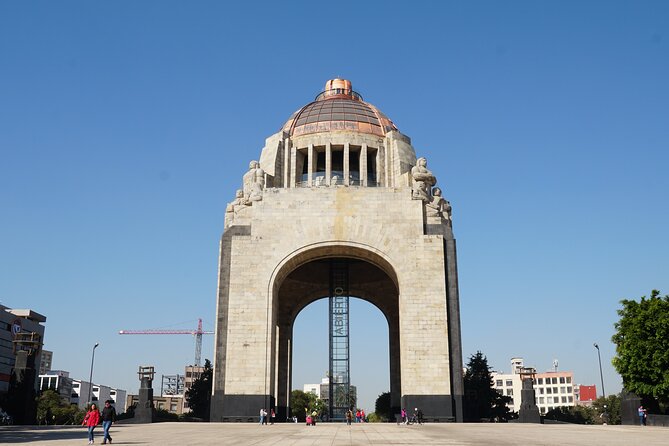
After the Zócalo area, the group heads to Monumento a la Revolución. The monument is a powerful reminder of the political upheaval that shaped modern Mexico. It also gives the route another change of setting, moving from the oldest center into a district known for broad streets and monumental architecture.
The stop is short, but the guide’s explanation is important. This tour is not designed as a series of quick photo grabs. The value comes from hearing how the landmarks fit into the story of Mexico City. The guides use spoken explanations, and one account also noted the use of visual material on a laptop to support the talks.
You should still manage expectations. Four hours and 19 highlights means no single place receives a long lecture. If you prefer one museum or monument explored in depth, book a specialist visit instead. If you want a wide first view, the brisk format works well.
Plaza Río de Janeiro and the return to Roma Norte
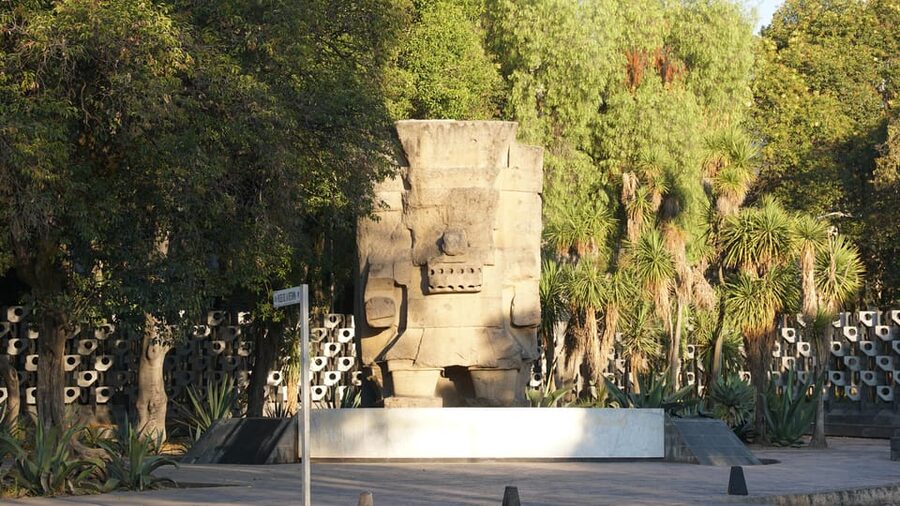
Plaza Río de Janeiro brings the group back toward Roma Norte. The plaza is a pleasant final stop because it returns you to the neighborhood where the experience began, rather than ending in a distant part of the city.
The finish at Cerrada Orizaba and Coahuila puts you near Roma Norte’s restaurants and cafés. The guides share food recommendations based on your preferences, and this can be one of the most useful parts of the final conversation. You are not left with only a list of monuments. You also get ideas for how to spend the rest of your stay.
The route is marketed as covering 19 highlights, while the listed itinerary groups some nearby sights into shared stops. That is normal for a city overview. You are not promised 19 long visits. You are promised a wide sweep of Mexico City with guided pauses along the way.
The guides, safety, and group size
Yibran and Daniela are central to the experience. Yibran leads the historical explanations in English, while Daniela helps keep the group together and takes photos and videos. Their style, based on the supplied details, combines facts, jokes, personal attention, and practical help.
That matters in Mexico City. A good city cycling guide does more than point at monuments. They need to judge crossings, watch the rear of the group, help people stay together, and adjust the pace. The strongest praise for this experience centers on those exact tasks.
The group is limited to ten participants. That is small enough for questions and easier street management, though it is not a private tour. If you are traveling with children, note that the activity is not suitable for anyone under 10.
Bikes and helmets are included. The equipment has drawn especially positive attention, with several people describing the bikes as comfortable, high quality, or new. Still, bike fit depends on what is available that day, so arrive early and speak up if the saddle or frame does not feel right.
What to bring and how hard the ride feels
Wear comfortable clothing and shoes. Bring sunscreen, since part of the route is in full sun, while other sections pass through leafy, shaded areas. You also need a passport or identity card, though a copy is accepted.
The tour runs rain or shine. That makes a light rain layer sensible during unsettled weather, though the supplied information does not promise any weather gear. Food and drinks are not included, so eat beforehand and carry water if you normally need it during exercise.
The ride is described as easy for a normally active person, but the day still involves four hours on a bicycle. You will be outdoors, moving through a large city, and stopping repeatedly. This suits you if you enjoy moderate activity and want to see many districts. It is less suitable if you dislike cycling in traffic or prefer slow, indoor sightseeing.
How the $70 price compares
The $70 fee includes the bicycle, helmet, English-speaking guide, and four hours of route planning and interpretation. Photos and videos shared after the tour add real value, especially if you want pictures of yourself riding instead of only standard monument shots.
The price makes the most sense when you use the tour as your first-day orientation. It can save you time and help you choose which museums, neighborhoods, restaurants, and monuments deserve a return visit. It is less compelling if you plan to spend the entire day inside museums, since most stops are brief exterior visits.
Free cancellation up to 24 hours before the start and the option to reserve now and pay later also make planning easier. Starting times depend on availability, so check the schedule before you build the rest of your day around it.
Should you book this Mexico City bicycle tour?
I would book it early in a Mexico City stay, ideally on a Sunday morning. You will see a wide range of the capital, get a feel for its neighborhoods, and leave with a practical list of places to revisit.
Book it if you want an active overview, enjoy history in short portions, and value local restaurant advice. The easy pace, good equipment, small group, and attentive guiding make the $70 price fair for a four-hour introduction.
Skip it if you want long museum visits, a private vehicle, or a completely traffic-free ride on a weekday. For most visitors who want to get their bearings fast, though, this is a smart and enjoyable start to CDMX.
FAQ
How long does the Mexico City bicycle tour last?
The tour lasts four hours.
How much does the tour cost?
The price is $70 per person.
Which language is the tour offered in?
The live tour guide service is offered in English.
Where does the tour begin?
The tour begins at Jalapa 272, where the guide provides your bicycle.
Where does the tour finish?
The tour finishes at Cerrada Orizaba and Coahuila in Roma Norte, Mexico City.
Are bicycles and helmets included?
Yes. Bicycles, helmets, and a guide are included.
Is the tour suitable for children under 10?
No. The activity is not suitable for children under 10 years old.
What happens if it rains?
The tour operates rain or shine. Bring comfortable clothing, comfortable shoes, sunscreen, and a passport or ID card. A copy of the ID is accepted.
Just added around Mexico City
- Xochimilco’s Wild Side: Mezcal, Insects & Culture★ 4.9 · 10 reviews
- Xochimilco: Island of the Dolls Tour Games and Drinks★ 5.0 · 25 reviews
- Xochimilco Ecological Tour – Away From the Crowds (3 Hours)★ 5.0 · 15 reviews
- Xochimilco: Food and Trajinera Ride with Local Women★ 5.0 · 5 reviews
- Xochimilco + Coyoacán Combo Full-Day Tour★ 5.0 · 3 reviews
- Xochimilco floating gardens, Coyoacan and UNAM murals★ 4.0 · 6 reviews
- Val´quirico And The City of Angels Puebla From Mexico City★ 5.0 · 3 reviews
- Xochimilco: amanecer en kayak Ciudad de México★ 5.0 · 35 reviews
Mexico City Bike Tours, compared.
![Frida Kahlo VIP [Museum Tickets Included] Bike, Markets & Churros](https://b.themexicocitytraveler.com/wp-content/uploads/frida-kahlo-vip-museum-tickets-included-bike-markets-churros-400x267.jpg)
Frida Kahlo VIP [Museum Tickets Included] Bike, Markets & Churros
Read our review →
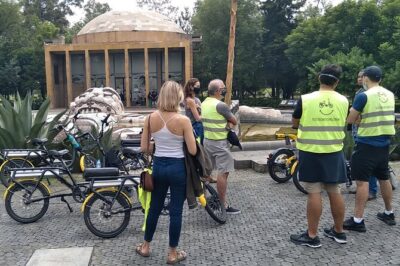
Mexico City E-Bike Tour with a taco and churros stop
Read our review →
Mexico City; ART NACO : Murals & Street Art Bike Tour
Read our review →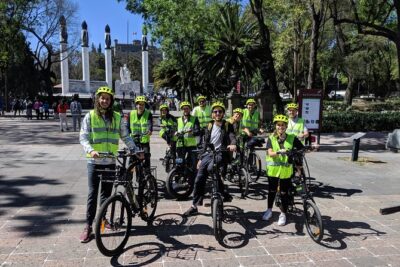
Mexico City Highlights E-Bike Tour With Foodie Stops
Read our review →
Street Food Bike Tour / Mexico is not only Tacos / All Inclusive
Read our review →Browse the lists this tour appears in