
Reviewed · MEXICO CITY HOP-ON HOP-OFF BUS TOURS
Mexico City: Hop-on Hop-off Bus Tour
Mexico City is too large to understand on foot in a day, and the Turibus four-route pass gives you a useful first look without forcing you into a fixed group itinerary. You can circle the Historic Downtown, then switch toward Polanco, Coyoacán, or the Basilica district as your time allows.
I like the freedom to hop off near the Frida Kahlo Museum, Zócalo, Museo Soumaya, or National Anthropology Museum, then continue when you are ready. I also like the price: at $21 per person, it can cost less than several taxis while adding city commentary. The catch is traffic, plus uneven audio quality and longer waits on some routes.
Key points to know before you board
- Four routes, one bracelet: Move between Historic Downtown, Polanco, South, and Basilica routes without buying separate tickets.
- Best first ride: The Historic Downtown route covers the main sights and runs about every 30 minutes.
- Plan the South route carefully: Traffic can make the trip to Coyoacán and the Frida Kahlo Museum take much longer than expected.
- Bring your own earphones: The supplied earbuds may be poor, and loud Spanish announcements can overpower other language channels.
- Use the upper deck wisely: Morning and late afternoon can be pleasant, but the open top offers little protection from strong midday sun.
- A two-day pass is more useful: One day is enough for an overview, but not for exploring all four routes at a relaxed pace.
Why the Turibus works well in a city this large
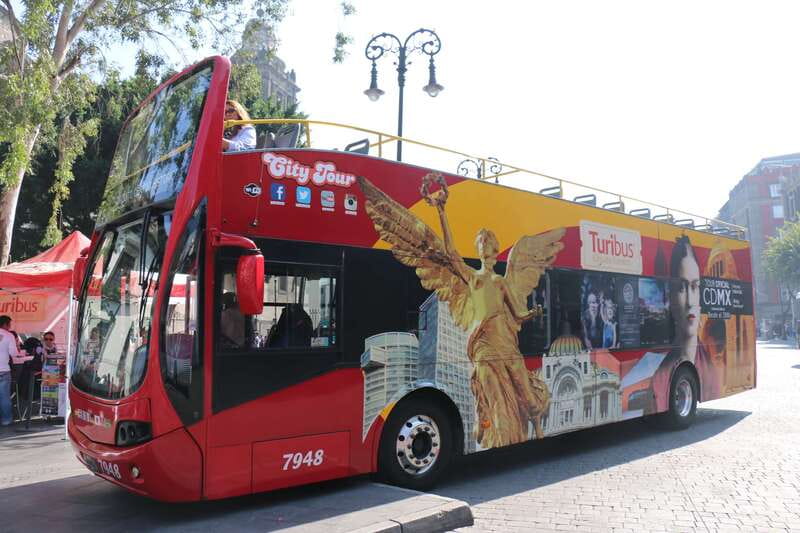
Mexico City spreads across a huge area, with museums, historic plazas, fashionable shopping districts, old neighborhoods, and major religious sites separated by serious traffic. The Turibus does not solve the traffic, but it lets you see the city while someone else handles the driving.
The best use of the bus is not to stay aboard for the entire day. I would ride one circuit to get my bearings, note the places that deserve more time, then hop off at two or three carefully chosen stops. You get transportation and a basic audio tour in one ticket.
The pass costs $21 per person for one or two days, depending on the option you choose. That is good value if you use it for sightseeing and transport. It is less attractive if you expect quick point-to-point journeys, since Mexico City traffic can slow the bus considerably.
You can begin at any listed stop by showing a printed or electronic voucher. This is useful if your hotel is near Reforma, Polanco, the Zócalo, or another route stop. Check the actual stop location before setting out. A stop may be close to, rather than directly beside, the attraction. The Frida Kahlo Museum stop, for example, has been about 75 meters from the museum.
More hop-on hop-off bus tickets in Mexico City:
- Mexico City: Hop-on Hop-off City Tour by Turibus 1-Day Pass
★ 4.1 · 691 reviews - Mexico City: Double Decker Bus Night Tour
★ 3.8 · 373 reviews - Turibus Hop On Hop Off Mexico City Tour
★ 3.0 · 347 reviews
Start with Historic Downtown and the main city sights
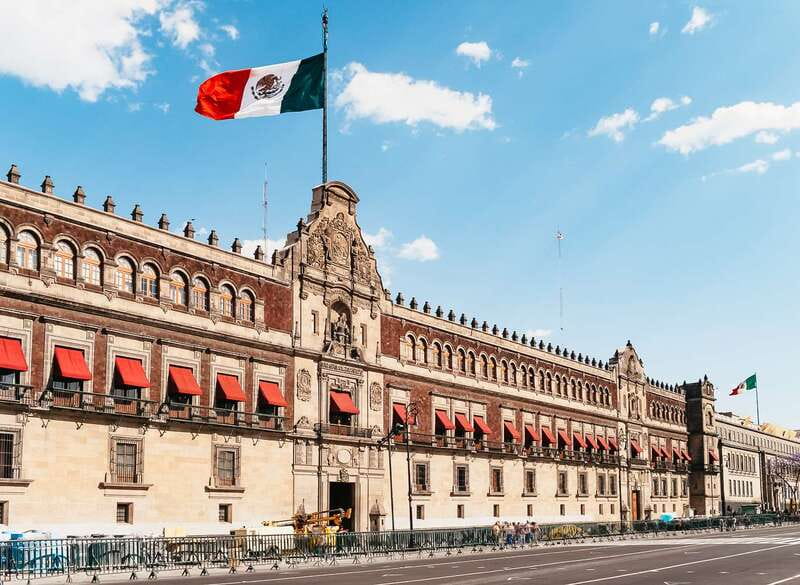
The Historic Downtown route is the strongest introduction. It runs daily from about 9 a.m. to 7 p.m., with buses roughly every 30 minutes. Its 19 stops connect the city center with Reforma, Chapultepec, Condesa, and several important museums.
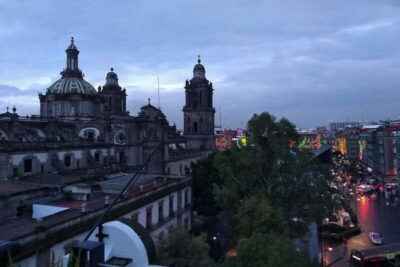
The ride includes stops near Zócalo, Mexico City’s main central plaza. This is the place to get off for the Metropolitan Cathedral, surrounding historic streets, food, and the city’s main civic spaces. The bus commentary provides a useful introduction to Mexico’s pre-Hispanic, colonial, and modern periods, though you should not expect the detail of a specialist walking tour.
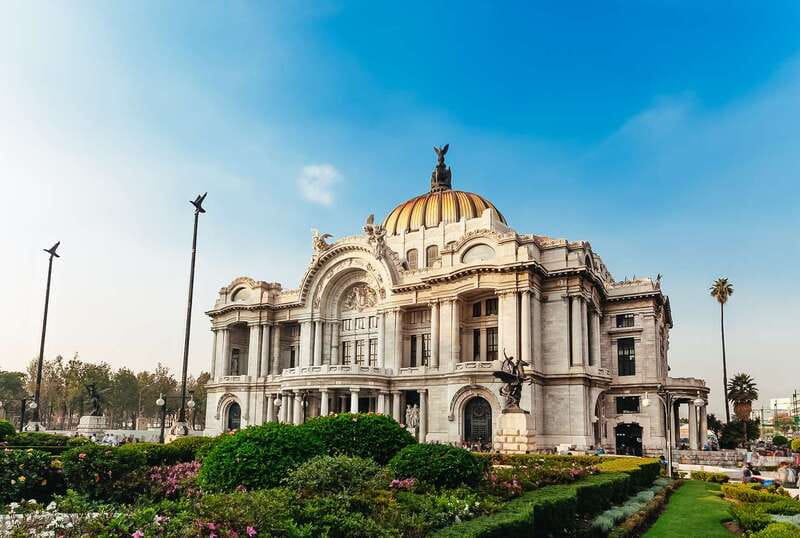
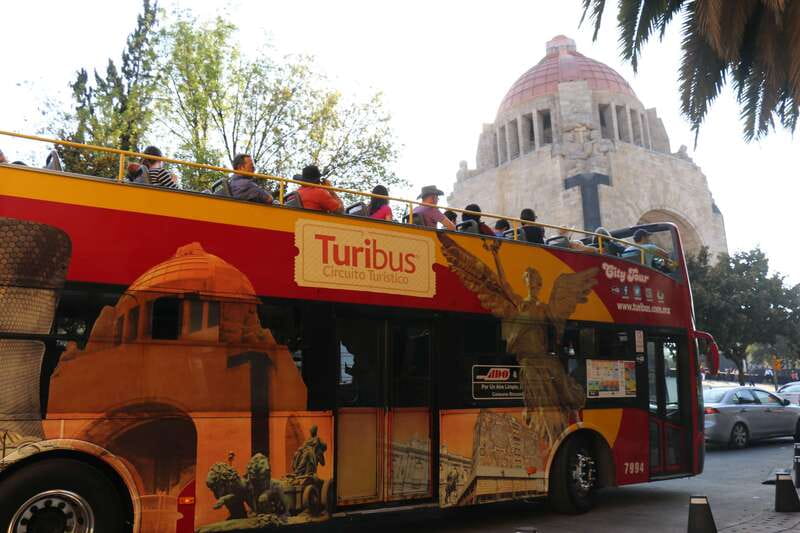
The route also passes near Plaza Manuel Tolsá and Museo Franz Mayer. These stops are useful for art and design, while the Monumento a la Revolución and Museo de San Carlos offer different views of the city’s political and artistic past.
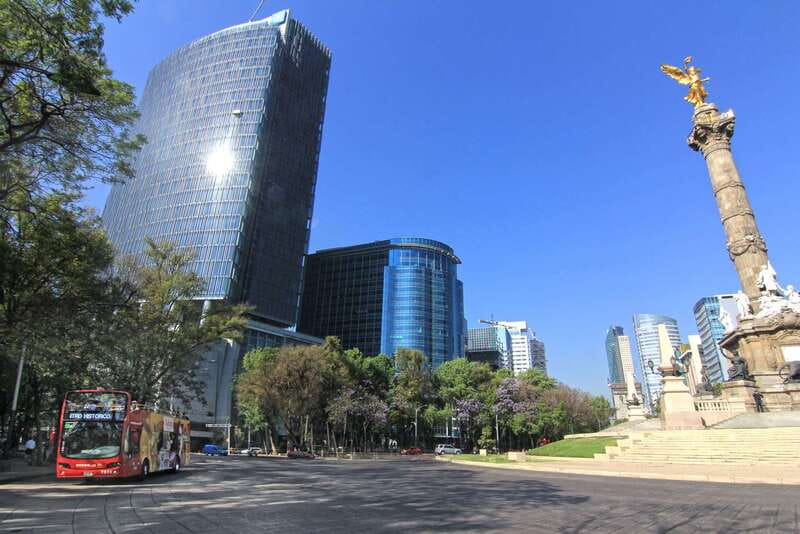
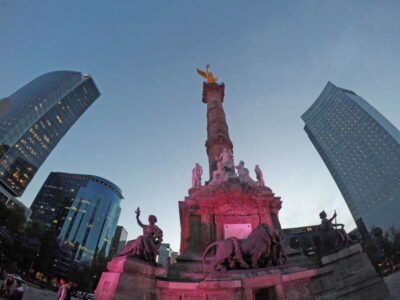
Along Reforma, you can get off near the Monumento a la Independencia, often called the Angel of Independence, and Reforma 222. The route continues toward Chapultepec, with access near the National Museum of Anthropology and the Museo de Arte Moderno. If you have only one day, this circuit shows you the broadest mix of Mexico City neighborhoods.
Condesa and Plaza Madrid, also known as Cibeles, offer a change from formal monuments to cafés, restaurants, and tree-lined streets. You may prefer to stay on the bus for a full circuit first, then decide which area fits your interests.
The main drawback is timing. Traffic around the center and Reforma can stretch the ride well beyond the advertised schedule. A 30-minute bus frequency does not mean each trip takes 30 minutes. Ask the staff when the next bus is expected if you get off, and keep some flexibility in your plans.
Polanco combines museums, shopping, and modern design

The Polanco route is shorter, with seven stops, but it serves a very different side of the city. Departures from Auditorio are listed at approximately 10 a.m., 11:30 a.m., 1 p.m., 2:30 p.m., 4 p.m., and 5:30 p.m.
This is not a route to use casually. Because buses leave at set times rather than every 30 minutes, check the departure before getting off. Missing one can mean a long wait.
The circuit includes Auditorio, Campos Elíseos, Masarik and Moliere, Centro Comercial Antara, Museo Soumaya, Hipódromo and Granja Las Américas, and Museo del Papalote.
The area around Masarik and Moliere is the place for high-end shopping and contemporary architecture. Museo Soumaya is one of the route’s strongest stops, especially if you want to see a striking museum building and a major art collection. Museo del Papalote is aimed at children, making this route more useful for families than its polished shopping image might suggest.
The Polanco bus is also a practical way to connect several widely separated attractions without arranging separate taxis. Still, the route is more about orientation than a full museum day. You will need to choose your stops, since a leisurely visit to several museums will not fit easily into a single circuit.
The South route reaches Coyoacán and the Frida Kahlo Museum
The South route is the most rewarding choice for people who want old neighborhoods, university architecture, archaeology, and Coyoacán. It runs daily from about 11 a.m. to 7 p.m., with service described as roughly every 30 to 60 minutes.
Its stops include Fuente de Cibeles, Mercado Roma, the World Trade Center, Torre Manacar, the Frida Kahlo Museum, Centro Histórico de Coyoacán, San Ángel, the University City area, the botanical garden, Perisur, KidZania Cuicuilco, and Fonart.
This circuit gives you a better sense of Mexico City beyond the central monuments. Coyoacán has a slower, more neighborhood-focused feel, while San Ángel brings colonial architecture and art spaces. The University City stops add modern Mexican architecture and open areas connected with the National Autonomous University of Mexico.
The Frida Kahlo Museum stop is the major draw for many people. Allow enough time for the museum itself, and remember that the bus may not stop directly outside the entrance. The route also includes the historic center of Coyoacán, so you can split your visit between the museum and the surrounding district if bus timing allows.
Here is the practical warning: traffic can make this route very slow. One ride to the Frida Kahlo Museum has taken close to two hours in heavy conditions. I would do the South route early in the day, then tackle Historic Downtown later, rather than trying to squeeze Coyoacán into a short afternoon.
The route has several similar or repeated Coyoacán and Frida Kahlo listings, so pay close attention to the stop announcements. If the stop marker is unclear, ask the staff before getting off.
A completely different kind of day in Mexico City:
- Teotihuacan, Guadalupe Shrine & Tlatelolco Day Tour with Lunch
★ 5.0 · 11,603 reviews - Xochimilco, Coyoacan and Frida Kahlo with Optional Lunch
★ 4.5 · 7,320 reviews - Balloon flight + Breakfast in cave + Pyramids + Pick up CDMX.
★ 5.0 · 6,335 reviews - Teotihuacan pyramids morning or afternoon without tourist traps
★ 5.0 · 6,186 reviews
The Basilica route links faith, music, and old Mexico
The Basilica route is the most focused of the four. Departures from Zócalo are listed at 10 a.m., 11:30 a.m., 1 p.m., 2:30 p.m., 4 p.m., and 5:30 p.m.
The main stops are Zócalo, Garibaldi, the Basilica of Guadalupe, and Palacio de los Condes de Miravalle. This is a good choice if the Basilica of Guadalupe is high on your list, or if you want to see a part of the city that does not fit naturally into the central and Polanco routes.
Garibaldi gives the route a musical and popular-culture angle, while the Basilica district connects Mexico City’s pre-Hispanic, colonial, and modern eras. The audio commentary helps place the religious sites in a wider city story, though visitors looking for detailed religious or architectural interpretation may want more time on foot.
Because departures are limited, treat this as a planned outing, not a route you will simply catch whenever you reach a stop. Confirm the return timing before leaving the bus.
Audio commentary is useful, but bring your own headphones
The bus includes a digital audio system with channels in Spanish, English, German, French, Italian, Chinese, Japanese, Portuguese, and Russian. There is also a special children’s channel.
The commentary is one of the better reasons to remain aboard for at least part of a full circuit. It explains major sites and gives you historical context while you watch the city change outside. The live announcements and staff guidance are generally in Spanish and English.
Sound quality is the weak point. On some buses, the Spanish audio is played loudly through the main speakers, making the English channel difficult to follow through the headset. Some headphone jacks have not worked, and a few English sections have ended before the explanation was complete.
Bring your own wired earphones if possible, and ask for the audio equipment before leaving the boarding point. Try not to sit beside the main speakers. Street noise can also make the commentary hard to hear, particularly in crowded areas.
The issue does not ruin the trip, but it changes how you should use the audio. Treat it as a helpful layer, not the sole reason to book the bus.
The open-top deck is fun, with a few uncomfortable moments
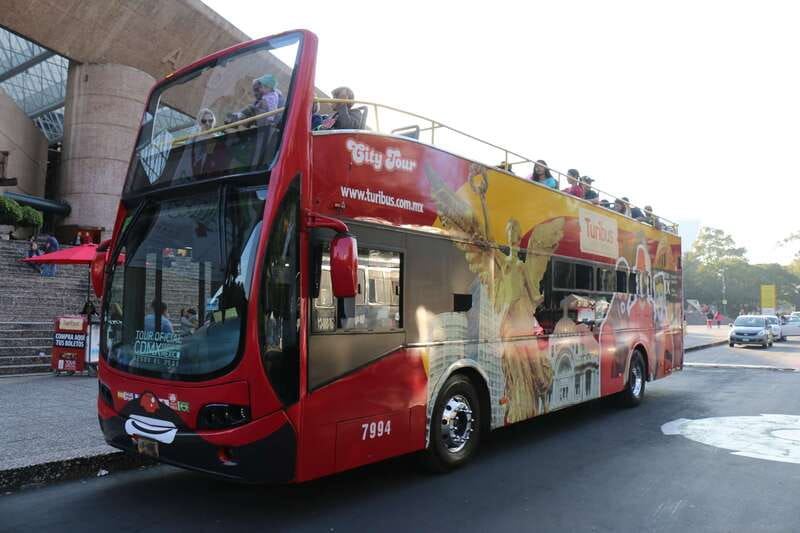
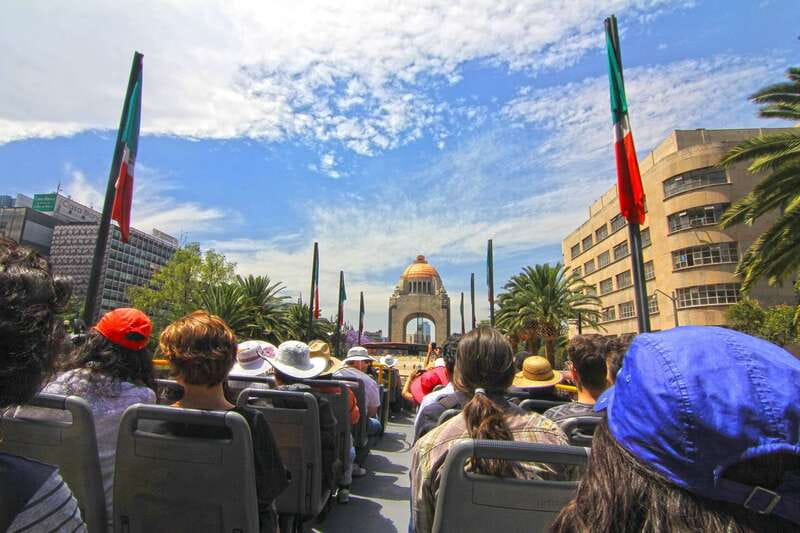
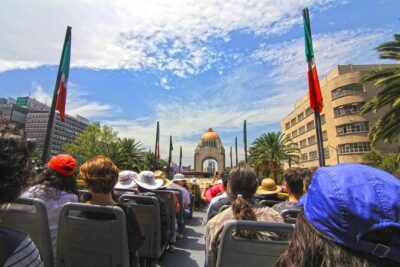
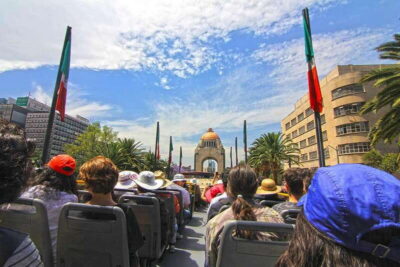
The double-decker buses offer the best views from upstairs. You can see monuments, traffic patterns, broad avenues, and changing neighborhoods more clearly than from a normal city bus.
The upper deck is especially pleasant in the morning and late afternoon. In strong midday sun, though, there is little shelter. Metal seats can become very hot, and a ride that looked relaxing can turn uncomfortable. Carry water, protect yourself from the sun, and move downstairs when necessary.
The buses are open-top and have no restrooms. Plan bathroom stops around museums, cafés, or shopping centers rather than expecting facilities onboard. The buses are wheelchair accessible, but the open design and busy stops mean you should still confirm boarding details when you arrive.
The vehicles are generally clean and modern, and drivers have been described as capable. Staff helpfulness can vary, so ask direct questions about route changes, stop locations, and the next departure.
How to fit four routes into one or two days
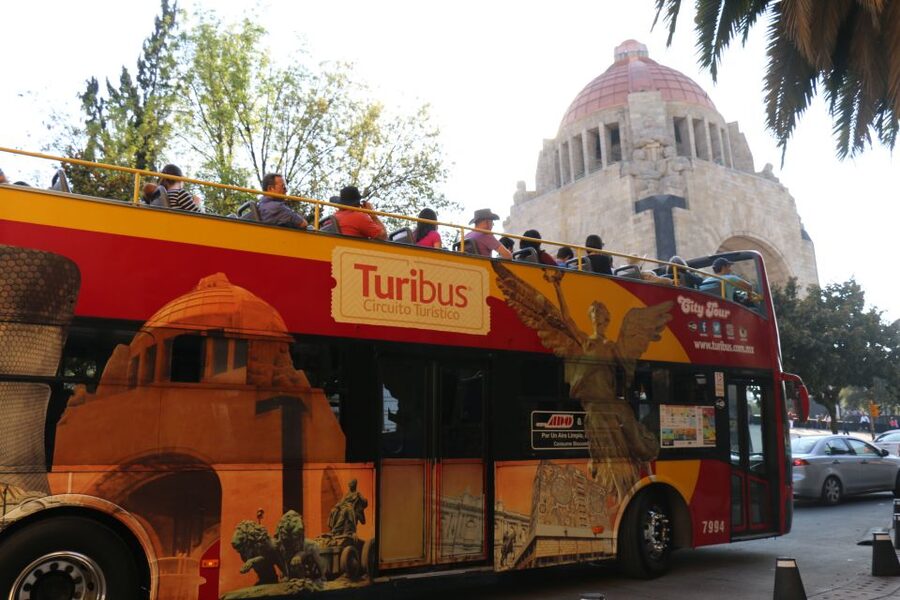
A one-day pass works best if you treat the bus as an overview. I would choose Historic Downtown first, then add either Polanco or Basilica. Trying to complete all four routes in one day leaves little time to get off and visit anything.
A two-day pass is the better buy for most people. Use the first day for Historic Downtown and Polanco. Use the second for the South route and Basilica, with enough room for a museum or meal along the way.
A practical plan looks like this:
- Start with Historic Downtown in the morning to see Zócalo, Reforma, Chapultepec, and nearby museums.
- Use Polanco for museums, shopping, and Museo Soumaya, while checking the fixed departure times.
- Reserve the South route for an early start, especially if you want the Frida Kahlo Museum or Coyoacán.
- Use the Basilica route when you can spare the time for a scheduled departure and return.
The published operating window is generally 9 a.m. to 7 p.m., though some online information has shown later hours. Plan around the stated 7 p.m. finish. Buses may leave you at the nearest stop when service ends.
Who should book the Mexico City Turibus?

I recommend this tour for a first visit, a short stay, families, and anyone who wants a broad introduction before choosing where to return. It is also useful after several days of walking, when you want to sit down and let the city come to you.
It is a good fit if you value flexibility more than speed. The pass can replace several taxi rides, but traffic means it is not a reliable way to arrive at a timed reservation.
You may want another option if you need exact arrival times, dislike open-top buses, or want detailed live guiding at every stop. The audio system is serviceable rather than perfect, and route schedules need attention.
At $21, I think the tour earns its price most clearly over two days. One day still gives you a useful city overview, but two days let you use the transport, sightseeing, and hop-on access without rushing.
FAQ
How long is the Mexico City Turibus ticket valid?
You can choose a one-day or two-day hop-on hop-off ticket. Check availability for the operating dates and starting times when booking.
Can I use one ticket on all four routes?
Yes. One bracelet provides access to the Historic Downtown, Polanco, South, and Basilica routes.
Where can I board the bus?
You can begin at any of the listed stops. Show your printed or electronic voucher when boarding.
What languages are available on the audio guide?
The digital audio system offers Spanish, English, German, French, Italian, Chinese, Japanese, Portuguese, and Russian. A special channel is available for children.
Do the buses run all day?
The Historic Downtown route generally runs from 9 a.m. to 7 p.m. The South route runs from about 11 a.m. to 7 p.m. Polanco and Basilica use scheduled departures, generally every 90 minutes from their starting points.
Are children and wheelchair users allowed?
Children up to age three ride free but must sit on a parent’s lap. The buses are wheelchair accessible. There are no restrooms onboard.
Should you book it?
Book the Turibus if you want a low-cost first look at Mexico City and can accept slow traffic, fixed departures on two routes, and imperfect audio. For the best value, choose two days, start with Historic Downtown, and save the South route for a planned morning.
If you only have one day, do not chase all four circuits. Pick Historic Downtown plus either Polanco or Basilica, and use the bus to decide where you want to return on foot.
Just added around Mexico City
- Xochimilco’s Wild Side: Mezcal, Insects & Culture★ 4.9 · 10 reviews
- Xochimilco: Food and Trajinera Ride with Local Women★ 5.0 · 5 reviews
- Xochimilco: Island of the Dolls Tour Games and Drinks★ 5.0 · 25 reviews
- Xochimilco Ecological Tour – Away From the Crowds (3 Hours)★ 5.0 · 15 reviews
- Xochimilco + Coyoacán Combo Full-Day Tour★ 5.0 · 3 reviews
- Xochimilco floating gardens, Coyoacan and UNAM murals★ 4.0 · 6 reviews
- Val´quirico And The City of Angels Puebla From Mexico City★ 5.0 · 3 reviews
- Xochimilco: amanecer en kayak Ciudad de México★ 5.0 · 35 reviews
Mexico City Hop-On Hop-Off Bus Tours, compared.




Browse the lists this tour appears in