
Reviewed · MEXICO CITY BIKE TOURS
Aztec Tlan – Heritage Bike Tour CDMX
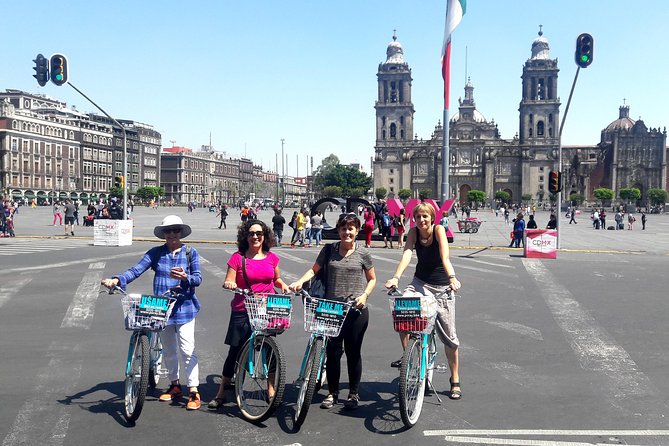
Mexico City’s historic center makes far more sense from a bicycle seat. On this four-hour ride, you move from Aztec temple ruins to the vast Zócalo, then through streets lined with grand post offices, museums, churches, markets, and everyday city life. The bike lets you cover more ground than a walking tour without turning the morning into a bus ride.
I like the small maximum of 10 people, which gives guides such as Gabby, Pablo, and Dany room to answer questions and adjust the pace. I also like that lunch is part of the deal, with tacos, quesadillas, tlacoyos, gorditas, chilaquiles, and options for dietary restrictions. The main consideration is traffic: much of the ride uses bike lanes, but crowded streets can still feel demanding if you rarely cycle in cities.
Key points to know before booking
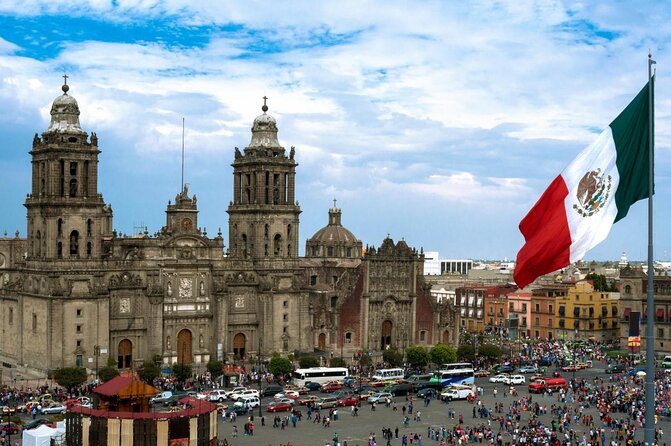
- Aztec roots meet modern Mexico City: Visit pre-Hispanic temple ruins, the Zócalo, markets, churches, and major civic buildings in one ride.
- A genuinely small group: The booking limit is 10 people, with a dedicated local guide.
- Easy pace, but not traffic-free: The route is described as relatively flat and manageable, though crowded streets require attention.
- Lunch is included: Choose from several Mexican street-food dishes, with accommodations for dietary restrictions.
- Start beside Alameda Central: Meet at the Poray location at Avenida Paseo de la Reforma 24, close to public transportation.
- Good value for a half-day: The $78.81 price includes the guide, bicycle, helmet, bottled water, and meal.
Why a bike is the right way to see central Mexico City
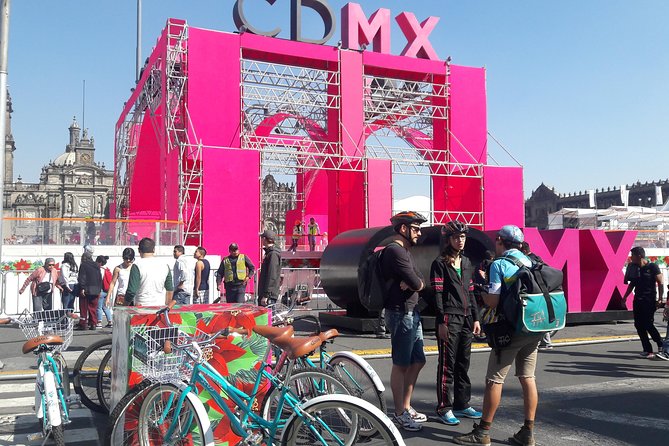
A walking tour can introduce you to the historic center, but the distances between its major sights add up quickly. A bicycle gives you a wider view. You can begin at Alameda Central, pass through the Zócalo, stop at old religious buildings, and reach streets known for commerce and food without spending half the morning waiting at crossings.
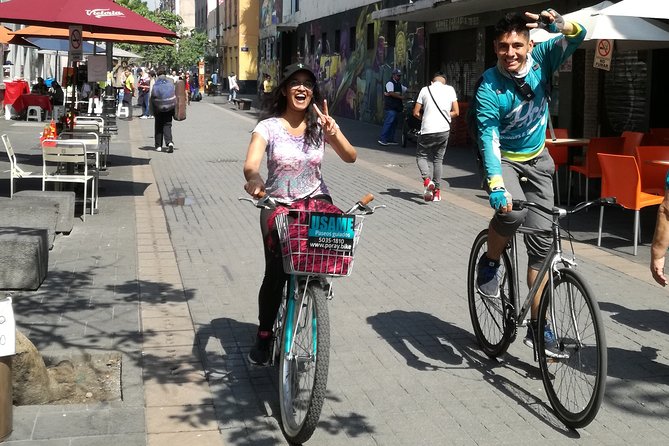
I also like the sense of place you get from riding at street level. You are not looking at Mexico City through a coach window. You hear vendors, watch pedestrians flow around the plazas, and notice how one block can shift from ornate government architecture to a crowded market street.
The route is not an athletic challenge. The ride is generally flat and kept at an easy pace, according to the experience details. Still, central Mexico City is a working city, not a closed museum. Some streets can be crowded, and one rider described the busy sections as a little treacherous, though also part of the fun. Pay close attention to the guide’s safety advice and keep your eyes ahead.
More bike tours in Mexico City:
- Frida Kahlo VIP [Museum Tickets Included] Bike, Markets & Churros
★ 5.0 · 1,072 reviews - Mexico City: 19 City Highlights Bicycle Tour
★ 5.0 · 425 reviews - Mexico bike tour
★ 5.0 · 407 reviews
Starting at Poray near Alameda Central
You meet at Downtown Poray, at Avenida Paseo de la Reforma 24 in Colonia Centro. The morning start is listed as 9:00 a.m., a useful time for a city ride because you can make several stops before the day becomes too busy.
At the shop, you select a bicycle and receive a helmet. The team helps you get comfortable on the bike before you set out. This small fitting session matters. A bicycle that feels awkward after ten minutes can become a real nuisance after four hours.
The ride begins almost immediately in the bike lane near Alameda Central. Alameda is described as the first urban park in the Americas, giving the tour a strong opening: leafy public space on one side, the historic center’s stone buildings and traffic on the other.
Your guide is not only there to lead the group. The local guides have cycled extensively through the city and can explain how to move safely through streets that may look confusing at first. Guides named Gabby, Pablo, and Dany have led this experience at different times, so the exact personality and route details may vary.
Alameda Central and the grand architecture of downtown
From Alameda, the route heads into the architectural core of Mexico City. This is one of the best parts of the tour for anyone who enjoys buildings but does not want a formal architecture lecture.
Bellas Artes is an early highlight. Its elaborate exterior and cultural role make it one of the city’s most recognizable buildings. Palacio Postal adds a different kind of visual pleasure, with ornamented details that reward a slow look. The National Art Museum, or MUNAL, continues the pattern with another carefully decorated facade.
I appreciate that the guide helps you ask a simple but useful question: what architectural style am I looking at? Mexico City’s center brings together several periods and influences. You do not need to memorize every label to enjoy the details, but the explanation gives the buildings more meaning than a quick photograph would.
These stops also help balance the Aztec focus of the tour. Mexico City is not one historical period. Its streets hold pre-Hispanic foundations, colonial religious buildings, later civic projects, and modern urban life. The ride connects those layers instead of treating them as separate museum exhibits.
The Zócalo and the city’s enormous main square
The Zócalo can be startling in person. Photographs often make it look like a normal central plaza, but its scale is much harder to grasp until you are standing or riding beside it.
The square has long served as a center of political, economic, and religious life. The Metropolitan Cathedral dominates one side, and its construction took three centuries. That long building period helps explain its mix of architectural styles. Rather than seeing a single neat design, you see a structure shaped by changing periods and priorities.
I like the way a bicycle tour handles the Zócalo. You can approach from different streets, pause for an explanation, then continue without retracing a long walking route. The guide can also point out how the grand square relates to the smaller commercial streets around it.
The Zócalo is not always calm. Public events, crowds, vendors, and traffic can affect the flow of the ride. If you want a quiet, carefully framed view of every building, a private walking tour may suit you better. If you want to understand how the square functions as part of a living city, the bike offers a more immediate view.
A completely different kind of day in Mexico City:
- Teotihuacan, Guadalupe Shrine & Tlatelolco Day Tour with Lunch
★ 5.0 · 11,603 reviews - Xochimilco, Coyoacan and Frida Kahlo with Optional Lunch
★ 4.5 · 7,320 reviews - Balloon flight + Breakfast in cave + Pyramids + Pick up CDMX.
★ 5.0 · 6,335 reviews - Teotihuacan pyramids morning or afternoon without tourist traps
★ 5.0 · 6,186 reviews
Pre-Hispanic ruins and the Aztec foundation
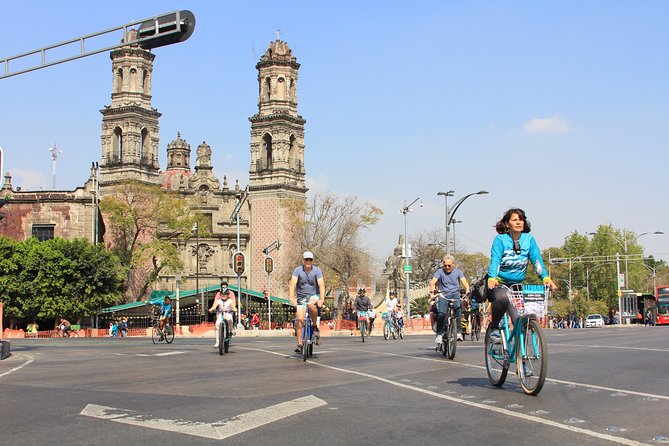
The tour’s central theme is the foundation of the Aztec Empire and the earlier city built on an island in a lake. The pre-Hispanic temple ruins give you a physical point of contact with that past.
These remains can be easy to miss when you are focused on the larger buildings around downtown. A guide makes the ruins more useful by explaining what you are seeing and how the older city relates to the modern streets above and around it.
This is also where the tour earns its name. You are not simply cycling past famous sights. You are following the transformation of Mexico City from its pre-Hispanic beginnings through Spanish rule and later urban growth.
Keep your expectations measured. This is a broad city tour, not a long archaeological visit with extended time at one ruin. You will see the remains as one important part of a four-hour route. If ancient sites are your main reason for visiting Mexico, you may want to pair this ride with a separate archaeological visit.
Markets, churches, and streets beyond the postcard view
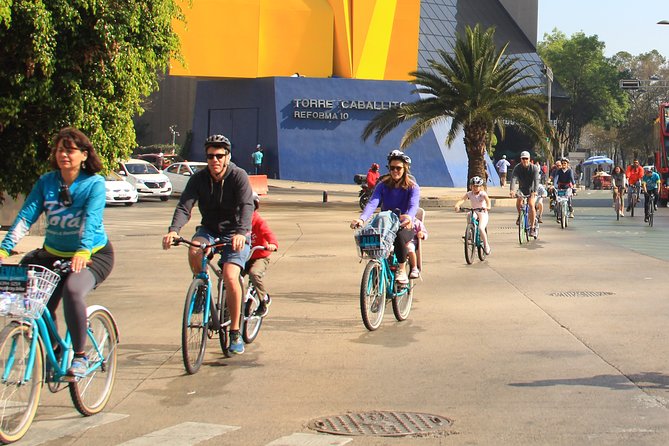
One of the strongest features of this experience is the move away from the obvious photo stops. The route can pass through markets, commercial streets, older plazas, churches, and less familiar corners of the center.
That variety is valuable because downtown Mexico City is more than its monuments. A market shows how people shop and eat. A small church or monastery can reveal details that are easy to miss beside a major cathedral. A commercial street explains how the historic center works today, not just how it looked in an earlier era.
The guides also share anecdotes and urban legends. That can make the route feel more personal, especially when you have already seen the standard buildings. One ride included a surprise stop at a synagogue from the 1940s. That particular addition may not be part of every departure, so treat it as a possible guide-led extra rather than a guaranteed stop.
The narrow and crowded streets are also where the cycling demands more attention. You may need to slow down, follow closely, and trust the guide’s signals. The small group helps here. A group of 10 is easier to keep together than a large convoy, and the guide can watch how each person is handling the street.
Mexican lunch served at street-food stops
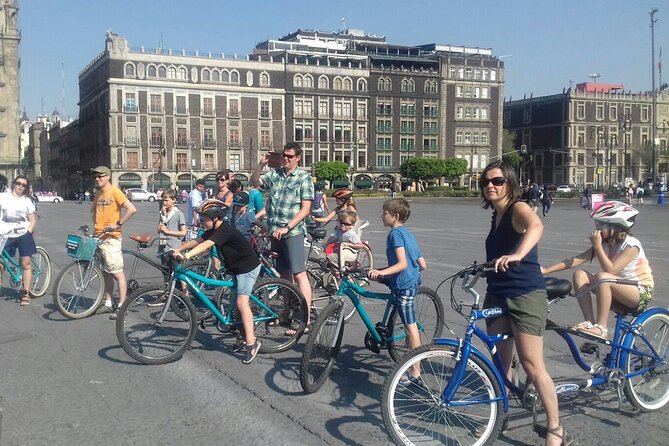
Food is not an afterthought on this tour. Lunch is included, with choices such as tacos, quesadillas, tlacoyos, gorditas, and chilaquiles.
That selection gives you a useful taste of everyday Mexican cooking rather than a standardized restaurant meal. You can ask about the dishes and try something that may not be familiar from your hotel breakfast or a tourist-oriented menu.
Dietary needs are worth mentioning before you start eating. The experience specifically offers options for different restrictions, and one rider with an onion allergy was able to enjoy the included meal. The practical lesson is simple: tell the guide clearly about your restriction at the start, then confirm your choice when food is served.
The meal also breaks up the sightseeing. Four hours on a bicycle can feel long if every minute is spent moving or listening. A food stop gives you time to sit, ask questions, and compare notes with the guide.
How safe and comfortable is the cycling?
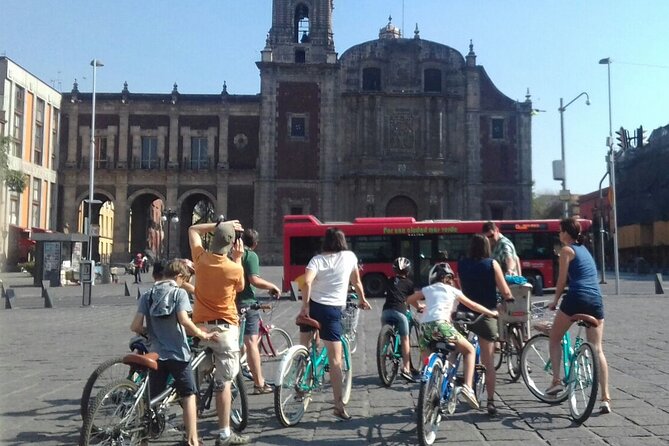
The route uses bike lanes for part of the ride, and the guides provide safety instructions before departure. The bicycles and helmets are included, so you do not need to arrange equipment separately.
The ride is described as relatively flat and easy paced. That makes it suitable for many people who are comfortable on a bicycle, including families and solo participants. The group format also means you have a guide leading the way rather than trying to navigate every turn yourself.
Still, city cycling is not the same as riding in a quiet park. Crowded streets can be stressful, and conditions can change from one block to the next. I would choose this tour if you ride confidently enough to brake, steer, and stay alert around other people. I would skip it if you are uneasy on a bicycle or want a completely traffic-free outing.
Wear clothing that lets you move easily and bring the attitude needed for an urban ride. The tour supplies bottled water, but you should still pay attention to your comfort throughout the morning.
What $78.81 includes, and where the value lies
At $78.81 per person, this is not the cheapest way to look around downtown. The price includes a local guide, bicycle, helmet, bottled water, and lunch, though. It also buys four hours of organized sightseeing in a group capped at 10 people.
The value is strongest if you want several things at once: historical context, active sightseeing, local food, and help navigating the center. Booking separate bicycle rental, a guide, and lunch could quickly approach the same cost, without the benefit of a planned route.
The price is less compelling if you only want a quick ride or already know the historic center well. You may also prefer a walking tour if your main interest is spending a long time inside one building. This experience is designed for breadth and connection, not for an in-depth visit to a single museum.
Hotel pickup and drop-off are not included. You make your own way to the Poray meeting point, which is near public transportation. The activity finishes back at the same location, making it easy to plan another central Mexico City activity afterward.
Who should book this four-hour ride?
I would recommend it to first-time visitors who want a clear introduction to central Mexico City without staying inside a vehicle. It also suits families, couples, and solo visitors who like learning while moving.
The tour works especially well for people who enjoy local guides with strong personal connections to the city. Gabby has been praised for allowing time for questions, while Pablo has taken riders through markets, museums, buildings, streets, and lesser-known religious sites. Dany brings an energetic interest in the city’s past and present.
It is also a good choice for people with limited time. In four hours, you can see a broad range of sights and get an initial sense of how the historic center fits together. You will not master Mexico City in one morning, but you will have a useful map in your head for later exploring.
I would be more cautious about booking if you dislike cycling near crowds, need a completely predictable route, or want long indoor visits at the cathedral, MUNAL, or Bellas Artes. The tour takes you to important buildings, but it is primarily a ride with stops, not a museum admissions program.
Should you book the Aztec Tlan Heritage Bike Tour?
Book it if you want to connect Mexico City’s Aztec origins, colonial buildings, grand civic architecture, markets, and street food in one active morning. The small group, included equipment, local guides, and meal make the $78.81 fee reasonable for a four-hour introduction.
Go in expecting city traffic, changing street conditions, and a route that values variety over long visits at individual sites. If you can ride comfortably and stay alert, this is a practical way to see more of downtown while hearing the stories that make its streets memorable.
FAQ
Where does the Aztec Tlan Heritage Bike Tour begin?
It begins at Downtown Poray, at Av. Paseo de la Reforma 24, Colonia Centro, Cuauhtémoc, Mexico City.
What time does the tour start?
The listed start time is 9:00 a.m.
Where does the tour end?
The activity ends back at the original meeting point.
How long does the bike tour last?
The tour lasts approximately four hours.
Is a bicycle included?
Yes. Bicycle use and a helmet are included in the price.
Is food included?
Yes. Lunch with street-food choices is included. Options include tacos, quesadillas, tlacoyos, gorditas, and chilaquiles, with choices for dietary restrictions.
How large is the group?
The tour has a maximum of 10 people per booking and operates as a small-group activity.
More Historical Tours in Mexico City
- Historic Downtown Walking Tour
★ 5.0 · 1,289 reviews - Historic Center Food Tour in Mexico City
★ 5.0 · 1,263 reviews - Mexico City: Historic Downtown Walking Tour
★ 4.8 · 1,039 reviews - Walking Tour of the Historic Center of Mexico City
★ 5.0 · 870 reviews
Just added around Mexico City
- Xochimilco’s Wild Side: Mezcal, Insects & Culture★ 4.9 · 10 reviews
- Xochimilco: Food and Trajinera Ride with Local Women★ 5.0 · 5 reviews
- Xochimilco: Island of the Dolls Tour Games and Drinks★ 5.0 · 25 reviews
- Xochimilco Ecological Tour – Away From the Crowds (3 Hours)★ 5.0 · 15 reviews
- Xochimilco + Coyoacán Combo Full-Day Tour★ 5.0 · 3 reviews
- Xochimilco floating gardens, Coyoacan and UNAM murals★ 4.0 · 6 reviews
- Val´quirico And The City of Angels Puebla From Mexico City★ 5.0 · 3 reviews
- Xochimilco: amanecer en kayak Ciudad de México★ 5.0 · 35 reviews
Mexico City Bike Tours, compared.

Frida Kahlo VIP [Museum Tickets Included] Bike, Markets & Churros
Read our review →
Mexico City E-Bike Tour with a taco and churros stop
Read our review →
Mexico City; ART NACO : Murals & Street Art Bike Tour
Read our review →
Mexico City Highlights E-Bike Tour With Foodie Stops
Read our review →
Street Food Bike Tour / Mexico is not only Tacos / All Inclusive
Read our review →Browse the lists this tour appears in