
Reviewed · MEXICO CITY HISTORIC CENTER WALKING TOURS
Walking Tour of the Historic Center of Mexico City
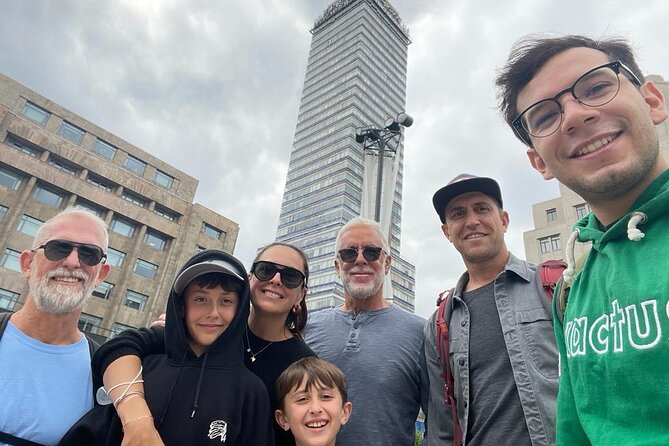
Mexico City’s historic center makes the most sense on foot, where an ancient temple site, a Spanish cathedral, Diego Rivera murals, and grand early 20th-century buildings all sit within a few blocks. This tour gives you that fast-moving introduction, led by guides such as Fernanda, Luis, Alexia, and Nat, who explain both the past and the city you see today.
I like the small maximum of 10 people, which makes it easier to hear and ask questions. I also like the mix of major sights and less obvious details, from indigenous languages and Day of the Dead traditions to the archaeological remains hidden beneath a city street. The main caution is simple: three hours on cobblestones, often in sun and at Mexico City’s high elevation, can feel demanding if you are not used to walking.
Key points at a glance
- Ancient and colonial Mexico in one walk: Move from the Aztec capital’s remains to the cathedral, viceroyal buildings, and modern national symbols.
- Diego Rivera murals inside a working government building: The Ministry of Education offers one of the tour’s most distinctive stops.
- A group capped at 10 people: You get a better chance to hear the guide and ask about the sites.
- A useful first-day orientation: The route ends near Palacio de Bellas Artes and the House of Tiles, two places worth returning to.
- Strong English-language guiding: Guides including Fernanda, Luis, Alexia, and Nat are praised for clear explanations, humor, patience, and local insight.
- Plan for a real walk: There are limited places to sit, uneven streets, and no transportation between stops.
Why this three-hour walk works so well in Centro Histórico
I see this tour as an orientation rather than a series of long building visits. You get a connected story: the Mexica city, the Spanish conquest, colonial rule, independence-era politics, revolution, art, trade, and present-day Mexico City.
That broad approach is useful on a first visit. You will not spend an hour inside each museum, but you will learn which places deserve a longer return visit. The route also helps you understand why the center feels layered. Colonial walls can sit over earlier Mexica structures, while 19th-century and modern buildings fill the same streets.
The small group matters here. Historic-center sidewalks can be crowded, and a guide needs to keep people together while crossing streets and moving around public squares. With no more than 10 participants, the walk should feel more personal than a large coach-style outing. Guides such as Luis and Fernanda are also noted for adjusting to questions, shade, bathroom needs, and the pace of the group.
The tour begins at Plaza de la Constitución, better known as the Zócalo, and ends near Edificio Guardiola, beside the Palace of Fine Arts and the House of Tiles. Transportation to the starting point is not included, so you need to arrange your own way there. The center is near public transportation, which makes the meeting point practical.
More walks through the historic centre:
- Historic Downtown Walking Tour
★ 5.0 · 1,289 reviews - Historic Center Food Tour in Mexico City
★ 5.0 · 1,263 reviews - Mexico City: Historic Downtown Walking Tour
★ 4.8 · 1,039 reviews
Starting at the Zócalo, Mexico City’s great civic stage
The Zócalo is the right place to begin because it gives you the scale of the old center immediately. The vast square is bordered by the National Palace, the Supreme Court of Justice, and rows of shops associated with silver and other goods.
Your guide uses the square to explain how Mexico City developed as both a political center and a place of public ceremony. The National Palace is especially important for understanding the country’s government and art. The square also gives you a clear sense of how the city’s colonial center still functions as a living civic space rather than a preserved museum district.
This first stop lasts about 15 minutes and is free to enter. It is mostly an outdoor orientation, so sun protection matters. The open space can also make it harder to hear if the area is busy, which is another reason to stay close to the guide.
The Metropolitan Cathedral and the long construction story
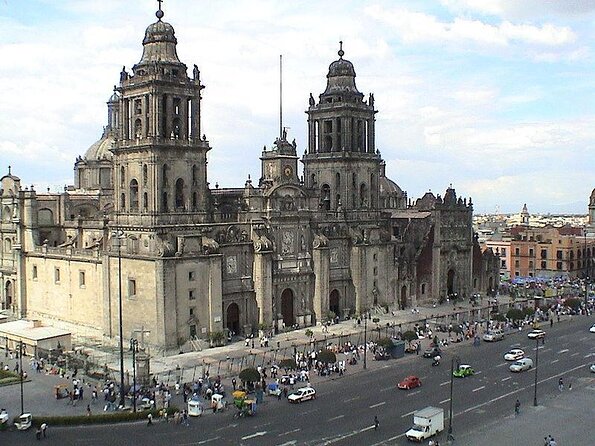
From the Zócalo, the group moves to the exterior of the Metropolitan Cathedral. The guide explains its construction and origins, along with its Baroque and neoclassical features.
This is a short stop, about 10 minutes, and the cathedral interior is not included. That distinction matters. You will get architectural context and an explanation of why the building took shape over a long period, but you should not expect a full interior visit as part of the scheduled tour.
I like this stop because the cathedral helps show how Spanish colonial power was placed directly beside the former Mexica ceremonial center. You can look at the building as architecture, but also as evidence of the political and religious changes that remade the city.
If you want to see inside, admission is not covered and you will need to arrange that separately. The tour keeps moving, so treat this as a useful introduction rather than a complete cathedral visit.
Templo Mayor and the city beneath the city
The route then turns toward the remains of Templo Mayor, the major Mexica temple complex. The tour views the archaeological ruins from outside and explains their importance to the Mexica, including the temple’s associations with the rain god and the sun god.
This is one of the places where the tour’s central idea becomes clear. Mexico City is not simply a colonial city built from scratch. The modern center occupies the site of the Mexica capital, and traces of that earlier city appear among later streets and buildings.
The guide also discusses the geographical distribution of the ancient center. That helps you picture how the ceremonial area related to the wider settlement, rather than seeing the ruins as isolated stones.
The tour does not include a full archaeological museum visit. If Templo Mayor is high on your list, plan a separate visit so you can spend more time with the excavation and displays. On this walk, the value is the explanation of what you are seeing and how it fits the city around you.
More Historical Tours in Mexico City:
- Mexico City Historical Centre Food Tour with 7 Authentic Tastings
★ 5.0 · 723 reviews - Walking Tour in Mexico City for Exploring their Cultural Heritage
★ 5.0 · 245 reviews - Walking Tour – Impressive murals in Historical Center of Mexico City
★ 5.0 · 224 reviews - Mexico City: Guided walking tour through the most historic parts of the city.
★ 4.5 · 172 reviews
Diego Rivera inside the Ministry of Education
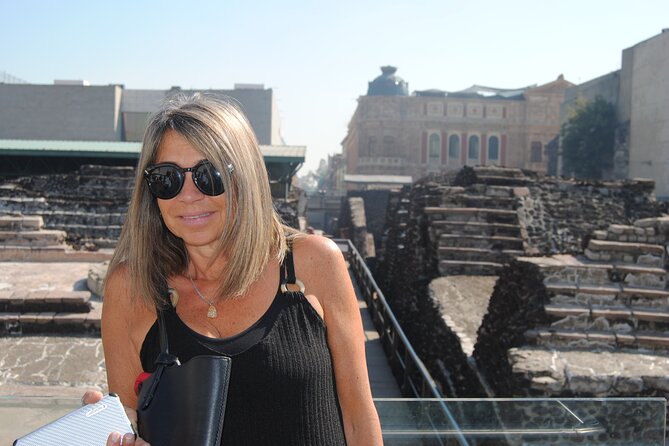
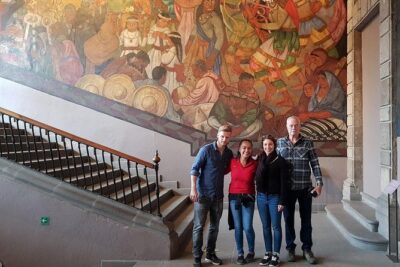
The Museo Vivo del Muralismo is the most distinctive indoor stop. You enter the Ministry of Education to see a large group of murals painted by Diego Rivera, with the tour describing this collection as roughly one-third of the murals he created during his career.
The murals cover festivals, traditions, social struggle, trade, and politics in early 20th-century Mexico. This is not just a chance to admire color and scale. The paintings are also a visual lesson in how Mexican artists presented workers, indigenous life, popular traditions, and political ideas.
The scheduled visit lasts about 25 minutes, though timing can depend on the group and conditions. Fernanda has been praised for allowing extra time in the education building courtyard, which is useful if the murals catch your attention.
I would pay close attention here, because this stop gives the tour more substance than a standard architecture walk. You are seeing art in the setting where it was created for a public institution, not only in a formal museum gallery. The admission is included.
Plaza de Santo Domingo and the colonial trade routes
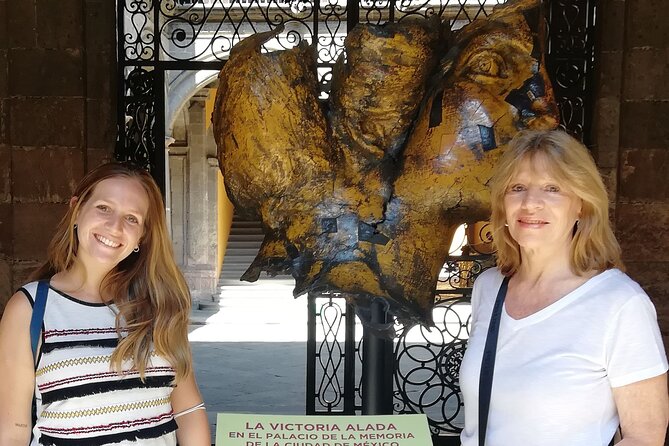
Plaza de Santo Domingo brings the group into the colonial period. The guide discusses the square’s role during the viceroyalty of New Spain, including the trade in spices and goods from Asia, the Holy Inquisition, and French attempts to conquer Mexico.
That range of topics is a strength. You get more than a list of dates and facades. The square becomes a place where religion, commerce, empire, and foreign pressure met.
The stop lasts about 15 minutes and is outdoors with no admission charge. As with the Zócalo, you are looking at the square as a working public place, so conditions can vary. The guide’s ability to tell the story clearly matters more than a formal entrance here.
Plaza Tolsá, the Little Horse, and a useful rest
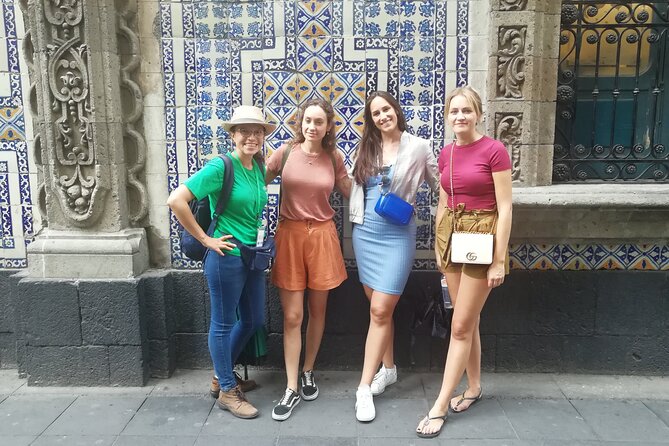
Plaza Tolsá is the planned rest point, with about 20 minutes in the shade. That pause is welcome after the first part of the walk, especially if you are still adjusting to Mexico City’s elevation or the heat.
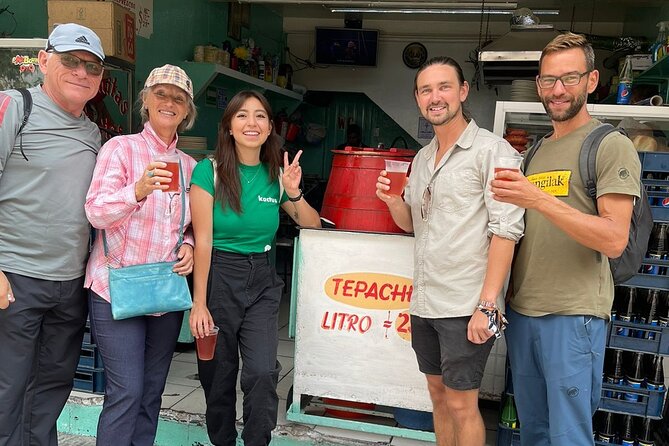
This is also where the guide can move beyond buildings and discuss indigenous languages, Day of the Dead traditions, music, politics, and gastronomy. The exact conversation depends on the guide and the group, but the format invites questions about modern Mexico rather than keeping the focus only on colonial architecture.
The plaza contains the equestrian statue of Charles IV, widely known as the Little Horse. You also see the exterior of the National Museum of Art and the Mining Palace. These buildings help explain Mexico City’s later artistic and academic ambitions.
I like the balance here. You are not asked to absorb three straight hours of dates while standing. Still, the rest is brief, and there is no promise of a long café break or a meal. Food and sweets available for purchase are not included.
The archaeological window under a modern street
The Ventana Arqueológica is a tiny stop, only about five minutes, but it may be one of the most memorable. Through an archaeological window beneath a street near the main temple, you see evidence of the past under the present city.
The guide explains how the remains were found and points out the hidden layers beneath buildings in the center. This is a compact lesson in urban archaeology. It shows why walking through Mexico City can feel like moving across several time periods at once.
Admission is included. Because the stop is short and the space is limited, do not expect a large exhibit. Its impact comes from the idea: the city’s old foundations are not always in a separate ruin zone. Sometimes they are directly under your feet.
Palacio de Bellas Artes, Palacio Postal, and the final stretch
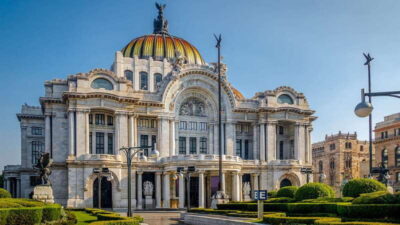
Palacio de Bellas Artes is one of the route’s major visual moments. The guide discusses the exterior and interior as works of art, although this tour does not include a formal interior admission. The building is an important symbol of Mexico City, and even a short explanation helps you notice more than its famous dome and pale facade.
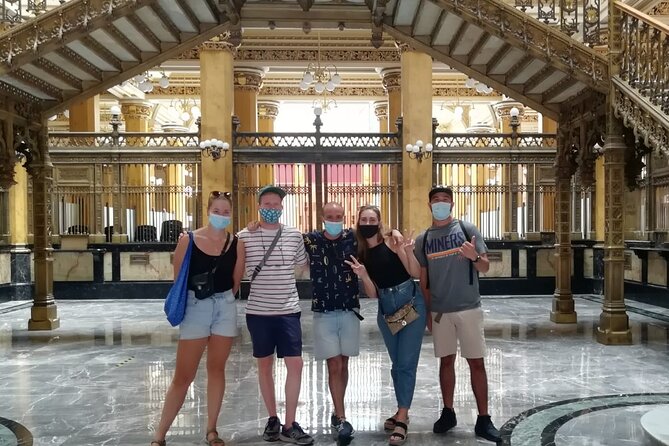
Next comes Palacio Postal, a grand building that remains in operation. The tour uses it to explain the economic and political meaning of such a majestic public structure. The outside visit lasts about 10 minutes, and admission is not included.
These stops are a reminder that the center did not stop developing after the colonial period. Public buildings also expressed confidence, wealth, and political purpose in later eras. If you enjoy architecture, you will likely want to return for more time inside the major buildings.
The final stop is the House of Tiles, one of the city’s most photographed facades. Its tiled exterior makes an immediate impression, and it is a fitting end to a walk built around the way architecture records different periods of Mexican life.
The tour finishes near Edificio Guardiola, beside Palacio de Bellas Artes and the House of Tiles. That location is useful. You can continue exploring on your own, return to one of the buildings, or use the nearby area to plan your next stop.
What the guides add to the route
The most praised part of the experience is the guiding. Fernanda is repeatedly described as warm, engaging, punctual, and able to balance humor with serious historical explanation. Luis is praised for clear English, a steady pace, detailed answers, and practical recommendations for the rest of a Mexico City visit.
Alexia brings thoughtful commentary on both historic sites and current life. Nat is noted for personal stories, patience, and strong explanations. Guides such as Sarah, Benjamin, Oscar, Thomas, Eduardo, and Gabby are also identified as friendly, lively, and attentive to questions.
You should not expect every guide to give the same talk word for word. That is part of the character of a small-group walk. The route is set, but the discussion can shift with the group. The strongest guides make the buildings easier to understand without burying you in facts.
The English is described as clear, and one guide is specifically praised for being easy to understand. If you want an academic lecture focused on one period, this may feel broad. If you want a human guide who can connect the Mexica past, colonial rule, art, food, language, and present-day life, the format fits well.
Pace, comfort, and value
The tour is about three hours and includes substantial walking. Cobblestone streets can slow the group, and there are not many places to sit outside the planned rest in Plaza Tolsá. Wear comfortable shoes and bring water, a hat, and sun protection.
Mexico City’s elevation can make the walk feel harder than the distance suggests, especially during a hot part of the day. Guides have been praised for finding shade and watching over street crossings, but you should still judge the tour against your own stamina.
The group limit of 10 improves the experience, but it cannot remove the realities of a historic center. Streets may be crowded, surfaces uneven, and the group’s pace affected by participants who need extra time. One practical consideration is that a slower group may not reach every scheduled point in full.
The exact tour price is not provided here, so I cannot judge it against a specific fee. The value comes from the guide, the small group, the three-hour route, and the included access to the Ministry of Education murals and archaeological window. You are paying for interpretation and orientation, not a package of museum admissions.
Tips are not included. Transportation to the Zócalo is not included either, and food or sweets purchased along the way cost extra. Free cancellation is available up to 24 hours before the start time. Cancellations inside that window are not refunded, and poor weather or failure to reach the required minimum group size can lead to a new date or full refund.
Who should book this Mexico City walk?
I would choose this tour for a first visit, especially if you want to understand the historic center before returning to its museums and interiors. It suits people who enjoy architecture, public squares, art, and stories that connect ancient Mexico with the city around you now.
It is also a good match for English-speaking visitors who want a guide rather than a self-guided route. The small group makes it easier to ask about food, politics, language, and neighborhood details.
I would think twice if you dislike long walks, uneven streets, outdoor heat, or a broad overview. This is not a deep visit to Templo Mayor, the cathedral, or Palacio de Bellas Artes. It is a well-rounded introduction that helps you decide where to spend more time later.
Should you book it?
Book this walk if you want a clear starting point for Mexico City’s historic center, strong English-language guiding, and a route that mixes famous sights with less obvious details such as the Ministry of Education murals and the archaeological window.
Skip it if you need frequent seating, full interior access, or a slower museum-focused program. For most first-time visitors who can manage three hours on foot, the combination of scale, context, and a group capped at 10 makes this a useful way to get your bearings fast.
FAQ
How long is the Walking Tour of the Historic Center of Mexico City?
The tour lasts approximately three hours.
Where does the tour start?
It starts at Plaza de la Constitución, commonly called the Zócalo, in Mexico City’s Centro Histórico.
Where does the tour end?
The walk ends at Edificio Guardiola, near Palacio de Bellas Artes and the House of Tiles.
Is the tour offered in English?
Yes. The tour is offered in English.
What is the maximum group size?
The tour has a maximum of 10 participants.
Are admission tickets included?
Admission to the Museo Vivo del Muralismo and the Ventana Arqueológica is included. Admission to the Metropolitan Cathedral and Palacio Postal is not included, and the tour explains Palacio de Bellas Artes from the outside rather than including a full admission visit.
Can I cancel for a full refund?
Yes, if you cancel at least 24 hours before the experience begins. Cancellations or changes made less than 24 hours in advance are not refunded or accepted. If poor weather or an insufficient number of participants causes cancellation, you will be offered another date or a full refund.
More Walking Tours in Mexico City
- Frida Kahlo VIP [Museum Tickets Included] Walk, Markets & Churros
★ 5.0 · 982 reviews - Anthropology Museum Private Experience Walking Tour
★ 5.0 · 355 reviews - Muralist Art Semi Private Walking Tour in Mexico City Downtown
★ 5.0 · 188 reviews - Coyoacán Walking Tour: Access to Frida Kahlo Museum & Tacos
★ 5.0 · 181 reviews
Just added around Mexico City
- Xochimilco’s Wild Side: Mezcal, Insects & Culture★ 4.9 · 10 reviews
- Xochimilco: Food and Trajinera Ride with Local Women★ 5.0 · 5 reviews
- Xochimilco: Island of the Dolls Tour Games and Drinks★ 5.0 · 25 reviews
- Xochimilco Ecological Tour – Away From the Crowds (3 Hours)★ 5.0 · 15 reviews
- Xochimilco + Coyoacán Combo Full-Day Tour★ 5.0 · 3 reviews
- Xochimilco floating gardens, Coyoacan and UNAM murals★ 4.0 · 6 reviews
- Val´quirico And The City of Angels Puebla From Mexico City★ 5.0 · 3 reviews
- Xochimilco: amanecer en kayak Ciudad de México★ 5.0 · 35 reviews
Mexico City Historic Center Walking Tours, compared.




Walking Tour – Impressive murals in Historical Center of Mexico City
Read our review →
Muralist Art Semi Private Walking Tour in Mexico City Downtown
Read our review →Browse the lists this tour appears in