
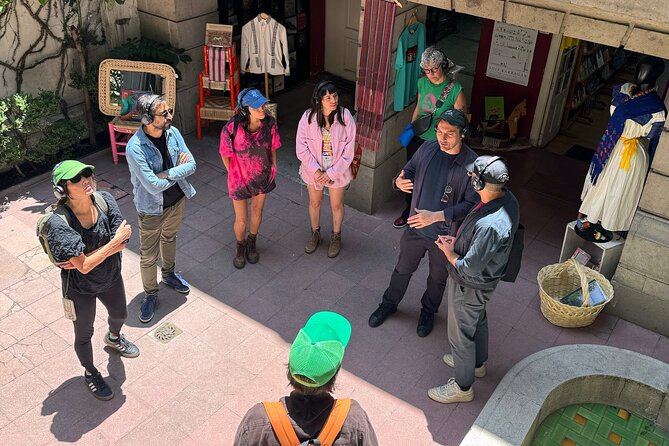
Reviewed · ROMA AND CONDESA NEIGHBORHOOD TOURS
Colonia Roma Musical Walking Tour
Colonia Roma is more than pretty facades and fashionable cafés. This walk uses 11 places to explain how Mexico City grew, how Roma changed, and how food, music, politics, and housing shaped Mexican identity. One minute you are looking at a 16th-century chapel. The next, you are discussing tortillas and the first Zapotec state.
I like the way the tour links subjects that are usually kept apart, especially the connection between corridos and crime newspapers during the Mexican Revolution. I also like the focus on ordinary places, such as a tortilla shop and newspaper stands, rather than only the neighborhood’s famous architecture.
The main drawback is that the walk is discussion-heavy and remains almost entirely outdoors. At 2 hours and 15 minutes, it is a good introduction to Roma, but it may feel slow if you want a fast architectural tour or a long list of indoor attractions.
Key details before you book
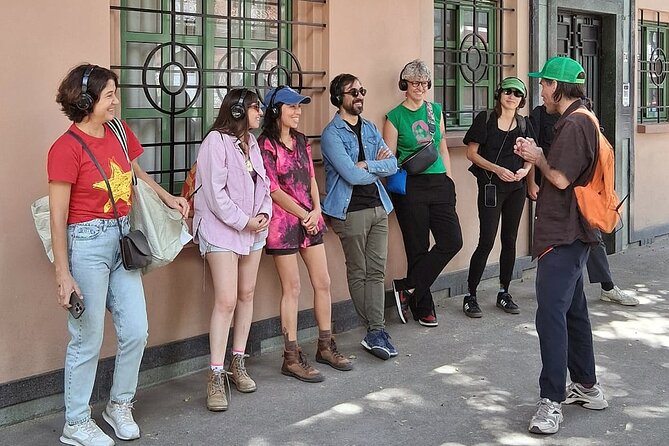
- Start at a 16th-century chapel: Meet at Capilla de San Francisco Javier de la Romita at 10:30 am.
- Stay in Colonia Roma: The route does not spread across Mexico City, so you get a focused look at one neighborhood.
- Make unusual connections: Mexican tortillas, Zapotec history, revolutionary music, housing, and architecture all enter the story.
- Finish at Plaza Río de Janeiro: The end point is the neighborhood’s main plaza, near the original 1902 plan for Roma.
- Small English-language group: The maximum is 12 people, which suits questions and conversation.
- Plan for an outdoor walk: The tour requires good weather and lasts about 2 hours and 15 minutes.
Why this Colonia Roma walk is different
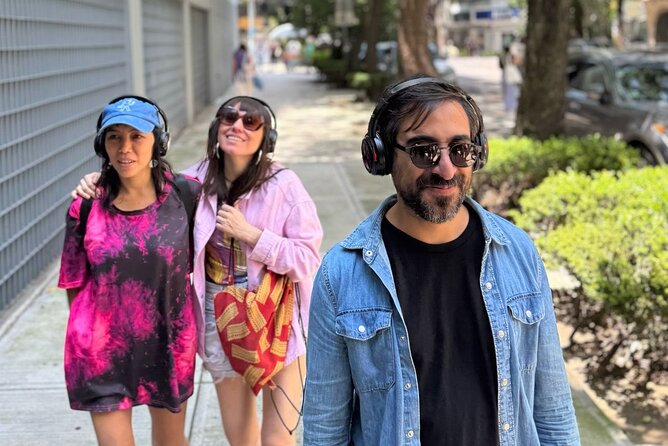
Many city walks treat Roma as a backdrop for attractive buildings. This one treats it as a record of Mexico City’s changing identity. Gabriel Acevedo Velarde uses the neighborhood to ask practical questions: Who was the area built for? How did it gain shops and services? What did modern architects believe the city needed? How did Mexican food and popular music grow from older political and social forces?
That approach gives the walk a wider reach than its route suggests. You stay within Colonia Roma, yet the subjects extend far beyond the sidewalks. The story includes a chapel from the 16th century, early 20th-century urban planning, a debate between conservative and modernist architects, the Mexican Revolution, and the origins of tortillas.
I especially like the use of places that do not normally lead a sightseeing list. A tortilla shop can tell you more about daily life than another grand facade. A newspaper stand can open a discussion about crime reporting and popular song. These stops make the neighborhood feel lived in, not arranged for visitors.
The group limit of 12 is useful here. This is not a walk where you simply follow a flag and take photos. The guide is making connections, and a small group gives you a better chance to hear the explanation and ask about a detail that catches your attention.
More Roma and Condesa neighbourhood walks:
- Colonia Roma Food Tour
★ 5.0 · 838 reviews - Michelin Taco Bike Tour: Roma Norte & Condesa /All-Inclusive.
★ 5.0 · 100 reviews - Mexico City: Roma & Condesa Private & Personalized Walking Tour
★ 5.0 · 70 reviews
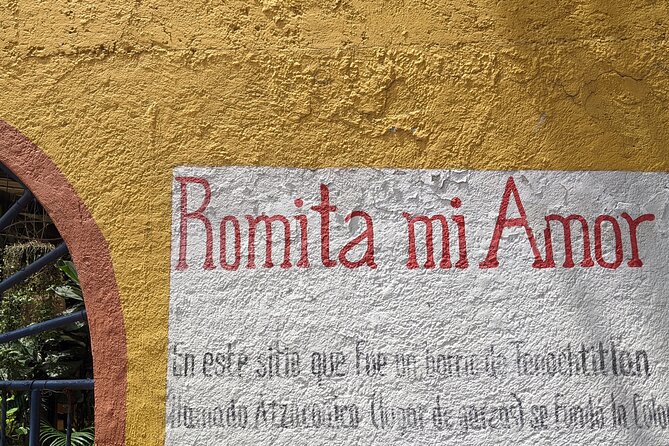
Starting at La Romita and the San Francisco Javier chapel
The tour begins at Capilla de San Francisco Javier de la Romita, at Plaza Romita 30. Be there for the 10:30 am start, since the opening stop sets up much of the discussion that follows.
The chapel dates from the 16th century. That fact alone changes how you read Colonia Roma. The neighborhood is often associated with grand early 20th-century homes and planned streets, but La Romita preserves the memory of a much older settlement. The small town around the chapel kept its identity into the 20th century, even as Mexico City expanded around it.
This is also the place to discuss the origin of the Virgin of Guadalupe. The subject adds a religious and cultural layer to the walk, helping you see that the area’s identity did not begin with its later architecture.
You spend about 10 minutes here. That is enough for an introduction, not a long church visit. The chapel is best understood as a starting point for the neighborhood’s older story rather than as a major interior attraction.
Everyday objects and the life of modern Mexico
One stop is an amusing museum devoted to objects from everyday Mexican life in modern times. The supplied details do not name the museum or list its collection, so you should treat it as a short cultural stop rather than plan around a large formal museum visit.
Its value is in the ordinary things. Everyday objects can show how people cooked, worked, communicated, and organized domestic life. They help balance the grander topics of architects, planners, and political change.
This is one of the places where the tour’s method makes sense. A city is not only shaped by famous buildings. It is also shaped by the items people use repeatedly, often without thinking about them. The stop gives the walk a more personal scale.
Because the visit is part of a moving walking route, do not expect a long independent museum session. The point is the explanation and the connection to Mexican modern life.
The Lamm house and the question of space
Another stop examines a house associated with the Lamm family. The family did not actually live there, an important detail that prevents an easy but misleading story.
The building reflects a confident attitude toward space. That matters because Mexico City faced a serious need for housing when the house was built. The contrast is clear: some buildings expressed ambition and room to spare, while the city around them needed practical places for a rapidly growing population.
This stop gives you a useful way to look at architecture. Instead of asking only if a building is attractive, you can ask what kind of city it assumes. Who had access to space? What did the architect or owner value? How did private design relate to public need?
You may not receive a full architectural tour of the house itself. The information provided describes it as a point of discussion, so the main experience is likely the exterior and the guide’s interpretation.
More Walking Tours in Mexico City:
- Historic Downtown Walking Tour
★ 5.0 · 1,289 reviews - Mexico City: Historic Downtown Walking Tour
★ 4.8 · 1,039 reviews - Frida Kahlo VIP [Museum Tickets Included] Walk, Markets & Churros
★ 5.0 · 982 reviews - Walking Tour of the Historic Center of Mexico City
★ 5.0 · 870 reviews
Avenida Álvaro Obregón, corridos, and revolutionary crime news
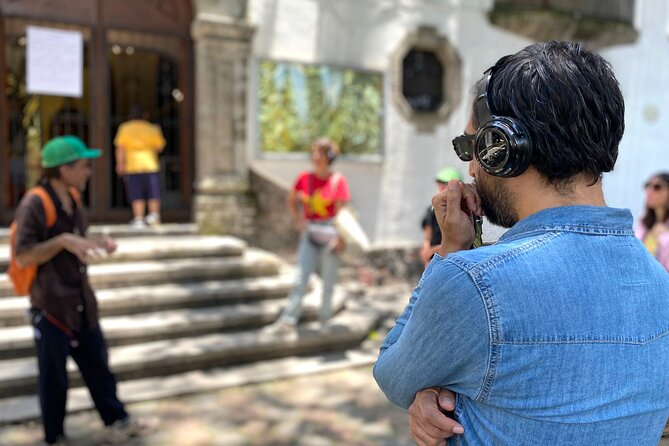
Avenida Álvaro Obregón is one of Roma’s best-known roads, but the tour uses it for more than a pleasant walk. You stop here for about eight minutes to discuss corridos, a narrative musical form, and their connection to crime newspapers during the Mexican Revolution.
This is one of the most distinctive parts of the route. Corridos are often treated as folk songs or musical history. Here, the focus is on how stories about crime, conflict, and public figures circulated through popular culture and the press.
That connection helps explain how people learned about events before modern media shaped public attention in today’s way. Music and newspapers were not sealed-off subjects. They could feed each other, turning current events into stories that people read, heard, remembered, and passed along.
The stop is brief, so the tour will not cover every aspect of revolutionary music. Still, it offers a sharp example of the walk’s wider purpose: use a street in Roma to explain a national cultural pattern.
Plaza Luis Cabrera and the housing debate of 1933
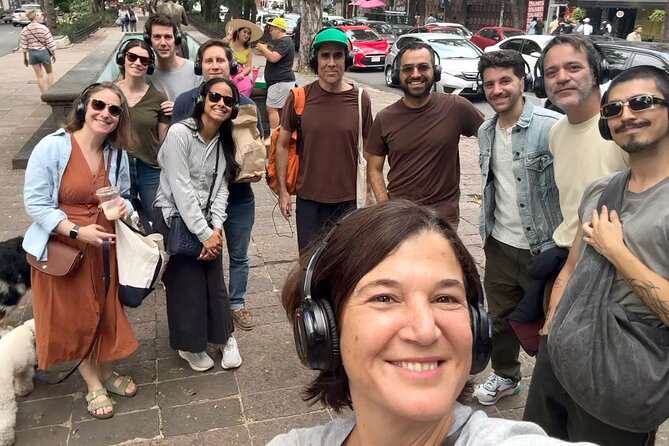
At Plaza Luis Cabrera, the conversation turns to a 1933 debate between conservative and modernist architects. The subject may sound technical, but the underlying problem is easy to understand: Mexico City needed housing, and the city’s population was doubling every decade.
The debate reveals two competing ambitions. One side looked toward tradition and established forms. The other pushed for modern design and new answers to urban problems. Both approaches reflected hopes about what Mexico City could become, but those hopes had to face the urgent need to house people.
I find this stop useful because it keeps architecture tied to real life. A building is not just a style exercise when a city is growing at that rate. Design choices affect cost, density, comfort, and access to housing.
You spend about 10 minutes at the plaza. It is a good place to pause and consider the difference between an architect’s ideal city and the city people actually need.
Plaza Río de Janeiro and Roma’s shift to services
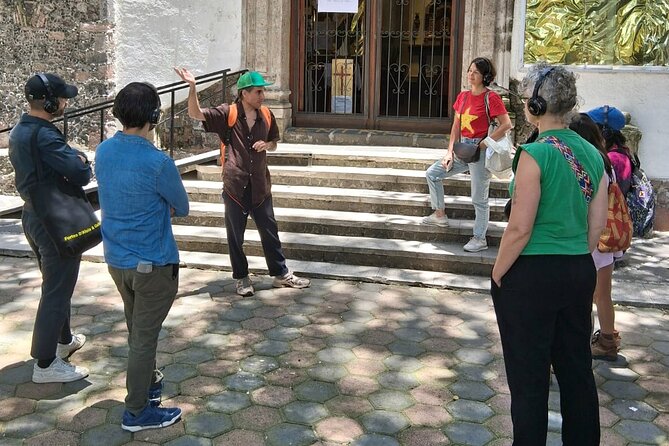
Plaza Río de Janeiro is the final destination and one of the main public spaces in the neighborhood. It was part of Roma’s first plan in 1902, and its location at Calle Durango and Orizaba makes it a natural place to finish.
Roma was first conceived as an exclusively residential area. That plan did not last. Planners and property owners soon realized that a neighborhood could not function well without basic services nearby.
The plaza helps explain that change. Roma gradually became more self-sufficient, with services that supported daily life rather than serving only as a place to sleep. This is a practical urban story, and you can apply it to many planned neighborhoods: the line between residential and commercial space rarely stays fixed.
The tour ends here, so you can use the plaza as your next decision point. You might continue exploring Roma, stop for food, or use the nearby streets to get your bearings. The tour does not provide a separate return transfer, since it is a point-to-point walk.
La Casa de las Brujas and changing architecture
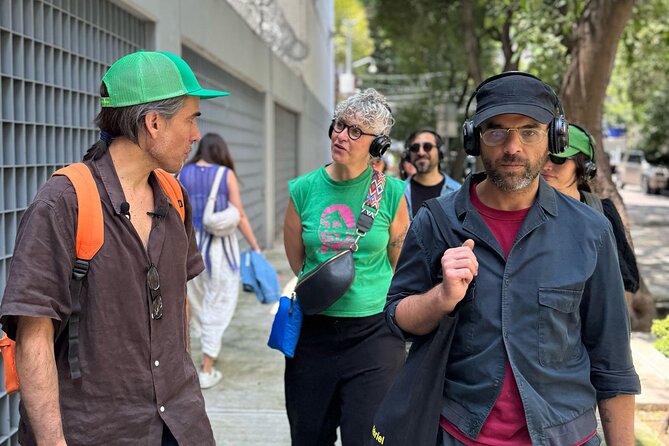
La Casa de las Brujas, or the Witches’ House, was originally built as a hotel and later functioned as an apartment building. It offers an example of eclectic architecture and changing ideas about what Roma was meant to be.
Its history mirrors the neighborhood’s wider shift. A place designed for one use can take on another as the city changes. The building also reflects the move from an exclusively residential district toward an area that provided services for more of Mexico City.
You spend about five minutes here, so expect a compact explanation rather than a long architectural lecture. That short stop works well within the larger route because it adds a clear example of adaptation.
I would pay attention to how the building’s original purpose and later use are discussed. The point is not simply to admire the facade. It is to see how architecture records changes in property, population, and urban needs.
Tortillería Premier and the origins of tortillas
The visit to Tortillería Premier is one of the route’s most unusual stops. It is a typical tortilla shop, and the discussion here concerns the invention of tortillas and their link to the first Zapotec state, five centuries before Christ.
That may sound like a strange subject for a neighborhood walk, but it is exactly the sort of connection that gives the experience its character. Tortillas are part of daily Mexican life, yet many people do not know the historical link between their creation and early Zapotec political development.
The stop lasts about eight minutes. You should not expect a cooking class or a meal unless the guide specifically says otherwise. The value is the explanation of how a familiar food can point toward ancient government, technology, and social organization.
This was the most clearly praised aspect of the experience, along with the mix of history, art, social context, politics, tortilla makers, and newspaper stands. I agree with the emphasis. The tour is at its best when a normal storefront becomes a doorway into a much larger subject.
What the $41.63 price gives you
At $41.63 per person, this is not a bargain-priced stroll, but the value depends on how you like to explore. You are paying for about 2 hours and 15 minutes with an English-speaking guide, a small group capped at 12, and a route built around interpretation rather than simple directions.
If you only want to see Roma’s prettiest buildings, you can walk the neighborhood on your own for less. The price makes more sense if you want someone to connect the buildings with Mexican politics, food, music, religious identity, and housing problems.
The tour also avoids a common weakness of city walks: spending all the time on the most obvious sights. Several stops are less familiar, and the focus on ordinary places gives you material you are unlikely to get from a quick self-guided stroll.
I would book it early in your Mexico City stay if you want context for later walks around Roma. I would choose something else if your priority is interior access, food tastings, or a broad tour covering several districts.
Timing, group size, and practical planning
The route begins at 10:30 am and lasts approximately 2 hours and 15 minutes. The stated stops add up to a little over an hour, which leaves time for walking between locations and for additional discussion along the way.
Meet at Capilla de San Francisco Javier de la Romita and finish at Plaza Río de Janeiro. Check both points before setting out, since the start and end are different. The tour is near public transportation, which helps with arrival and onward plans.
The experience is offered in English and uses a mobile ticket. Confirmation is provided when you book. Service animals are allowed, and most people can participate, but the details do not promise a fully step-free route or seating at each stop.
Wear comfortable shoes and prepare for an outdoor walk. Since good weather is required, a poor-weather cancellation can lead to a different date or a full refund. You can cancel for a full refund up to 24 hours before the start time, but changes or cancellations inside that window are not accepted.
Who will enjoy this walk most
I would recommend it to you if you enjoy connections between everyday life and big historical ideas. It suits people who want to understand why a neighborhood looks the way it does, not just photograph its buildings.
It is also a good fit for architecture fans who want social context. The Lamm house, La Casa de las Brujas, Plaza Luis Cabrera, and Plaza Río de Janeiro give you several ways to think about design, housing, planning, and neighborhood change.
Food and culture enthusiasts should pay special attention to Tortillería Premier. Music fans will get something different from the corrido discussion on Avenida Álvaro Obregón. The chapel at La Romita gives the walk an older religious starting point.
I would be less likely to recommend it to you if you want a fast-paced route, extensive museum time, or a meal included in the price. The tour’s strength is conversation and interpretation, so your enjoyment depends on being willing to pause and listen.
Should you book the Colonia Roma Musical Walking Tour?
Book this tour if you want a focused, thoughtful walk through Roma that connects architecture with Mexican social and cultural history. The strongest moments are the unusual ones: the tortilla shop, the discussion of corridos and crime newspapers, the old chapel, and the debate over housing and modern design.
Skip it if you only need a short orientation or want to explore at your own pace. For $41.63, the value comes from Gabriel Acevedo Velarde’s links between subjects that rarely appear together. If that sounds useful, the small English-language group and carefully chosen route make this a sensible way to begin your time in Colonia Roma.
FAQ
Where does the Colonia Roma Musical Walking Tour begin?
It begins at Capilla de San Francisco Javier de la Romita, Pl. Romita 30, La Romita, Centro, Cuauhtémoc, Mexico City.
What time does the tour start?
The start time is 10:30 am.
Where does the tour end?
It ends at Plaza Río de Janeiro, at Calle Durango and Orizaba in Roma Norte.
How long does the experience last?
The walking tour lasts approximately 2 hours and 15 minutes.
Is the tour offered in English?
Yes. The tour is offered in English.
How many people can join?
The maximum group size is 12 travelers.
What is the price per person?
The listed price is $41.63 per person.
Can I cancel for a full refund?
Yes. You can cancel at least 24 hours before the experience start time for a full refund.
What happens if the weather is poor?
The experience requires good weather. If it is canceled because of poor weather, you will be offered a different date or a full refund.
Just added around Mexico City
- Xochimilco’s Wild Side: Mezcal, Insects & Culture★ 4.9 · 10 reviews
- Xochimilco: Food and Trajinera Ride with Local Women★ 5.0 · 5 reviews
- Xochimilco: Island of the Dolls Tour Games and Drinks★ 5.0 · 25 reviews
- Xochimilco Ecological Tour – Away From the Crowds (3 Hours)★ 5.0 · 15 reviews
- Xochimilco + Coyoacán Combo Full-Day Tour★ 5.0 · 3 reviews
- Xochimilco floating gardens, Coyoacan and UNAM murals★ 4.0 · 6 reviews
- Val´quirico And The City of Angels Puebla From Mexico City★ 5.0 · 3 reviews
- Xochimilco: amanecer en kayak Ciudad de México★ 5.0 · 35 reviews
Roma and Condesa Neighborhood Tours, compared.


Michelin Taco Bike Tour: Roma Norte & Condesa /All-Inclusive.
Read our review →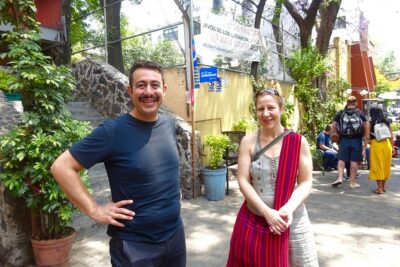
Roma & Condesa Private & Personalized Walking Tour
Read our review →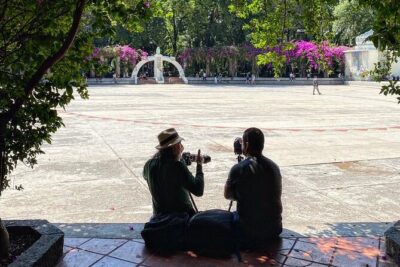
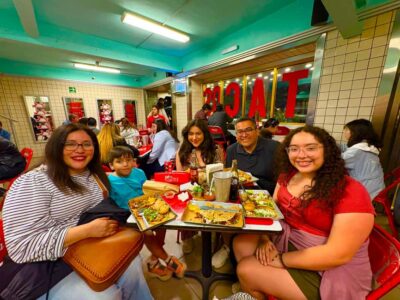

Cheerful Introduction Walking Tour in Roma, Condesa & Juarez
Read our review →

Browse the lists this tour appears in