
Reviewed · ROMA AND CONDESA NEIGHBORHOOD TOURS
Epic Condesa and Roma Norte Walking Tour
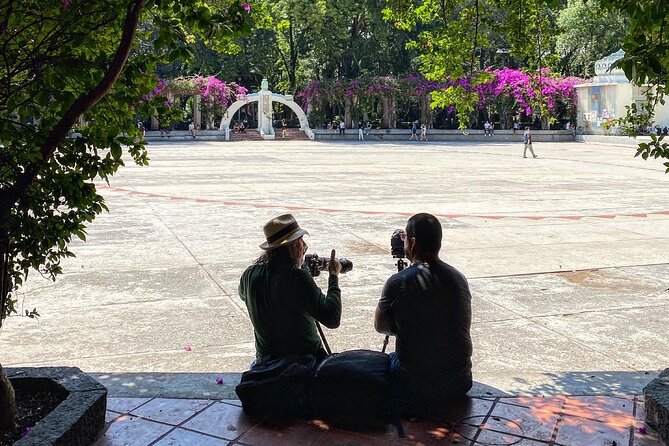
Condesa and Roma Norte are best understood on foot, where a former racetrack, Art Deco corners, leafy parks, old mansions, galleries, and ordinary neighborhood streets all fit into one long afternoon. Ricardo leads this English-language walk through both districts, adding local history, architecture, food advice, and the sort of small details you could easily miss alone.
I like the small group limit of 12, which gives Ricardo room to answer questions and adjust the pace. I also like the route’s mix of famous sights and quieter stops, from Parque México and Plaza Río de Janeiro to La Romita and Huerto Roma Verde.
The main caution is simple: this is a serious walk. Although the advertised duration is about four and a half hours, some outings run five hours or more once breaks and conversation are included. You’ll want decent shoes, water, and enough energy for a long afternoon outside.
What makes this walk worth your time
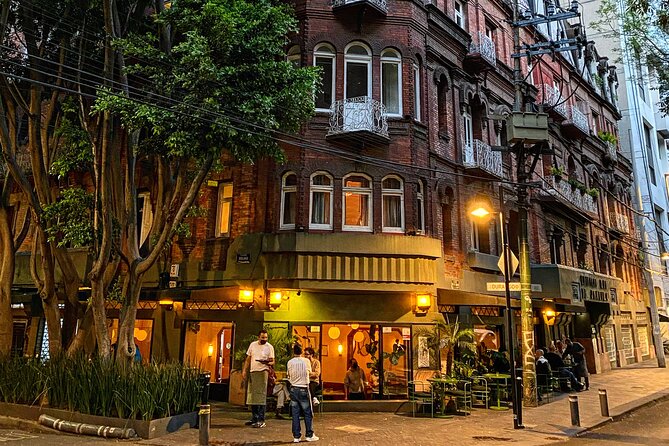
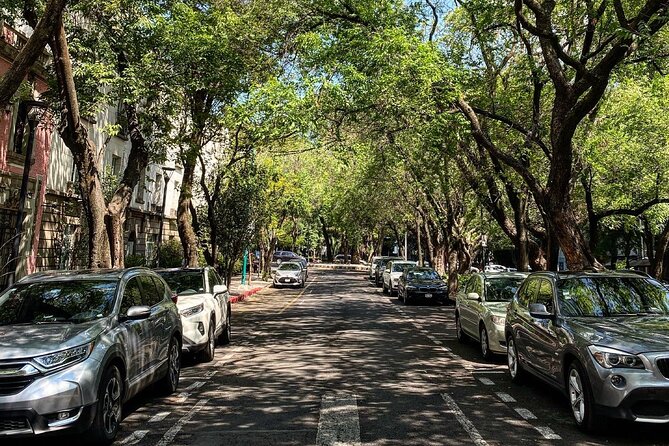
- See the former racetrack at Ámsterdam: This looping, tree-lined street gives Condesa its unusual shape and makes a fine introduction to the district.
- Follow Ricardo through two districts: His explanations cover architecture, art, Mexican history, current life, and local food.
- Move beyond the postcard sights: La Romita, Casa Basalta, Calle Orizaba, and Huerto Roma Verde add character to the better-known parks and plazas.
- Walk in a group of no more than 12: The format is small enough for questions and personal suggestions.
- Finish in Roma Sur: The tour ends at Huerto Roma Verde, not back at the starting point, so plan your afternoon around that location.
- Expect food advice along the way: Past outings have included a pastry stop, street tacos, and restaurant recommendations, though food is not listed as included.
Starting at Parque México and Ámsterdam
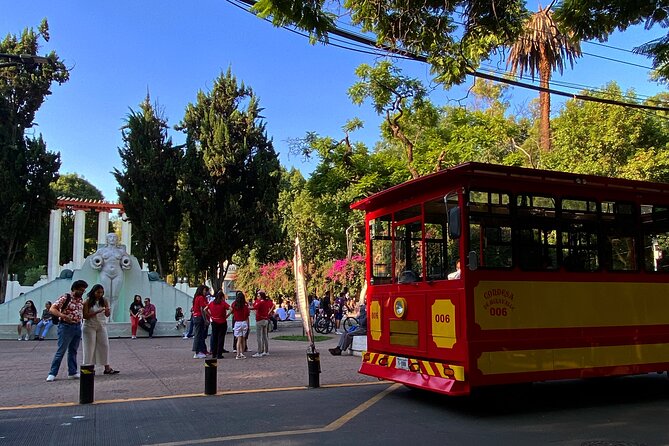
Meet at Churrería El Moro on Avenida Michoacán at noon. Starting beside a well-known churro shop is a useful choice, since you begin in the heart of Hipódromo rather than spending the first part of the tour walking in from a less interesting meeting point.
The first formal stop is Parque México, one of Condesa’s most pleasant public spaces. You’ll follow leafy paths, look at its Art Deco details, and get an early feel for the neighborhood’s easy mix of park life, architecture, and café culture. The stop is listed at 15 minutes, so expect an introduction rather than a long park visit.
From there, Ámsterdam explains much of Condesa’s design. The street curves in an oval around what was once a horse-racing track. Its wide, green center and unusual layout make it one of the area’s most memorable walks. Ricardo can point out the relationship between the street plan, the trees, and the early 20th-century buildings.
This is one of the strongest parts of the route for anyone interested in city design. You are not just looking at attractive buildings. You are seeing how an old sporting ground helped shape an entire neighborhood.
More Roma and Condesa neighbourhood walks:
- Colonia Roma Food Tour
★ 5.0 · 838 reviews - Michelin Taco Bike Tour: Roma Norte & Condesa /All-Inclusive.
★ 5.0 · 100 reviews - Mexico City: Roma & Condesa Private & Personalized Walking Tour
★ 5.0 · 70 reviews
Parks, hotels, and the Mexico-Spain connection
A short stop at Parque España follows. It is a calmer green space with paths, sculptures, and monuments. Five minutes is enough to orient you, but not enough for a slow wander, so treat it as part of the moving story rather than a full park visit.
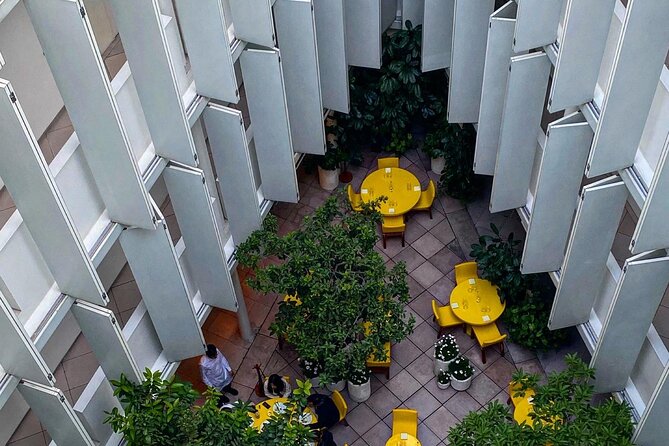
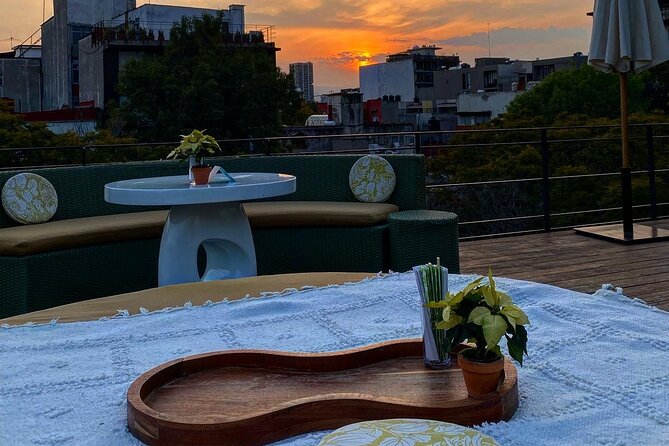
Condesa DF comes next, a boutique hotel known for its mix of modern and colonial elements, interior design, and rooftop views over Condesa. The visit is brief, and access to every area may depend on the property’s conditions at the time, but the building gives Ricardo another chance to explain how old structures and newer design share the district.
At Fuente de Cibeles, you’ll see Mexico City’s copy of Madrid’s famous fountain. The stop adds a useful thread about Mexico and Spain, and it breaks up the architecture with a major public monument. You only spend about five minutes here, so listen closely and take your photos quickly.
The route then reaches Casa Museo Guillermo Tovar de Teresa. This preserved house contains art, antiques, and objects connected with the life of the Mexican art historian Guillermo Tovar de Teresa. The planned 15-minute stop is one of the more distinctive visits on the walk, since it shifts the focus from streets and façades to a person’s home, taste, and collection.
The next stop, Casa Universitaria del Libro UNAM, brings you to a historic mansion used for temporary exhibitions. It is another short visit, but it helps show how older buildings in Roma and Condesa have found new cultural uses.
Churches, plazas, and Roma Norte architecture
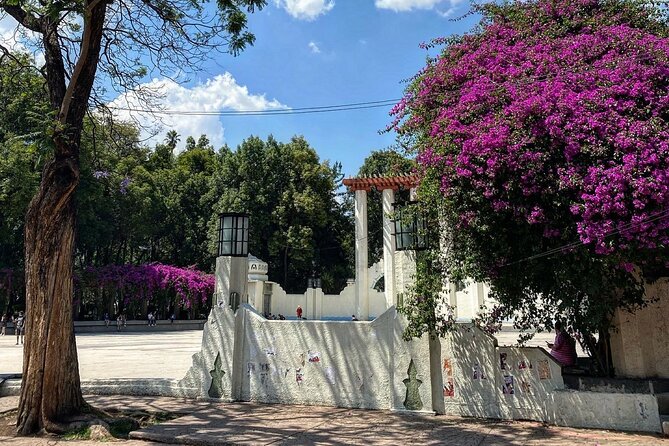
Parroquia de la Sagrada Familia offers a quick look at neo-Gothic design and the religious history of Roma Norte. You will not spend long inside or around the church, but the stop gives the route architectural range. After parks, mansions, and hotels, the church supplies a very different visual note.
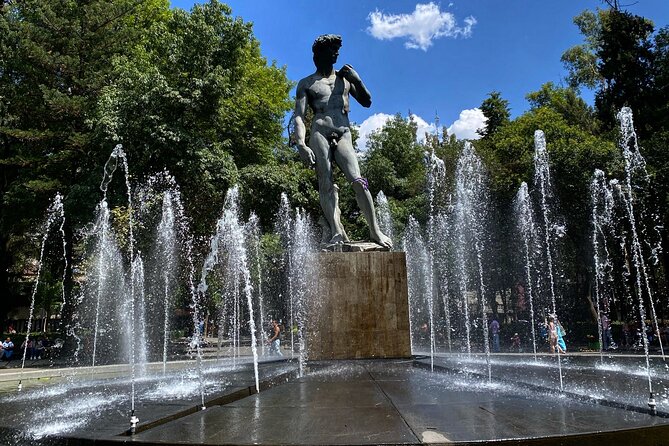
Plaza Río de Janeiro is one of the more recognizable spaces on the Roma Norte portion of the walk. You’ll see the replica of Michelangelo’s David, sit or stroll around the park, and look at the buildings that frame the square. The five-minute timing is tight, but the plaza is easy to grasp quickly.
The nearby Edificio Río de Janeiro adds another architectural stop. Its eclectic exterior is one of the area’s calling cards, and Ricardo uses it to explain how Roma Norte developed and changed. If your main interest is buildings, this section will likely be among the most rewarding parts of the afternoon.
Casa Basalta offers a different kind of urban story. This early 20th-century mansion now brings together the MAIA Contemporary art gallery, a meditation center, and restaurants. The point is not simply to admire an old house. You get to see how a historic property can support art, food, and community uses at the same time.
La Romita and the quieter side of Roma

La Romita is one of the most characterful stops on the route. Its narrow streets and small historic plaza feel separate from the broad avenues and polished blocks nearby. Ricardo explains its beginnings as the pre-Hispanic village of Aztacalco and its later development.
This is where the tour’s local focus matters most. A guide can connect a modest neighborhood pocket with the much larger story of Mexico City’s growth. You should not expect a grand monument here. The appeal is the contrast between La Romita’s scale and the city around it.
Pushkin Garden provides a short pause before the route continues along Avenida Álvaro Obregón. The park is named for the Russian poet and offers a quiet crossing point. Since several stops are only five to ten minutes, the tour works best if you enjoy learning while walking rather than lingering at each site.
Álvaro Obregón is one of Roma Norte’s major streets, lined with early 20th-century architecture, shops, restaurants, and nightlife. It shows the district in motion. You’ll see how historic façades now sit beside contemporary businesses, and why this part of the city attracts both residents and visitors.
Casa Prunes is another architectural highlight. The Art Nouveau mansion contains a restaurant and less obvious spaces within the building. The stop is listed at eight minutes, so this is mainly a guided look rather than a full meal or extended interior visit.
More Walking Tours in Mexico City:
- Historic Downtown Walking Tour
★ 5.0 · 1,289 reviews - Mexico City: Historic Downtown Walking Tour
★ 4.8 · 1,039 reviews - Frida Kahlo VIP [Museum Tickets Included] Walk, Markets & Churros
★ 5.0 · 982 reviews - Walking Tour of the Historic Center of Mexico City
★ 5.0 · 870 reviews
Squares, passages, and cultural buildings
Plaza Luis Cabrera slows the pace again. Its fountain and green spaces make it a pleasant place to pause, especially after several hours of walking. This is also a good point to ask Ricardo about places you want to return to later, since the square sits in an area with many restaurants and cafés.
El Parián dates to 1926 and now contains local shops and restaurants. The passage is a compact example of how commercial spaces in Roma have changed while retaining older structures. Five minutes will not allow for serious shopping, but you can note places to revisit on your own.
Casa Lamm Centro de Cultura brings the route back to a major historic building with a present-day cultural role. Its early 20th-century architecture and exhibitions make it a useful stop for anyone who wants more than a food-and-shopping tour.
Calle Orizaba receives a longer 15-minute look. The street is known for early 20th-century buildings and an active neighborhood feel. This is a good stretch for absorbing the district as a whole, rather than stopping to inspect one landmark at a time.
The final stop is Huerto Roma Verde, an urban garden and community space on Jalapa Street in Roma Sur. Its sustainable practices and community focus give the tour a fitting end. You finish with a view of Mexico City that is less polished and more hands-on, showing how residents use urban space for environmental and social projects.
What the guide adds to the route
Ricardo is the main reason this tour feels different from a self-guided architecture walk. He speaks excellent English and covers much more than dates and building names. You can expect discussion of Mexican history, art, culture, architecture, current politics, and local places to eat.
The format also allows for conversation. When the group is very small, Ricardo can respond to requests for galleries, food, or other points of interest along the way. Some outings have included a pastry stop and street tacos, but you should treat those as possible additions rather than guaranteed inclusions.
His restaurant advice is another practical benefit. If you are new to Mexico City, a local guide can help you choose where to eat after the walk and suggest places in the neighborhoods you have just explored. The value is not only in the four-plus hours of guiding. You may leave with a better plan for the rest of your stay.
Is $59 a fair price?
At $59 per person, this is not a bargain if you only want a quick orientation. You can walk through the parks and streets for free on your own. The price pays for the guide’s time, the carefully linked route, the English commentary, and access to local context that is difficult to gather from a map.
The value improves if you are especially interested in architecture, urban history, art, or food. You cover two major districts, visit around 20 points of interest, and avoid spending your first afternoon figuring out where the streets lead. A small group also makes the price more reasonable than a private tour while keeping the experience more personal than a large group outing.
Most stops have no admission charge, so the tour price is not covering entry tickets. Bring extra money if you want churros, pastries, tacos, drinks, or a meal based on the places you encounter. The tour itself is best understood as a guided neighborhood study, not an all-inclusive food tour.
Timing, effort, and who should book
The tour starts at noon and lasts about four and a half hours. Because the route includes 20 stops and substantial walking between them, the day can run longer in practice. One outing lasted more than five hours, with breaks along the way.
You should have a moderate level of physical fitness. This is not a bus tour with occasional photo stops. You walk along streets, through parks, across plazas, and between neighborhoods. Comfortable shoes are essential, and you should plan around the noon start and the late finish.
The tour suits you best if you:
- Want a broad introduction to Condesa and Roma Norte in one afternoon
- Care about architecture, public spaces, art, and local stories
- Prefer a small group and an English-speaking guide
- Like asking questions and adjusting the route through conversation
- Want restaurant and food suggestions for later
- Are comfortable walking for several hours
It may not suit you if you want a slow visit inside every museum, a short neighborhood stroll, or a tour built mainly around eating. The stop times are often brief, and the route covers a lot of ground.
Practical details before you book
You receive confirmation when you book, and the meeting point is near public transportation. The start is Churrería El Moro, Avenida Michoacán 27, in Hipódromo. The tour ends at Huerto Roma Verde, Jalapa 234, in Roma Sur, so do not assume you will finish where you began.
The group is capped at 12 people, and the tour is offered in English. Free cancellation is available if you cancel at least 24 hours before the start time. Changes or cancellations inside that window are not accepted for a refund.
The tour has a 4.9 rating from 46 reviews, with 98 percent of customers recommending it. Those figures fit the experience described here: the strongest points are Ricardo’s personal guidance, the architecture, the wide range of neighborhoods, and the chance to find places you would likely skip on your own.
Should you book the Condesa and Roma Norte walk?
Book it if you want to understand how these districts fit together rather than simply photograph a few pretty streets. Ricardo’s route connects parks, old homes, churches, plazas, galleries, food spots, and community spaces in a way that gives the afternoon a clear shape.
Skip it if your energy is limited or if you prefer to explore at your own slow pace. For everyone else, especially first-time visitors who like architecture and local conversation, $59 is a fair price for a long, well-guided introduction to two of Mexico City’s most engaging neighborhoods.
FAQ
How long is the Epic Condesa and Roma Norte Walking Tour?
The advertised duration is approximately four hours and 30 minutes. The route may take five hours or more when walking, breaks, and conversation are included.
What time does the tour begin?
The tour starts at 12:00 pm.
Where is the meeting point?
Meet at Churrería El Moro, Avenida Michoacán 27, Hipódromo, Cuauhtémoc, Mexico City.
Where does the tour end?
The tour ends at Huerto Roma Verde, Jalapa 234, Roma Sur, Cuauhtémoc, Mexico City.
Is the tour offered in English?
Yes. The experience is offered in English.
How many people can join the tour?
The maximum group size is 12 travelers.
What neighborhoods does the tour visit?
The route covers Condesa and Roma Norte, finishing in Roma Sur at Huerto Roma Verde.
Are admission tickets included?
The listed stops have free admission. The tour price does not list food or drinks as included.
Is the tour physically demanding?
You should have a moderate level of physical fitness. The tour involves several hours of walking between parks, streets, plazas, buildings, and cultural spaces.
Can I cancel for a full refund?
Yes, if you cancel at least 24 hours before the local start time. Cancellations or changes made less than 24 hours before the experience are not refunded.
Just added around Mexico City
- Xochimilco’s Wild Side: Mezcal, Insects & Culture★ 4.9 · 10 reviews
- Xochimilco: Food and Trajinera Ride with Local Women★ 5.0 · 5 reviews
- Xochimilco: Island of the Dolls Tour Games and Drinks★ 5.0 · 25 reviews
- Xochimilco Ecological Tour – Away From the Crowds (3 Hours)★ 5.0 · 15 reviews
- Xochimilco + Coyoacán Combo Full-Day Tour★ 5.0 · 3 reviews
- Xochimilco floating gardens, Coyoacan and UNAM murals★ 4.0 · 6 reviews
- Val´quirico And The City of Angels Puebla From Mexico City★ 5.0 · 3 reviews
- Xochimilco: amanecer en kayak Ciudad de México★ 5.0 · 35 reviews
Roma and Condesa Neighborhood Tours, compared.


Michelin Taco Bike Tour: Roma Norte & Condesa /All-Inclusive.
Read our review →
Roma & Condesa Private & Personalized Walking Tour
Read our review →

Cheerful Introduction Walking Tour in Roma, Condesa & Juarez
Read our review →

Bike tour in the Chapultepec Forest and Roma Condesa
Read our review →Browse the lists this tour appears in