
Reviewed · DIEGO RIVERA MURAL TOURS
UNAM: Murals & Revolution
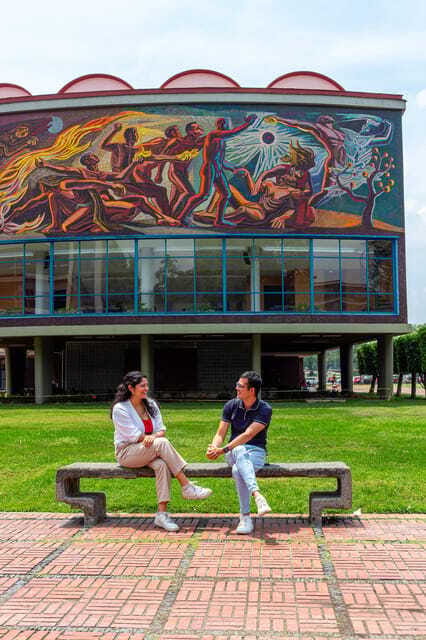
UNAM’s murals turn a university campus into a wide-open lesson in Mexican identity. On this two-hour tour, you’ll move from the Rectoría and Central Library to the Olympic Stadium, studying works by O’Gorman, Siqueiros, Chávez Morado, Eppens, and Diego Rivera along the way.
I like the clear focus on public art and politics, rather than a quick campus walk. I also like the guide-led discussion of student revolts and education, which gives the murals a human purpose. The main drawback is time: two hours goes quickly, so this is an introduction, not a full survey of every artwork at UNAM.
Key points
- UNAM’s Central Library: Study its famous exterior mural work as part of the university’s larger artistic vision.
- Five major Mexican muralists: See works associated with Siqueiros, O’Gorman, Chávez Morado, Eppens, and Rivera.
- History beyond the paintings: Connect the art with Mexican education, student movements, and the university’s role today.
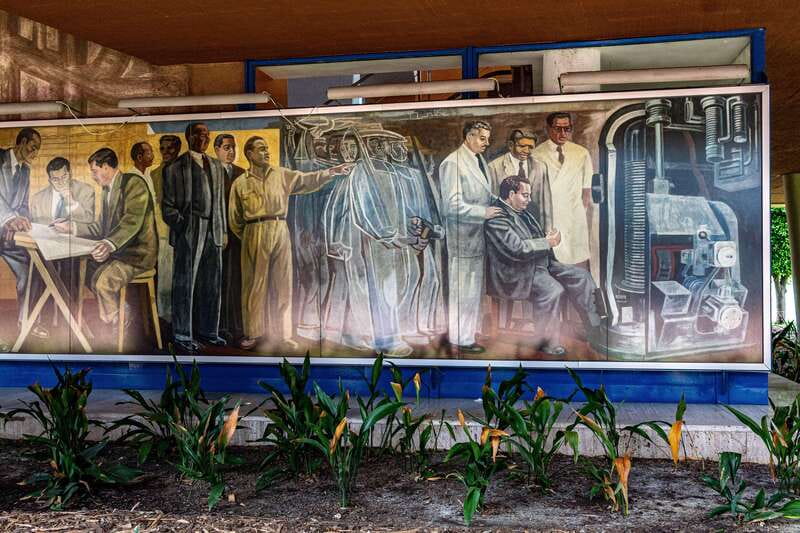
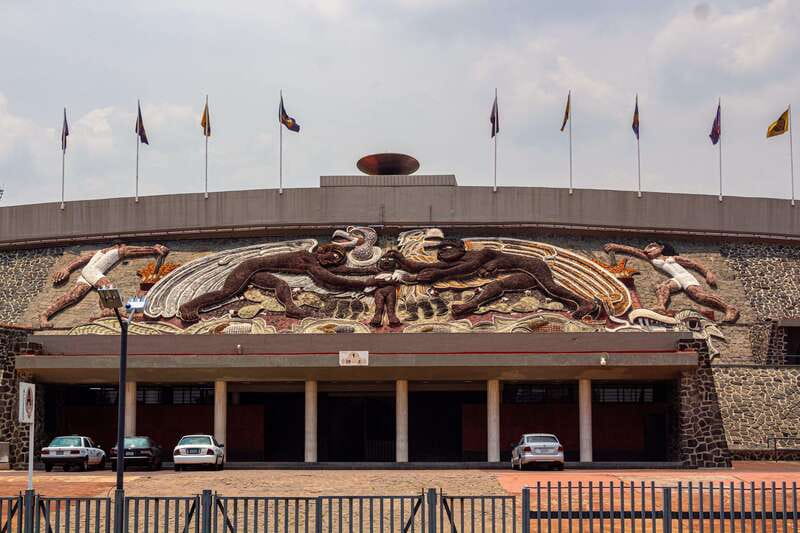
- Olympic Stadium finale: Visit the stadium from outside and see Diego Rivera’s La universidad, la familia y el deporte en México.
- Multilingual guiding: Tours are offered in Spanish, English, German, Italian, and Portuguese.
- Simple meeting point: Find the guide at Rectoría by looking for the small Mexican flag.
Why UNAM’s murals matter
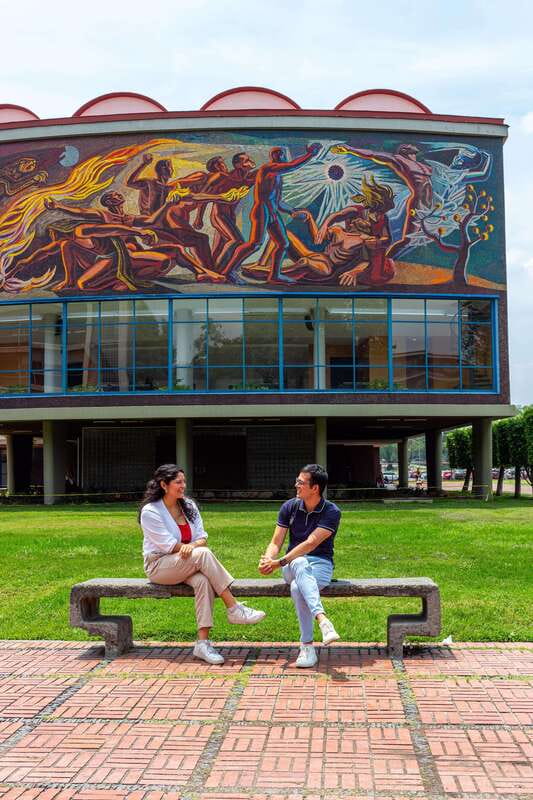
Mexico City has plenty of museums, but UNAM gives you a different way to meet Mexican art. The works are tied to buildings, walkways, and public institutions. You are not simply looking at paintings in quiet rooms. You are seeing how artists used architecture to speak to students and to the country beyond the campus gates.
The subject is especially useful if you want to understand the years after the Mexican Revolution. Murals became a public tool for teaching history, celebrating workers and families, and arguing about the future of Mexico. At UNAM, that public art sits beside the institution that helped shape the country’s education system.
This tour also looks beyond art technique. You’ll hear about the origins of education in Mexico, student revolts, and the university’s value in modern Mexican life. That makes the experience a good match for you if you prefer context with your sightseeing. The paintings are the main attraction, but the discussion helps explain why they were made and why they still matter.
More Diego Rivera mural tours:
- CDMX: Xochimilco, Coyoacan, Frida Kahlo Museum & Murals Tour
★ 4.4 · 3,025 reviews - Mexico City; ART NACO : Murals & Street Art Bike Tour
★ 5.0 · 284 reviews - EXCLUSIVE TOUR Casa Estudio Frida Kahlo-Diego Rivera Small Groups
★ 5.0 · 237 reviews
Meeting at Rectoría with the Mexican flag
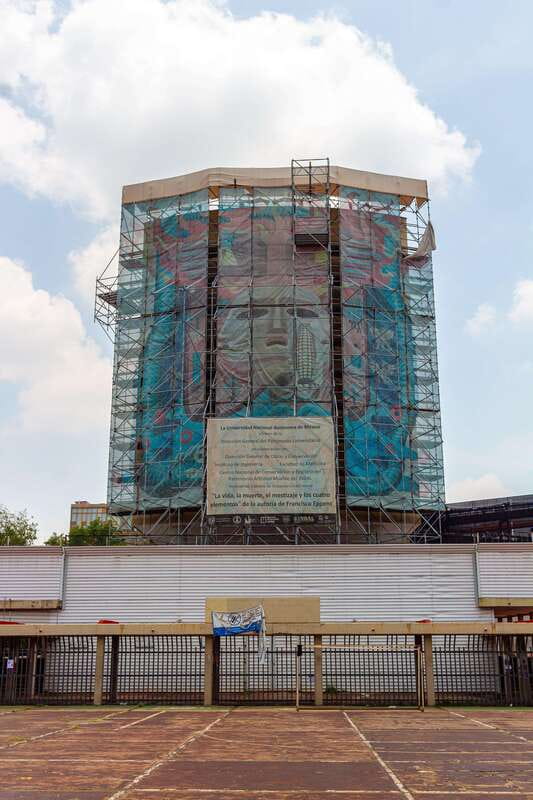
The tour begins at the Rectoría building, in front of the UNESCO commemorative plaque. Look for the guide holding a small Mexican flag. That detail matters on a large university campus, where a clear visual marker makes the first meeting less stressful.
The starting point also gives the tour an immediate sense of place. You begin at a central symbol of UNAM rather than meeting at a random street corner. From there, the guide takes you into the campus and sets up the main themes: art, education, political change, and the university’s public role.
The provider is José Vicente Figueroa, and guide names connected with this experience include José and Jesús. The strongest praise focuses on the guides’ clear explanations, friendly manner, and ability to answer questions. José is described as especially personable, while Jesús is noted for keeping the tour engaging. If your booking confirms one of these guides, you can expect the conversation to be a major part of the experience.
The Central Library and O’Gorman’s visual history
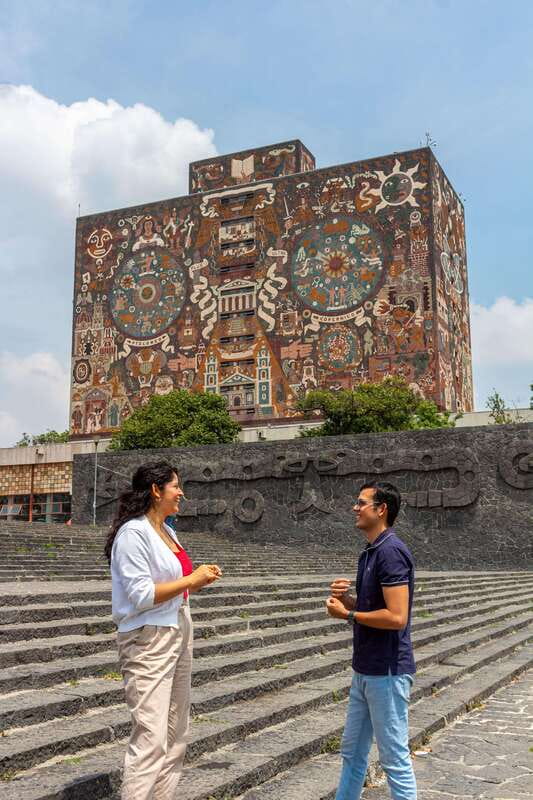
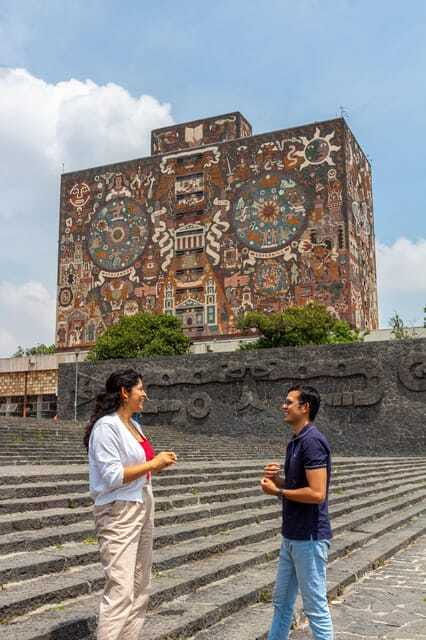
The Central Library receives about 30 minutes of guided attention. This is one of the key stops because UNAM’s architecture and murals work together. The building is not treated as a simple backdrop. Its artwork asks you to think about Mexico’s past, its people, and the role of learning.
Juan O’Gorman is one of the artists discussed during the tour. His work is known for detailed, large-scale historical imagery, and the Central Library offers a strong setting for examining how Mexican identity was presented through public art. Your guide helps you read the images instead of leaving you to guess at their meaning.
The short time here is both useful and limiting. Thirty minutes is enough to learn how to look at the building and to identify major ideas. It is not enough for a slow study of every detail. If you already know O’Gorman’s work, you may wish the stop lasted longer. If the murals are new to you, the focused explanation keeps the visit manageable.
A campus walk through art, education, and revolt
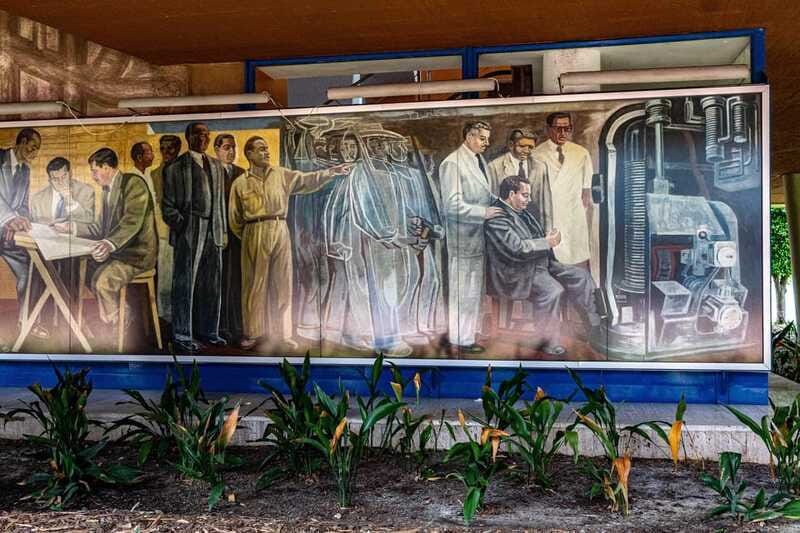
After the Central Library, the tour continues through the university for roughly an hour. This is the broadest part of the experience. You’ll examine murals connected with David Alfaro Siqueiros, José Chávez Morado, Francisco Eppens, and O’Gorman, while the guide links the artworks to Mexican social and political life.
Siqueiros brings a forceful political edge to the discussion. Chávez Morado and Eppens add other views of public identity and national culture. The value here is not just the number of artists. It is the chance to compare how different muralists handled similar questions: Who belongs in the national story? What should education do? How should a university serve society?
The tour also covers student revolts. That subject gives the campus a more modern and personal dimension. UNAM is not presented only as a collection of impressive buildings. You’ll hear about students challenging authority and about the university’s place in Mexico today.
For me, this is where the tour earns its price. A guide can point out murals on your own, but connecting them to education and protest gives the walk a clear argument. You are not just collecting images for your camera. You are learning how public art can record disagreement, hopes, and changing ideas about citizenship.
The available feedback strongly praises the guides’ command of the subject and their willingness to answer questions. One Spanish-language response describes the guide as highly educated, clear, and open to interaction. That is useful to know if you like tours that leave room for conversation instead of delivering a fixed speech.
More Ciudad Universitaria tours:
- Xochimilco, Coyoacan, Aztec Stadium & UNAM
★ 4.0 · 232 reviews - Xochimilco floating gardens, Coyoacan and UNAM murals
★ 4.0 · 53 reviews - Visit to Xochimilco, Coyoacán and Ciudad Universitaria
★ 3.5 · 28 reviews - Walk around UNAM campus, a UNESCO World Heritage Site
★ 5.0 · 22 reviews
The Olympic Stadium and Diego Rivera’s final lesson
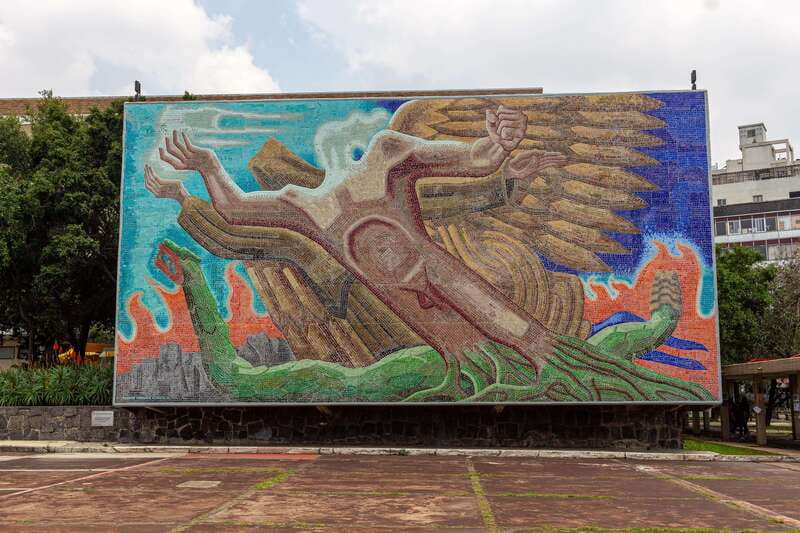
The final stop is the Estadio Olímpico Universitario, visited from outside. Here you’ll see Diego Rivera’s mural La universidad, la familia y el deporte en México, translated as The University, the Family, and Sport in Mexico.
This ending shifts the focus from the university as a place of study to the university as part of everyday Mexican life. The title alone brings together three ideas the tour has been building toward: education, family, and public activity. It also gives you a chance to consider how sport and academic life were presented as parts of national development.
The stadium visit lasts about 30 minutes. Because the experience is an exterior visit, you should not book it expecting access to the inside of the stadium. The value comes from the mural, the architecture around it, and the explanation of how Rivera’s work fits the larger story of UNAM.
Ending here is a sensible choice. The stadium gives the tour a change of scale after the more detailed campus stops. You finish with a major work by Rivera, but the guide keeps the focus on ideas rather than treating the mural as a famous name to check off.
What two hours can and cannot cover
The stated duration is two hours, divided into about 30 minutes at the Central Library, one hour among the campus murals, and 30 minutes at the Olympic Stadium. That is an efficient structure, but it leaves little spare time.
You should arrive ready to keep moving and listen closely. The experience is designed around interpretation, so stopping for long personal photo sessions could reduce the time available for explanations. If you want a slow architectural study or detailed photography, you may need to return to UNAM on your own.
The compact format is an advantage if you have only part of a day in Mexico City. It gives you a useful introduction without consuming an entire morning or afternoon. It also works well before another activity, provided you allow time to reach the meeting point and do not plan on an overly tight schedule.
Group size is not specified, so you should not assume a private tour or a small group. The guide’s ability to answer questions is a strong part of the experience, but how much personal conversation you get may depend on the group.
Is the $52 price fair?
At $52 per person, this is not the cheapest way to see a university campus. The price makes more sense if you value explanation, art history, and political context rather than simply walking around and taking photographs.
You are paying for a two-hour guided experience covering several major artists, the Central Library, the campus murals, and the Olympic Stadium. A self-guided visit may cost less, but it would require you to build the historical connections yourself. For first-time visitors to UNAM, the guide’s structure can save effort and help you notice details you might otherwise miss.
The value is strongest for art lovers, students of Mexican history, and visitors who want to understand the university beyond its UNESCO status. It is weaker for you if your main goal is unrestricted campus exploration or extended time with one mural.
The booking terms add some practical flexibility. You can cancel up to 24 hours before the tour for a full refund, and you can reserve now and pay later. Tour times vary, so check availability before planning the rest of your day.
Language choices and guide style
Guiding is available in Spanish, English, German, Italian, and Portuguese. Some content may be presented in its original language, so ask questions if a term or explanation is unclear in your chosen language.
The guide names associated with the experience are José Vicente Figueroa, José, and Jesús. The comments about José and Jesús are notably positive about subject knowledge, clarity, and personal warmth. Those qualities matter here because mural tours depend on interpretation. A guide who can explain an image, take a question, and connect it to a larger issue will give you far more than a list of artist names.
The tour has earned a 4.9 rating from eight reviews, with especially strong praise for the guides’ historical and artistic command. That is a small sample, so I would treat it as a helpful signal rather than a guarantee of every tour. Still, the pattern is clear: the human guide is the main reason to book.
Who should book UNAM: Murals & Revolution?
Book this tour if you want a focused introduction to UNAM’s murals and prefer learning through conversation. It suits you particularly well if you are interested in Mexican politics, public art, education, architecture, or student movements.
It also works for visitors who might feel lost when facing a large mural filled with symbols. The guide gives you a way into the images and explains why they were placed in a university setting.
You may want to skip it if you have already spent extensive time studying UNAM’s murals, need a slow photography session, or want access inside the Olympic Stadium. The two-hour schedule is focused, and the stadium portion is outside.
For most first-time visitors, I would book it. The combination of five muralists, the Central Library, the Rectoría meeting point, and Rivera’s stadium mural gives you a well-shaped introduction to one of Mexico City’s most important cultural sites. Just arrive ready to walk, listen, and let the guide connect the pictures to the country’s continuing debates.
FAQ
Where does the tour begin?
It begins at the Rectoría de la UNAM, in front of the UNESCO commemorative plaque.
How do I recognize the guide?
The guide will carry a small Mexican flag.
How long does the tour last?
The tour lasts two hours.
Which languages are available?
The tour is offered in Spanish, English, German, Italian, and Portuguese.
Which artists are covered?
The tour discusses murals by Siqueiros, O’Gorman, Chávez Morado, Eppens, and Diego Rivera.
Is the Central Library included?
Yes. The Central Library has a guided visit lasting about 30 minutes.
Is the Olympic Stadium included?
Yes. The tour visits the Estadio Olímpico Universitario from outside and includes about 30 minutes of guided explanation.
What subjects are discussed besides art?
The guide discusses the origins of education in Mexico, student revolts, and the role of UNAM in Mexico today.
Can I cancel for a refund?
Yes. You can cancel up to 24 hours in advance for a full refund.
Just added around Mexico City
- Xochimilco’s Wild Side: Mezcal, Insects & Culture★ 4.9 · 10 reviews
- Xochimilco: Food and Trajinera Ride with Local Women★ 5.0 · 5 reviews
- Xochimilco: Island of the Dolls Tour Games and Drinks★ 5.0 · 25 reviews
- Xochimilco Ecological Tour – Away From the Crowds (3 Hours)★ 5.0 · 15 reviews
- Xochimilco floating gardens, Coyoacan and UNAM murals★ 4.0 · 6 reviews
- Xochimilco + Coyoacán Combo Full-Day Tour★ 5.0 · 3 reviews
- Val´quirico And The City of Angels Puebla From Mexico City★ 5.0 · 3 reviews
- Xochimilco: amanecer en kayak Ciudad de México★ 5.0 · 35 reviews
Diego Rivera Mural Tours, compared.
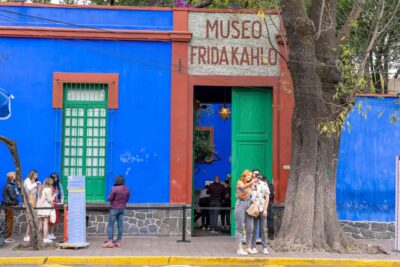
Xochimilco, Coyoacan, Frida Kahlo Museum & Murals Tour
Read our review →
Mexico City; ART NACO : Murals & Street Art Bike Tour
Read our review →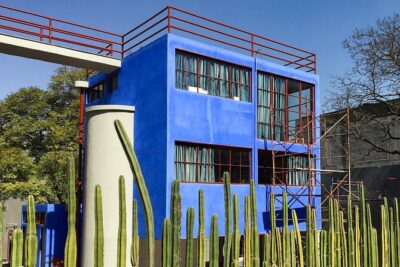
EXCLUSIVE TOUR Casa Estudio Frida Kahlo-Diego Rivera Small Groups
Read our review →
Walking Tour – Impressive murals in Historical Center of Mexico City
Read our review →
La Catrina & Muralism: Diego Rivera’s Legacy & Frida Kahlo
Read our review →
Xochimilco floating gardens, Coyoacan and UNAM murals
Read our review →Browse the lists this tour appears in