
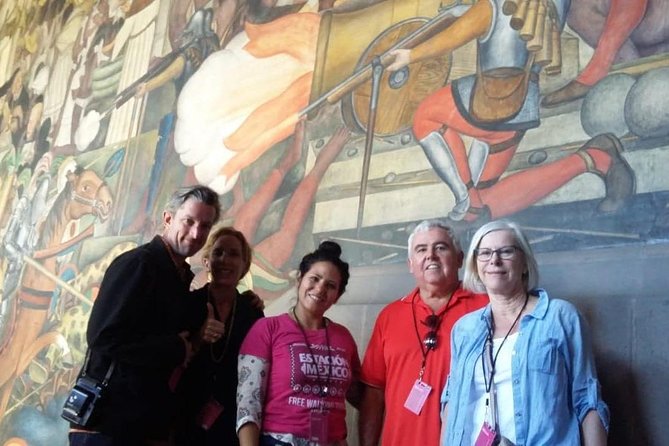
Reviewed · FRIDA KAHLO MUSEUM TOURS
La Catrina & Muralism: Diego Rivera’s Legacy & Frida Kahlo
Mexico City’s mural tradition turns public buildings into history books. On this 2.5-hour walking tour, you follow the work of Diego Rivera and other major muralists from San Ildefonso to Bellas Artes, with the political stories and symbols explained along the way.
I like the included museum admissions and the small maximum of 12 people. I also like the chance to see murals tucked into markets and public buildings that are easy to miss on your own. The main drawback is that the timing can stretch well past the advertised length, and there is no planned water or snack stop.
Key points
- Begin at San Ildefonso: Learn how Diego Rivera and Frida Kahlo first crossed paths at one of Mexico City’s key art schools.
- See murals inside public spaces: The route includes courtyards, museum halls, markets, and buildings that many independent visitors miss.
- Put art into political context: Your guide explains how muralism addressed revolution, class, labor, Indigenous identity, and national memory.
- Finish at Bellas Artes: See Rivera’s controversial mural made in the United States, now displayed inside Mexico’s most important cultural venue.
- Expect active touring: Much of the experience involves standing and walking, with limited time to sit.
- Bring water and a snack: The tour can run longer than 2.5 hours, especially when the group has many questions.
Mexico City’s murals are history on a wall
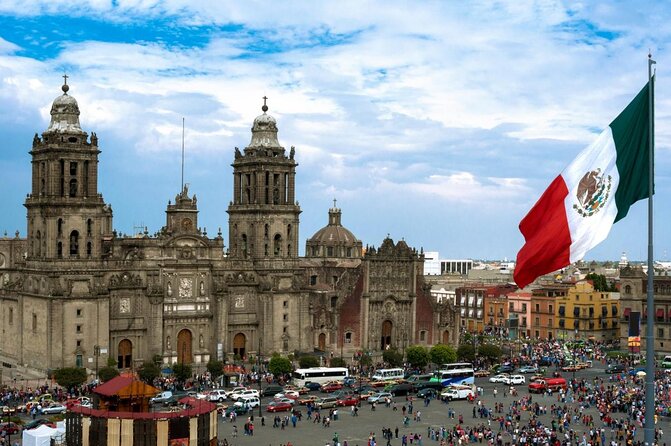
Mexican muralism is not simply a collection of oversized paintings. It was a public art movement that brought national stories into schools, government buildings, markets, and cultural centers. The paintings were made for ordinary people, not only for visitors who could afford a museum ticket.
That matters on this tour. A guide can point out a worker, soldier, Indigenous figure, revolutionary, or political symbol, then connect it to the events and arguments that shaped modern Mexico. Without that context, a mural may look impressive but remain hard to read.
The tour focuses on Diego Rivera, Frida Kahlo, and the wider movement that also includes José Clemente Orozco and David Alfaro Siqueiros. You will see how different artists presented the revolution and Mexican identity in very different ways. Some images celebrate the people. Others are sharp, angry, or openly political.
The strongest part of the experience is the interpretation. Guides such as Sofía, Ulysses, Wariyor, Diana, David, Erin, and Addy have been praised for clear explanations and strong personal interest in the subject. Your guide will vary, but the format calls for an English-speaking host who is closely connected to Mexican art and history.
More Frida Kahlo Museum visits:
- Xochimilco, Coyoacan and Frida Kahlo with Optional Lunch
★ 4.5 · 7,320 reviews - CDMX: Xochimilco, Coyoacan, Frida Kahlo Museum & Murals Tour
★ 4.4 · 3,025 reviews - Frida Kahlo VIP [Museum Tickets Included] Bike, Markets & Churros
★ 5.0 · 1,072 reviews
San Ildefonso and the Rivera-Kahlo connection
The tour starts at Antiguo Colegio de San Ildefonso, at Justo Sierra 16 in Centro Histórico. This former college is more than a convenient meeting point. It is tied to the early development of Mexican muralism and to the personal story of Rivera and Kahlo.
You begin with a short introduction to Rivera’s life and work. The most memorable detail here is the connection between Rivera and Kahlo, whose relationship became one of the best-known stories in Mexican art. San Ildefonso witnessed the beginning of their romance, giving the first stop an extra human dimension.
This opening also helps you understand why muralism grew in public institutions. The movement was not meant to be private decoration. It carried ideas about education, national identity, social struggle, and the place of working people in Mexican life.
Plan to spend about 35 minutes here. That is enough time for an introduction and selected art, but not enough for a slow visit to every corner. If you love museum interiors and want to study each work at length, you may wish to return independently.
The meeting time is 11 a.m. Arrive with enough time to find the entrance in Centro Histórico. You will be on foot for much of the day, and the tour includes public transportation, so comfortable shoes are more useful than anything dressy.
Museo Vivo del Muralismo and public art in working spaces
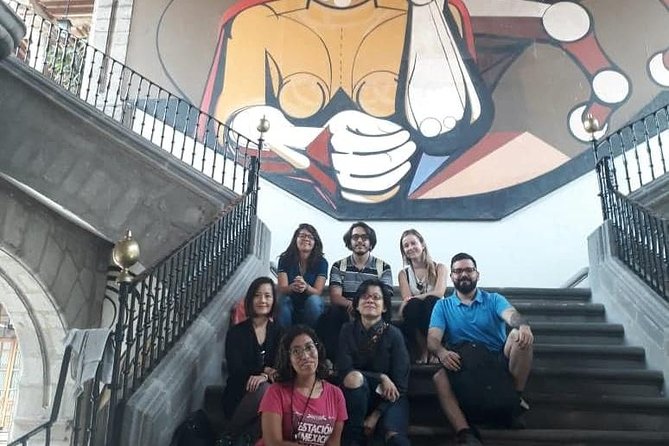
The second stop is Museo Vivo del Muralismo, a site arranged across two courtyards and three levels. The layout gives the visit a different feel from a single gallery room. You move through an architectural setting while looking at works made for public surroundings.
This is where the tour begins to show why a guided visit can be worth the price. A mural is often large, crowded with people and symbols, and difficult to read in a few minutes. Your guide can direct your attention to details that might otherwise pass unnoticed.
The museum also fits the wider idea behind the experience: muralism belongs in daily life. Several art sites in Mexico City are located in buildings people use for education, government, trade, or civic life. The art is not always separated from the city by a quiet white room.
You have about 35 minutes here. The group size, capped at 12, should make it easier to hear explanations and ask questions than on a large coach excursion. Still, the visit is active. You may spend much of the time standing, moving between levels, or listening in courtyards.
Museo Mural Diego Rivera and La Catrina
At Museo Mural Diego Rivera, you see one of the best-known works connected with Mexican muralism: Rivera’s portrayal of Día de Muertos and La Catrina. The painting brings together historical figures, social types, and the famous skeleton figure who has become an international symbol of Mexican culture.
La Catrina is especially useful for understanding how Mexican artists used familiar images to make larger points. The figure can be playful, elegant, satirical, and unsettling at the same time. Rivera’s mural places her within a crowded scene, where the dead and the living, the powerful and the ordinary, share the same visual space.
Your guide can help you follow the people and references packed into the composition. You may also learn how Rivera used the mural to present a version of Mexico’s past, including figures and conflicts that were not always treated equally in official accounts.
The planned visit lasts about 30 minutes. That is a sensible amount of time for the main work, though art lovers may want longer. The tour is designed to give you a strong reading of the mural rather than leave you alone for an extended museum session.
This stop is likely to appeal most to visitors already interested in Día de Muertos, Rivera, or visual symbolism. It also works well for families. A 14-year-old can follow the striking figures and stories more easily than a long lecture on art theory.
More Diego Rivera mural tours:
- Mexico City; ART NACO : Murals & Street Art Bike Tour
★ 5.0 · 284 reviews - EXCLUSIVE TOUR Casa Estudio Frida Kahlo-Diego Rivera Small Groups
★ 5.0 · 237 reviews - Walking Tour – Impressive murals in Historical Center of Mexico City
★ 5.0 · 224 reviews - Mexico City: Art Naco, murals & street art bike tour
★ 4.7 · 166 reviews
Bellas Artes and Rivera’s controversial American mural
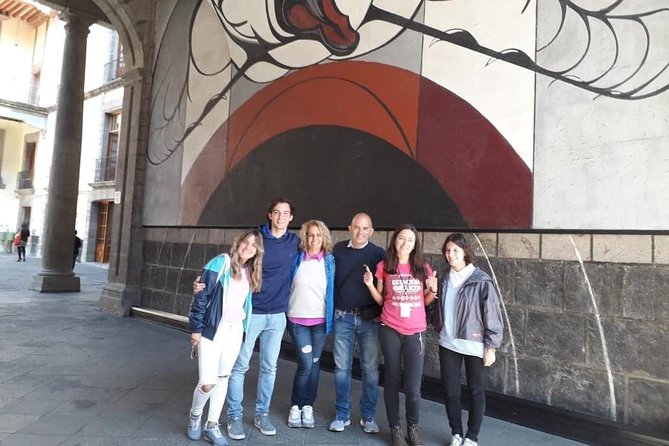
The final stop is Palacio de Bellas Artes, reached at the end of the route. The Palace of Fine Arts is Mexico City’s major cultural venue, and its interior holds an important Rivera work with a complicated past.
Rivera originally created the mural in the United States. It became controversial there, then was preserved in Mexico. Seeing it inside Bellas Artes gives you a chance to consider how public art can collide with politics, patronage, censorship, and national identity.
This is a fitting ending because the building brings together the themes explored throughout the walk. Rivera’s work is visually grand, but it also argues with the people and institutions around it. Your guide can help explain why the mural caused trouble and why Mexico chose to preserve it.
The stated time here is about 30 minutes. The tour ends near Av. Juárez, where your guide can share suggestions for nearby food and further sightseeing. This is useful planning help, especially if you want lunch after a tour that has run through the middle of the day.
The extra murals that make the route special
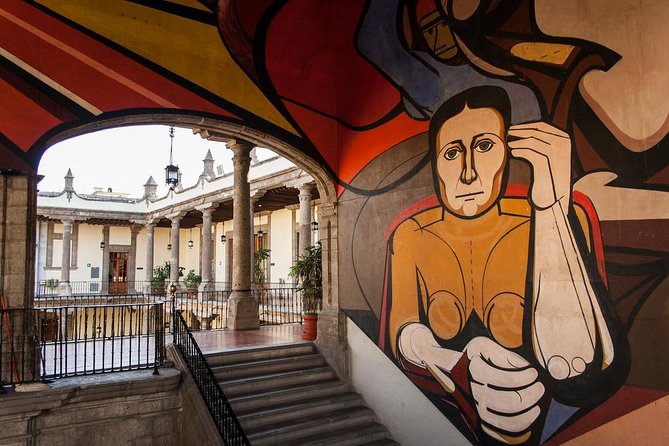
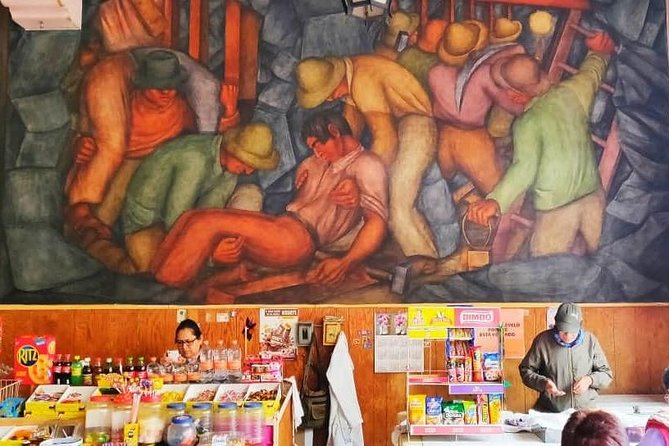
Although the named stops provide the structure, the experience appears to be more than four museum visits. Guides have taken groups through markets and other public areas to see murals that are difficult to locate without local direction.
That is one of the best reasons to book this rather than simply visit Bellas Artes and Museo Mural Diego Rivera on your own. You can find the major institutions independently. It is much harder to know which public buildings, courtyards, corridors, and market spaces contain worthwhile art.
Ulysses and Wariyor have been praised for pointing out works in plain sight and explaining the stories behind them. One guide even continued helping after the scheduled route ran short on time, arranging a later meeting so the group could see a final mural. That kind of flexibility cannot be guaranteed, but it shows the value of having a guide who cares about the subject.
You should also expect some adjustment to the route. Museum access can change, and the listed sites may be altered depending on availability. The experience is strongest when you treat the plan as a framework rather than a promise that every stop will unfold in exactly the same way.
How long it really takes
The official duration is approximately 2 hours and 30 minutes. That is the figure to use when planning your day, but you should leave extra room afterward.
Some visits have lasted more than four hours when the guide has added murals, answered questions, or followed a longer version of the route. Other groups have found the pace and standing tiring, with some people leaving before the final stop.
This is not a complaint about the subject. If you are fascinated by Mexican history and art, extra time can be a gift. But you need to know what you are signing up for. Do not schedule a tight lunch reservation or an afternoon flight immediately afterward.
There are no food or drinks included, and no official water or toilet break is listed. Bring water and a small snack. You will thank yourself if the walk continues through lunchtime.
Walking, public transportation, and group size
The tour includes public transportation, which keeps the outing affordable and connects the museums and public spaces without requiring a private vehicle. You should expect a city walk rather than a seated sightseeing trip.
The route is described as suitable for most participants, but it involves walking, standing, museum levels, and time on your feet. One participant specifically noted that the distance was not extreme, but that walking was still required. Anyone with mobility concerns should ask the operator about current route details before booking.
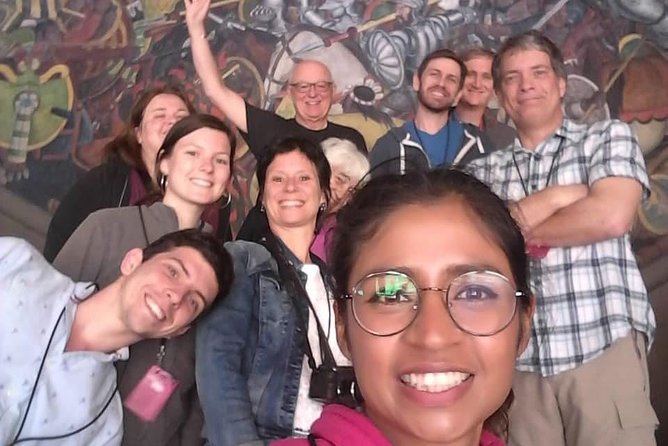
The maximum group size is 12. That is small enough for questions and personal attention, especially when the guide is explaining a crowded mural. It also means the group may move at the pace of the slowest participant, which is normal for a walking tour.
The one-language format is another practical advantage. The storytelling is delivered in English without switching between languages, so you get more continuous explanation. It is offered in English only.
What the $66.14 price buys you
At $66.14 per person, this is not the cheapest way to walk around Centro Histórico. The value depends on how much guidance you want.
Your fee includes museum tickets, public transportation, and an English-speaking guide. If you visited only the major museums independently, you might spend less on guiding but lose the links between the murals, the artists, and the political setting.
I think the price makes the most sense for first-time visitors, art students, families, and anyone who wants interpretation instead of a quick look at famous paintings. It is less appealing if you prefer to move at your own pace, sit with one mural for an hour, or avoid a fixed route.
The small group helps justify the cost. You are not simply being led from door to door. The guide can respond to questions and point out details based on what interests you. Guides have been singled out for their passion, clear communication, and ability to explain difficult history in an approachable way.
The 93 percent recommendation rate and 4.7 rating suggest that the format works well for most people, but the less positive experiences point to the same issue: the tour can be longer and more physically demanding than expected.
The best guides for different interests
You cannot select a specific guide from the information provided, but several names have been praised for different strengths.
Sofía is known for passionate explanations and a strong grasp of the murals. Ulysses has been especially effective at showing public art that is easy to miss and explaining the areas inside familiar buildings. Wariyor, also referred to as Warrior or Guerrero, is described as warm, energetic, and deeply engaged with Mexican art and culture.
Diana has been praised for covering Rivera, Orozco, and Siqueiros. Erin is noted for taking time with the subject and explaining the fine points around each mural. David has been valued for combining mural history with broader lessons about Mexican culture.
These names should not be treated as a guarantee of who will lead your tour. They do show the kind of guide the operator aims to provide: someone who can connect visual details with the story of Mexico.
Who should book this mural walk
I would recommend it to you if you want to understand why Mexican murals matter, not just photograph them. It is also a smart choice if you have limited time in Mexico City and want several major art locations tied together in one morning.
Families can enjoy it, especially with older children and teenagers who can handle several hours on foot. Solo visitors may also appreciate the structure and the chance to ask questions without having to arrange a private guide.
Art lovers should book it for the public murals and the context. You may know Rivera’s name already, but the tour brings him into conversation with Kahlo, Orozco, Siqueiros, the revolution, and the city itself.
I would hesitate if you need regular rest breaks, dislike standing, or have a hard appointment soon after. I would also reconsider if your main goal is a slow, private museum visit. This is an active group walk with a lot of explanation.
Should you book La Catrina and Muralism?
Book this tour if you want the murals to speak more clearly. The museums are worthwhile on their own, but the guide adds the political, personal, and cultural links that make the paintings easier to understand.
Bring water, a snack, comfortable shoes, and patience with a schedule that may expand. At $66.14, it is a fair buy for museum admission, transport, a small group, and strong art-focused storytelling. Skip it only if you want complete freedom over timing or need a quieter, shorter outing.
FAQ
Where does the tour begin?
It begins at Antiguo Colegio de San Ildefonso, Justo Sierra 16, Centro Histórico de la Ciudad de México.
What time does the tour start?
The scheduled start time is 11 a.m.
Where does the tour end?
It ends near Palacio de Bellas Artes on Av. Juárez in Centro Histórico.
How long is the tour?
The stated duration is approximately 2 hours and 30 minutes. You should allow extra time because the experience can run longer.
What language is the tour offered in?
The tour is offered in English and uses a one-language format.
Are museum tickets included?
Yes. Admission tickets for the museums are included in the price.
Is public transportation included?
Yes. Public transportation is included.
Is food included?
No. Food and drinks are not included. Bringing water and a snack is sensible.
How large is the group?
The maximum group size is 12 travelers.
Can I cancel for a full refund?
Yes. You can cancel at least 24 hours before the local start time for a full refund. Cancellations or changes made within 24 hours are not refunded or accepted.
Just added around Mexico City
- Xochimilco’s Wild Side: Mezcal, Insects & Culture★ 4.9 · 10 reviews
- Xochimilco: Food and Trajinera Ride with Local Women★ 5.0 · 5 reviews
- Xochimilco: Island of the Dolls Tour Games and Drinks★ 5.0 · 25 reviews
- Xochimilco Ecological Tour – Away From the Crowds (3 Hours)★ 5.0 · 15 reviews
- Xochimilco + Coyoacán Combo Full-Day Tour★ 5.0 · 3 reviews
- Xochimilco floating gardens, Coyoacan and UNAM murals★ 4.0 · 6 reviews
- Val´quirico And The City of Angels Puebla From Mexico City★ 5.0 · 3 reviews
- Xochimilco: amanecer en kayak Ciudad de México★ 5.0 · 35 reviews
Frida Kahlo Museum Tours, compared.

Xochimilco, Coyoacan and Frida Kahlo with Optional Lunch
Read our review →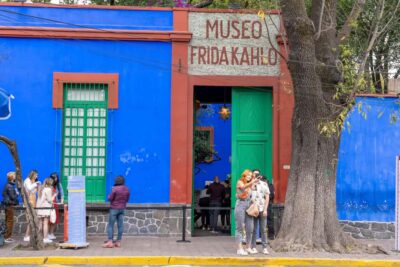
Xochimilco, Coyoacan, Frida Kahlo Museum & Murals Tour
Read our review →![Frida Kahlo VIP [Museum Tickets Included] Bike, Markets & Churros](https://b.themexicocitytraveler.com/wp-content/uploads/frida-kahlo-vip-museum-tickets-included-bike-markets-churros-400x267.jpg)
Frida Kahlo VIP [Museum Tickets Included] Bike, Markets & Churros
Read our review →![Frida Kahlo VIP [Museum Tickets Included] Walk, Markets & Churros](https://b.themexicocitytraveler.com/wp-content/uploads/frida-kahlo-vip-museum-tickets-included-walk-markets-churros-400x267.jpg)
Frida Kahlo VIP [Museum Tickets Included] Walk, Markets & Churros
Read our review →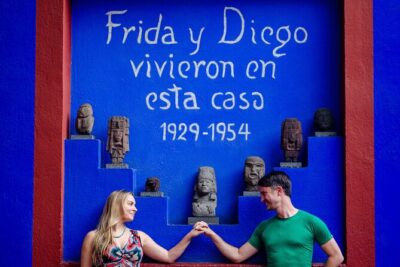
EXCLUSIVE TOUR Frida Kahlo Museum – SMALL GROUPS
Read our review →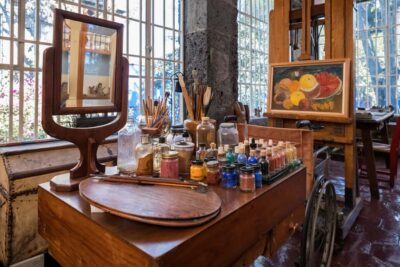
Frida Kahlo Museum Entry Ticket w/Digital Guide
Read our review →
Private City Tour in Frida Kahlo, Coyoacan, and Xochimilco
Read our review →
PREMIUM Frida Kahlo Museum and Xochimilco (Small Groups)
Read our review →Browse the lists this tour appears in