
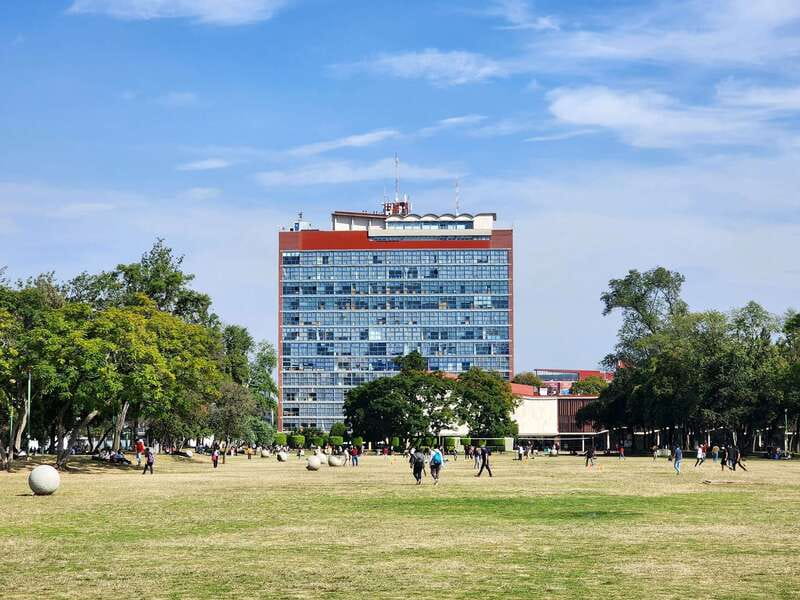
Reviewed · UNAM AND CIUDAD UNIVERSITARIA TOURS
Walk around UNAM campus, a UNESCO World Heritage Site
UNAM is not simply a university campus. It is a giant outdoor lesson in modern Mexican architecture, set across black volcanic ground and covered with murals by Diego Rivera, David Alfaro Siqueiros, and Juan O’Gorman. The three-hour walk gives you a useful way into a place that can feel vast and hard to read on your own.
I like two things in particular: the focus on meaning, not just appearances, and Sebastián’s connection to UNAM as a former student and lecturer. He explains how the buildings, art, student life, politics, and wider Mexican society fit together. The main drawback is the 4-kilometer walk, with few easy toilet options, so this is not a casual stroll.
Key points to know before you book
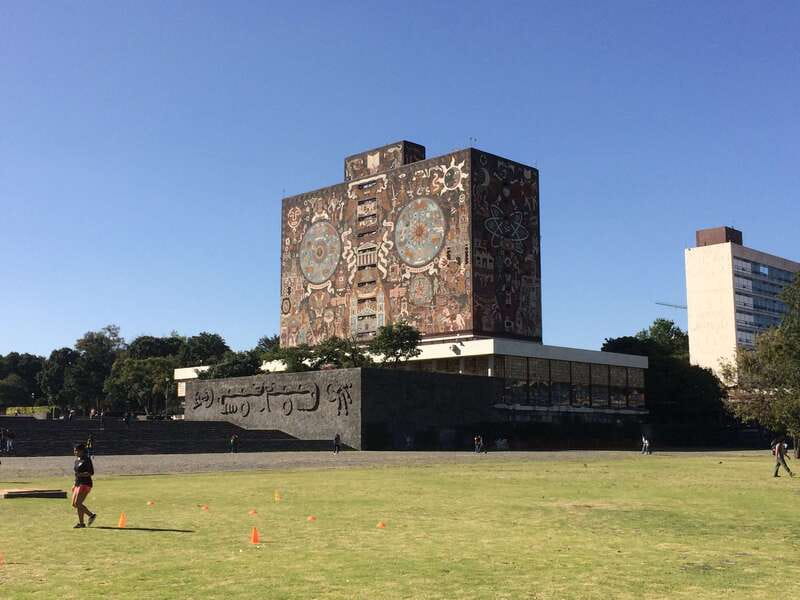
- Juan O’Gorman’s Central Library: Study one of Mexico’s best-known building façades and the stories carried by its huge mosaic panels.
- Three major muralists: See work linked to Diego Rivera, David Alfaro Siqueiros, and O’Gorman while learning how art became part of public life.
- A campus with a social pulse: On a weekday, you may see students heading to class, working in workshops, and gathering across different faculties.
- A volcanic setting: UNAM rises from rugged volcanic ground, and the tour explains how that natural setting shaped the campus.
- A guide with personal ties: Sebastián brings his own student experience and current teaching work to the discussion.
- A real walking tour: Plan for about 2.5 miles, rain or shine, and arrange your bathroom needs before you start.
Why UNAM is worth three hours of your Mexico City time
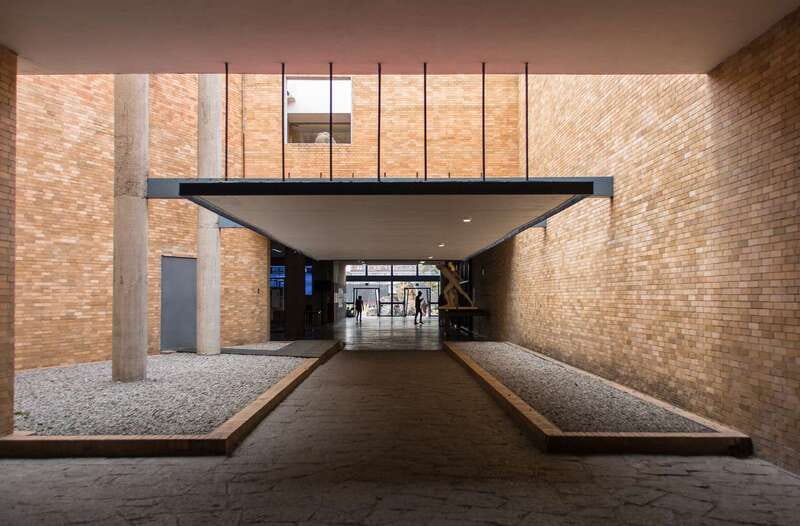
Mexico City offers no shortage of famous museums and historic squares. UNAM gives you something different: a working university where architecture, public art, education, politics, and daily student life occupy the same space.
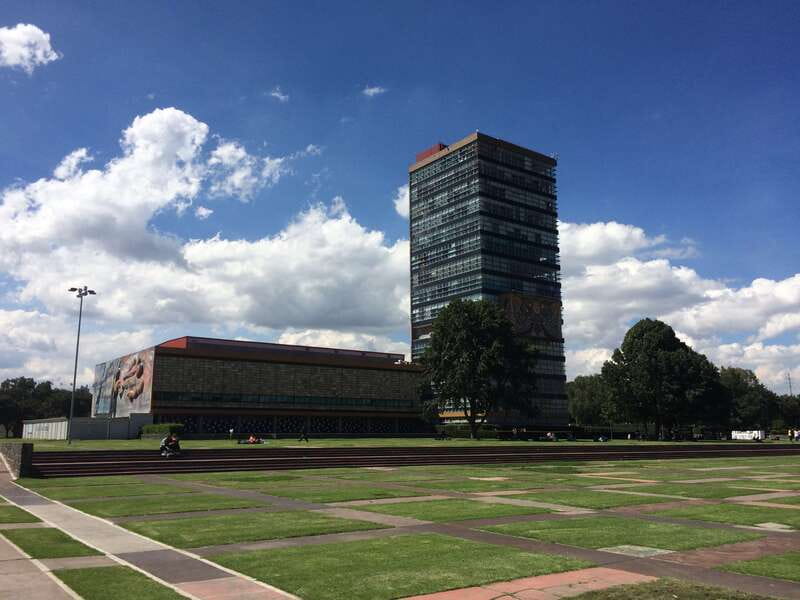
The campus was built in the 1950s, during a period when Mexico and the United States were in close contact. Its design reflects the confidence of modern Mexico, but it does not copy a single European model. The buildings respond to the local setting, and the murals turn walls into large public statements about national identity, education, science, and society.
I find this especially useful if you want to understand Mexico beyond its colonial center. The tour does not treat UNAM as a collection of pretty buildings. It uses the campus to explain how Mexico presented itself as a modern nation and how a major public university continues to shape life in the country.
The site received UNESCO World Heritage status for good reason. Its value comes from the relationship between architecture, art, open space, and the volcanic setting. You are not walking through a sealed museum. You are moving through a living campus where the original ideas still meet everyday use.
More Ciudad Universitaria tours:
- Xochimilco, Coyoacan, Aztec Stadium & UNAM
★ 4.0 · 232 reviews - Xochimilco floating gardens, Coyoacan and UNAM murals
★ 4.0 · 53 reviews - Visit to Xochimilco, Coyoacán and Ciudad Universitaria
★ 3.5 · 28 reviews
Starting at the Olympic Stadium
The meeting point is in front of the Estadio Olímpico Universitario, or Olympic Stadium. This gives the walk a clear landmark and places you at one of the campus’s most recognizable entrances.
From Condesa or Roma, an Uber takes about 30 minutes, though traffic can affect that estimate. You can also use Metrobús Línea 1. Get off at Dr. Gálvez Station, then walk south of Insurgentes Avenue for about 10 minutes.
Give yourself time to reach the stadium. The campus is large, and starting the tour stressed or late would work against the relaxed pace needed for looking closely at the art. Comfortable walking shoes are the sensible choice. Carry water, even though water is included, and wear protection from sun or rain because the tour runs in all weather.
The stadium is also a fitting starting point. UNAM’s architecture is not meant to be viewed only from a distance. You begin with the scale of the campus and then move into the details of its walls, buildings, paths, and open areas.
Reading the murals instead of just photographing them
The murals are the visual stars of the visit, but their importance goes beyond color and size. Mexico’s mural movement used public walls to tell stories that could reach people outside private galleries. At UNAM, those images connect education and national life.
You will encounter work associated with Diego Rivera, David Alfaro Siqueiros, and Juan O’Gorman. Each artist brought a different approach to public art, and the guide helps you notice those differences rather than treating every mural as one broad category.
Sebastián’s role is particularly useful here. He explains the imagery and the historical setting, then links it to the university’s present-day character. That turns the murals from backdrop into evidence. You begin to see what ideas the campus wants to express, who those ideas were meant to reach, and how public art can shape a country’s self-image.
Bring a camera if you like, but do not rush from one photo to the next. The value of this tour is the explanation around the image. You will get more from pausing at a wall and asking what you are seeing than from collecting quick snapshots.
Juan O’Gorman’s Central Library
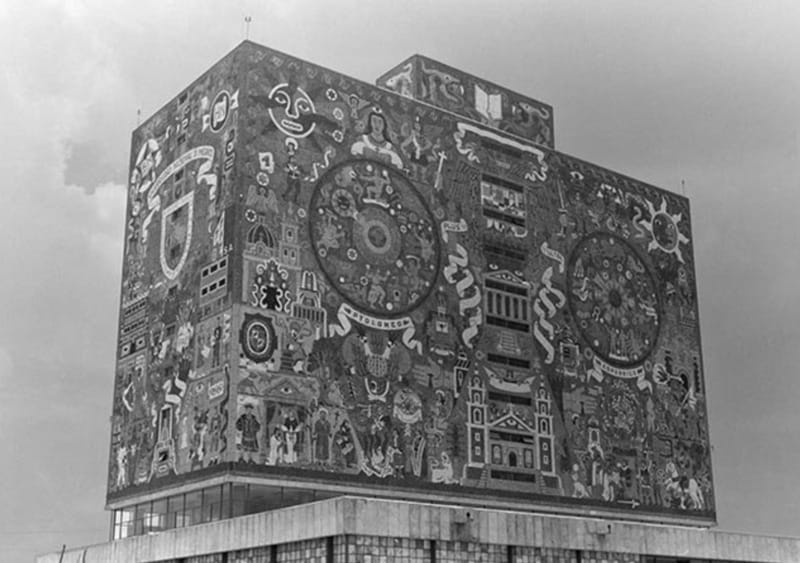
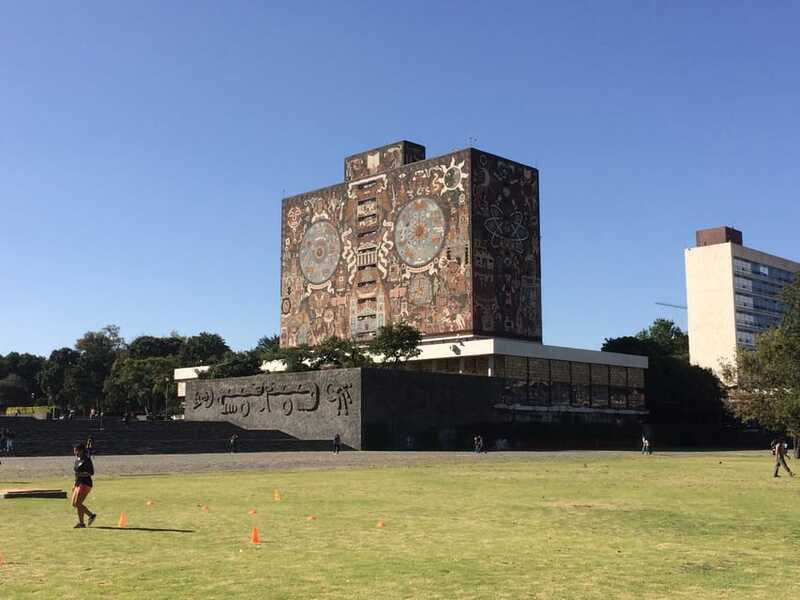
The Central Library is one of the major reasons architecture fans choose this walk. Juan O’Gorman’s design is famous for its enormous mosaic surfaces, which transform the building into a visual account of Mexico and human knowledge.
The scale can be difficult to grasp in a quick visit. From a distance, the building reads as a bold block. As you look longer, the surface breaks into layers of symbols and scenes. A guide helps you connect the visual program to the university’s goals and to Mexico’s ideas about history, learning, and national identity.
This is also where the tour’s mix of art and architecture pays off. The murals are not decorations added after the buildings were finished. They are part of the architecture itself. The building and the images work together, which is one reason UNAM feels different from a standard collection of modern structures.
If you have already seen O’Gorman’s work elsewhere, you may still appreciate the scale here. If you know little about Mexican modernism, this is an approachable introduction. You do not need an architecture degree. You only need time to look and a willingness to ask questions.
More Historical Tours in Mexico City:
- Historic Downtown Walking Tour
★ 5.0 · 1,289 reviews - Historic Center Food Tour in Mexico City
★ 5.0 · 1,263 reviews - Mexico City: Historic Downtown Walking Tour
★ 4.8 · 1,039 reviews - Walking Tour of the Historic Center of Mexico City
★ 5.0 · 870 reviews
Modernist buildings shaped by volcanic ground
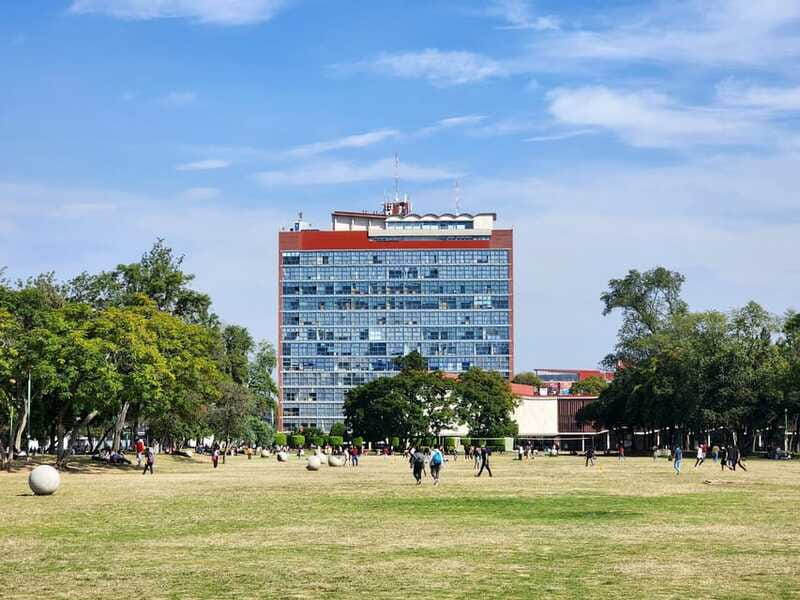
UNAM’s buildings rise from a rocky volcanic setting, and that ground is part of the experience. The walk does not present the campus as a smooth, carefully separated garden. Its structures relate to the rough terrain and to the material qualities of the area.
That setting gives the modernist design a strong local character. The campus may have been built during an international period of close contact, but it is not detached from Mexico. The volcanic ground keeps the architecture connected to place.
You will spend time considering how the buildings sit within that setting. This matters because modern architecture can sometimes feel like an abstract design exercise. At UNAM, the relationship with the ground helps explain why the site feels rooted rather than imported.
Expect the walk to include long stretches between important points. The tour covers about 4 kilometers, or 2.5 miles, over three hours. That is a manageable distance for many people, but it is still enough to tire you if you arrive in poor shoes or underestimate the sun and weather.
The campus as a working university
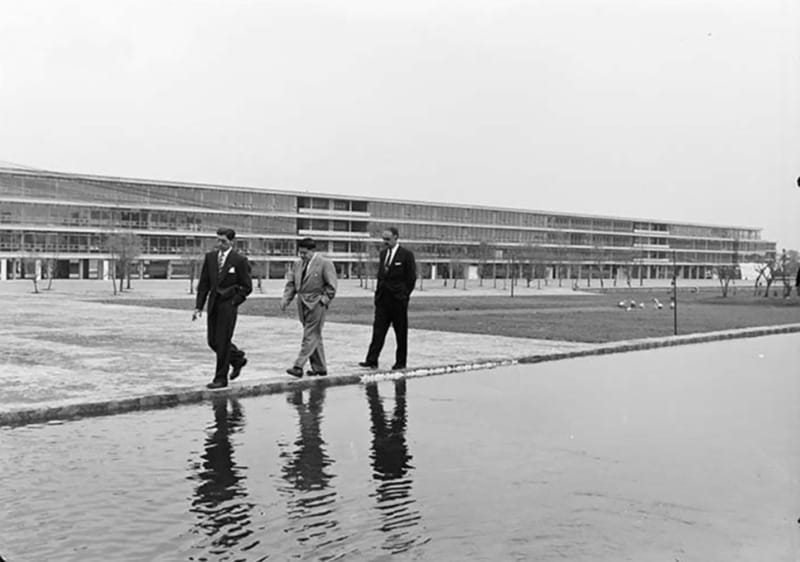
One of the strongest parts of this experience is the chance to consider UNAM as a real institution, not an empty monument. On a weekday, you may see students going to class, working in workshops, and meeting across campus.
That everyday activity adds useful contrast. The murals and buildings belong to Mexico’s cultural history, but the campus is also used for ordinary tasks. Students move through spaces that visitors admire, and different faculties can have different feels and rhythms.
Sebastián’s personal connection helps here. He studied at UNAM and now works as a lecturer, so he can discuss both the physical campus and the day-to-day life it supports. His explanations include the socioeconomic and political pressures facing students, along with the university’s place in wider Mexican society.
This is where the tour becomes more than an architecture walk. You get a look at how a public university functions as a social institution. The discussion may include why tuition is virtually free for students and why the graduation rate is low. Those details help you understand that access to education and completing a degree are not always the same thing.
If seeing student life matters to you, choose a weekday if possible. The campus is likely to feel more active then. The tour can still work on other days, but the working university atmosphere is an important part of its character.
Politics, protest, and the wider meaning of UNAM
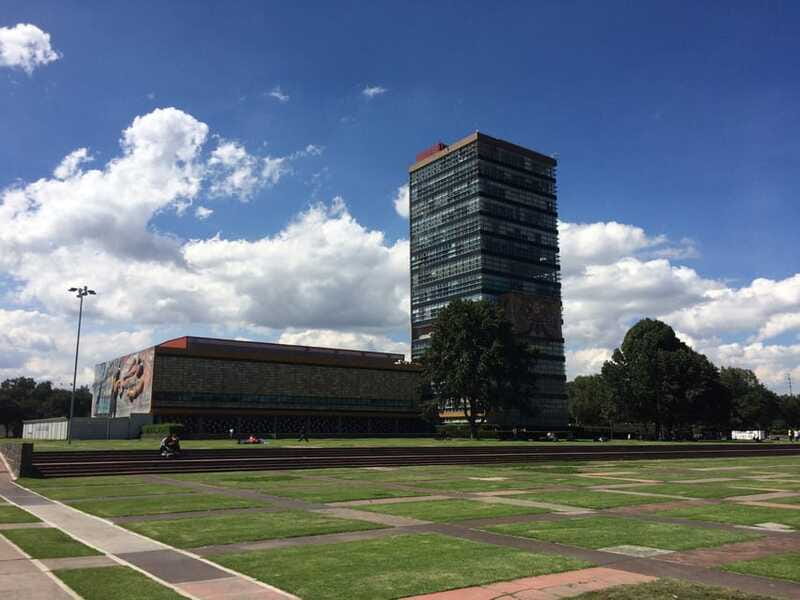
UNAM has a major role in Mexican public life, and the tour makes room for that side of the campus. You may hear about the political and social issues connected to the university, not only its buildings and art.
One point on the route is the auditorium where Okupa Che is based. This adds a current and potentially more complicated layer to the visit. It shows that UNAM is not frozen in the 1950s, even though its UNESCO-recognized architecture comes from that period.
You should not expect a neutral list of dates and architectural terms. The tour connects design with power, education, class, and student politics. That is a strength if you want context and a possible drawback if you prefer a short, purely visual sightseeing walk.
Sebastián’s approach appears suited to questions. He can discuss the campus’s history and present-day concerns, then relate them to the larger situation in Mexico. You should feel free to ask about a mural, a faculty, or something you notice along the way. The conversation is part of the value.
How the pace and practical details affect the experience
The tour lasts three hours and is usually offered in the morning and afternoon. That gives you some flexibility when fitting UNAM into a Mexico City schedule.
Morning may be more comfortable if you want to limit heat and sun, while an afternoon departure may suit a slower start. The supplied information does not promise a fixed time for every date, so check the available departure when booking.
The tour takes place rain or shine. Bring suitable clothing and do not assume poor weather will automatically cancel the walk. A light rain layer is sensible, and sun protection is just as important on a clear day.
Toilets may be hard to find during the walk. Use a bathroom before meeting the guide and avoid beginning with an uncomfortable level of urgency. Food and drinks are not included, although water is provided, so eat beforehand or plan a meal after the tour.
The tour is marked wheelchair accessible, but the full route is still 4 kilometers across a large campus with rocky volcanic surroundings. If you use a wheelchair or have mobility concerns, ask for practical route details before booking. The experience is not suitable for pregnant women.
Is $76 a fair price?
At $76 per person, this is not a budget campus stroll. You are paying for a three-hour guided walk, water, and access to a focused interpretation of one of Mexico City’s most important modern sites.
The value depends on what you want from UNAM. If you only need to see the Central Library and take photographs, you may prefer a shorter independent visit. If you want the murals explained, the architecture placed in context, and the university connected to Mexican society, the fee makes more sense.
A good guide matters greatly here because the campus is spread out and the meaning is not always obvious from the walls alone. Sebastián’s background as a former student and lecturer gives the tour a personal and academic link. He can explain the buildings while also talking about student life, social class, political questions, and the university’s place in Latin America.
I would consider this a strong value for people who normally pay for museum guides, architecture walks, or cultural talks. It is less useful for someone who wants a quick stop between other attractions. Three hours is a real commitment, and the walking distance is part of the price.
The booking terms also reduce some risk. You can cancel up to 24 hours before the tour for a full refund, and the reserve-now, pay-later option lets you hold a place without paying immediately. Those policies are practical if your Mexico City schedule is still changing.
Who should book this UNAM tour?
You should book it if you like buildings with ideas behind them, public murals, Mexican history, politics, sociology, or university life. It also suits repeat visitors who have already seen the central historic sights and want a different side of Mexico City.
Architecture students and design fans will find plenty to study, especially at the Central Library and in the relationship between the buildings and volcanic ground. First-time visitors can also benefit because the tour offers a clear entry point into modern Mexico.
This is less suitable if you dislike walking, need frequent bathroom access, or want a polished attraction with a short, fixed route. It is also not the right choice for a traveler looking only for famous photo spots.
The tour is available in English and Spanish. Since it runs rain or shine, dress for the forecast and wear shoes you can trust for a 2.5-mile walk. Reserve a weekday if you want the best chance of seeing students going about campus life.
Should you book it?
Book this tour if you want UNAM explained as a living place where muralism, modern architecture, education, and politics meet. Sebastián’s personal ties to the university add useful detail, and his teaching background fits a site that rewards questions.
Skip it if you want a brief, self-guided look or if a three-hour walk would be uncomfortable. For the right visitor, though, UNAM can become one of the most memorable stops in Mexico City, not because it is easy to photograph, but because the campus gives you a fuller way to understand modern Mexico.
FAQ
Where does the UNAM campus tour meet?
The meeting point is in front of the Estadio Olímpico Universitario, also called the Olympic Stadium.
How do I reach the meeting point from Condesa or Roma?
You can take an Uber, which is about a 30-minute ride from Condesa or Roma. You can also use Metrobús Línea 1 and exit at Dr. Gálvez Station, then walk south of Insurgentes Avenue for about 10 minutes.
How long is the tour?
The tour lasts three hours.
How far do I walk?
The route covers about 4 kilometers, or 2.5 miles.
Is the tour offered in English?
Yes. The tour is available in English and Spanish.
Is water included?
Yes, water is included. Food and other drinks are not included.
Does the tour include hotel pickup?
No. You need to make your own way to the Olympic Stadium meeting point.
Does the tour run in bad weather?
Yes. The tour takes place rain or shine, so bring clothing suited to the forecast.
Are bathrooms easy to find during the tour?
Bathrooms may be hard to find, so use one before the tour begins.
Is the tour wheelchair accessible?
The activity is described as wheelchair accessible. Since the route covers 4 kilometers across the campus, ask for route details if you have specific mobility needs.
Can pregnant women take this tour?
The tour is listed as not suitable for pregnant women.
Can I cancel for a refund?
You can cancel up to 24 hours in advance for a full refund. You can also reserve now and pay later.
More Walking Tours in Mexico City
- Frida Kahlo VIP [Museum Tickets Included] Walk, Markets & Churros
★ 5.0 · 982 reviews - Anthropology Museum Private Experience Walking Tour
★ 5.0 · 355 reviews - Walking Tour in Mexico City for Exploring their Cultural Heritage
★ 5.0 · 245 reviews - Walking Tour – Impressive murals in Historical Center of Mexico City
★ 5.0 · 224 reviews
Just added around Mexico City
- Xochimilco’s Wild Side: Mezcal, Insects & Culture★ 4.9 · 10 reviews
- Xochimilco: Island of the Dolls Tour Games and Drinks★ 5.0 · 25 reviews
- Xochimilco Ecological Tour – Away From the Crowds (3 Hours)★ 5.0 · 15 reviews
- Xochimilco: Food and Trajinera Ride with Local Women★ 5.0 · 5 reviews
- Xochimilco + Coyoacán Combo Full-Day Tour★ 5.0 · 3 reviews
- Xochimilco floating gardens, Coyoacan and UNAM murals★ 4.0 · 6 reviews
- Val´quirico And The City of Angels Puebla From Mexico City★ 5.0 · 3 reviews
- Xochimilco: amanecer en kayak Ciudad de México★ 5.0 · 35 reviews
UNAM and Ciudad Universitaria Tours, compared.
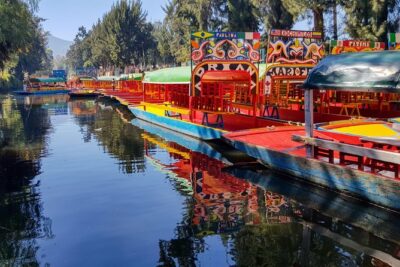
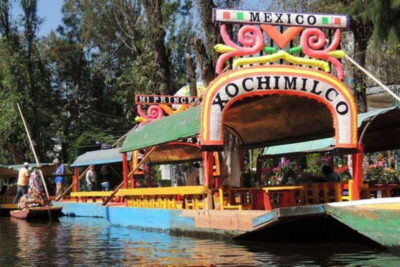
Xochimilco floating gardens, Coyoacan and UNAM murals
Read our review →
Visit to Xochimilco, Coyoacán and Ciudad Universitaria
Read our review →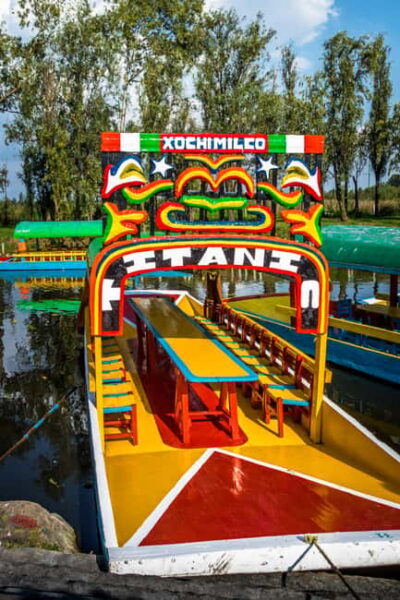
Coyoacán, UNAM, Xochimilco, and optional Frida Kahlo Museum
Read our review →
Xochimilco, Casa de Frida Kahlo, Coyoacán and UNAM
Read our review →
Diego Rivera Studio & UNAM Murals Tour with Admission Tickets
Read our review →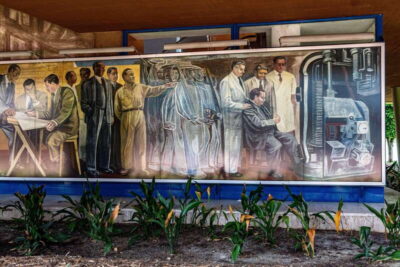
Browse the lists this tour appears in