
Reviewed · DIEGO RIVERA MURAL TOURS
Tour history of Muralism in Mexico
Mexico City’s mural story comes alive in three very different places: a former Jesuit school, a working market, and the grand walls of the Education Ministry. This 3.5-hour walking tour connects them into one clear lesson about how art moved from elite institutions into everyday public life.
I like the varied settings, since you are not simply moving from one museum room to another. I also like the focus on artists beyond the usual Diego Rivera spotlight, including the Greenwood sisters and the muralists who worked at Abelardo L. Rodriguez Market. The main consideration is that the group can reach 35 people, so the experience may feel less personal at its busiest.
Key points
- Three distinct mural sites: Visit San Ildefonso, Abelardo L. Rodriguez Market, and the Secretariat of Public Education.
- A wider view of muralism: Learn about Rivera, Orozco, Siqueiros, the Greenwood sisters, and the larger artistic projects behind the walls.
- A working market stop: See how mural painting entered an everyday public place rather than remaining inside a formal museum.
- A central Mexico City route: Begin in the Historic Center and finish at Palacio de Bellas Artes.
- English-speaking experience: The tour is offered in English, with admission entries included.
- Useful value at $59.57: The price covers a guided visit to several cultural sites over about three and a half hours.
Why Mexico City’s murals need more than one stop
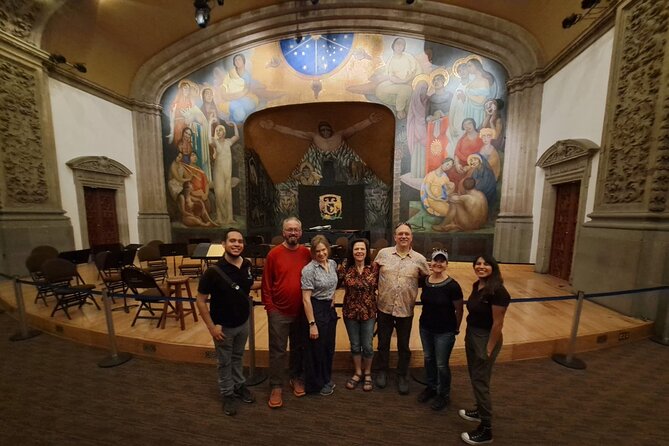
Mexico’s mural movement is easy to reduce to three famous names: Diego Rivera, José Clemente Orozco, and David Alfaro Siqueiros. This tour gives you a broader view by showing how muralism operated in schools, government buildings, and public markets.
That range matters. A museum can explain artistic ideas, but a market shows how public art met ordinary daily life. A government building reveals the political and educational ambitions behind the murals. By the end, you have seen muralism as art, civic message, and public decoration.
The tour begins at the Antiguo Colegio de San Ildefonso and ends at Palacio de Bellas Artes. All three main stops are in or near Mexico City’s Historic Center, so the route keeps you close to major cultural sights rather than sending you across the city.
The guide is expected to supply the connection between places. That is important here because the murals are not just large paintings to admire. You will want help understanding who commissioned them, which artists worked on them, and why public buildings became such important canvases.
More Diego Rivera mural tours:
- CDMX: Xochimilco, Coyoacan, Frida Kahlo Museum & Murals Tour
★ 4.4 · 3,025 reviews - Mexico City; ART NACO : Murals & Street Art Bike Tour
★ 5.0 · 284 reviews - EXCLUSIVE TOUR Casa Estudio Frida Kahlo-Diego Rivera Small Groups
★ 5.0 · 237 reviews
San Ildefonso: colonial walls and major muralists
The Antiguo Colegio de San Ildefonso is a strong place to begin because the building itself sets up the contrast between old Mexico and modern Mexican muralism. Founded as a Jesuit school in the 16th century, it has colonial architecture and now operates as a museum and temporary exhibition space.
You have about 35 minutes here, with admission included. That is enough time for a focused introduction, though not enough for a slow examination of every work or exhibition in the building.
The mural collection includes work by Diego Rivera, José Clemente Orozco, and David Alfaro Siqueiros. Seeing these names together helps you compare their approaches rather than treating muralism as one single style.
Your guide can also explain why an old educational institution became such a useful setting for mural art. The school’s identity matters. This was a place linked to teaching and public knowledge, so murals placed here could speak to ideas larger than decoration.
I like this first stop because it gives the tour a firm artistic and architectural base. You begin with a respected cultural institution, learn the names and purpose of the movement, then move into less formal spaces where the story becomes more social.
There is one practical limit. The visit is short, and San Ildefonso can reward a longer stay. If you already know you want to study Rivera, Orozco, or Siqueiros closely, plan separate time to return on your own if your schedule allows.
Abelardo L. Rodriguez Market: muralism in a working public space
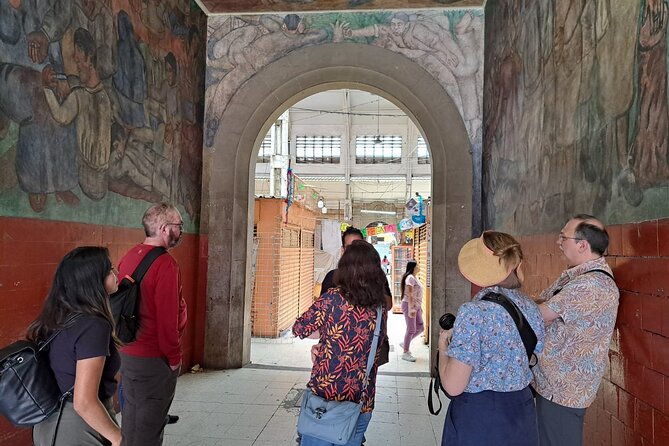
The Abelardo L. Rodriguez Market changes the mood. Instead of a former school and museum setting, you enter a market where people begin their day early and go about ordinary business.
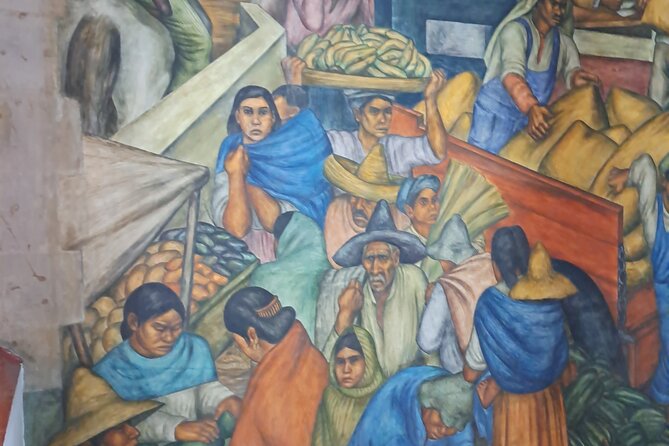
The stop lasts about 35 minutes and includes admission. The market is presented as a place where you can see everyday Mexico, not just a formal art setting. That makes it one of the most useful parts of the experience for anyone interested in how art reaches a public audience.
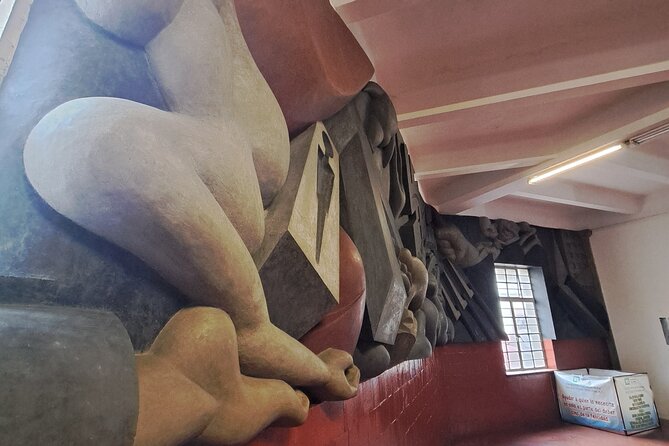
The mural project involved many artists. The tour also highlights the Greenwood sisters, described as the first women to paint in Mexico. That detail gives this stop a different angle from the standard mural tour, which often centers almost entirely on male artists.
I value this part because it expands your sense of who participated in Mexican muralism. You are not only looking at the finished paintings. You are learning about a larger project involving several artists and a setting used by local people.
The market may also require a different kind of attention. You are not in a quiet gallery where every wall is presented for close study. The surroundings are part of the point, but they can also make it harder to concentrate on individual images. Listen closely to the guide and keep your expectations realistic: this is a short stop inside an active public place, not a private viewing.
For me, the market is the tour’s most distinctive setting. San Ildefonso and the Secretariat of Public Education are major cultural sites. The market helps explain how muralism could function outside official museum spaces and reach people during normal daily routines.
Diego Rivera’s murals at the Secretariat of Public Education
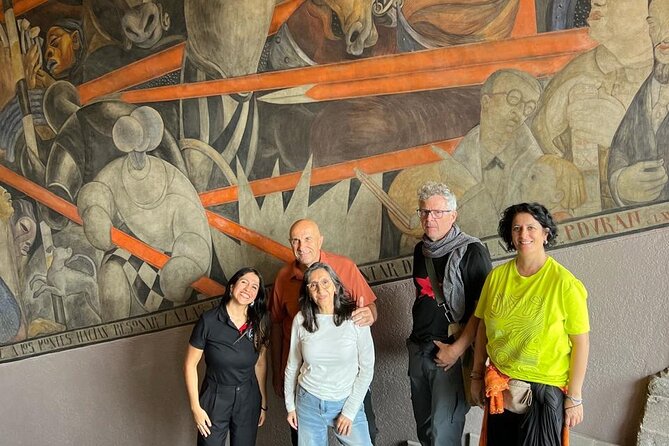
The third main stop takes about 45 minutes at the murals of Diego Rivera in the Secretaria de Educacion Publica, or Secretariat of Public Education. The site is now described as a museum of muralism, with many of Rivera’s works.
This is the longest scheduled stop, and that makes sense. Rivera’s project is large enough to need context, not just a quick glance at one famous panel.
The building’s role is central to understanding the art. These murals were not created in an isolated studio or for a private collector. They were part of a major public project connected with education and government. Your guide explains the history of that project and helps you read the building as a complete artistic program.
If Rivera is the main reason you are considering this experience, this stop will likely carry the most weight. You can see many murals in one place, then connect them to the earlier examples at San Ildefonso and Abelardo L. Rodriguez Market.
The 45-minute visit is useful but still structured. You will probably receive a guided overview rather than an exhaustive analysis of every image. That is a fair trade if you want a clear introduction to Rivera’s public work and still want time for the other sites.
I would pay close attention to how the guide links Rivera’s murals with the broader mural movement. The value is not only in seeing famous paintings. It is in learning why government buildings and public institutions became key places for telling national stories through art.
More Historical Tours in Mexico City:
- Historic Downtown Walking Tour
★ 5.0 · 1,289 reviews - Historic Center Food Tour in Mexico City
★ 5.0 · 1,263 reviews - Mexico City: Historic Downtown Walking Tour
★ 4.8 · 1,039 reviews - Walking Tour of the Historic Center of Mexico City
★ 5.0 · 870 reviews
Finishing at Palacio de Bellas Artes
The tour ends at Palacio de Bellas Artes on Avenida Juarez. The guide explains the murals at the Fine Arts Palace before the experience finishes.
This final point is useful because Bellas Artes is one of Mexico City’s best-known cultural buildings, and its murals provide one more place to connect the ideas discussed during the walk. The tour description does not assign a separate timed stop here, so treat it as a concluding explanation rather than another full museum visit.
You should also note that the end point is not the same as the starting point. You begin at Justo Sierra 16, near San Ildefonso, and finish at Bellas Artes. That makes the route practical if you want to continue exploring the Historic Center afterward.
Because the tour ends in a central location, you can use the rest of your day for nearby sights. The experience itself does not include lunch, so you may want to make a meal plan before or after the walk rather than expecting a food break during the tour.
What the $59.57 price really covers
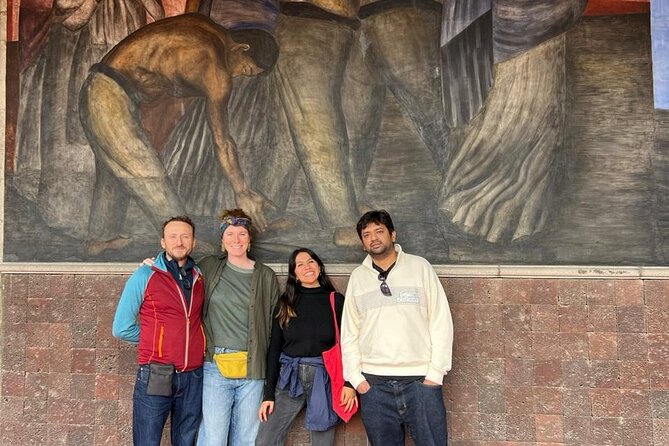
At $59.57 per person, this is not the cheapest way to walk through central Mexico City. The cost makes more sense if you want an English-speaking guide and admission entries handled for the three principal stops.
You are paying for interpretation as much as access. Without context, murals can become a parade of large images and famous names. The guide’s job is to explain how the sites connect, why the projects were created, and how the artists fit into the wider story.
The value is strongest for a first visit to Mexico City or a first serious look at Mexican muralism. You receive a focused route lasting about three and a half hours, with several major cultural sites in one experience.
The value is weaker if you prefer to move at your own pace or spend an hour with one painting. The schedule gives each location a set amount of time, and the group may include as many as 35 people. That size is manageable for a city walk, but it may limit opportunities for extended questions.
A five-out-of-five rating is listed for the experience, with five reviews available. The clearest praise focuses on a prompt, well-informed, personable guide. No guide name is provided, so you should not book expecting a particular individual. You can expect the experience to depend heavily on the guide’s ability to keep a large group together and make the art understandable.
Timing, group size, and practical details
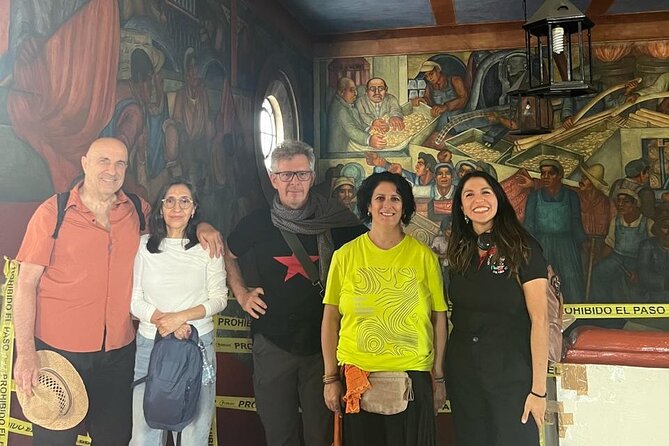
The tour lasts approximately three hours and 30 minutes. The main scheduled visits total 115 minutes: 35 minutes at San Ildefonso, 35 minutes at the market, and 45 minutes at the Secretariat of Public Education. The remaining time allows for movement, explanations, and the final Bellas Artes discussion.
The experience is offered in English and uses a mobile ticket. Confirmation is provided at booking, which is useful when you are arranging several activities in Mexico City.
The maximum group size is 35 people. That is worth considering before you reserve. If you prefer a quiet, highly personal art lesson, a smaller private visit may suit you better. If you are comfortable joining a larger group in exchange for a lower per-person price, this format is more appealing.
The tour is near public transportation, and most people can participate. Service animals are allowed. These details make it fairly accessible for many visitors, though the information does not provide a specific statement about stairs, elevators, or the walking distance between locations.
Tips are not included. Lunch is also not included, so budget for both separately. Since the route stays in central Mexico City, you can choose from many nearby places to eat after finishing at Bellas Artes, but the tour itself does not promise a meal stop.
Free cancellation is available if you cancel at least 24 hours before the start time. Cancellations inside that window are not refunded, and changes are not accepted. The experience also requires a minimum number of participants. If that minimum is not met and the tour is canceled, you are offered another date or experience, or a full refund.
Who will get the most from this mural walk
I would recommend this tour to you if you want a structured introduction to Mexican muralism without spending a full day inside museums. The three settings give you a useful range, and the English format removes a language barrier during the art explanations.
It also suits you if you recognize Rivera’s name but want a wider picture. The focus on Orozco, Siqueiros, the Greenwood sisters, and the many artists involved at the market keeps the tour from becoming only a Diego Rivera biography.
You may want to skip it if you have already studied these sites in detail or if you dislike fixed schedules. The visits are short, and the group can reach 35 people. You will get an organized overview, not a private art seminar.
Families, first-time visitors, and people with a strong interest in public art may find the route especially useful. The market stop adds a real-world setting, while the former school and government building show how muralism worked in official cultural spaces.
Should you book the Tour History of Muralism in Mexico?
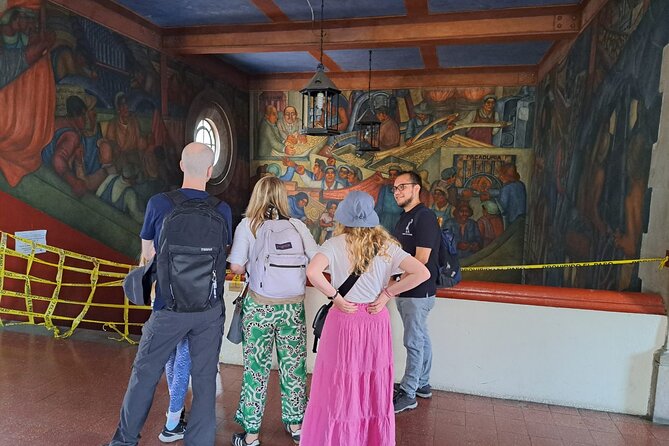
Book it if you want to understand how muralism moved through schools, markets, government buildings, and major cultural institutions. The route is focused, the entries are included, and the finish at Bellas Artes leaves you in a convenient part of the Historic Center.
I would consider the $59.57 worthwhile for a first visit, especially if you value a guide who can explain the art rather than simply point it out. Just keep the group size and short stop times in mind.
If you want a relaxed, highly detailed look at every mural, choose a smaller or longer experience instead. If you want a practical introduction with three distinct settings and a clear finish in central Mexico City, this tour is a sensible pick.
FAQ
How long does the mural tour last?
The experience lasts approximately three hours and 30 minutes.
Where does the tour begin?
It begins at the Former College of San Ildefonso, at Justo Sierra 16 in Mexico City’s Historic Center.
Where does the tour finish?
The tour ends at Palacio de Bellas Artes on Avenida Juarez. The guide explains the Fine Arts murals before finishing.
Is admission included?
Yes. Entries are included for the experience. Lunch and tips are not included.
Is the tour offered in English?
Yes. The experience is offered in English and uses a mobile ticket.
What is the cancellation policy?
You can cancel at least 24 hours before the start time for a full refund. Cancellations or changes made less than 24 hours before the start time are not accepted, and the amount paid is not refunded.
Just added around Mexico City
- Xochimilco’s Wild Side: Mezcal, Insects & Culture★ 4.9 · 10 reviews
- Xochimilco: Food and Trajinera Ride with Local Women★ 5.0 · 5 reviews
- Xochimilco: Island of the Dolls Tour Games and Drinks★ 5.0 · 25 reviews
- Xochimilco Ecological Tour – Away From the Crowds (3 Hours)★ 5.0 · 15 reviews
- Xochimilco + Coyoacán Combo Full-Day Tour★ 5.0 · 3 reviews
- Xochimilco floating gardens, Coyoacan and UNAM murals★ 4.0 · 6 reviews
- Val´quirico And The City of Angels Puebla From Mexico City★ 5.0 · 3 reviews
- Xochimilco: amanecer en kayak Ciudad de México★ 5.0 · 35 reviews
Diego Rivera Mural Tours, compared.
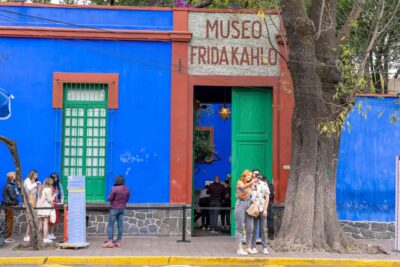
Xochimilco, Coyoacan, Frida Kahlo Museum & Murals Tour
Read our review →
Mexico City; ART NACO : Murals & Street Art Bike Tour
Read our review →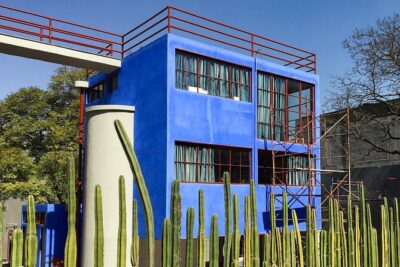
EXCLUSIVE TOUR Casa Estudio Frida Kahlo-Diego Rivera Small Groups
Read our review →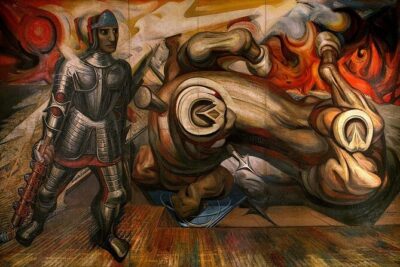
Walking Tour – Impressive murals in Historical Center of Mexico City
Read our review →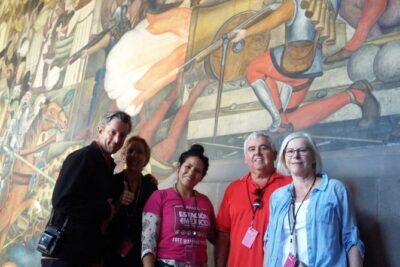
La Catrina & Muralism: Diego Rivera’s Legacy & Frida Kahlo
Read our review →
Xochimilco floating gardens, Coyoacan and UNAM murals
Read our review →Browse the lists this tour appears in