
Reviewed · NATIONAL MUSEUM OF ANTHROPOLOGY TOURS
Tour Museum of Anthropology a trip to the past-Small groups
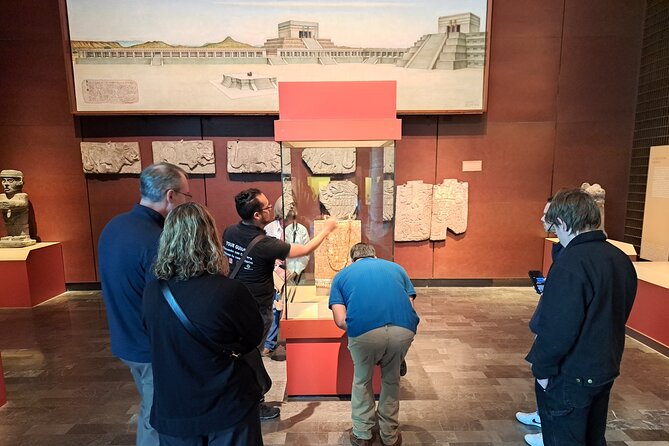
Mexico City’s National Museum of Anthropology is so large that a first visit can feel like a march through rooms of beautiful objects without a clear thread. This small-group tour fixes that problem by turning the museum into a guided story, linking the Sun Stone, Maya artifacts, and Aztec history across three focused hours.
I like the small maximum of 15 people, and I especially like the way guides Jorge and Delta use questions, maps, legends, and evidence to make the displays easier to understand. The main drawback is simple: three hours only covers selected highlights, so you may see roughly a quarter of the museum and have little time left for wandering afterward.
Key points to know before you book
- A guided route through a huge museum: You concentrate on major objects instead of losing time deciding which room to enter next.
- English helps where labels may not: Much of the museum’s written material is in Spanish, so an English-speaking guide can make a major difference.
- Jorge and Delta receive repeated praise: Both are described as lively storytellers who connect artifacts, dates, symbols, and cultures.
- The tour stays small: The group is capped at 15 people, making questions and conversation more realistic than on a large coach tour.
- Three hours means highlights, not everything: Plan another visit, or extra independent time, if you want to study the full collection.
- The price is $98.57 per person: Tickets and the guide are included, so the value depends on how much context and interpretation you want.
Why this museum needs a guide
The National Museum of Anthropology is not a quick stop. Its collection covers thousands of years and many cultures, with rooms devoted to major Mesoamerican societies and regions. A self-guided visit can be rewarding, but it can also leave you wondering how one carved stone relates to the next.
That is where this tour earns its keep. Instead of treating each object as an isolated curiosity, the guide builds a timeline and shows connections between peoples, places, religious ideas, political power, and daily life. You are not simply told that an artifact is old. You learn what it represented and why it matters.
The English guidance is especially useful. Several people who speak English well found that many labels offered limited help unless they could read Spanish. A good guide fills that gap with clear explanations and adds the meaning behind symbols that a short museum caption cannot cover.
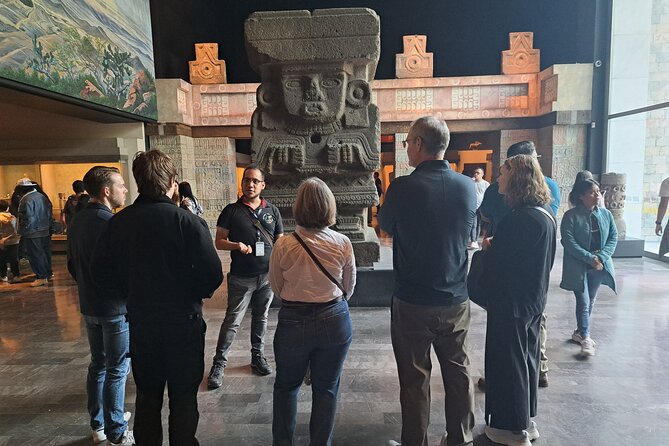
I also like the questioning approach used by Jorge. He may begin with a large architectural feature or a central museum object and ask you what you notice. Later, you return to it with enough context to understand its symbols. That approach makes you pay attention rather than passively follow a speech.
The museum itself is part of the lesson. The tour can include maps, wall charts, and discussion of how the building presents Mexico’s past. You get a sense not only of the ancient cultures represented inside, but also of how modern Mexico chooses to tell that story.
More Anthropology Museum tours:
- Chapultepec Castle & Anthropology Museum Tour
★ 4.5 · 1,348 reviews - Anthropology Museum Guided Tour
★ 4.5 · 1,035 reviews - Mexico City: Anthropology Museum Guided Visit
★ 4.4 · 708 reviews
Starting at the National Museum of Anthropology
You meet at the museum on Avenida Paseo de la Reforma in the Polanco area, within Chapultepec Park. The experience begins and ends at this same location, so you do not need to coordinate a separate drop-off point or arrange transport between stops.
Your ticket is included, as is the English-speaking guide. Confirmation is provided when you book, and the activity is offered by Educando con Cultura. The group can include up to 15 people, though a smaller group is possible and would make the experience feel more personal.
Special access is advertised for selected times, with the aim of avoiding the heaviest crowds. Do not interpret that as private access to the entire museum. The useful benefit is a more orderly start and a guide who can get your group moving through the building without wasting your first half-hour in confusion.
One practical point: arrive ready to walk and concentrate. Three hours in a major museum can pass quickly, especially when the guide is asking questions and moving between objects, maps, and displays. I would not schedule a rushed meal or another tightly timed activity immediately afterward.
Following the Mesoamerican timeline
The strongest part of the route is its structure. Rather than hearing disconnected facts about the Maya, Teotihuacan, Mexica, and other societies, you are shown how different periods and regions fit together.
That matters because Mexico’s ancient cultures were not one single civilization. Their traditions developed at different times and places, and their art, buildings, religious practices, and political systems were not interchangeable. A guide can point out those distinctions while still explaining the links between them.
Jorge’s approach, in particular, uses questions and a clear sequence. He connects one artifact to the next, then uses the following object to answer an earlier question. This gives the tour a sense of direction and helps you remember the material after leaving the museum.
Delta’s style focuses on making major cultural groups understandable without flattening their differences. She guides visitors toward the key pieces and explains the development of Indigenous societies in Mexico. Her background and enthusiasm for the subject come through in the way she discusses both evidence and tradition.
You may hear legends, but the better part of the experience is learning how archaeology tests those stories. The guide can separate popular ideas from what objects, excavations, and written records actually show. That kind of careful explanation is valuable in a museum where dramatic myths can easily overshadow the evidence.
The Sun Stone and other major objects
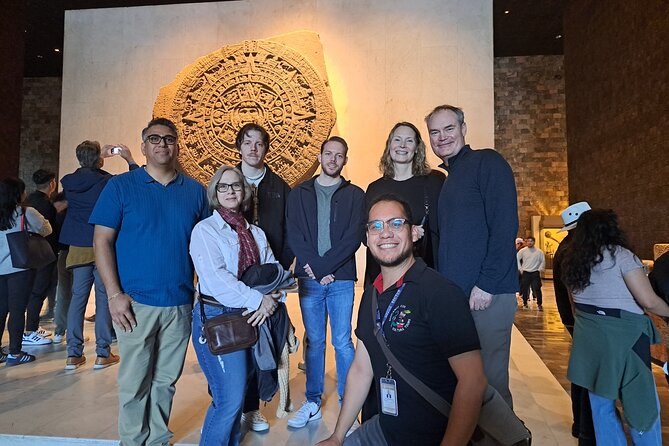
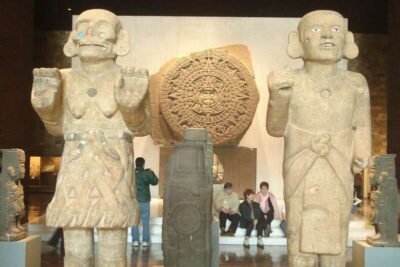
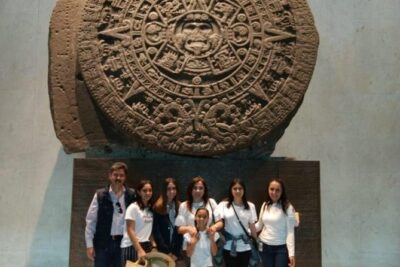
The Sun Stone is one of the museum’s best-known objects, and it is a natural anchor for the tour. Seeing it in person gives you a chance to study its carved imagery, but the carvings only become useful once you understand how the symbols work.
A guide can help you look at the object in layers. You may first notice its scale and dense surface. Then you can begin to follow the figures, signs, and ideas represented in the stone. The point is not simply to take a photograph. It is to understand how art, religion, time, and authority could be joined in one monument.
The tour also highlights the sarcophagus of Pakal, associated with the Maya site of Palenque. This is another moment where interpretation matters. The object has a powerful visual presence, but its importance comes from the person, culture, and beliefs connected to it.
You will also be shown objects that are not always part of the public display. The exact pieces available may vary, so treat this as an added possibility rather than a guaranteed private collection visit. The main value remains the guide’s ability to point out details you might otherwise pass without noticing.
More museums in Mexico City:
- CDMX: Xochimilco, Coyoacan, Frida Kahlo Museum & Murals Tour
★ 4.4 · 3,025 reviews - Frida Kahlo VIP [Museum Tickets Included] Bike, Markets & Churros
★ 5.0 · 1,072 reviews - Frida Kahlo VIP [Museum Tickets Included] Walk, Markets & Churros
★ 5.0 · 982 reviews - EXCLUSIVE TOUR Frida Kahlo Museum – SMALL GROUPS
★ 5.0 · 901 reviews
Maps, symbols, and the work behind the displays
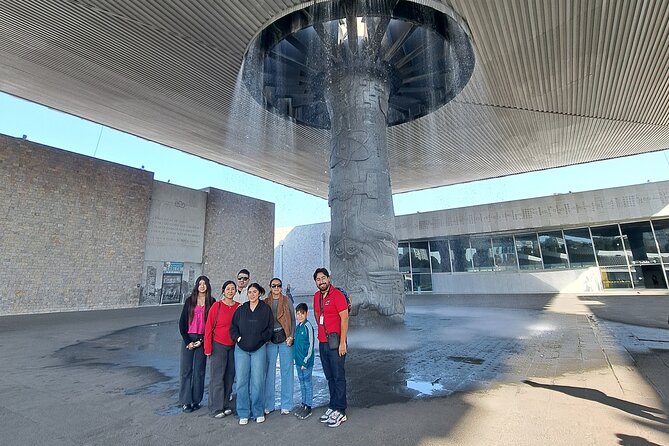
Some of the most useful moments may come away from the famous objects. Guides use larger maps and charts to show where cultures developed and how the timeline fits together. This is especially helpful if you know the names of Mesoamerican societies but cannot place them geographically or chronologically.
The museum also gives attention to restoration and preservation. Multimedia resources may show ancient rituals and the work involved in caring for archaeological material. These displays remind you that the objects did not simply appear in perfect condition inside glass cases.
That behind-the-scenes angle adds practical context. You see the museum as a place of research and interpretation, not only a room full of treasures. You may also gain a better sense of why some conclusions are firm while others remain open to debate.
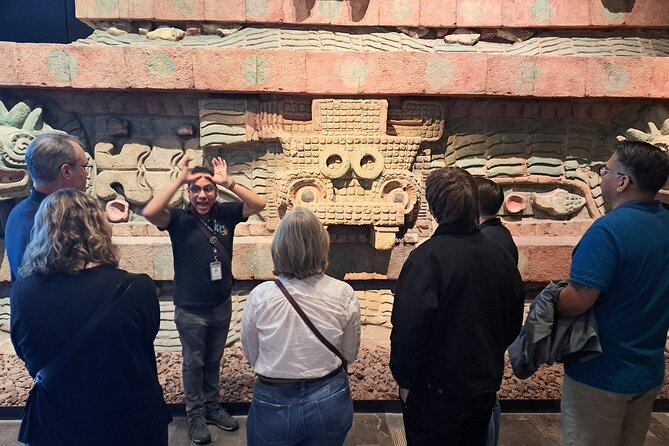
The guide’s role is not to replace your own looking. It is to give you a framework, then direct your eyes to the details that carry meaning. I find that especially useful with sculpture and architecture, where it is easy to admire the surface without understanding the message.
Jorge and Delta: two guide styles to look for
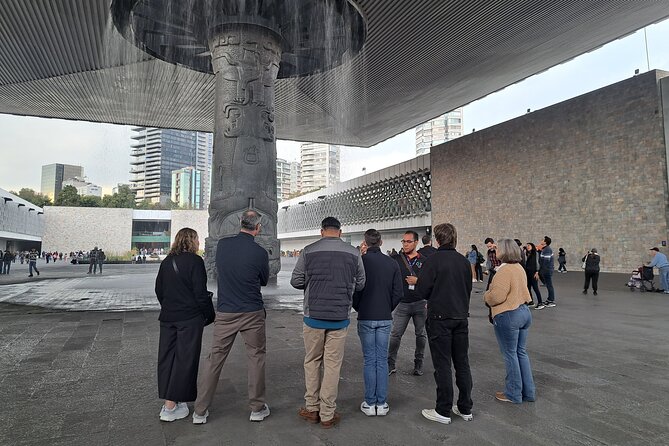
Jorge is repeatedly singled out for storytelling, strong English, and an interactive style. He has been described as someone who can connect about 4,000 years of history in a coherent way without making the tour feel like a lecture. His use of questions works well for solo visitors, couples, and families with older children.
He also brings up the question of how history is recorded. His explanations can ask you to consider whose version became official and what archaeology can confirm. That makes the tour more thoughtful than a simple procession from one famous artifact to another.
Delta receives similar praise for warmth, clear explanations, and command of the museum’s collection. She is especially effective at taking visitors through the major pre-Hispanic cultures and explaining the social and religious ideas behind the objects.
You cannot always choose which guide leads your departure, so book this experience for the teaching approach rather than for a guaranteed personality. If you are assigned Jorge or Delta, expect an animated presentation with room for questions. An audio device may be provided so you can hear the guide clearly, even when the group is moving through a large gallery.
The tour is also described as LGBTQ friendly, which is a useful detail for visitors who want a welcoming cultural experience.
What three hours can and cannot cover
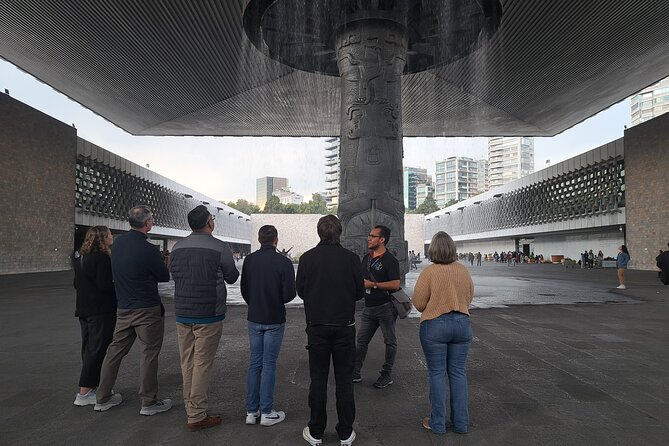
The tour lasts about three hours, and that is enough time for a strong introduction. It is not enough time to see every gallery carefully. The museum is simply too large, and a good guide must make choices.
You should expect a highlights route. You will likely leave with a clearer timeline, a better understanding of key symbols, and a list of rooms or objects you want to revisit. You should not expect to read every label, linger at every display, or cover three-quarters of the building.
This limitation is not necessarily a flaw. Without a plan, you could spend an hour in one room and miss the main objects elsewhere. The guide gives you a broad foundation first. If you have the energy, you can return independently and spend more time with the areas that caught your attention.
Timing matters. One visitor found a 2 p.m. start less crowded, but the museum closed at 5 p.m., leaving no time afterward for independent exploration. A later start may be comfortable for crowd levels, yet it removes your chance to stay on after the guided portion. If you want extra museum time, a morning appointment is the safer choice, assuming that departure is available.
Is $98.57 a fair price?
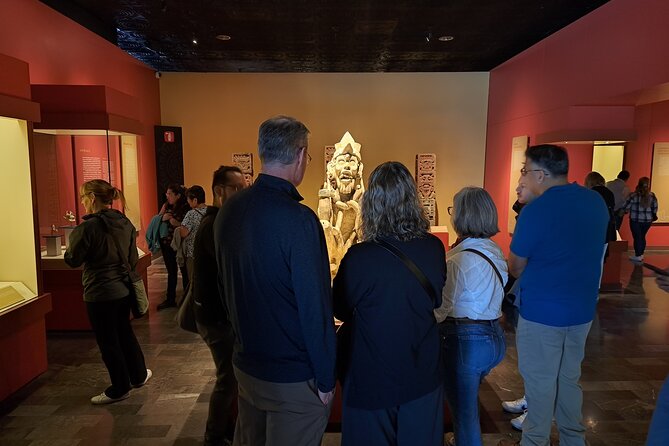
At $98.57 per person, this is not a bargain museum entrance with a quick orientation. You are paying for admission and three hours of English interpretation in a small group.
For me, the value is strongest if you do not speak Spanish comfortably, if this is your first visit, or if you want cultural context rather than a casual walk through galleries. A guide can save you from missing the museum’s central ideas and can make a few key objects far more meaningful.
The price is harder to justify if you are an experienced museum visitor who prefers reading labels and setting your own pace. It is also less attractive if you want to see the entire collection in one day, since the organized route focuses on highlights.
Tips and lunch are not included. The tour ends back at the museum, so you can plan your own meal afterward. Since the experience is in Chapultepec Park and near public transportation, it is practical to combine with other Mexico City plans, but keep enough time for the museum itself.
Who should book this experience?
I would choose this tour for a first visit to Mexico City, especially if the Anthropology Museum is high on your list. It also suits anyone who wants a clear cultural introduction without spending several days studying the museum independently.
Families with teenagers may appreciate the questions, stories, and visual symbols more than a silent self-guided visit. Solo visitors and couples can benefit from the small group, since there is a real chance to ask for clarification.
You may prefer to skip it if you speak Spanish fluently, already know Mesoamerican history well, or dislike a fixed route. In that case, the included ticket still gets you inside, but much of the tour’s value comes from interpretation, not access alone.
Most people can participate, and service animals are allowed. The activity requires a minimum number of participants, so a cancellation for that reason comes with the option of another date or a full refund. You can cancel for a full refund up to 24 hours before the start time. Changes or cancellations inside that window are not accepted.
My verdict: book it for the context
I would book this tour if you want the Anthropology Museum to make sense, not merely look impressive. The museum’s scale, Spanish-heavy signage, and complex subject matter make a strong guide especially useful.
Choose an earlier time if you want to explore on your own afterward. Choose the tour for the structure and teaching, not the promise of seeing everything. At $98.57, it is a meaningful expense, but the combination of admission, a small group, and three hours with guides such as Jorge or Delta can be worthwhile for a first visit.
FAQ
Where does the tour start and finish?
It starts at the National Museum of Anthropology, at Av. Paseo de la Reforma in Chapultepec Park. The activity ends back at the same meeting point.
How long does the tour last?
The guided museum experience lasts approximately three hours.
Is museum admission included?
Yes. The ticket and guide are included in the price.
Is the tour offered in English?
Yes. The experience is offered in English.
How large can the group be?
The maximum group size is 15 participants.
Will I see the entire museum?
No. Three hours is enough for selected highlights, but not the complete museum collection. You may want extra time to explore independently.
Can I cancel for a full refund?
Yes, if you cancel at least 24 hours before the experience begins. Cancellations or changes made less than 24 hours before the start time are not refunded or accepted.
Just added around Mexico City
- Xochimilco’s Wild Side: Mezcal, Insects & Culture★ 4.9 · 10 reviews
- Xochimilco: Food and Trajinera Ride with Local Women★ 5.0 · 5 reviews
- Xochimilco: Island of the Dolls Tour Games and Drinks★ 5.0 · 25 reviews
- Xochimilco Ecological Tour – Away From the Crowds (3 Hours)★ 5.0 · 15 reviews
- Xochimilco + Coyoacán Combo Full-Day Tour★ 5.0 · 3 reviews
- Xochimilco floating gardens, Coyoacan and UNAM murals★ 4.0 · 6 reviews
- Val´quirico And The City of Angels Puebla From Mexico City★ 5.0 · 3 reviews
- Xochimilco: amanecer en kayak Ciudad de México★ 5.0 · 35 reviews
National Museum of Anthropology Tours, compared.
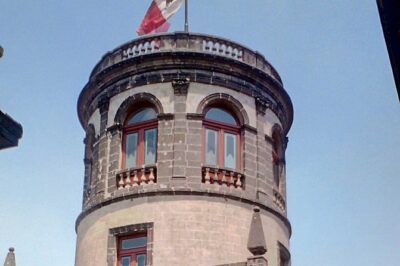
Chapultepec Castle & Anthropology Museum Tour
Read our review →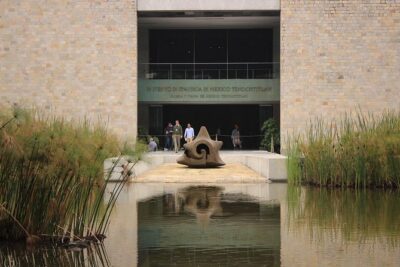
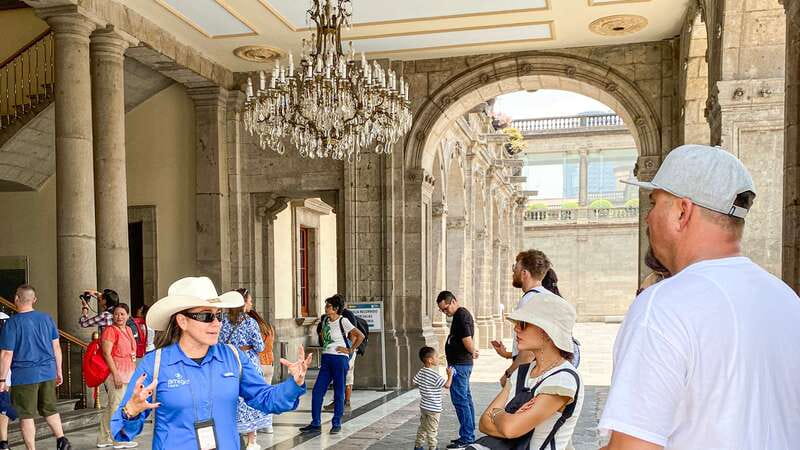
Chapultepec Castle and Anthropology Museum Tour
Read our review →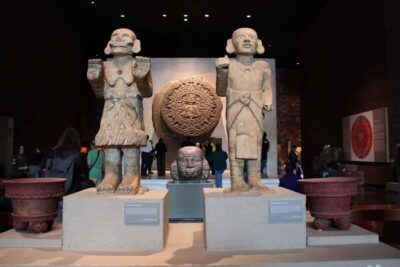
Anthropology Museum Private Experience Walking Tour
Read our review →
5 Hour Tour through Chapultepec, Anthropology Museum and Castle
Read our review →
PRIVATE Tour in Chapultepec Castle and Museum of Anthropology
Read our review →Browse the lists this tour appears in