
Reviewed · DIEGO RIVERA MURAL TOURS
Tour Evolution of Muralism paints your Grafiti
Mexico City’s mural story comes alive when you move from colonial walls to a working market and finish by spraying your own graffiti. This tour connects Diego Rivera, José Clemente Orozco, and David Alfaro Siqueiros with the city’s current street-art scene.
I like the strong art-history thread and the chance to see places that are easy to miss without a guide. I also like the public-transport ride, which turns the trip into a small lesson in everyday Mexico City, not just a string of gallery stops.
The main consideration is physical pace. You cover plenty of ground, use the metro and bus, and spend about four hours on your feet, so wear walking shoes and expect a lively, information-heavy outing.
Key points to know before you book
- San Ildefonso traces the beginnings of Mexican muralism, with work by Rivera, Orozco, Siqueiros, and other major artists.
- Abelardo L. Rodríguez Market contains about 1,450 square meters of murals, including walls and ceilings covered with revolutionary and worker-focused imagery.
- The public-transport ride is part of the experience, using Mexico City’s metro and bus system rather than a private vehicle.
- Ex Fábrica MX turns a former flour factory into a graffiti-filled art space, with bars, shops, and room to relax.
- You may get to spray your own graffiti at the final stop, making this more than a look-but-don’t-touch art tour.
- The group is limited to 12 people, and the $71.36 price includes a certified guide, public transportation, and admission to San Ildefonso, but not food or drinks.
Why this mural tour works so well
Mexican muralism is much easier to understand when you see it in the places where it developed. Rather than treating murals as isolated decorations, this experience follows their movement through schools, public markets, and repurposed industrial spaces.
That change of setting matters. At San Ildefonso, you see grand art tied to education and national identity. At Abelardo L. Rodríguez Market, murals share space with a public market and focus on workers, farmers, miners, and the promises of the Mexican Revolution. At Ex Fábrica MX, the message shifts toward modern urban expression and graffiti.
I like that the tour does not stop with famous names. A guide such as Jorge can help you look closely at the symbols, figures, and political ideas inside each mural. The point is not simply to recognize Rivera or Orozco. It is to understand why these artists painted public walls and why their ideas still matter.
The experience is offered in English and normally lasts between three and a half and four hours. The group limit of 12 should allow for questions without making the walk feel like a large city procession. It is a good format for anyone who wants context instead of a quick photo stop.
More Diego Rivera mural tours:
- CDMX: Xochimilco, Coyoacan, Frida Kahlo Museum & Murals Tour
★ 4.4 · 3,025 reviews - Mexico City; ART NACO : Murals & Street Art Bike Tour
★ 5.0 · 284 reviews - EXCLUSIVE TOUR Casa Estudio Frida Kahlo-Diego Rivera Small Groups
★ 5.0 · 237 reviews
San Ildefonso, where the mural movement takes root
The tour begins at Mexico City’s Metropolitan Cathedral in the Zócalo area. From there, you visit the Antiguo Colegio de San Ildefonso, one of the Historic Center’s major colonial buildings and an important cultural site in Mexico’s national life.
Allow about an hour and a half here. Admission is included, which is useful because this is the one paid cultural stop in the schedule.
San Ildefonso matters because its walls are closely tied to the beginning of Mexican muralism. The building displays work by Diego Rivera, David Alfaro Siqueiros, José Clemente Orozco, and other artists. These murals do not sit in a modern white gallery. Their architectural setting is part of the experience, and the surrounding colonial structure adds weight to the bold political and social scenes.
A good guide will help you break the images into parts. Look for the way bodies, tools, crowds, and symbols are arranged. The paintings carry more than decoration. They reflect arguments about education, labor, power, and the nation Mexico was trying to build after the revolution.
This is also where a guide’s skill matters most. The artistic vocabulary can be difficult if you are not used to Mexican historical names or political references. Jorge has been especially effective at explaining how to read the images and how the ideas in the murals changed over time. If names are hard to remember, take photos of the artists’ signatures and key works, where permitted. That gives you a useful reference for later visits around Mexico City.
The drawback is that one and a half hours can feel short if you want to examine every painting carefully. It is enough for a guided introduction, not a private study visit. If San Ildefonso is your main interest, consider returning on your own after the tour.
Abelardo L. Rodríguez Market and murals for working people
The next stop takes you to the Abelardo L. Rodríguez Market, a very different setting. Built in the early decades of the 20th century, it was designed as a model for a more modern public market. Its most unusual feature is the mural coverage: about 1,450 square meters across walls and ceilings.
Admission is free, and the visit lasts about an hour and a half.
This stop gives you a more public, everyday view of muralism. The paintings were created by students of Diego Rivera and reflect the government’s effort to promote the benefits of the 1910 Mexican Revolution. They also show the artists’ concern for exploitation and working conditions.
Expect themes involving workers, peasants, and miners. The murals are not neutral scenes. They argue for a particular view of society and history. That is why this market is such a useful companion to San Ildefonso. You are not just seeing another collection of large paintings. You are seeing how mural art moved into a place used by ordinary residents.
The building itself also changes how you look at the art. Murals above a market can be more direct than paintings made for a formal museum. You may find yourself switching between the artwork, the architecture, and the daily purpose of the building.
The public setting has a practical drawback: the experience may feel less controlled than a museum visit. The tour data does not promise a quiet gallery atmosphere, and you should be ready to focus while moving through a working public space. Still, that is part of its value. The art is connected to the life of the city instead of being sealed away from it.
Riding the metro and bus between art stops
Public transportation is included, and the route uses the metro and bus. That detail may sound minor, but it changes the tone of the experience.
You see how the city’s art districts connect in real life rather than riding directly between stops in a private vehicle. The journey also adds a small cultural lesson. Mexico City’s transport system is part of the daily rhythm of the capital, and using it helps you understand the distances between the Historic Center, the market, and the final art space.
The transport section does require flexibility. You should expect some walking, transfers, and time spent moving through public areas. This is not the best choice if you want a slow, private outing with no stairs or crowds. The experience information says most people can participate and that service animals are allowed, but it does not provide a detailed accessibility breakdown for each station or vehicle.
Wear comfortable walking shoes. One participant specifically advised this after covering a lot of ground, and the advice makes sense given the four-hour schedule and multiple stops.
A completely different kind of day in Mexico City:
- Teotihuacan, Guadalupe Shrine & Tlatelolco Day Tour with Lunch
★ 5.0 · 11,603 reviews - Xochimilco, Coyoacan and Frida Kahlo with Optional Lunch
★ 4.5 · 7,320 reviews - Balloon flight + Breakfast in cave + Pyramids + Pick up CDMX.
★ 5.0 · 6,335 reviews - Teotihuacan pyramids morning or afternoon without tourist traps
★ 5.0 · 6,186 reviews
Ex Fábrica MX, from flour production to street art
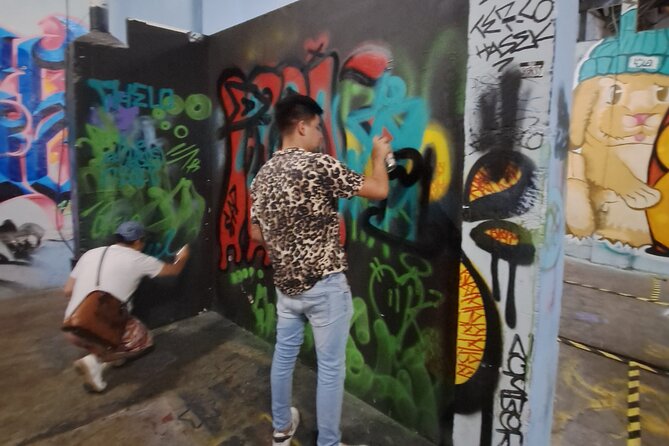
The final stop is Ex Fábrica MX, located at Primavera 106 in Tacuba. The site was once a flour factory dating from the 1940s. After being abandoned, it was rehabilitated as an art district, with urban art as its main draw.
You spend about 40 minutes here, and admission is free.
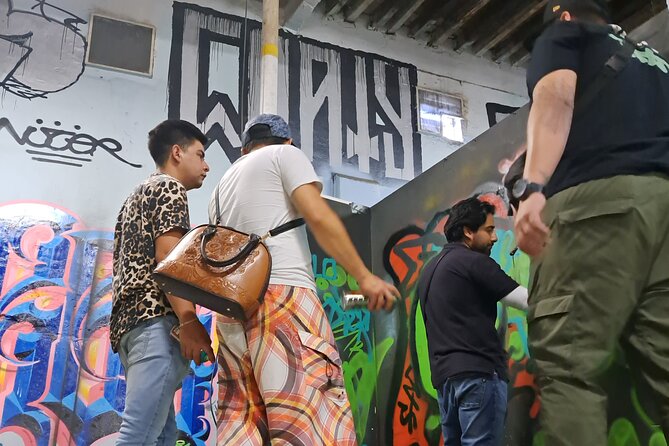
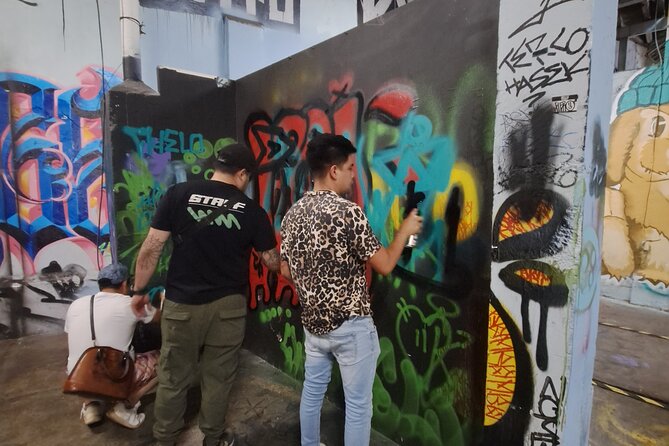
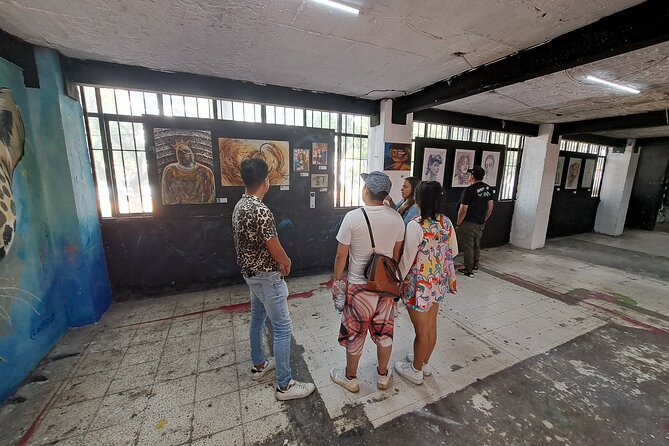
This is where the tour shifts from historic mural painting to present-day graffiti. Almost every surface is covered with strong colors, figures, and large-scale urban expressions. The space has become popular for photographs, but it is more than a backdrop. The old industrial building gives the art a rough setting that suits the scale and energy of the work.
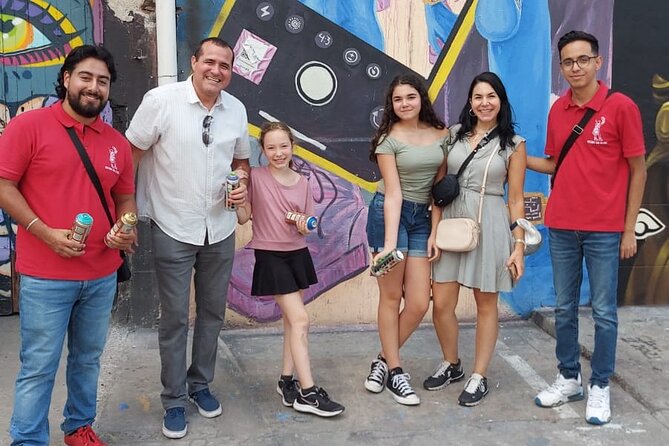
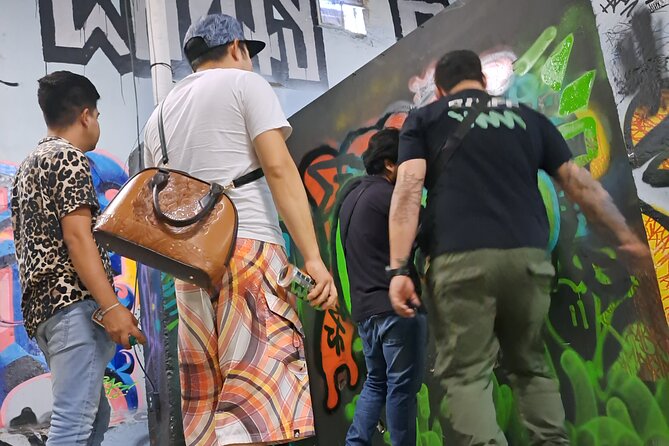
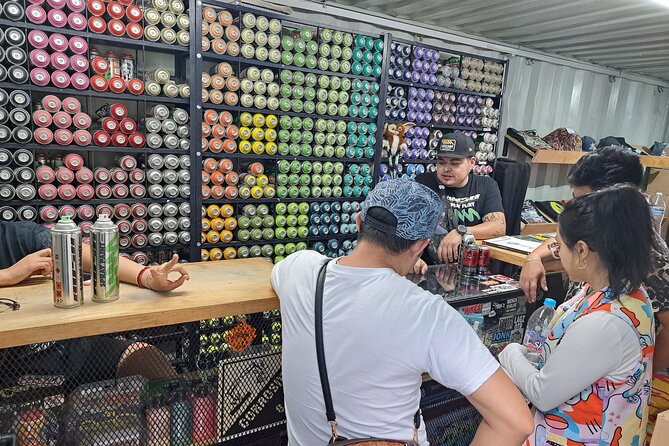
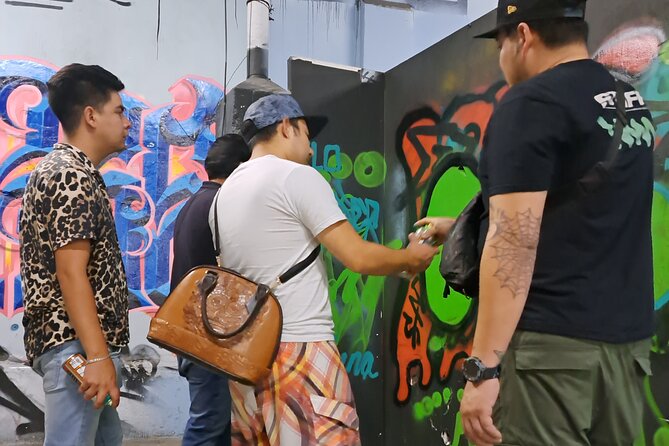
The experience may include a chance to spray your own graffiti. That hands-on finish is one of the tour’s best ideas. After spending hours learning how artists used public walls to communicate, you get to make a small mark yourself.
Do not expect the same kind of historical interpretation here as at San Ildefonso. Ex Fábrica MX is about contemporary expression, color, and participation. It also has bars and shops, and the space is used for relaxing as well as looking at art. That makes the ending less formal and more social.
Forty minutes is enough to see the key areas and take part in the graffiti activity, but not enough to explore every corner at leisure. If you like street art, you may wish you had more free time. Still, ending here gives the tour a clear arc: historic murals, political public art, and modern graffiti.
The guide makes the difference
This experience depends heavily on the guide. The sites are worthwhile, but the meaning of the murals is not always obvious at first glance.
Jorge has been singled out for combining personal warmth with strong art knowledge. His method is practical: break down the components of a mural, explain the symbols, then place the work in its political and social setting. That approach can change how you look at art after the tour.
Jaime has also led this experience and other tours for the same provider. The available information describes him as trained and professional, with a lively approach to the tour’s activities.
A strong guide is especially useful for families. An 11-year-old can follow the tour when the explanations are clear and connected to people, work, politics, and visual storytelling. The graffiti activity gives younger participants a chance to create something rather than listen for four hours.
This is also a good outing for teenagers who like drawing, design, or street art. They may find Ex Fábrica MX more immediately appealing, while the guide helps connect modern graffiti to the older mural tradition.
Is $71.36 a fair price?
At $71.36 per person, this is not the cheapest way to see murals in Mexico City. The price makes more sense when you count what is included: a certified guide, public transportation, and admission to San Ildefonso.
The other two stops are free, and lunch, drinks, and tips are not included. You should budget for your own food and carry enough water for a long outing, though the supplied information does not specify meal stops.
For me, the value comes from the interpretation and route planning. You could visit some of these places independently, but you would need to organize the transport, understand the connection between the sites, and research the political meaning of the murals yourself.
The small group limit of 12 also helps justify the price. It is easier to ask questions and hear explanations than it would be on a large coach outing. The tour is often reserved about 15 days ahead, so book early if your Mexico City dates are fixed.
Who should book this experience?
I would choose this tour if you want to understand how Mexican muralism developed and how it connects to modern graffiti. It is especially suitable for:
- Art lovers who want more than famous museum stops
- Families with older children or teenagers interested in art
- Visitors who enjoy using public transportation
- First-time Mexico City visitors who want a guided route through lesser-known art sites
- Anyone who likes hands-on activities and wants to spray graffiti at the end
I would think twice if you dislike walking, public transit, or political art. The tour asks you to pay attention for several hours, and the most rewarding parts depend on listening to historical and artistic explanations.
It is also not a food tour. Lunch and drinks are not included, and the schedule is built around art rather than long breaks.
Practical details that matter
The tour starts at the Mexico City Metropolitan Cathedral in the Zócalo, at Plaza de la Constitución. It ends at Ex Fábrica MX, Primavera 106 in Tacuba, so you should plan your next activity from the final location rather than assume you will return to the Historic Center.
Confirmation is provided at booking. The experience is offered in English, accepts mobile tickets, allows service animals, and operates near public transportation. Most people can participate, though a full accessibility assessment of the metro, bus, and sites is not provided.
Free cancellation is available if you cancel at least 24 hours before the start time. Cancellations within 24 hours are not refunded, and changes during that period are not accepted.
Should you book it?
Book this tour if you want a guided explanation of Mexico City’s mural tradition and like the idea of finishing with your own graffiti. The combination of San Ildefonso, Abelardo L. Rodríguez Market, and Ex Fábrica MX gives you three useful settings, colonial, public, and industrial.
The best reason to go is the connection between them. You begin with major artists and national ideas, see those ideas painted for working people, then finish in a contemporary art space where public walls are still used for expression.
The main tradeoff is pace. You will walk, ride public transportation, and spend most of four hours focused on art. For the right person, that is the point. Bring comfortable shoes, stay curious, and let the guide turn painted walls into a readable part of Mexico City’s story.
FAQ
How long does the tour last?
The tour lasts approximately three and a half to four hours.
Where does the tour begin?
It begins at Mexico City Metropolitan Cathedral in Plaza de la Constitución in the Historic Center.
Where does the tour end?
It ends at Ex Fábrica MX, Primavera 106, Tacuba, Miguel Hidalgo.
Is admission included?
Admission to the Antiguo Colegio de San Ildefonso is included. The Abelardo L. Rodríguez Market and Ex Fábrica MX are listed as free-entry stops.
Is transportation included?
Yes. Public transportation is included, with the route using the metro and bus.
Is food included?
No. Lunch, food, and drinks are not included.
What happens if I cancel?
You receive a full refund if you cancel at least 24 hours before the experience begins. Cancellations or changes made less than 24 hours before the start time are not accepted and are not refunded.
Just added around Mexico City
- Xochimilco’s Wild Side: Mezcal, Insects & Culture★ 4.9 · 10 reviews
- Xochimilco: Food and Trajinera Ride with Local Women★ 5.0 · 5 reviews
- Xochimilco: Island of the Dolls Tour Games and Drinks★ 5.0 · 25 reviews
- Xochimilco Ecological Tour – Away From the Crowds (3 Hours)★ 5.0 · 15 reviews
- Xochimilco + Coyoacán Combo Full-Day Tour★ 5.0 · 3 reviews
- Xochimilco floating gardens, Coyoacan and UNAM murals★ 4.0 · 6 reviews
- Val´quirico And The City of Angels Puebla From Mexico City★ 5.0 · 3 reviews
- Xochimilco: amanecer en kayak Ciudad de México★ 5.0 · 35 reviews
Diego Rivera Mural Tours, compared.
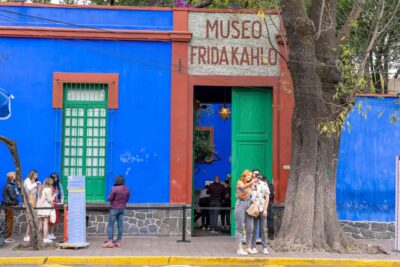
Xochimilco, Coyoacan, Frida Kahlo Museum & Murals Tour
Read our review →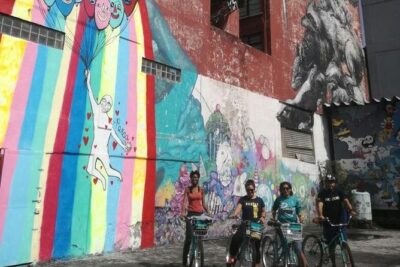
Mexico City; ART NACO : Murals & Street Art Bike Tour
Read our review →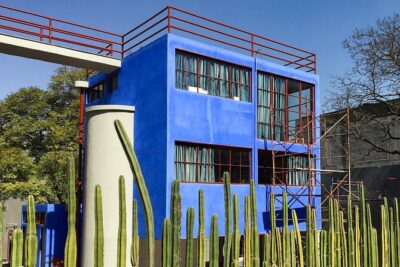
EXCLUSIVE TOUR Casa Estudio Frida Kahlo-Diego Rivera Small Groups
Read our review →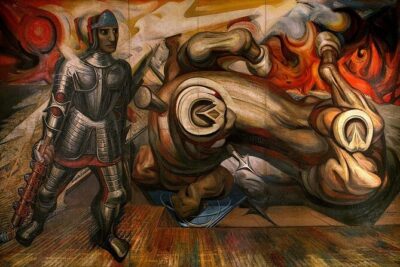
Walking Tour – Impressive murals in Historical Center of Mexico City
Read our review →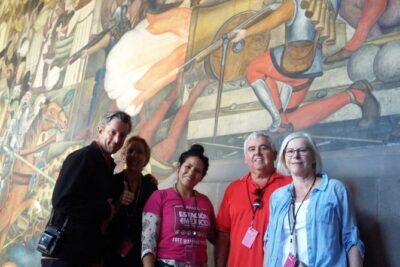
La Catrina & Muralism: Diego Rivera’s Legacy & Frida Kahlo
Read our review →
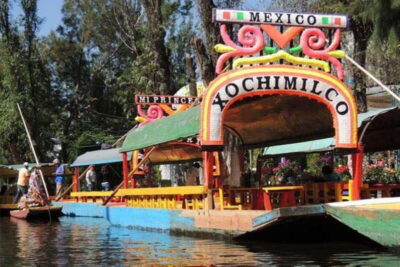
Xochimilco floating gardens, Coyoacan and UNAM murals
Read our review →Browse the lists this tour appears in