
Reviewed · MEXICO CITY HISTORIC CENTER WALKING TOURS
Private Tour in the Historic Center of CDMX with Local Guide
Mexico City’s historic center is a layered story of Aztec power, Spanish conquest, Mexican independence, and grand Porfirian architecture. This private walk brings those layers together, from the Aztec temple remains to Diego Rivera’s murals and the gold-trimmed Palacio Postal. I like the personal format and the way art, architecture, and political history share the same streets. I also like that admission fees are covered, so you can focus on the guide rather than a string of small payments. The main consideration is pace: three to four hours on foot, with many stops, calls for a moderate fitness level.
Guide Hilary receives especially strong praise for her energy, art history background, and ability to explain difficult subjects clearly. One particularly useful detail is that the walk can pass through busy public events near Palacio Nacional and the Zócalo, places where Mexico City’s current life often sits right beside its oldest monuments. The tour is private, but it does not include transportation, and the meeting and ending points require careful attention when you book.
Key points to know before you book
- Aztec and Spanish Mexico in one walk: See the remains of the old Aztec capital alongside the Metropolitan Cathedral and colonial buildings.
- Hilary’s art history strength: Her explanations of Diego Rivera’s murals and the city’s architecture are a major part of the experience.
- Private English-language guiding: Only your own group participates, giving you room to ask questions and adjust the conversation.
- Tickets are included: Entry fees and taxes are covered, including access connected with Rivera’s murals and the listed paid sites.
- A central walking route: The tour begins at Zócalo Central Hotel and ends at Palacio de Bellas Artes, with no transportation provided.
- Good value for a short introduction: At $65 per person, the price makes the most sense if you want context, not just quick photographs.
Why this part of Mexico City deserves a guided walk
Mexico City’s Centro Histórico can look simple on a map, yet its meaning changes every few steps. A cathedral occupies ground tied to the Spanish colonial period. A former convent recalls the first Franciscan presence. A post office built during the Porfirian era shows a later Mexico reaching for European style.
The most useful role of a guide here is not merely pointing out façades. It is connecting them. The remains of the Aztec capital, the cathedral, the presidential residence, and the great public square make more sense when you understand how one center of power was built over another.
This private format helps with that connection. You are not placed in a large group, and the guide can spend more time on the subjects that interest you. If art matters most, you can ask for more detail about Rivera. If political history catches your attention, the Zócalo and Palacio Nacional give the conversation a natural focus.
The walk is offered in English and lasts about three to four hours. That is enough time for a strong first look, but not enough for an unhurried visit inside every building. Think of it as a guided introduction to the district, not a full museum day.
More walks through the historic centre:
- Historic Downtown Walking Tour
★ 5.0 · 1,289 reviews - Historic Center Food Tour in Mexico City
★ 5.0 · 1,263 reviews - Mexico City: Historic Downtown Walking Tour
★ 4.8 · 1,039 reviews
Beginning near the Zócalo and the Aztec past
The published meeting point is Zócalo Central Hotel at Avenida 5 de Mayo 61. The route also includes the main temple of the Aztecs and the remains of Tenochtitlan, the city that once occupied this center.
This is where the tour’s central idea comes into focus. Mexico City is not simply an old Spanish city. It was built over an older Aztec capital, and the surviving remains help you picture that earlier world. A guide can explain the conquest and show how the physical center changed after the Spanish takeover.
That historical shift is not treated as a distant footnote. It shapes what you see all morning. The cathedral, the government buildings, and the open square are not random attractions. They are part of a long struggle over authority, religion, and public space.
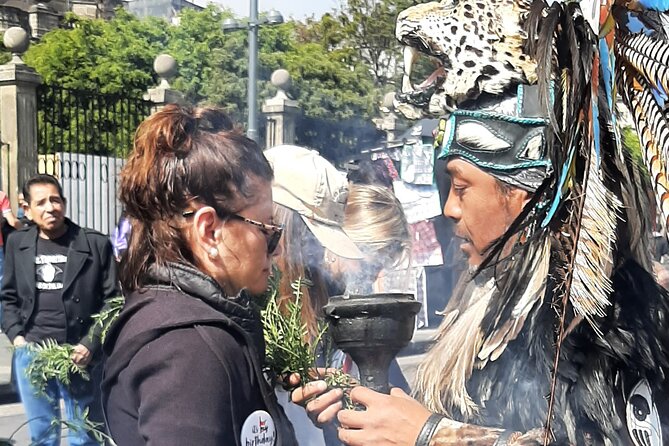
The review material describes a large demonstration near Palacio Nacional during one walk. Hilary explained that public events of this sort are common. You should not expect a quiet, museum-like center at every moment. Instead, you may find modern political life unfolding beside the monuments, which can make the history feel immediate rather than sealed behind glass.
Palacio de Bellas Artes and Rivera’s murals
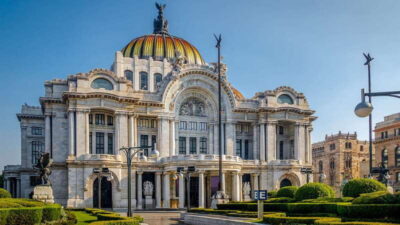
Palacio de Bellas Artes is one of Mexico City’s most recognizable buildings. The scheduled visit allows about 30 minutes, with admission included.
The building gives you a strong lesson in Mexico’s changing architectural tastes. Its exterior and interior reflect the grand ambitions associated with the Porfirian period, while the murals and cultural use connect it to modern Mexican identity. The exact amount of time inside will feel brief if you want to study every detail, but it works well as part of a wider walking route.
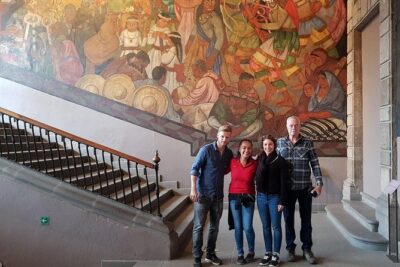
The next stop, Museo Vivo del Muralismo, is allotted about 40 minutes and has no separate admission charge. Here the focus is Diego Rivera’s murals. This may be the strongest stop for anyone who wants more than a quick look at Mexico’s famous public art.
Rivera’s work is easier to appreciate when someone explains the figures, events, and political ideas shown in the walls. Hilary is praised for her art history background, and that matters here. You can expect interpretation rather than a simple identification of the artist and title.
I would give this portion your full attention. The museum visit is one of the reasons the $65 price can make sense, particularly if you are new to Mexican muralism and would otherwise see the paintings without much context.
The Metropolitan Cathedral and Mexico’s layered center
The Catedral Metropolitana de la Ciudad de Mexico receives about 15 minutes. It was begun in 1573 and serves as the seat of the archbishopric.
Fifteen minutes is enough for an introduction, but not a detailed architectural study. The cathedral is large, complicated, and tied to the city’s long colonial development. The guide can point out the challenge of its construction and explain why the building took shape over such a long period.
A short stop here works because the cathedral is part of a larger sequence. You are not seeing it in isolation. First comes the Aztec past, then the colonial church, then the government center and public square. The contrast is the lesson.
If you want quiet time for prayer, close inspection, or photographs, you may need to return on your own. The tour’s purpose is to give you the story and the setting, not to replace a full cathedral visit.
More Historical Tours in Mexico City:
- Walking Tour of the Historic Center of Mexico City
★ 5.0 · 870 reviews - Mexico City Historical Centre Food Tour with 7 Authentic Tastings
★ 5.0 · 723 reviews - Walking Tour in Mexico City for Exploring their Cultural Heritage
★ 5.0 · 245 reviews - Walking Tour – Impressive murals in Historical Center of Mexico City
★ 5.0 · 224 reviews
Palacio Nacional and the city’s political heart
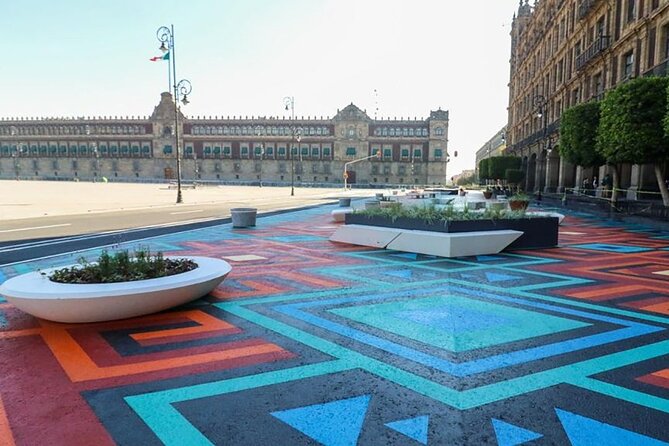
The official residence of the President of the Mexican Republic is included among the central sights. The supplied schedule does not assign it a numbered stop or a separate visit duration, so you should confirm with the provider exactly how much time is planned inside or outside the building.
Its importance is clear even if the visit is brief. This is one of the places where Mexico’s past and present meet. Public demonstrations, government activity, and major historic events all connect to the area around Palacio Nacional and the Zócalo.
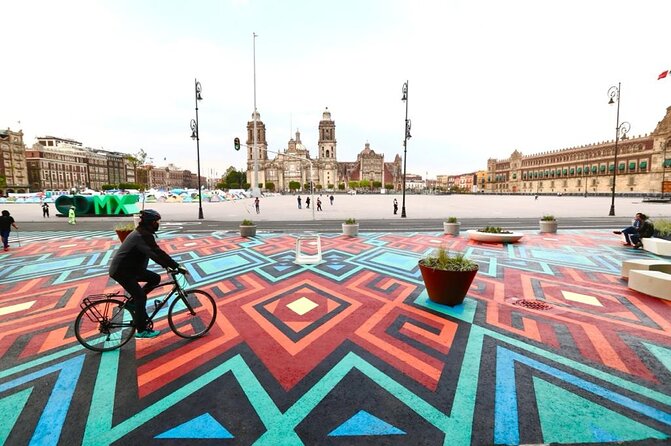
The Zócalo receives about 15 minutes and is described as the heart of Mexico City and the second biggest square in the world. The exact experience will depend on what is happening there on the day. You may find ceremonies, demonstrations, crowds, or open space. That changing character is part of the point.
A guide adds value here by helping you read the square as a civic room. It is not only a place to take a wide photograph. It is where political power, religion, tourism, and daily city life meet.
House of Tiles and the old commercial streets
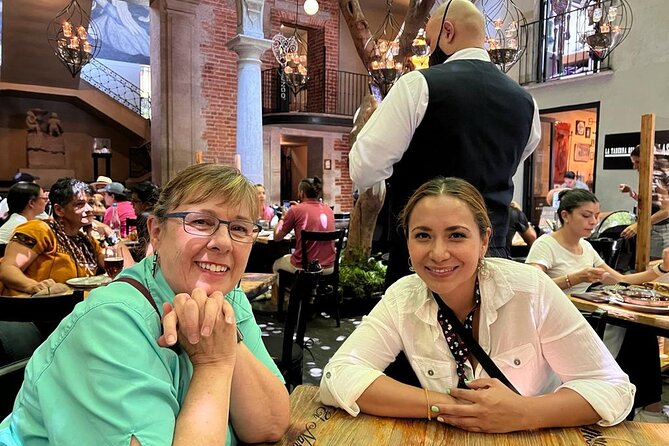
The House of Tiles receives a 10-minute stop. It was the 18th-century residence of the Counts of the Orizaba Valley and is now a restaurant.
The attraction is its appearance and its setting in the historic center. Ten minutes is enough for a quick look, a few photographs, and an explanation of the building’s former role. It is not enough for a meal, so treat the restaurant as a possible return stop rather than part of the tour itself.
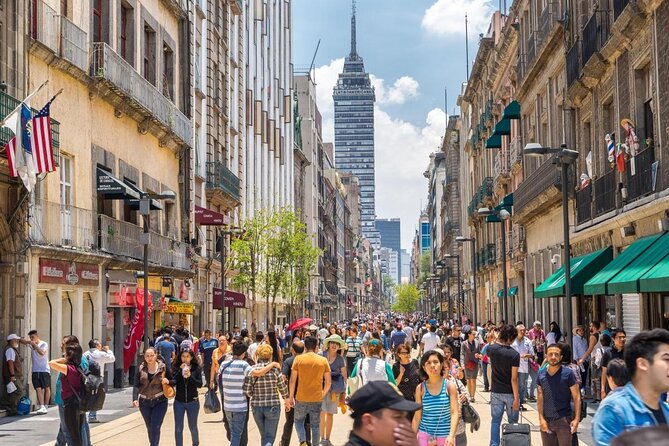
The route may also lead along Independencia and other pedestrian-oriented streets. One account describes shops and a notably attractive city view along the way. These connecting streets matter because they show the district between the official monuments. You get a sense of how the historic center functions as a real neighborhood, not just a row of attractions.
San Francisco and the first Franciscan presence
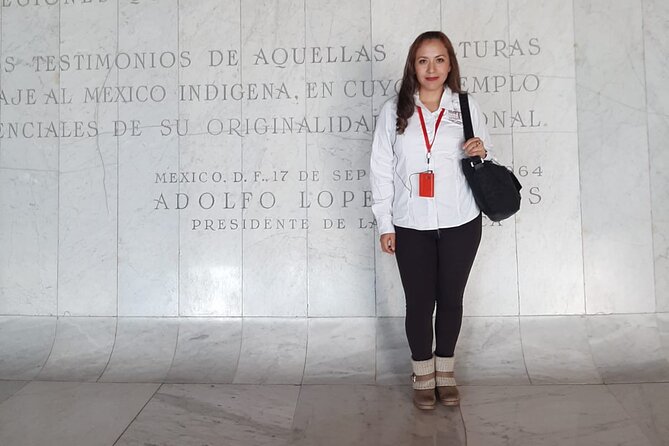
Templo y Exconvento San Francisco de Asis receives about 30 minutes, with admission included. It was the first convent of the Franciscan order and dates to the 16th century.
This is one of the more useful stops for understanding how Spanish religious institutions took root after the conquest. The building is not just an old church. It represents the early Franciscan presence and the role of religious orders in shaping colonial Mexico.
The half-hour allotment gives the guide enough time to explain the site without making the entire tour feel like a church crawl. If religious architecture is a major interest, you may want more time than the schedule allows. For a first visit, the stop should provide a clear introduction.
Palacio Postal and Art Nouveau detail
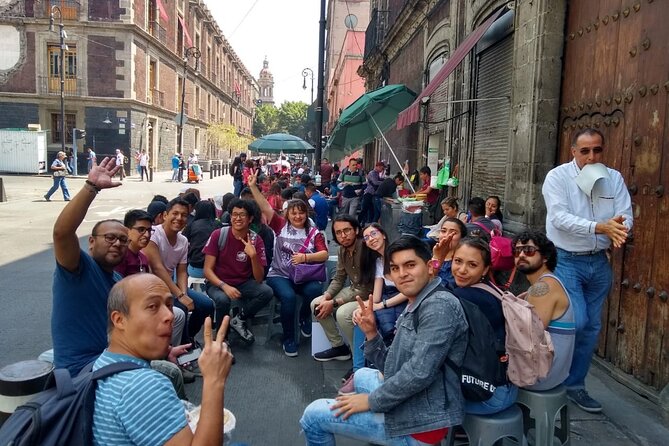
Palacio Postal is allotted about 15 minutes, with admission included. It remains a functioning post office and is known for its Art Nouveau design.
This is a fine reminder that Mexico City’s historic center is not limited to Aztec and colonial buildings. The post office belongs to a later era, when the city was presenting itself as modern, cultured, and internationally minded.
Because the building still functions as a post office, the visit has a practical quality that many historic monuments lack. You are looking at a working public building, not only a preserved shell. Fifteen minutes should be enough to appreciate the interior and hear the main explanation, though anyone interested in decorative details may wish to return independently.
Antiguo Palacio de Iturbide and the final stretch
The Museo Antiguo Palacio de Iturbide receives about 15 minutes and is free to enter. It was the residence of Mexico’s first emperor and now hosts changing art exhibitions.
The building adds another chapter to the city’s political story. After Aztec rule and Spanish colonial rule, Mexico moved through its own experiments with government and empire. A former imperial residence makes that transition visible.
Because exhibitions can change, the precise content of your visit may vary. The reliable point is the building’s former role and its current use as a museum. It is a useful short stop, especially for people who enjoy seeing historic residences repurposed for public culture.
The stated end point is Palacio de Bellas Artes on Avenida Juárez. Since Bellas Artes also appears as the first numbered stop, confirm the sequence when booking. The practical information presents the hotel as the starting point and Bellas Artes as the end point, while the route description may place attractions in a different order.
What the $65 price really buys you
At $65 per person, the tour is not the cheapest way to walk through the center. You are paying for a private English-language guide, a three to four hour route, and included tickets, taxes, and fees.
The value improves if you want interpretation. You could photograph the cathedral, Zócalo, House of Tiles, and Palacio Postal on your own, but the connection between the Aztec remains, colonial institutions, Rivera’s murals, and later political history would be harder to assemble.
The price also works better for a small private group than for one person traveling alone. Group discounts are available, though the exact discount is not provided. Ask for the current group rate before booking.
Transportation is not included. That is less of a problem here because the start and end points are both in the historic center, and the meeting point is near public transportation. Still, you must get yourself to Zócalo Central Hotel and arrange your onward travel from Palacio de Bellas Artes.
Pace, comfort, and practical planning
Plan for substantial walking and a moderate level of physical fitness. The route has several stops, but the itinerary also involves moving between them on foot through one of the city’s busiest central areas.
Wear comfortable shoes and leave room for the schedule to breathe. The listed durations range from 10 to 40 minutes, yet public activity, demonstrations, crowds, or access conditions can affect the rhythm. The tour’s private format gives you a better chance to ask for clarification or spend a little longer on a subject, but it does not turn a half-day walk into a full-day museum visit.
Confirmation is sent within 48 hours of booking, subject to availability. Free cancellation is available up to 24 hours before the experience begins. If your plans are uncertain, that deadline matters, since changes or cancellations inside 24 hours are not accepted for a refund.
Who will get the most from this experience
I would choose this tour if you are visiting Mexico City for the first time and want the historic center explained rather than simply photographed. It is especially suitable for people interested in art, architecture, conquest, religion, and public history.
It also suits couples, families, or friends who prefer a private conversation to a large group. Hilary’s energy and art history focus appear to be a strong match for anyone who wants detailed explanations of Rivera’s murals and the buildings along the route.
I would hesitate if you dislike walking, want long museum visits, or prefer exploring entirely at your own pace. The itinerary covers a lot, and several stops are intentionally short. You may leave with a strong map of the district and a list of places to revisit, rather than having seen every interior in detail.
Should you book the Centro Histórico walk?
Book it if you want a compact, private introduction to Mexico City’s historic center, with special attention to Rivera, architecture, and the city’s layered political past. The included tickets and personal guiding make $65 a fair price for a three to four hour experience, especially when shared with a small group.
Before paying, confirm the walking order, the treatment of Palacio Nacional, and the exact meeting instructions. If those details suit your plans and you can manage the pace, this is a practical way to understand the center quickly, with Hilary’s art history skills adding real value.
FAQ
How much does the private tour cost?
The price is $65 per person. Group discounts are available, but the exact discount is not stated.
How long does the tour last?
The experience lasts approximately three to four hours.
Is the tour private?
Yes. Only your group participates in the activity.
Is the tour offered in English?
Yes. The tour is offered in English.
What is included in the price?
All fees and taxes are included, along with tickets for Rivera’s murals and tickets for the listed included sites.
Is transportation included?
No. Transportation is not included.
Where does the tour begin?
The stated starting point is Zócalo Central Hotel, Avenida 5 de Mayo 61, Centro Histórico, Mexico City.
Where does the tour end?
The stated ending point is Palacio de Bellas Artes on Avenida Juárez in the historic center.
Can I cancel for a full refund?
Yes, if you cancel at least 24 hours before the experience start time. Cancellations or changes made less than 24 hours before the start are not refunded or accepted.
Just added around Mexico City
- Xochimilco’s Wild Side: Mezcal, Insects & Culture★ 4.9 · 10 reviews
- Xochimilco: Food and Trajinera Ride with Local Women★ 5.0 · 5 reviews
- Xochimilco: Island of the Dolls Tour Games and Drinks★ 5.0 · 25 reviews
- Xochimilco Ecological Tour – Away From the Crowds (3 Hours)★ 5.0 · 15 reviews
- Xochimilco + Coyoacán Combo Full-Day Tour★ 5.0 · 3 reviews
- Xochimilco floating gardens, Coyoacan and UNAM murals★ 4.0 · 6 reviews
- Val´quirico And The City of Angels Puebla From Mexico City★ 5.0 · 3 reviews
- Xochimilco: amanecer en kayak Ciudad de México★ 5.0 · 35 reviews
Mexico City Historic Center Walking Tours, compared.




Walking Tour – Impressive murals in Historical Center of Mexico City
Read our review →
Muralist Art Semi Private Walking Tour in Mexico City Downtown
Read our review →Browse the lists this tour appears in