
Reviewed · DIEGO RIVERA MURAL TOURS
Palace of Fine Arts Mural Tour
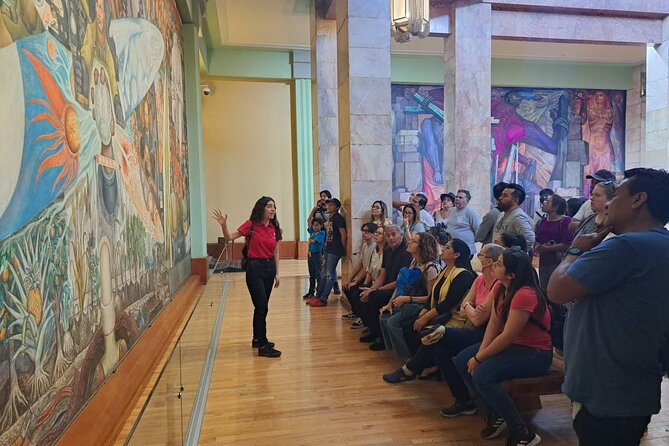
The most compelling part of this tour is the story behind the pictures. Inside Mexico City’s Palacio de Bellas Artes, you’ll look closely at murals by Diego Rivera, David Alfaro Siqueiros, José Clemente Orozco, Jorge González Camarena, Rufino Tamayo, and others, while hearing how art, politics, and national identity meet on the walls. The Rockefeller Center mural story gives the visit an especially sharp edge.
I like the focused length, about 1 to 1.5 hours, and the chance to study several major works without giving up half your day. I also like that the tour covers both the building and the art, with guide León praised for clear English, careful explanations, and lively storytelling. The main caution is the price, $56.75 per person, and the conflicting admission information, so confirm exactly what your booking includes before paying.
Key points at a glance
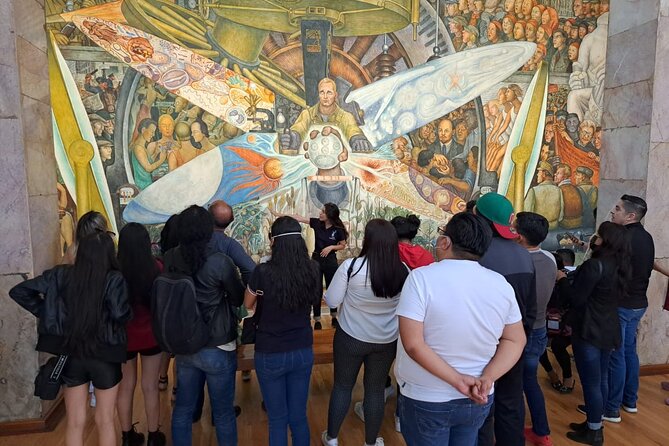
- Rivera’s destroyed Rockefeller Center mural: Learn why Diego Rivera’s New York commission was removed and how its ideas live on in Mexico.
- Seven major mural subjects: The route includes Rivera, Siqueiros, Orozco, González Camarena, Tamayo, and Rodríguez Lozano.
- Architecture plus painting: The guide explains the exterior and interior of Bellas Artes, not only the artworks.
- English-language guidance: León is specifically praised for explaining symbolism, history, and artistic details in English.
- A compact central Mexico City visit: The tour begins and ends at Palacio de Bellas Artes and lasts about 90 minutes.
- A small but not intimate group: Up to 35 people can join, which may affect how easily you can hear and see the guide.
Why the murals inside Bellas Artes matter
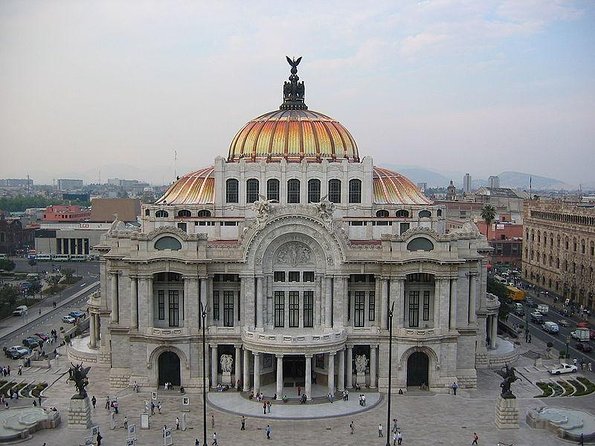
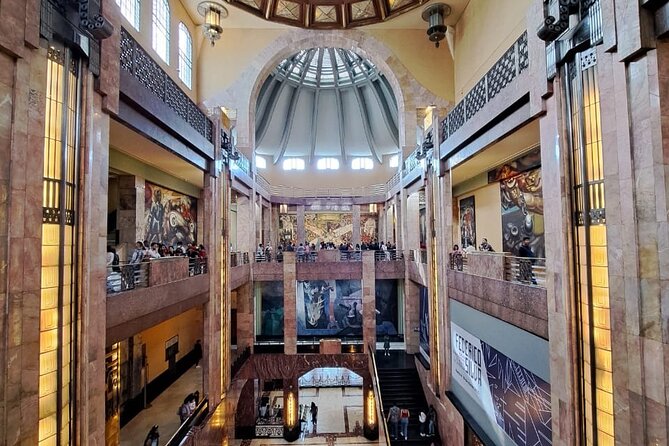
Palacio de Bellas Artes is more than a handsome theater and museum in Mexico City’s historic center. It is the setting for one of the clearest introductions to Mexican muralism, a movement that used large public paintings to tell stories about power, workers, revolution, Indigenous identity, religion, and modern life.
The building was declared a UNESCO World Heritage Site in 1987. On this tour, the architecture provides the frame for the art. You’ll hear about the project associated with Porfirio Díaz, then move into the interior to see how later artists filled the building with competing visions of Mexico.
That context matters. A mural can be hard to read when you see it as a huge wall of figures and colors. A good guide helps you notice who is holding what, which political symbols repeat, and how the artist wants you to react. The strongest part of this experience is not simply counting famous names. It is learning why these paintings were created and what they were trying to say.
The tour is offered in English, which makes it useful if you want more than a quick look around. The information provided lists a certified guide, and León is the guide specifically named in the feedback. His explanations are described as detailed and easy to follow, including symbolism, artist background, and historical context.
More Diego Rivera mural tours:
- CDMX: Xochimilco, Coyoacan, Frida Kahlo Museum & Murals Tour
★ 4.4 · 3,025 reviews - Mexico City; ART NACO : Murals & Street Art Bike Tour
★ 5.0 · 284 reviews - EXCLUSIVE TOUR Casa Estudio Frida Kahlo-Diego Rivera Small Groups
★ 5.0 · 237 reviews
Start at Palacio de Bellas Artes
You meet at Palacio de Bellas Artes, Av. Juárez S/N, in the Centro Histórico area of Cuauhtémoc. The activity ends at the same meeting point, so you do not need to arrange a separate ride back from the tour.
The visit includes an explanation of the building’s interior and exterior. That is important because Bellas Artes is not merely a container for the murals. Its design and history help explain why the site became such an important cultural location.
Expect the guide to set the scene before turning to individual paintings. You’ll learn about the building project linked to Porfirio Díaz and the place it holds in Mexico’s national story. The tour then turns to the murals, with attention to several of the best-known works in the palace.
The precise order may depend on access and the guide’s presentation, so think of the following as the main works and subjects covered rather than a guaranteed minute-by-minute route.
Rivera’s Man at the Crossroads and the Rockefeller Center story
Diego Rivera’s Man at the Crossroads, listed here as Universe Controlled Man, is likely to be one of the tour’s major discussion points. The key story is its connection to Rockefeller Center in New York.
Rivera was commissioned to paint a mural there, but the work became controversial because of its political imagery. The mural included Lenin, and the disagreement over its message led to the painting’s destruction. The Mexican version in Bellas Artes allows you to consider what was lost, what Rivera changed, and how the artist’s political ideas shaped his public work.
This is the sort of story that makes a short art tour worthwhile. You are not just looking at a famous painter’s style. You are seeing how a mural became a fight over who controls public space and which ideas can appear on a wall.
If you already know Rivera’s work, the Rockefeller Center episode adds useful context. If you are new to Mexican muralism, it offers an easy way into the period’s political tensions.
González Camarena’s Liberation
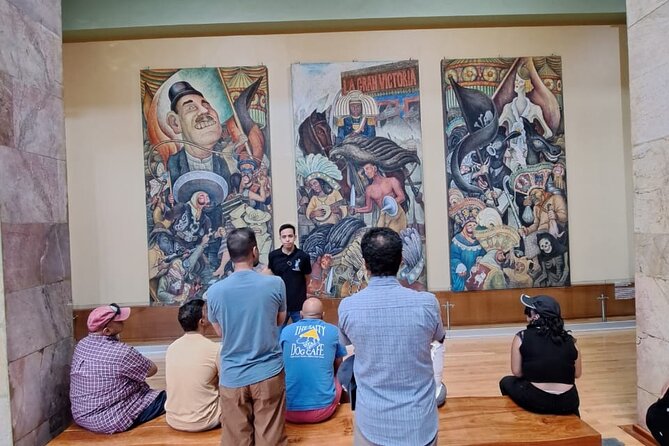
Jorge González Camarena’s Liberation brings another voice into the tour. The title itself points toward themes of freedom and national identity, but the guide’s explanation is what helps you read the symbols and figures within the composition.
The value here is comparison. Rivera’s work can feel direct and political, while González Camarena’s painting gives you another approach to Mexican history and identity. Seeing both in the same building lets you compare their treatment of the past instead of studying either work in isolation.
The tour is especially useful for anyone who tends to move quickly through museums. A guide can pause the group at the details that are easy to miss, then connect them to the artist and the period.
A completely different kind of day in Mexico City:
- Teotihuacan, Guadalupe Shrine & Tlatelolco Day Tour with Lunch
★ 5.0 · 11,603 reviews - Xochimilco, Coyoacan and Frida Kahlo with Optional Lunch
★ 4.5 · 7,320 reviews - Balloon flight + Breakfast in cave + Pyramids + Pick up CDMX.
★ 5.0 · 6,335 reviews - Teotihuacan pyramids morning or afternoon without tourist traps
★ 5.0 · 6,186 reviews
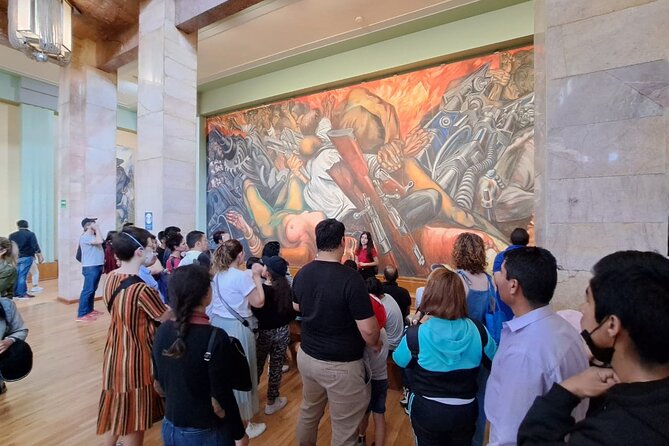
Orozco’s Katharsis
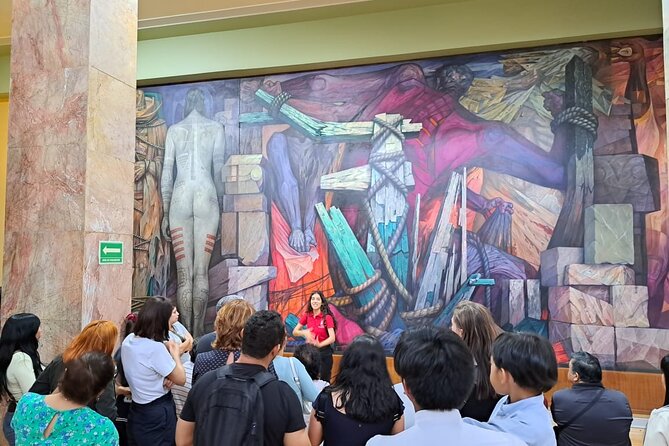
José Clemente Orozco’s Katharsis is one of the darker, more forceful works on the route. Even without a long art background, you can expect this painting to prompt discussion about violence, technology, social upheaval, and the cost of modern life.
Orozco’s work is not simply decorative. It can feel unsettling, and that is part of its purpose. A careful explanation helps you understand why the mural’s mood is so different from a celebratory national scene.
This is a good place to listen closely rather than trying to photograph every detail. The tour’s stated focus on symbolism and context is most useful with works that can seem chaotic at first glance.
Rivera’s Carnival of Huejotzingo
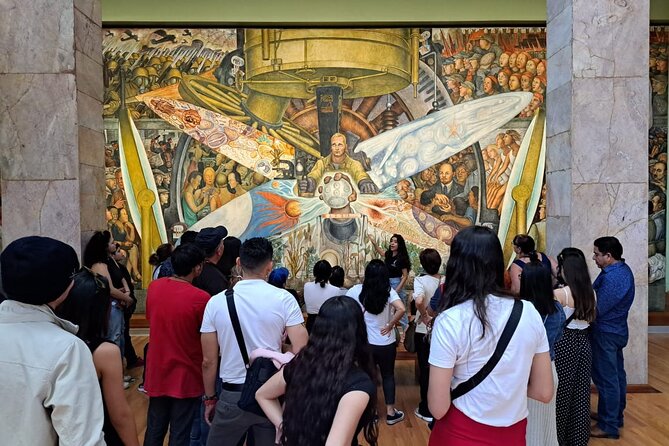
Rivera’s The Carnival of Huejotzingo shifts the subject toward popular tradition and Mexican society. The title refers to a carnival in Huejotzingo, and the work gives the guide another chance to explain how Rivera used familiar cultural scenes to build a larger picture of the country.
Look for the contrast between everyday celebration and the historical forces that shaped Mexican identity. Rivera’s murals often invite you to scan the whole surface, then return to individual figures and details. The guide’s role is to show how those pieces fit together.
This work also helps balance the tour. You are not looking only at conflict and political argument. You are also considering custom, public life, and the ways artists turned local subjects into national art.
Siqueiros and the struggle for a new Mexico
David Alfaro Siqueiros is represented by the diptych Torment and Apotheosis of Cuauhtémoc and the Triptych of the New Democracy. These works bring Indigenous history, conquest, political struggle, and modern revolution into the discussion.
Cuauhtémoc, the last Mexica ruler of Tenochtitlan, has long been used as a symbol of resistance. A guide can help you see how Siqueiros presents his suffering and symbolic rise, and how the painting connects the pre-Hispanic past with later political struggles.
The Triptych of the New Democracy gives the tour another route into Siqueiros’s political thinking. The title signals a concern with social change and the meaning of democracy, while the scale and force of the work make it difficult to treat as neutral decoration.
Siqueiros can be demanding at first. His murals often use strong movement and dramatic forms, and a quick glance may not reveal how the figures relate to one another. This is where the tour’s close explanation earns its keep.
Tamayo and Rodríguez Lozano
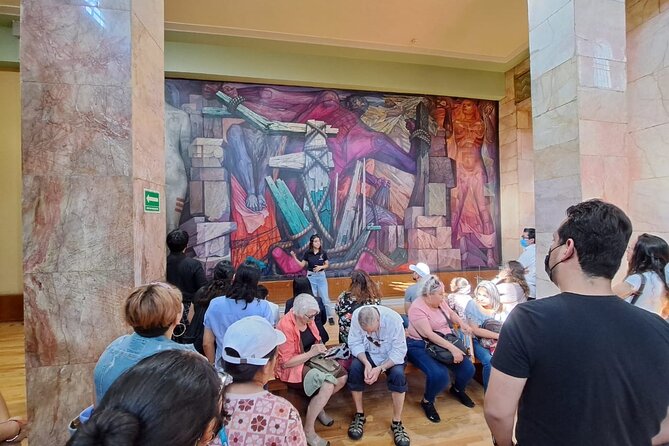
The tour also includes Rufino Tamayo and the Piedad by Rodríguez Lozano. Their presence broadens the visit beyond the best-known trio of Rivera, Orozco, and Siqueiros.
Rufino Tamayo is important because Mexican art was never a single style or political program. His work gives you a point of comparison with the more openly social muralism associated with Rivera and Siqueiros.
The Piedad adds another subject and mood to the route. Religious imagery has a long place in Mexican art, and the work lets you consider how older visual traditions continued inside a modern national art institution.
The information provided does not specify which Tamayo work you will study in detail, so keep your expectations practical. You will receive an explanation of Tamayo’s presence and the Piedad, but the exact amount of time spent on each piece may depend on the guide and group.
What the 90-minute format means
The listed duration is about one hour and 30 minutes, though the general tour information also gives a range of one to 1.5 hours. That is a sensible length for a focused introduction.
You’ll have enough time to hear the main stories and examine a selection of murals without committing an entire morning or afternoon. The tradeoff is that this is not a slow, scholarly study of every work in Bellas Artes. Seventeen murals are referenced in the description, but the highlighted works make clear that the tour concentrates on selected artists and subjects.
I would choose this format if you want structure. It keeps you from wandering past major paintings without understanding them. If you already have a strong background in Mexican muralism, you may want a longer museum visit afterward so you can study the works at your own pace.
The maximum group size is 35 people. That is not a private tour, and a large group can make it harder to stand close to the guide or hear every word. Arrive ready to stay with the group and ask questions when there is a natural pause.
Is $56.75 a fair price?
At $56.75 per person, this is not a cheap museum orientation. The value depends on how much you want guided interpretation rather than independent viewing.
You are paying for a certified guide, an English-language explanation, and a concentrated lesson covering architecture, artists, political events, and symbolism. For a first visit to Bellas Artes, that can save you from spending an hour looking at murals without knowing what connects them.
The supplied details also create an important question: the inclusion section lists entries, while the itinerary says admission ticket not included. Do not assume the entrance fee is covered. Confirm this before booking, because the final value changes if you must pay separately at the palace.
Food and drinks are not included, but that is not a serious drawback for a 90-minute activity. You can plan your meal separately in the historic center.
Who will get the most from this tour?
I would recommend it to you if you want a clear introduction to Mexican muralism, prefer a guide to explain symbolism, or have limited time in Mexico City. It also suits anyone curious about the political story behind Rivera’s destroyed Rockefeller Center mural.
The experience is a good match for first-time visitors to Bellas Artes, art students, history readers, and anyone who feels unsure about how to approach large public paintings. The reviews supplied with the tour repeatedly praise the guide’s preparation and ability to explain details in English. León is described as friendly, well prepared, and especially strong at connecting each mural to its historical setting.
You may want to skip it if you prefer to wander alone, dislike fixed pacing, or already know these works well. The group can reach 35 people, and the price is high for a short visit if you only want to see the building.
Most people can participate, and service animals are allowed. The palace is near public transportation, which makes the central meeting point practical. Confirmation is received at booking, and free cancellation is available if you cancel at least 24 hours before the local start time. Inside 24 hours, the payment is not refunded and changes are not accepted.
Should you book the Palace of Fine Arts Mural Tour?
Book it if the murals are a priority and you want their political and cultural meaning explained in English. The strongest reason to choose it is the guide-led interpretation, especially the connection between Rivera’s Bellas Artes mural and the destroyed Rockefeller Center commission.
The tour earns its place in your Mexico City plan when you value context, clear storytelling, and a compact schedule. Before confirming, ask about the admission fee because the supplied booking details are inconsistent. If entry is not included, add that cost to your calculation.
For an independent museum visit, spend the money elsewhere. For a focused introduction to Rivera, Siqueiros, Orozco, González Camarena, Tamayo, and Rodríguez Lozano, this is a sensible short tour with unusually strong attention to the stories behind the paint.
FAQ
Where does the Palace of Fine Arts Mural Tour begin?
It begins at Palacio de Bellas Artes, Av. Juárez S/N, Centro Histórico de la Ciudad de México, Cuauhtémoc, 06050 Ciudad de México, Mexico.
Where does the tour end?
The activity ends back at the meeting point at Palacio de Bellas Artes.
How long does the tour last?
The tour lasts about one hour to one hour and 30 minutes. The detailed duration is listed as approximately 1 hour 30 minutes.
What language is the tour offered in?
The tour is offered in English.
How much does the tour cost?
The listed price is $56.75 per person.
Is admission to Palacio de Bellas Artes included?
The information is inconsistent. One section lists entries as included, while the itinerary says the admission ticket is not included. Confirm this point before booking.
Which artists are covered?
The tour covers Diego Rivera, David Alfaro Siqueiros, José Clemente Orozco, Jorge González Camarena, Rufino Tamayo, and Rodríguez Lozano.
Which murals are discussed?
Highlighted works include Universe Controlled Man, Liberation, Katharsis, The Carnival of Huejotzingo, Torment and Apotheosis of Cuauhtémoc, The New Democracy, and the Piedad by Rodríguez Lozano.
How many people can join the tour?
The maximum group size is 35 people.
Can I cancel for a full refund?
Yes. You can cancel for a full refund if you cancel at least 24 hours before the experience’s start time. Cancellations or changes made within 24 hours are not refunded or accepted.
Just added around Mexico City
- Xochimilco’s Wild Side: Mezcal, Insects & Culture★ 4.9 · 10 reviews
- Xochimilco: Food and Trajinera Ride with Local Women★ 5.0 · 5 reviews
- Xochimilco: Island of the Dolls Tour Games and Drinks★ 5.0 · 25 reviews
- Xochimilco Ecological Tour – Away From the Crowds (3 Hours)★ 5.0 · 15 reviews
- Xochimilco + Coyoacán Combo Full-Day Tour★ 5.0 · 3 reviews
- Xochimilco floating gardens, Coyoacan and UNAM murals★ 4.0 · 6 reviews
- Val´quirico And The City of Angels Puebla From Mexico City★ 5.0 · 3 reviews
- Xochimilco: amanecer en kayak Ciudad de México★ 5.0 · 35 reviews
Diego Rivera Mural Tours, compared.
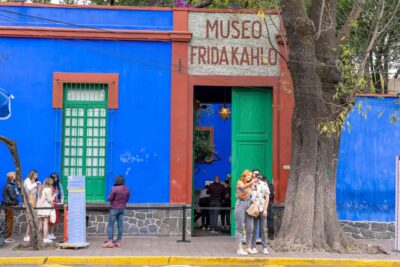
Xochimilco, Coyoacan, Frida Kahlo Museum & Murals Tour
Read our review →
Mexico City; ART NACO : Murals & Street Art Bike Tour
Read our review →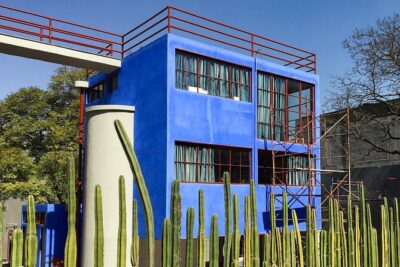
EXCLUSIVE TOUR Casa Estudio Frida Kahlo-Diego Rivera Small Groups
Read our review →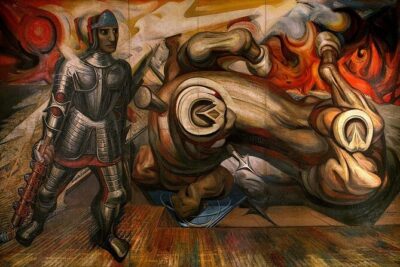
Walking Tour – Impressive murals in Historical Center of Mexico City
Read our review →
La Catrina & Muralism: Diego Rivera’s Legacy & Frida Kahlo
Read our review →
Xochimilco floating gardens, Coyoacan and UNAM murals
Read our review →Browse the lists this tour appears in