
Reviewed · MEXICO CITY HISTORIC CENTER WALKING TOURS
Mexico City’s Historical Center Icons
Mexico City’s past is packed into a few walkable blocks, where Aztec ruins sit beside a Spanish cathedral and early 20th-century palaces. This private tour gives you that story in a clear order, from the Mexica city to modern Mexico, while guides such as Alejandro and Tlilal add local context.
I like the private format, since your group can ask questions and set the pace. I also like the route’s mix of archaeology, religion, politics, and architecture, especially the chance to see grand interiors you might otherwise pass by. The main drawback is timing: four hours can provide a strong introduction, but not enough time for long museum visits or every major building in the Centro Histórico.
Key points to know before booking
- A private four-hour walking tour gives your group direct access to an English-speaking guide and room for questions.
- The historical sequence works well, moving from Mexica ruins to colonial churches and then to the grand architecture of modern Mexico.
- Alejandro is a strong choice for history-minded visitors, with clear English and a gift for linking archaeology, politics, culture, and current events.
- The route ends at Palacio de Bellas Artes, a useful point for continuing your own sightseeing.
- The $98 price buys personal attention, not transportation or a full museum program.
- Weekend timing matters, since the listed operating window is Saturday and Sunday from 10 a.m. to 2 p.m.
Why this compact route works so well
The Centro Histórico can feel like several cities layered on top of one another. You have the Mexica capital, the Spanish colonial city, the independent Mexican nation, and the grand public buildings of the late 19th and early 20th centuries, all within a short stretch.
That layering is the real strength of this outing. Instead of seeing six unrelated landmarks, you get a basic framework for understanding how Mexico City changed over time. A guide can point out why a cathedral occupies this location, what the ruins reveal about the earlier city, and how later buildings expressed Mexico’s wealth and national ambitions.
You should expect a walking experience rather than a ride between sights. Reviews describe it as a street-based tour, and the route from the Plaza de la Constitución to Bellas Artes keeps you close to the core sights. Wear comfortable shoes, bring sun protection, and carry a little cash for a snack or drink, since those are not included.
The group is private, so you will not be trying to keep up with a large crowd. That matters in the Centro Histórico, where sidewalks and entrances can feel busy. It also lets you spend more time on the subjects that interest you, such as archaeology, church art, architecture, politics, or modern city life.
More walks through the historic centre:
- Historic Downtown Walking Tour
★ 5.0 · 1,289 reviews - Historic Center Food Tour in Mexico City
★ 5.0 · 1,263 reviews - Mexico City: Historic Downtown Walking Tour
★ 4.8 · 1,039 reviews
Starting at the Metropolitan Cathedral
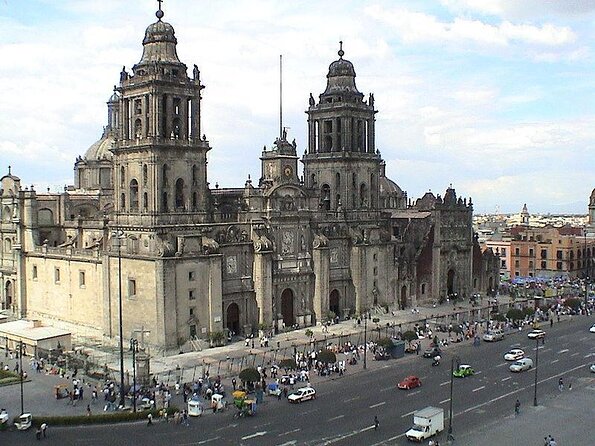
The tour begins at Plaza de la Constitución, commonly called the Zócalo, at the Metropolitan Cathedral. This is a fitting place to start because the cathedral represents the Spanish colonial order that replaced the Mexica capital.
You spend about 30 minutes here discussing its history. That is enough time for an overview and a look at the building, but not a slow architectural study. The cathedral is monumental, and its scale helps you understand the importance of religion and government in the colonial city.
The guide’s explanation is especially useful here because the building can be easy to treat as just another grand church. A chronological approach helps place it in the larger story of Mexico City. Alejandro, in particular, has been praised for explaining the city’s history from the 1500s through the 1950s in a way that connects one period to the next.
The cathedral is listed with no admission charge for this experience. Still, the tour is not designed as a long, silent church visit. If you want extended time for details, photographs, or prayer, you may need to return on your own.
Seeing the Mexica city at Templo Mayor
From the cathedral, the route turns to the Museo del Templo Mayor and the ruins of the pre-Columbian Mexica city. This is the archaeological heart of the tour.
The contrast is powerful. Within minutes, you move from a major Catholic cathedral to the remains of the civilization that existed before the Spanish conquest. That physical closeness is one of the best reasons to explore the historic center with a guide. On your own, you might notice the ruins but miss how sharply they change your understanding of the surrounding streets.
The scheduled visit lasts about 30 minutes. That makes this a short introduction rather than a full museum session. You can expect the guide to explain the importance of the ruins and place them in the development of the city. If archaeology is your main interest, you may want extra time here after the tour.
The pricing information lists admission as free for the stops, while the general terms say entrance fees to museums not specified in the tour are not included. The practical point is simple: ask at booking or before starting if you plan to enter additional museum areas. Do not assume that every museum in the historic center is covered by the $98 fee.
Looking inside the Gran Hotel Ciudad de Mexico
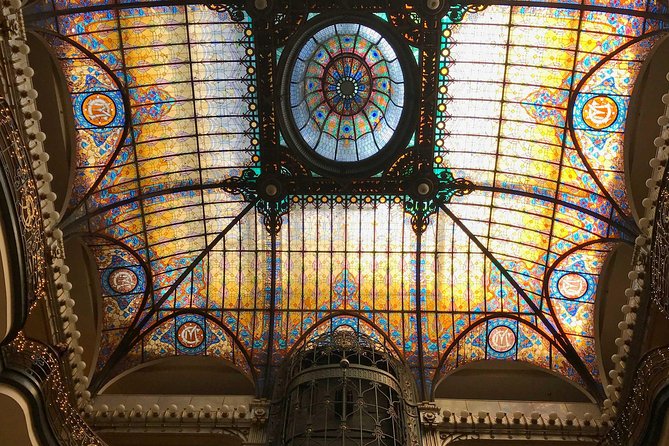
The Gran Hotel Ciudad de Mexico offers a change of mood. This elegant Art Nouveau building dates from the transition between the 19th and 20th centuries, and the stop lasts about 15 minutes.
That short visit works as an architectural pause. After the archaeological remains and cathedral, you see how Mexico City presented itself as a modern capital at the turn of the century. The building’s interior is one of the places a guide can help you notice details you might otherwise miss.
Several people specifically appreciated being shown inside impressive buildings they would have passed without entering. That is a useful benefit of a private tour. You are not only checking landmarks off a list; you are getting help with the doors, interiors, and background that are easy to overlook.
Do not expect a long tour of the hotel. Fifteen minutes is enough for a quick look and explanation, not a detailed architectural lecture. The value here comes from the route’s variety.
More Historical Tours in Mexico City:
- Walking Tour of the Historic Center of Mexico City
★ 5.0 · 870 reviews - Mexico City Historical Centre Food Tour with 7 Authentic Tastings
★ 5.0 · 723 reviews - Walking Tour in Mexico City for Exploring their Cultural Heritage
★ 5.0 · 245 reviews - Walking Tour – Impressive murals in Historical Center of Mexico City
★ 5.0 · 224 reviews
Pausing at the House of Tiles
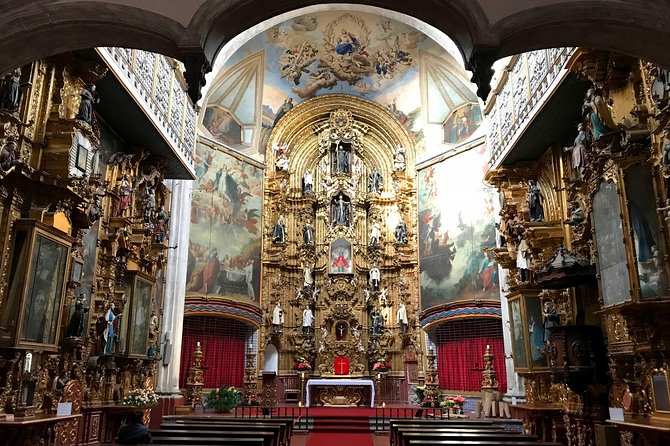
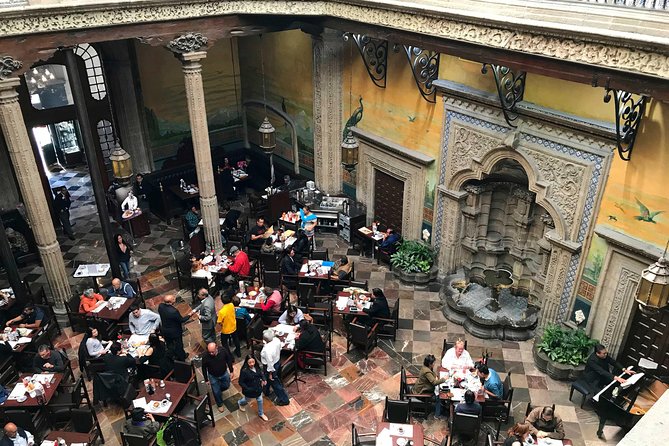
The House of Tiles, or Casa de los Azulejos, is one of the route’s most visually distinctive stops. This 18th-century house is known for its tiled exterior and ornate character, and you spend about 30 minutes here.
It gives the tour a more intimate colonial feel after the enormous cathedral and the open archaeological site. The building helps show how decoration, domestic architecture, and public display worked together in the old city.
This is also a good place to ask questions. With a private guide, you can focus on the tilework, the building’s age, or how it fits into the city’s changing architectural styles. The tour does not promise a meal or a dedicated restaurant visit, so plan to handle any food or drink costs yourself.
The 30-minute stop suggests a meaningful look rather than a quick photograph. Even so, the guide will need to keep an eye on the clock. The route has several major buildings still ahead.
Admiring the Palacio Postal
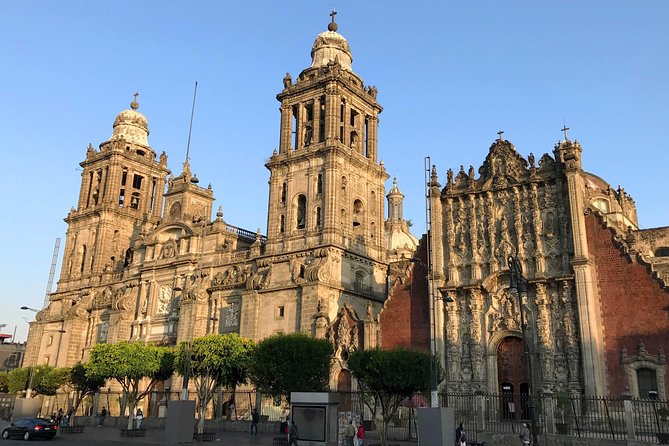
The Palacio Postal is another brief but worthwhile stop, lasting about 15 minutes. This early 20th-century post office is known for its elaborate design and formal interior.
It may seem like an ordinary public service building until you see the level of attention given to its construction. That is part of the pleasure of this route: Mexico City’s historic center puts grand architecture in places you might not expect, including a working post office.
The stop is short, so think of it as a guided introduction. You will have a chance to appreciate the building and understand its place in the city’s modernization, but you should not expect a full tour of every detail.
For architecture fans, this stop helps balance the itinerary. The tour is not only churches and ruins. It also shows how Mexico expressed confidence and civic ambition through public buildings.
Finishing at Palacio de Bellas Artes
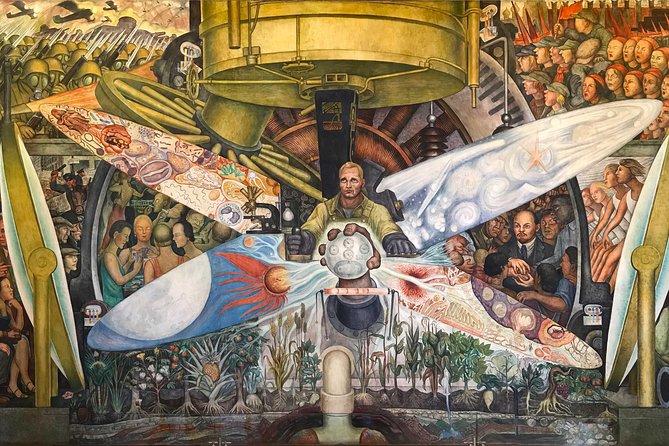
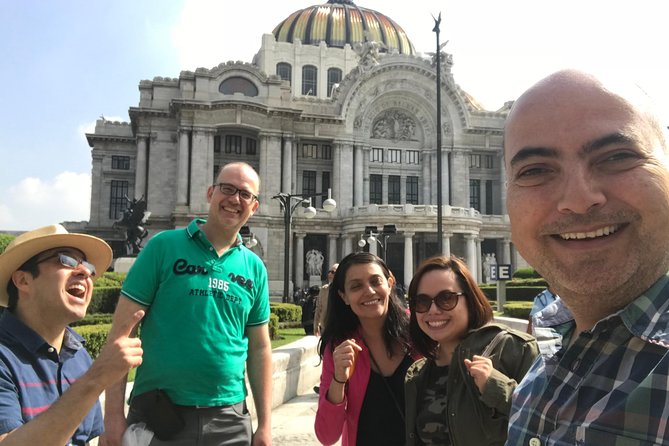
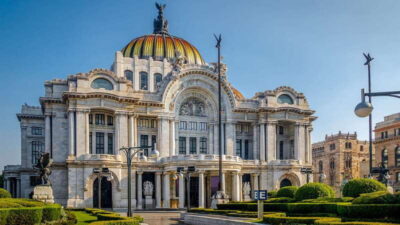
The final major stop is Palacio de Bellas Artes, one of the best-known buildings in Mexico City. You spend about 30 minutes here before finishing in the square on Avenida Juárez.
Bellas Artes works well as the endpoint because it brings together art, theater, architecture, and national identity. The building is a landmark of the Centro Histórico, and its exterior makes a strong final impression after the earlier stops.
The end point is practical, too. You finish in a central public square rather than being returned to your hotel. That means you can continue exploring, find food, visit nearby sights, or arrange your own ride from there.
Do not assume the tour includes a full museum or performance visit inside Bellas Artes. The experience is an overview of the building and the historic center. Any museum entrance not specifically included is your responsibility.
What the guides add to the experience
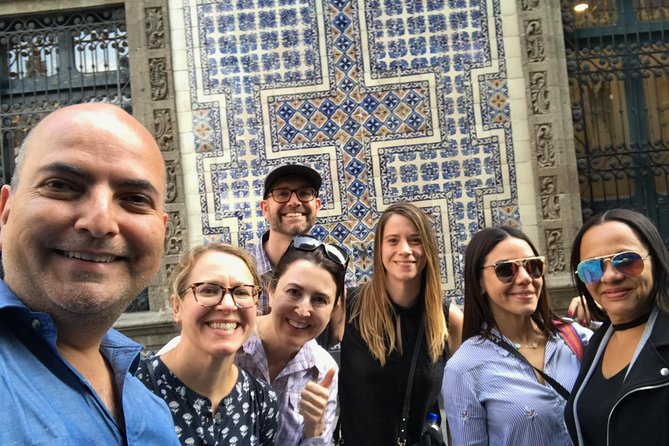
The quality of this tour depends heavily on the guide, and the feedback points to two names: Alejandro and Tlilal.
Alejandro is especially well suited to people who want more than dates and building names. He explains archaeology, history, politics, economics, culture, architecture, and current events in clear English. He also appears comfortable adjusting the route when a planned sight is unavailable.
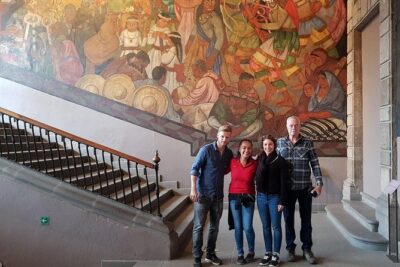
One useful example involves the National Palace murals. When the murals were closed on a Monday, Alejandro found another place to see murals rather than letting the disappointment derail the day. That kind of flexibility is valuable, though you should remember that the listed operating schedule for this experience is Saturday and Sunday.
Tlilal is described as friendly and well informed, making her a good fit if you prefer a warm, personal style. Since the tour is private, you can ask either guide to spend more time on the subjects that matter most to you.
The strongest praise centers on clear explanations, strong spoken English, patience, and pride in Mexico City. Those qualities matter more than a long list of stops. A guide who can connect the ruins, churches, public buildings, and modern city gives the route its real value.
Is $98 a fair price?
At $98 per person, this is not the cheapest way to see the Centro Histórico. You are paying for a private four-hour experience rather than a large group walk or a self-guided route.
The value improves if you are traveling with family or friends and can share the guide’s attention as a private group. You can ask questions freely, move at a comfortable pace, and shape the conversation around your interests. For a first day in Mexico City, that personal orientation can save time later.
The price does not include private transportation, snacks, or beverages beyond the supplied bottled water. It also does not cover museum entrance fees that are not specifically part of the tour. Since the route is based in the historic center, transportation is less important than it would be on a citywide tour, but you still need to reach the meeting point at Plaza de la Constitución.
I see the strongest value for first-time visitors who want a solid foundation before exploring alone. If you already know the Centro Histórico well, the price may be harder to justify unless you specifically want private historical interpretation.
Who should book this walking tour?
I would recommend it to you if you want an organized first look at Mexico City’s center and prefer asking questions to following a script. It suits couples, families, friends, and small private groups with a moderate level of physical fitness.
It is also a strong choice for anyone interested in how different periods overlap. The route covers Mexica archaeology, colonial religion, Art Nouveau design, 18th-century domestic architecture, public buildings, and the cultural role of Bellas Artes.
You should think twice if you want long museum visits, private transportation, or a relaxed pace with no schedule. Six stops in four hours requires movement, and some locations receive only 15 minutes. The tour is an overview with depth from the guide, not a full-day museum program.
The listed schedule runs Saturday and Sunday from 10 a.m. to 2 p.m. Confirmation is sent within 48 hours, subject to availability. Service animals are allowed, public transportation is nearby, and the tour requires good weather. You can cancel for a full refund up to 24 hours before the start time, but late cancellations are not refunded.
Should you book Mexico City’s Historical Center Icons?
Book this tour if you want a private, history-focused introduction to the Centro Histórico, especially on your first day in the city. Alejandro is a particularly good match for travelers who want broad historical and cultural context, while Tlilal offers a friendly personal approach.
The route’s real strength is its sequence: cathedral, Mexica ruins, grand hotel, tiled house, post office, and Bellas Artes. You leave with a clearer sense of how Mexico City grew and changed, plus a central ending point for your own afternoon.
Skip it if you need transportation, extensive museum time, or the lowest possible price. For most first-time visitors who value a good guide and a useful orientation, the $98 cost is reasonable.
FAQ
How long does the tour last?
The tour lasts approximately four hours.
What days and times is the tour offered?
The listed operating hours are Saturday and Sunday from 10 a.m. to 2 p.m.
Where does the tour begin?
It begins at Plaza de la Constitución 803 in Mexico City’s Centro Histórico.
Where does the tour finish?
The tour finishes at the Palacio de Bellas Artes square on Avenida Juárez.
Is this a private tour?
Yes. Only your group participates in the activity.
Is transportation included?
No. Private transportation is not included. The tour takes place in the historic center, near public transportation.
Can I cancel for a full refund?
Yes. You can cancel at least 24 hours before the start time for a full refund. Cancellations or changes made less than 24 hours before the start time are not refunded or accepted.
Just added around Mexico City
- Xochimilco’s Wild Side: Mezcal, Insects & Culture★ 4.9 · 10 reviews
- Xochimilco: Food and Trajinera Ride with Local Women★ 5.0 · 5 reviews
- Xochimilco: Island of the Dolls Tour Games and Drinks★ 5.0 · 25 reviews
- Xochimilco Ecological Tour – Away From the Crowds (3 Hours)★ 5.0 · 15 reviews
- Xochimilco floating gardens, Coyoacan and UNAM murals★ 4.0 · 6 reviews
- Xochimilco + Coyoacán Combo Full-Day Tour★ 5.0 · 3 reviews
- Val´quirico And The City of Angels Puebla From Mexico City★ 5.0 · 3 reviews
- Xochimilco: amanecer en kayak Ciudad de México★ 5.0 · 35 reviews
Mexico City Historic Center Walking Tours, compared.




Walking Tour – Impressive murals in Historical Center of Mexico City
Read our review →
Muralist Art Semi Private Walking Tour in Mexico City Downtown
Read our review →Browse the lists this tour appears in