
Reviewed · MEXICO CITY CABLE CAR TOURS
Iztapalapa: Cable Car Tour and Urban Art From the Heights
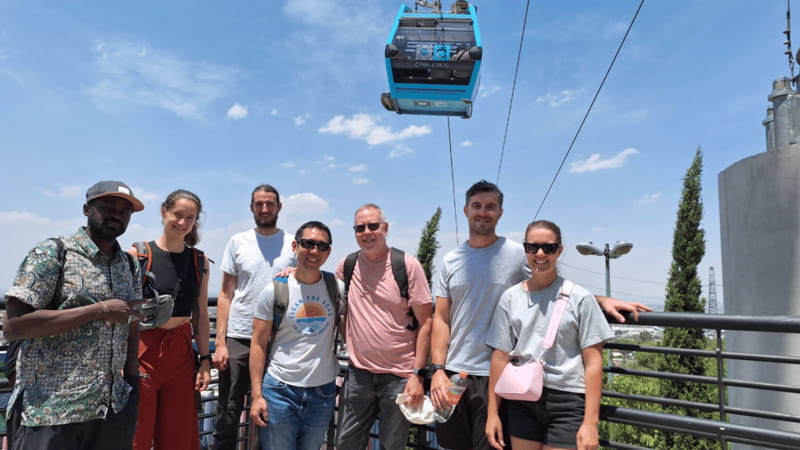
The best part of this outing is the Cablebús ride over Iztapalapa, where Mexico City opens up in a way you cannot get from a sidewalk or museum terrace. You look down on tangled streets, painted rooftops, dense neighborhoods, distant mountains, and the daily life of a part of the city that sits far outside the usual visitor circuit.
I like two things right away: the ride teaches you how to use Mexico City’s metro system, and the murals become a kind of open-air history lesson when seen from the cabins. Guides such as Eduardo, Benjamin, Oscar, Gabi, and Alexia have earned strong praise for explaining the city with warmth and care.
The main drawback is simple: a good portion of the four hours is spent on public transport. If you already know Mexico City’s metro and want a fast sightseeing loop, the subway explanations may feel long. The route also requires comfort with heights, crowded transit, and a fairly strict clothing policy.
Key points at a glance

- World-class cable car views: Ride above Iztapalapa for wide views of rooftops, streets, murals, and surrounding mountains.
- A useful metro lesson: The journey begins and ends at Bellas Artes, giving you practical help with Mexico City’s huge subway network.
- Community art from a rare angle: See large murals and painted rooftops designed to be noticed by people riding above the neighborhood.
- Local food and tortillas: Learn why tortillas matter in Mexican daily life, with tortillas included and gorditas available for 15 pesos.
- Small-group format: Groups are limited to nine people, making it easier to ask questions and keep together in transit.
- An offbeat four hours: This is best for people who want neighborhoods, public transport, and local context rather than famous monuments.
Why the Cablebús ride is the star
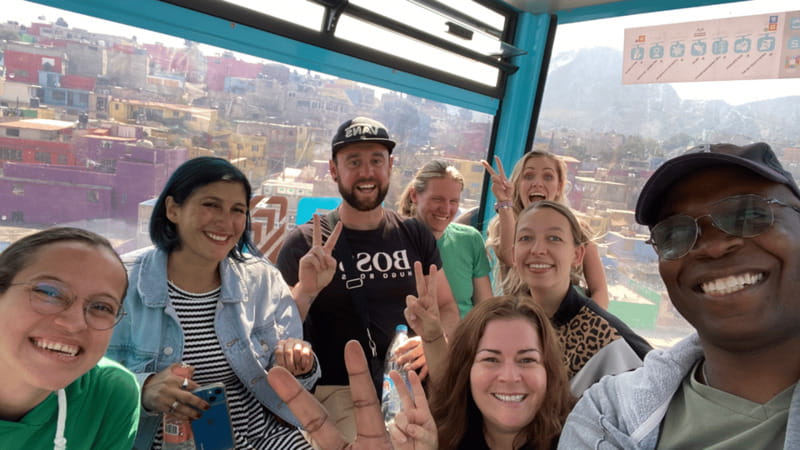
Iztapalapa is not the Mexico City most first-time visitors see. You will not spend the morning moving between grand colonial buildings or polished museum districts. Instead, the cable car carries you above a working urban area, revealing how homes, roads, public spaces, and transport routes fit together.
The ride is more than a scenic thrill. The Cablebús connects communities that can be difficult to reach quickly by street, and the high route gives you a clear sense of the city’s scale. From the cabin, the view shifts constantly. One moment you are looking across tightly packed buildings. The next, you are studying a painted wall or spotting mountains beyond the city.
The murals are a major reason to choose this tour. Some are placed on rooftops or large building walls, so people below may not see the full design. From the cable car, the art reads as part of the neighborhood rather than as an isolated gallery piece. Your guide explains the stories and cultural meaning behind the images, adding context that a solo ride would lack.
The cable car itself has been described as the longest in the world, and the route runs for several miles. The cabins are modern, clean, safe, and quiet according to the information provided for the experience. Still, people with vertigo or motion sickness should think twice before booking. You spend real time above the streets, not just a few minutes on a lookout.
More cable car rides in Mexico City:
- Fly over to the Unexplored Parts of CDMX by Cable Car
★ 5.0 · 168 reviews - Mexico City: City Highlights Cable Car Ride w/ Taco & Tour
★ 4.9 · 44 reviews - Discover Reforma & Chapultepec Park: Cable Car & Ferris Wheel
★ 5.0 · 15 reviews
Starting at Bellas Artes and learning the metro
The meeting point is the Parisian entrance to the Bellas Artes subway station, on the left side of the palace. Look for a guide wearing a green shirt and carrying a green umbrella. This detail matters, since one person had trouble finding the meeting point and suggested that a photo of the entrance would help.
From there, you spend about 45 minutes on the metro heading toward the Cablebús. The return trip takes about 40 minutes. That is a substantial part of the tour, but it serves a purpose. Mexico City’s subway can feel confusing at first, especially when you are changing lines, following signs in a busy station, or trying to understand the difference between destinations and line colors.
Your guide handles the practical side. You receive a public transport card, and the guide shows you how the system works while sharing facts about the city. If this is your first day in Mexico City, that lesson can pay off for the rest of your visit. Several people used the tour as a low-stress introduction to riding the metro and gained confidence for independent trips later.
If you live in a city with a familiar subway system, you may find this section more basic than necessary. One person from London felt the metro explanation could have been shorter. That is a fair point. The tour is not only a cable car excursion. It is also a transit orientation, so the value depends on how comfortable you already are with urban rail.
Iztapalapa from the cabin windows
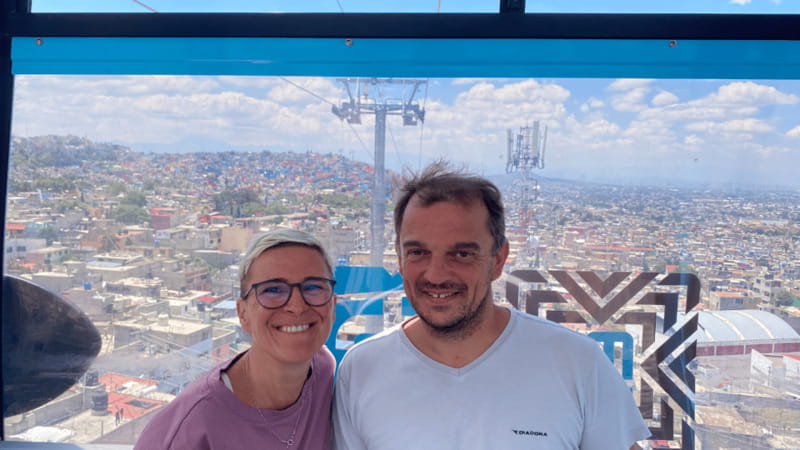
After the first metro section, the Cablebús ride lasts about 40 minutes. This is the heart of the experience. You have time to watch the neighborhoods change, listen to the guide, and take photographs without rushing from one viewpoint to the next.
The cabins give you a rare view of Mexico City’s urban form. You see the maze of streets from above, along with buildings painted in strong colors and the broad spread of the city beyond. The view is not tidy or postcard-perfect, and that is part of the point. Iztapalapa appears as a real community with its own rhythms, problems, pride, and visual identity.
The guide’s commentary helps you read what you are seeing. You learn how the area developed, how it has dealt with challenges, and how transport has changed access for communities farther from the historic center. Guides including Benjamin, Eduardo, Oscar, and Alexia have been especially praised for connecting the physical view with stories about the city and local life.
The murals also have a practical audience. People commuting in the cabins see the works repeatedly, making the Cablebús a moving public art route. You are not simply stopping at a painted wall for a quick photograph. You are seeing art integrated into daily transport.
Bring a phone or camera, but do not spend the whole ride looking through a screen. Some of the best details are easy to miss, especially when the cabin turns or the view opens toward the mountains. Your guide may point out murals or landmarks that you would otherwise pass without understanding.
A short guided visit and a place to stop for photographs
Once you reach Iztapalapa, the formal guided portion lasts about 20 minutes, followed by roughly 15 minutes for photographs. The timing is short, so do not expect a long walking tour through several streets.
That limited walking is a benefit for people who want to explore without a demanding route. The experience is promoted as a way to see Mexico City from above without extensive walking, although you will still need to move through subway stations and cable car stations. Comfortable shoes remain important.
A local park or scenic area is part of the visit. From there, you may see volcanoes and the city in the distance. The exact quality of the view will depend on weather and air conditions, so keep expectations sensible. Mexico City’s atmosphere can change quickly, and haze may soften distant peaks.
This stop also adds human context. The guide discusses Iztapalapa’s growth, local challenges, and community life. Music enters the conversation too, including cumbia, sonidero, and urban rock. These references help explain the area through more than buildings and transport. You get a sense of the sounds associated with local life, not just a collection of dates and facts.
A completely different kind of day in Mexico City:
- Teotihuacan, Guadalupe Shrine & Tlatelolco Day Tour with Lunch
★ 5.0 · 11,603 reviews - Xochimilco, Coyoacan and Frida Kahlo with Optional Lunch
★ 4.5 · 7,320 reviews - Balloon flight + Breakfast in cave + Pyramids + Pick up CDMX.
★ 5.0 · 6,335 reviews - Teotihuacan pyramids morning or afternoon without tourist traps
★ 5.0 · 6,186 reviews
Tortillas, gorditas, and the local food angle
The tortilla activity gives the tour a hands-on finish. You learn why tortillas are central to the Mexican diet and culture, rather than treating them as a side dish that appears automatically with every meal. Tortillas are included in the price.
The food portion may also involve a local market or food stop. The supplied details refer to market visits, fresh tortillas, tacos, fruit juice, sweets, and gorditas. Gorditas are not included, but you can buy them for 15 pesos. Bring cash if you want to try local snacks, since meals and drinks are not part of the base price.
This is where the tour can feel most personal. A guide who knows where to stop can help you try something simple and local without turning the meal into a formal restaurant event. You should not book this expecting a full food tour, though. The main focus remains transport, views, murals, and community history.
Because menus and food stops can vary, bring a small amount of Mexican currency and keep your expectations flexible. You may get a taste of the area rather than a planned multi-course meal. That is fine for a four-hour outing, especially if you want to leave room for dinner elsewhere.
What four hours really means
The tour runs for about four hours from Bellas Artes and includes:
- About 45 minutes on the metro outbound
- About 40 minutes on the Cablebús
- About 20 minutes of guided exploration
- About 15 minutes for photographs
- About 30 minutes of scenic views while moving through Iztapalapa
- About 25 minutes on the Cablebús return
- About 40 minutes on the metro back to Bellas Artes
The schedule shows why the experience feels different from a standard walking tour. You spend much of the time in motion, looking outward and listening. That is ideal if you enjoy transportation, city planning, and seeing how neighborhoods connect. It is less ideal if you want long stops, museums, or plenty of time to wander on your own.
Groups are limited to nine people. That is a useful size for metro travel, where it is easy for a large group to get split up. It also gives you a better chance to ask about the murals, the transport system, or the music and food discussed along the way.
The guide is a key part of the value. English and Spanish are offered, and the strongest experiences depend on a guide who can explain the area with clarity and respect. Names associated with especially well-regarded outings include Eduardo, Benjamin, Oscar, Gabi, Alexia, Gabriel, Tomas, Gabrielle, and Sam. Guides are not interchangeable, but the consistent praise for their warmth and local knowledge is a strong reason to choose a guided trip instead of attempting the route alone.
Is $24 a fair price?

At $24 per person, the tour offers solid value if you would otherwise feel unsure about using the metro and Cablebús. The price includes the public transport card, metro and cable car rides, tortillas, an expert guide, and educational materials.
You are paying for more than the transportation fare. The guide saves you the work of figuring out the route, helps keep the group together, explains what you are seeing, and gives the murals and neighborhoods some meaning. For a first visit to Mexico City, that support can be worth more than the ride itself.
The value is weaker if you already know the metro, speak Spanish comfortably, and are happy to ride the Cablebús independently. You would still receive the guided context, but the long transit sections may feel less useful. Also budget for snacks, drinks, and the optional 15-peso gordita.
Free cancellation is available up to 24 hours before the start, and you can reserve now and pay later. That flexibility helps if your Mexico City schedule is still shifting.
Who should book this experience?
I would choose this tour for a first-time visitor who wants to understand Mexico City beyond the central attractions. It is also a good match for anyone interested in public transport, community art, urban growth, and photography from unusual viewpoints.
It suits solo visitors and small groups particularly well. The guide can make the metro less intimidating, and the nine-person limit keeps the outing manageable. If you want to spend time with local food, murals, and city stories rather than checking off famous buildings, this is a strong choice.
I would be cautious if you have vertigo, respiratory problems, altitude sickness, motion sickness, or a strong fear of heights. The activity is also not suitable for children under five, people over 220 pounds or 100 kilograms, or anyone needing a mobility scooter or non-folding wheelchair.
The clothing rules are unusually strict. Wear discreet clothing, comfortable shoes, and no sandals, flip-flops, shorts, skirts, short skirts, sleeveless shirts, or sunglasses. Leave large bags, luggage, drones, bikes, skateboards, pets other than assistance dogs, and jewelry at your accommodation. Carry cash and provide a WhatsApp number with the correct area code so the team can contact you promptly.
Should you book the Iztapalapa Cablebús tour?
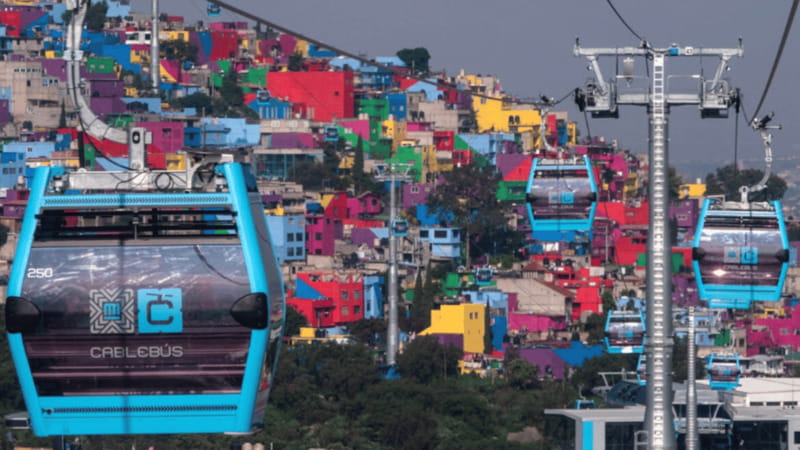
Book it if you want a practical, people-centered look at Mexico City and do not mind that the experience spends nearly as much time on transport as it does at the destination. The cable car views, rooftop murals, mountain outlooks, tortilla activity, and local food options create a satisfying four-hour mix.
Skip it if you want a polished sightseeing route with short transfers and long visits at major landmarks. Also skip it if heights make you uneasy or if you dislike strict clothing rules.
For most curious visitors, especially those new to the Mexico City metro, the $24 price is reasonable. You get a memorable view of Iztapalapa, a useful lesson in moving around the city, and a respectful introduction to a neighborhood many visitors never see.
FAQ
Where does the Iztapalapa Cablebús tour meet?
Meet at the Parisian entrance of the Bellas Artes subway station, on the left side of the Bellas Artes palace. Guides wear a green shirt and carry an umbrella.
How long does the experience last?
The tour lasts about four hours, including the metro journey from Bellas Artes, the Cablebús rides, time in Iztapalapa, and the return trip.
Is transportation included?
Yes. The tour includes a public transport card, metro rides, and Cablebús rides.
Is food included?
Tortillas are included, but meals and drinks are not. Gorditas cost an additional 15 pesos. Bring cash if you want to buy snacks or local food.
Is the tour available in English?
Yes. Live guiding is offered in English and Spanish. Some content may be presented in its original language.
Can I cancel the booking?
You can cancel up to 24 hours in advance for a full refund. The experience also offers a reserve-now, pay-later option.
Just added around Mexico City
- Xochimilco’s Wild Side: Mezcal, Insects & Culture★ 4.9 · 10 reviews
- Xochimilco: Food and Trajinera Ride with Local Women★ 5.0 · 5 reviews
- Xochimilco: Island of the Dolls Tour Games and Drinks★ 5.0 · 25 reviews
- Xochimilco Ecological Tour – Away From the Crowds (3 Hours)★ 5.0 · 15 reviews
- Xochimilco floating gardens, Coyoacan and UNAM murals★ 4.0 · 6 reviews
- Xochimilco + Coyoacán Combo Full-Day Tour★ 5.0 · 3 reviews
- Val´quirico And The City of Angels Puebla From Mexico City★ 5.0 · 3 reviews
- Xochimilco: amanecer en kayak Ciudad de México★ 5.0 · 35 reviews
Mexico City Cable Car Tours, compared.

Fly over to the Unexplored Parts of CDMX by Cable Car
Read our review →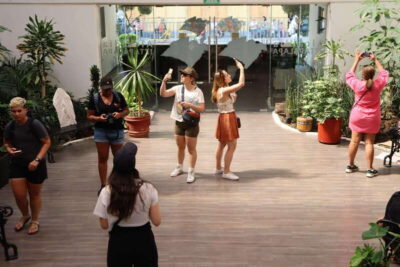
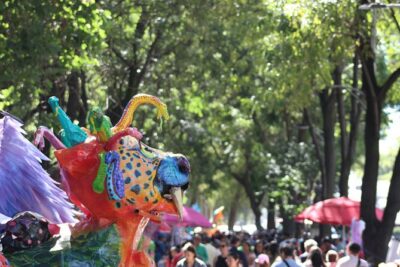
Discover Reforma & Chapultepec Park: Cable Car & Ferris Wheel
Read our review →
Anthropology Museum, Chapultepec Castle & Cable Car Tour
Read our review →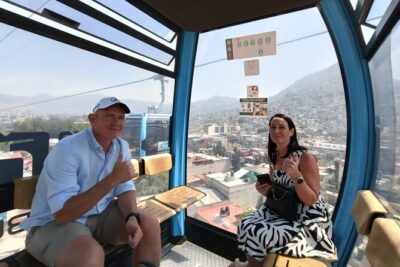
Private Tour: Cable Car, Urban Museum, Local Market – Best Rated
Read our review →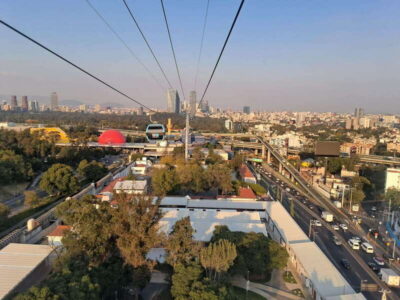
Browse the lists this tour appears in