

Reviewed · MEXICO CITY CABLE CAR TOURS
Fly over to the Unexplored Parts of CDMX by Cable Car
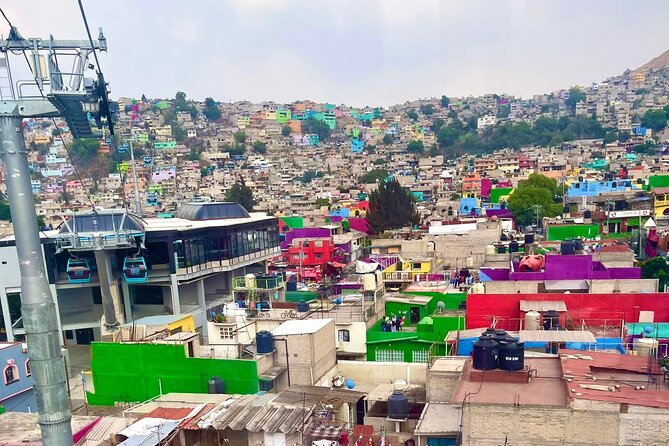
Mexico City’s Cablebús gives you a view that ordinary sightseeing rarely provides. From above, you see Iztapalapa’s dense neighborhoods, colorful buildings, rooftop murals, and the sheer size of CDMX, while Fernando explains how the city grew and how locals use its public transportation.
I like two things especially: the tour teaches you to use the Metro and Cablebús, and it takes you to places most visitors would not find on their own. The tacos, murals, museum, and pulque stop add real local flavor. The trade-off is pace. Expect plenty of walking, stairs, transfers, and rapid English, so this is not the best choice if you need a slow, relaxed outing.
Key points at a glance
- See Iztapalapa from the Cablebús: The ride turns public transportation into one of the day’s best viewpoints.
- Learn to move around CDMX: Fernando explains the Metro and city transit as you use them.
- Visit local murals and Mercado Quetzalcóatl: The market stop includes tacos and striking painted walls.
- Explore beyond the usual tourist zone: You spend time in a working district rarely included in standard sightseeing routes.
- Taste a pre-Hispanic drink: The tour ends at a local pulquería with a complimentary alcoholic beverage.
- Plan for an active four and a half hours: Walking, stairs, noisy transit, and a quick pace are part of the experience.
Why the Cablebús changes your view of Mexico City
Mexico City can be hard to grasp from street level. The historic center, Roma, Condesa, and the major museums show important parts of the city, but they do not explain its full size or how ordinary neighborhoods fit together.
The Cablebús helps fill that gap. As the cabins move above Iztapalapa, you look across tightly packed homes and streets toward the city’s outer edges. The ride is not a staged attraction. It functions as everyday public transportation, which makes the view feel more useful and more honest.
You see rooftops, murals, hills, and layers of housing that are easy to miss from a car. Fernando uses those views to explain the district, its development, and the social geography of CDMX. I like this approach because you are not simply taking pictures from a gondola. You are learning what you are looking at.
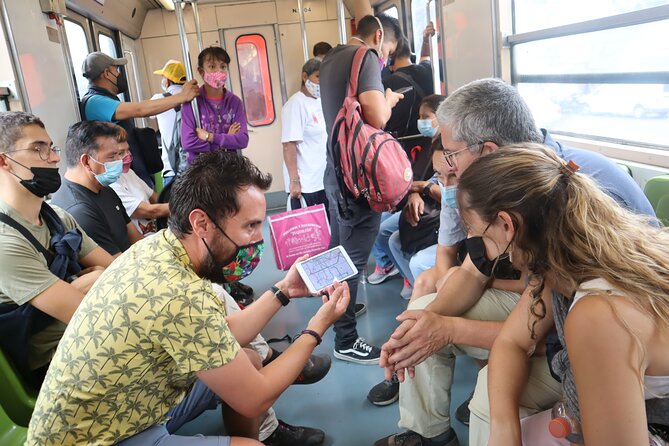
The Cablebús also gives you a practical skill. If you are new to Mexico City’s Metro, the tour shows you how to use the system while accompanied by someone who knows the route. Several parts of the experience rely on public transportation, so you get a working introduction rather than a classroom lecture.
More cable car rides in Mexico City:
- Iztapalapa: Cable Car Tour and Urban Art From the Heights
★ 4.9 · 124 reviews - Mexico City: City Highlights Cable Car Ride w/ Taco & Tour
★ 4.9 · 44 reviews - Discover Reforma & Chapultepec Park: Cable Car & Ferris Wheel
★ 5.0 · 15 reviews
Meeting Fernando in Centro Histórico
The tour begins near Churrería El Moro Centro at Eje Central Lázaro Cárdenas 42. That puts you in the Centro Histórico, close to public transportation and easy to reach from the central tourist area.
Fernando is the main guide named in the tour details, and some departures may also include Alex or Fernando’s sister. His role goes well beyond pointing out sights. He explains history, culture, urban growth, and transit as the group moves through the city.
You should arrive ready to listen while walking. English is offered, and Fernando speaks quickly. That energy works well for people who want a lot of information in a short time, but it may be difficult if English is not your first language or you have trouble hearing in a noisy Metro carriage.
The group can include up to 20 people. That is large enough to provide some social energy, but small enough for a guide to keep the group together during transfers. The tour is also reported to run at a fast pace, so stay close and keep your belongings secure during station changes.
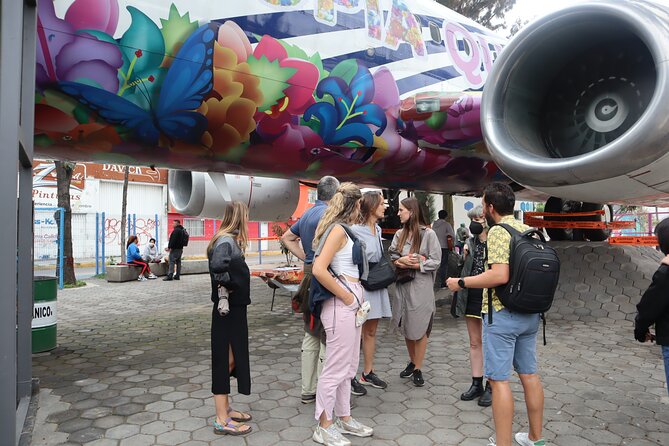
Museum of Cultures by Iztapalapa Passion
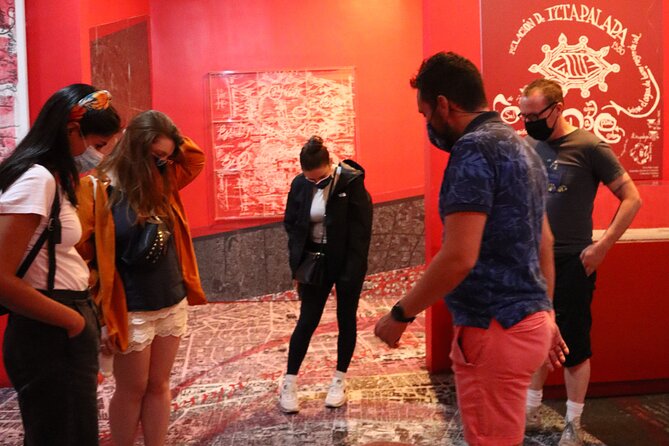
The first scheduled stop is the Museum of Cultures By Iztapalapa Passion, with about 35 minutes inside and admission included.
This is a useful opening because it gives you a framework for the district before you walk through it. The museum explains Iztapalapa’s traditions and history, helping you understand that the area is more than a distant collection of apartment blocks and streets.
You will not have a long museum visit here. Thirty-five minutes is enough for an introduction, not an exhaustive look at every display. I see that as a sensible choice on a tour built around movement and direct contact with the neighborhood.
Pay attention to the connection between the museum and the streets that follow. The value of this stop is not just the exhibits. It prepares you to notice local traditions and cultural references later in the day.
Walking through Iztapalapa by Metro and street
After the museum, you spend roughly an hour in Iztapalapa. The group walks through local streets, visits a cultural center, eats local food, and begins the route toward the Cablebús.
This is the part that makes the experience different from a standard sightseeing loop. You are not staying in the polished central districts. You are seeing a large, working part of CDMX through its public spaces, transit links, food, and neighborhood art.
Fernando explains the district as you go, covering both its past and its present. His explanations also show how transportation connects areas that may feel far apart when viewed on a city map.
The route requires stamina. Direct feedback about the experience points to frequent walking and stairs in and out of Metro and Cablebús stations. If you use a cane, have limited mobility, or simply prefer a slow pace, ask yourself if you can manage a demanding half-day. The general information says most people can participate, but that does not mean the route is easy.
I would also suggest eating lightly before the tour. You will receive food later, but the morning includes movement, transfers, and sustained attention. Comfortable shoes matter more here than stylish ones.
A completely different kind of day in Mexico City:
- Teotihuacan, Guadalupe Shrine & Tlatelolco Day Tour with Lunch
★ 5.0 · 11,603 reviews - Xochimilco, Coyoacan and Frida Kahlo with Optional Lunch
★ 4.5 · 7,320 reviews - Balloon flight + Breakfast in cave + Pyramids + Pick up CDMX.
★ 5.0 · 6,335 reviews - Teotihuacan pyramids morning or afternoon without tourist traps
★ 5.0 · 6,186 reviews
Flying above the neighborhoods on the Cablebús
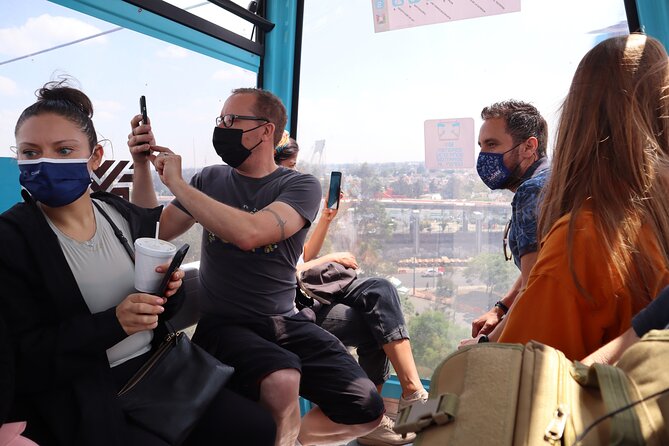
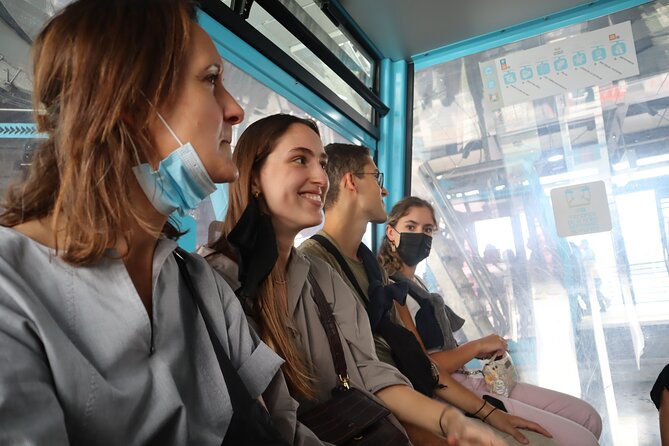
The Cablebús ride is the highlight for many people, and it is easy to see why. The cabins move smoothly above the city, giving you a wide view of Iztapalapa and the surrounding urban spread.
Look down for murals painted on rooftops and buildings. These works may be hard to spot from street level, and the aerial view changes how you read the neighborhood. You can also see how closely homes and streets sit together, giving you a clearer sense of Mexico City’s scale.
The ride feels safe according to the supplied experience details, but remember that this is public transit, not an amusement park attraction. You are sharing the system with local commuters. That makes the ride more meaningful, though it also means you should expect the normal movement and noise of a working transit network.
The guide’s commentary is important here. Without context, you might see colorful roofs and dense housing but miss the reasons behind the city’s shape. Fernando points out what you are seeing and connects the view to geography, planning, culture, and daily life.
This is also a good place to take photographs, but do not let your camera replace the view. The most useful part of the ride is understanding how the neighborhood fits into the larger city.
Mercado Quetzalcóatl and the taco stop
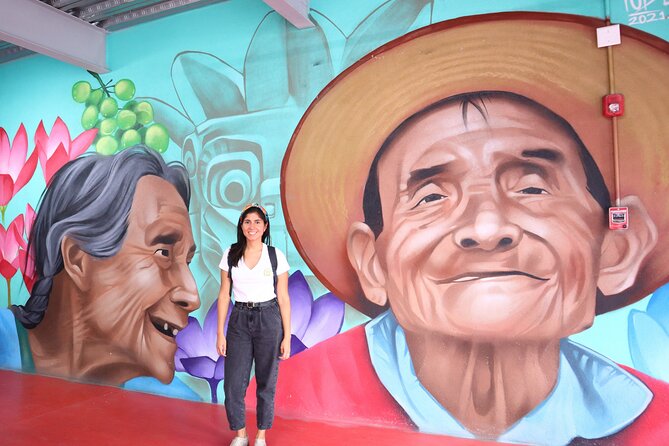
Mercado Quetzalcóatl gets about 30 minutes. The visit includes tacos and murals, making it one of the most appealing stops for anyone who wants food and local visual culture in the same place.
The tacos are described as a highlight, and carnitas are specifically mentioned in the experience details. You should think of this as a quick local-food stop rather than a long sit-down meal. Thirty minutes passes quickly, especially if the group is moving together.
The market’s murals are another reason to pay attention. They offer a different look at the district from the rooftop art seen during the Cablebús ride. Together, the two views show how public and residential spaces carry local identity.
I like the balance here. You are not only hearing about Iztapalapa. You are eating there, walking through it, and seeing art created for the people who live in the area. That makes the afternoon more direct and memorable than a guide’s talk delivered from a bus.
Food preferences are not detailed in the tour information, so do not assume the market can meet every dietary need. If you have restrictions, confirm before booking.
Finishing with pulque in Centro Histórico
The final scheduled stop is a pulquería, where you receive a complimentary alcoholic beverage. Pulque is a traditional fermented drink with pre-Hispanic roots, so the stop gives the day a fitting cultural finish.
The published details name Pulquería Vacas Verdes Bellas Artes for the final stop, while the meeting information gives Pulquería La Risa on Calle de Mesones 71 as the end point. Both are described as local bars in the downtown area. Check your confirmation for the exact finishing venue before you go.
You do not need to be a bar enthusiast to appreciate this stop. The drink connects the day’s museum, neighborhood, food, and cultural themes. It also gives you a chance to sit down and process everything after several hours on foot.
An alcoholic beverage is included, so this part suits adults who want to try a traditional drink. The tour details do not specify a nonalcoholic replacement, so ask in advance if that matters to you.
The tour ends in or near Centro Histórico, which is convenient for continuing with dinner, returning to your hotel, or exploring the center on foot.
What the $58 price really covers
At $58 per person, this is not the cheapest way to see Mexico City. It is also not simply a Cablebús ride with a guide attached.
The price includes museum admission, the market visit, food at the taco stop, a snack, and an alcoholic beverage. More importantly, you are paying for route planning, transit instruction, neighborhood interpretation, and a guide who can explain what you are seeing as the city changes around you.
I think the value is strongest if you are new to CDMX. Learning how to use the public transportation system early in your stay can save money and make later sightseeing easier. Several people have found the transit lesson alone useful, especially after struggling with traffic in a car or rideshare.
The value is also strong for repeat visitors who have already seen the historic center and main museums. You get a different side of the city without having to plan the Metro transfers, locate the Cablebús route, choose a market, and arrange a suitable cultural stop yourself.
The price is less convincing if you only want a gentle scenic ride. Much of the cost pays for the full route and interpretation, not just the time in the cable car.
Who should book, and who should think twice
I would recommend this tour to you if you:
- Want to see parts of CDMX outside the main tourist areas
- Enjoy public transportation and local food
- Like history explained alongside present-day city life
- Want help learning the Metro and Cablebús
- Can walk quickly and manage stairs
- Are comfortable with an active group outing
- Speak English well enough to follow rapid commentary
Families can enjoy it, and the tour has held the attention of older children and teenagers. It also suits solo visitors and couples who want more contact with local neighborhoods than a conventional sightseeing tour provides.
I would think twice if you need frequent rests, have hearing difficulty, dislike crowded public transportation, or want a slow day with long stops. One critical account described the guide’s manner as too sharp and the pace as frustrating for someone using a cane. That concern should not be ignored, even though most of the supplied feedback praises Fernando’s energy, organization, and command of the subject.
You should also know that the guide may ask questions and encourage interaction. That can make the experience lively, but it may feel demanding if you prefer to listen quietly.
Booking, cancellation, and practical details
The tour lasts about four and a half hours and is offered in English. Mobile tickets are accepted, confirmation arrives when you book, and the route begins near public transportation in Centro Histórico.
Free cancellation is available up to 24 hours before the start time. Inside that window, the payment is not refunded. The tour may also be rescheduled or refunded if poor weather affects the route or if the minimum number of participants is not reached.
Wear shoes suited to walking and keep your schedule flexible after the tour. The timing is approximate, and the route involves several forms of transportation, street walking, and stairs.
Should you book this Iztapalapa Cablebús tour?
Book it if you want Mexico City explained from the inside rather than viewed only from its famous center. The strongest parts are the Cablebús views, the practical transit lesson, Fernando’s detailed commentary, the market tacos, and the chance to see murals and streets most visitors miss.
Skip it if you want an easy half-day or if walking fast is a problem. For the right person, $58 buys far more than a cable-car ticket: it gives you a working understanding of CDMX and a rare look at how the city lives beyond its postcard districts.
FAQ
How long does the tour last?
The experience lasts approximately 4 hours and 30 minutes.
Where does the tour begin?
It begins at Churrería El Moro Centro, at Eje Central Lázaro Cárdenas 42 in Centro Histórico.
Where does the tour end?
The tour ends at a local bar in Centro Histórico. The published details identify Pulquería La Risa on Calle de Mesones 71 as the end point, while the final stop is also listed as Pulquería Vacas Verdes Bellas Artes. Check your confirmation for the exact venue.
Is the tour offered in English?
Yes. The tour is offered in English.
What is included in the tour?
The experience includes museum admission, the local market visit, tacos, a complimentary snack, and an alcoholic beverage at the pulquería.
How many people can join?
The maximum group size is 20 people.
Do I need to be comfortable with walking and stairs?
Yes. The experience includes walking through Iztapalapa and stairs in Metro and Cablebús stations. It is described as fast-paced, so you should be prepared for an active outing.
What is the cancellation policy?
You can cancel up to 24 hours before the start time for a full refund. Cancellations or changes made less than 24 hours before the start time are not refunded or accepted.
Just added around Mexico City
- Xochimilco’s Wild Side: Mezcal, Insects & Culture★ 4.9 · 10 reviews
- Xochimilco: Food and Trajinera Ride with Local Women★ 5.0 · 5 reviews
- Xochimilco: Island of the Dolls Tour Games and Drinks★ 5.0 · 25 reviews
- Xochimilco Ecological Tour – Away From the Crowds (3 Hours)★ 5.0 · 15 reviews
- Xochimilco + Coyoacán Combo Full-Day Tour★ 5.0 · 3 reviews
- Xochimilco floating gardens, Coyoacan and UNAM murals★ 4.0 · 6 reviews
- Val´quirico And The City of Angels Puebla From Mexico City★ 5.0 · 3 reviews
- Xochimilco: amanecer en kayak Ciudad de México★ 5.0 · 35 reviews
Mexico City Cable Car Tours, compared.
Iztapalapa: Cable Car Tour and Urban Art From the Heights
Read our review →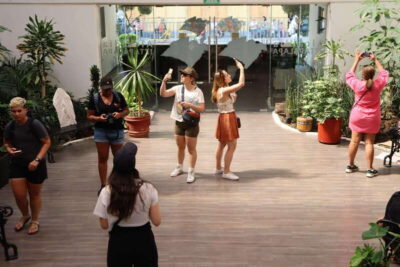
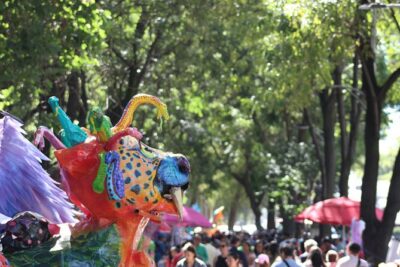
Discover Reforma & Chapultepec Park: Cable Car & Ferris Wheel
Read our review →
Anthropology Museum, Chapultepec Castle & Cable Car Tour
Read our review →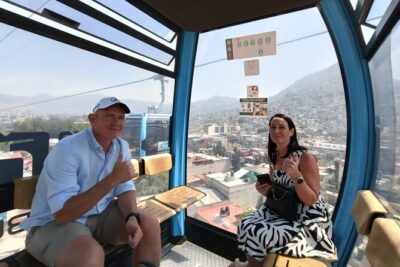
Private Tour: Cable Car, Urban Museum, Local Market – Best Rated
Read our review →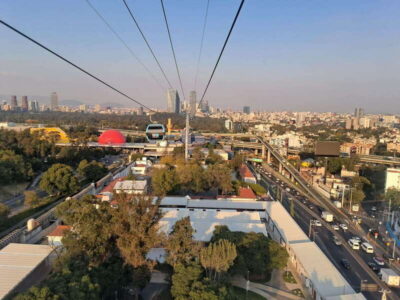
Browse the lists this tour appears in