
Reviewed · MEXICO CITY HISTORIC CENTER WALKING TOURS
Half-Day Small-Group Historical Center Mexico City Tour
Mexico City’s past comes into focus quickly on this four-hour bike tour. You pedal from Juárez into the Historic Center, moving from an old convent and Aztec ruins to Diego Rivera’s mural, Bellas Artes, and the Monument to the Revolution. It is a smart way to cover ground while keeping the history tied to real streets and public spaces.
I like the small group of no more than 10, supported by two guides. I also like the mix of history and food: you get context at major sites, then a snack and lunch that help turn a sightseeing morning into a fuller taste of city life. The main consideration is the cycling itself. You need moderate fitness and enough comfort to ride through Mexico City traffic, even though the guides work hard to make the route feel manageable.
Key points to know before you book
- Two guides for up to 10 people: This gives the group closer attention and helps with street crossings and city riding.
- A strong first look at Centro Histórico: The route links Tlaxcoaque, Regina Coeli, the Zócalo, Templo Mayor, Alameda Central, Bellas Artes, and the Revolution Monument.
- History and food share equal billing: Snacks begin the morning, and lunch is included, with local cafés, bakeries, and taco stops featured by some guide teams.
- Diego Rivera is a major highlight: You park the bikes and spend about 40 minutes with his large mural about Mexico’s story.
- You see Templo Mayor from outside only: The ancient center of the Aztec capital is powerful, but the museum admission is not included.
- It starts and ends in Juárez: Meet at Londres 37 at 9:00 a.m. and plan your own way to the meeting point.
Why a bike is a good way to meet Mexico City
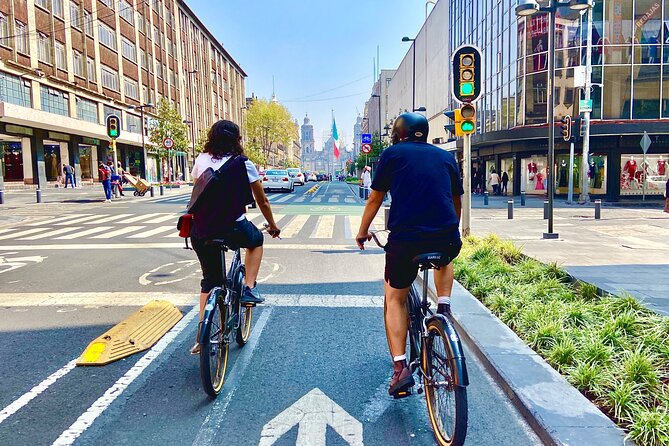
Mexico City is too large to understand from one plaza or museum. A bike gives you a useful middle ground. You cover more ground than you would on foot, but you still move slowly enough to notice churches, murals, public squares, and the changing feel of each neighborhood.
I especially like this route for a first morning in town. It gives you a basic map of the Historic Center while introducing the forces that shaped it: Indigenous Mexico, Spanish colonial rule, the Revolution, public art, and daily city life. The guides also explain how the sites matter to local people, not just why they appear in a guidebook.
The ride is not presented as a race. The published schedule leaves time for explanations, with longer stops at Regina Coeli and the Diego Rivera museum. Still, this is an active tour. You should be comfortable riding a bicycle for several hours, stopping often, and sharing streets with city traffic. Bikes are supplied, and helmets are optional.
The two-guide setup matters here. One guide can lead while another helps position the group or assists with crossings. Past guide teams have included Velia with Valentino, Augustine, Miranda, Isaac, and Amistad. The exact staff may vary, but the format is designed to keep the group personal rather than turning into a large cycling line.
More walks through the historic centre:
- Historic Downtown Walking Tour
★ 5.0 · 1,289 reviews - Historic Center Food Tour in Mexico City
★ 5.0 · 1,263 reviews - Mexico City: Historic Downtown Walking Tour
★ 4.8 · 1,039 reviews
Starting at Bazar Fusion with snacks and a short lesson
The morning begins at Bazar Fusion, at Londres 37 in the Juárez area. You receive a snack, meet the guides, and get an introduction to the route. Before setting off, the guides also explain how to ride a bicycle in Mexico City.
That opening is more useful than it may sound. If you are unfamiliar with city cycling, the first minutes help you settle onto the bike and understand how the group will move. It also gives you a chance to check the bike and ask questions before the route becomes busier.
The tour starts at 9:00 a.m., which is a practical time for a half-day outing. You should allow enough time to reach Londres 37 by public transportation or another method, since transportation to the meeting point is not included. The activity returns to the same location at the end, making the rest of your day easier to plan.
Tlaxcoaque offers an early lesson in Mexico City’s layers
The first sightseeing stop is Plaza Tlaxcoaque, on the way toward the Historic Center. The stop lasts about 15 minutes and includes an explanation of the square’s past, along with a look at a street mural.
This is a good opening stop because it joins formal history with present-day public art. The mural gives you a visual clue about how Mexico City continues to tell its story outside museums. You are not simply riding from monument to monument. You are learning to watch the walls and streets as part of the city’s record.
The short visit also keeps the morning moving. If your interest is focused on major museums, you will not spend too long here. If you enjoy urban details, the combination of a public square and mural may be one of the more memorable early moments.
Regina Coeli shows the character of the old center
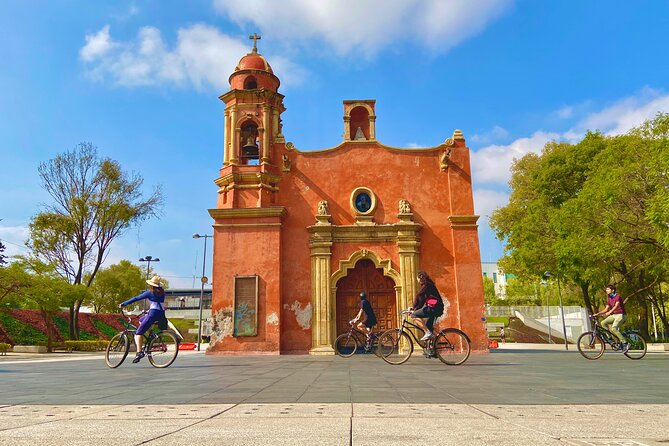
At Regina Coeli Parish, you have about 30 minutes to look at the former convent church and hear about its architecture. The guides also explain why this part of the city matters to local residents.
This stop gives the route a quieter pause after the opening ride. Churches in the Historic Center can be easy to admire only from the outside, but here the architecture gets a proper explanation. The former convent also helps you understand that the center was shaped by institutions, neighborhoods, and everyday religious life, not just grand government buildings.
I like the fact that the guide does not treat the church as an isolated object. Linking it to local use makes the visit more useful. You begin to see the Historic Center as a lived-in part of Mexico City rather than a collection of preserved façades.
More sightseeing tours in Mexico City:
- Mexico City: Hop-on Hop-off City Tour by Turibus 1-Day Pass
★ 4.1 · 691 reviews - Private City Tour in Frida Kahlo, Coyoacan, and Xochimilco
★ 5.0 · 626 reviews - Mexico City: 19 City Highlights Bicycle Tour
★ 5.0 · 425 reviews - Private City Tour Mexico City – Best Rated
★ 5.0 · 402 reviews
The Zócalo and Templo Mayor explain the city’s foundations
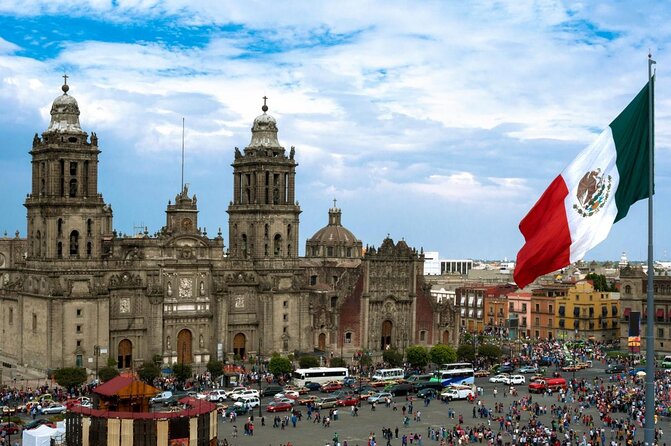
The Zócalo is the symbolic heart of Mexico City, and the tour gives you about 15 minutes there. This is a brief stop, so do not expect a long plaza lecture or extended free time. Instead, use it to get oriented while the guide explains why the square has played such an important role in the city.
From there, the route continues to the Museo del Templo Mayor. The guides explain that this was the center of the Aztec Empire and that much of the site remains beneath the colonial buildings around it. You see the archaeological area from outside only. Museum admission is not included.
That limitation is worth noting. If Templo Mayor is high on your list, you may want to return later for the full museum visit. On the bike tour, the value is the setting and the explanation: ancient Mexico is not placed far from colonial Mexico, and both are still part of the same city center.
The 15-minute stop cannot provide the same detail as an archaeological museum visit. It does, however, give you an important framework for the rest of your time in Mexico City. The city’s modern streets sit above and around an older capital, and the guides make that relationship clear.
Diego Rivera’s mural is the longest and strongest art stop
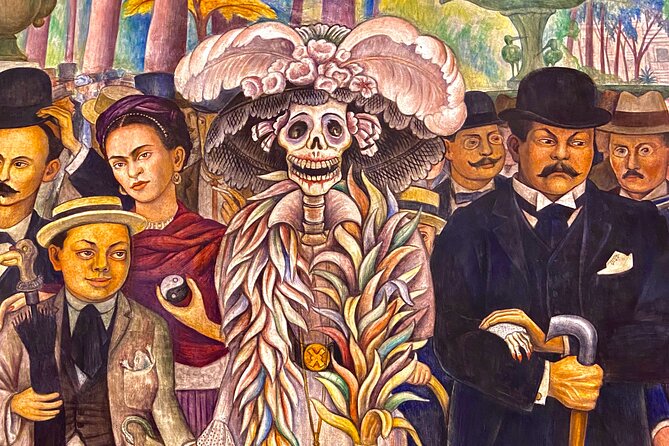
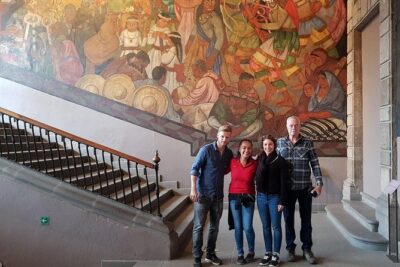
The tour then reaches the Museo Mural Diego Rivera near Alameda Central. You park the bikes and spend about 40 minutes with Rivera’s mural, which presents a story of Mexico through the setting of the Alameda park.
This is the route’s longest scheduled stop, and that makes sense. A mural this large needs time. You can look closely, follow the figures and scenes, and listen as the guides explain Mexico’s mural tradition. The guide team is described as especially strong on muralism, so this is not just a quick photo stop.
I see this as the artistic center of the tour. The earlier stops build a political and religious framework, while Rivera’s work brings many periods and personalities into one public image. You do not need a detailed background in Mexican art to get something from it. The guide’s interpretation helps you notice how the mural uses history as a public conversation.
The museum admission is included, which adds value. You also get a proper break from riding, something worth considering if you are unsure about spending a full morning on a bicycle.
Bellas Artes and the Revolution Monument keep the story moving
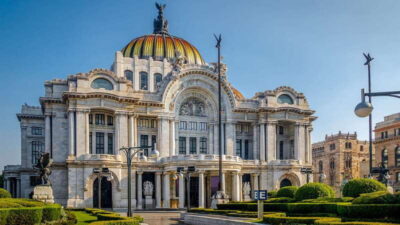
The group passes Palacio de Bellas Artes for about five minutes. This is a quick exterior stop, with attention to the building’s architecture and the way the Mexican Revolution affected its construction.
Do not book this tour expecting a full Bellas Artes visit. You will not have time to explore the interior, and admission is not included. The benefit is seeing the building as part of the route and connecting its unfinished or interrupted construction story to the country’s political upheaval.
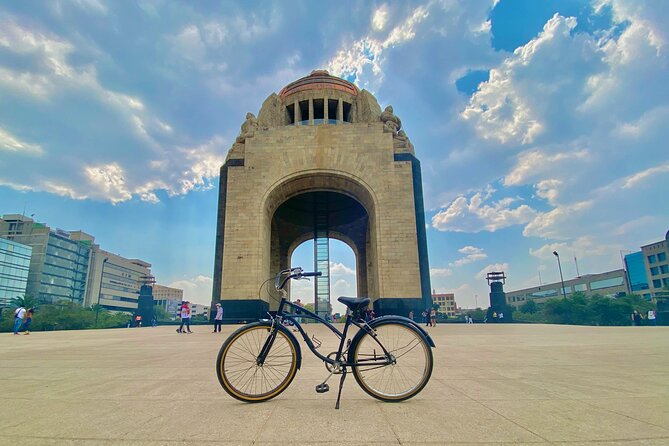
The final major stop is the Monument to the Revolution. The group rides past it, then stops in the middle for about 20 minutes while the guides explain the Mexican Revolution. It is one of the larger monuments in the city, and the location gives the closing section of the tour a broad public setting.
The sequence works well. You have just seen Rivera’s interpretation of Mexican history, and now you hear more about the revolution that changed the country’s direction. The tour does not try to cover every event or leader. Instead, it gives you a set of landmarks that you can recognize and revisit during the rest of your stay.
Food gives the history a local rhythm
Lunch is included, and food is one of the experience’s strongest features. The route is described as combining authentic local food with the history stops. Guide teams have included café, bakery, and taco visits, with one past route including a pastry shop that supplies baked goods wholesale to the city.
Exact food stops can vary, so I would not book this expecting a fixed tasting menu. Think of the meal as part of the morning’s texture. A snack at the start, food along the way, and lunch included make the tour feel less like a series of lectures and more like a city outing.
This also helps if you are traveling with older children or teenagers. The history remains central, but the food gives the group another reason to keep moving. Guides such as Isaac and Valentin have adjusted the pace and focus for mixed groups, including adults and teens.
If you have dietary restrictions, the supplied details do not specify available substitutions. Ask the provider before booking if food needs are important to you.
How safe and demanding is the cycling?
The tour requires a moderate level of physical fitness. You will pedal between stops, get on and off the bike, and spend part of the morning handling city streets. The route is described in the supplied information as easy biking by some participants, but that does not mean it is suitable for every rider.
Mexico City traffic can feel intense, especially if you do not often cycle in a large capital. The two-guide structure is helpful here. Guide teams have included a lead cyclist and another person who helps the group cross streets and stay together. That support can make a major difference for people who are willing to ride but feel uncertain about city traffic.
Still, do not choose this activity if you want a completely relaxed walking tour. You need to pay attention, follow directions, and be comfortable with an active morning. Bikes and optional helmets are supplied, so you do not need to bring equipment.
Group size, value, and the right kind of morning
The group is capped at 10 people, with two guides. That is a meaningful advantage because the route includes interpretation, street riding, and food stops. A smaller group makes it easier to hear the guide, ask questions, and stay together at busy places.
The exact price is not provided here, so I cannot judge the deal by a dollar amount. I can judge what is bundled: bicycle use, a helmet option, a snack, lunch, two guides, several major sights, and admission to the Diego Rivera mural museum. Templo Mayor and Bellas Artes admission are not included, and both are visited from outside.
For value, I would compare this with the cost of arranging separate transportation, a guide, a food outing, and a museum visit. If you want a broad first look at central Mexico City in one morning, the package makes practical sense. If you already know the Historic Center well or want long museum visits, you may get less from it.
The experience suits first-time visitors, active couples, small families with older children, and anyone who wants history explained while moving through the city. It is also a good choice if you want an early orientation before spending later days on foot.
Booking details and cancellation
You receive confirmation when you book, and the meeting point is near public transportation. The tour begins at 9:00 a.m. at Londres 37 and ends back there after about four hours.
Free cancellation is available if you cancel at least 24 hours before the start time. Cancellations or changes made less than 24 hours before departure are not refunded or accepted under the stated policy. The activity also requires a minimum number of participants. If that minimum is not met, you are offered another date or experience, or a full refund.
Should you book this Mexico City bike tour?
I would book it if you want a lively first look at the Historic Center, enjoy learning through places rather than lectures, and feel comfortable riding a bicycle in city traffic. The best parts are the small group, two-guide support, the substantial Diego Rivera stop, and the way food breaks up the history.
I would skip it if you need a slow, fully seated morning, want extensive interior visits at Templo Mayor or Bellas Artes, or are not comfortable cycling. For everyone else, this is a practical way to connect ancient Mexico, colonial architecture, revolutionary history, public art, and everyday food in a single half-day.
FAQ
How long is the Mexico City bike tour?
The tour lasts approximately four hours.
Where does the tour start?
It starts at Bazar Fusion, Londres 37, Juárez, Cuauhtémoc, Mexico City.
What time does the tour begin?
The scheduled start time is 9:00 a.m.
Where does the tour end?
The activity ends back at the original meeting point.
Are bicycles included?
Yes. Bicycle use is included, and helmets are available as an option.
Is lunch included?
Yes. Lunch is included in the tour.
Does the tour enter Templo Mayor and Bellas Artes?
No. Templo Mayor is viewed from outside, and admission is not included. Palacio de Bellas Artes is a brief exterior pass, and admission is also not included.
More Historical Tours in Mexico City
- Walking Tour of the Historic Center of Mexico City
★ 5.0 · 870 reviews - Mexico City Historical Centre Food Tour with 7 Authentic Tastings
★ 5.0 · 723 reviews - Walking Tour in Mexico City for Exploring their Cultural Heritage
★ 5.0 · 245 reviews - Walking Tour – Impressive murals in Historical Center of Mexico City
★ 5.0 · 224 reviews
More half-day trips in Mexico City
- Mexico City Private & Personalized Half-Day Tour with a Local
★ 5.0 · 126 reviews - Private Teotihuacan Half-Day Tour from Mexico City
★ 5.0 · 68 reviews - Half-Day Tour to Teotihuacan Pyramids from Mexico City
★ 5.0 · 53 reviews - Mexico City Half-Day Tour with Museum of Anthropology
★ 4.5 · 12 reviews
Just added around Mexico City
- Xochimilco’s Wild Side: Mezcal, Insects & Culture★ 4.9 · 10 reviews
- Xochimilco: Food and Trajinera Ride with Local Women★ 5.0 · 5 reviews
- Xochimilco: Island of the Dolls Tour Games and Drinks★ 5.0 · 25 reviews
- Xochimilco Ecological Tour – Away From the Crowds (3 Hours)★ 5.0 · 15 reviews
- Xochimilco + Coyoacán Combo Full-Day Tour★ 5.0 · 3 reviews
- Xochimilco floating gardens, Coyoacan and UNAM murals★ 4.0 · 6 reviews
- Val´quirico And The City of Angels Puebla From Mexico City★ 5.0 · 3 reviews
- Xochimilco: amanecer en kayak Ciudad de México★ 5.0 · 35 reviews
Mexico City Historic Center Walking Tours, compared.



Walking Tour – Impressive murals in Historical Center of Mexico City
Read our review →
Muralist Art Semi Private Walking Tour in Mexico City Downtown
Read our review →Browse the lists this tour appears in