
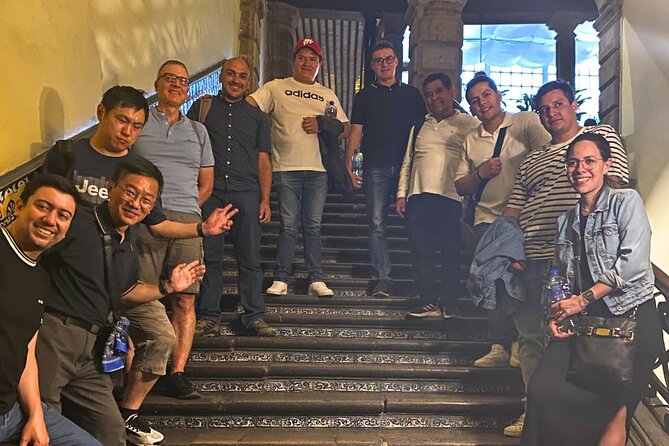
Reviewed · MEXICO CITY HISTORIC CENTER WALKING TOURS
Express Historic Center the must in two hours
Mexico City’s historic center packs Aztec temples, Spanish churches, grand post offices, tiled mansions, and modern national identity into a compact area. This two-hour walking tour gives you the basic map and the stories you need before exploring on your own. I like the sensory approach, including textures, sounds, aromas, and visual details, and I like that the guide finishes with food and sightseeing suggestions. The main limitation is its brisk pace: you see several major landmarks from the outside, but you do not have time for full museum visits.
I also like the small group cap of 15 people, which should make it easier to hear the guide and ask questions. TiAPANi guide Daniela has led other company tours covering the pyramids, Puebla, Cholula, and the National Museum of Anthropology, and her style is described as engaging for both adults and children. Still, confirm who will lead your departure, since the listed experience does not guarantee Daniela personally.
Key points at a glance
- A fast introduction to central Mexico City: Cover the Zócalo, Metropolitan Cathedral, Templo Mayor, Plaza Tolsá, Palacio Postal, House of Tiles, Alameda Central, and the exterior of Bellas Artes in about two hours.
- Aztec and colonial history side by side: The route links the former Mexica ceremonial center with the Spanish cathedral and later civic buildings.
- Mostly exterior sightseeing: Admission is free at the main stops, but entry to the Museo del Templo Mayor is not included.
- A sensory style of guiding: Expect stories tied to stone, music, food aromas, architecture, legends, and daily life.
- Useful for first-time visitors: The guide provides recommendations for places to see and food to try after the walk.
- Simple logistics: Meet near the Zócalo at BBVAC, Avenida de la Palma 12, and finish near Alameda Central at Avenida Juárez 39.
Why two hours works in the Historic Center
The center of Mexico City can feel confusing at first. Grand plazas open into narrow streets, layers of buildings hide ancient remains, and important sights appear one after another with little warning. A short guided walk helps you understand the shape of the area before you return for longer visits.
The route is not designed as a museum tour. It is a moving introduction, with brief stops and a clear storyline. You begin in the city’s Aztec and colonial core, pass through the viceroyal and Porfirian eras, and finish near the cultural institutions of modern Mexico.
That range is the best reason to book it. In two hours, you can see how Mexico City changed from a Mexica capital to a Spanish colonial city and then into the national capital represented by grand theaters, museums, and public parks.
You should expect a fair amount of standing and walking on city streets. The pace will suit you if you want an overview, but it may feel too quick if you prefer long stops for photography or detailed architectural study.
More walks through the historic centre:
- Historic Downtown Walking Tour
★ 5.0 · 1,289 reviews - Historic Center Food Tour in Mexico City
★ 5.0 · 1,263 reviews - Mexico City: Historic Downtown Walking Tour
★ 4.8 · 1,039 reviews
Starting at the Zócalo, the city’s great public room
The meeting point is at BBVAC, Avenida de la Palma 12, in the Centro Histórico. From there, the walk moves toward the Zócalo, officially the Plaza de la Constitución.
This enormous square is the right place to begin because it brings several eras together. The national flag occupies the center, while the surrounding buildings point to colonial government, religious power, and the present-day Mexican state. The guide uses the square to explain the Mexica ceremonial center that once occupied this area and the public events that followed.
The stop lasts about 15 minutes. That is enough time to get oriented and hear the main story, though not enough to examine every building around the plaza. I would arrive ready to listen rather than expecting a long photo break.
The Zócalo can also be a busy public space, with changing activity and crowds. A small group and an English-speaking guide matter here because the scale of the square can make a quiet explanation hard to follow.
The Metropolitan Cathedral and two centuries of building
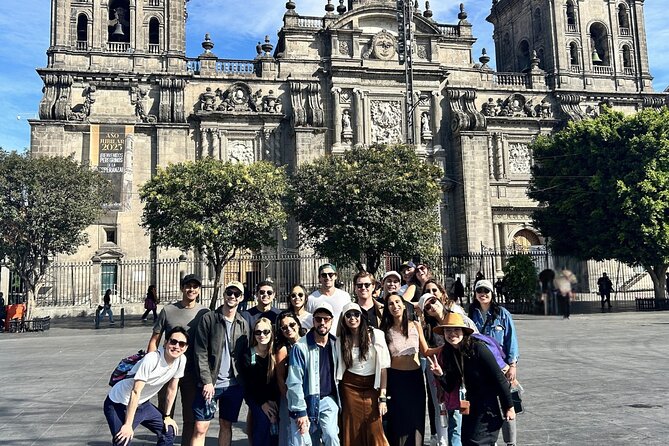
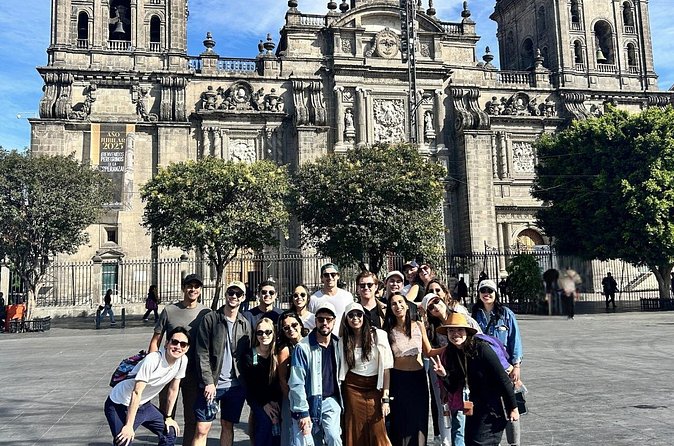
The next stop is the Metropolitan Cathedral, one of the great landmarks on the north side of the Zócalo. The tour focuses on its volcanic stone, long construction history, and mixture of cultural and architectural influences.
The cathedral was built over more than two centuries, so you are not looking at one neat architectural moment. The exterior reflects changing styles and changing ideas about power, worship, and city life. The guide also plans to share a fragment of the monumental organ, adding sound to a stop that could otherwise become a quick look at a large facade.
The visit is to the outside. There is no included interior admission or extended church visit, so plan a separate return if you want to study chapels, altars, or artwork. That arrangement keeps the tour moving, but it also means the cathedral receives only about 10 minutes.
Templo Mayor, where the older city comes through
Beside the cathedral, the Museo del Templo Mayor protects one of the most important archaeological areas in the center. The guide explains how the discovery of the Coyolxauhqui stone helped reveal the scale and importance of the Mexica ceremonial center beneath the colonial city.
This is one of the most useful stops because it makes the city’s layers visible. The cathedral is not simply next to an unrelated archaeological site. Both occupy the heart of a place that has been rebuilt, covered, and uncovered across centuries.
The tour includes an exterior look and historical explanation, but the admission ticket to the museum is not included. The stop lasts about 15 minutes. If you want to walk the archaeological platforms or spend time with the museum displays, plan a separate visit after the tour.
The wording of the route suggests a transition from the present street level toward the earlier city. That idea is central to the experience: you are not only looking at old objects, you are learning how one city was built over another.
More 2-Hour Experiences in Mexico City:
- 2 Hours and 30 Minutes Salsa Night in México City
★ 5.0 · 18 reviews - 2 hours Lucha Libre Show (mexican wrestling) with transport
★ 5.0 · 14 reviews - 2 Hours of Mexican Muralism with an Art Lover
★ 5.0 · 12 reviews - CDMX Historic Center Walking Tour (2 hours)
★ 5.0 · 6 reviews
Plaza Tolsá and the colonial elite
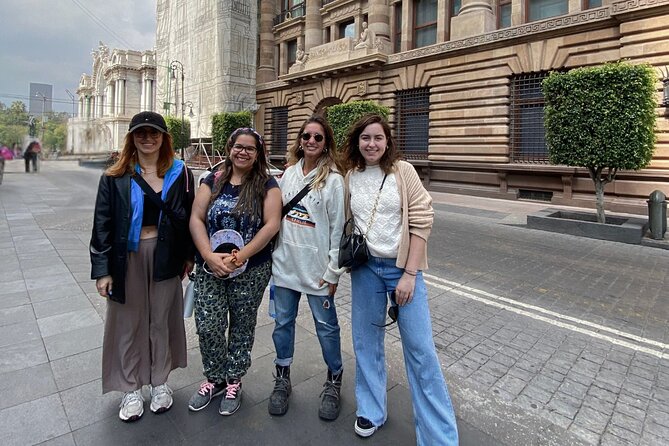
The walk continues through streets and public spaces connected with old banquets, military parades, and national celebrations before reaching Plaza Tolsá. The square is named for the sculptor Manuel Tolsá, whose bronze statue of Carlos IV is known as El Caballito, or the Little Horse.
The guide uses the statue and the square to explain the social world of the viceroyal era and the Creole elite who once moved through this part of town. References to fans, food aromas, and public ceremony make the stop more human than a simple description of a monument.
You receive about 10 minutes here. That is enough for the main story and a look at the statue, but the square also rewards a slower visit if you care about sculpture and surrounding architecture. On this tour, the value comes from connecting the monument to people, status, and public life.
Palacio Postal, a short look at old civic grandeur
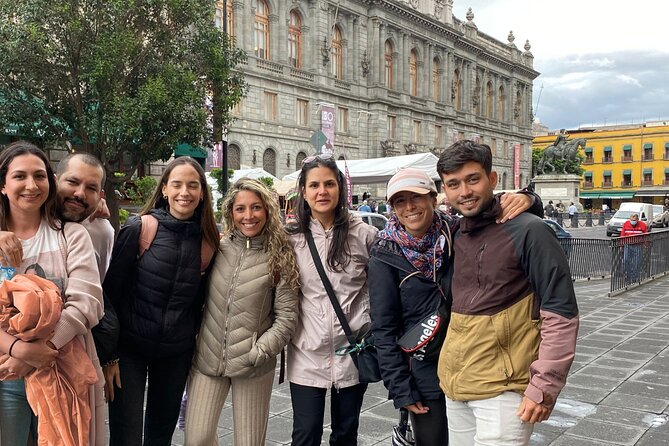
Palacio Postal receives one of the shortest stops, about five minutes, but it is a memorable exterior. The building is known for marble, wrought iron, and gilded details, with a design that reflects the confidence of an earlier national capital.
The guide frames the building through the letters and postcards that passed through it. That small detail gives the architecture a daily purpose. Instead of seeing only a decorative facade, you picture messages crossing the country and the world.
Five minutes goes quickly. If the building catches your eye, make a note to return. The tour gives you the introduction, not a detailed architectural inspection.
House of Tiles and a lesson in ordinary city life
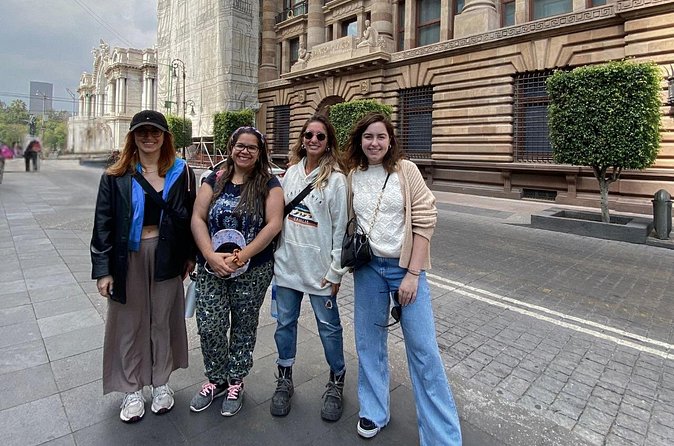
The House of Tiles, or Casa de los Azulejos, is one of the route’s most photogenic stops. Its blue and white tile facade gives it an immediate visual identity, but the guide also explains the families who lived there and the origin of the tilework.
This is where the tour’s sensory approach makes sense. You are encouraged to notice surface, color, and pattern while hearing stories about the people connected with the building. A tile demonstration is also part of the experience, adding a practical element to the architectural story.
The stop lasts about 10 minutes. You will have time to appreciate the facade and understand its place in the city, but not to explore every interior detail. If you want a meal or a longer look inside, ask the guide for current suggestions during the final recommendations.
Palacio de Bellas Artes and Alameda Central
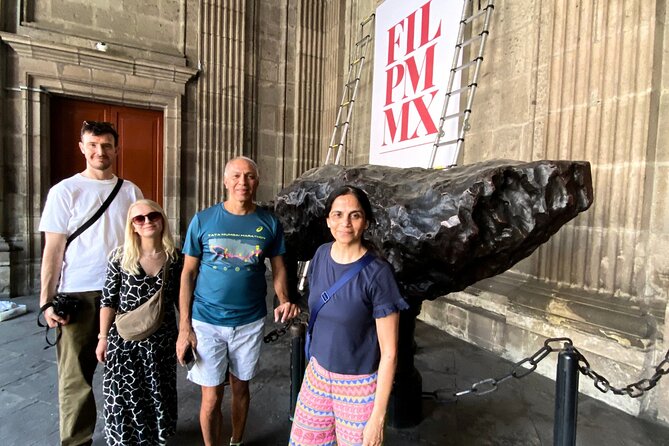
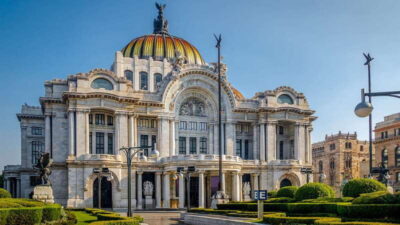
The final portion brings you to the exterior of the Palacio de Bellas Artes and the trees of Alameda Central. Bellas Artes allows the guide to shift from colonial architecture to the Porfirian period, Art Nouveau, Art Deco, national art, and the creation of modern Mexico.
The building is also tied to a very practical city problem: it is sinking. Mexico City was built on soft former lakebed, and the uneven settling of major buildings is part of the capital’s story. The guide explains why Bellas Artes has required special attention and why its appearance combines more than one design period.
The route ends in Alameda Central, described as the first park in the Americas. This is a sensible ending point. After a fast series of streets, facades, and plazas, you finish under trees rather than at another enclosed attraction.
You also receive recommendations for places to visit and food to try. That may be the most useful part for a short-stay visitor, since you can turn the orientation into a plan for the rest of the day.
What the sensory approach adds
The tour is built around more than dates and names. You may be asked to notice volcanic stone at the cathedral, listen for the cathedral organ, picture ceremonies in the Zócalo, consider aromas linked to old public life, and look closely at the tile facade.
I like this approach because it helps you remember places after the walk ends. A long list of dates can blur together. A sound, texture, or visual detail gives the story something concrete to hold on to.
The style should also work well for families. Daniela’s other tours are described as keeping children and teenagers involved, and the company emphasizes anecdotes, legends, and curious facts instead of technical language. That does not guarantee every guide will use the same rhythm, but it gives you a useful sense of the intended tone.
Price, group size, and what you receive
At $26.76 per person, the tour is priced as an affordable orientation rather than a full attraction package. The cost covers a two-hour guided walk, an English-speaking local guide, explanations of history and culture, and assistance through WhatsApp before and during the tour.
You are not paying for museum entry, food, drinks, or transportation to the meeting point. The Museo del Templo Mayor is the only named stop with an admission cost not included, so budget separately if you want to go inside.
The maximum group size is 15 people. That is small enough to make questions practical, though it is not a private tour. Tips are optional but appreciated.
The tour begins near the Zócalo and ends near Alameda Central, at Avenida Juárez 39. Since you finish in a different place from where you start, the route works well as a one-way introduction to the center. It is less suitable if you need to return to your starting point immediately.
Who should book this walk
I would choose this tour if you are visiting Mexico City for the first time, have only a short window in the center, or want context before visiting museums on your own. It is also a good fit if you prefer stories and local explanations to a formal lecture.
Families may appreciate the use of legends, sensory details, and brief stops. The English option makes the route easier to follow if you do not speak Spanish.
I would be more cautious if your main goal is indoor sightseeing. You will not receive extended visits to the Cathedral, Templo Mayor Museum, Palacio Postal, House of Tiles, or Bellas Artes. The tour shows you where these places are and explains why they matter, then leaves you to return at your own pace.
The company’s free cancellation policy allows a full refund when you cancel at least 24 hours before the start time. Changes or cancellations inside that window are not refunded. The experience can also be moved or refunded if poor weather or an insufficient number of participants causes cancellation.
Should you book Express Historic Center?
Book it if you want a clear, lively introduction to the center and plan to keep exploring afterward. The route links ancient Mexica remains, colonial power, civic architecture, art, and public parks without demanding a full day.
The strongest reasons to choose it are the small group limit, the English narration, the sensory storytelling, and the useful final advice on food and sights. The main tradeoff is time. Two hours gives you a strong first outline, not a complete visit to Mexico City’s major institutions.
If you want the best value, use the tour as your first morning or afternoon in the Historic Center. Then return to Templo Mayor, Bellas Artes, the Cathedral, or another favorite building with a better sense of what you are seeing.
FAQ
How long does the tour last?
The guided walking tour lasts approximately two hours.
What language is the tour offered in?
The tour is offered in English.
Where does the tour begin?
It begins at BBVAC, Avenida de la Palma 12, Centro Histórico de la Ciudad de México, Cuauhtémoc, Mexico City.
Where does the tour end?
It ends at Avenida Juárez 39, Colonia Centro, near Alameda Central.
Is transportation included?
No. Private transportation to the meeting point is not included and is at your own expense.
Is admission to the Templo Mayor Museum included?
No. Admission to the Museo del Templo Mayor is not included.
Does the tour enter the Metropolitan Cathedral?
The experience includes a visit to the outside of the Metropolitan Cathedral.
How many people can join the tour?
The maximum group size is 15 people.
Can I cancel for a full refund?
Yes. You can cancel at least 24 hours before the start time for a full refund. Cancellations or changes made less than 24 hours before the start time are not refunded.
More Historical Tours in Mexico City
- Walking Tour of the Historic Center of Mexico City
★ 5.0 · 870 reviews - Mexico City Historical Centre Food Tour with 7 Authentic Tastings
★ 5.0 · 723 reviews - Walking Tour in Mexico City for Exploring their Cultural Heritage
★ 5.0 · 245 reviews - Walking Tour – Impressive murals in Historical Center of Mexico City
★ 5.0 · 224 reviews
Just added around Mexico City
- Xochimilco’s Wild Side: Mezcal, Insects & Culture★ 4.9 · 10 reviews
- Xochimilco: Food and Trajinera Ride with Local Women★ 5.0 · 5 reviews
- Xochimilco: Island of the Dolls Tour Games and Drinks★ 5.0 · 25 reviews
- Xochimilco Ecological Tour – Away From the Crowds (3 Hours)★ 5.0 · 15 reviews
- Xochimilco + Coyoacán Combo Full-Day Tour★ 5.0 · 3 reviews
- Xochimilco floating gardens, Coyoacan and UNAM murals★ 4.0 · 6 reviews
- Val´quirico And The City of Angels Puebla From Mexico City★ 5.0 · 3 reviews
- Xochimilco: amanecer en kayak Ciudad de México★ 5.0 · 35 reviews
Mexico City Historic Center Walking Tours, compared.




Walking Tour – Impressive murals in Historical Center of Mexico City
Read our review →
Muralist Art Semi Private Walking Tour in Mexico City Downtown
Read our review →Browse the lists this tour appears in