
Reviewed · NATIONAL MUSEUM OF ANTHROPOLOGY TOURS
Guided Tour of the National Museum of Anthropology
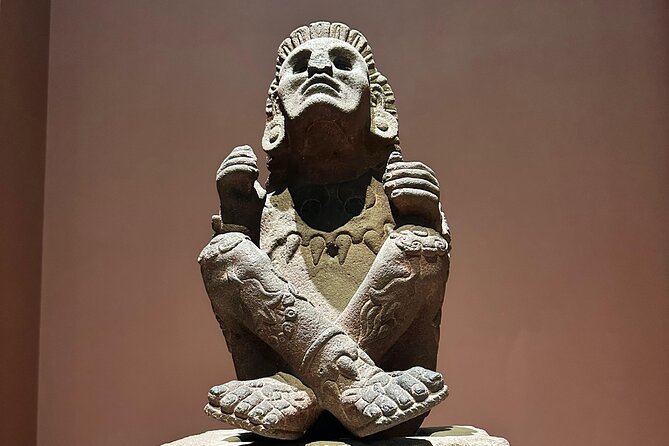
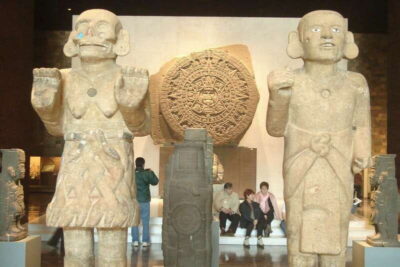
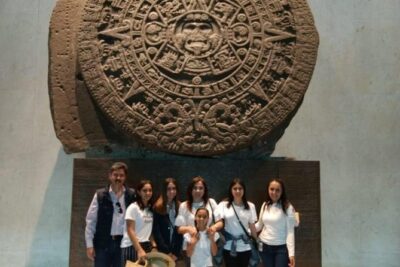
The Sun Stone is the star attraction, but the real value here is having a certified guide explain how Mexico’s ancient civilizations shaped the culture you see today. You’ll visit the museum’s Aztec and Maya galleries and focus on its most important halls rather than wandering without a plan.
I like the English-language guidance and the fact that museum admission is included. I also like the small maximum group of 15, which should make it easier to hear and ask questions. The main concern is a reported mix-up in tour language, so confirm your English tour at the meeting point.
Key points at a glance
- See the Sun Stone: The museum’s most famous artifact anchors the visit and gives the ancient Mexico story a clear starting point.
- Visit Aztec and Maya galleries: The tour focuses on two of the museum’s best-known cultural collections.
- Spend 2.5 hours with a guide: That is enough time for a focused introduction without turning the museum into an all-day commitment.
- Meet at the main entrance: You make your own way to Museo Nacional de Antropología, with no hotel transfer included.
- Join a group of up to 15: The limited size should offer a more manageable pace than a large coach-style group.
- Book in English at $75: Admission is included, so you are paying for the guide, structure, and interpretation as well as entry.
Why the Sun Stone makes a strong starting point
Many museum visits begin with a room full of objects and no clear idea of what deserves your attention. This tour takes a better route by putting one of Mexico’s best-known artifacts at the center of the experience: the Sun Stone.
You will not simply see an impressive carved object and move on. The guide is there to explain its place within the story of ancient Mexico and to connect the artifacts with modern Mexican culture. That connection matters, since the museum is not only about a distant past. Its collections help explain symbols, traditions, and national identity that still shape Mexico today.
The available information does not specify exactly how long you will spend at the Sun Stone or which display order the guide will use. Still, it is reasonable to treat this part of the visit as a major highlight. If you want a quick orientation to the museum’s most recognizable material, this guided format gives you a useful anchor.
The Sun Stone also helps you judge the tour’s style. This is not designed as a loose stroll through every gallery. It is a selected visit to the museum’s iconic rooms, with the guide choosing the key objects and supplying the context that labels alone cannot provide.
More Anthropology Museum tours:
- Chapultepec Castle & Anthropology Museum Tour
★ 4.5 · 1,348 reviews - Anthropology Museum Guided Tour
★ 4.5 · 1,035 reviews - Mexico City: Anthropology Museum Guided Visit
★ 4.4 · 708 reviews
The Aztec galleries, with meaning behind the objects
The Aztec galleries are one of the clearest reasons to choose this experience. A guide can help you place individual artifacts within a wider cultural story instead of treating each case as a separate stop.
You will learn about the Aztec civilization and its influence on Mexico. The exact objects covered beyond the Sun Stone are not listed, so I would not book this expecting a catalog of every major piece. Instead, think of the visit as a guided introduction to the gallery’s main themes and important examples.
That distinction is useful. If you have only a few hours in Mexico City, a focused introduction can be more rewarding than trying to absorb the entire museum on your own. You get a path through the material and a chance to ask questions as the ideas develop.
I especially like the way the tour links ancient civilizations to present-day culture. That keeps the Aztec material from feeling sealed off in the past. You are encouraged to see the museum as part of a larger story about Mexico, not just as a room of old objects.
The Maya galleries add a second viewpoint
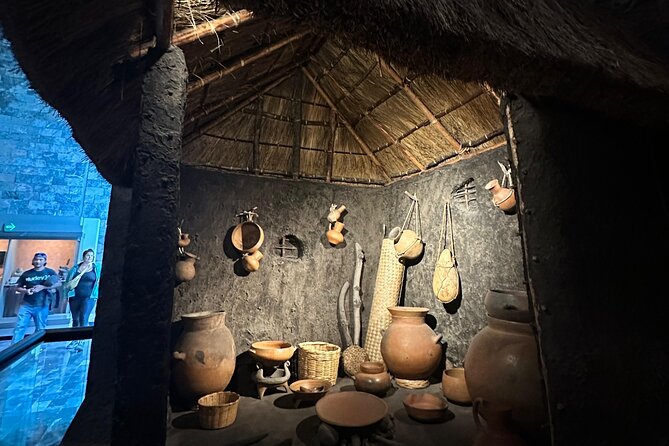
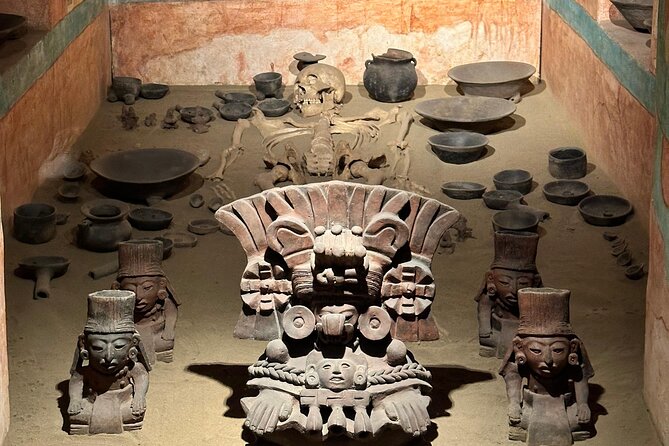
The Maya galleries give the tour a wider reach. By pairing the Aztec and Maya collections, the guide can show that ancient Mexico was shaped by more than one civilization, with different traditions and cultural contributions.
Again, the description does not list individual Maya artifacts or promise a particular gallery sequence. You should expect a guided visit through the main Maya material, not a specialist seminar on every site or historical period.
This pairing is one of the tour’s better choices. If the visit covered only the Aztec galleries, you would get a narrower picture of ancient Mexico. Adding the Maya section gives you another major cultural tradition to compare, and it helps explain why the museum is such an important stop for first-time visitors.
The guide’s role is particularly useful here. You may find that the objects make more sense when someone points out the ideas connecting them. The value is not just in seeing the collection, but in having a person help you decide what deserves your attention during a limited visit.
A 2.5-hour visit keeps the pace manageable
The experience lasts about two hours and 30 minutes, beginning at 10:00 am. That timing gives you a substantial morning visit while leaving part of the day open for other plans in Mexico City.
I like this length for a museum introduction. A shorter tour might rush through the Aztec and Maya galleries, while a much longer one could become tiring, especially if you are still adjusting to a full day of sightseeing. Two and a half hours gives the guide room to explain the major themes without asking you to commit to an entire day indoors.
The exact pacing is not specified, so you should not expect a fixed number of minutes in each hall. The guide may spend more time on the Sun Stone or another important artifact depending on the group’s questions and interests.
That flexibility can work in your favor. A group interested in ancient civilizations may get more explanation, while a group moving at a quicker pace may cover the selected halls more efficiently. The tradeoff is that you will not control every minute of the visit.
If you want to see the entire museum in detail, this tour will not be enough on its own. It is better understood as a focused introduction to the most iconic areas. You can return later for a longer independent visit if the collection catches your interest.
More museums in Mexico City:
- CDMX: Xochimilco, Coyoacan, Frida Kahlo Museum & Murals Tour
★ 4.4 · 3,025 reviews - Frida Kahlo VIP [Museum Tickets Included] Bike, Markets & Churros
★ 5.0 · 1,072 reviews - Frida Kahlo VIP [Museum Tickets Included] Walk, Markets & Churros
★ 5.0 · 982 reviews - EXCLUSIVE TOUR Frida Kahlo Museum – SMALL GROUPS
★ 5.0 · 901 reviews
What the small group changes
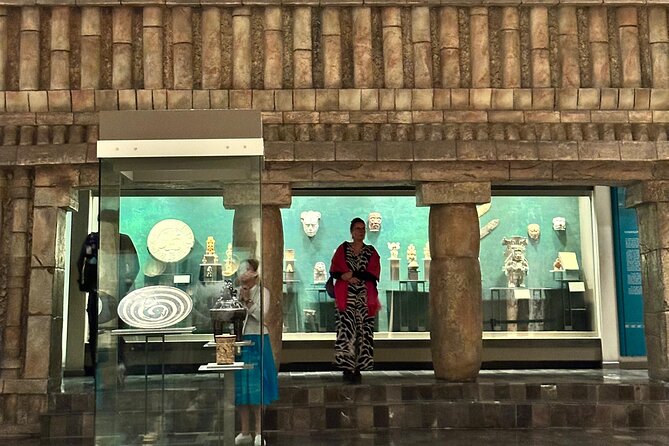
The tour accepts a maximum of 15 people. That is not a private visit, but it is small enough to feel more controlled than a large group moving through crowded rooms.
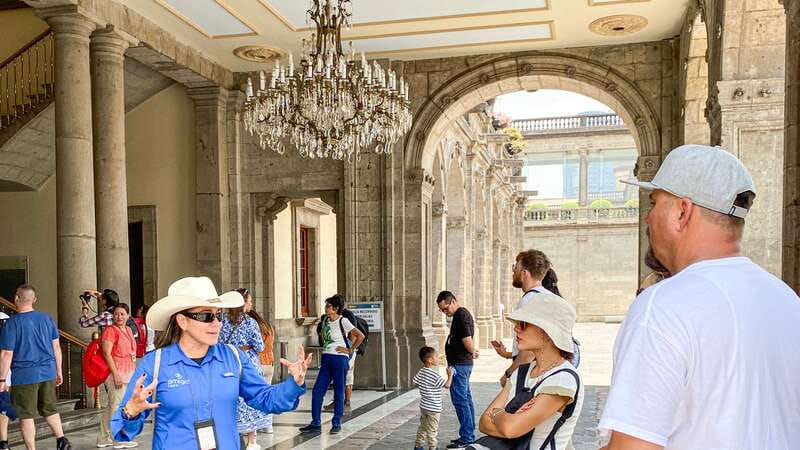
A smaller group usually makes the practical parts easier. You are less likely to lose the guide between displays, and questions can be handled without stopping an entire crowd. The guide can also keep the group together more easily as you move from the main entrance through the selected halls.
The group limit is especially useful in a museum setting. You are listening in rooms where other people may be viewing objects or following their own plans. A group of 15 still requires attention, but it should be easier to hear than a large guided party.
Keep your expectations realistic. The group may not be quiet or perfectly uniform, and the experience is not advertised as private. If you want complete control over the route and pace, a private guide would be a different type of booking. For a shared visit, though, the maximum size is sensible.
The English-language issue deserves attention
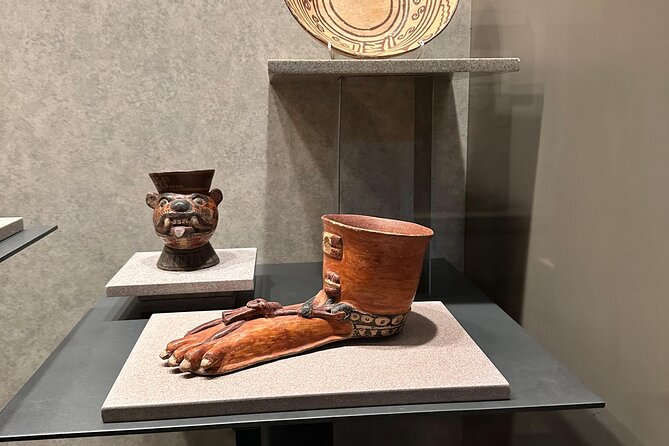
The tour is offered in English, and the guide is described as certified. That is important because museum interpretation depends on more than simply identifying objects. You want to follow the historical connections, understand the guide’s explanations, and ask questions without a language barrier.
There was one reported problem with the tour language. A guest arrived expecting English but initially found a Spanish-speaking guide. The situation was corrected by arranging an English-speaking guide at the museum, and that replacement guide was described as informative and well versed in the subject.
The outcome was positive, but the mix-up is still worth taking seriously. A language problem can waste time and make a museum visit stressful, even when the staff fixes it. At the main entrance, confirm that you are assigned to the English-language tour before the group leaves.
This is a practical point, not a reason to reject the experience outright. The reported guide change was handled successfully, and the replacement guide salvaged the day. Still, if English interpretation is essential to your plans, build in a moment to verify it at check-in.
No guide names are provided, so I cannot tell you to look for a particular person. Meet the guide at the museum’s main entrance and have your booking confirmation ready.
Getting to the museum without a transfer
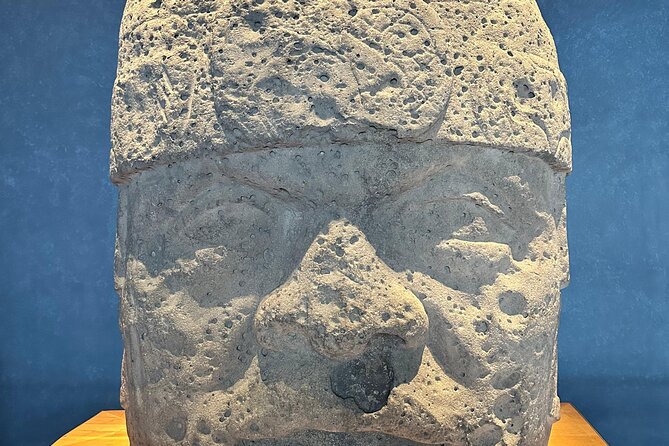
The meeting point is Museo Nacional de Antropología, at Av. Paseo de la Reforma in the Polanco area of Bosque de Chapultepec. The tour begins and ends at the same place.
This is a self-arrival experience. Private transportation is not included, and no hotel pickup or return transfer is provided. You need to plan your own route to the museum and allow enough time to arrive before the 10:00 am start.
The museum is near public transportation, which helps if you are staying elsewhere in Mexico City. The supplied details do not identify a specific station, route, or recommended travel time, so check your own route before the morning of the tour rather than relying on a last-minute guess.
Returning to the meeting point is convenient. You do not need to arrange a second pickup or wonder where the tour ends. Once the guided portion is over, you can continue with your own plans from the museum.
Because the start point is fixed, this tour works best if you are comfortable making your way around Mexico City independently. It is less useful for someone who wants a fully escorted outing from a hotel.
Is $75 a fair price?
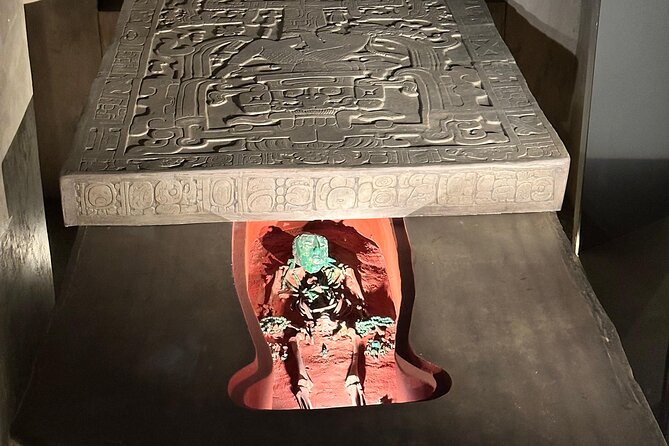
The cost is $75 per person. Admission to the museum and the guide are included, while transportation is not.
The value depends on how you normally visit museums. If you are good at reading displays, setting your own route, and deciding which objects matter, you may prefer to pay only for admission and explore independently. If you want a clear route and explanations in English, the guide is the main reason to consider the price.
You are also paying for time saved. Rather than entering and trying to decide where to begin, you go directly to the museum’s selected highlights. The guide connects the Sun Stone, Aztec material, Maya material, and modern Mexican culture into one two-and-a-half-hour visit.
The maximum group size of 15 adds some value, since this is not an unlimited-size group. Still, the tour is not private, and transportation is not bundled in. I would call the price reasonable for someone who values guided context and has limited time, but less attractive for an independent museum fan who wants to linger alone.
The best comparison is not simply admission versus $75. Ask yourself what a clear English explanation of the museum’s main collections is worth to you. If that service would make the difference between understanding the museum and merely passing through it, the added cost can make sense.
Who should book this experience?
I would recommend this tour to a first-time visitor to Mexico City who wants an organized introduction to ancient Mexican civilizations. It also suits you if you have only one morning available and want to see the most important halls without planning a route yourself.
It is a good fit for English-speaking couples, families, and small groups who prefer a guide but do not want a large organized excursion. The maximum of 15 people keeps the format shared but reasonably contained.
You should also consider it if you want cultural context rather than only photographs of famous objects. The connection between ancient civilizations and modern Mexican culture gives the visit a clear purpose.
I would hesitate if you are looking for a private museum experience, hotel transportation, or a full tour of every collection. The two-and-a-half-hour format is focused, and the available details do not promise coverage beyond the Aztec and Maya galleries and other iconic halls.
Most people can participate, according to the tour information. No special access details or mobility arrangements are provided, so contact the provider directly if you have a specific accessibility need.
Booking ahead and cancellation
This experience is often booked about 35 days in advance. That suggests you should plan ahead if the 10:00 am start and English-language guide are important to your schedule.
Confirmation is provided when you book. You can cancel for a full refund up to 24 hours before the start time. Cancellations or changes made less than 24 hours before the experience are not accepted for a refund, and the cut-off uses local Mexico City time.
My recommendation
Book this tour if you want a focused English-language introduction to the National Museum of Anthropology, especially the Sun Stone, Aztec galleries, and Maya galleries. The guide, included admission, fixed morning start, and 15-person limit make it a practical choice for a first visit.
Skip it if you prefer to explore at your own speed or want transportation and private attention. Also confirm the tour language at the entrance, since one booking had a Spanish-English mix-up even though staff arranged an English-speaking replacement guide who provided a successful visit.
FAQ
How much does the guided tour cost?
The price is $75 per person.
How long does the tour last?
The tour lasts approximately two hours and 30 minutes.
What time does the tour start?
It starts at 10:00 am.
Where do I meet the guide?
You meet the certified guide at the main entrance of Museo Nacional de Antropología, Av. Paseo de la Reforma, Polanco, Bosque de Chapultepec I Secc, Miguel Hidalgo, Mexico City.
Where does the tour end?
The activity ends back at the same meeting point.
Is museum admission included?
Yes. The admission fee is included in the tour price.
Is transportation included?
No. Private transportation and transfers are not included.
Is the tour offered in English?
Yes. The experience is offered in English.
How many people can join the tour?
The maximum group size is 15 people.
Can I cancel for a full refund?
Yes. You can cancel at least 24 hours before the local start time for a full refund. Cancellations or changes made less than 24 hours before the start time are not accepted for a refund.
Just added around Mexico City
- Xochimilco’s Wild Side: Mezcal, Insects & Culture★ 4.9 · 10 reviews
- Xochimilco: Food and Trajinera Ride with Local Women★ 5.0 · 5 reviews
- Xochimilco: Island of the Dolls Tour Games and Drinks★ 5.0 · 25 reviews
- Xochimilco Ecological Tour – Away From the Crowds (3 Hours)★ 5.0 · 15 reviews
- Xochimilco + Coyoacán Combo Full-Day Tour★ 5.0 · 3 reviews
- Xochimilco floating gardens, Coyoacan and UNAM murals★ 4.0 · 6 reviews
- Val´quirico And The City of Angels Puebla From Mexico City★ 5.0 · 3 reviews
- Xochimilco: amanecer en kayak Ciudad de México★ 5.0 · 35 reviews
National Museum of Anthropology Tours, compared.

Chapultepec Castle & Anthropology Museum Tour
Read our review →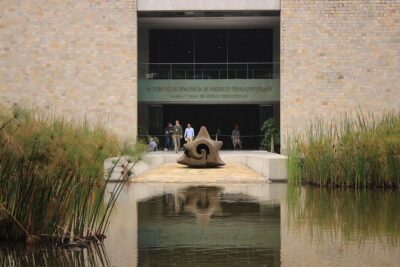
Chapultepec Castle and Anthropology Museum Tour
Read our review →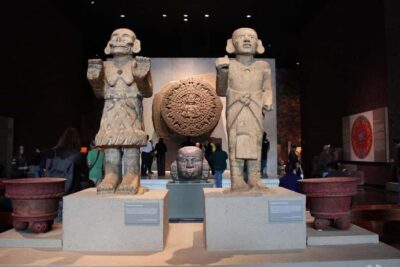
Anthropology Museum Private Experience Walking Tour
Read our review →
5 Hour Tour through Chapultepec, Anthropology Museum and Castle
Read our review →
PRIVATE Tour in Chapultepec Castle and Museum of Anthropology
Read our review →Browse the lists this tour appears in