
Reviewed · WALKING TOURS
Mexico City: Historical walking tour of Tenochtitlan
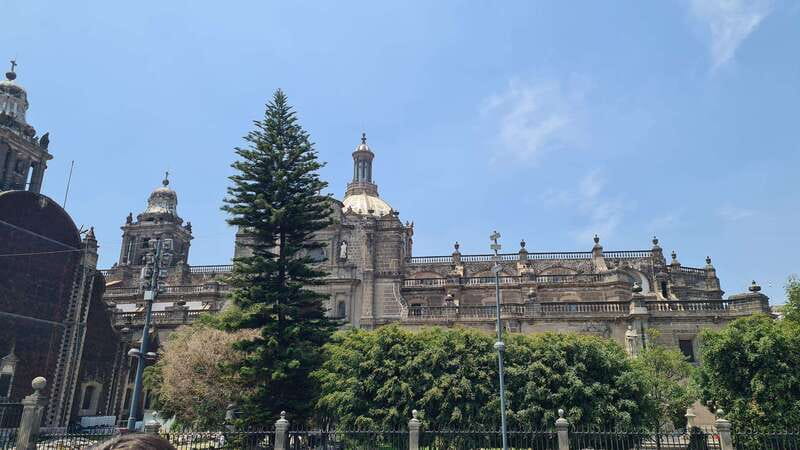
Mexico City’s Centro Histórico is a layered city where an Aztec temple, a Spanish cathedral, a colonial palace, and a 20th-century mural can sit within a few blocks. This walking tour makes those layers readable, with Professor Cristina Ríos, a PhD guide, explaining how Tenochtitlan became the capital you see today. I especially like the focus on connections between sites, not just a parade of photo stops, and the chance to notice details you could easily miss alone.
I also like the small groups of three to 10 people and the route’s steady three-hour pace. Cristina has adjusted walks for private groups, answered detailed questions, and occasionally added nearby sights such as Cortés’s tomb when time allowed. The main caution is that most stops are viewed from outside, so you should plan extra time for the Templo Mayor Museum and Palace of Fine Arts on your own.
Key points at a glance
- Seven centuries in three hours: The tour links Tenochtitlan, Spanish rule, independence, and modern Mexican art.
- Professor Cristina Ríos leads the walk: Her PhD background suits visitors who want serious historical and architectural context.
- The Templo Mayor begins the story: You see models and the archaeological zone from outside rather than entering the museum.
- Casa de los Azulejos includes an indoor mural stop: José Clemente Orozco’s work receives a detailed explanation.
- Small groups keep questions practical: Groups are limited to 10, and larger groups receive headsets.
- The $43 price pays for interpretation: Tickets, food, and drinks cost extra, but the route covers many central landmarks.
Why the Tenochtitlan story works on foot
The best feature of this walk is its sense of sequence. You begin near the remains of Tenochtitlan, then follow the city through the Spanish conquest, colonial rebuilding, independence, and later artistic life. That order gives you a useful framework for the rest of your Mexico City visit.
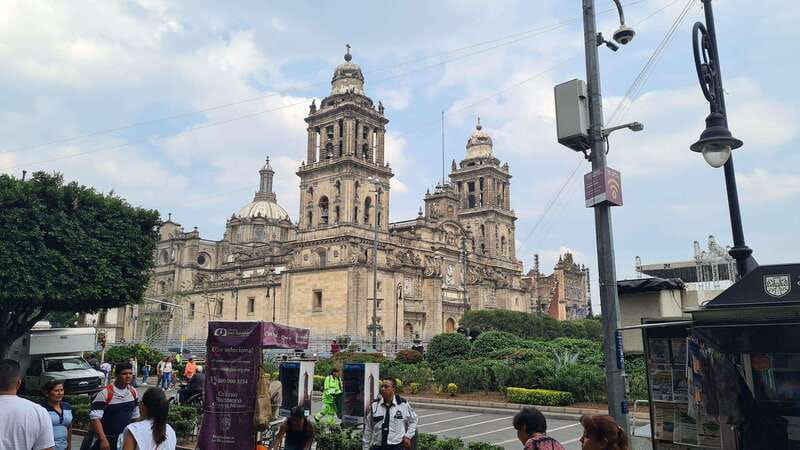
I find this approach more helpful than a tour that treats every building as an isolated attraction. At the Cathedral, for example, the point is not only the facade. You are also considering what came before it, what the Spanish authorities built over, and how the city changed as power shifted.
The tour is especially suited to you if you like architecture, archaeology, art, and political history. Cristina’s explanations cover Aztec society, Spanish colonization, early Mexican independence, architectural styles, and the people tied to the buildings. Several stops may seem ordinary at first glance, but a careful explanation gives them a clear place in the city’s story.
The tradeoff is density. Three hours is enough to build a strong foundation, but not enough to enter every museum or study each interior at leisure. Think of this as an informed orientation walk, followed by independent visits to the places that catch your attention.
More Historical Tours in Mexico City:
- Historic Downtown Walking Tour
★ 5.0 · 1,289 reviews - Historic Center Food Tour in Mexico City
★ 5.0 · 1,263 reviews - Mexico City: Historic Downtown Walking Tour
★ 4.8 · 1,039 reviews
Starting at Centro Cultural España and Templo Mayor
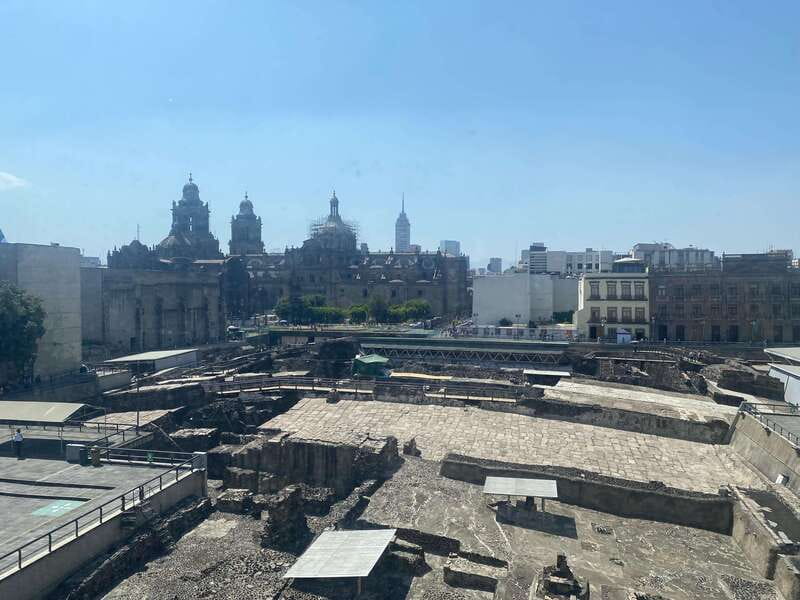
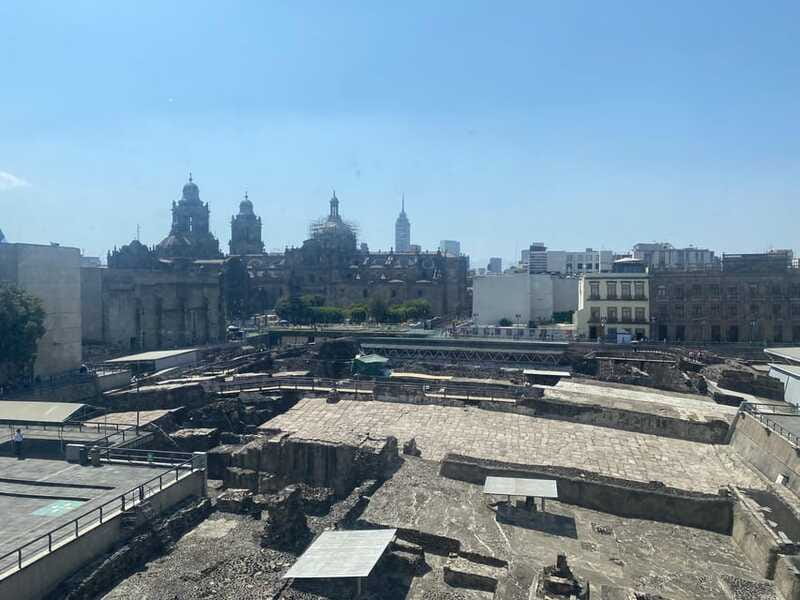
The meeting point is the entrance to the Centro Cultural España at Guatemala 18, beside the Templo Mayor area. The tour begins with models and an outside view of the archaeological zone. You do not enter the Templo Mayor Museum or the excavation area as part of the walk.
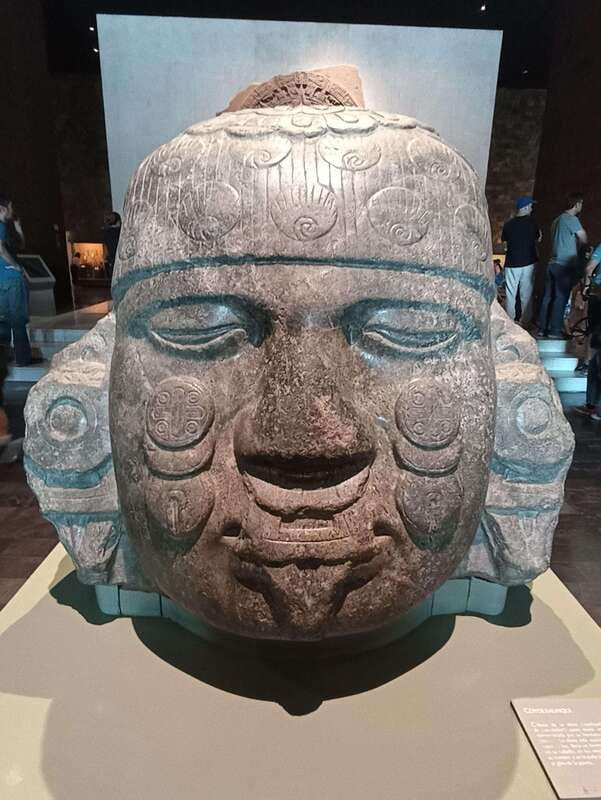
That detail matters when you plan your day. Templo Mayor is one of the most important places connected to ancient Tenochtitlan, but this experience uses the site as a starting point for explanation rather than as a museum visit. You will want to return independently if you wish to see the objects and displays inside.
The opening section lasts about 40 minutes. It sets up the central idea of the tour: modern Mexico City was built over and around the earlier Mexica capital. The models help you picture a city that can be difficult to understand from the present-day streets alone.
Cristina’s teaching style appears to be the main reason this opening works so well. She explains the chronology clearly, takes questions seriously, and uses nearby remains to connect broad events with the ground beneath your feet.
Behind the Cathedral and the Calmecac site
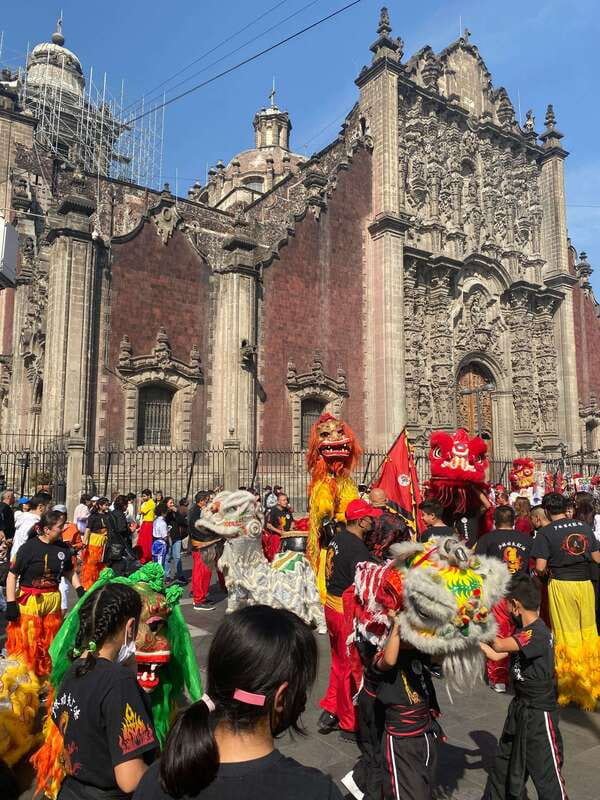
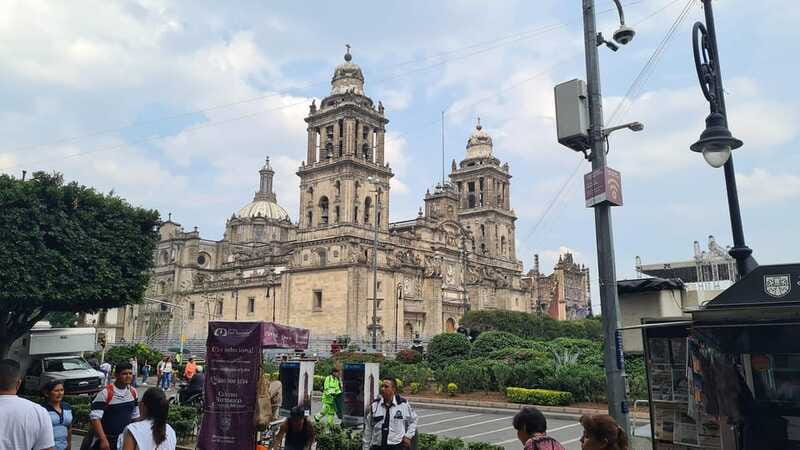
The route then moves behind the Metropolitan Cathedral, where you see the Animas del Purgatorio area and the site museum at the Centro Cultural España. The Calmecac site is one of the more unusual stops because it is easy to pass through the area without knowing what you are looking at.
This is the kind of stop that gives the walk its value. You are not simply being taken to the city’s most famous facade. You are being shown how pre-Hispanic and colonial remains survive beside later buildings, often in spaces that do not announce their importance.
The Cathedral section lasts about 20 minutes. You should expect an exterior-focused explanation rather than a long indoor visit. That keeps the group moving, but it also means you may wish to return later if the interior is a priority.
Bring questions here. The relationship between the older Mexica city and the colonial center can raise complicated issues, and Cristina’s ability to explain both architecture and history is useful.
Cortés’s lodgings and the old Axayacatl Palace
The next stop concerns Cortés’s lodgings at the former Axayacatl Palace, also associated with the old houses of Moctezuma. This is a powerful place to discuss the first Spanish presence in the city because the building carries several layers of political meaning.
You get a clearer sense of how conquest was not just a military event. It also involved occupying important spaces, adapting existing structures, and reshaping the center of government. The stop helps tie the story of Cortés to the larger transformation of Tenochtitlan.
One useful feature of a small group is the freedom to ask for clarification when names and dates begin to pile up. Cristina has also taken groups slightly off the main route to see the tomb of Cortés. That extra stop is not promised, so do not count on it, but it shows how the route can sometimes respond to interest and available time.
More Walking Tours in Mexico City:
- Frida Kahlo VIP [Museum Tickets Included] Walk, Markets & Churros
★ 5.0 · 982 reviews - Walking Tour of the Historic Center of Mexico City
★ 5.0 · 870 reviews - Anthropology Museum Private Experience Walking Tour
★ 5.0 · 355 reviews - Walking Tour in Mexico City for Exploring their Cultural Heritage
★ 5.0 · 245 reviews
Iturbide Palace and Mexican independence
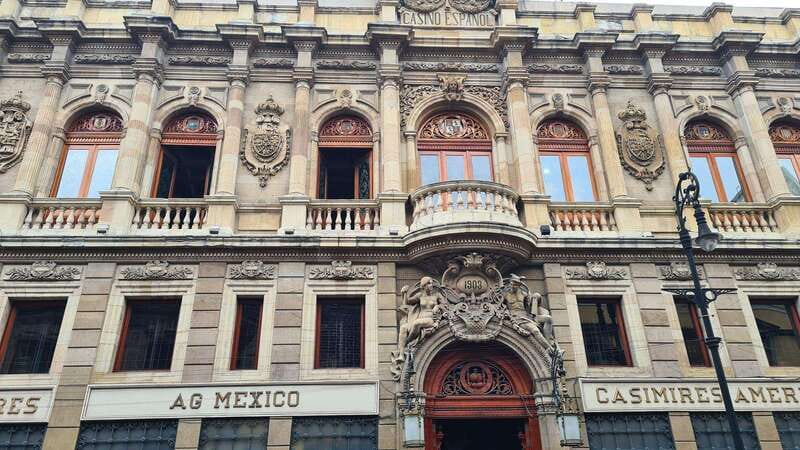
The walk continues to the Iturbide Palace, now the Banamex Cultural Center. The building adds a colonial and early national layer to the tour, moving the story beyond the conquest.
Here you consider the political and architectural world that followed Spanish rule. The name Iturbide connects the site with Mexico’s early independent period, while the building itself helps explain how elite spaces changed over time.
The stop lasts about 20 minutes. As with several locations, the scheduled experience centers on explanation rather than a full museum visit. If an exhibition inside interests you, save the building for another part of your day.
This is also where the tour’s broad range becomes clear. It is not limited to Aztec archaeology. You move through the city’s later political story, learning how Mexico City continued to change after the colonial period ended.
San Francisco and the colonial city
At the Church of San Francisco, the focus is on the facade. A 20-minute stop may sound brief, but an exterior can tell you plenty when someone explains its style, religious purpose, and place in the city.
The church helps you picture the colonial center as a network of religious and civic buildings, not just a collection of grand monuments. It also gives the group a pause from the earlier archaeological material before the route shifts toward decorative architecture and modern Mexican art.
You should wear proper walking shoes. The tour covers several central blocks, and the value comes from paying attention at each stop rather than rushing from one landmark to the next. A hat, sunglasses, and sunscreen are sensible, especially for a morning walk with time spent outdoors.
Casa de los Azulejos and Orozco’s mural
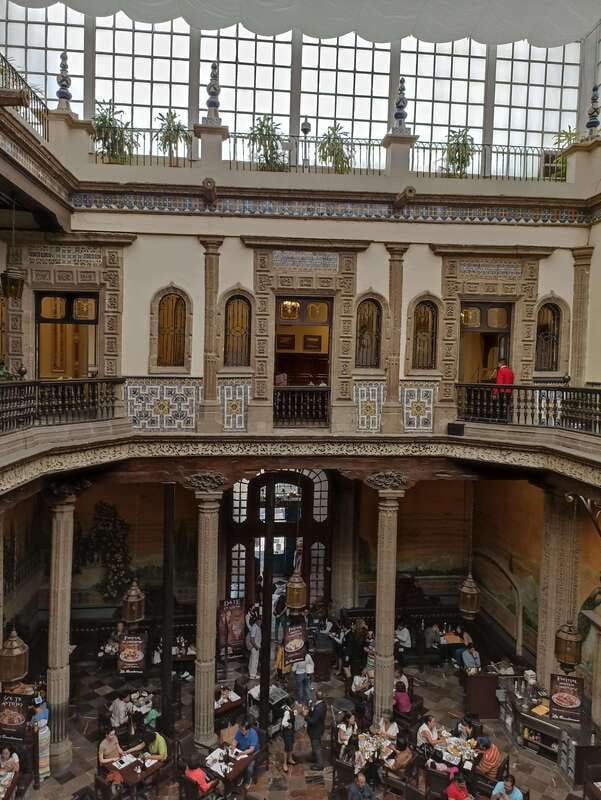
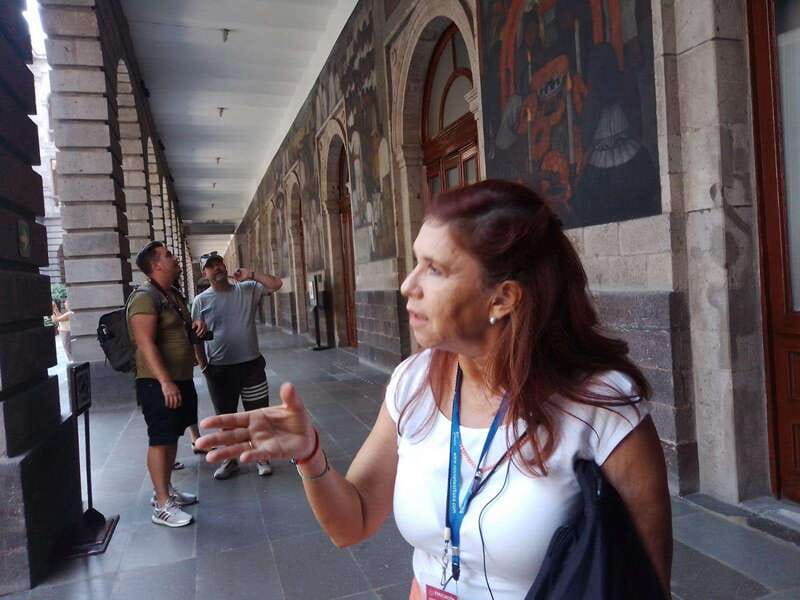
Casa de los Azulejos is one of the strongest visual stops. Its tiled exterior is easy to recognize, but the tour also includes an interior look at a José Clemente Orozco mural, with a detailed explanation.
This is where the route broadens from buildings and political events into Mexican art. Orozco’s work gives Cristina a chance to explain how artists interpreted the country’s past and social struggles. You are not just looking at decoration. You are learning how architecture and public art can carry arguments about Mexico.
The stop lasts around 30 minutes. That is enough time for a focused explanation, though not necessarily for a relaxed meal or extended look around the building. A traditional sweet at Dulcería Celaya may be added as an optional part of the experience, but food is not included in the price.
For many people, this stop will be more memorable than another grand facade because it combines a distinctive building with a work of art. It also rewards close attention. Look at the details Cristina points out, then spend a few extra minutes afterward noticing what you might have missed during the explanation.
Ending at the Palace of Fine Arts
The walk finishes at the Palace of Fine Arts after a pass-by stop of about 30 minutes. The building gives the tour a fitting final chapter, linking the older city to Mexico’s modern cultural identity.
You will not have a full interior visit as part of this tour. That is important if you want to see the murals or attend a performance. Instead, the stop provides context and a convenient endpoint for further exploring the center.
Ending here is practical. You can continue to the Palace of Fine Arts independently, revisit Casa de los Azulejos, or use Cristina’s recommendations for additional sights and places to eat. Several participants have found the suggestions useful because the walk gives you a better sense of what deserves more time.
What the guide adds to the $43 cost
At $43 per person, this is not the cheapest way to walk around downtown. You can see many of the exteriors for free, and museum tickets are not included. The value depends on how much you want interpretation rather than simple sightseeing.
For me, the strongest case for the price is Cristina herself. She brings together pre-Hispanic history, colonial architecture, Mexican independence, and art history in one continuous explanation. Her English has been described as clear, and the tour is also offered in Spanish.
The small group limit matters. With as few as three participants, you have a better chance to ask about a mural, a building detail, or a historical figure without holding up a large crowd. If the group exceeds seven, headsets are provided, which helps in noisy central streets.
The cost also buys efficient planning. In three hours, you cover a wide central route and learn what you are seeing. That can save you from wandering past important places without understanding them. It does not replace entrance fees or a full museum day, but it can help you choose where to spend that extra time.
Pace, access, and who should book
The walk is listed as wheelchair accessible, and the route takes place in the historic center. Still, you should confirm your own comfort with a three-hour city walk and outdoor stops. Comfortable shoes are essential, and a hat or sunglasses will help in the sun.
Children under 10 are not accepted. The content and pace are aimed more at adults and older children who can follow a detailed explanation of architecture, politics, and history. One 10-year-old was able to stay entertained, but younger children may find the long explanations difficult.
I would book this early in a Mexico City visit. The tour gives you a working map of the Centro Histórico and points out places you can return to later. It also helps prevent the common mistake of treating Templo Mayor, the Cathedral, and the colonial buildings as unrelated sights.
You should choose another experience if your main goal is entering museums, spending long periods inside churches, or seeing every landmark at leisure. This is an outside-heavy walking tour with a strong academic guide, not a ticketed attraction package.
Practical details before you go
The tour lasts three hours and starts in the morning, with exact times depending on availability. Meet at the Centro Cultural España entrance at Guatemala 18, near the Templo Mayor models and archaeological zone.
Food and drinks are not included. Dulcería Celaya sweets are optional, so bring what you need for the walk and plan a meal afterward. Hotel pickup and drop-off are not provided.
You can cancel up to 24 hours before the start for a full refund, and the reserve-now, pay-later option keeps your plans flexible. English and Spanish tours are available.
Should you book this Tenochtitlan walking tour?
Book it if you want Mexico City explained by a serious local guide rather than simply pointed out. Professor Cristina Ríos is the main reason to choose this particular walk, especially if you care about Aztec history, Spanish colonization, architecture, art, and early Mexican independence.
The best plan is to take the tour early in your stay, then return to the Templo Mayor Museum and Palace of Fine Arts with the background you gained. At $43, it offers good value for focused instruction across a wide section of the center, but only if you understand what you are buying: a detailed walking lesson with exterior views, not a bundle of admission tickets.
FAQ
Where does the tour meet?
Meet at the entrance of Centro Cultural España at Guatemala 18, near the Templo Mayor models and archaeological zone.
Does the tour enter the Templo Mayor Museum?
No. The tour views the models and archaeological zone from outside. Museum admission is not included.
How long does the walking tour last?
The tour lasts three hours, with availability depending on the selected starting time.
What languages are available?
The live tour is available in English and Spanish.
Are tickets, food, or drinks included?
No. Tickets, food, and drinks are not included. Traditional sweets at Dulcería Celaya may be offered as an optional stop.
Is the tour suitable for children?
Children under 10 are not accepted. The tour is designed for participants who can follow detailed explanations of history, architecture, and art.
Just added around Mexico City
- Xochimilco’s Wild Side: Mezcal, Insects & Culture★ 4.9 · 10 reviews
- Xochimilco: Food and Trajinera Ride with Local Women★ 5.0 · 5 reviews
- Xochimilco: Island of the Dolls Tour Games and Drinks★ 5.0 · 25 reviews
- Xochimilco Ecological Tour – Away From the Crowds (3 Hours)★ 5.0 · 15 reviews
- Xochimilco + Coyoacán Combo Full-Day Tour★ 5.0 · 3 reviews
- Xochimilco floating gardens, Coyoacan and UNAM murals★ 4.0 · 6 reviews
- Xochimilco: Eco Tour With Food★ 4.8 · 7 reviews
- Val´quirico And The City of Angels Puebla From Mexico City★ 5.0 · 3 reviews
Walking Tours, compared.

![Frida Kahlo VIP [Museum Tickets Included] Walk, Markets & Churros](https://b.themexicocitytraveler.com/wp-content/uploads/frida-kahlo-vip-museum-tickets-included-walk-markets-churros-400x267.jpg)
Frida Kahlo VIP [Museum Tickets Included] Walk, Markets & Churros
Read our review →
Anthropology Museum Private Experience Walking Tour
Read our review →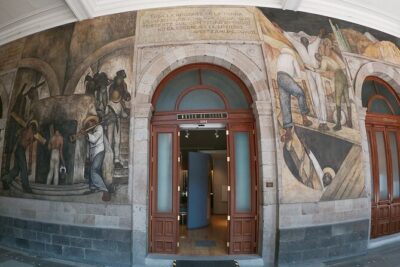
Walking Tour in Mexico City for Exploring their Cultural Heritage
Read our review →
Walking Tour – Impressive murals in Historical Center of Mexico City
Read our review →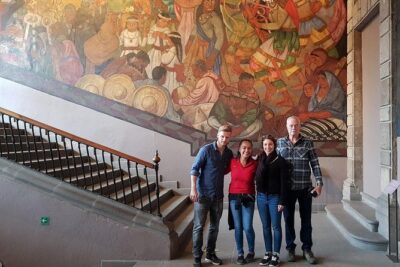
Muralist Art Semi Private Walking Tour in Mexico City Downtown
Read our review →
Coyoacán Walking Tour: Access to Frida Kahlo Museum & Tacos
Read our review →Browse the lists this tour appears in