
Reviewed · WALKING TOURS
Mexico City: Guided walking tour through the most historic parts of the city.
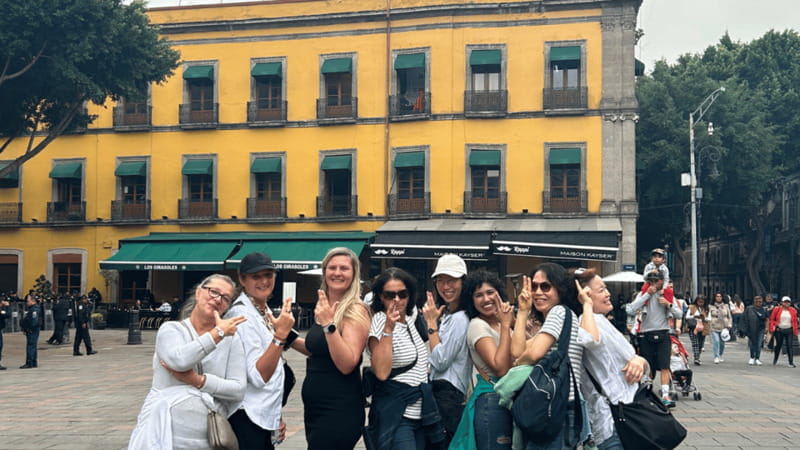
Mexico City’s past is packed into a compact walk from the Zócalo to Bellas Artes. In three hours, you move from the Aztec capital to the Spanish Viceroyalty and then into independent Mexico, with stops at major buildings and less obvious corners along the way. I like the strong historical framework and the practical advice about food, transport, and daily life. I also like that guides such as Areli, Luis, Oscar, Alexia, Laura, and Netza bring their own stories and energy to the route.
The price is $30 per person, a fair deal for a three-hour introduction to the Centro Histórico, especially if this is your first day in town. The main drawback is the amount of standing and walking, along with the fact that entrance fees, food, and drinks are extra. One group also found the opening talk too long before the walking began, so you may need patience at the start.
Key points to know before you go
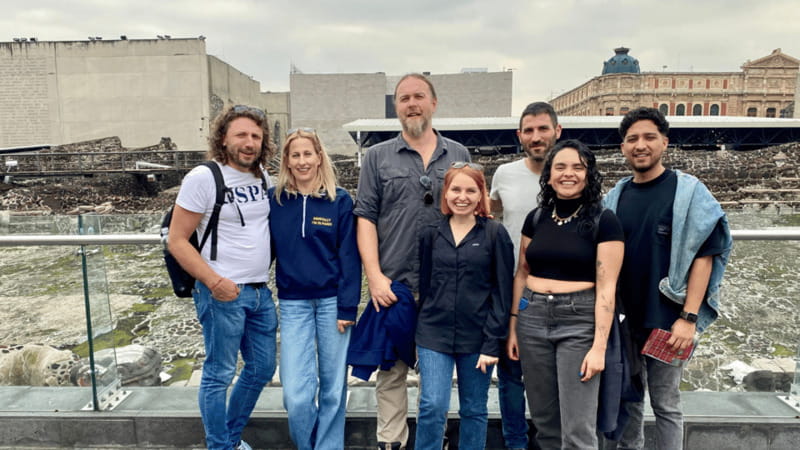
- Three eras in one walk: The route connects pre-Hispanic Mexico, the Viceroyalty, and the Republic.
- A useful first-day tour: You finish near Bellas Artes with food ideas, transport tips, and a better sense of the city center.
- Major sights with local context: See the Cathedral, Templo Mayor, Santo Domingo, the Postal Palace, Casa de los Azulejos, and Bellas Artes.
- Guides make the difference: Areli, Oscar, Alexia, Laura, Netza, Thomas, and others are praised for clear storytelling and warm, lively presentations.
- Come prepared to walk: Wear comfortable shoes, bring sun protection, cash, and clothing suited to the weather.
- Food is not included: Your guide can suggest places and help you choose wisely, but you pay for anything you eat.
Why this three-hour walk works as a first look at Mexico City
Mexico City can feel hard to read at first. Its streets carry Aztec foundations, Spanish churches, grand 19th-century buildings, murals, street food, and modern city life all at once. A walking tour gives you a useful map in your head before you set off on your own.
This route follows a clear story. You begin at the city’s ceremonial heart, learn how Mexico-Tenochtitlan became Mexico City, and then walk through the buildings and public squares that reflect later chapters. I like that the tour does not treat the Centro Histórico as a collection of pretty facades. It explains why the buildings are there and how different periods overlap.
The walking distance is manageable for most people who are comfortable on their feet, but the tour involves standing at several stops. The pace can adapt to the group, and guides have adjusted parts of the experience for events such as Day of the Dead. Still, allow time for street crossings, crowds, pauses, and questions rather than expecting a brisk march from one landmark to the next.
The meeting point is easy to identify. Go to the main entrance of the Metropolitan Cathedral, facing the Zócalo and its large flag. Look for a guide in a green uniform with a green umbrella. Plan your route carefully and allow at least an hour to reach the meeting point, since Mexico City traffic and public transport can take longer than expected.
More Historical Tours in Mexico City:
- Historic Downtown Walking Tour
★ 5.0 · 1,289 reviews - Historic Center Food Tour in Mexico City
★ 5.0 · 1,263 reviews - Mexico City: Historic Downtown Walking Tour
★ 4.8 · 1,039 reviews
Starting at the Zócalo and the Metropolitan Cathedral
The Zócalo is the right place to begin. This enormous central plaza gives you room to see the scale of Mexico City before the tour narrows into side streets and historic squares. Your guide sets up the first major question: how did an Aztec imperial center become the capital you see today?
The explanation covers Mexico-Tenochtitlan, the Aztec empire, the Spanish conquest, and the later growth of Mexico City. It is not just a list of dates. The best guides connect the plaza to the people who shaped the country, including Moctezuma, Hernán Cortés, presidents, artists, and revolutionary figures.
The Cathedral is one of the tour’s first major visual rewards. You go inside to see its architecture, then learn how the building reflects Spanish colonial power and Catholic influence. Give yourself time to look upward and around rather than treating the interior as a quick photo stop.
This first section can be information-heavy. One group suggested that the opening explanation could be shorter before the walk gets moving. I think that is useful advice if you prefer learning while walking. On the other hand, the introduction gives you the basic framework needed to understand the rest of the route.
Seeing the Templo Mayor beside modern Mexico City
The Templo Mayor area makes the city’s layers especially clear. The ruins are close to the Cathedral and modern streets, so you can see how the old Aztec center sits beneath and beside later buildings. Your guide explains the importance of the temple and the scale of the city that once occupied this site.
The stop lasts about 30 minutes and is one of the most valuable parts of the experience for anyone unfamiliar with Mexican history. You are not simply looking at stones. You are learning how conquest, construction, and urban growth changed the same central ground over centuries.
The tour includes a guided explanation of the area, but entrance fees are not included. The supplied schedule names the Templo Mayor Museum, while the general inclusions say admission charges are extra. If entering the museum matters to you, confirm the current arrangement when booking and bring money for any ticket you choose to buy.
This is also where good guiding matters most. A guide such as Laura or Netza can turn a complicated sequence of events into something easier to follow, while a guide such as Gaby has been praised for adding myths, legends, and cultural curiosities. The particular guide will vary, but the route is designed to give you context rather than only photographs.
Santo Domingo and the city beyond the main plaza
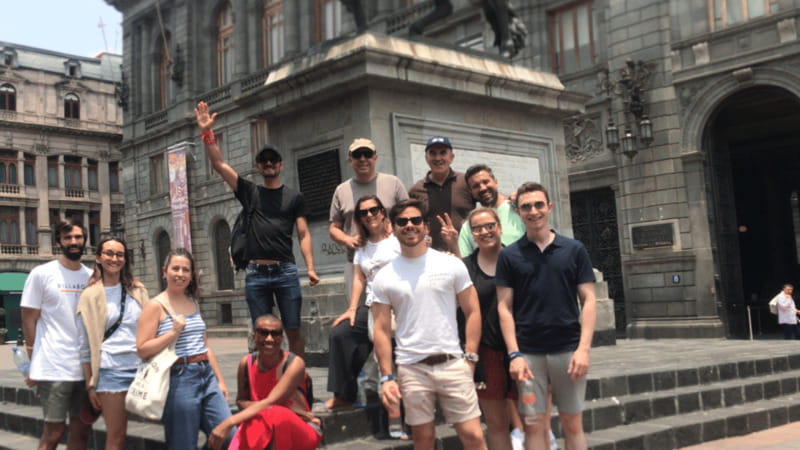
From the central plaza, the walk continues to Plaza de Santo Domingo. This stop focuses on the Dominican order and the religious institutions that helped shape colonial Mexico. The square also gives you a change of scale after the broad Zócalo.
You have time for photographs and explanation rather than a formal interior visit. That makes the stop flexible, though you should not expect a long museum-style presentation at every location. The value is in seeing how public spaces, churches, government buildings, and commerce fit together.
This is one of the places where the tour tries to move beyond the standard postcard route. Guides point out side streets, local details, and places that may not appear in a typical guidebook. You might also get suggestions for where to stop later for tacos or other local food.
The food advice is practical rather than part of a tasting tour. You do not receive lunch or included snacks, and you pay directly for anything you choose to eat. Bring cash, especially if you want to try a small street-side option after asking your guide what looks safe and worthwhile.
More Walking Tours in Mexico City:
- Frida Kahlo VIP [Museum Tickets Included] Walk, Markets & Churros
★ 5.0 · 982 reviews - Walking Tour of the Historic Center of Mexico City
★ 5.0 · 870 reviews - Anthropology Museum Private Experience Walking Tour
★ 5.0 · 355 reviews - Walking Tour in Mexico City for Exploring their Cultural Heritage
★ 5.0 · 245 reviews
Palacio de Correos and Mexico City’s grand architecture
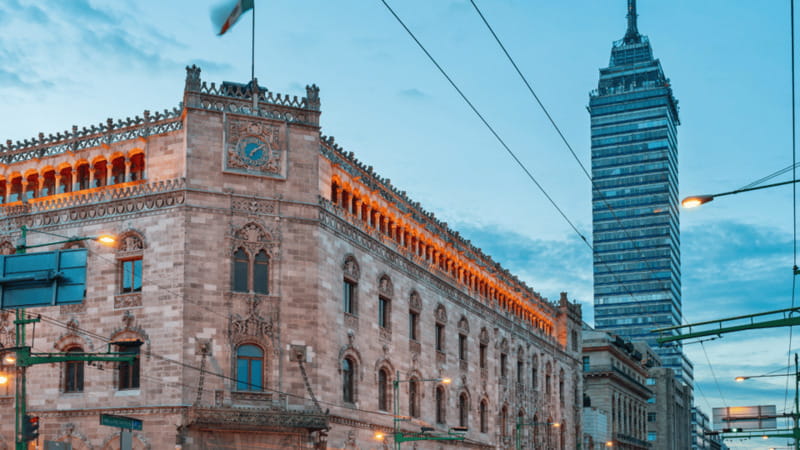
The Palacio de Correos de México gives the walk a different mood. Its ornate 19th-century design reflects the ambitions of Mexico during the Republic, after the colonial period and the War of Independence. The building is especially useful for showing that Mexican history did not stop with the conquest or colonial rule.
You have time for photographs, a visit, and some free time. The building’s decoration rewards a slower look, so do not rush straight to your camera. Your guide can help explain why the architecture matters and how it fits into the city’s changing identity.
This section also helps explain the tour’s three-part structure. The pre-Hispanic past appears at the Templo Mayor, the Viceroyalty comes through the Cathedral and Santo Domingo, and the Republic becomes more visible in the grand civic and cultural buildings farther along the route.
Casa de los Azulejos and the final approach to Bellas Artes
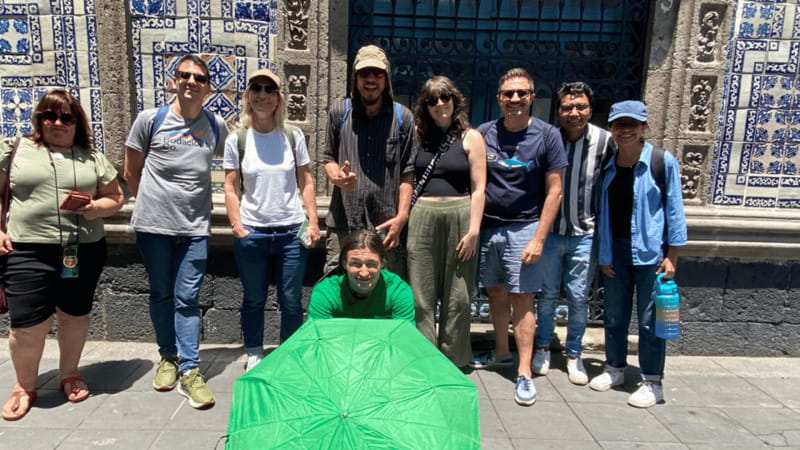
Casa de los Azulejos, or the House of Tiles, is one of the walk’s most memorable facades. Its blue-and-white tilework makes a strong photograph, but the building is more useful than a quick picture. It shows how architecture in the historic center can combine Spanish influences, local craft, and later changes.
The stop is brief, around 20 minutes, with time for photographs and a visit. The route keeps moving, so you get a broad introduction rather than a lengthy architectural study. If you enjoy buildings and design, note the details your guide points out and return later at your own pace.
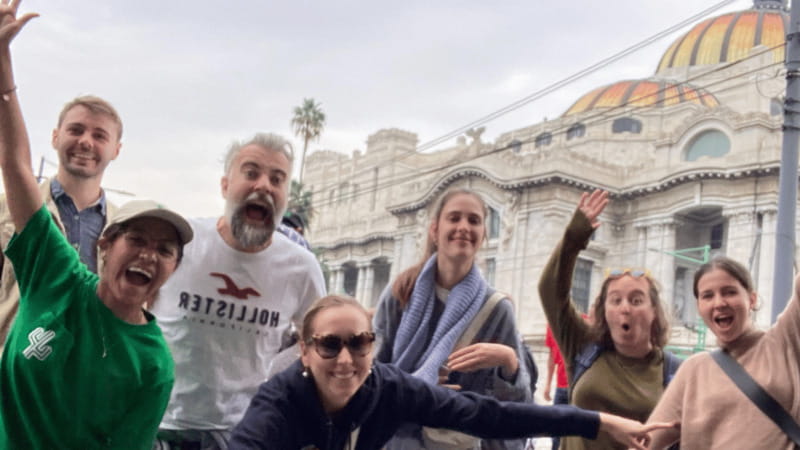
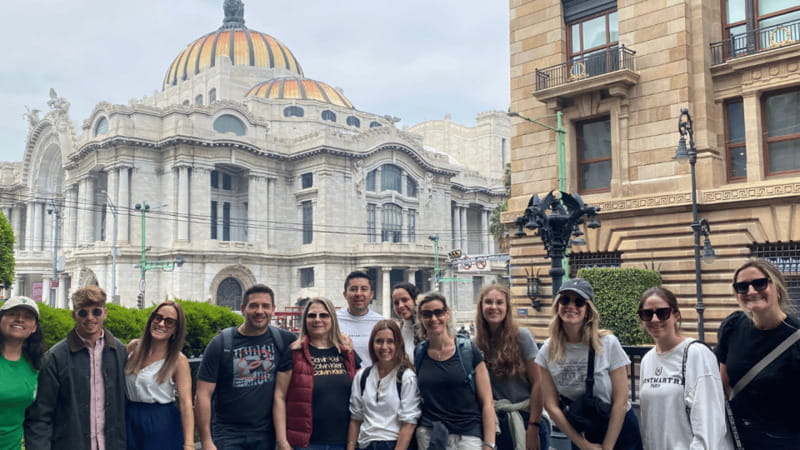
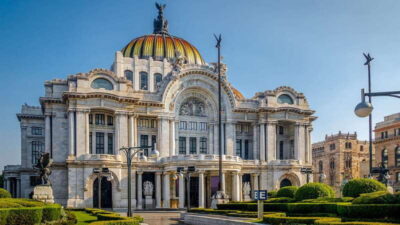
The final stop is the Palacio de Bellas Artes. Its monumental form and cultural importance make it a fitting endpoint. The tour finishes here, which is convenient if you want to continue exploring the building or nearby streets after the guide says goodbye. The scheduled program lists a photo stop, not a full guided interior visit, so plan separately if you want to see exhibitions or go inside beyond the tour’s visit time.
Ending at Bellas Artes also makes the route practical. You are no longer limited to the Zócalo area, and your guide can suggest what to do next. Several guides, including Alexia, Oscar, and Luis, are praised for giving useful recommendations for later sightseeing and meals.
The guides and the feel of the group
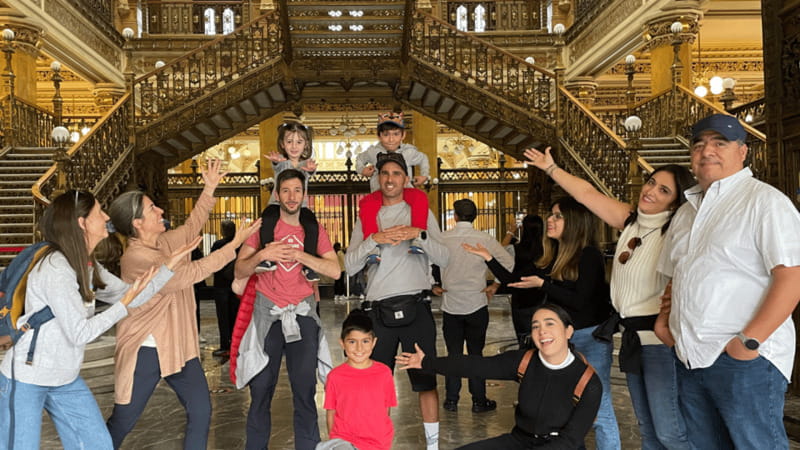
The strongest part of this experience is the guide’s ability to connect facts with people and everyday life. Oscar is described as warm and full of stories. Alexia is praised for her energy and practical suggestions. Areli is noted for explaining the city’s past with respect for the people who lived through it. Luis is praised for answering questions and keeping the group involved.
Other guides include Gabriela, Laura, Netza, Thomas, Eduardo, Benjamin, Gabriel, and Neza. Since the guide changes, you should book for the route and format rather than expecting one particular person. Still, the range of names and repeated praise for clear explanations suggest that the operator has a substantial guiding team.
Group size can vary. One small group had only five people, while another had six, which allowed plenty of questions and a more personal pace. The experience is likely to work best when the group is engaged and willing to listen. One guide may spend longer on history, while another may add more food advice, local customs, or stories about city life.
The tour is offered in English and Spanish. Some material may appear in its original language, so ask questions if a name or explanation is unclear. The guides are expected to handle questions about history, culture, food, and social life, not only the buildings directly in front of you.
Food tips, transport advice, and local details
This is not a food tour, but food is part of its appeal. Guides explain how locals judge places to eat and can point you toward tacos and other options. One useful feature is advice on spotting safer food stands, which gives you a better starting point than choosing at random.
You also learn about getting around Mexico City and about ordinary city habits, including why some streets are kept clean and what locals look for when choosing a place to eat. These details may seem small, but they help you make better decisions during the rest of your stay.
Bring cash for food and small purchases. Do not count on eating during the walk unless you are prepared to buy something yourself. If you bring children, pack water, snacks, and anything they need to stay comfortable, since the tour is paced for the whole group rather than built around regular child breaks.
Is $30 a fair price?
At $30, the tour offers three hours with a local guide, a clear route through several major sights, historical explanation, and practical city advice. You are paying for interpretation and orientation as much as for walking from one building to another.
The price is strongest if you are new to Mexico City and want a dependable starting point. A self-guided walk would cost less, but you would need to research the historical connections yourself and might miss the side details about food, transport, and local habits.
Remember the extra costs. Transportation to the cathedral is not included, nor are entrance fees, food, or drinks. If you want a low-cost outing with no add-ons, those details matter. If you see the tour as an introduction that helps shape the rest of your visit, the price is reasonable.
Free cancellation up to 24 hours before the tour and the option to reserve now and pay later make planning easier. The tour runs in all weather, so do not book it expecting a rain cancellation. Bring a hat, sunglasses, sunscreen, comfortable shoes, cash, and clothing suited to the forecast.
Who should book this walking tour?
I would choose this tour for a first or second day in Mexico City. It gives you a basic mental map, introduces the main historic center, and leaves you near Bellas Artes with ideas for what to do next.
It suits adults, older children who can manage three hours of walking, and anyone who likes history explained through places. It is less suitable for wheelchair users, and the stated information excludes people over 95. The route may also be tiring if you have trouble standing or walking on city streets.
You should also book it if you like asking questions. The best moments come from the exchange between guide and group, especially when the guide explains a food custom, a local habit, or a historical figure not covered in a standard description.
Should you book it?
Book this walking tour if you want a well-priced introduction to central Mexico City, with the Aztec, colonial, and republican periods tied together in one route. The Cathedral, Templo Mayor, Santo Domingo, Casa de los Azulejos, and Bellas Artes give you plenty to see, while local advice makes the experience useful beyond the three-hour walk.
Skip it if you want a private tour, a food tasting, a fully accessible route, or long interior visits at every building. Also consider arriving with realistic expectations: this is an active walking tour, and the opening history talk may feel long to some people.
For most first-time visitors who want both the major sights and a clearer sense of how Mexico City works, I would book it early in the stay. You will finish with better bearings, several places to revisit, and a more informed way to choose your next taco stand.
FAQ
How long does the Mexico City walking tour last?
The tour lasts three hours. The route begins at the Metropolitan Cathedral and ends at the Palacio de Bellas Artes.
Where is the meeting point?
Meet outside the main entrance of the Metropolitan Cathedral, facing the Zócalo and its large flag. The guide wears a green uniform and carries a green umbrella.
Which languages are available?
The tour is offered in English and Spanish. Some content may be shown in its original language.
Is food included in the tour price?
No. Food and drinks are not included. You may buy food during the walk, and guides can offer suggestions about places to eat.
Are entrance fees included?
No. Entrance fees are not included in the $30 price. Transportation to and from the meeting point is also separate.
What should I bring?
Bring comfortable shoes, sunglasses, a hat, sunscreen, cash, and clothing suited to the weather. The tour operates in all weather conditions.
Just added around Mexico City
- Xochimilco’s Wild Side: Mezcal, Insects & Culture★ 4.9 · 10 reviews
- Xochimilco: Food and Trajinera Ride with Local Women★ 5.0 · 5 reviews
- Xochimilco: Island of the Dolls Tour Games and Drinks★ 5.0 · 25 reviews
- Xochimilco Ecological Tour – Away From the Crowds (3 Hours)★ 5.0 · 15 reviews
- Xochimilco + Coyoacán Combo Full-Day Tour★ 5.0 · 3 reviews
- Xochimilco floating gardens, Coyoacan and UNAM murals★ 4.0 · 6 reviews
- Xochimilco: amanecer en kayak Ciudad de México★ 5.0 · 35 reviews
- Xochimilco: Eco Tour With Food★ 4.8 · 7 reviews
Walking Tours, compared.

![Frida Kahlo VIP [Museum Tickets Included] Walk, Markets & Churros](https://b.themexicocitytraveler.com/wp-content/uploads/frida-kahlo-vip-museum-tickets-included-walk-markets-churros-400x267.jpg)
Frida Kahlo VIP [Museum Tickets Included] Walk, Markets & Churros
Read our review →
Anthropology Museum Private Experience Walking Tour
Read our review →
Walking Tour in Mexico City for Exploring their Cultural Heritage
Read our review →
Walking Tour – Impressive murals in Historical Center of Mexico City
Read our review →
Muralist Art Semi Private Walking Tour in Mexico City Downtown
Read our review →
Coyoacán Walking Tour: Access to Frida Kahlo Museum & Tacos
Read our review →Browse the lists this tour appears in