
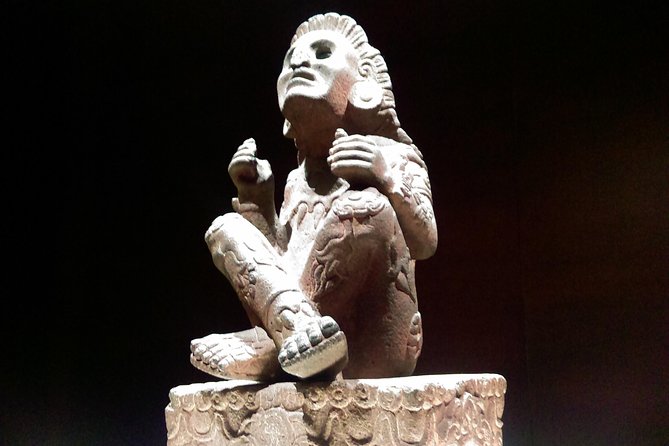
Reviewed · NATIONAL MUSEUM OF ANTHROPOLOGY TOURS
Museum of Anthropology: a look at Mexico’s past
Mexico City’s National Museum of Anthropology can overwhelm even the most eager museumgoer. The galleries cover thousands of years and many cultures, so a guided visit with Hector Banderas or Edith González gives you a clear path through the major rooms instead of leaving you to wander from object to object.
I like the way the guides connect symbols, myths, politics, and daily life across the museum. I also like the small-group format, which lets you ask questions and hear the guide clearly through an audiobox when six or more people join. The main drawback is the fixed three-hour focus: you will see the essential rooms, but this enormous museum can easily take several days to explore fully.
Key points to know before booking
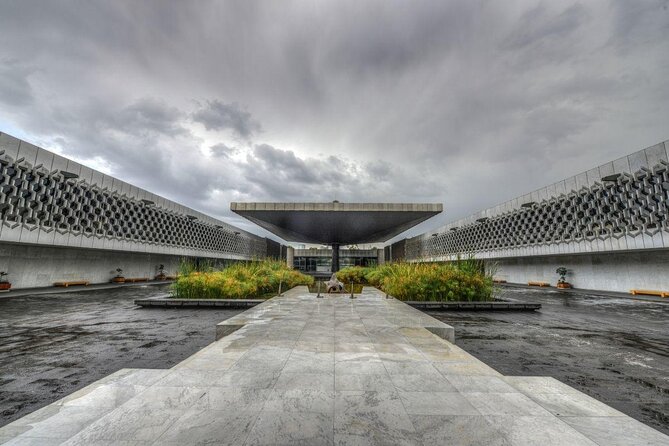
- The museum tells Mexico’s story through its major cultures: Expect attention to the Aztec, Maya, and other pre-colonial peoples of Mexico.
- Hector and Edith receive especially strong praise: Both guides explain difficult subjects clearly and bring mythology, artifacts, and history together.
- You get museum admission and a licensed guide: The ticket is included, along with a guide certified by Mexico’s tourism authority, SECTUR.
- The visit lasts about three hours: That is enough for a focused introduction, not a complete look at every gallery.
- The group is capped at six people: This is a useful size for questions and personal attention.
- The tour is for adults: The activity is not available to anyone under 18, despite some past family comments about older children enjoying the explanations.
Why the Anthropology Museum needs a guide
The National Museum of Anthropology is not a small collection you can casually cover before lunch. Its rooms present the cultures and peoples who lived in Mexico before the arrival of the Spanish, and the sheer quantity of material can make it hard to know what matters most.
A good guide gives you a framework. Instead of seeing an isolated stone carving, you learn how symbols connect with religious beliefs, political power, geography, and everyday life. That context changes the museum from a series of impressive objects into a story about how societies developed and understood their world.
This is where Hector’s approach seems particularly useful. He is described as linking symbols and themes across different rooms, helping you recognize ideas later in the museum and even elsewhere in Mexico City. His explanations also use stories and parables, which can make complex material easier to remember.
Edith offers a similarly strong experience, with a warm and grounded presentation style. Her work focuses on the purpose of the museum as well as the history it presents. She has also been praised for explaining gods, legends, religious practices, politics, geography, and conflict in a way that remains easy to follow.
You do not need a background in archaeology or Mexican history. The guide’s job is to explain what you are seeing without assuming that you already know the difference between the cultures represented in the galleries.
More Anthropology Museum tours:
- Chapultepec Castle & Anthropology Museum Tour
★ 4.5 · 1,348 reviews - Anthropology Museum Guided Tour
★ 4.5 · 1,035 reviews - Mexico City: Anthropology Museum Guided Visit
★ 4.4 · 708 reviews
Starting beneath the museum’s famous fountain
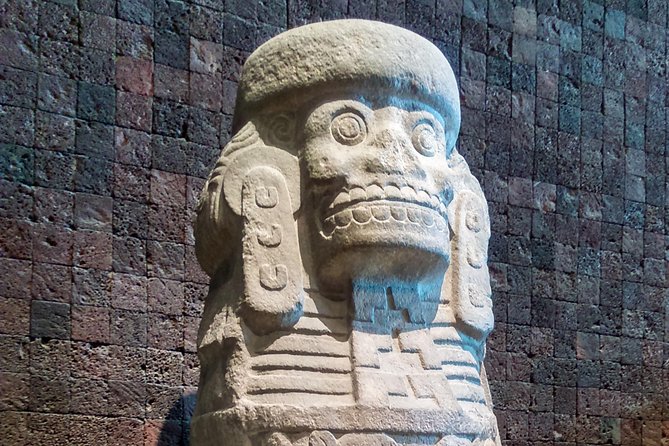
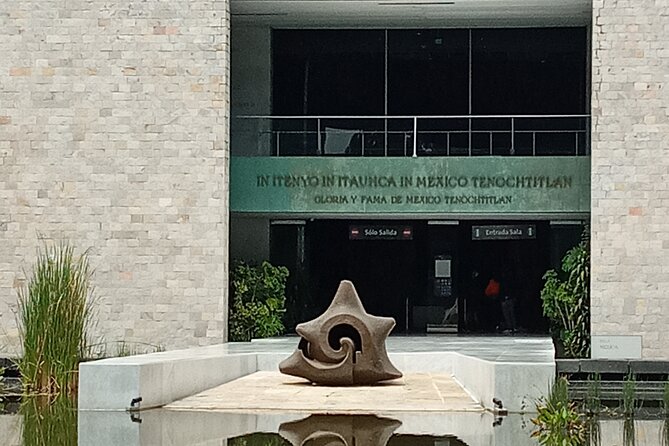
The meeting point is on Paseo de la Reforma, at the National Museum of Anthropology in Chapultepec, in the Polanco area. The activity begins and ends at the same point, and the museum is near public transportation.
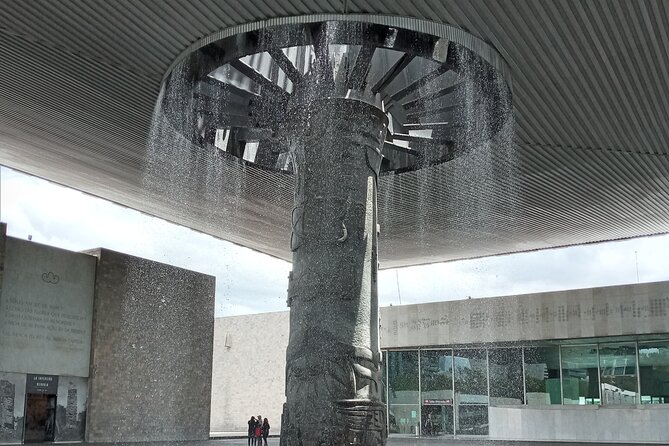
One of the first things you notice is the museum’s large inverted fountain in the central courtyard. It is a practical and memorable welcome, especially on a warm afternoon. The meeting area also gives your guide a natural place to explain how the museum is organized and what you will cover.
Because the museum is in Chapultepec, you can pair this activity with other nearby plans, but do not crowd your schedule too tightly. A three-hour guided visit can feel full, especially if you stop to ask questions or take time with the objects. The experience itself does not include private transportation, lunch, or bottled water, so plan those parts yourself.
Bring water and wear comfortable shoes. The tour requires a moderate level of physical fitness, and you will likely be on your feet for much of the visit. One useful touch in the guiding style is the effort to find places where you can sit during longer explanations. That matters in a museum visit where the information keeps coming and your legs may tire before your interest does.
The main rooms and the cultures they present
The route focuses on the museum’s most emblematic rooms. The supplied details do not promise a room-by-room itinerary, so your exact path can depend on the guide and the day’s conditions. The purpose is clear, however: you will visit the major displays connected with the cultures and peoples of Mexico before Spanish contact.
You can expect the guide to place the objects within a larger sequence. That sequence may include the development of societies, religious beliefs, warfare, political authority, artistic traditions, and the way communities related to their surroundings. The value is not only in hearing facts. It is in learning how to read the objects.
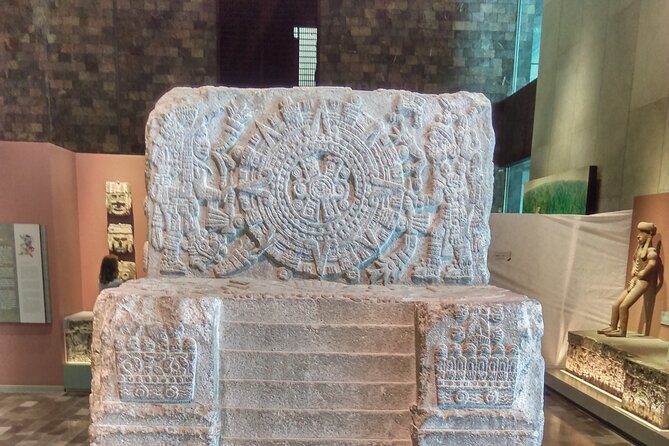
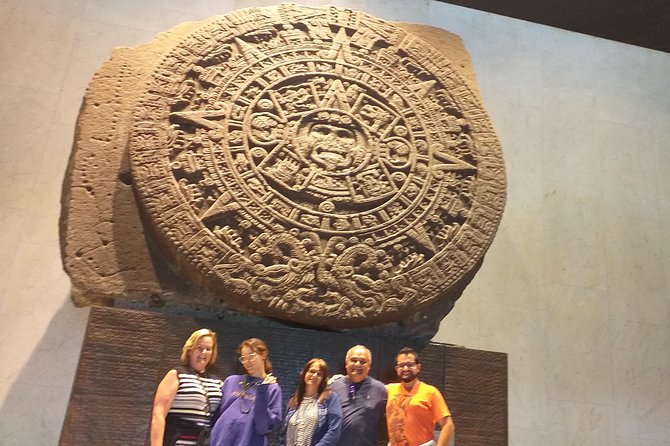
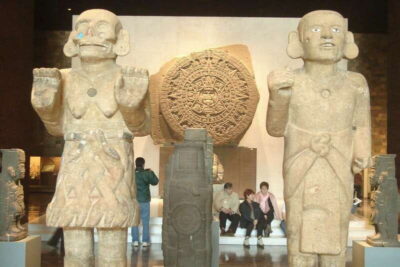
The museum’s artifacts can be visually powerful but difficult to interpret alone. A carved figure, ceremonial object, or large stone monument may suggest one thing to a modern visitor and have meant something very different in its original setting. The guide helps you separate modern assumptions from the evidence and traditions connected to each piece.
Hector has been praised for giving close attention to details and for explaining the stories and mythology surrounding major objects. Edith has also been praised for showing how older beliefs connect with religious practices that continue in Mexico today. Those links help you see pre-colonial culture as part of a continuing story, not as a subject locked away in the distant past.
That said, this is a selected tour rather than a full museum study. If you become fascinated by one gallery, you may want to return later on your own. One guide has pointed out that seeing everything properly could take three days. That is not a criticism of the tour. It is a reminder that the three-hour visit is an introduction with priorities.
Hector’s teaching style and Edith’s clear explanations
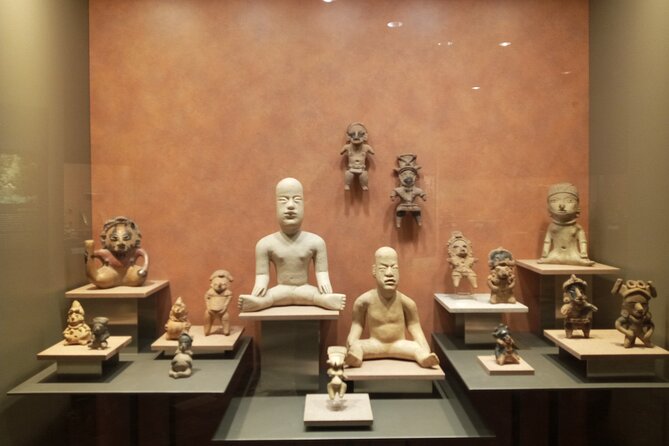
The strongest feature of this experience is the guide. The tour provider may assign Hector or Edith, and both have received repeated praise for their ability to make the museum understandable.
Hector’s style combines detailed explanations with enthusiasm for mystery, mythology, and history. He has been praised for creating a narrative that covers the peoples of Mexico across roughly 3,500 years. He also uses technology to help connect ancient ideas with the present, which can be helpful when the displays contain unfamiliar symbols.
His patience is another plus. If you arrive a few minutes late, the available feedback suggests he may be gracious rather than flustered, though you should still make every effort to arrive on time. Once inside, he takes questions and does not seem eager to rush through the objects.
Edith is described as warm, engaging, and easy to understand. Her academic background in history has helped her explain pre-colonial Mexico through several angles, including life, politics, geography, religion, and conflict. If you prefer a guide who builds a calm story and lets the information unfold, her style should suit you.
The two guides are not presented as identical, and that is a good thing. A personal guide can shape the visit around your questions. You might ask more about mythology, artistic symbols, belief systems, or the way the museum presents Mexico’s indigenous peoples. A recorded audio tour cannot respond in the same way.
The one caution is that the experience is best for adults and older, genuinely interested teenagers. One past visitor found the guide very helpful with a 13-year-old but less engaging for an 11-year-old. The formal policy is stricter: children under 18 cannot join this activity. If you are planning a family visit, check the age rule before booking.
More museums in Mexico City:
- CDMX: Xochimilco, Coyoacan, Frida Kahlo Museum & Murals Tour
★ 4.4 · 3,025 reviews - Frida Kahlo VIP [Museum Tickets Included] Bike, Markets & Churros
★ 5.0 · 1,072 reviews - Frida Kahlo VIP [Museum Tickets Included] Walk, Markets & Churros
★ 5.0 · 982 reviews - EXCLUSIVE TOUR Frida Kahlo Museum – SMALL GROUPS
★ 5.0 · 901 reviews
Small group size and the audiobox system
The maximum group size is six people. That is a major advantage in a museum where a large crowd can make it hard to hear or ask questions. A small group also gives the guide more room to adjust the pace.
Audio equipment is provided for groups of six or more. This is called audiobox equipment, and it helps you follow the guide without standing shoulder to shoulder around each display. If you have ever lost the thread of a museum explanation because another group walked between you and the guide, you will understand why this small detail matters.
For a group smaller than six, the information does not specify that the equipment will be used. You should still expect an in-person guided visit, but do not assume the audiobox is part of every booking.
The group limit also affects value. A private tour is not advertised, but a maximum of six gives you some of the feel of a personal visit without the scale of a big bus group. You can ask questions, hear the answers, and spend more time on objects that interest you.
Is three hours enough?
Three hours is a sensible length for a first visit. It gives you enough time to understand the museum’s central themes without turning the day into a marathon. You will leave with a working map of the collection and a better idea of which rooms deserve a second visit.
Still, you should not expect to see everything. The museum is large, and the tour concentrates on its most important rooms. If you are an archaeology enthusiast or someone who wants to study every culture represented, plan a return visit rather than trying to force all of it into one afternoon.
I would treat the guided tour as your orientation. Let the guide explain the big picture, the major symbols, and the objects that carry the most meaning. Then, if you have time, return independently to spend longer with the rooms that caught your attention.
The timing also matters because the museum contains a lot of information. Three hours of uninterrupted explanation can be tiring, even when the subject interests you. The opportunity to sit during some talks is useful, but you should still expect a concentrated experience rather than a light stroll.
Value: paying for a useful beginning
No price is provided here, so I cannot judge the exact cost. The value depends on how much you want from the museum and how comfortable you are making sense of it alone.
The admission ticket is included, which simplifies the visit. You are also paying for a federally licensed guide certified by SECTUR, not simply a person who knows the building. The small group limit adds further value because the guide can respond to individual questions.
For a first visit to the museum, guided access is particularly worthwhile. You may save time by focusing on the rooms that explain the central story instead of trying to cover every corridor. You also gain a way to recognize recurring symbols and themes during the rest of your time in Mexico City.
The tour is less useful if you prefer to move at your own speed, read every label, or spend an hour with a single object. In that case, you may prefer to visit independently, or use the guided visit as a first orientation and return later.
The high rating, 4.8 out of 5 from 52 ratings, and 96 percent recommendation rate suggest a strong record. Those figures do not guarantee that every guide or schedule will suit every person, but they match the main strength of the activity: clear teaching from guides who care about the subject.
Practical planning for the museum visit
The activity is offered in English, which makes it useful if you want more than a quick translation of labels. The guide can explain ideas, answer questions, and place unfamiliar objects in context.
The meeting point is on Avenida Paseo de la Reforma, at the museum in Bosque de Chapultepec. Since private transportation is not included, you need to make your own way there. The museum is near public transportation, so this is easier than an excursion that starts far outside the city center.
Lunch and bottled water are also not included. Bring or arrange water yourself, especially if you are visiting during a hot part of the day. Do not expect the tour to provide a meal break.
Confirmation is sent at booking. If your plans change, free cancellation is available up to 24 hours before the start time for a full refund. Changes or cancellations made less than 24 hours before the start are not accepted for a refund. The activity also requires a minimum number of participants, so a cancellation by the operator can result in another date or a full refund.
Who should book this experience?
I would choose this tour if you are visiting the National Museum of Anthropology for the first time and want the major ideas explained in plain English. It suits adults who enjoy history, mythology, art, and culture but do not want to spend the first hour figuring out where to begin.
It is also a good choice if you like asking questions. The small group gives you a better chance to speak with Hector or Edith than a large museum group would.
You should think twice if you want a quiet, self-directed museum visit or if you plan to spend most of your day examining every gallery. The three-hour route is focused, not exhaustive. It also does not accept anyone under 18, so families with younger children need another plan.
Should you book the museum tour?
Yes, if the National Museum of Anthropology is new to you. The museum contains too much material to absorb easily without some structure, and the strongest part of this experience is the guide’s ability to connect objects, symbols, myths, and historical change.
Hector and Edith bring different personal styles, but both have shown an ability to make difficult subjects clear. Book it as your introduction, listen closely, ask questions, and return later if one room catches your interest. That approach gives you both the human explanation and the freedom to explore at your own pace.
FAQ
How long does the Anthropology Museum tour last?
The activity lasts approximately two to three hours, with the main guided visit listed as three hours.
What museum does the tour visit?
The tour visits the Museo Nacional de Antropología, or National Museum of Anthropology, in Mexico City.
Is museum admission included?
Yes. The museum access ticket is included.
Is the tour offered in English?
Yes. The activity is offered in English.
Who guides the tour?
The experience uses a federally licensed guide certified by SECTUR. Guides named in the available information include Hector Banderas and Edith González.
How many people can join?
The activity has a maximum of six participants.
Is audio equipment provided?
Audiobox equipment is provided for groups of six clients or more.
Can children join the tour?
No. The activity is not available for children under 18 years of age.
Where does the tour start and finish?
It starts at the National Museum of Anthropology on Paseo de la Reforma in Bosque de Chapultepec and ends back at the meeting point.
Is transportation included?
No. Private transportation is not included. The meeting point is near public transportation.
What else is not included?
Lunch and bottled water are not included.
What happens if I need to cancel?
You can cancel up to 24 hours before the experience starts for a full refund. Cancellations or changes made less than 24 hours before the start time are not accepted for a refund.
Just added around Mexico City
- Xochimilco’s Wild Side: Mezcal, Insects & Culture★ 4.9 · 10 reviews
- Xochimilco: Food and Trajinera Ride with Local Women★ 5.0 · 5 reviews
- Xochimilco: Island of the Dolls Tour Games and Drinks★ 5.0 · 25 reviews
- Xochimilco Ecological Tour – Away From the Crowds (3 Hours)★ 5.0 · 15 reviews
- Xochimilco floating gardens, Coyoacan and UNAM murals★ 4.0 · 6 reviews
- Xochimilco + Coyoacán Combo Full-Day Tour★ 5.0 · 3 reviews
- Val´quirico And The City of Angels Puebla From Mexico City★ 5.0 · 3 reviews
- Xochimilco: amanecer en kayak Ciudad de México★ 5.0 · 35 reviews
National Museum of Anthropology Tours, compared.
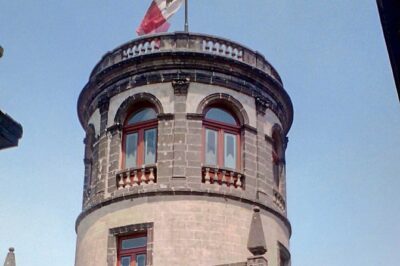
Chapultepec Castle & Anthropology Museum Tour
Read our review →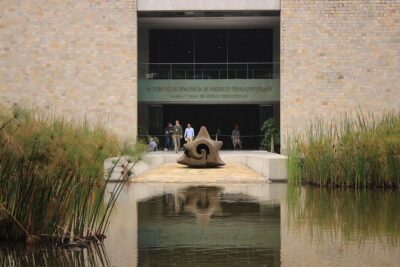
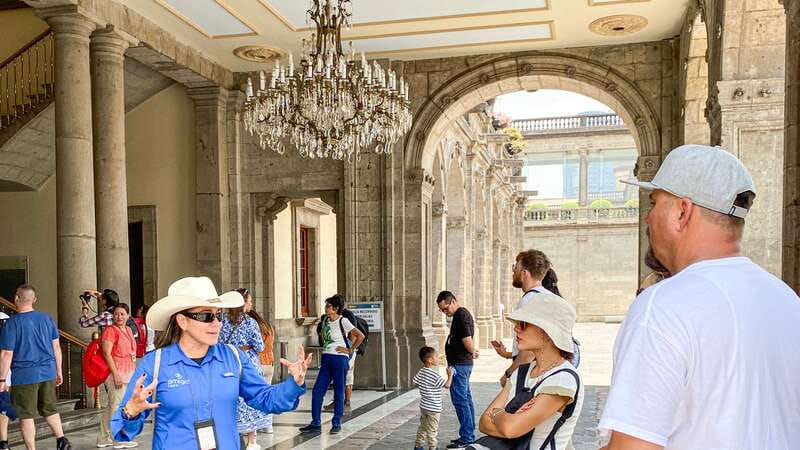
Chapultepec Castle and Anthropology Museum Tour
Read our review →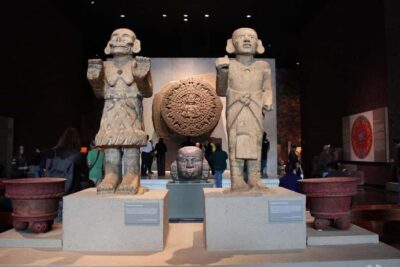
Anthropology Museum Private Experience Walking Tour
Read our review →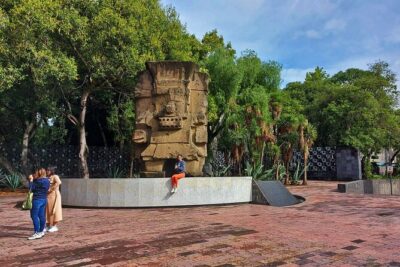
5 Hour Tour through Chapultepec, Anthropology Museum and Castle
Read our review →
PRIVATE Tour in Chapultepec Castle and Museum of Anthropology
Read our review →Browse the lists this tour appears in