
Reviewed · MEXICO CITY HISTORIC CENTER WALKING TOURS
Walking Tour in Historic Center CDMX
Mexico City’s story unfolds backward on this walk. You begin with Diego Rivera’s political mural, pass grand buildings from the Porfirian era, then finish with the Aztec city of Tenochtitlan. I like the clear historical arc, and I like how the route links art, politics, religion, theater, and daily life rather than treating the old center as a row of pretty buildings. The main drawback is pace: nine stops in roughly three hours means you get sharp explanations, not long museum visits.
I also like the guides’ flexibility. Delta has been praised for keeping the schedule on track, while Diego has adapted the walk for older visitors and answered unusual questions with ease. Book early in the day if you want fewer crowds, and wear comfortable shoes for the streets between the stops.
Key points to know before you book
- A history lesson with a clear reverse timeline: Start with modern Mexican political art and end with the Aztec capital and Spanish conquest.
- Nine stops in about three hours: You cover a lot of ground, but most visits last only 10 to 25 minutes.
- Strong English-speaking guides: Delta, Diego, Jorge, and Jaime have led especially well-regarded tours.
- Several famous buildings from the outside or in brief: Bellas Artes, Palacio Postal, Palacio de Minería, and Museo Nacional de Arte all receive attention, but this is not a full museum day.
- A useful final stop near Templo Mayor: The tour explains how Tenochtitlan was built, with models and a look at the main temple area.
- Best for curious first-time visitors: It gives you a working map of the historic center before you return to explore favorite sites at your own speed.
Why this route works so well in central Mexico City
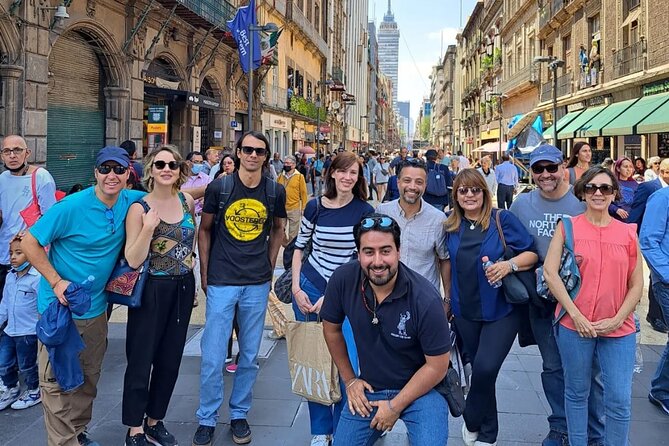
The old center can feel like several cities layered on top of one another. One block brings a grand European-style facade, the next reveals a mural about revolution, and beneath the modern streets lie remains of the Aztec capital. This tour makes those layers easier to read.
The route begins at Museo Mural Diego Rivera and moves through Alameda Central, the Palacio de Bellas Artes, and a string of historic buildings before reaching Templo Mayor. That order matters. You first see how Mexico’s modern national identity was shaped, then move through the colonial and Porfirian city, and finally arrive at the foundations of Tenochtitlan.
I would not choose this walk if your goal is to spend an hour studying one museum collection. I would choose it if you want a guided introduction that helps you decide where to return later. The explanations give each place a purpose, so the buildings are not just attractive backdrops for photographs.
The tour is offered in English and is limited to a maximum of 25 people. That is small enough to make questions possible, though the feel may vary depending on the actual size of your group. Guides named in strong feedback include Delta, Diego, Jorge, and Jaime. Diego has been especially useful for visitors who wanted clear English and extra help with transport or lunch plans after the walk.
More walks through the historic centre:
- Historic Downtown Walking Tour
★ 5.0 · 1,289 reviews - Historic Center Food Tour in Mexico City
★ 5.0 · 1,263 reviews - Mexico City: Historic Downtown Walking Tour
★ 4.8 · 1,039 reviews
Diego Rivera’s mural sets the tone
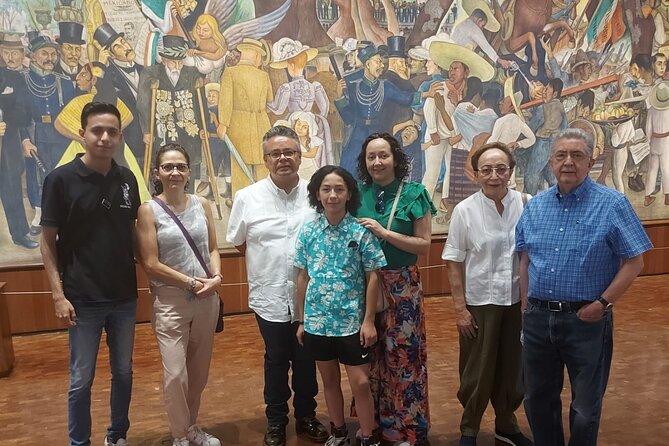
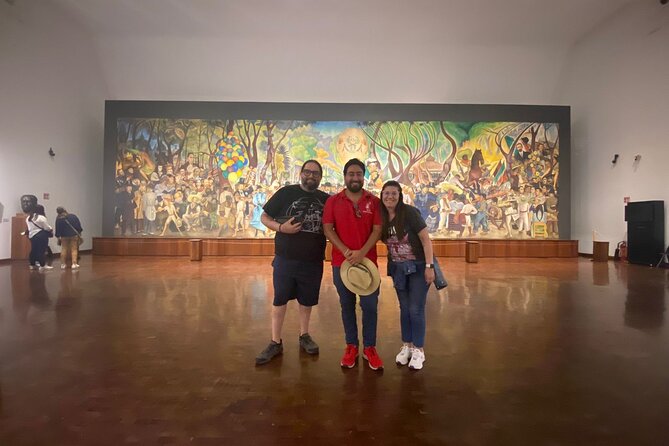
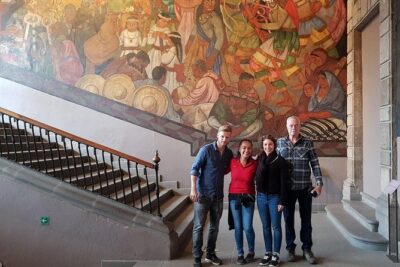
The first stop is Museo Mural Diego Rivera, with about 25 minutes inside and admission listed as included. The main work, Rivera’s mural Dream of a Sunday Afternoon in Alameda Central Park, gives the guide a broad canvas for explaining Mexican political and cultural history.
One striking detail is the censorship controversy tied to the phrase God does not exist. That episode opens the door to Mexico’s long argument between church authority, liberal reform, revolutionary politics, and public art. You are not simply looking at a mural crowded with famous figures. You are learning why Rivera placed those figures together and why the work caused such a stir.
This is a smart first stop because it gives you names and themes that return later. The guide uses the mural to cover about 400 years of colonial and national history, according to one detailed account of the walk. That background helps you make sense of the palaces, theaters, and monuments ahead.
Twenty-five minutes is enough for an introduction, but not enough for a slow artistic reading of every figure. If you care deeply about Rivera, plan to return on your own.
Alameda Central connects public space and power
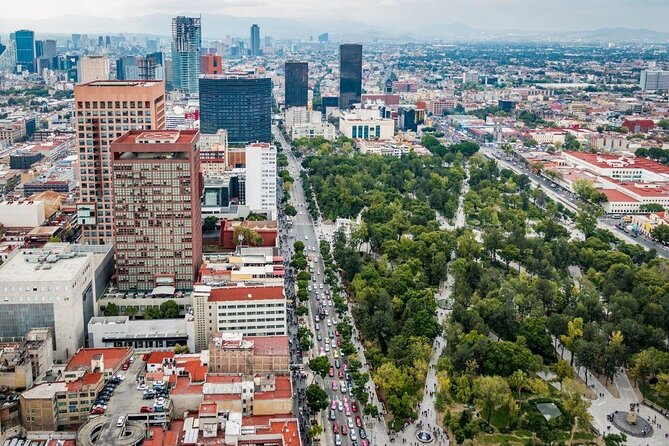
A short walk brings you to Alameda Central, described on the tour as the first public park in America. You spend about 10 minutes here looking at its classical sculptures and discussing how city residents use the space.
The stop is brief, but it adds an important human element. Parks reveal how a city wants people to gather, move, relax, and be seen. Alameda Central also helps you understand the scale of the historic center before the route reaches its grandest buildings.
Do not expect a long stroll through every path or a detailed account of each statue. The value lies in seeing the park as part of the city’s social life, not in checking off a garden visit.
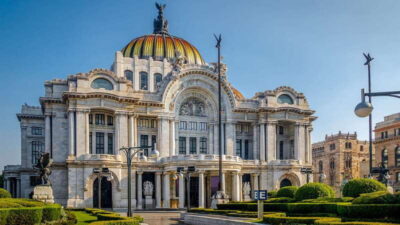
Bellas Artes gives you the city’s grandest facade
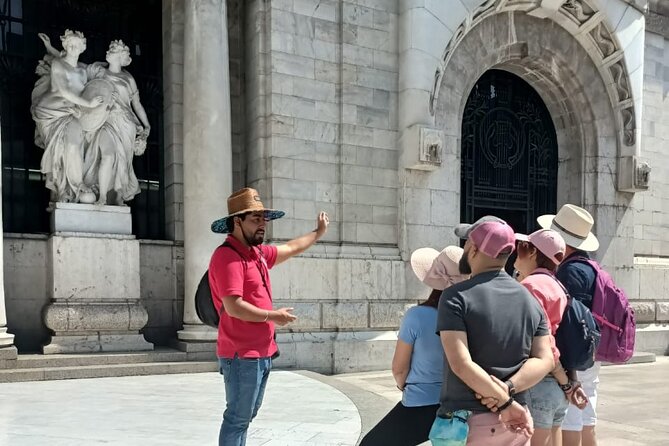
The Palacio de Bellas Artes receives about 20 minutes and is described as the most emblematic place in Mexico City. The guide covers its history, role in the city, and changing place in everyday life.
From the outside, the building is hard to miss. Its elaborate exterior and domed profile make it one of the clearest symbols of central Mexico City. Inside, it is also associated with major Mexican art and murals, but the schedule does not allow a full museum visit. Your guide’s explanation is the main event here.
I appreciate that the tour treats Bellas Artes as more than a photo stop. Its story fits the route’s larger theme of contrast: political art near formal architecture, public culture beside commercial streets, and newer national identity built over older foundations.
If this is the building you most want to see, check the day’s conditions and your own priorities before booking. Twenty minutes can orient you, but it will not replace a dedicated visit.
More Historical Tours in Mexico City:
- Walking Tour of the Historic Center of Mexico City
★ 5.0 · 870 reviews - Mexico City Historical Centre Food Tour with 7 Authentic Tastings
★ 5.0 · 723 reviews - Walking Tour in Mexico City for Exploring their Cultural Heritage
★ 5.0 · 245 reviews - Walking Tour – Impressive murals in Historical Center of Mexico City
★ 5.0 · 224 reviews
Porfirian ambition appears at Palacio Postal and Palacio de Minería
The Palacio Postal follows with about 15 minutes. It belongs to Porfirio Díaz’s project to beautify and modernize Mexico City, and its ornate design shows how the government used public buildings to project order, wealth, and progress.
This is one of the tour’s useful contrasts. The building’s polished appearance represents a confident modern state, yet that era also carried sharp social tensions that eventually helped fuel revolution. A good guide can connect the facade to those larger forces without turning the stop into a dry architecture lecture.
At Palacio de Minería, the visit lasts around 10 minutes. The explanation includes Mexico’s continuing importance as a silver-exporting country. That detail connects a grand academic building with mining wealth and the economic forces that shaped the country.
These stops are short, so pay attention to the guide’s main points and take a few photographs. You will not have much time for an independent inspection of architectural details.
Museo Nacional de Arte adds sculpture and close-up detail
The route then reaches Museo Nacional de Arte, usually called MUNAL, for about 10 minutes. The tour includes a look at a sculpture created by an artist using one hand, along with details of the building’s architecture. Admission is listed as included for this stop.
This is a small but memorable detail. It gives you a human story to hold onto while also showing how the tour balances art with architecture. MUNAL’s building itself is part of the lesson, since its grand interior and exterior reflect the city’s desire for monumental public culture.
Again, ten minutes is a preview. You may want to return if you care about Mexican painting, sculpture, or the building’s decorative details. The walk gives you enough context to make that later visit more rewarding.
Teatro de la Ciudad brings a darker human story
At Teatro de la Ciudad, the guide spends roughly 15 minutes explaining the history of theater in Mexico and the tragic story of Esperanza Iris. Across from the theater, you also hear about a former 18th-century asylum for women labeled insane.
This is where the walk’s promise of light and dark places becomes clear. The theater represents performance, ambition, and public celebration. The asylum story points to the harsh treatment of women who did not fit accepted social rules.
The stop is listed as free, so you are not paying an extra admission charge here. The main value comes from the guide’s storytelling and from seeing how much social history can sit in a small area of the center.
Underground ruins reveal the older city
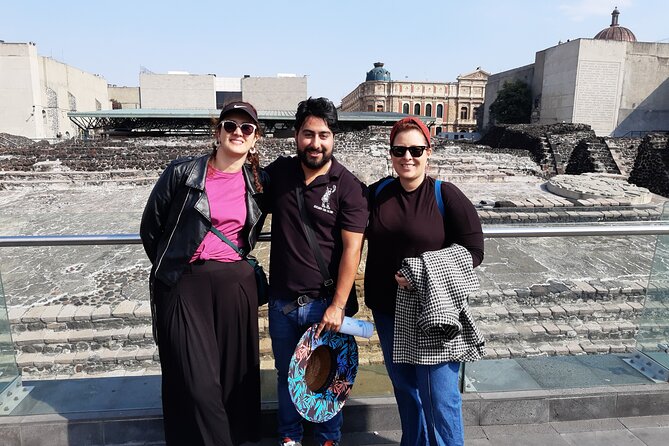
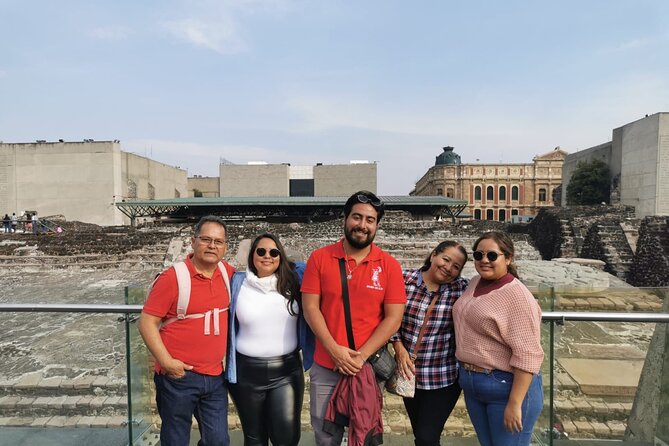
At Centro Cultural España en México, the tour goes below street level to see ruins linked to a school for the sons of Aztec nobles. The visit takes about 20 minutes and is listed as free.
This is one of the route’s most effective transitions. A modern cultural center sits above remains from the Aztec period, giving you a physical sense of how Mexico City was built over earlier cities. The ruins are not treated as an isolated archaeological site. They become part of the story of conquest, rebuilding, and the layers beneath present-day streets.
The wording of the stop suggests that you will go down to see the remains, but the amount of time is still limited. Let the guide explain what you are seeing, since the surviving walls and foundations may not speak for themselves.
Templo Mayor closes the story at its source
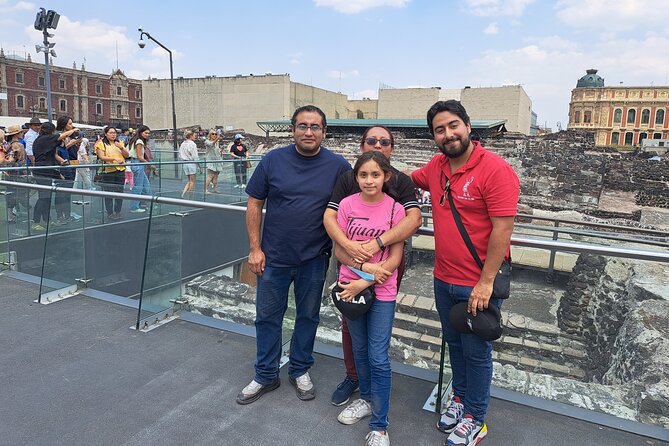
The final stop is Museo del Templo Mayor and the surrounding main temple area. The scheduled explanation lasts about 25 minutes and covers models showing how the Aztecs built Tenochtitlan, along with their worldview, sacrifices, and the Spanish conquest.
The meeting information makes clear that the tour ends by explaining the main temple from outside, using models and the surrounding area to show how the city was built. Do not book this expecting a long, self-guided museum visit. The guide’s explanation of the archaeological site and the models is the focus.
This ending works because it reverses the usual first impression of central Mexico City. By now, the elegant palaces and colonial streets are no longer the beginning of the story. They sit on top of a much older capital with its own engineering, religion, trade, and political power.
The final explanation should leave you with a useful mental map. You can then decide if you want to return for a longer visit to the museum and archaeological remains.
Price, pace, and what you receive for $83.64
At $83.64 per person, this is not a bargain-priced stroll. The value depends on how much you want interpretation. You are paying for a certified guide, an English-language route, and a tightly organized introduction to many major sites in a short period.
The price makes more sense for a first visit, especially if you have only a day or two in Mexico City’s center. A good guide can save you from wandering between disconnected buildings and can explain why the art, architecture, religion, politics, and archaeology belong in one story.
It makes less sense if you prefer to move slowly, read every museum label, or spend serious time inside Bellas Artes, MUNAL, the Rivera museum, or Templo Mayor. You would likely get more from separate museum visits with this walk used as an orientation.
The tour normally lasts about two hours and 30 minutes to three hours and 10 minutes. That range reflects the number of stops and the pace of the group. The itinerary includes admissions at several museums, but some stops are brief and others are explained from public areas or outside.
Practical advice for a smoother walk
The historic center is best handled with comfortable shoes and a little patience. You will move between several sites, pause for explanations, and deal with city crowds, especially later in the day. One useful tip is to book an early time slot when possible.
A mobile ticket is provided, and confirmation is received at booking. The start is at Museo Mural Diego Rivera on Calle Colón Balderas, while the finish is at Templo Mayor Museum on Seminario 8. Both points are near public transportation.
The tour is offered in English. Service animals are allowed, and most people can take part. Tips, lunch, food, and drinks are not included, so plan to handle those separately. Diego has offered practical advice about lunch and the best place to catch an Uber after the walk, but you should treat that as a helpful guide service rather than a listed part of the tour.
The booking calendar shows that people generally reserve about 13 days ahead. That is useful if you want a particular date or guide, though the exact guide is not guaranteed in the information provided.
Free cancellation is available if you cancel at least 24 hours before the local start time. Cancellations or changes inside that window are not refunded or accepted.
Who should book this Mexico City walk
I would recommend it to first-time visitors who want a strong introduction to the historic center without spending a full day in one museum. It is also a good fit for families and solo visitors who like asking questions, since the guides have handled both settings well.
The tour suits you if you enjoy connections between places. Rivera’s mural leads into national history, Alameda shows public life, Porfirian buildings show ambition, the theater stop adds social drama, and Templo Mayor brings the story back to the Aztec capital.
I would be cautious if mobility, heat, crowds, or long periods on your feet are major concerns. The route involves walking between multiple central sites, and the schedule leaves little room to linger. I would also skip it if your main goal is detailed museum study.
Should you book it?
Book this tour if you want Mexico City’s historic center explained as one long, complicated story. The strongest guides, including Delta, Diego, Jorge, and Jaime, have been praised for clear English, friendly manner, good timing, and flexibility with questions or the needs of older visitors.
Do not book it expecting nine full admissions and nine extended museum visits. Think of it as a guided orientation with selected interiors, public spaces, ruins, models, and exterior explanations. At $83.64, it is worthwhile for context and efficient sightseeing, especially early in your visit. If you want depth at each museum, use this walk to choose where to return, then give those places the time they deserve.
FAQ
How long does the walking tour last?
The experience lasts approximately two hours and 30 minutes to three hours and 10 minutes.
What language is the tour offered in?
The tour is offered in English.
Where does the tour begin?
It begins at Museo Mural Diego Rivera, on Calle Colón Balderas in Mexico City’s historic center.
Where does the tour end?
It ends at Templo Mayor Museum on Seminario 8. The final explanation covers the main temple area, models, and how Tenochtitlan was built.
What sites are included?
The route includes Museo Mural Diego Rivera, Alameda Central, Palacio de Bellas Artes, Palacio Postal, Palacio de Minería, Museo Nacional de Arte, Teatro de la Ciudad, Centro Cultural España en México, and the Templo Mayor area.
Are admission tickets included?
Admission is listed as included for Museo Mural Diego Rivera, Alameda Central, Palacio de Bellas Artes, Palacio Postal, Palacio de Minería, and Museo Nacional de Arte. Teatro de la Ciudad, Centro Cultural España en México, and Museo del Templo Mayor are listed as free stops. The final Templo Mayor explanation takes place from outside.
How large can the group be?
The tour has a maximum of 25 participants.
Is food included?
No. Lunch, food, drinks, and tips are not included.
Can I cancel for a full refund?
Yes, if you cancel at least 24 hours before the experience start time. Cancellations or changes made less than 24 hours before the start are not refunded or accepted.
More Walking Tours in Mexico City
- Frida Kahlo VIP [Museum Tickets Included] Walk, Markets & Churros
★ 5.0 · 982 reviews - Anthropology Museum Private Experience Walking Tour
★ 5.0 · 355 reviews - Muralist Art Semi Private Walking Tour in Mexico City Downtown
★ 5.0 · 188 reviews - Coyoacán Walking Tour: Access to Frida Kahlo Museum & Tacos
★ 5.0 · 181 reviews
Just added around Mexico City
- Xochimilco’s Wild Side: Mezcal, Insects & Culture★ 4.9 · 10 reviews
- Xochimilco: Island of the Dolls Tour Games and Drinks★ 5.0 · 25 reviews
- Xochimilco Ecological Tour – Away From the Crowds (3 Hours)★ 5.0 · 15 reviews
- Xochimilco: Food and Trajinera Ride with Local Women★ 5.0 · 5 reviews
- Xochimilco + Coyoacán Combo Full-Day Tour★ 5.0 · 3 reviews
- Xochimilco floating gardens, Coyoacan and UNAM murals★ 4.0 · 6 reviews
- Val´quirico And The City of Angels Puebla From Mexico City★ 5.0 · 3 reviews
- Xochimilco: amanecer en kayak Ciudad de México★ 5.0 · 35 reviews
Mexico City Historic Center Walking Tours, compared.




Walking Tour – Impressive murals in Historical Center of Mexico City
Read our review →
Muralist Art Semi Private Walking Tour in Mexico City Downtown
Read our review →Browse the lists this tour appears in