
Reviewed · MEXICO CITY HISTORIC CENTER WALKING TOURS
Mexico City Downtown Highlights Private Walking Tour
Mexico City reveals its layers quickly on this two-hour private walking tour. You move from Aztec ruins to Spanish colonial churches, then on to grand 19th and 20th-century buildings, all within the old center. I especially like the route’s range and the chance to ask a private guide about the details that are easy to miss in a large group.
I also like the practical local advice included along the way, such as recommendations for restaurants, cafés, and pubs. The main drawback is the short length: with so many major sights packed into two hours, you should expect an excellent introduction rather than long interior visits. Attraction tickets, food, and drinks are not included.
Key points to know before you book
- Seven major sights in two hours: The route links Zócalo, the Metropolitan Cathedral, Templo Mayor, the House of Tiles, Torre Latinoamericana, Bellas Artes, and Palacio Postal.
- A truly private format: Your group has its own licensed guide, with up to 25 people assigned to one guide.
- History from Aztec times to today: The walk connects ancient ceremonies, colonial power, independence celebrations, modern architecture, and earthquake survival.
- Choose from five languages: Tours are available in English, Spanish, German, Italian, and French.
- Plan for extra costs: Entry tickets, food, and drinks are not part of the $93 per-person price.
- Wear serious walking shoes: The tour runs in sun or rain, so check the forecast and dress for the day.
Starting beneath the Gran Hotel’s grand façade
Your meeting point is in front of the Gran Hotel Ciudad de México at 16 de Septiembre 82 in Centro Histórico. Do not go inside the hotel. Its staff is not involved with the tour, so wait outside for your guide.
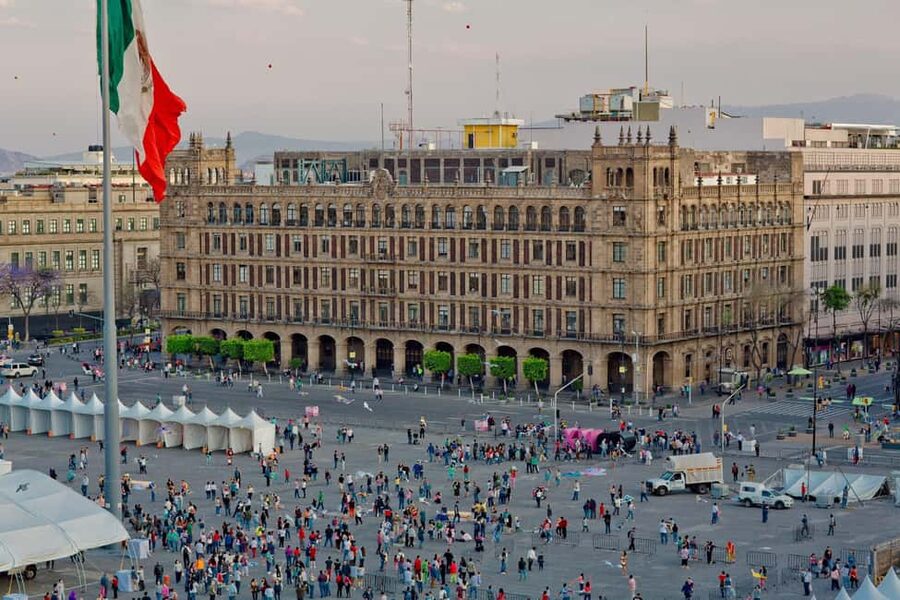
This is a useful starting point because the hotel sits close to the southern side of Plaza de la Constitución, better known as Zócalo. You begin in the city’s ceremonial center rather than spending time on transport or introductions in a distant neighborhood.
The tour is led by a licensed private guide. No individual guide names are provided, so you will receive the name and final meeting details from Rosotravel before the tour. Check your email the day before, since that message contains important information from the operator.
The private setup matters here. Mexico City’s center can feel visually overloaded at first: flags, stone façades, street activity, church towers, archaeological remains, and layers of architecture compete for your attention. A guide can give you a clear order of events and explain why the buildings sit where they do.
More walks through the historic centre:
- Historic Downtown Walking Tour
★ 5.0 · 1,289 reviews - Historic Center Food Tour in Mexico City
★ 5.0 · 1,263 reviews - Mexico City: Historic Downtown Walking Tour
★ 4.8 · 1,039 reviews
Zócalo, the city’s great public room
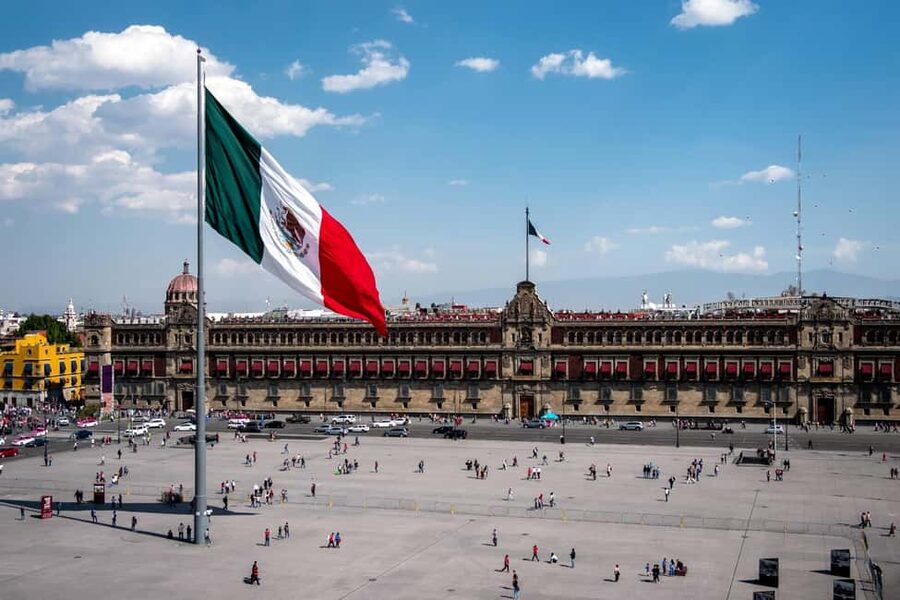
Plaza de la Constitución is one of the largest and most important public spaces in Mexico City. Your guide introduces it as a place used for centuries, first for Aztec gatherings and later for major colonial, religious, and national events.
The value of this stop is not just the scale of the square. It gives you a framework for the entire walk. Ancient power, Spanish rule, Catholic authority, independence celebrations, and modern civic life all meet here.
Take a moment to look across the square before following the next part of the route. The open space helps you understand how the surrounding buildings function together. It is also a good place to ask your guide about the changes Mexico City has seen over time.
The square may be active and crowded, depending on the day. That can make photos and conversation less easy, but it is also part of the point. You are seeing the working heart of the capital, not a preserved museum courtyard.
The Metropolitan Cathedral and layers of faith
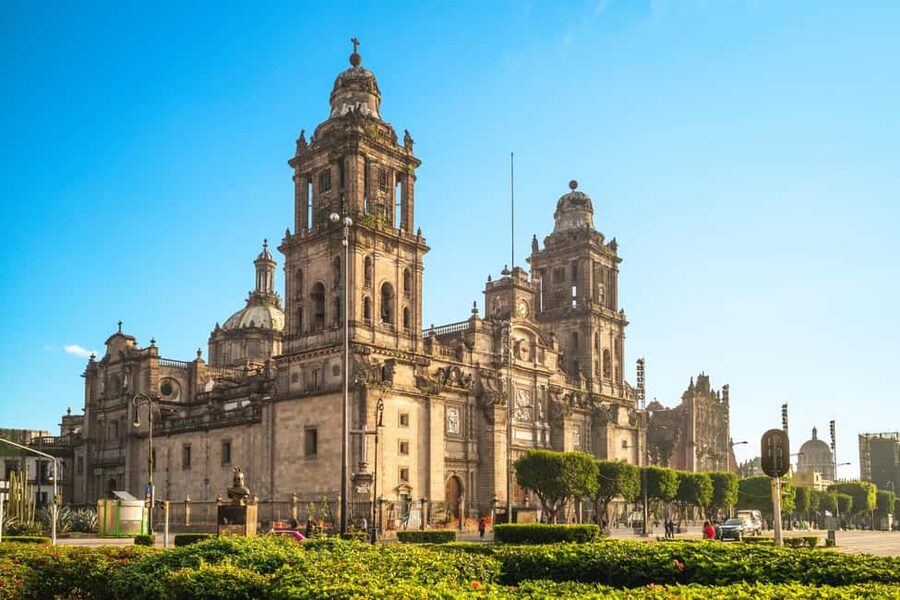
Just steps away, the Metropolitan Cathedral brings together Spanish baroque design and indigenous influences. Your guide explains the religious and political role of the building, along with the resilience needed to maintain it over centuries.
The itinerary names the cathedral as a key sight, but tickets are not included in the tour price. Since the walk lasts only two hours, confirm with your guide whether the plan is an exterior explanation or whether you have time to enter. Do not assume that an interior visit is covered.
I like this part of the route because the cathedral is not treated as an isolated church. It is presented as part of the city’s larger story. You can compare its heavy stone presence with the archaeological remains nearby and begin to see how older Mexican traditions and colonial institutions exist side by side.
If architecture interests you, ask your guide to point out the differences between the cathedral’s baroque elements and its indigenous influences. A private tour gives you the freedom to shape that conversation instead of listening to a fixed script.
Templo Mayor, where Aztec Mexico comes into view
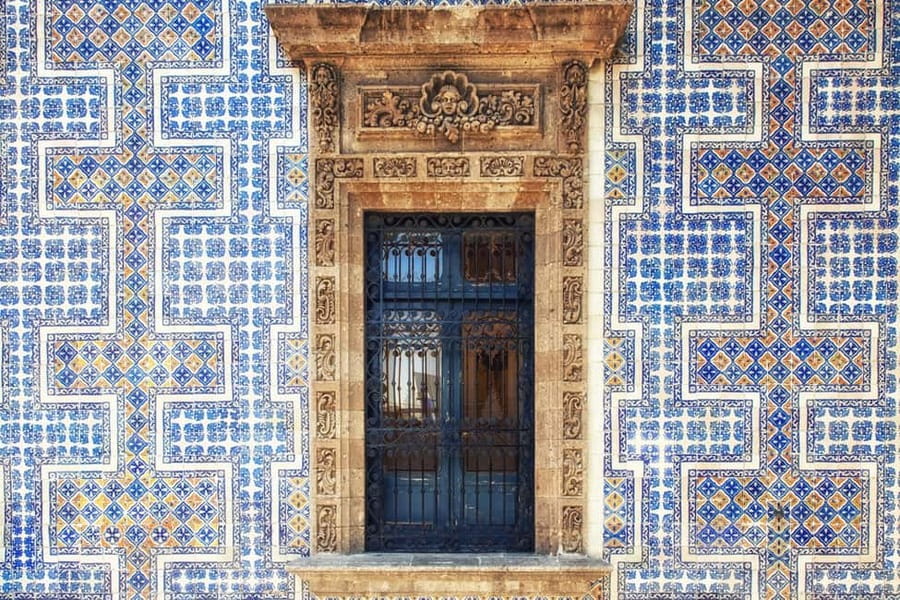
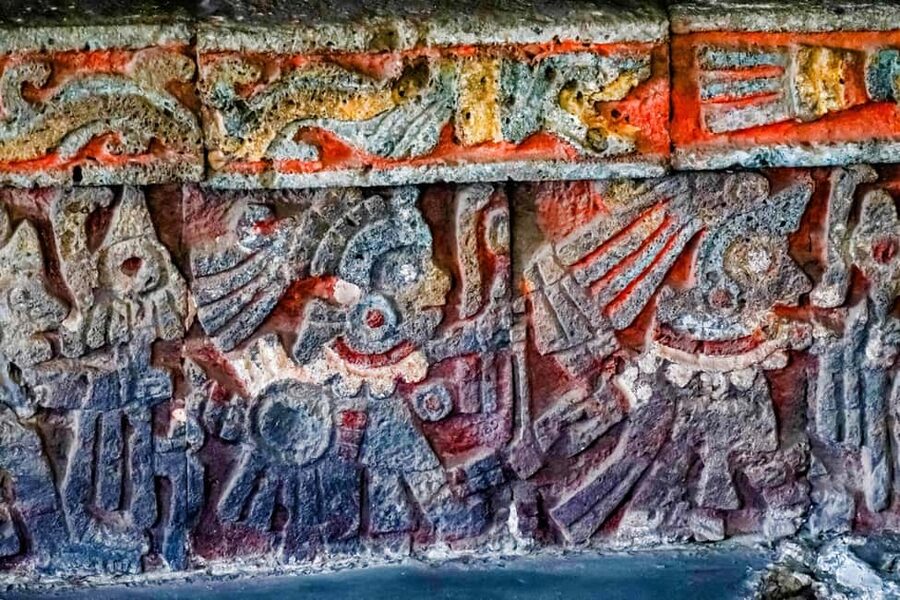
The next major stop is Templo Mayor Museum and the remains of the Aztec ceremonial center. Here, the tour shifts from colonial Mexico to the city that existed before the Spanish conquest.
The value of Templo Mayor is its physical connection to the modern center. You are not hearing about the Aztec Empire in a far-off museum. You are looking at remains in the same central district where later authorities built churches, government buildings, and grand public spaces.
The guide helps you picture ceremonies and public life that once took place here. That interpretation is especially useful because archaeological remains can look abstract without context. Stones, foundations, and excavated sections become easier to understand when someone explains their former purpose.
The museum is listed as part of the route, but admission is not included. If you want time inside, ask how the two-hour schedule will work and budget separately for the ticket. A full museum visit would naturally require more time than a quick stop, so you may prefer to return later for a slower look.
This is one of the strongest reasons to choose a private walk. If ancient civilizations are your main interest, you can ask for more explanation here. If you care more about architecture and modern Mexico City, your guide can keep the stop concise and preserve time for the later buildings.
More Walking Tours in Mexico City:
- Frida Kahlo VIP [Museum Tickets Included] Walk, Markets & Churros
★ 5.0 · 982 reviews - Walking Tour of the Historic Center of Mexico City
★ 5.0 · 870 reviews - Anthropology Museum Private Experience Walking Tour
★ 5.0 · 355 reviews - Walking Tour in Mexico City for Exploring their Cultural Heritage
★ 5.0 · 245 reviews
The blue-and-white House of Tiles
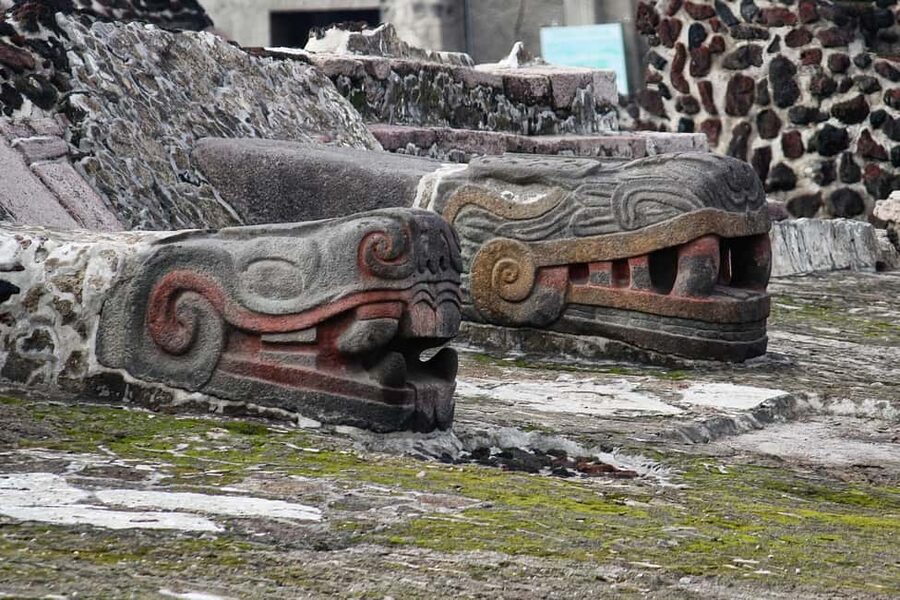
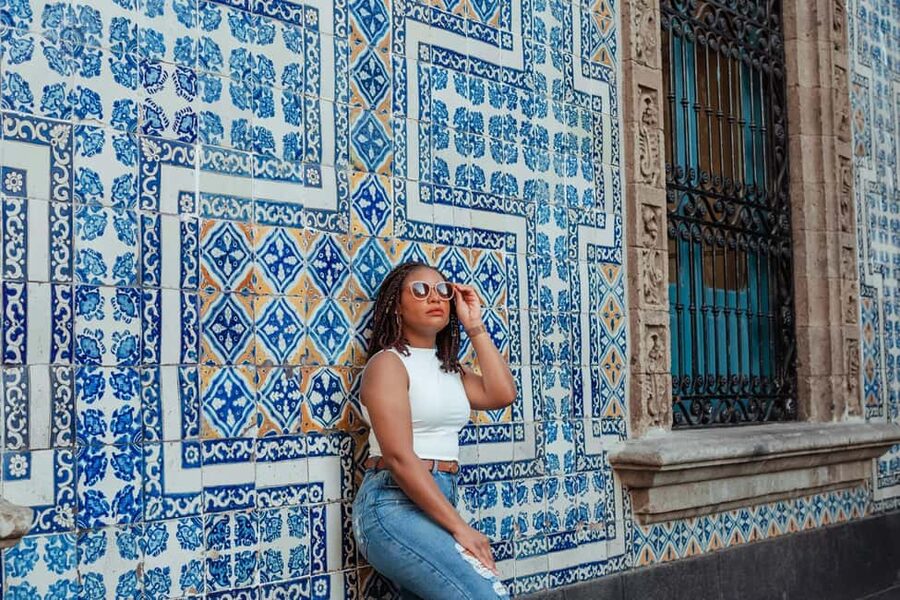
A short walk brings you to the House of Tiles, known for its striking blue-and-white tiled façade. The building began as a noble residence and later became a lively urban hub, giving it a useful story beyond its appearance.
This stop rewards close looking. The tiles create a surface that photographs well, but your guide can explain how the building changed function over time. That shift from private residence to public meeting place reflects the way the historic center has remained useful rather than becoming a silent monument district.
The House of Tiles is also a welcome change after the heavy stone of the cathedral and archaeological site. Its decoration is more playful and immediately visible. You will likely spend only a short time here, but it is one of the route’s most memorable façades.
The itinerary does not include food or drinks, even though this area offers places to stop. If you want to eat or have coffee, save it for after the walk or ask your guide for a recommendation. Local restaurant, café, and pub suggestions are included, which adds value at the end of a short orientation tour.
Torre Latinoamericana and Mexico City’s changing skyline
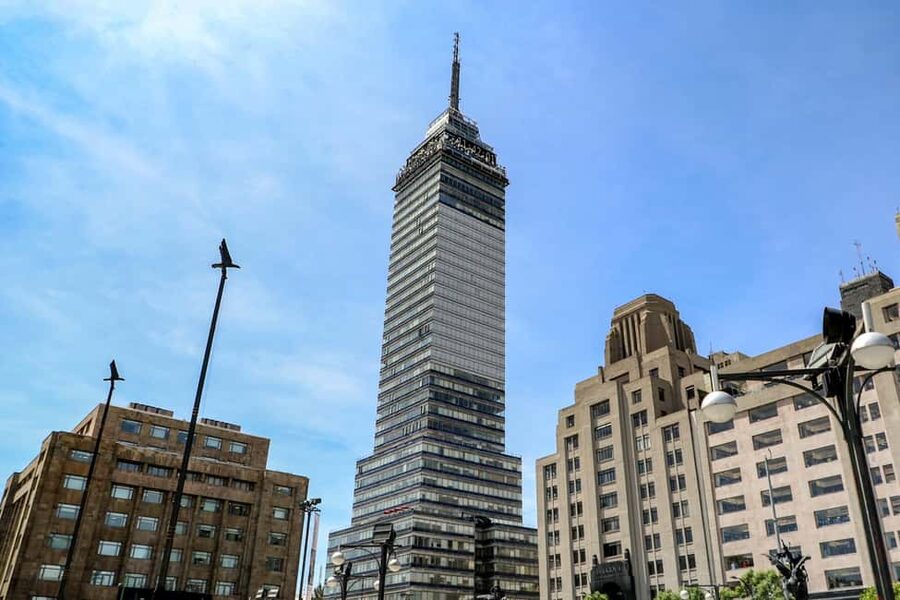
Torre Latinoamericana brings the route into modern Mexico City. It was one of the city’s first skyscrapers and is linked to stories of survival after major earthquakes.
The tower helps you read the city vertically. Earlier stops focus on ruins, churches, and low historic façades. Here you look at the capital as a modern metropolis and consider the engineering challenges of building in an earthquake-prone city.
The tour does not state that an observation-deck ticket is included. Treat Torre Latinoamericana as a landmark stop unless your guide confirms otherwise, and remember that attraction tickets are extra. If panoramic views are important to you, ask about visiting the tower separately after the walk.
This is also where the two-hour schedule becomes most noticeable. You may hear an introduction to the tower and its earthquake story rather than spend a long time inside. That is not a flaw if you want orientation. It may disappoint you if your main goal is a full skyscraper visit.
Palacio de Bellas Artes and Mexico’s artistic identity
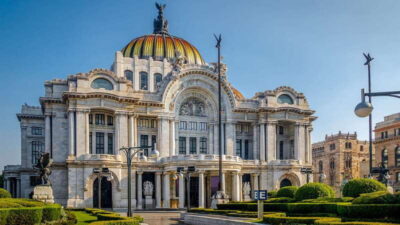
The Palacio de Bellas Artes is one of the route’s grandest sights. Its exterior combines Art Nouveau and Art Deco details, while the building itself represents Mexico’s national cultural life.
Your guide connects the palace with Mexican art and points out murals by artists such as Diego Rivera. The building is valuable even if you only view it from outside, since the exterior gives you a clear sense of its scale and decorative ambition.
If art is high on your list, ask how much time you can spend discussing the murals and the building’s cultural role. As with the other attractions, admission is not included, so an interior visit may need a separate plan.
I appreciate the way this stop follows Torre Latinoamericana. The contrast is sharp: one building looks toward modern engineering and city growth, while the other expresses national art and public culture. The route keeps changing its subject, which prevents the walk from feeling like a long list of similar churches and plazas.
Palacio Postal, a golden finish

The final listed sight is Palacio Postal, the city’s ornate post office. Its neoclassical design and elaborate golden interior details make it one of the more surprising stops on the route.
The building has served as Mexico City’s main post office for more than a century. That working purpose gives the architecture extra interest. It was not created only to impress visitors. It was built to handle communication in a growing capital, and it has continued to serve that role.
You may find this stop especially appealing if you enjoy buildings that still have a practical public function. It also closes the walk on a different note from Templo Mayor and Bellas Artes. Instead of ancient ceremony or national art, you finish with communication, commerce, and the daily operation of the city.
The tour description does not promise an interior visit or include admission costs. Ask your guide what the schedule allows, particularly if you want detailed architectural commentary inside.
What $93 per person really buys you
At $93 per person, this is not the cheapest way to see Mexico City’s center. You are paying for a private guide, a fixed two-hour route, commentary in your chosen language, and the ability to ask questions without competing with a large public group.
The value improves when you are traveling with several people and can share the private booking. It also makes more sense for a first visit when you want a clear introduction in a short window, especially before exploring the center on your own.
The price does not cover attraction tickets, meals, drinks, or transport. That keeps the advertised tour cost from being the full cost of your outing. Set aside extra money if you plan to enter Templo Mayor, the cathedral, Torre Latinoamericana, Bellas Artes, or Palacio Postal.
I would not choose this tour if you want lengthy museum visits. Two hours is enough to connect the main sights, hear useful background, and decide where to return. It is not enough for a slow examination of every interior.
Pace, language, weather, and group size
The tour is a walking experience from start to finish. Wear comfortable shoes, bring sun protection when needed, and carry suitable clothing for rain. The walk operates in poor weather rather than being automatically canceled, so check the forecast before leaving.
A private group can contain from one to 25 people per guide. That is more personal than a large public tour, but 25 is still a sizable walking group. Larger bookings receive additional guides, with a higher price.
Five languages are available: English, Spanish, German, Italian, and French. Confirm your chosen language at booking and read the day-before email carefully for final instructions.
Free cancellation is available up to 24 hours before the tour for a full refund. You can also reserve now and pay later, which helps if your Mexico City schedule is still changing.
Who will get the most from this walk
I would recommend this tour to first-time visitors who want to understand the historic center before returning to favorite sights independently. It also suits families or friends who value a private pace and want to ask plenty of questions.
History-minded visitors will appreciate the movement from Aztec remains to colonial architecture and modern landmarks. Architecture fans get a strong variety in a short time, from the cathedral and House of Tiles to Bellas Artes, Palacio Postal, and Torre Latinoamericana.
The walk may be less suitable for anyone with limited mobility or anyone hoping to avoid outdoor walking. The route is active, and the operator specifically advises comfortable footwear and weather-ready clothing.
Should you book this Mexico City walking tour?
Book it if you want a focused first look at Centro Histórico, prefer a private guide, and accept that major interiors may need separate visits. The route is well chosen: Zócalo gives you the civic setting, Templo Mayor supplies the ancient foundation, and the later buildings show how Mexico City kept changing.
Skip it if you want a slow museum day or a tour with tickets and meals bundled into the price. For everyone else, $93 buys a useful orientation, personal commentary, and practical advice for continuing your visit. Just treat the two hours as a strong beginning, not the whole story.
FAQ
Where does the tour meet?
Meet your guide in front of Gran Hotel Ciudad de México at 16 de Septiembre 82, Centro Histórico de la Ciudad de México. Do not enter the hotel, since its staff is not informed about the tour.
How long does the tour last?
The walking tour lasts two hours. Starting times vary, so check availability when booking.
Which languages are available?
The live guide can conduct the tour in English, Spanish, German, Italian, or French.
Are attraction tickets included?
No. Tickets to attractions are not included. Food and drinks are also separate.
Is the tour private?
Yes. It is a private group tour with one guide for groups of up to 25 people. Larger groups receive additional guides, and the price will be higher.
Can I cancel or pay later?
You can cancel up to 24 hours in advance for a full refund. Reserve now and pay later is also available.
Just added around Mexico City
- Xochimilco’s Wild Side: Mezcal, Insects & Culture★ 4.9 · 10 reviews
- Xochimilco: Food and Trajinera Ride with Local Women★ 5.0 · 5 reviews
- Xochimilco: Island of the Dolls Tour Games and Drinks★ 5.0 · 25 reviews
- Xochimilco Ecological Tour – Away From the Crowds (3 Hours)★ 5.0 · 15 reviews
- Xochimilco + Coyoacán Combo Full-Day Tour★ 5.0 · 3 reviews
- Xochimilco floating gardens, Coyoacan and UNAM murals★ 4.0 · 6 reviews
- Val´quirico And The City of Angels Puebla From Mexico City★ 5.0 · 3 reviews
- Xochimilco: amanecer en kayak Ciudad de México★ 5.0 · 35 reviews
Mexico City Historic Center Walking Tours, compared.




Walking Tour – Impressive murals in Historical Center of Mexico City
Read our review →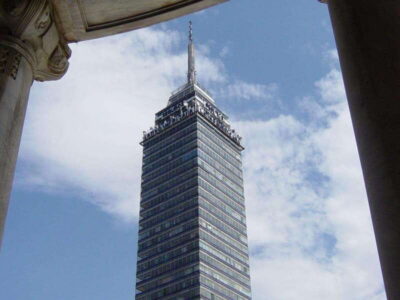
Muralist Art Semi Private Walking Tour in Mexico City Downtown
Read our review →Browse the lists this tour appears in