
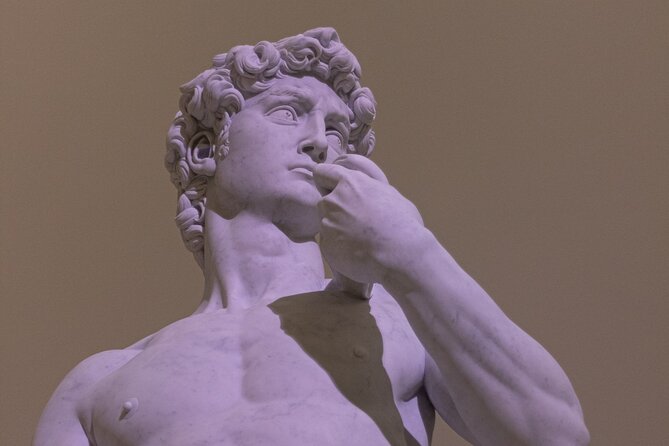
Reviewed · MUSEO SOUMAYA AND POLANCO TOURS
Soumaya Museum: the Master of Mexican and Western Art
The Soumaya Museum packs European masters, Mexican art, Rodin sculpture, and modern works into six floors. This guided visit helps you make sense of that big mix, with roughly two hours inside the museum and a bilingual guide to connect artists and ideas.
I like the small group limit of 15, which gives the guide room to explain important works without turning the visit into a crowded lecture. I also like the clear route through six themed rooms, especially the final gallery devoted to Julián and Linda Slim and the Rodin collection. The main drawback is simple: two hours is not enough for every work, so you will need to accept a brisk selection rather than a complete museum visit.
Key points at a glance
- Six distinct art rooms: Move from modern technology and symbolism to European masters, Mexican art, and Rodin.
- A bilingual guide included: English is offered, with guides such as Jesus and José leading the visit.
- A compact, focused format: Plan on about two hours of museum time, with the full activity listed at roughly two and a half hours.
- Major names in one place: You might see works associated with da Vinci, Rodin, Rivera, Dalí, and Monet.
- Small-group setting: The maximum group size is 15 people.
- Simple meeting plan: Start and finish at Museo Soumaya in the Granada area of Mexico City.
Why Soumaya works better with a guide
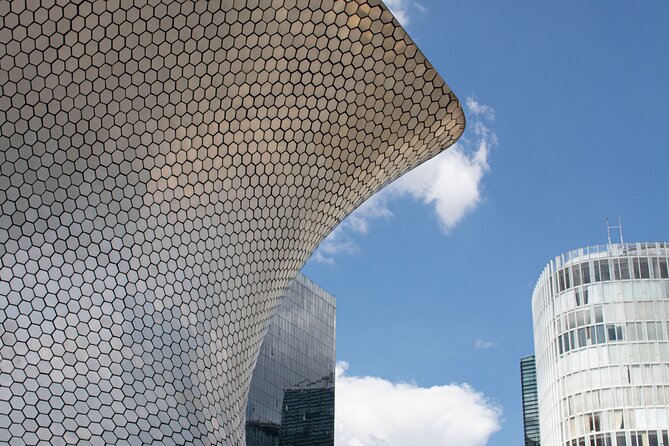
Museo Soumaya is not a single-artist museum with one easy story. Its six floors cover different periods, countries, and artistic aims. One room may focus on technical invention and modernity, while another moves into myths, religious themes, European painting, or Mexican identity.
That range is exciting, but it can also leave you wondering how the pieces fit together. A bilingual guide gives the visit a clear shape. Instead of walking past dozens of names and dates, you get a route through the museum’s main ideas and a selection of works worth your attention.
The guides Jesus and José are specifically identified with this experience. Jesus is praised for leading the visit with grace and class, while José is noted for being friendly, clear, and able to link artists across several floors. Those details matter because this museum needs explanation more than it needs a fast walk from room to room.
The guide can also help you decide what deserves your time. With around two hours in the museum, you cannot study every painting or sculpture at length. A good explanation lets you pause at the works that matter most to you and keep moving through the less essential material.
More Museo Soumaya and Polanco visits:
- Polanco Food Tour: The Bestselling Food Adventure in Mexico City
★ 5.0 · 881 reviews - Mexico City: 3–Hour Polanco Food Tour
★ 4.9 · 101 reviews - Tacos and Mezcal Experience in Polanco!
★ 5.0 · 66 reviews
Room 1: Modernity, ars and techné
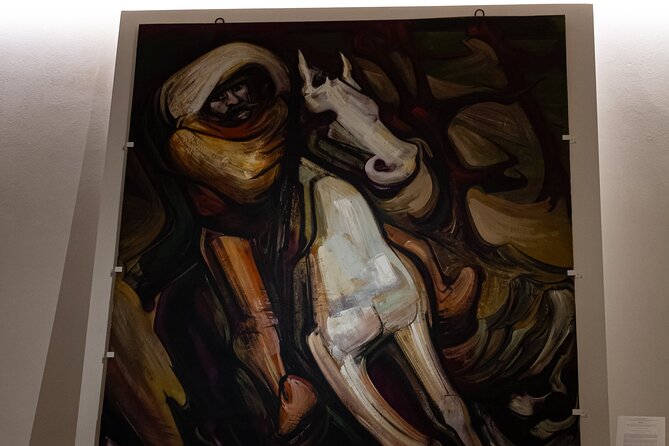
The first room is titled Modernity: ars and techné. Even without a detailed work list, the title signals the kind of question this section raises: how art relates to skill, making, tools, and new ways of seeing.
This is a useful opening because it frames art as more than decoration. You may find yourself looking at how an object was made, what materials allow an artist to do, and how changing technology affects artistic expression.
Your guide’s role here is especially useful. A title such as ars and techné can feel abstract on a wall label, but a spoken explanation can make the theme easier to follow. If you are new to art museums, this room gives you a way to think about technique before the tour moves into mythology, older European work, and Mexican art.
Do not expect to linger over every piece. The museum holds far more than the tour can cover in one sitting, so listen for the guide’s main points and make a mental note of works you would like to revisit later.
Room 2: Myths and allegories from visible to invisible
The second room, Myths and Allegories: From the Visible to the Invisible, shifts attention toward stories, symbols, and ideas that are not always obvious at first glance.
A painting may show a recognizable figure or scene, yet its meaning can depend on a myth, a religious reference, or a symbolic object. This is where a guide can save you from seeing only the surface. The explanation may help you understand why a certain figure appears, what a gesture suggests, or how an artist turns an old story into a new image.
I would pay close attention to the links your guide makes between this room and the later galleries. The experience is designed to connect artists rather than treat each floor as an isolated display. That approach makes the large collection easier to digest, particularly if you do not already know the visual language of European art.
The possible weakness is that symbolic art can take time. If you prefer a quick look at famous names, this room may feel slower. If you enjoy asking what a picture means, it may become one of the most rewarding parts of the route.
Room 3: Old European and New Spain masters
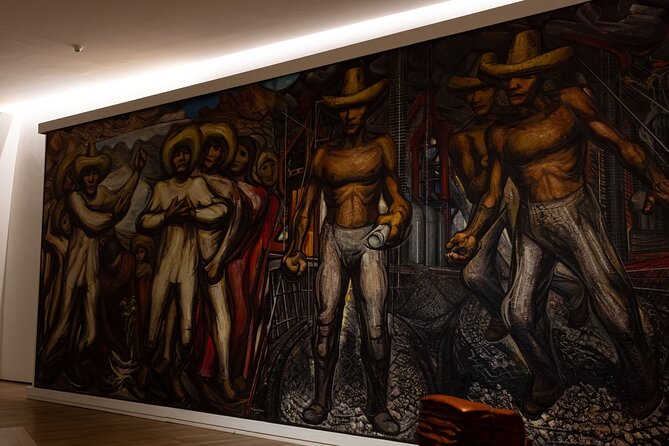
The third room brings together Old European and New Spain masters. This is one of the sections where historical context matters most, since the gallery connects European traditions with art made in New Spain.
You will encounter works from an earlier period than the modern and avant-garde material found later. The guide can point out changes in subject, style, and artistic purpose, helping you see how one period leads into another.
This room also gives the tour a broader geographic frame. The museum is not presenting Mexican art as a completely separate story. Instead, the route lets you consider how artists in Mexico and Europe relate to shared traditions while developing their own responses.
Since the supplied information does not name every work in this room, I would avoid arriving with a fixed checklist. Let the guide identify the key pieces. If you are especially interested in European painting or New Spain, tell the guide early so you can spend more time on that material.
More museums in Mexico City:
- CDMX: Xochimilco, Coyoacan, Frida Kahlo Museum & Murals Tour
★ 4.4 · 3,025 reviews - Chapultepec Castle & Anthropology Museum Tour
★ 4.5 · 1,348 reviews - Frida Kahlo VIP [Museum Tickets Included] Bike, Markets & Churros
★ 5.0 · 1,072 reviews - Anthropology Museum Guided Tour
★ 4.5 · 1,035 reviews
Room 4: From Romanticism to the Avant-garde
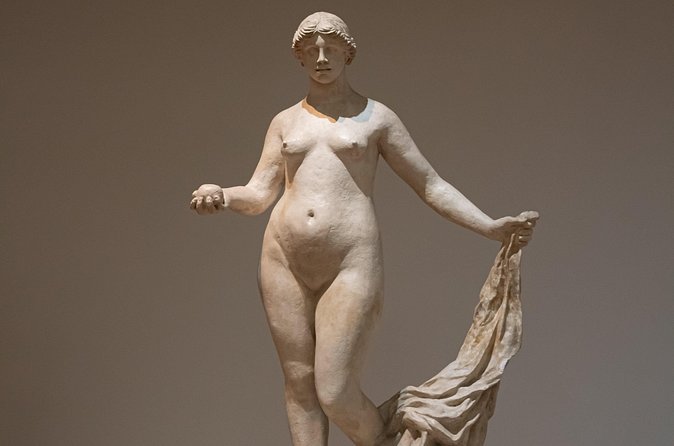
The fourth room moves from Romanticism to the Avant-garde, a wide stretch of artistic change. This is where the museum’s collection begins to feel especially broad, with different ideas about emotion, form, movement, and experimentation appearing within one section.
The tour can help you understand the change as a process rather than a jumble of styles. Romanticism and the Avant-garde are not just labels to memorize. They mark different ways artists responded to their world and tested the limits of accepted form.
This section is also a likely place to encounter some of the major names associated with the museum. The collection includes works connected with Monet and Dalí, among others. The supplied experience information also highlights da Vinci, Rivera, and Rodin, so the guide may use these artists to show how the collection spans several major moments in Western and Mexican art.
A practical tip: do not assume the most famous name automatically deserves the most time. Let the guide explain why a less familiar work matters. In a museum this large, the best learning often comes from the connections between well-known and lesser-known pieces.
Room 5: Twenty centuries of art in Mexico
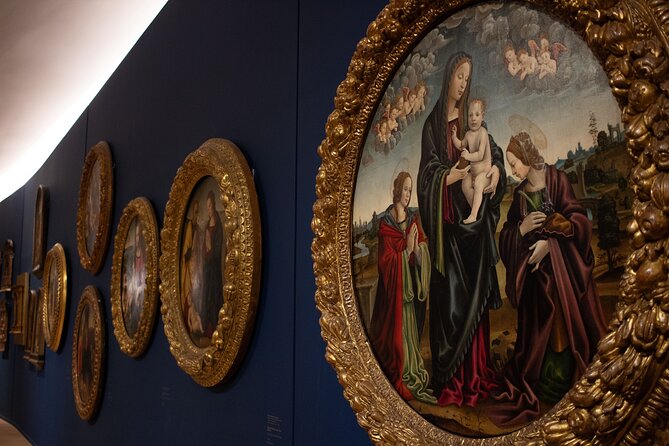
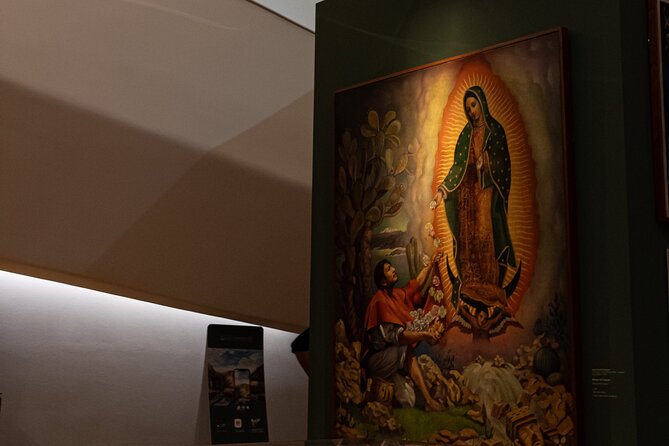
Room five, Twenty Centuries of Art in Mexico, gives the tour its strongest national focus. It places Mexican art within a long time frame rather than limiting the story to one period or one famous movement.
That broad scope is valuable, but it also creates a challenge. Twenty centuries is a lot to cover, and the room cannot offer a full account of every era in a short guided visit. Your guide will need to make choices, and you should expect a clear overview instead of an exhaustive study.
This is where José’s approach, as described for the experience, sounds particularly useful. He is noted for linking artists across floors and making a large amount of information easier to follow. Those connections can help you see Mexican art as a developing story, not a collection of unrelated objects.
If Mexican art is your main reason for booking, tell the guide at the beginning. The tour includes many other periods, so a quick word about your interests may help you get more from this room. You can also return to the works that catch your eye once the guided portion is finished, depending on the museum’s arrangements that day.
Room 6: The Rodin era and the Slim collection
The final room is Julián and Linda Slim: The Rodin Era. It gives the visit a strong finish, especially for anyone drawn to sculpture.
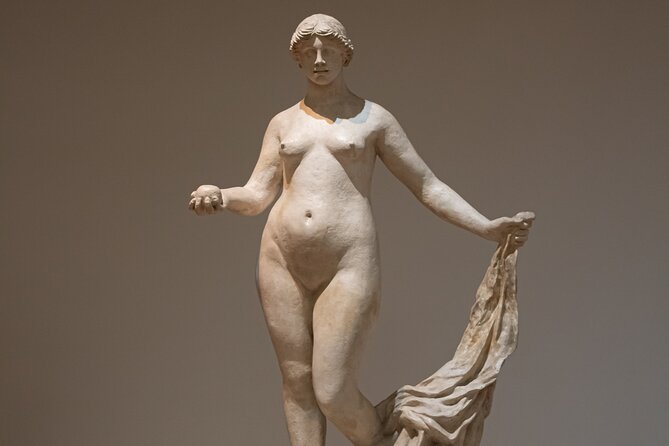
Rodin is one of the clearest highlights named for this experience. The collection also includes major works associated with da Vinci, Rivera, Dalí, and Monet, so the final section helps bring together the museum’s interest in famous European and Mexican artists.
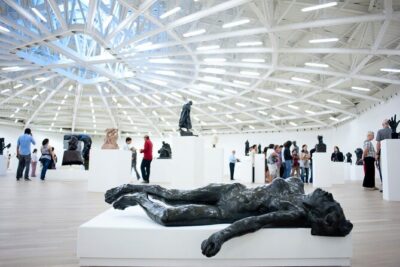
The Rodin focus gives you a chance to look closely at the physical side of art: modeling, gesture, surface, and the way a sculpture occupies space. You may find that sculpture benefits from a guide’s explanation because the work changes as you move around it. A short stop can become more meaningful when you know what formal detail to watch.
This room is also a reminder that Soumaya is not only a painting museum. If you mainly want Mexican muralism or European paintings, make sure you do not rush the sculpture collection. The final gallery may be the part you remember most clearly.
What the $53.68 price means
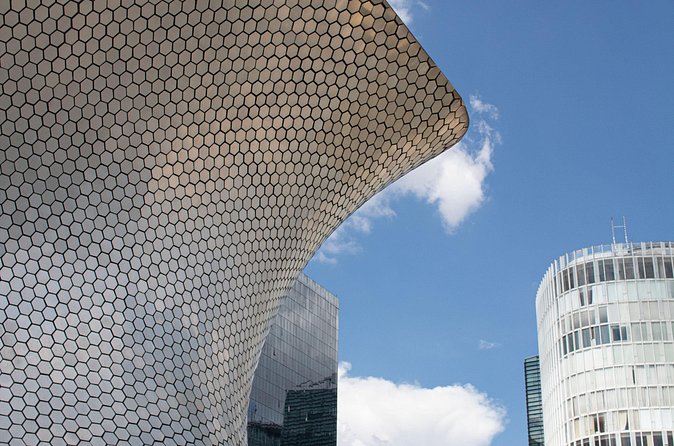
The listed price is $53.68 per person. The experience includes a bilingual guide, while food and transportation are not included. The museum admission is listed as free, so the price appears to pay mainly for the guided service rather than an entrance ticket.
That makes the value depend on how much help you want inside the museum. If you are comfortable reading labels and choosing your own route, a self-guided visit may be enough. If you want someone to select key works, explain the links between six rooms, and answer questions in English, the fee can make sense.
The group limit of 15 helps the value. You are not paying for a private visit, but the group is small enough for the guide to remain part of the experience rather than becoming a distant voice at the front.
The activity is listed at about two hours and 30 minutes, with the museum portion described as two hours. That is a useful length for a first visit. It gives you structure without taking an entire day, but you should not expect to see every corner in detail.
Meeting in Granada and planning your visit
The meeting point is Museo Soumaya on Boulevard Miguel de Cervantes Saavedra in the Granada area of Miguel Hidalgo. The activity ends back at the same meeting point, which keeps the plan simple.
The museum is near public transportation, but transportation itself is not included. You will need to arrange your own way to the starting point and return trip. Since no pickup service is listed, do not wait for the guide at a hotel or another museum.
Confirmation is provided at booking. The experience is offered in English and uses a mobile ticket, so keep the booking details available on your phone.
The group can include up to 15 people, and most people can take part. No special participation restrictions are listed in the provided details, but you should still allow enough time to reach the museum before the start time.
Free cancellation is available if you cancel at least 24 hours before the start. Changes or cancellations made less than 24 hours before the start are not accepted for a refund, and the cut-off follows local Mexico City time.
Who will get the most from this tour
I would choose this tour if you want structure and context more than a casual walk through a famous building. It suits first-time museum visitors, people who want an English explanation, and anyone curious about how Mexican and Western art can be presented together.
It is also a good match for travelers with limited time in Mexico City. The route gives you a taste of six rooms in one visit, with the option to remember favorite works and return later if your schedule allows.
Art specialists may find the pace too quick. Two hours cannot provide a full study of every period, and the tour does not promise a private art consultation. If you already know the collection well, you may prefer to move independently and spend longer with a narrow group of works.
Still, the experience has a strong record, with a 4.9 rating from 20 ratings and 100 percent recommendation shown in the supplied information. The praise centers on clear explanations, friendly guides, and an engaging way of connecting artists. Those are exactly the qualities that matter most in a museum with such a wide range.
Should you book the Soumaya Museum tour?
Book it if you want a guided introduction to six floors of art and you value clear explanations from a bilingual guide. The strongest reasons are the small group, the wide selection of artists, and the chance to see works linked to Rodin, da Vinci, Monet, Dalí, and Rivera while also learning about Mexican art.
Skip it if your priority is a slow, independent study of a few works or if you do not want to pay for a guide when museum admission is listed as free. For most first visits, though, the structure is useful. Soumaya offers a lot in one building, and this tour gives you a sensible path through it without taking up a full day.
FAQ
Where does the tour begin?
The tour begins at Museo Soumaya, Boulevard Miguel de Cervantes Saavedra, Granada, Miguel Hidalgo, 11529 Ciudad de México, CDMX, Mexico.
Where does the activity end?
The activity ends back at the Museo Soumaya meeting point.
How long does the experience last?
The activity lasts approximately two hours and 30 minutes. The museum visit itself is listed as two hours.
Is a guide included?
Yes. A bilingual guide is included.
Is the experience offered in English?
Yes. English is one of the languages offered.
How many people can join the tour?
The activity has a maximum group size of 15 people.
Are food and transportation included?
No. Food and transportation are not included.
Can I cancel for a refund?
Yes. You can cancel up to 24 hours before the start time for a full refund. Cancellations or changes made less than 24 hours before the start are not accepted for a refund.
Just added around Mexico City
- Xochimilco’s Wild Side: Mezcal, Insects & Culture★ 4.9 · 10 reviews
- Xochimilco: Food and Trajinera Ride with Local Women★ 5.0 · 5 reviews
- Xochimilco: Island of the Dolls Tour Games and Drinks★ 5.0 · 25 reviews
- Xochimilco Ecological Tour – Away From the Crowds (3 Hours)★ 5.0 · 15 reviews
- Xochimilco + Coyoacán Combo Full-Day Tour★ 5.0 · 3 reviews
- Xochimilco floating gardens, Coyoacan and UNAM murals★ 4.0 · 6 reviews
- Val´quirico And The City of Angels Puebla From Mexico City★ 5.0 · 3 reviews
- Xochimilco: amanecer en kayak Ciudad de México★ 5.0 · 35 reviews
Museo Soumaya and Polanco Tours, compared.



Mexico City Segway Tour: Polanco & Chapultepec Park
Read our review →
Ultimate Taco & Mezcal Experience in Polanco – A Foodie’s Dream!
Read our review →
Browse the lists this tour appears in