
Reviewed · MEXICO CITY HISTORIC CENTER WALKING TOURS
Mexico City: 10 Wonders of the Historic Center
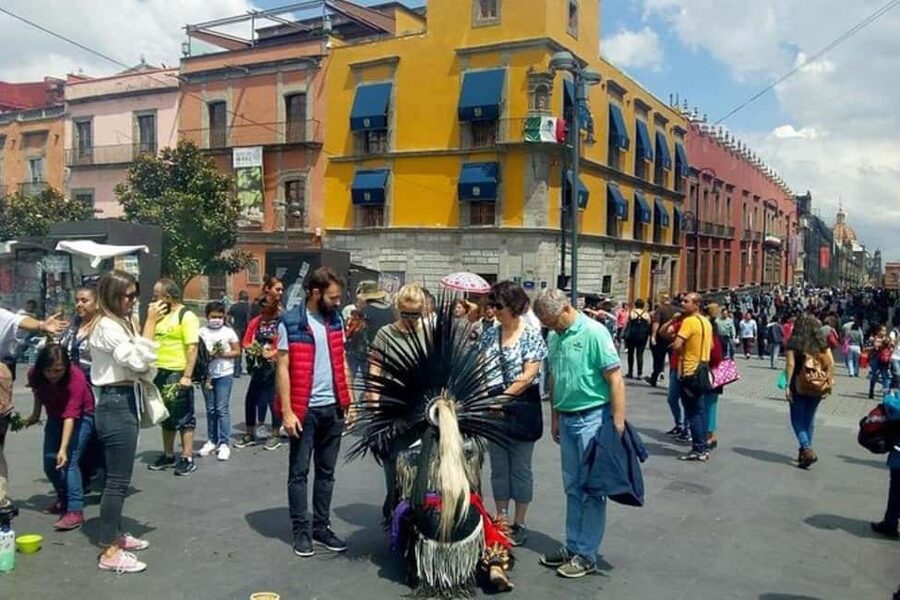
Mexico City’s Historic Center packs centuries into a few blocks, and this tour gives you a fast, flavorful introduction. You’ll move from Diego Rivera’s crowded mural of Mexican history to Spanish colonial churches, glittering halls, old bakeries, and the Aztec remains beneath today’s streets. The mix of art, food, and archaeology is the real draw.
I like two things here. First, the route links major sights that are easy to visit on foot but harder to understand on your own. Second, the food stops add something beyond sightseeing: traditional bread, Mexican sweets, and a meal with a view. The three-hour format also suits a first day in town.
The catch is simple: this is a walking tour, not a ride between monuments. One recent booking ended early after a late start, an unprepared guide, and a pace that did not suit a guest with a healing foot injury. Ask about walking needs before booking, and expect the quality of guiding to matter greatly.
Key points to know before you book
- Diego Rivera’s Alameda mural begins the story: You’ll see a major work that brings Mexican figures and history together in one busy scene.
- The route is almost entirely on foot: No private transportation is included, so comfortable shoes and a reasonable walking ability matter.
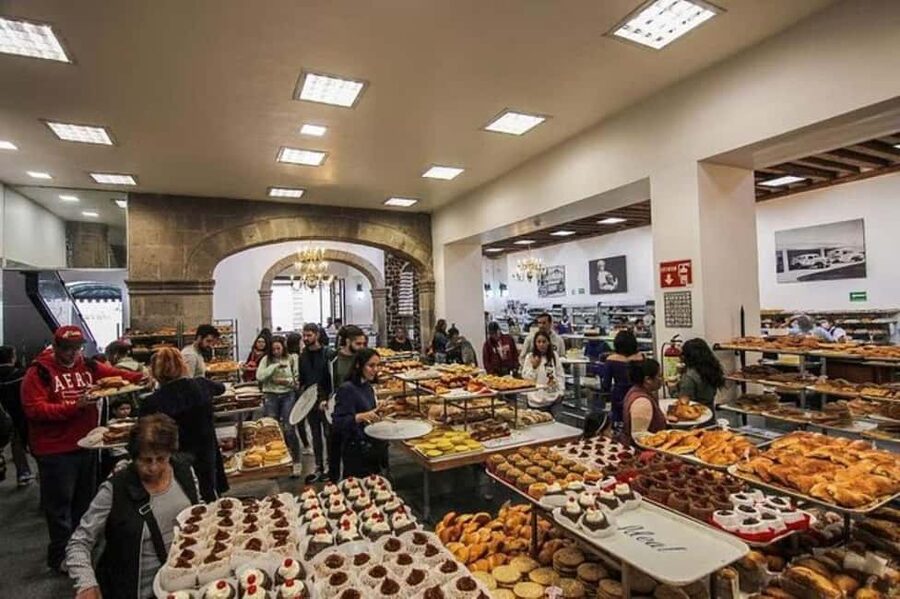
- Food is part of the tour, not an afterthought: Expect traditional bread, Mexican sweets, and a meal at a local restaurant.
- The architecture changes quickly: Fine Arts, the Postal Palace, the House of Tiles, and the Gran Hotel each offer a different look at the city.
- Temple Mayor gives the final historical punch: The tour ends near Aztec ruins beneath the modern capital, with time for photos and food.
- Small groups are possible: The maximum group size is 15 people, with English and Spanish guides available.
A three-hour walk through Mexico City’s layered past
The tour starts at GZ + P Arquitectos and quickly moves into the cultural heart of the city. This is a compact route, but it covers an impressive range: pre-Hispanic Mexico, Spanish rule, the colonial period, modern Mexican art, and everyday food traditions.
I like this approach because the sights do not feel isolated. A cathedral is more interesting after you understand the Aztec city beneath it. A grand European-style post office means more when you have seen how Mexico City blended foreign influences with local traditions. The guide’s job is to connect those pieces rather than simply point at façades.
You should also keep the pace in mind. Several stops last only 15 minutes, and the mural museum receives about 30 minutes. That is enough for an introduction and some photographs, but not enough for a slow, detailed museum visit. Think of this as a broad first look, not a specialist art or archaeology tour.
More walks through the historic centre:
- Historic Downtown Walking Tour
★ 5.0 · 1,289 reviews - Historic Center Food Tour in Mexico City
★ 5.0 · 1,263 reviews - Mexico City: Historic Downtown Walking Tour
★ 4.8 · 1,039 reviews
Diego Rivera’s mural sets the tone
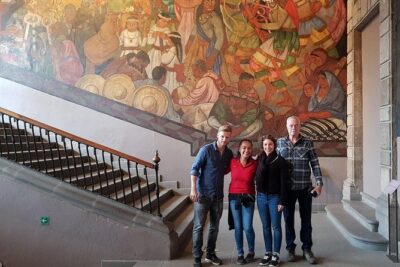
The first major stop is the Diego Rivera Mural Museum, where you’ll spend about 30 minutes with Dream of a Sunday Afternoon in the Alameda Central. This is a strong opening because Rivera’s mural is not just decoration. It gathers people, symbols, and episodes from Mexican history into one large public scene.
Give yourself time to look beyond the famous central figures. The work presents Mexico’s past as a crowded conversation, with indigenous, colonial, political, and modern elements sharing the same space. That makes it a useful introduction to the tour’s main idea: Mexico City is built from several eras at once.
Half an hour is a sensible amount of time here. You can see the mural properly and hear the basic explanation without spending the entire morning indoors. If you want to study Rivera’s work in depth, you’ll probably want a separate return visit.
Alameda Central and the grand buildings nearby
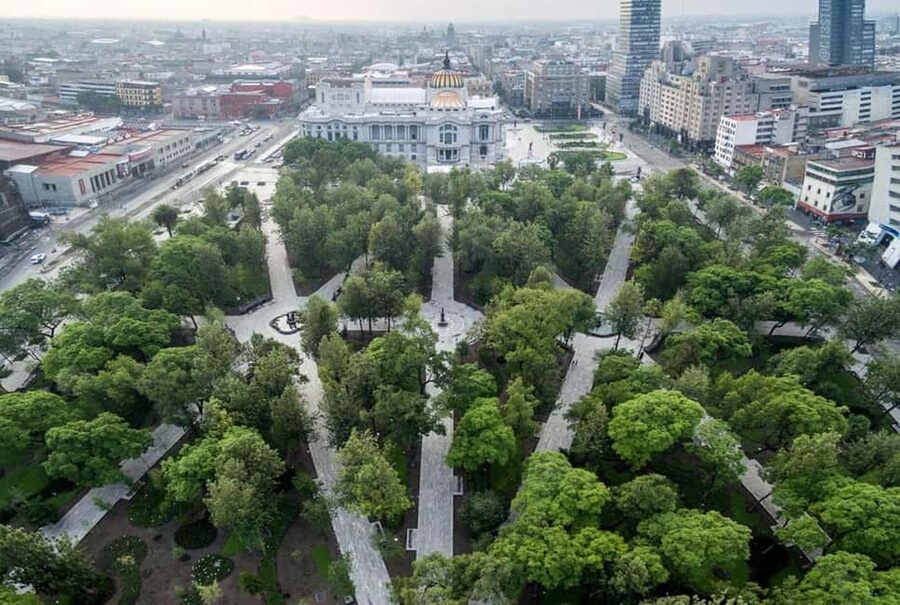
After the museum, you’ll walk through Alameda Central for roughly 15 minutes. It is described as the oldest park in the Americas, and its location makes it a natural bridge between the museum and the city’s grand civic buildings.
The park is not treated as a long stop, so expect a short walk and an overview rather than a full garden visit. This is a good place to notice how public space, monuments, and major institutions sit close together in the Historic Center.
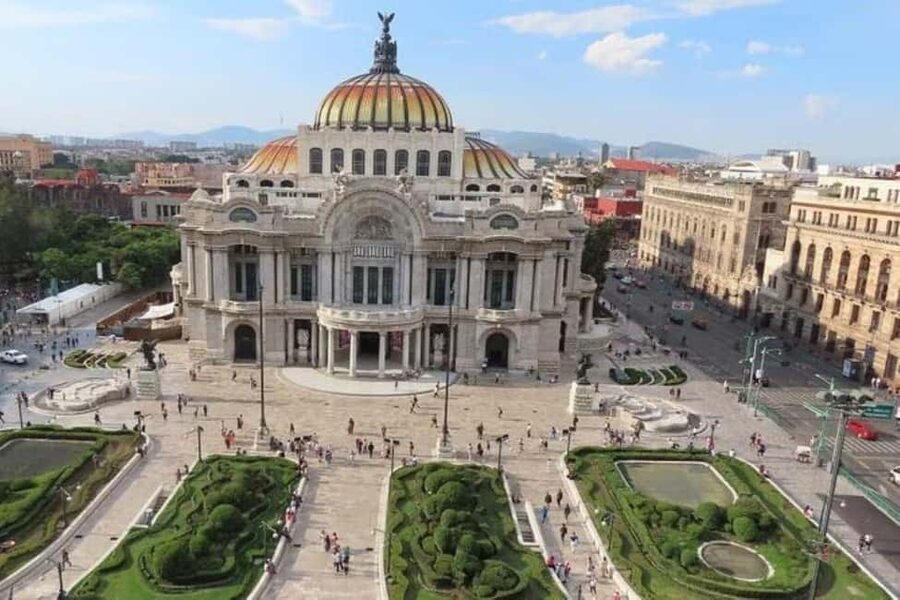
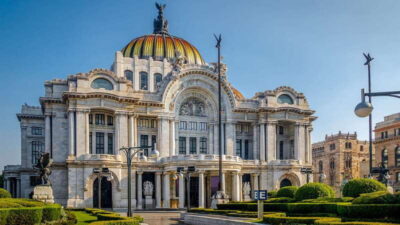
Next comes the Palace of Fine Arts, one of Mexico City’s most recognizable buildings. The scheduled time is about 15 minutes, mainly for photographs. You can admire its pale exterior and the contrast between its heavy presence and the open space around it, but you should not expect a full interior tour or a long look at its murals.
The short stop works well for a first visit because the building is visually powerful. It is less satisfying if you hoped to explore galleries or spend time inside. I would plan a separate visit if art or architecture is your main reason for coming.
The Postal Palace and House of Tiles
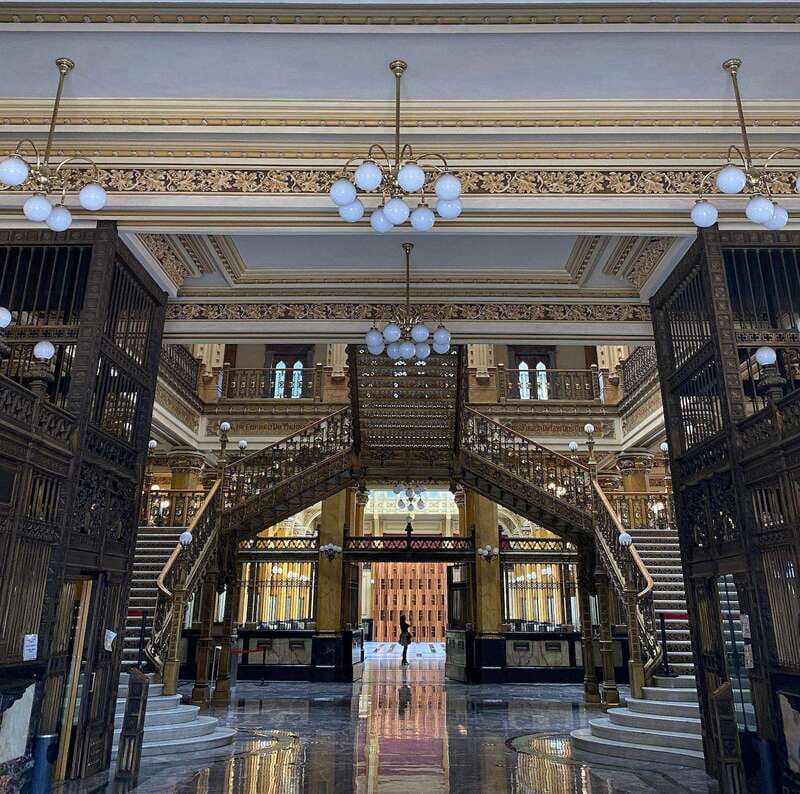
The Palacio de Correos de México is another photo stop of about 15 minutes. The building is known for its ornate interior and grand early twentieth-century style, making it a sharp contrast with the colonial structures elsewhere on the route.
The appeal here is visual. Look for the polished surfaces, decorative details, and formal design that turn an ordinary post office into a major sight. Since this is a quick stop, the guide’s explanation will help you notice details you might otherwise walk past.
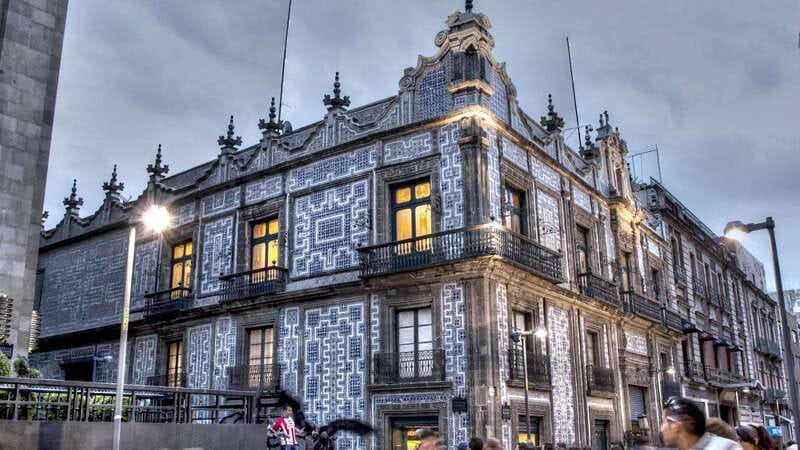
The House of Tiles follows. Its tiled façade gives it an immediate, almost storybook appearance, but the building also helps show how old Mexico City absorbed different artistic influences. You’ll have about 15 minutes for photographs and a short explanation.
These two stops are especially useful for architecture lovers. They also help break up the historical narrative with something easy to see: patterns, stonework, tiles, and grand interiors. The limitation is time. You’ll get the outside impression and perhaps a glimpse inside, not a full architectural study.
More Historical Tours in Mexico City:
- Walking Tour of the Historic Center of Mexico City
★ 5.0 · 870 reviews - Mexico City Historical Centre Food Tour with 7 Authentic Tastings
★ 5.0 · 723 reviews - Walking Tour in Mexico City for Exploring their Cultural Heritage
★ 5.0 · 245 reviews - Walking Tour – Impressive murals in Historical Center of Mexico City
★ 5.0 · 224 reviews
Bread, sweets, and a taste of daily Mexico City
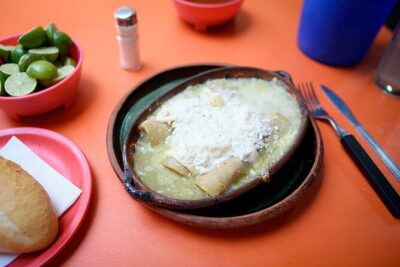
Food gives this walk its most local feeling. At Ideal Bakery, you’ll taste traditional Mexican bread. That may sound like a small stop, but bakeries tell you plenty about a city. Bread is practical, familiar, and tied to daily life in a way that major monuments are not.
The tour also includes a stop connected with Mexican sweets, including Dulcería de Celaya. You’ll have around 10 to 15 minutes there. Expect this to be a brief introduction rather than a long tasting session, but it adds a pleasant change of pace after the large public buildings.
Because the food is included, the $78 price is easier to assess than it would be for a walk with sightseeing alone. You are paying for a guide, entrance fees, a meal, and several small tastes. The value depends on how well the guide handles the historical explanations and keeps the route moving.
I would not book this expecting a full food tour. The food is woven into a history walk, so the portions, choices, and timing may be limited. If you want a focused study of regional cooking, you’ll need a different kind of experience. If you like using food as a window into local culture, these stops add real value.
The Gran Hotel’s ceiling and the city’s polished side
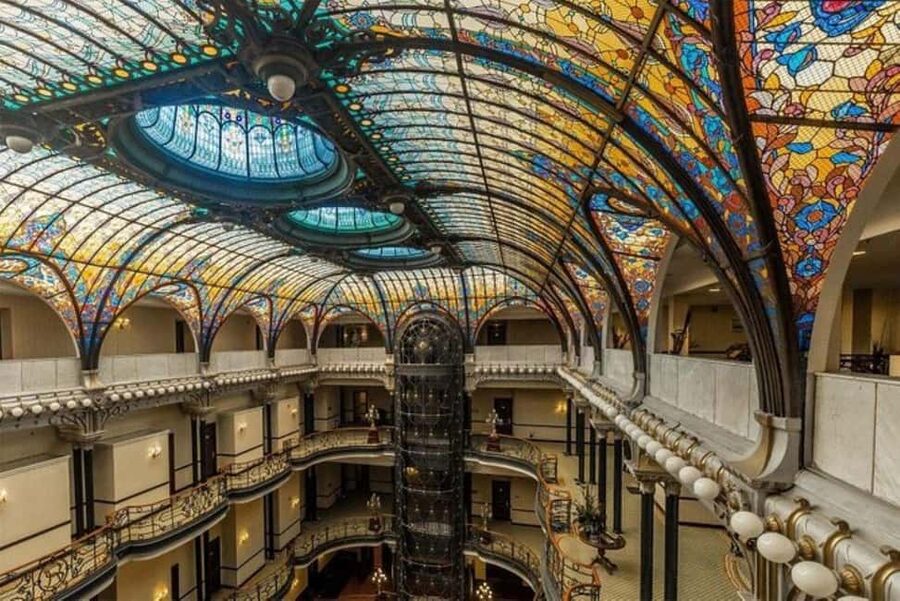
The Gran Hotel of Mexico is included for its impressive Tiffany stained glass ceiling. This is one of the route’s most memorable visual details, especially after the more formal civic buildings and the busy streets outside.
The ceiling gives you a glimpse of the city’s elegant commercial past. It also shows how much variety can appear within a short walk: a public park, a mural museum, a palace of fine arts, a post office, a tiled house, a bakery, and a hotel with colored glass overhead.
The stop is brief, so look up as soon as you enter and use your time well. The exact itinerary information gives 15 minutes for the hotel-related visit. That is enough to see the main feature and take photographs, but not enough to linger over every architectural detail.
The Metropolitan Cathedral and the city below it
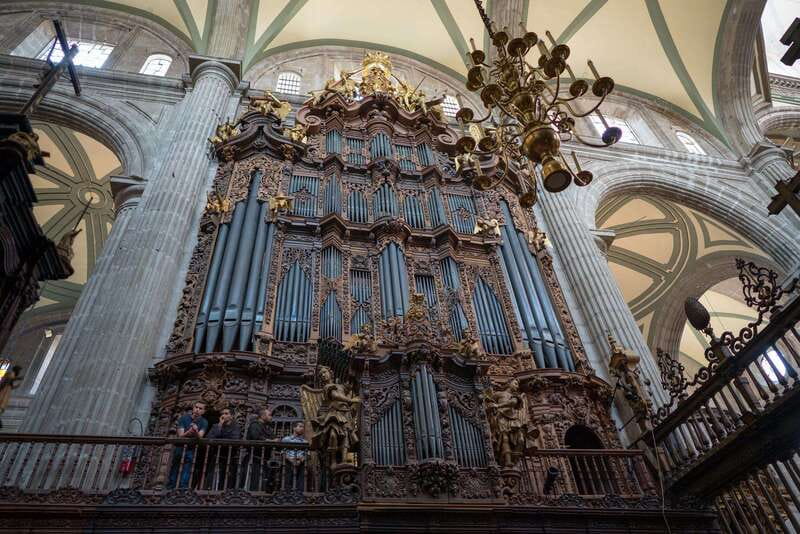
The Metropolitan Cathedral receives about 15 minutes. It is one of the largest churches in Latin America and one of the essential sights in the Historic Center.
A short visit lets you see the scale of the building and hear how Spanish colonial power shaped the center of Mexico City. The cathedral also forms part of the tour’s larger contrast: the Spanish colonial city was built directly over the earlier Aztec capital.
You should not expect a quiet, extended church visit. Fifteen minutes is a quick look, suited to a highlights tour. If you want time for side chapels, religious art, or a slower architectural inspection, return on your own.
Temple Mayor brings the story back to the Aztecs
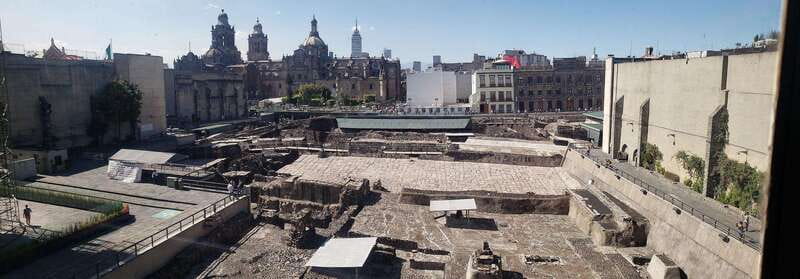
The final historical stop is the Temple Mayor Museum and ruins. The tour presents this as a place to learn about the Aztec remains beneath the modern city, with time for photographs and narration.
This is where the route’s themes come together. You begin with Rivera’s picture of Mexican history, pass through buildings shaped by Spanish and European design, and finish with the remains of the civilization that occupied this ground before the colonial city was built.
The supplied schedule describes this as a 15-minute photo stop, while the broader description emphasizes the Aztec remains and the story beneath your feet. In practical terms, you should expect an introduction rather than a full museum visit. The Temple Mayor site deserves more time if archaeology is a major interest, but it is still a strong ending for a short city walk.
The final meal takes place at a local restaurant, with about 30 minutes for food tasting and a panoramic view suited to photographs. Lunch is included, which helps the overall price. The meal also gives you a chance to sit down after the walking portion and take stock of the route.
How good is the guiding?
The guide can make or break this experience. Miguel has been specifically praised for clear historical storytelling and for making the food and sweets part of an enjoyable day. That is exactly what this route needs: someone who can explain why the buildings matter without turning the walk into a list of dates.
At the same time, you should know that guide quality may not be consistent. A separate recent booking described a late arrival, repeated checking of the next stop, and the guide eating and drinking during the walk. The guest also felt the tour was too demanding for someone with a previous broken foot.
That account is important because the route has many short transitions and scheduled stops. Before booking, confirm that you can walk at the expected pace and ask how the meeting and guide assignment will be handled. A strong guide will turn the route into a coherent story. A weak one may leave you feeling rushed and underinformed.
Price, group size, and practical fit
At $78 per person, the tour is not the cheapest way to see the Historic Center. The fee includes the guide, taxes, entrance tickets, lunch, and food tastings. It does not include private transportation, so you are paying mainly for interpretation, access, and the convenience of a planned route.
For a first visit, that can be fair value. You can cover ten major sights in three hours, learn how the indigenous and Spanish layers overlap, and sample several traditional foods without planning each stop yourself. The price is less attractive if you already know the area, want long visits inside museums, or prefer to set your own pace.
The group can have up to 15 people. That is small enough for a guide to speak to the group, but it is not a private tour. English and Spanish are available, and the activity is listed as wheelchair and stroller accessible, with accessible surfaces and transportation noted as accessible. Still, the walking pace deserves a direct question if mobility is a concern.
You can cancel up to 24 hours before the start for a full refund, and reserve now while paying later. Those policies are useful if your Mexico City plans are still shifting, but they do not change the central issue: this is a walking experience.
Who should book this Historic Center walk?
I would recommend it to a first-time visitor who wants a quick orientation, enjoys history in manageable portions, and likes adding food to a sightseeing route. It is also a good choice if you prefer a guide to explain the links between Rivera, colonial buildings, the cathedral, and Temple Mayor.
It suits visitors who can walk steadily for three hours, with short pauses at the major sights and a seated food stop near the end. Wear comfortable shoes and expect an urban route rather than a vehicle-based tour.
I would be more cautious if you have limited mobility, need frequent rests, or want detailed time inside the Palace of Fine Arts, the cathedral, or Temple Mayor Museum. The schedule is tight, and the experience depends heavily on the guide’s pace and preparation.
Should you book it?
Book this tour if you want a compact introduction to Mexico City’s Historic Center with architecture, murals, Aztec archaeology, bread, sweets, and lunch in one outing. Miguel appears to offer the kind of engaging historical narration that makes the route worthwhile, but guide quality is not guaranteed.
Skip it if you want a slow museum day, private transportation, or a carefully tailored pace. For most able walkers visiting the Historic Center for the first time, the combination of major sights and local food makes the $78 reasonable, provided you treat it as a brisk overview rather than an in-depth tour.
FAQ
How long does the tour last?
The tour lasts three hours.
What language is the tour offered in?
Live guides are available in English and Spanish.
Is lunch included?
Yes. Lunch at a local restaurant is included, along with food tasting.
Does the tour include traditional Mexican food?
Yes. The route includes traditional bread, Mexican sweets, and food at a local restaurant.
Is private transportation included?
No. Private transportation is not included, and the experience is primarily a walking tour.
What are the main sights on the route?
The route includes the Diego Rivera Mural Museum, Alameda Central, the Palace of Fine Arts, the Postal Palace, the House of Tiles, the Gran Hotel of Mexico, the Metropolitan Cathedral, and Temple Mayor ruins.
Is the tour wheelchair accessible?
The activity is listed as wheelchair accessible, with accessible surfaces and wheelchair-accessible transportation. Strollers and service animals are also allowed.
How many people can join the tour?
The maximum group size is 15 people.
Can I cancel for a full refund?
Yes. You can cancel up to 24 hours in advance for a full refund.
Just added around Mexico City
- Xochimilco’s Wild Side: Mezcal, Insects & Culture★ 4.9 · 10 reviews
- Xochimilco: Food and Trajinera Ride with Local Women★ 5.0 · 5 reviews
- Xochimilco: Island of the Dolls Tour Games and Drinks★ 5.0 · 25 reviews
- Xochimilco Ecological Tour – Away From the Crowds (3 Hours)★ 5.0 · 15 reviews
- Xochimilco + Coyoacán Combo Full-Day Tour★ 5.0 · 3 reviews
- Xochimilco floating gardens, Coyoacan and UNAM murals★ 4.0 · 6 reviews
- Val´quirico And The City of Angels Puebla From Mexico City★ 5.0 · 3 reviews
- Xochimilco: amanecer en kayak Ciudad de México★ 5.0 · 35 reviews
Mexico City Historic Center Walking Tours, compared.




Walking Tour – Impressive murals in Historical Center of Mexico City
Read our review →
Muralist Art Semi Private Walking Tour in Mexico City Downtown
Read our review →Browse the lists this tour appears in