
Reviewed · MEXICO CITY HISTORIC CENTER WALKING TOURS
10 wonders of the Historic Center of Mexico City food and music
Mexico City’s Historic Center is a place where an Aztec temple, a French-style palace, a Tiffany ceiling, and a humble bakery can all fit into one afternoon. This three-hour walking tour connects those contrasts with stops at Diego Rivera’s great Alameda mural and the Templo Mayor ruins, then adds bread, sweets, and a quesadilla.
I like the way the tour covers the essential downtown sights without treating food as an afterthought. I also like the small-group format, capped at 15 people, and the personal touch guides such as Rodrigo and Balaam have brought to the walk. The main caution is pace: you may cover about 9,000 steps, and the food comes late, so eat something small before you arrive.
Key points at a glance
- Diego Rivera opens the story: You begin with Dream of a Sunday Afternoon in the Alameda Central, a mural packed with Mexican history and famous figures.
- Ten major sights in one walk: The route links Bellas Artes, the Postal Palace, the Metropolitan Cathedral, Templo Mayor, the Gran Hotel, and more.
- Food is built into the route: You taste La Ideal bread, traditional Mexican sweets, and a quesadilla with fillings such as huitlacoche, pork cracklings, or meat.
- Guides make the difference: Rodrigo, Balaam, Miguel, Balam, Cedrela, and Jesus have led this experience, with praise focused on storytelling, patience, and flexibility.
- Expect real city conditions: Demonstrations, rain, blocked streets, or building access can change the route, though the guide may substitute other sights or food stops.
- Best for first-time visitors: It gives you a strong downtown orientation, but it is not a slow, detailed museum tour of every building.
Why this walk works as a first look at Mexico City
The Historic Center can feel like several cities layered on top of one another. Colonial churches sit over the old Aztec capital. Government buildings and department stores fill streets where markets and ceremonial roads once ran. The tour’s strength is its range. In a few hours, you move from art to architecture, from cathedral to archaeological site, and from grand public spaces to everyday Mexican food.
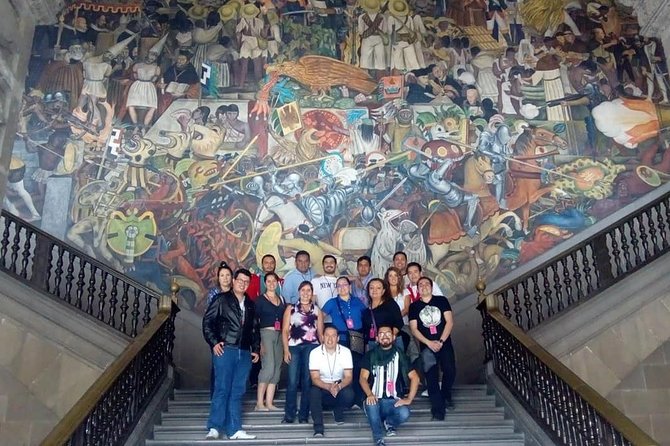
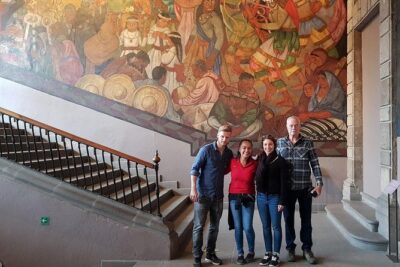
The tour begins at the Diego Rivera Mural Museum on Calle Colón Balderas, near Alameda Central. The featured mural, Dream of a Sunday Afternoon in the Alameda Central, gives your guide a useful visual starting point. Rivera places historic figures, political symbols, and ordinary people together in one long scene. You do not need a fine arts background to enjoy it. The mural works like a visual map of Mexico’s past, and a good guide can help you spot the people and ideas that might otherwise blur together.
From there, the route reaches Alameda Central, described as the oldest park in the Americas. This is not simply a green break in the city. It is a public space tied to Mexico City’s changing identity, and it puts several major buildings within easy reach. You get a quick sense of how compact the central sightseeing zone can be, even though the city beyond it is enormous.
The tour is offered in English and normally runs about three hours. Since the group can include up to 15 people, it is more personal than a large coach outing, but you should still expect a group walk rather than a private guided visit. Guides have been praised for answering questions, making small detours, and helping people who need a slower pace. One guide even spent extra time helping with unrelated travel problems after the scheduled walk.
More walks through the historic centre:
- Historic Downtown Walking Tour
★ 5.0 · 1,289 reviews - Historic Center Food Tour in Mexico City
★ 5.0 · 1,263 reviews - Mexico City: Historic Downtown Walking Tour
★ 4.8 · 1,039 reviews
Bellas Artes, the Postal Palace, and Mexico City’s grand style
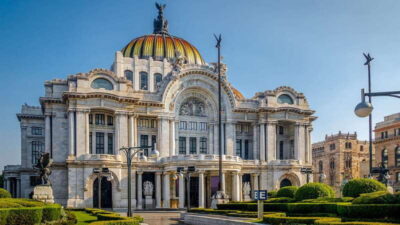
The Palace of Fine Arts is one of the route’s visual high points. Its white exterior and domed roof make it easy to recognize, but the building is more than a photogenic stop. It represents Mexico City’s taste for monumental public architecture and provides a useful bridge between the city’s artistic and political stories.
You may not have time for a full museum visit here. The experience is built around seeing the main sights and hearing their context, not spending an hour inside each one. If you want to study every mural or gallery, plan a separate visit.
The Postal Palace offers a different kind of spectacle. Its ornate interior and carefully finished details show how much attention Mexico City once gave to civic buildings used for ordinary business. This is one of those stops where a guide adds real value. Without explanation, you may simply see an elaborate old post office. With context, you begin to understand why public architecture was designed to make daily services feel important.
The route then continues to the House of Tiles, one of the Historic Center’s most recognizable façades. Its patterned exterior is a quick reminder that Mexico City’s architectural character comes from many periods and influences rather than one single style. The building is especially useful as a photo stop, though time may be limited if the group is keeping to the three-hour schedule.
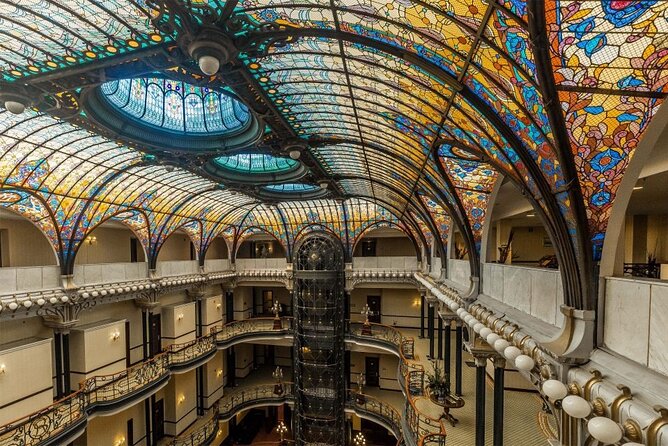
The Gran Hotel Ciudad de México provides another change of mood. Its Tiffany stained-glass ceiling is the detail to watch for. The elegant hotel interior offers a glimpse of the city’s grand commercial past, when central hotels were designed to impress from the moment you stepped inside.
Access can change. During one tour, a demonstration prevented entry to the Gran Hotel, so the guide substituted San Ildefonso College, where murals provided a strong alternative. That is worth keeping in mind if you are booking for one particular interior. You are paying for a guided look at the Historic Center, not a guarantee that every doorway will be open on every day.
The cathedral and the Aztec city beneath your feet
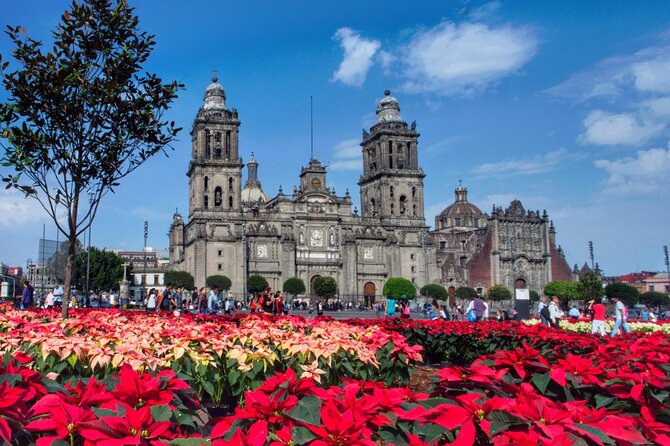
The Metropolitan Cathedral is one of the largest churches in Latin America and one of the most important stops for understanding the center. Its scale is easy to appreciate from the outside, but the surrounding area also tells an important story about how Mexico City was built and rebuilt over time.
The nearby Sagrario Metropolitano adds another architectural layer. Its richly decorated exterior differs from the main cathedral and makes the pair a useful comparison. You get more from this stop if you pause to look at the details instead of rushing toward the next landmark.
The final major stop is the Museo del Templo Mayor and its archaeological remains. Here, the city’s Aztec foundations become physical. Ruins remain beneath and beside the modern center, making the past feel less like a chapter in a book and more like something under your feet.
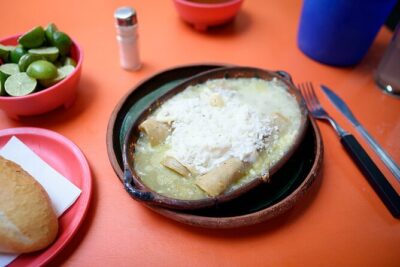
The tour ends with traditional Mexican food and a panoramic view suited to photos. The meal includes a quesadilla made with a corn or blue corn tortilla, filled with melted cheese and a choice such as huitlacoche, crispy pork cracklings, or meat, then finished with red or green salsa. Huitlacoche, sometimes called Mexican corn truffle, is a particularly useful introduction for anyone who wants to try an ingredient outside the usual taco-and-cheese routine.
The order of the stops can vary. The advertised highlights begin with the Diego Rivera mural, while the detailed route lists Sagrario Metropolitano and Templo Mayor among the first stops. City conditions can change the sequence, and the guide may adjust the route to keep the group moving. The important point is that the walk is designed to connect these central sights rather than follow a rigid museum schedule.
Bread, sweets, and the everyday side of Centro Histórico
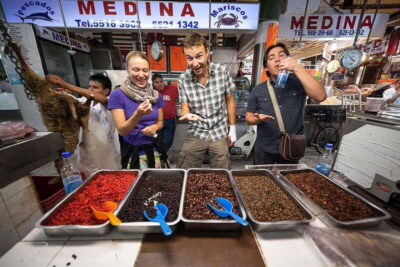
Food gives this tour a welcome change of pace. At La Ideal Bakery, you sample traditional Mexican bread, including soft rolls with crisp tops, conchas, and croissants. La Ideal is a busy, long-running bakery rather than a staged tasting room. That matters. You get a small look at the kind of place people use for ordinary snacks and breakfast, not just a stop chosen for tourists.
The bakery visit is also practical. Several people have found it useful for picking up an extra snack or something to take away. Since lunch comes at the end, the bread helps prevent the classic mistake of trying to appreciate architecture while thinking only about food.
The stop at Dulcería de Celaya introduces Mexico’s sweet side. The shop is associated with traditional Mexican candies and offers a different view of local food culture than a market snack. You may not spend long there, but it breaks up the walking and gives the guide another way to explain regional tastes and customs.
The final quesadilla functions as lunch, though I would keep your expectations sensible. This is not a sit-down restaurant meal with multiple courses. It is a filling local bite included in a sightseeing walk. The menu can shift when street conditions or business hours require it. On one altered route, tacos and quesadillas replaced some planned food stops, and the group still received a satisfying taste of local cooking.
This flexibility is one of the tour’s practical strengths. It also means the exact food experience is not fixed. If a particular sweet, bakery item, or filling is your main reason for booking, ask the guide on the day what is available.
More food tours in Mexico City:
- Polanco Food Tour: The Bestselling Food Adventure in Mexico City
★ 5.0 · 881 reviews - Colonia Roma Food Tour
★ 5.0 · 838 reviews - Mexico City Historical Centre Food Tour with 7 Authentic Tastings
★ 5.0 · 723 reviews - Mexico City Boat Tour Food and Unlimited Drinks Priority Boarding
★ 5.0 · 653 reviews
The guides are the heart of the experience
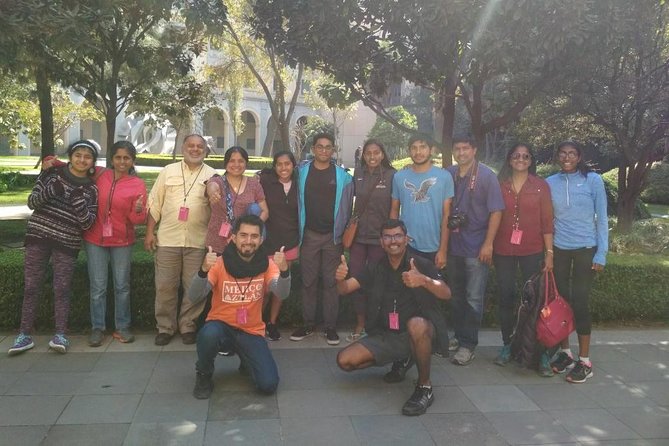
The buildings are impressive, but the guide determines how much you take away. Rodrigo has been especially praised for storytelling, patience, and a broad understanding of the city. He has helped people find the meeting point, answered long strings of questions, and added small extras when time allowed.
Balaam and Balam have also led tours, with strong praise for their easy manner and ability to explain Mexico City’s art, architecture, and culture. Miguel has been noted for adding depth to the cathedral and Rivera mural stops. Cedrela and Jesus have been described as attentive and amusing guides on the route.
The names matter because the experience is not identical with every guide. You can expect an English-speaking guide, but the personality, pacing, and exact explanations will vary. The best guides appear to treat the route as a conversation rather than a speech. They answer questions, point out details, and may make a small detour if it fits the group.
That personal approach is useful for first-time visitors. You can ask where to eat later, which areas to visit, or how to reach another sight. Several guides have offered recommendations beyond the formal route. Just remember that a helpful guide cannot control protests, rain, closed buildings, or sudden street restrictions.
How much walking, time, and city friction to expect
Three hours sounds short for ten wonders, and the tour does move at a purposeful pace. One account estimated roughly 9,000 steps. Wear comfortable shoes, and do not treat this as a gentle café crawl.
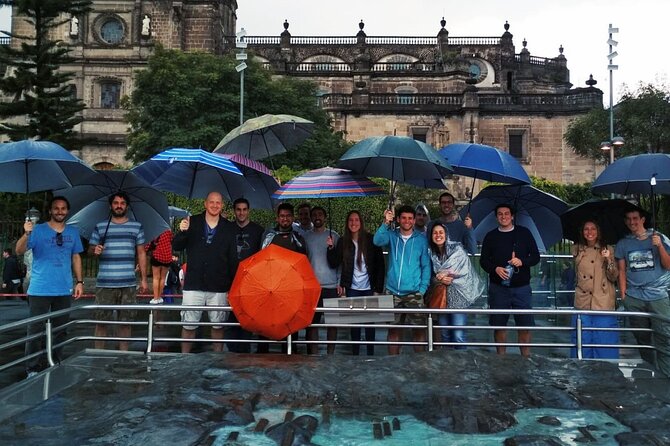
The walk takes place in the center of Mexico City, where streets can be crowded and conditions can shift. A demonstration once blocked parts of the route, but the guide rerouted the group and substituted another historic site. Rain has also affected a tour without stopping it. These are not failures of the experience so much as facts of visiting a working city.
Most people can participate, and service animals are allowed. The activity is near public transportation, but private transportation is not included. You meet at the Diego Rivera Mural Museum and the activity is scheduled to finish back at the meeting point, although one account reported ending elsewhere and needing to return independently. I would confirm the final meeting arrangements with the guide if your next booking depends on a precise finish time.
The tour can also run longer than three hours. If you have a flight, museum reservation, or timed dinner afterward, leave extra space. This is particularly important if the group stops to answer questions, deals with a blocked street, or adds an optional sight.
Is $49 a fair price?
At $49 per person, the value comes from the number of sights covered, the guide, entry tickets, and the included food. You are not just paying for a walk past famous façades. The fee includes all taxes and fees, entrance tickets, the La Ideal bread tasting, and the quesadilla lunch. Traditional sweets are also part of the advertised food route.
For a first visit, that is a reasonable package. You would need to organize the route yourself, find the mural museum, understand the historical links between the cathedral and Templo Mayor, locate the bakery and candy shop, and manage your own food stops. The guide also gives you an English explanation as you go.
The value is weaker if you prefer a slow architectural tour or want substantial time inside museums. Ten stops in three hours means some sights receive a short explanation and a look from outside. You may want to return later to Bellas Artes, the Diego Rivera museum, Templo Mayor, or the cathedral on your own.
Group discounts may be available, which can improve the price for families or friends. The tour has a 4.8 rating from 67 reviews, with 94 percent recommending it, but the one-star experience points to an important policy issue. Cancellations made less than 24 hours before the start time are not refunded, including last-minute changes. If illness or a schedule problem is possible, read that rule carefully before booking.
Who will get the most from this tour?
I would choose this walk for a first or second day in Mexico City. It gives you a mental map of the Historic Center and helps you decide where to return for a longer visit. It also suits solo visitors, couples, and families who want a guide but do not want a large group.
Food-curious visitors will appreciate the mix of bakery bread, sweets, and savory fillings. The route is also a good fit if architecture and local history interest you equally. You get grand interiors, public art, religious buildings, and archaeological remains in one compact outing.
I would be more cautious if you have limited walking ability or strongly dislike schedule changes. A guide may help someone with a bad knee, but the route still involves substantial walking. The tour is not the best choice for a person who wants a seated meal, a private vehicle, or a single museum explored in detail.
Should you book the Historic Center food and music tour?
Book it if you want a friendly, high-energy introduction to central Mexico City, especially early in your trip. The strongest reasons are the excellent range of sights, the food stops that feel connected to everyday city life, and guides such as Rodrigo and Balaam who have a record of making the history easy to follow.
Skip it if your priority is a slow museum visit, a guaranteed entrance to every listed building, or a fixed three-hour finish. Arrive after a light snack, wear good shoes, allow extra time, and treat the route as a flexible walking introduction. For most first-time visitors, $49 buys a useful orientation, several memorable views, and enough food to send you back into the city with a better idea of where to explore next.
FAQ
How long does the tour last?
The tour lasts approximately three hours, though it can run longer depending on the pace, questions, weather, or changes to the route.
Where does the tour begin?
The meeting point is the Diego Rivera Mural Museum at Calle Colón Balderas s/n, Colonia Centro, Cuauhtémoc, Mexico City.
Where does the tour end?
The activity is scheduled to end back at the meeting point. One experience ended at a different location, so confirm the final arrangements if you have a strict schedule afterward.
What food is included?
The included food consists of bread from La Ideal and lunch featuring a quesadilla made with a corn or blue corn tortilla. Fillings can include cheese, huitlacoche, crispy pork cracklings, or meat, with red or green salsa.
Is transportation included?
No. Private transportation is not included. The tour takes place on foot and is near public transportation.
What happens if I cancel?
You can receive a full refund if you cancel at least 24 hours before the local start time. Cancellations or changes made less than 24 hours before the tour are not accepted for a refund.
More Historical Tours in Mexico City
- Walking Tour of the Historic Center of Mexico City
★ 5.0 · 870 reviews - Walking Tour in Mexico City for Exploring their Cultural Heritage
★ 5.0 · 245 reviews - Walking Tour – Impressive murals in Historical Center of Mexico City
★ 5.0 · 224 reviews - Mexico City: Guided walking tour through the most historic parts of the city.
★ 4.5 · 172 reviews
Just added around Mexico City
- Xochimilco’s Wild Side: Mezcal, Insects & Culture★ 4.9 · 10 reviews
- Xochimilco: Food and Trajinera Ride with Local Women★ 5.0 · 5 reviews
- Xochimilco: Island of the Dolls Tour Games and Drinks★ 5.0 · 25 reviews
- Xochimilco Ecological Tour – Away From the Crowds (3 Hours)★ 5.0 · 15 reviews
- Xochimilco + Coyoacán Combo Full-Day Tour★ 5.0 · 3 reviews
- Xochimilco floating gardens, Coyoacan and UNAM murals★ 4.0 · 6 reviews
- Xochimilco: amanecer en kayak Ciudad de México★ 5.0 · 35 reviews
- Xochimilco: Eco Tour With Food★ 4.8 · 7 reviews
Mexico City Historic Center Walking Tours, compared.



Walking Tour – Impressive murals in Historical Center of Mexico City
Read our review →
Muralist Art Semi Private Walking Tour in Mexico City Downtown
Read our review →Browse the lists this tour appears in