
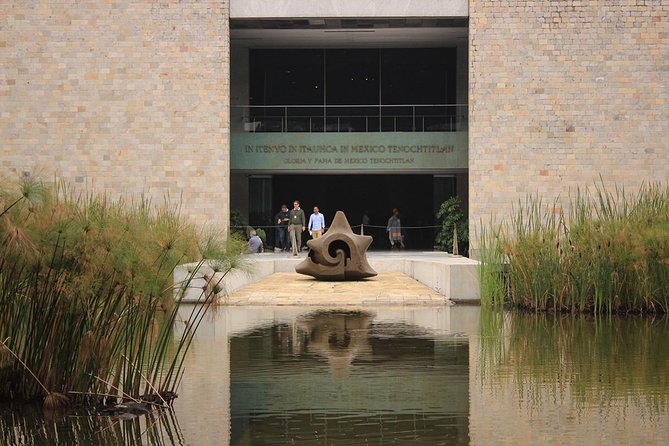
Reviewed · NATIONAL MUSEUM OF ANTHROPOLOGY TOURS
Anthropology Museum Guided Tour
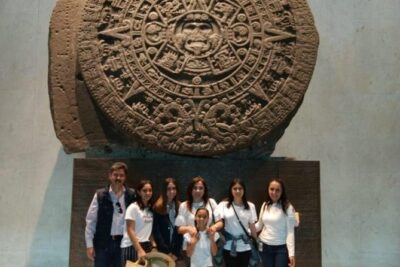
The National Museum of Anthropology holds enough material for several visits, yet this tour gives you a useful route through its biggest ideas in about two and a half hours. You’ll see the Aztec Sun Stone, colossal Olmec heads, Maya treasures, reconstructions of ancient tombs, and a model of Tenochtitlan.
I like two things here: admission is included, and a guide can supply the historical links that the museum’s Spanish-heavy signs often do not. Guides such as Alan, Ligia, Leonardo, Antonio, and Lili have been praised for clear, lively explanations. The tradeoff is that some departures have been crowded or poorly organized, and a few people found their guide’s English hard to follow.
Key points to know before booking
- The Aztec Sun Stone anchors the visit: You’ll see one of Mexico’s most recognizable ancient objects, along with the wider story needed to understand it.
- The museum is enormous: A guide helps you choose major galleries instead of wandering without a plan.
- Admission is included: The $39 price covers the museum entrance and guided visit.
- Guide quality matters: Alan, Ligia, Leonardo, Antonio, Lili, and Alexa received especially warm praise for clear explanations and patience.
- Arrive early and exactly on time: Late arrivals may miss the group, and some people found the meeting process confusing.
- Expect a group, not guaranteed solitude: The stated maximum is 25 people, though some departures have felt larger or crowded.
Why this museum needs a guide
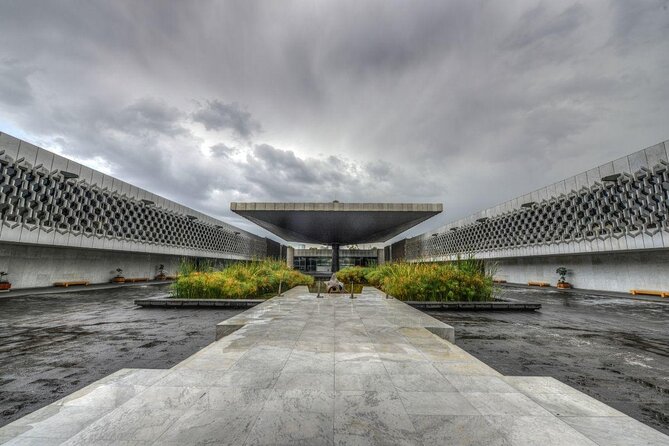
Mexico City’s National Museum of Anthropology is not a quick room-and-exit attraction. Its permanent ground-floor galleries cover the major pre-Columbian cultures found across present-day Mexico, along with areas that were once part of Mexico but now lie in the southwestern United States.
That reach is both the museum’s strength and its problem. You can look at a carved monument, a burial object, or a model of an ancient city and admire the workmanship without knowing what you’re seeing. A good guide supplies the missing structure: who made it, when, where, why it mattered, and how it connects with Mexico today.
I find that especially useful here because not every display offers full English explanation. Several people have found the museum much harder to understand alone, even when they had already read about Mexican history. A guide can turn separate rooms into a timeline and explain why Teotihuacan, the Maya world, the Toltecs, and the Mexica, often called the Aztecs, should not be treated as one culture.
The best guides use the objects as teaching tools rather than rushing past them. Alan has been praised for starting with geography and a broad view before moving into specific cultures. Alexa used photographs and drawings to explain how buildings were constructed. Gibran, also identified as Alex, brought visual material to help explain the region’s ancient societies.
That is the kind of help you are paying for. The museum admission alone gets you through the door. The guide is supposed to give the collection a readable shape.
More Anthropology Museum tours:
- Chapultepec Castle & Anthropology Museum Tour
★ 4.5 · 1,348 reviews - Mexico City: Anthropology Museum Guided Visit
★ 4.4 · 708 reviews - Mexico City: Chapultepec Castle and Anthropology Museum Tour
★ 4.5 · 637 reviews
The Aztec Sun Stone and Mexico’s ancient capital
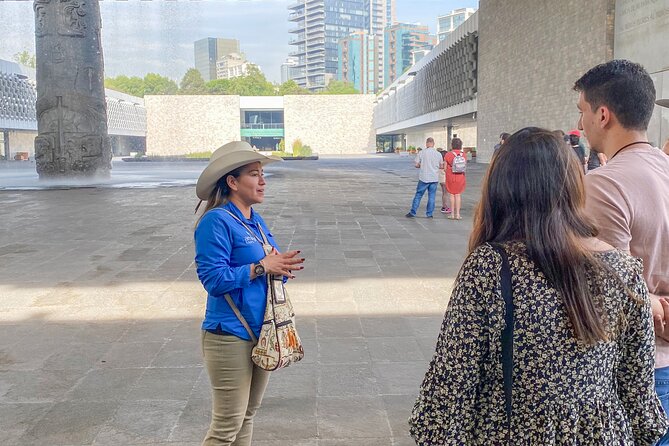
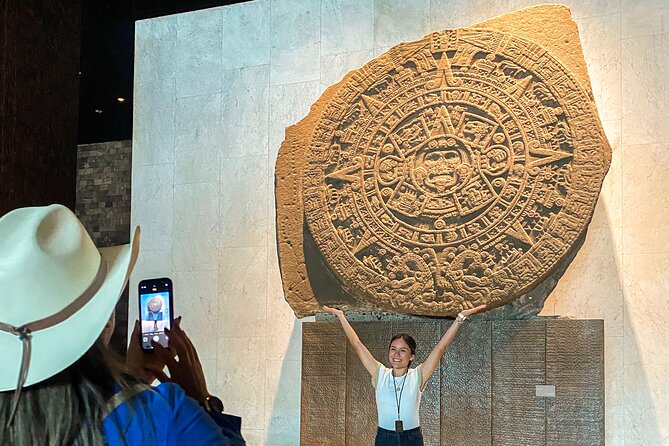
The Aztec Sun Stone is the obvious headline object, but it works best when you do not treat it as an isolated famous rock. The guide can explain its symbols, its place in Mexica thought, and the way later generations have used it as a shorthand for ancient Mexico.
The museum also has a model showing the location and layout of Tenochtitlan, the former Mexica capital. Modern Mexico City grew over and around that old city, so the model provides a powerful bit of orientation. It helps you picture canals, causeways, temples, and urban scale in a place that can otherwise seem like an ordinary modern capital.
This is one of the tour’s most useful moments because geography keeps returning throughout the museum. The cultures represented here did not all live in the same place or at the same time. If your guide points out those differences clearly, the exhibits become far easier to follow.
The quality of the explanation can vary. One person described a guide who jumped between Teotihuacan and Tenochtitlan without using the available maps to clarify the difference. That kind of presentation can leave you with more names than understanding. Listen for a clear timeline and ask questions if the story starts to blur.
Olmec heads and the cultures before the Mexica
The giant Olmec heads are among the museum’s most memorable objects. Found in the jungles of Tabasco and Veracruz, these massive stone faces make an immediate impression, but their real value comes from learning where they fit in the early history of Mesoamerica.
A strong guide will help you avoid the common mistake of viewing every ancient Mexican civilization through the later Aztec period. The Olmec world belongs to an earlier chapter, with its own artistic traditions and centers of power. You may also see how later cultures are linked by broad regional patterns without assuming they were all part of one continuous empire.
This is where an English guide can save time and confusion. The museum’s scale encourages you to stop for photographs, admire a large sculpture, then move on. A guide slows the important moments down and gives you a reason to look closely.
At its best, the tour does not try to explain every object. Two and a half hours is enough for a strong overview, not a complete reading of the museum. That limit is sensible. You leave with a framework, then return to the rooms that interested you most.
Maya treasures, tombs, and the Sacred Cenote
The Maya galleries offer a different rhythm from the large stone monuments. Here you encounter objects tied to rulers, burial customs, writing, ceremony, and long-distance cultural connections.
The collection includes treasures recovered from the Sacred Cenote at Chichen Itza. That detail gives the guide a chance to explain how a natural feature could become a ceremonial place and why objects found there matter beyond their material value.
Reconstructions of Maya tombs also help make the archaeological record more understandable. A display case can separate you from the original setting. A tomb reconstruction brings the arrangement of people, objects, and architecture back into view, at least in model form.
This section rewards questions. You might ask how archaeologists know an object’s date, what a symbol means, or how a reconstruction was made. Some guides, including Genovanna, have been praised for giving the group time to look around and then answering questions. Others have talked almost nonstop, leaving little room for conversation.
If you want a quiet, self-directed look at every Maya gallery, this tour may feel restrictive. If you want help sorting out the sequence of Maya sites and traditions, the guide can be a major advantage.
More museums in Mexico City:
- CDMX: Xochimilco, Coyoacan, Frida Kahlo Museum & Murals Tour
★ 4.4 · 3,025 reviews - Frida Kahlo VIP [Museum Tickets Included] Bike, Markets & Churros
★ 5.0 · 1,072 reviews - Frida Kahlo VIP [Museum Tickets Included] Walk, Markets & Churros
★ 5.0 · 982 reviews - EXCLUSIVE TOUR Frida Kahlo Museum – SMALL GROUPS
★ 5.0 · 901 reviews
The museum’s big picture, from geography to Spanish conquest
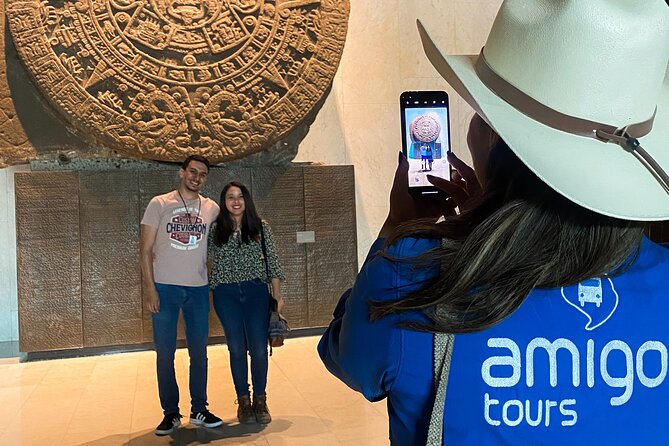
The tour is designed to move through Mexico’s ancient cultures and toward the Spanish conquest. That broad arc is valuable because it connects archaeology with the country you are visiting now.
Several strong guides have built the visit from the general to the specific. Alan, for example, has been praised for beginning with geography before discussing individual cultures. That order makes sense. First you learn where major regions were located, then you can understand why their art, architecture, and political systems differed.
The museum also includes displays that help explain how Mexico City took shape around the old Aztec capital. This gives the archaeological galleries a direct connection to your walk through the modern city.
Still, do not expect a university lecture. The museum contains far more information than any guide can cover in one morning. The quality of the experience depends on whether your guide can select the right objects and keep the chronology straight.
A few people found the narration scattered, with references to topics that had not yet been explained. Another person felt the guide spent too much time managing the group and too little time explaining the collection. Those are real concerns for a museum this large. If your guide is clear and well prepared, the tour feels efficient. If not, you may spend the afternoon retracing the route on your own.
What the two-and-a-half-hour schedule feels like
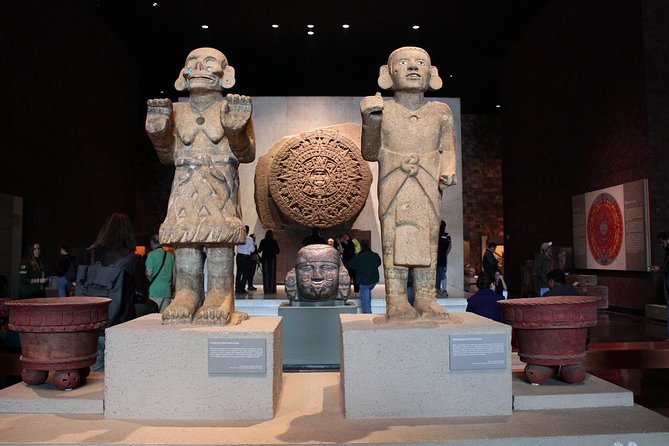
The advertised duration is about 2 hours and 30 minutes, all at the museum. There is no meal, transport, or separate attraction included, and the activity ends back at the meeting point.
A morning departure is a smart choice. It leaves your afternoon free for Chapultepec, nearby museums, or other parts of Mexico City. It also gives you time to return to favorite galleries after the guided portion.
The schedule can vary in practice. Some guides finish near the planned time, while others have continued longer when the group had questions. That generosity is welcome if you have no fixed plans afterward. If you have a timed lunch, castle visit, or evening booking, keep some extra space.
The meeting point is at the museum on Avenida Paseo de la Reforma in Chapultepec, in the Polanco area. Public transport is nearby. Do not arrive late and expect the group to wait. One person arrived 10 minutes after the meeting time, contacted the operator through the app, and still found the group gone. The operator’s response made clear that a departed group cannot be rejoined.
That policy may feel strict, but it matters in Mexico City traffic. Give yourself plenty of time. The more troubling issue is that several people found the meeting arrangements unclear, with no obvious sign showing where to gather. Look for the guide or tour staff before joining the museum entry line, and allow time for ticket checks.
Group size, audio equipment, and English clarity
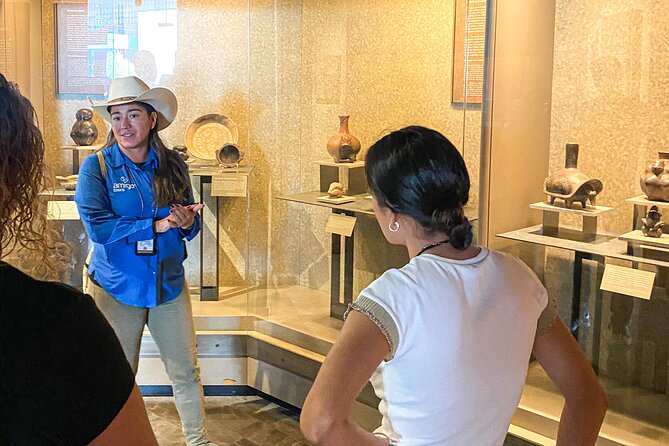
The stated maximum is 25 people. That is not a private tour, and it is not the same as having a personal museum specialist beside you. A group of 10 can feel quite manageable. A group near the maximum may make it harder to hear, see small objects, or ask questions.
Some poor experiences came from groups that felt larger than expected. One person described more than 20 people and a slow start while tickets and headphones were handled. Another person reported poor audio equipment and said the guide’s English was difficult to understand.
This is the biggest risk in booking. The museum deserves a clear, organized introduction, but your experience depends heavily on the guide assigned that day. Many people have praised guides including Alan, Ligia, Leonardo, Antonio, Lili, Alexa, Hector, and Genovanna. They describe these guides as warm, patient, clear, and able to bring the objects to life.
The praise is not universal. Some people found the English difficult to follow, even when the guide clearly knew the subject. One person felt the guide spoke continuously without checking whether the group understood. If you are sensitive to accents or need a slower pace, this uncertainty deserves serious thought.
Headsets may be used, but the equipment has not worked well for everyone. Stay close enough to see the guide’s gestures and visual aids. If you cannot hear, say so early rather than waiting an hour.
Is $39 a fair price?
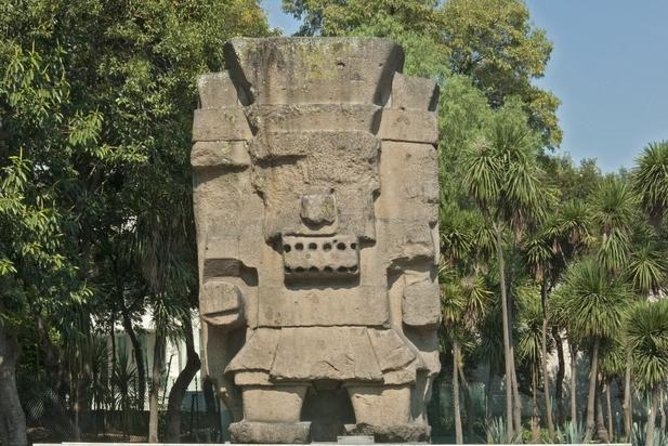
At $39 per person, the price includes both museum admission and the professional guide. That is reasonable if you want a structured introduction and do not speak Spanish well enough to rely on the museum’s signs.
The value is highest for a first visit. You are paying to save time, identify the major objects, and understand how the cultures relate to one another. A strong guide can give you in two and a half hours what you might struggle to assemble alone over much longer.
The value drops if the group is disorganized or the guide is hard to understand. Several people felt they received only part of the promised benefit because time went to crowd control, ticket handling, or unfocused narration. One person preferred the official plaques after leaving the tour.
There is no food or drink included, and the museum does not allow food, drinks, or backpacks inside. Only a handbag is allowed. Plan accordingly, especially if you are combining this with a full day in Chapultepec.
The tour is free to cancel up to 24 hours before the start time. Cancellations made later are not refunded, and changes inside that window are not accepted. That makes it wise to check your schedule and local traffic before booking.
Who should book this museum visit?
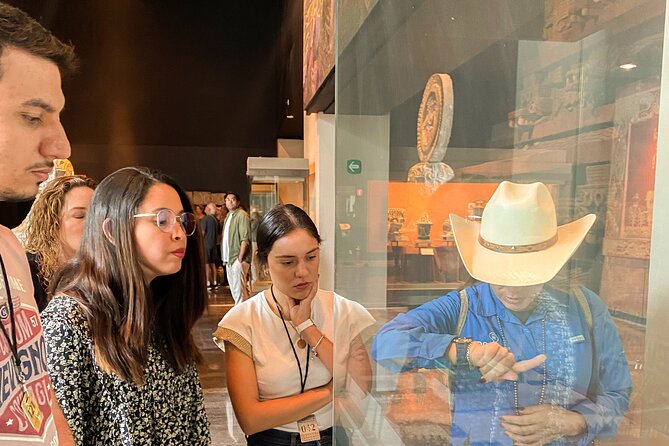
I would choose this tour if you are visiting the museum for the first time, want a broad historical frame, or find Spanish-only museum text limiting. It also suits families who want someone to explain the objects in a lively way rather than simply point at labels.
It is a good fit for people who enjoy archaeology but do not want to plan a route through dozens of galleries. The tour can also help you decide which rooms deserve a second, slower look.
I would be more cautious if you want a small private experience, need guaranteed fluent English, or dislike fixed group pacing. The advertised maximum of 25 is not tiny, and guide quality is uneven.
If you book, choose the earliest available departure, arrive well ahead of time, and confirm exactly where the guide will meet you. Once inside, stay alert for the main themes: geography, chronology, city building, religion, burial practice, and the relationship between ancient cultures and modern Mexico.
Should you book the Anthropology Museum Guided Tour?
Yes, with a clear understanding of the gamble. The museum itself is essential, and a good guide can make its enormous collection far easier to grasp. The strongest guides, including Alan, Ligia, Leonardo, Antonio, Lili, and Alexa, have given visitors a structured and memorable introduction.
I would book it for the included admission, the English context, and the chance to see the Sun Stone, Olmec heads, Maya material, and Tenochtitlan model with a sensible route. I would not book it expecting a guaranteed private tour or perfect organization.
Arrive early, protect your schedule, and treat the guided visit as an overview. If your guide is excellent, you may want to stay longer and revisit the galleries alone. If the group feels crowded or the explanation is unclear, the museum still gives you plenty to explore, but the $39 value becomes harder to defend.
FAQ
How long does the Anthropology Museum guided tour last?
The tour lasts approximately 2 hours and 30 minutes. Some guides may continue longer if the group has questions, so avoid booking another timed activity too closely afterward.
What is included in the $39 price?
The price includes entrance to Mexico City’s National Museum of Anthropology and a professional English-speaking guide.
Where does the tour start and end?
It starts at the National Museum of Anthropology on Avenida Paseo de la Reforma in Chapultepec. The activity ends back at the meeting point.
Is the tour offered in English?
Yes. The tour is offered in English, though your experience may depend on the assigned guide’s clarity and the quality of the audio equipment.
How large is the group?
The stated maximum is 25 people. Some departures may be smaller, but this should not be treated as a guaranteed private tour.
Can I bring a backpack, food, or drinks?
No. Food, drinks, and backpacks are not allowed inside. Only a handbag is permitted.
What happens if I arrive late?
The group may leave without you, and it may not be possible to rejoin once it has departed. Arrive early because Mexico City traffic and the museum meeting process can cause delays.
Just added around Mexico City
- Xochimilco’s Wild Side: Mezcal, Insects & Culture★ 4.9 · 10 reviews
- Xochimilco: Food and Trajinera Ride with Local Women★ 5.0 · 5 reviews
- Xochimilco: Island of the Dolls Tour Games and Drinks★ 5.0 · 25 reviews
- Xochimilco Ecological Tour – Away From the Crowds (3 Hours)★ 5.0 · 15 reviews
- Xochimilco + Coyoacán Combo Full-Day Tour★ 5.0 · 3 reviews
- Xochimilco floating gardens, Coyoacan and UNAM murals★ 4.0 · 6 reviews
- Val´quirico And The City of Angels Puebla From Mexico City★ 5.0 · 3 reviews
- Xochimilco: amanecer en kayak Ciudad de México★ 5.0 · 35 reviews
National Museum of Anthropology Tours, compared.

Chapultepec Castle & Anthropology Museum Tour
Read our review →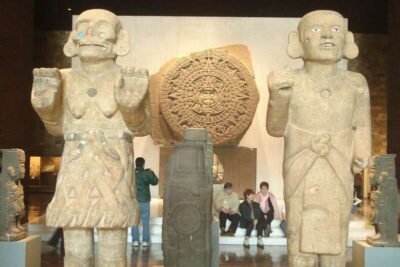
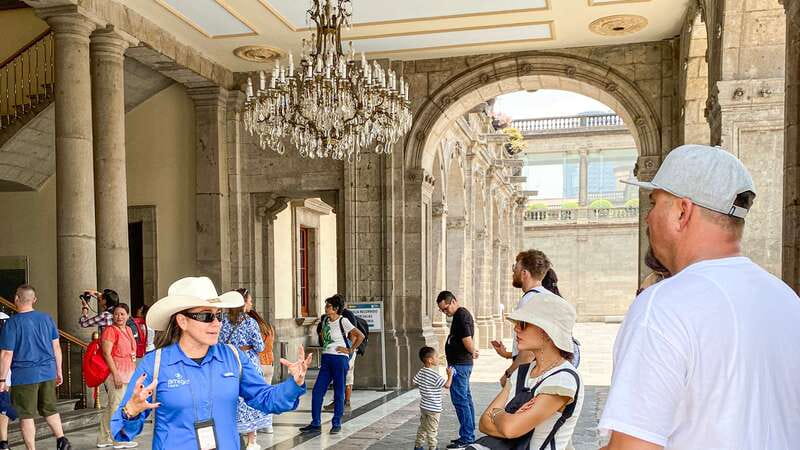
Chapultepec Castle and Anthropology Museum Tour
Read our review →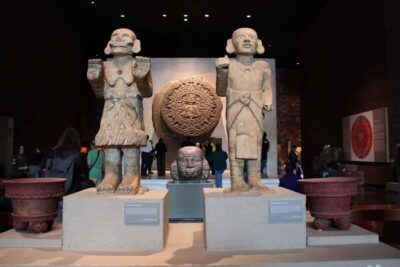
Anthropology Museum Private Experience Walking Tour
Read our review →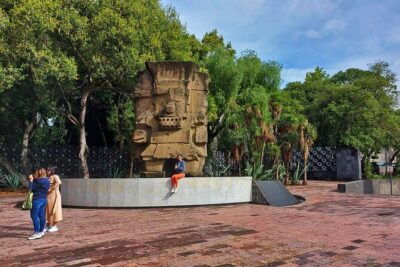
5 Hour Tour through Chapultepec, Anthropology Museum and Castle
Read our review →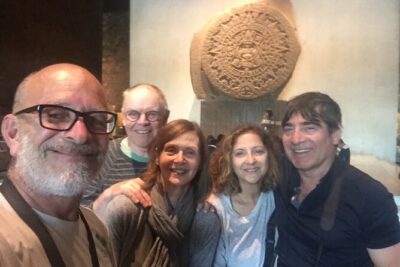
PRIVATE Tour in Chapultepec Castle and Museum of Anthropology
Read our review →
Teotihuacan & Anthropology Museum, Templo Mayor & City Tour
Read our review →Browse the lists this tour appears in