
Reviewed · FRIDA KAHLO MUSEUM TOURS
La Catrina & Muralism: Diego Rivera’s Legacy & Frida Kahlo
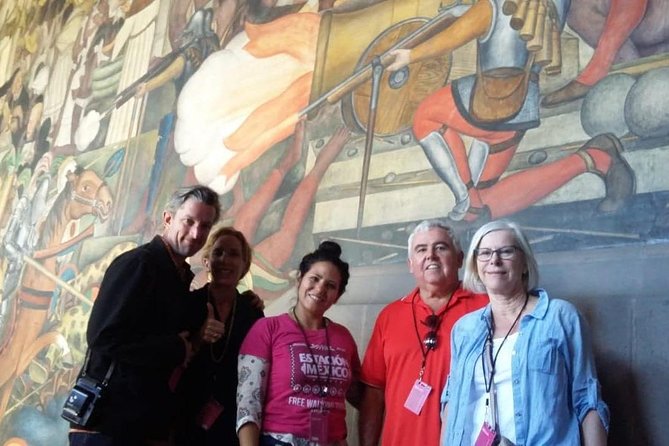
The most memorable part of this tour is the way it links Diego Rivera’s murals to Mexico’s national identity. You move from the former College of San Ildefonso, tied to the early mural movement, to Rivera’s famous La Catrina and the grand murals at the Palace of Fine Arts.
I like two things here. First, the route gives you more than a single museum visit, so you can see how muralism developed across several important sites. Second, the local guides explain symbols, social criticism, and Rivera’s relationship with Frida Kahlo rather than simply pointing at the paintings. The drawback is that three hours includes several stops and a public transport transfer, so the pace may feel brisk.
Key points
- San Ildefonso sets the story: Begin at the former college, a key place for understanding Mexico’s mural movement.
- La Catrina gets proper context: Learn how Rivera’s famous skeleton image connects with Day of the Dead traditions and modern Mexican culture.
- Frida and Diego appear as artists and people: The tour explores where their relationship began and how it shaped Rivera’s work.
- Several mural sites fit into one route: Visit Museo Vivo del Muralismo, the Diego Rivera Mural Museum, and Bellas Artes.
- Guides bring different strengths: Sam, Jesús, Luís, and Aldo have been praised for clear explanations, patience, and enthusiasm.
- Plan for walking: Wear comfortable shoes, bring sunscreen, and leave large bags and luggage behind.
Why Rivera’s murals matter beyond the paintings
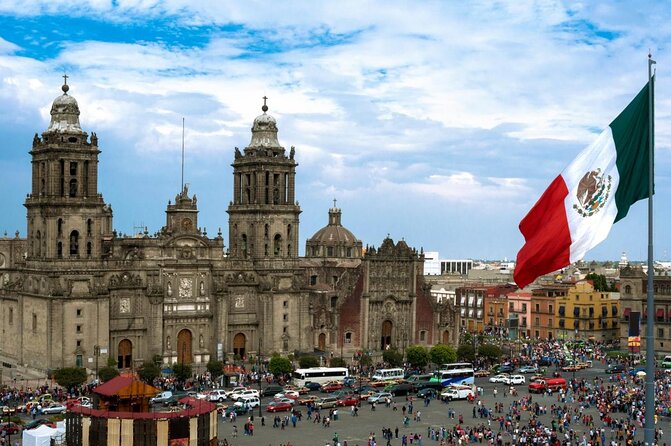
Diego Rivera’s murals are not simply large pictures placed on walls. They were made to speak to the public, often showing workers, Indigenous people, political leaders, historical events, and daily life. A visit like this helps you read the walls as public arguments as well as works of art.
That matters because muralism played a major role in shaping how Mexico presented its own story. The movement brought art out of private galleries and into public buildings. You do not need a background in art to follow the tour, but it helps to know that these murals were designed to be seen by ordinary people, not only by collectors or museum specialists.
Your guide explains the historical setting, artistic choices, and symbols beneath the surface. Bernard, who joined a tour led by Sam, singled out the explanations of symbolism and meaning. That is a useful clue about the tour’s focus: you are not just counting famous names or taking quick photographs.
More Frida Kahlo Museum visits:
- Xochimilco, Coyoacan and Frida Kahlo with Optional Lunch
★ 4.5 · 7,320 reviews - CDMX: Xochimilco, Coyoacan, Frida Kahlo Museum & Murals Tour
★ 4.4 · 3,025 reviews - Frida Kahlo VIP [Museum Tickets Included] Bike, Markets & Churros
★ 5.0 · 1,072 reviews
Starting at San Ildefonso, the birthplace of muralism
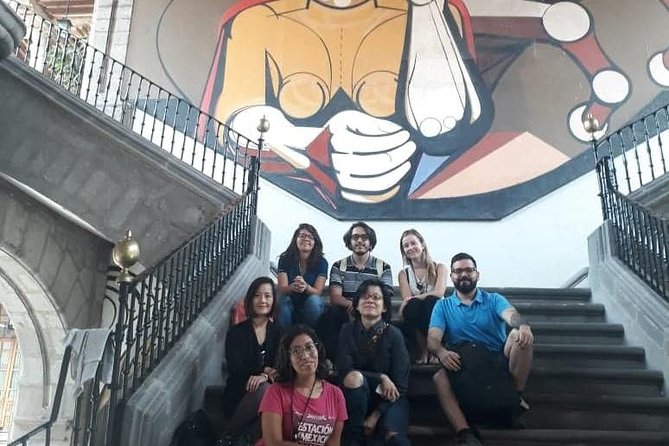
Meet your guide in front of the entrance to the former College of San Ildefonso. Look for the pink shirts and umbrellas. This simple marker should make the meeting point easier to spot in the busy center of Mexico City.
San Ildefonso is the right place to begin because the building gives the mural story a clear starting point. Here, your guide introduces Rivera’s career and artistic vision, then explains how muralism affected Mexico’s cultural identity. The setting helps you see that the movement grew from a particular social and political moment, rather than appearing as a collection of isolated masterpieces.
Expect a guided visit rather than free time to wander at your own speed. The advantage is focus. You can ask why a figure appears in a mural, what a particular gesture means, or how Rivera used composition to guide the eye.
The tradeoff is time. Three hours is enough to build a strong outline of the subject, but not enough to examine every wall at length. If you like to study brushwork or read every label, you may want to return on your own after the tour.
Museo Vivo del Muralismo and the early movement
The next stop is Museo Vivo del Muralismo. This part of the route broadens the story beyond one artist. You learn about the early mural movement, its methods, and the relationship between art, memory, and public life.
The phrase living muralism points to an important idea: these works are not locked away from society. They carry historical memories and continue to shape how people understand Mexico. Your guide connects the paintings to their time, helping you notice social criticism, traditional references, and the choices artists made when working on a large scale.
This is also where a guide’s skill matters most. A good explanation can turn a crowded wall into a readable scene. Jesús, praised for being patient, enthusiastic, and clear, guided one family with children aged 10 and 12. That suggests the tour can work for families when the guide adjusts the explanation and keeps young listeners involved.
Still, the subject is serious at times. The murals deal with politics, class, conflict, and national identity. Younger children may enjoy the stories and striking figures, but parents should expect a cultural history lesson rather than a light sightseeing stop.
The Diego Rivera Mural Museum and La Catrina
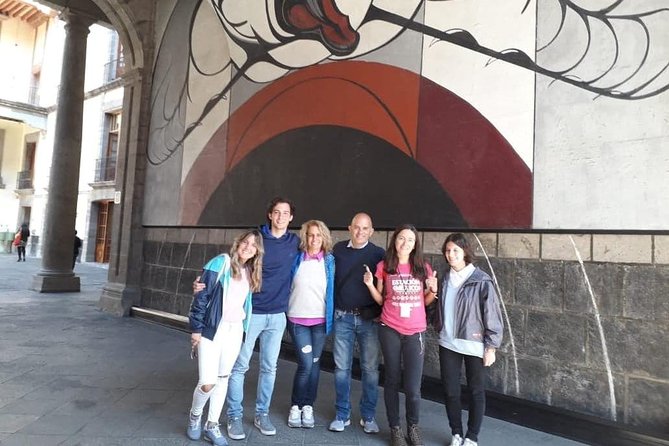
After the first museum visits, the route includes about 20 minutes on public transport before reaching the Diego Rivera Mural Museum. This transfer is short, but it is worth planning for. Comfortable shoes matter, and sunscreen is sensible because the tour involves walking between stops.
The museum is the place to focus on Rivera’s treatment of Mexican life and memory. The central draw is the iconic depiction of La Catrina, the elegant skeleton now linked around the world with Day of the Dead. You learn how the image fits into Mexican tradition and how Rivera helped give it an enduring public identity.
La Catrina is more than a decorative skull. Her presence invites questions about class, death, vanity, and the way Mexican culture remembers the dead. The tour gives you the background needed to see why the image has traveled so far beyond the original work. You may recognize her from films, celebrations, and Mexico City’s famous Day of the Dead parade, but this visit helps connect the popular image with its artistic and cultural roots.
This stop is likely to appeal most to visitors who already know La Catrina from photographs but want to understand what she means. It also gives families a visual hook. The image is immediately recognizable, while the explanation adds depth without requiring technical art training.
The museum visit may feel compact if you want a long, quiet look at every detail. That is the cost of fitting several important sites into one morning or afternoon. Think of this tour as a guided introduction, not a replacement for a full day devoted to Rivera.
More Diego Rivera mural tours:
- Mexico City; ART NACO : Murals & Street Art Bike Tour
★ 5.0 · 284 reviews - EXCLUSIVE TOUR Casa Estudio Frida Kahlo-Diego Rivera Small Groups
★ 5.0 · 237 reviews - Walking Tour – Impressive murals in Historical Center of Mexico City
★ 5.0 · 224 reviews - La Catrina & Muralism: Diego Rivera’s Legacy & Frida Kahlo
★ 4.5 · 197 reviews
Rivera and Frida, romance inside the art story
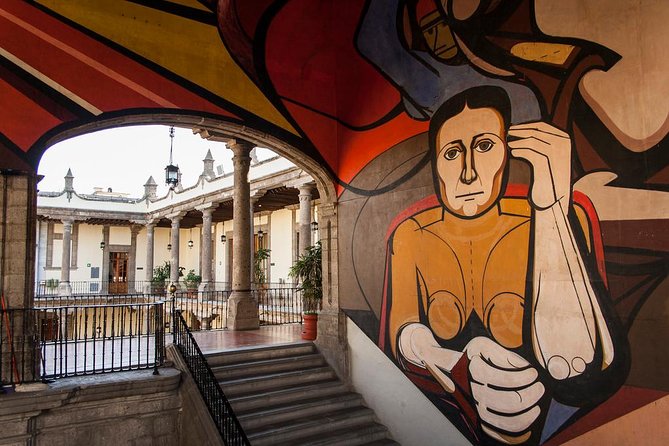
The relationship between Diego Rivera and Frida Kahlo is one reason many people book this experience. Their romance began in the artistic world connected with these sites, and the tour explores where their relationship started.
Their partnership was passionate and turbulent. That personal history helps explain why Rivera’s work can feel so tied to memory, politics, identity, and the people around him. The guide does not treat Frida as a footnote to Rivera. Instead, her presence provides a way to understand the artistic circle and emotional pressures surrounding his career.
One review describes a guide named Aldo showing the amphitheater where Rivera met Frida, along with historic sites and Rivera’s paintings. The exact route and guide may vary, but you can expect the Rivera and Kahlo connection to be part of the larger story.
I like this approach because it avoids splitting Mexican art into separate boxes. Rivera and Kahlo are often sold as celebrity figures, yet their work also belongs to a wider conversation about Mexican society and cultural memory. The tour keeps that wider setting in view.
If you are mainly interested in Frida Kahlo’s own paintings, note the limits. This experience centers on Rivera and muralism. Frida is an important part of the story, but the tour is not presented as a dedicated Frida museum visit.
Palace of Fine Arts and the final mural lesson
The tour finishes at the Palace of Fine Arts, or Palacio de Bellas Artes. This is an effective final stop because the building brings together performance, architecture, and some of the country’s best-known murals.
Here, your guide continues the discussion of technique and meaning. Look for explanations of how Rivera arranged people and events across a large surface, how the eye moves through a composition, and how images can carry both beauty and criticism.
Ending at Bellas Artes also gives the tour a strong sense of scale. You have moved from the early story of muralism to a major cultural institution. The final stop helps show that muralism was not a brief art trend. It became part of Mexico’s public identity.
The tour ends at the Palace of Fine Arts, so you are left in a central cultural area rather than returned to the first meeting point. That is useful if you want to continue sightseeing afterward. The supplied details do not promise extra free time inside the palace, so ask your guide what is included in the visit and what you may explore independently once the tour ends.
How much walking and transport to expect
The experience lasts three hours and includes guided visits at several locations. You should expect regular walking, time on your feet, and one public transport journey of about 20 minutes.
Wear comfortable shoes. Sunscreen is also listed as a useful item, which suggests that some time may be spent outdoors between sites. Bring only what you need, since luggage, large bags, bags, baby carriages, food, and flash photography are not allowed according to the activity rules.
The tour is wheelchair accessible, but the route still includes multiple locations and public transport. If you use a wheelchair, it is sensible to confirm the practical details of the transfer and each stop before booking. The guide speaks Spanish or English, so choose the language that lets you ask questions comfortably.
There is no meal or drink included. Three hours is short enough that you can eat before or after, but do not count on a food break during the walk.
What $58 gets you
At $58 per person, this is not a cheap way to see one painting. Its value comes from the guided connections between several places. You are paying for a local art enthusiast to explain Rivera’s work, the development of muralism, La Catrina, and the link between Rivera and Kahlo while taking you between major sites.
That can be good value on a first visit to Mexico City, especially if you would otherwise spend time figuring out how the museums and murals fit together. The tour gives you a framework that makes later independent visits more rewarding.
The price is harder to justify if you prefer to move slowly, read everything alone, or already know Rivera’s work well. You may find more value in visiting one museum for several hours. Also remember that transportation to the starting point, meals, and drinks are not included.
The strong rating of 4.9 from 13 reviews reflects especially high praise for the guides. Sam was noted for explaining symbolism, Jesús for including children, Luís for presenting Mexican history clearly, and Aldo for patient storytelling. Those details suggest that the guide is the main reason to choose this experience.
Who should book this mural tour
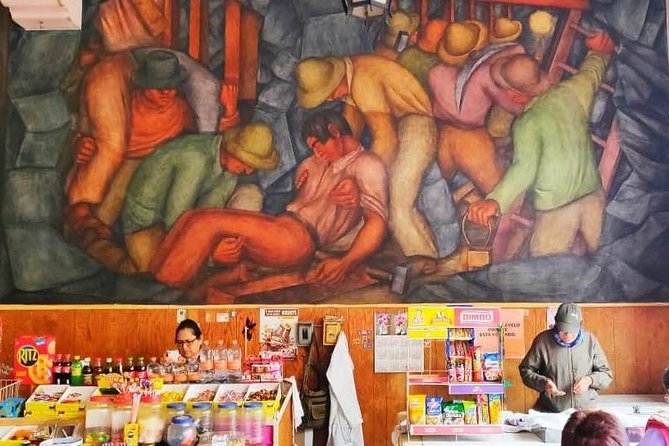
I would recommend it to a first-time Mexico City visitor who wants a clear introduction to Rivera and Mexican muralism without spending a full day inside museums. It also suits families with older children, art lovers who want historical context, and anyone curious about La Catrina beyond the parade costumes and souvenirs.
It is a good match if you enjoy asking questions. The best use of a live guide is to ask what a symbol means, why a scene was included, or how Rivera’s ideas fit the period. The tour is less suited to someone who wants a quiet, unhurried museum visit or a full biography of Frida Kahlo.
Book it if you value interpretation more than free time. Skip it if your main aim is food, shopping, or a relaxed day with little walking. The route is focused and active, with several cultural stops packed into three hours.
Should you book La Catrina and Muralism?
Yes, if you want to understand why Rivera’s murals matter and how La Catrina became such a powerful Mexican symbol. The route covers San Ildefonso, Museo Vivo del Muralismo, the Diego Rivera Mural Museum, and Bellas Artes, giving you a useful three-hour map of the subject.
Go in with realistic expectations. This is a brisk introduction, not an exhaustive art course, and the exact guide may vary. Still, the mix of historic places, major murals, Rivera and Kahlo’s story, and strong guide-led interpretation makes the $58 worthwhile for many first-time visitors.
FAQ
Where does the tour begin?
It begins in front of the entrance to the former College of San Ildefonso, also called Colegio de San Ildefonso. Look for guides wearing pink shirts and carrying umbrellas.
Where does the tour finish?
The tour finishes at the Palace of Fine Arts, also called Palacio de Bellas Artes, in Mexico City.
How long does the experience last?
The tour lasts three hours.
What languages are available?
The live guide speaks Spanish or English.
Is public transportation part of the route?
Yes. The route includes a public transport journey of about 20 minutes between stops.
Is the tour wheelchair accessible?
Yes, the activity is listed as wheelchair accessible. Since the route includes walking and public transport, confirm any specific mobility needs before booking.
What should I bring?
Bring comfortable shoes and sunscreen. Do not bring luggage or large bags, food, baby carriages, or items for flash photography. Meals and drinks are not included.
Just added around Mexico City
- Xochimilco’s Wild Side: Mezcal, Insects & Culture★ 4.9 · 10 reviews
- Xochimilco Ecological Tour – Away From the Crowds (3 Hours)★ 5.0 · 15 reviews
- Xochimilco: Food and Trajinera Ride with Local Women★ 5.0 · 5 reviews
- Xochimilco: Island of the Dolls Tour Games and Drinks★ 5.0 · 25 reviews
- Xochimilco + Coyoacán Combo Full-Day Tour★ 5.0 · 3 reviews
- Xochimilco floating gardens, Coyoacan and UNAM murals★ 4.0 · 6 reviews
- Val´quirico And The City of Angels Puebla From Mexico City★ 5.0 · 3 reviews
- Xochimilco: amanecer en kayak Ciudad de México★ 5.0 · 35 reviews
Frida Kahlo Museum Tours, compared.

Xochimilco, Coyoacan and Frida Kahlo with Optional Lunch
Read our review →
Xochimilco, Coyoacan, Frida Kahlo Museum & Murals Tour
Read our review →
Frida Kahlo VIP [Museum Tickets Included] Bike, Markets & Churros
Read our review →
Frida Kahlo VIP [Museum Tickets Included] Walk, Markets & Churros
Read our review →
EXCLUSIVE TOUR Frida Kahlo Museum – SMALL GROUPS
Read our review →
Frida Kahlo Museum Entry Ticket w/Digital Guide
Read our review →
Private City Tour in Frida Kahlo, Coyoacan, and Xochimilco
Read our review →
PREMIUM Frida Kahlo Museum and Xochimilco (Small Groups)
Read our review →Browse the lists this tour appears in