
Reviewed · NATIONAL MUSEUM OF ANTHROPOLOGY TOURS
Anthropology Museum Tour: Discover Pre-Hispanic Treasures
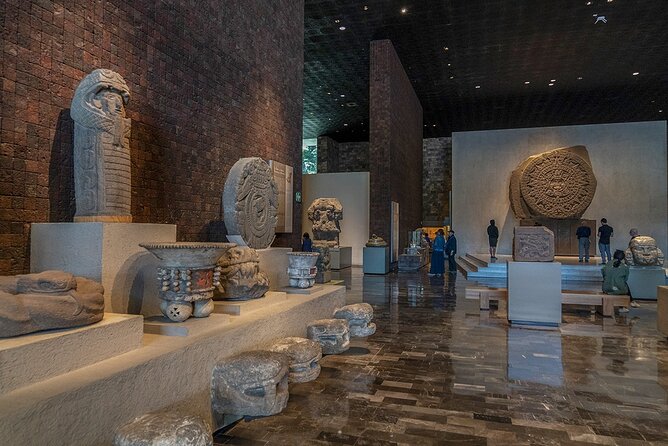
Mexico City’s National Museum of Anthropology holds the kind of objects that make ancient history feel immediate: a massive Aztec Sun Stone, Olmec figures with striking human forms, and artifacts tied to the beliefs of Mesoamerican cultures. A guide helps connect these pieces into a story rather than leaving you to read labels alone.
I like the three-hour focus, which gives you a useful introduction without swallowing an entire day. I also like the choice between a small group of up to 12 people and a private visit, since families and first-time visitors may value a slower, more personal pace. The main caution is that tickets are bought on arrival, so this is not a skip-the-line experience.
Key points to know before you book
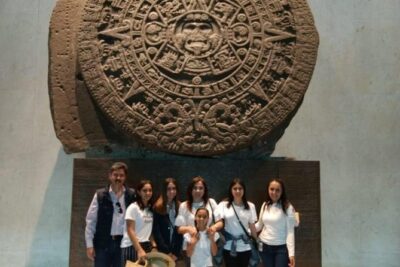
- The Aztec Sun Stone is the star object: This 22-ton monument offers a powerful entry point into Aztec ideas about time and the universe.
- Olmec art adds an older layer: The famous Group of Figures shows that the museum reaches far beyond the Aztec period.
- Guides can shape the whole visit: Diana, Maida, Clara, Silvia, and Ivan have led particularly strong tours, with different styles and levels of detail.
- The tour is about three hours: That is enough for major highlights, but not every room in a museum of this size.
- Private and small-group formats differ: Private tours can adjust timing and focus, while small groups need at least three people and follow a set plan.
- Bring a working phone number: The guide may contact you about the meeting point, and failure to answer can lead to a missed tour.
Why this museum deserves three hours
The National Museum of Anthropology is not a quick stop between other sights. Its two floors cover ancient Mexican art along with ethnographic displays about Indigenous communities in present-day Mexico.
That range matters. You are not only looking at objects from a vanished world. You are also being asked to connect ancient traditions with living cultures. A guide can help you understand why a carved figure, ceremonial object, or human remain matters instead of treating each display as an isolated curiosity.
The museum’s scale also creates a practical problem. You can easily spend hours reading every label, yet still leave with only a loose sense of how the cultures fit together. The guided format gives you a route through the major displays and helps prevent the visit from becoming a blur of dates and unfamiliar names.
I would treat this as an introduction rather than a final word on Mesoamerican history. The three-hour visit can give you a clear framework for the rest of your time in Mexico City, especially if you plan to visit historic sites or museums afterward.
More Anthropology Museum tours:
- Chapultepec Castle & Anthropology Museum Tour
★ 4.5 · 1,348 reviews - Anthropology Museum Guided Tour
★ 4.5 · 1,035 reviews - Mexico City: Anthropology Museum Guided Visit
★ 4.4 · 708 reviews
Starting at the National Museum of Anthropology
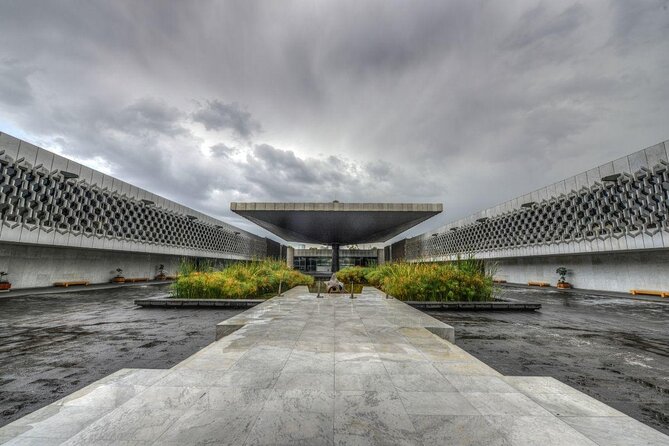
You meet at the museum on Avenida Paseo de la Reforma in the Polanco area of Bosque de Chapultepec. The activity ends at the same place, and transportation to or from the museum is not included.
That setup is simple, but you should plan your arrival carefully. The museum is near public transportation, yet the tour does not include a hotel pickup. Bring your confirmation and a personal ID or copy. Keep your phone available, too, since the guide may need to reach you on the day of the visit.
The meeting point is especially important because the operator asks for a full international phone number. If the guide cannot find or contact you, the booking may be treated as a no-show. I would arrive early enough to locate the entrance and avoid beginning the tour in a hurry.
The museum is a large public institution, and the tour does not offer a fast entrance lane. Tickets are purchased upon arrival, so a short wait is possible and is outside the guide’s control. That is worth remembering if you have booked another activity immediately afterward.
The Olmec Group of Figures
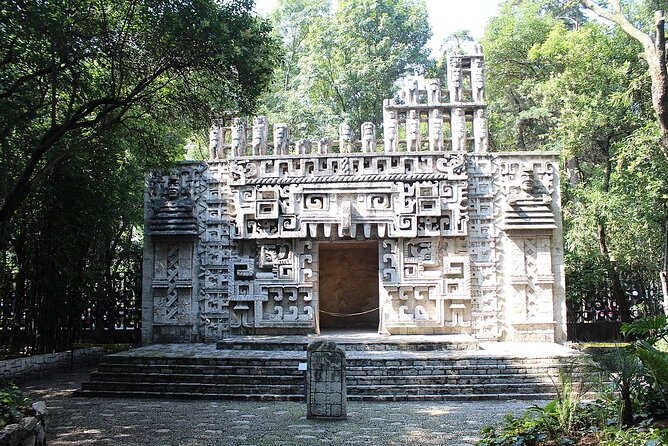
One of the most memorable stops is the Olmec Group of Figures. The Olmec culture belongs to an earlier period than the better-known Aztec civilization, so this section gives the tour a useful sense of time.
The figures are striking because they are not simply decorative objects. Their forms invite questions about ritual, authority, community, and the way early Mesoamerican artists represented people. Your guide can point out details you might otherwise pass without noticing.
This is also where a good guide earns the fee. A label may identify the object and its age, but the tour works best when the explanation connects the piece to larger ideas. Clara, for example, has been praised for explaining artifacts and religious beliefs in an approachable way. Silvia has led the museum with a historian’s command of Mesoamerican civilization while keeping the presentation personable.
You should not expect every guide to explain the material in exactly the same way. Some guides are more conversational. Ivan, for instance, was described as highly academic in his approach. That can be a plus if you want detail, but it may feel too formal for younger children.
The 22-ton Aztec Sun Stone
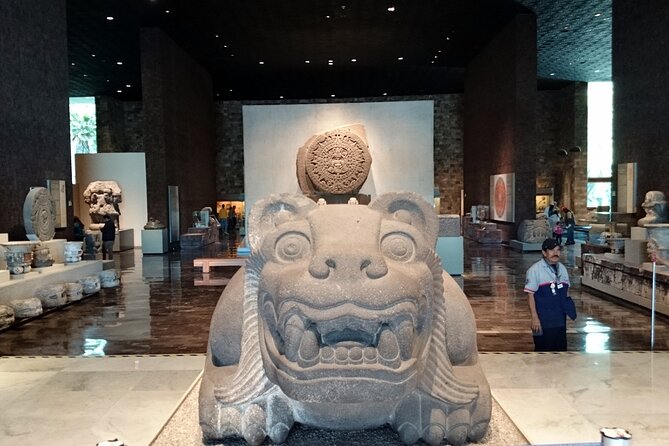
The colossal Aztec Sun Stone is the museum’s great visual anchor. At 22 tons, it has a physical force that photographs cannot quite capture.
The value of seeing it with a guide is not only its size. The stone reflects ideas about time, cosmic order, and Aztec thought, making it a useful object for understanding how the culture viewed the world. The guide can help you read its symbols and place it within the wider story of pre-Hispanic Mexico.
This stop also shows why the tour is worthwhile for a first visit. You can see the Sun Stone independently, but a guided explanation gives you a better chance of remembering what you saw. Instead of thinking of it as a famous carved disk, you begin to understand why it matters in world history.
The museum’s strongest objects are not all in the same period or cultural setting. The guide’s job is to keep the sequence clear, moving from earlier cultures such as the Olmec toward the Maya and Aztec worlds and then to later chapters of Mexican history. One strong tour participant described the visit as a helpful starting point for understanding the land from the Maya and Aztec eras through colonial times and the post-Revolution period.
More museums in Mexico City:
- CDMX: Xochimilco, Coyoacan, Frida Kahlo Museum & Murals Tour
★ 4.4 · 3,025 reviews - Frida Kahlo VIP [Museum Tickets Included] Bike, Markets & Churros
★ 5.0 · 1,072 reviews - Frida Kahlo VIP [Museum Tickets Included] Walk, Markets & Churros
★ 5.0 · 982 reviews - EXCLUSIVE TOUR Frida Kahlo Museum – SMALL GROUPS
★ 5.0 · 901 reviews
Ancient human remains and the museum’s wider story
The itinerary includes ancient human remains along with artifacts. These displays can add a direct, sometimes unsettling sense of connection to the people who lived in these societies.
You should expect the museum to present more than famous sculpture. Its collections cover belief, daily life, ritual, and social organization. The ethnographic exhibits then shift the focus toward contemporary Indigenous communities, giving the visit a present-day dimension.
That combination is one of the museum’s best features. You are not being shown a dead culture as if it disappeared without a trace. You are seeing evidence of older societies alongside displays that reflect communities living in Mexico today.
Still, three hours will not allow a close look at everything. If you already have a strong interest in one culture, tell the guide in advance if you choose the private format. The private option allows the time spent in each part of the visit to be adjusted, and the route can be modified within the stated duration.
What the guides add, and where the experience can fall short
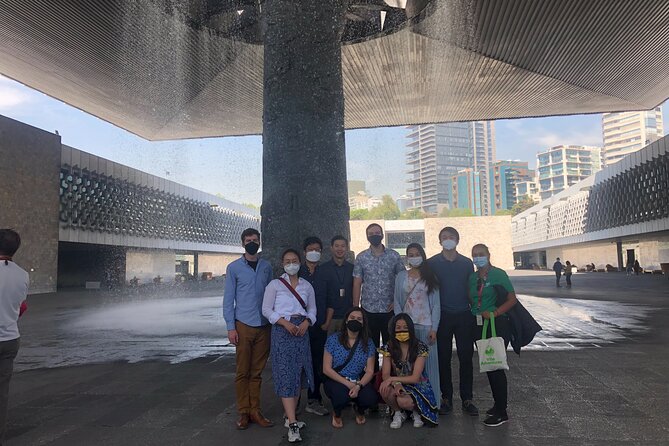
The best reason to book this activity is the guide. Several guides have received strong praise for clear explanations, warm manners, and the ability to adjust the tour to the group. Diana has been noted for making a wide stretch of history come alive. Maida has been praised for tailoring the visit and giving close attention to the group. Clara has been described as both friendly and well prepared.
That does not mean every tour will feel equally strong. One visitor found the explanations no more useful than the museum labels. That is a fair concern in any museum tour. If your guide gives only basic facts, the added value drops sharply.
Guide style can also affect families. One private group with four children found Ivan’s academic approach very informative but not especially suited to kids. If children are coming with you, ask for a family-friendly guide or explain your needs when arranging a private tour. The private format gives you more control, but it does not automatically guarantee a child-focused presentation.
There has also been an isolated scheduling failure involving a guide who did not arrive and a delayed explanation from the operator. A refund was eventually issued, but the missed visit could not be recovered that day. Keep your phone on, confirm the meeting details, and contact the company quickly if the guide is not present at the agreed time.
Small group or private tour?
The small-group option holds up to 12 people and requires at least three participants to confirm. If fewer than three people are booked, the operator may cancel up to two days before the tour and provide a full refund.
A small group is the sensible choice if you want a lower-cost guided introduction and do not need to control the route. The fixed departure time and set itinerary make planning easy, though the pace may not match your ideal speed.
A private tour is confirmed for one or more people and includes only your group. Its main advantage is control. You can adjust how long you spend in different areas and may add a nearby attraction, market, or restaurant if it fits within the original duration and does not require a major route change.
Major changes, extra time, a new route, or additional participants require advance notice and may cost more. The private option is especially useful for families, visitors with a narrow interest in Maya or Aztec culture, and anyone who prefers to ask many questions without worrying about slowing down a group.
The small-group tour is offered in English and Spanish. Private tours are led by bilingual guides, usually in Spanish and English. French, German, Italian, Portuguese, and other languages may be available, but they depend on the guide and should be requested before booking.
Is $50 a fair price?
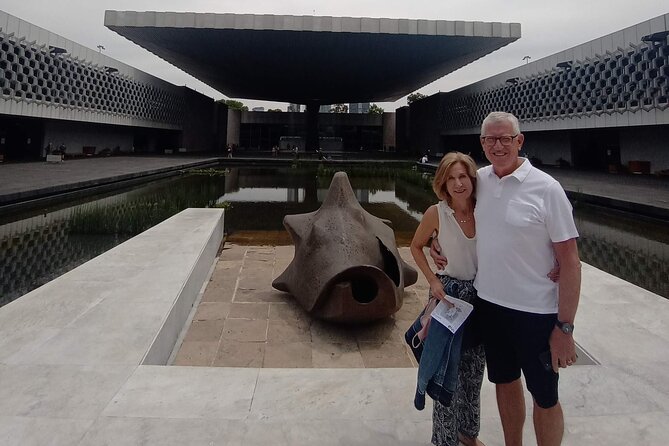
At $50 per person, this is not the cheapest way to enter the museum. Your payment includes admission, a guided visit, and the convenience of having someone organize the museum experience around major objects.
The value depends heavily on the guide. A thoughtful guide who connects the Olmec, Maya, Aztec, colonial, and later chapters of Mexican history can save you time and give you a clearer understanding of what you are seeing. A guide who simply repeats labels offers less for the same price.
The price also includes an online booking commission, sometimes as much as 30 percent, which limits the operator’s ability to reduce the rate. Group discounts may be available, but you should not assume the price will drop unless the option appears during booking.
For a private visit, $50 per person can be reasonable if your group values flexibility. For a small group, I would book it mainly if you want context and conversation, not just access to the museum.
Practical advice for a smoother visit
Wear comfortable shoes. The museum covers two spacious floors, and standing for a guided explanation can be tiring even if most of the route is indoors.
Bring a hat, sunscreen, and sunglasses for time outside before or after the visit. Carry some cash if you plan to shop, since not every merchant in Mexico accepts bank cards. Personal travel insurance is also required by the tour terms.
The tour requires good weather, and poor conditions may lead to a different date or a full refund. The activity is otherwise suitable for most people, but anyone with a medical condition that could affect participation should tell the operator ahead of time.
The experience is non-refundable if you cancel or request a change for your own reasons. Read that condition carefully before paying, especially if your Mexico City schedule is still unsettled.
Who should book this museum tour?
I would recommend it to a first-time visitor who wants a clear introduction to pre-Hispanic Mexico without spending a full day working through every display alone. It also suits adults who enjoy history, architecture, religious ideas, and the stories behind major objects.
Families can benefit from the private format, but I would make the children’s ages and attention spans clear before booking. The museum is fascinating, yet the tour can become too academic for younger children if the guide does not adjust the presentation.
You may not need this tour if you already have a strong background in Mesoamerican cultures or prefer to explore museums at your own pace. You may also want to skip it if you need guaranteed fast entry or a tightly timed schedule, since admission is handled on arrival and a wait is possible.
Should you book it?
Book this tour if you want the National Museum of Anthropology explained as a connected story, with special attention to the Olmec Group of Figures and the Aztec Sun Stone. The strongest guides, including Diana, Maida, Clara, and Silvia, can make the museum far more approachable than a solo visit.
Choose private if you have children, a special interest, or a fixed pace. Choose small group if you want a standard three-hour introduction and can accept a set departure and route. The price is fair when the guide adds real context, but the experience is less convincing if the explanations stay close to the labels.
FAQ
How long does the Anthropology Museum tour last?
The tour lasts about three hours and includes a guided visit to the National Museum of Anthropology.
Where does the tour begin?
It begins at the National Museum of Anthropology, on Avenida Paseo de la Reforma in Bosque de Chapultepec, Mexico City.
Where does the tour end?
The activity ends back at the museum meeting point.
Is museum admission included?
Yes. Entrance tickets and the guided museum visit are included, though tickets are bought upon arrival.
Does the tour include skip-the-line entry?
No. There is no fast line, and you may need to wait while tickets are purchased at the museum.
Is transportation included?
No. Transportation to and from the museum is not included.
What languages are available?
Small-group tours are offered in English and Spanish. Private tours are led by bilingual guides, usually in English and Spanish. Other languages may be available but are not guaranteed.
How many people can join a small-group tour?
A small group can include up to 12 travelers and requires at least three participants to confirm.
Can I book a private tour for just one person?
Yes. The private tour is confirmed for one or more people, and only your group participates.
Can the private tour be customized?
Yes. The time spent in each area can be adjusted, and a nearby attraction, restaurant, or market may be added if it fits within the original duration and does not require a major route change.
Just added around Mexico City
- Xochimilco’s Wild Side: Mezcal, Insects & Culture★ 4.9 · 10 reviews
- Xochimilco: Food and Trajinera Ride with Local Women★ 5.0 · 5 reviews
- Xochimilco: Island of the Dolls Tour Games and Drinks★ 5.0 · 25 reviews
- Xochimilco Ecological Tour – Away From the Crowds (3 Hours)★ 5.0 · 15 reviews
- Xochimilco + Coyoacán Combo Full-Day Tour★ 5.0 · 3 reviews
- Xochimilco floating gardens, Coyoacan and UNAM murals★ 4.0 · 6 reviews
- Val´quirico And The City of Angels Puebla From Mexico City★ 5.0 · 3 reviews
- Xochimilco: amanecer en kayak Ciudad de México★ 5.0 · 35 reviews
National Museum of Anthropology Tours, compared.

Chapultepec Castle & Anthropology Museum Tour
Read our review →
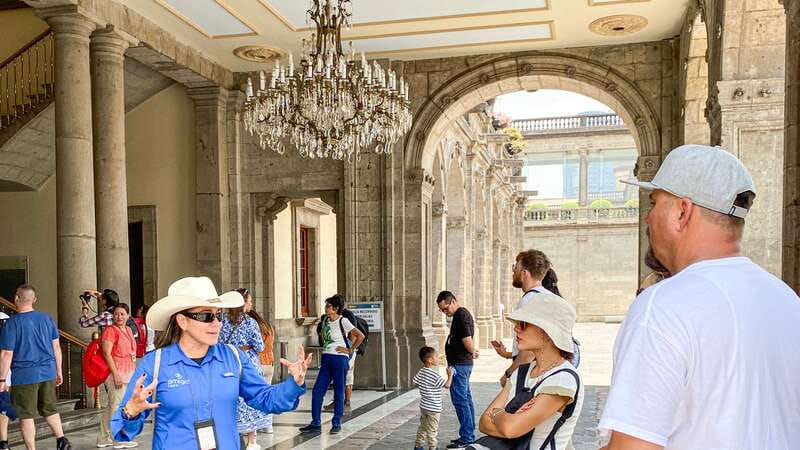
Chapultepec Castle and Anthropology Museum Tour
Read our review →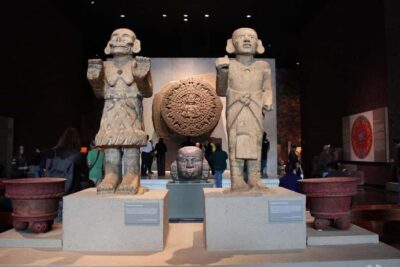
Anthropology Museum Private Experience Walking Tour
Read our review →
5 Hour Tour through Chapultepec, Anthropology Museum and Castle
Read our review →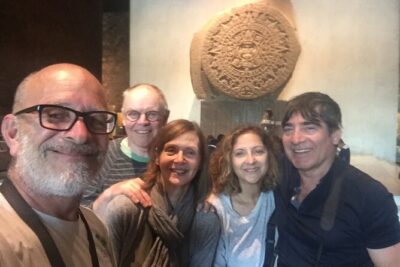
PRIVATE Tour in Chapultepec Castle and Museum of Anthropology
Read our review →Browse the lists this tour appears in