
Reviewed · MEXICO CITY HISTORIC CENTER WALKING TOURS
Historic Downtown Walking Tour
Mexico City’s historic center packs centuries into a few blocks. This three-hour walk takes you from the Aztec capital to the Spanish cathedral, grand public squares, and the glittering Palacio Postal, with a local guide connecting the pieces. The biggest strength is the story, not simply the sightseeing.
I like the route for two clear reasons: you get inside the Metropolitan Cathedral and Palacio Postal, and the guides add useful context about history, politics, culture, and food. Guides including Estefania, Emiliano, Mar, and Nadia have been especially praised for clear English and good pacing. The one concern is pace and group size. The tour is promoted as small, but the practical maximum is 25 people, and a fast guide can be hard to hear in crowded plazas.
Key points at a glance
- Starts at the Zócalo: Begin beside Mexico City’s main square, a useful place to understand the city’s geography and public life.
- Aztec and Spanish history share one route: See the Templo Mayor ruins beside the Metropolitan Cathedral, a striking lesson in how Mexico City changed over time.
- Three notable interiors: The cathedral, Palacio Postal, and the approach to Bellas Artes add welcome detail beyond outdoor sightseeing.
- English-speaking local guides: The best-known guide names in the feedback are Estefania, Emiliano, Mar, Nadia, Mariel, Daniela, and Sandra.
- A strong first-day choice: The walk gives you a working map and historical frame for later visits around the city.
- Good value at $26.53: For three hours with a certified local guide, the price is reasonable, though museum visits beyond the walking route are not the focus.
Why this is a smart first walk in Mexico City
Mexico City can feel confusing at first. The historic center has Aztec foundations, colonial churches, nineteenth-century civic buildings, twentieth-century art, street activity, and modern politics all sharing the same few blocks.
That is why I like beginning here with a guide. You are not just checking off the Zócalo and Bellas Artes. You are learning how the pieces relate, which makes later visits to museums and other neighborhoods easier to understand.
The route is compact, but the subject is not. A good guide can explain the old Aztec city, the Spanish conquest, Catholic power, national identity, architecture, food, and modern Mexican culture without turning the morning into a lecture. Several guides, including Emiliano and Estefania, are praised for making a large amount of material easy to follow.
You should expect a steady walk rather than a leisurely wander. One especially useful description of the tour is that three hours can feel short because the group moves briskly and covers a lot. That is good if you want an orientation. It is less ideal if you prefer long pauses for photographs or quiet time inside each building.
More walks through the historic centre:
- Historic Center Food Tour in Mexico City
★ 5.0 · 1,263 reviews - Mexico City: Historic Downtown Walking Tour
★ 4.8 · 1,039 reviews - Walking Tour of the Historic Center of Mexico City
★ 5.0 · 870 reviews
Starting at the Zócalo, the city’s great public room
The meeting point is at C. de Monte de Piedad 11, beside the Zócalo. This is a practical starting place because the square is the symbolic center of Mexico City and a natural reference point for the rest of the route.
You begin by learning why the Zócalo matters as the heart of Mexico. The exact presentation will depend on your guide, but this opening sets up the main theme of the walk: different eras did not replace one another completely. They remain visible in the same streets and buildings.
The square itself can be noisy and crowded. Music, public events, street activity, and nearby traffic may make it difficult to hear a guide who speaks softly or walks too far ahead. Emiliano has been praised for projecting his voice, while another guide received less favorable feedback for speaking quickly. Stay close to the guide from the start and ask for a repeat if you miss a point.
The Zócalo stop is listed at about 15 minutes. That is enough for orientation and context, but not enough for a full study of every surrounding building. Think of it as the opening chapter rather than the main attraction.
Templo Mayor and the city beneath the city
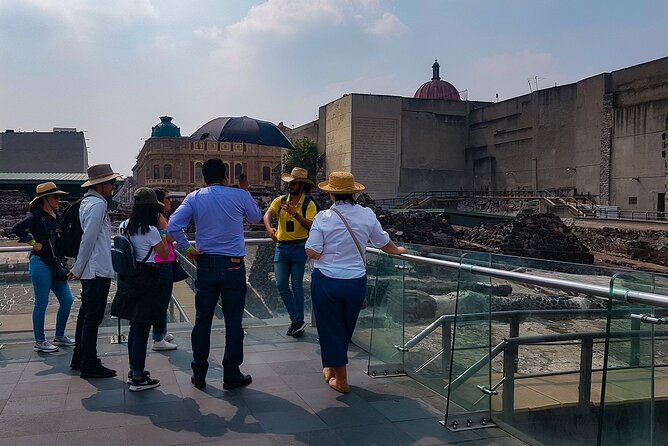
From the Zócalo, the group heads to Plaza Manuel Gamio and the remains of Templo Mayor, the ceremonial center of the ancient Aztec city. This is one of the most important stops because it makes Mexico City’s layered past visible under your feet.
The ruins are directly beside the colonial cathedral area. That physical closeness says more than a long explanation could: the Spanish city was built over the Aztec capital, and fragments of the earlier city remain part of the modern center.
You will see outdoor ruins during this tour, not a full museum visit. Several people who enjoyed the walk still wanted more time at the Templo Mayor Museum afterward. I would take that as useful planning advice. If pre-Hispanic Mexico is a major interest, reserve separate time for the museum rather than expecting this three-hour walk to cover it.
The planned stop is about 30 minutes. That gives your guide time to explain the site and its role, but it is still an overview. Crowds can also make the group spread out, so this is another place where staying within sight of the guide matters.
Inside the Metropolitan Cathedral
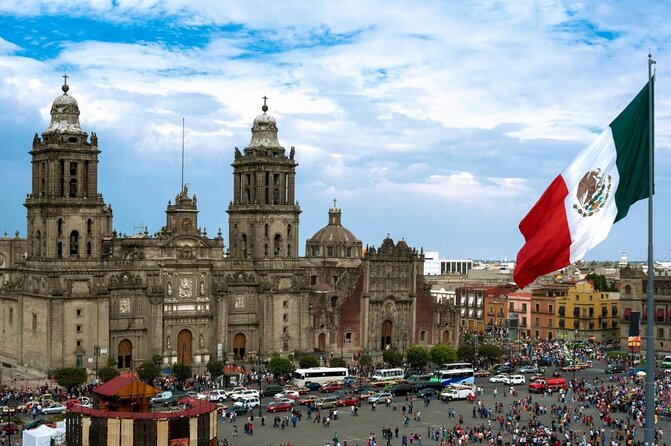
The next stop is the Mexico City Metropolitan Cathedral, described on the route as the heart of Catholic faith in Mexico. The group goes inside, which makes this more than a quick exterior photograph.
The cathedral gives you a strong contrast with Templo Mayor. One stop presents the remains of the Aztec ceremonial center. The next shows the grand religious institution that became central to colonial Mexico and later national life.
The scheduled visit lasts about 30 minutes. Your guide can help you notice the building’s role and atmosphere without requiring you to know architectural terms in advance. This is also a useful pause after walking across open plazas.
The tour description lists admission as free at the stops. It also says museum entrance tickets are included, though no museum visit is part of the main route. The practical point is simple: the advertised experience focuses on the included walking stops, with no separate paid museum visit presented as a required part of the itinerary.
More Historical Tours in Mexico City:
- Mexico City Historical Centre Food Tour with 7 Authentic Tastings
★ 5.0 · 723 reviews - Walking Tour in Mexico City for Exploring their Cultural Heritage
★ 5.0 · 245 reviews - Walking Tour – Impressive murals in Historical Center of Mexico City
★ 5.0 · 224 reviews - Mexico City: Guided walking tour through the most historic parts of the city.
★ 4.5 · 172 reviews
Plaza Manuel Tolsá and the city’s grand civic face
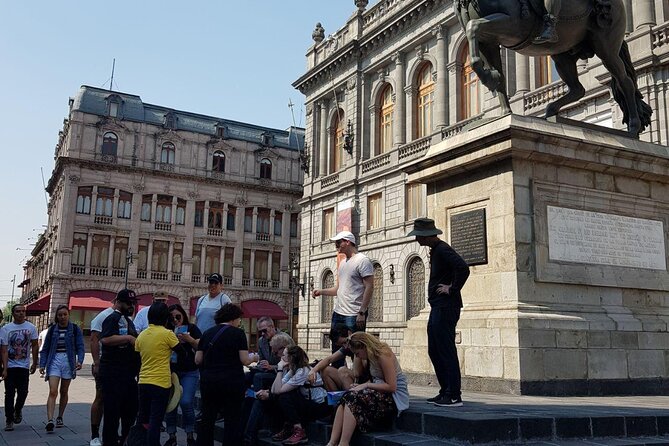
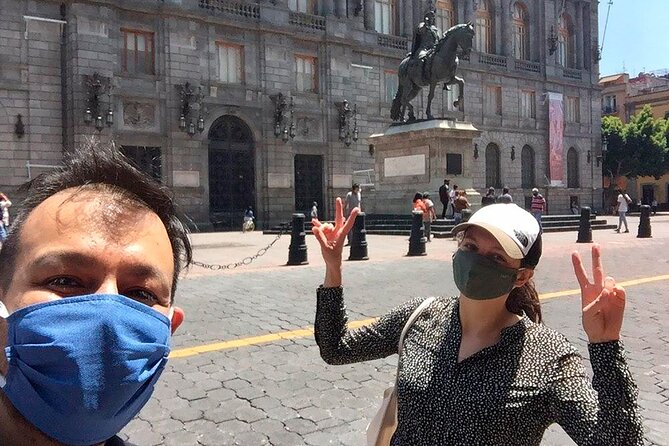
Plaza Manuel Tolsá is a shorter stop, planned for about 10 minutes. Its appeal is visual and architectural, centered on one of Mexico City’s most recognizable statues.
This square helps shift the focus from religious and pre-Hispanic history to the city’s later civic identity. It is a quick stop, so you will likely receive an explanation and time for a few photographs rather than a long exploration.
Short stops like this are part of the tour’s tradeoff. You see more of the center in one morning, but you do not linger deeply at every site. If your ideal tour includes sketching, extended photography, or sitting in each plaza, this route may feel rushed.
For most first-time visitors, I think the short format works. You get a broad sense of how the center fits together, then you can return to the places that catch your interest.
Palacio Postal, an unexpected interior
The Palacio Postal is one of the route’s most enjoyable surprises. The group goes inside what is described as one of the city’s most glamorous post offices, giving you an ornate interior rather than another look at a church facade or public square.
This stop adds architectural variety. After the open Zócalo, archaeological remains, cathedral, and statue-filled plaza, the post office offers a different kind of civic grandeur. It also shows how ordinary public services could be housed in an unusually elaborate building.
The planned visit is about 15 minutes. That is enough to appreciate the interior and hear why it matters, but do not expect a full architectural tour. Keep your camera ready, listen for the guide’s details, and remember that the group will continue on schedule.
I especially like this inclusion because it gives the route texture. A first visit to Mexico City should not be only about the most famous monuments. Buildings used for everyday public life can tell you just as much about the city’s ambitions and style.
Bellas Artes and the final walk to El Caballito
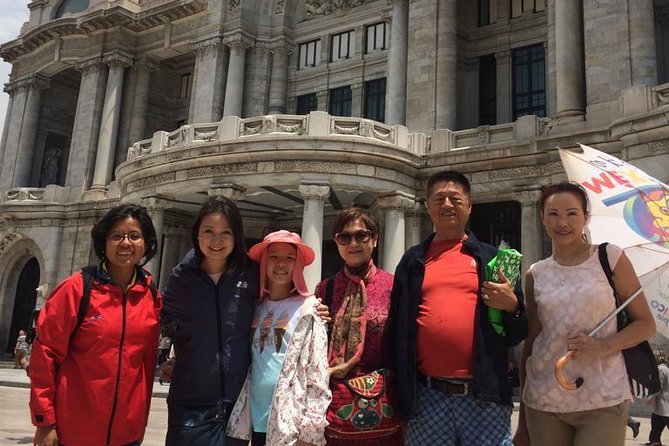
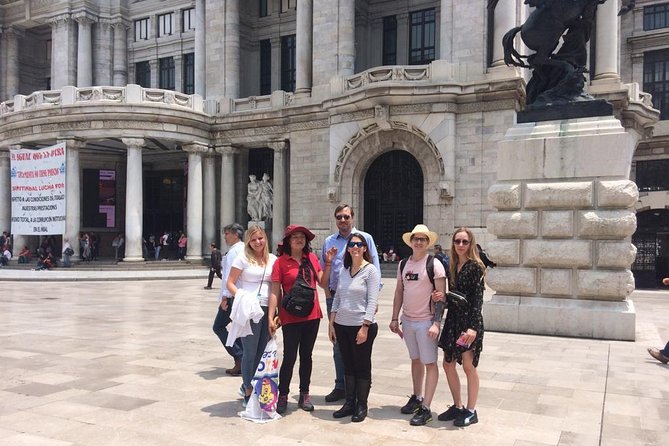
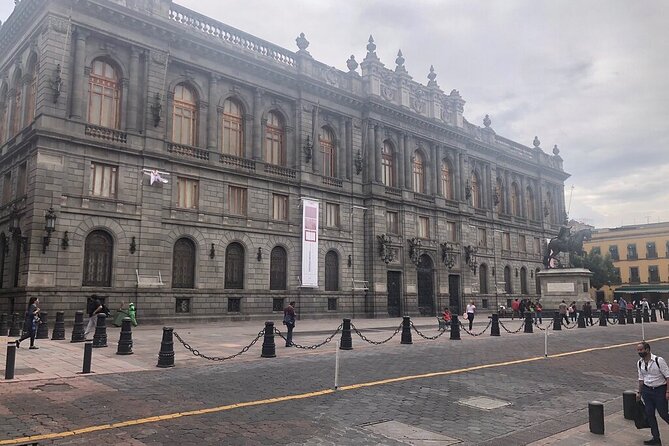
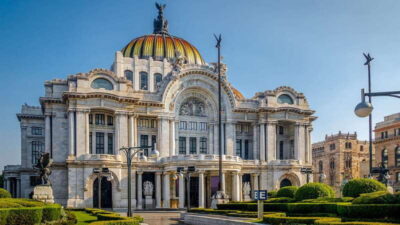
The final major stop is Palacio de Bellas Artes, the celebrated art nouveau building and a symbol of twentieth-century Mexico City architecture. The tour ends nearby, beside the El Caballito statue in front of the National Museum of Art.
Bellas Artes is an excellent closing point because it brings the route into the modern era. You have moved from the Aztec city to colonial religion and later civic architecture, then arrive at a building associated with Mexico’s modern artistic identity.
The planned stop is about 15 minutes. That is enough for an introduction and exterior appreciation, but not enough for a full visit to the art collections or murals. If the interior art is high on your list, plan another visit after the walk.
Ending at the National Museum of Art is useful. You are not dropped at an indistinct street corner. You finish near El Caballito and a major museum, with the historic center still open for further exploring. The end point also makes it easy to continue with lunch, another museum, or a self-guided walk, though transportation and food are not included.
The guides make the difference
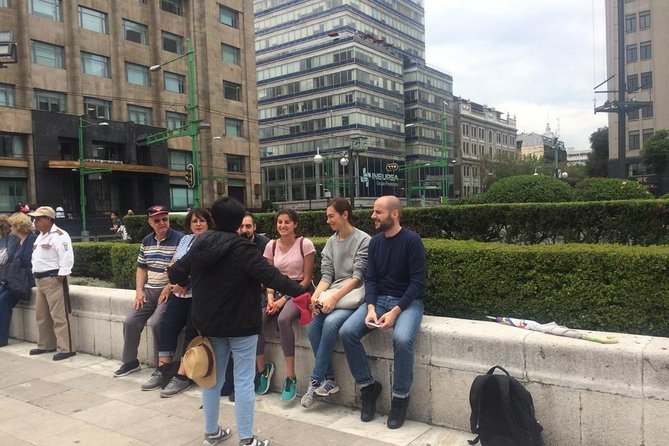
The route is solid, but the guide determines how much you take away. The strongest feedback goes to guides who speak clear English, organize the material well, and connect dates and buildings to everyday Mexican life.
Emiliano is praised for strong English, clear explanations, good pacing, and a mix of history, politics, and culture. He also received credit for giving food suggestions and projecting his voice across noisy plazas.
Estefania is praised for making the transition from the Aztecs to present-day Mexico easy to understand. Mar is described as friendly, enthusiastic, and especially strong on pre-Hispanic history, culture, food, and practical suggestions for the rest of a visit.
Nadia is praised for an accessible style, humor, answers to questions, and food and dessert recommendations. Mariel, Daniela, and Sandra also receive warm comments for clear explanations and useful advice.
The weaker points are worth noting. One guide was described as speaking too quickly, with an accent that was harder for part of the group to follow. Another person felt the guide was not especially engaging. A separate complaint involved a larger group splitting into smaller sections, making it harder to hear.
The operator lists a maximum of 25 people, while the highlights describe groups capped at 15. Because those figures differ, I would plan for a group that may be larger than a tiny walking party. If you have hearing concerns, position yourself near the guide and speak up early.
How much walking and effort should you expect?
You need a moderate level of fitness. The tour lasts about three hours and moves through busy central streets and plazas. There is no suggestion of strenuous hiking, but you will be on your feet for most of the experience.
The pace has been described as brisk but manageable. One person found the tour easy and not tiring, while another noted that the guide sometimes got far ahead in crowded streets. Wear comfortable shoes and keep the group in sight.
You should also expect city noise. The historic center is an active public district, not a quiet museum campus. A guide with a strong voice makes a real difference, and Emiliano was singled out for that strength.
The tour is offered in English, and the supplied details also state that Spanish tours are available. Service animals are allowed, and the meeting point is near public transportation. Transport to the meeting point is not included, so you need to make your own way to Monte de Piedad 11.
Is $26.53 a fair price?
At $26.53 per person, this is a sensible price for a three-hour guided introduction to Mexico City’s center. You are paying for a certified local guide, a structured route, and access to context that would be difficult to build from signs and guidebooks while walking alone.
The value is strongest if this is your first visit. A good morning can help you decide which places deserve a longer return visit, including Templo Mayor, the National Museum of Art, or Bellas Artes.
The price is less compelling if you want extended indoor visits or a museum-heavy experience. This is primarily a walking orientation, with brief stops and a few interiors. Food, lunch, gratuities, and transport to the starting point are not included. Food can be purchased during the day, but you should not count on a provided meal.
Tips are optional but appreciated. Since guide quality matters so much here, tipping is a reasonable way to recognize a guide who keeps the group together, answers questions, and makes the complex history easy to follow.
Who should book this walk?
I would choose this tour for first-time visitors, families wanting an easy introduction, couples who prefer a structured morning, and solo visitors who want context before exploring alone.
It also suits anyone who wants practical suggestions for the rest of a trip. Guides have offered advice on food, desserts, museums, and places to see beyond the route. That can save you time once the tour ends.
I would be more cautious if you already know the historic center well, want long visits inside museums, or dislike group walking tours. The route covers many subjects quickly, and the experience can depend on whether your assigned guide speaks at a comfortable pace and keeps the group close.
Book early if your schedule is fixed. The tour is booked, on average, 18 days ahead, suggesting that popular dates may fill before the last minute. Free cancellation is available up to 24 hours before the start time. Cancellations or changes made within 24 hours are not refundable.
Should you book the Historic Downtown Walking Tour?
Yes, if you want a clear introduction to Mexico City before tackling its museums and neighborhoods. The route covers the right first-day landmarks, and the strongest guides turn six central stops into a readable story about Aztec Mexico, colonial power, religion, public architecture, and modern culture.
The main caution is the group experience. The advertised maximum may reach 25 people, and a fast-speaking guide can reduce the pleasure of an otherwise excellent walk. Arrive ready to stay close, ask questions, and return later to the places that deserve more time.
At $26.53, it is a good buy for orientation, history, and practical advice. I would book it near the beginning of your stay, then use the final stop at Bellas Artes to choose what you want to explore next.
FAQ
How long does the Historic Downtown Walking Tour last?
The tour lasts approximately three hours and includes more than three hours of walking through Mexico City’s historic center.
What language is the tour offered in?
The supplied tour details list English and Spanish as available languages. The English option is specifically listed for this experience.
Where does the tour start?
The tour starts at C. de Monte de Piedad 11 in Centro Histórico, near the Zócalo.
Where does the tour end?
It ends beside the El Caballito statue, in front of the National Museum of Art at C. de Tacuba 8.
What attractions are included?
The route includes the Zócalo, Plaza Manuel Gamio and the Templo Mayor ruins, the Metropolitan Cathedral, Plaza Manuel Tolsá, Palacio Postal, and Palacio de Bellas Artes.
Is the tour suitable for people with limited mobility?
The experience requires a moderate level of physical fitness because it is a three-hour walking tour. Service animals are allowed.
Can I cancel for a refund?
You can cancel at least 24 hours before the start time for a full refund. Cancellations or changes made less than 24 hours before the start time are not refunded.
More Walking Tours in Mexico City
- Frida Kahlo VIP [Museum Tickets Included] Walk, Markets & Churros
★ 5.0 · 982 reviews - Anthropology Museum Private Experience Walking Tour
★ 5.0 · 355 reviews - Muralist Art Semi Private Walking Tour in Mexico City Downtown
★ 5.0 · 188 reviews - Coyoacán Walking Tour: Access to Frida Kahlo Museum & Tacos
★ 5.0 · 181 reviews
Just added around Mexico City
- Xochimilco’s Wild Side: Mezcal, Insects & Culture★ 4.9 · 10 reviews
- Xochimilco: Food and Trajinera Ride with Local Women★ 5.0 · 5 reviews
- Xochimilco: Island of the Dolls Tour Games and Drinks★ 5.0 · 25 reviews
- Xochimilco Ecological Tour – Away From the Crowds (3 Hours)★ 5.0 · 15 reviews
- Xochimilco + Coyoacán Combo Full-Day Tour★ 5.0 · 3 reviews
- Xochimilco floating gardens, Coyoacan and UNAM murals★ 4.0 · 6 reviews
- Val´quirico And The City of Angels Puebla From Mexico City★ 5.0 · 3 reviews
- Xochimilco: amanecer en kayak Ciudad de México★ 5.0 · 35 reviews
Mexico City Historic Center Walking Tours, compared.



Walking Tour – Impressive murals in Historical Center of Mexico City
Read our review →
Muralist Art Semi Private Walking Tour in Mexico City Downtown
Read our review →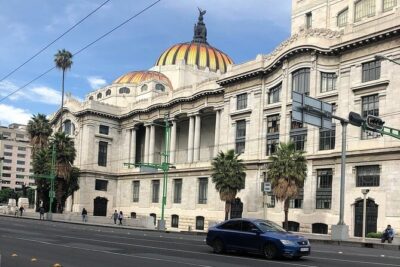
Mexico City Layover Tour: Downtown City Sightseeing
Read our review →Browse the lists this tour appears in