
Reviewed · TEOTIHUACAN TOURS FROM MEXICO CITY
Guided Walking Tour to the Archaeological Zone of Teotihuacán
Teotihuacán is best understood on foot, where its huge ceremonial spaces, apartment compounds, temples, and pyramids slowly line up into one remarkable ancient city. This tour takes you from the Temple of Quetzalcóatl along the Avenue of the Dead to the Sun and Moon pyramids, with guide Joel adding local detail and demonstrations of the site’s unusual acoustics.
I like the clear three-hour route and the fact that admission is included, so you can focus on the ruins instead of sorting out the basics. I also like the chance to hear about obsidian, building methods, symmetry, and the sound effects connected with the temples. The main drawback is simple: this is a long walking tour with little time to spare, and bottled water is not included.
Key points
- A three-hour route through the main ceremonial zone: See the Citadel, Temple of Quetzalcóatl, Avenue of the Dead, Sun Pyramid, palaces, and Moon Pyramid.
- English-language guidance with Joel: The guide adds local knowledge and points out details that are easy to miss on your own.
- Admission and taxes included: You do not need to budget separately for the archaeological site entrance.
- Gate 1 to Gate 3 walking route: You finish near restaurants, bathrooms, Uber service, and a bus stop for Mexico City.
- Acoustics and obsidian are part of the story: The visit looks beyond pyramid photographs and explains how the site worked and sounded.
- Bring your own water: The tour provides no bottled water, and the walk is long enough that this matters.
Starting at Gate 1 in Teotihuacán
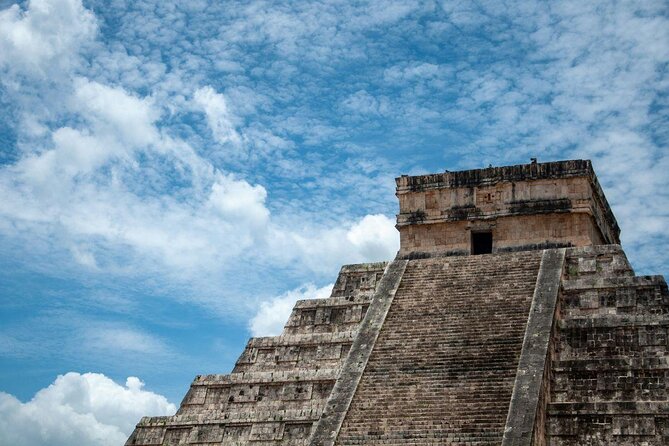
The meeting point is the parking area at Archaeological Zone of Teotihuacán, Gate 1, in the State of Mexico. The tour runs from 8:30 to 11:30 in the morning, giving you a set three-hour window inside the site.
At the start, you go to the bathroom, buy your admission ticket if needed, and pick up water. The tour price includes admission and taxes, but bottled water is not included. I would bring water with you rather than count on buying it at the entrance, especially since the route covers a lot of open ground.
The visit begins from a viewpoint over the archaeological zone. That first look helps you understand the scale of Teotihuacán before you get close to the individual buildings. This is not a small ruin tucked into a corner. The ceremonial center spreads along a broad central avenue, and the walk ahead is long.
You need a moderate level of physical fitness. The tour description specifically warns that the road is long, and that is the key practical point here. The value comes from seeing the major parts of the site in one guided visit, but you should not expect a short stop at one pyramid followed by a bus ride.
More Teotihuacan days out of Mexico City:
- Teotihuacan, Guadalupe Shrine & Tlatelolco Day Tour with Lunch
★ 5.0 · 11,603 reviews - Balloon flight + Breakfast in cave + Pyramids + Pick up CDMX.
★ 5.0 · 6,335 reviews - Teotihuacan pyramids morning or afternoon without tourist traps
★ 5.0 · 6,186 reviews
The Citadel and Temple of Quetzalcóatl
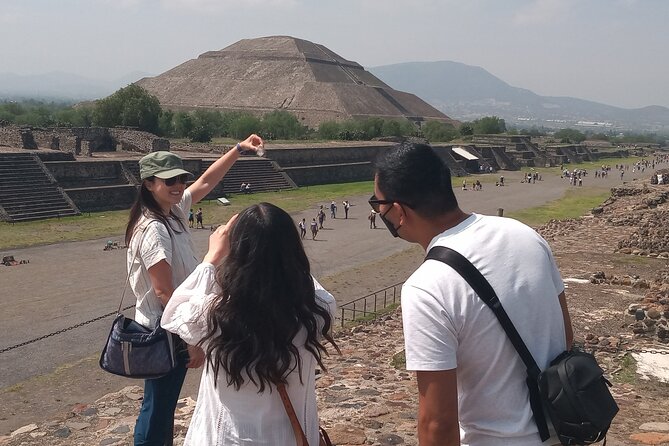
The first major stop is the Citadel, a large ceremonial area connected with the Temple of Quetzalcóatl. Your guide explains the buildings here before leading you onward, giving the tour an early focus on how Teotihuacán was planned rather than treating the site as a series of unrelated stone structures.
The Temple of Quetzalcóatl is also where the visit begins to show its more unusual side. The guide can explain the site’s acoustics and the way sound works across the open plazas. Joel, the guide identified with this experience, is praised for his warm manner and for taking people to strong viewing points.
One especially memorable part of the visit can be the birdlike sound connected with the temple area. The experience includes attention to the song of the quetzal, and one account describes clapping near the temple and hearing a sound associated with the bird. You should think of this as a demonstration of the site’s acoustics, not a guaranteed performance at a fixed moment.
The Citadel also gives you a useful introduction to Teotihuacán’s sense of order. Symmetry, open courtyards, and carefully arranged structures are part of the explanation. I like this approach because it shifts your attention from simply asking how tall a pyramid is to asking how the whole place was designed to function.
Walking the Avenue of the Dead
From the Citadel, you continue along the Avenue of the Dead. This is the backbone of the tour and the part that makes the three-hour schedule feel active. You move through a wide ceremonial route with plazas, platforms, pyramids, and residential areas connected to it.
The road is not just a straight walk between two famous monuments. Along the way, the guide points out sunken patios and the West Plaza, as well as apartment compounds where Teotihuacán’s people lived. These details help you picture a city rather than a site built only for rulers or ceremonies.
The apartment areas are particularly useful because they add a human scale. The pyramids dominate the photographs, but the residential compounds show how ordinary daily life fitted into the wider plan. You learn about the construction of the pyramids, the materials used, and the role of obsidian in Teotihuacán culture.
Obsidian is one of the site’s most interesting materials. The tour connects the stone with the area’s architecture and local resources, giving you something concrete to look for as you walk. A guide can make a plain dark stone or a wall detail meaningful in a way that a quick solo visit may not.
The Avenue of the Dead also lets you see how changing distances affect the experience. The pyramids do not all reveal themselves at once. As you walk, the scale of the avenue and the alignment of the buildings become clearer, while the guide fills in the purpose of the plazas and courts.
The Sun Pyramid and the long central walk
The Pyramid of the Sun is one of the major points along the route. The tour passes by it as part of the Avenue of the Dead, placing the structure within the larger ceremonial plan instead of treating it as an isolated photo stop.
That distinction matters. If you visit without a guide, it is easy to spend your attention on the pyramid’s size and miss the way it relates to the avenue, plazas, and surrounding buildings. Here, the explanation covers how the pyramids were made and how the builders used symmetry and natural resources.
The schedule is compact, so do not expect an extended break at every monument. You are moving through a sequence of major areas, and the guide’s job is to keep the walk connected. If you prefer slow photography, long personal pauses, or repeated climbs, this may feel rushed.
The open setting can also make the walk feel more demanding than the three-hour figure suggests. Water, comfortable shoes, and a reasonable walking pace will make a real difference. The site has bathroom services, but the tour does not include bottled water.
More Walking Tours in Mexico City:
- Historic Downtown Walking Tour
★ 5.0 · 1,289 reviews - Mexico City: Historic Downtown Walking Tour
★ 4.8 · 1,039 reviews - Frida Kahlo VIP [Museum Tickets Included] Walk, Markets & Churros
★ 5.0 · 982 reviews - Walking Tour of the Historic Center of Mexico City
★ 5.0 · 870 reviews
Palaces, patios, and the city behind the monuments
The route continues through palace areas and courtyards before reaching the Moon Pyramid. These spaces show another side of Teotihuacán’s design, with enclosed areas, patios, and carefully controlled views.
The sunken patios are worth noting. They give the architecture a different feel from the large open avenue, and they show how the city used changes in level to shape movement and space. You may also find that these smaller areas make it easier to notice construction details that disappear beside the largest pyramids.
The guide’s explanations are most useful here when they connect architecture to daily life. The tour includes information about the apartments where Teotihuacán residents lived, so the visit does not remain fixed on temples and ceremonial buildings.
This is where Joel’s personal style matters. The strongest praise for him centers on hospitality, kindness, and knowing which spots to show. That suggests a guide who adds human attention to what could otherwise become a tiring sequence of monuments. Since the group can include as many as 40 people, you should also remember that the intimacy of the experience may depend on the day’s group size.
Finishing at the Moon Pyramid
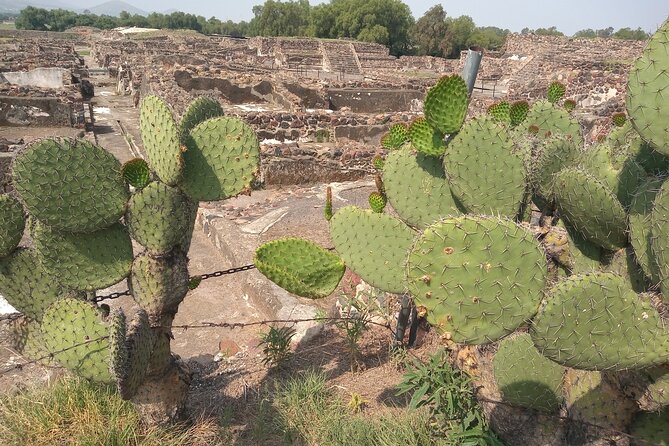
The route ends near the Pyramid of the Moon and then continues to Gate 3, rather than returning to the original entrance. That arrangement is practical if you plan to continue exploring or need onward transport.
The Moon Pyramid gives the tour a strong final point. From this end of the Avenue of the Dead, the arrangement of the avenue and surrounding structures becomes easier to read. The guide can bring together the themes covered earlier: symmetry, ceremonial planning, acoustics, construction, and the relationship between the major monuments.
The site’s sound effects are also tied to this part of the visit. The experience includes the chance to hear the quetzal song and to learn how the acoustics work. One particularly vivid account describes clapping near a temple and hearing the birdlike effect during a full moon visit. The exact sound and conditions are not guaranteed, but it is the kind of detail that can make the final stop more memorable than another pyramid photograph.
Finishing at Gate 3 is worth planning around. The exit is near a restaurant, bathrooms, Uber service, and a bus stop for Mexico City. You should not assume you will end where you started. If your driver is meeting you, give clear instructions for Gate 3 and allow time to find the right pickup spot.
What the $73 price includes
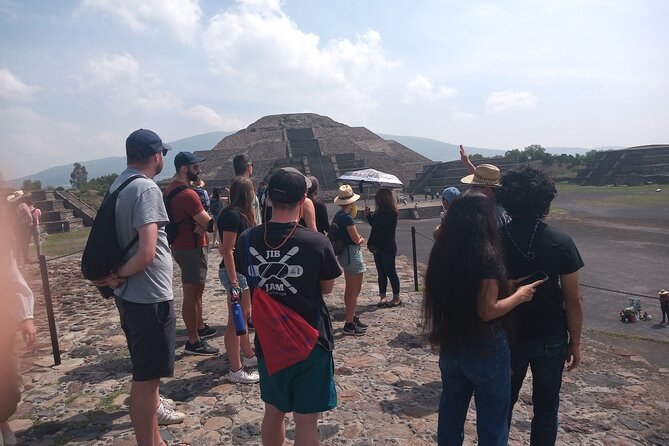
At $73 per person, this tour is priced as a guided visit rather than a simple entrance ticket. The amount includes all fees and taxes, as well as admission to the archaeological zone. The main thing you are paying for is the structure of the walk and the guide’s interpretation.
I see the value in that arrangement if you want the major route explained in English. Teotihuacán covers enough ground that a guide can save you from wandering between the Citadel, Avenue of the Dead, Sun Pyramid, palaces, and Moon Pyramid without a clear plan.
The value is less obvious if you already know the site well or want complete control over your pace. A self-guided visit would give you more freedom to stop, photograph, and rest. This tour is better suited to someone who wants an organized route and cultural context within three hours.
Because the price is non-refundable and cannot be changed after booking, check your schedule carefully before paying. The activity is often booked well in advance, with an average booking lead time of 41 days. That is a useful sign that you should not leave planning until the last minute if this specific time slot suits your Mexico City plans.
Group size, timing, and practical comfort
The maximum group size is 40 people. That is not a private or small-group walk, so the guide may need to keep the group moving and repeat explanations for people at the back. The advantage is a lower price than a private tour, while the tradeoff is less personal attention.
The English-language format is helpful if you want the history and architecture explained as you walk. Confirmation is provided at booking, and the site is near public transportation. The route ends by Gate 3, where you can find a bus stop to Mexico City and Uber service.
The 8:30 to 11:30 schedule gives you a morning visit. It also means you should arrive ready to begin rather than treating the first part as a leisurely orientation. Start with water, sun protection, and shoes suited to a long archaeological walk.
The tour is mobile-ticket friendly, which keeps the booking process simple. Still, save the ticket where you can reach it easily on your phone. The tour does not list bottled water as an inclusion, and that small omission is worth taking seriously in an open archaeological zone.
Who will get the most from this walk
I would choose this tour if you want a clear introduction to Teotihuacán and prefer a guide to connect the major monuments. It suits first-time visitors who want to see the central route, hear about the city’s people and materials, and finish in a known location with onward transport.
It is also a good fit if details such as acoustics, symmetry, pyramid construction, apartment compounds, and obsidian interest you. Those subjects give the visit more substance than a simple march from one famous pyramid to another.
I would hesitate if you dislike fixed schedules, large groups, or extended walking. The route is described as long, and three hours leaves limited room for wandering away from the main path. The tour may also disappoint you if you expect bottled water, a private guide, or a flexible cancellation policy.
The strongest reason to book is the guide. Joel is presented as kind, hospitable, and skilled at choosing useful viewpoints. A guide with that approach can make the wide site easier to read and can turn small details, such as a courtyard or acoustic effect, into part of the larger story.
Should you book this Teotihuacán tour?
Book it if you want an organized English walking tour that covers the Citadel, Temple of Quetzalcóatl, Avenue of the Dead, Sun Pyramid, palace areas, and Moon Pyramid in about three hours. The included admission, Gate 3 finish, and attention to acoustics and local materials add practical and cultural value.
Skip it if you want to explore at your own speed, avoid a group of up to 40 people, or need flexible cancellation. Bring water, expect a long walk, and plan your transportation from Gate 3 rather than Gate 1.
FAQ
How long is the Teotihuacán walking tour?
The tour lasts approximately three hours.
What time does the tour operate?
The listed operating hours are 8:30 AM to 11:30 AM, Monday through Sunday.
Where does the tour start?
It starts at the parking area for Gate 1 of the Archaeological Zone of Teotihuacán, in 55825 Mexico.
Where does the tour end?
The tour ends at Gate 3, near a restaurant, bathrooms, Uber service, and a bus stop for Mexico City.
Is admission to Teotihuacán included?
Yes. Admission tickets, all fees, and taxes are included in the tour price.
Is bottled water included?
No. Bottled water is not included, so you should bring your own or buy it at the entrance.
What language is the tour offered in?
The tour is offered in English.
Who is the guide?
The experience is provided by Native Tour Guide Teotihuacán, and Joel is identified as the guide connected with the visit.
How large can the group be?
The maximum group size is 40 people.
Can I cancel or change the booking?
No. The experience is non-refundable and cannot be changed for any reason after booking.
Just added around Mexico City
- Xochimilco’s Wild Side: Mezcal, Insects & Culture★ 4.9 · 10 reviews
- Xochimilco: Food and Trajinera Ride with Local Women★ 5.0 · 5 reviews
- Xochimilco: Island of the Dolls Tour Games and Drinks★ 5.0 · 25 reviews
- Xochimilco Ecological Tour – Away From the Crowds (3 Hours)★ 5.0 · 15 reviews
- Xochimilco + Coyoacán Combo Full-Day Tour★ 5.0 · 3 reviews
- Xochimilco floating gardens, Coyoacan and UNAM murals★ 4.0 · 6 reviews
- Val´quirico And The City of Angels Puebla From Mexico City★ 5.0 · 3 reviews
- Xochimilco: amanecer en kayak Ciudad de México★ 5.0 · 35 reviews
Teotihuacan Tours from Mexico City, compared.
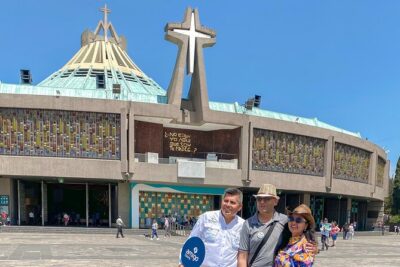
Teotihuacan, Guadalupe Shrine & Tlatelolco Day Tour with Lunch
Read our review →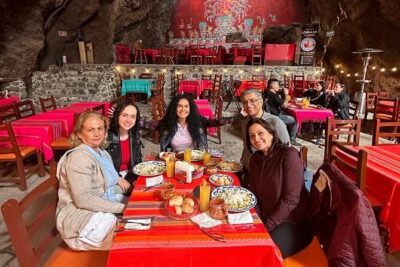
Balloon flight + Breakfast in cave + Pyramids + Pick up CDMX.
Read our review →
Teotihuacan pyramids morning or afternoon without tourist traps
Read our review →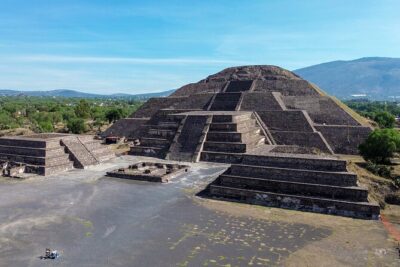
Teotihuacan Early Access Guided Tour with optional Lunch
Read our review →
Balloon flight + pick up in CDMX + Breakfast in Cave + Pyramids
Read our review →
Balloon Flight + Cave Breakfast + Pick Up from CDMX or We Fly
Read our review →
Teotihuacan Hot Air Balloon Flight from Mexico City / Volare
Read our review →
Hot Air Balloon Flight with Breakfast Cave and Pyramids Tour
Read our review →Browse the lists this tour appears in