
Reviewed · MEXICO CITY
The hidden archaeology in the CDMX
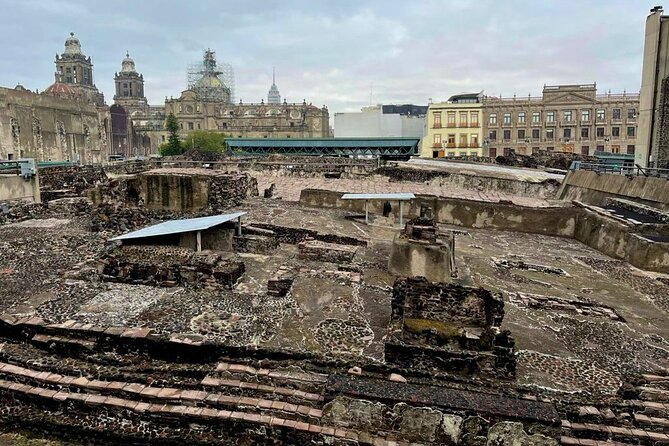
Mexico City’s oldest stories are often right under your feet. This private tour helps you picture Mexico Tenochtitlán, the Mexica capital, before following its destruction and reshaping under Spanish rule and Indigenous allies. It links archaeological clues, colonial buildings, and modern streets that are easy to pass without noticing.
I like the way the route focuses on small archaeological details, not just famous monuments. I also like that it is private, so your group can ask questions and keep a pace that suits you. The main caution is that all sites are visited from outside, so this is a street-level history walk, not a museum tour with interior access.
Key points to know before booking
- Look beneath the modern city: Archaeological windows and surviving foundations help reveal the Mexica capital below today’s streets.
- A private four-hour route: Only your group participates, with the tour offered in English.
- Eight central stops: The route includes the Historic Center, Zócalo, Templo Mayor area, Casa de los Azulejos, and several less obvious sites.
- No interior admissions: Every stop is viewed from outside, and admission is listed as free.
- A useful central finish: The tour ends at the Plaza del Palacio de Bellas Artes.
- One serious reliability warning: A past booking ended with the guide failing to arrive, so confirm the appointment before setting out.
Why the archaeology is easy to miss
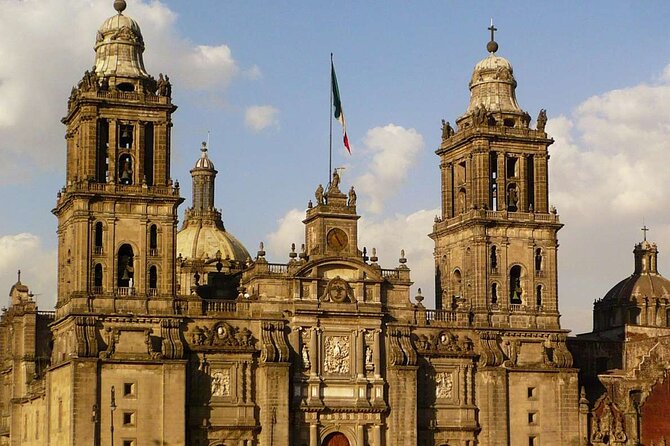
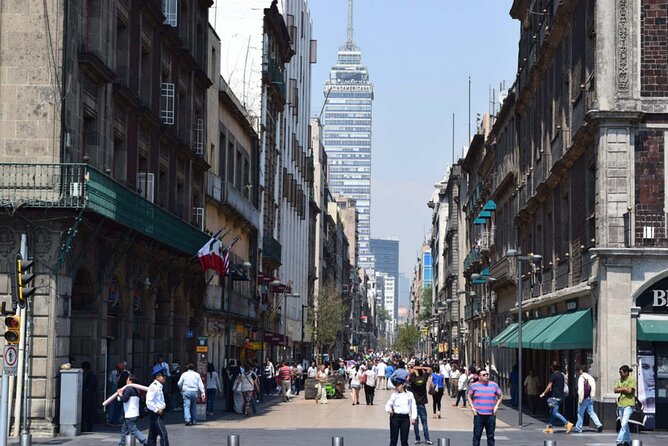
Mexico City’s Historic Center can feel like one giant architectural display, but its oldest layer is not always obvious. Colonial walls, busy streets, government buildings, churches, and shops occupy ground that once belonged to Mexico Tenochtitlán.
That is the central idea here. Instead of treating each building as an isolated sight, the guide explains how the city changed from Mexica capital to Spanish colonial center. You are encouraged to imagine the sacred spaces, streets, and power structures that existed before the conquest.
I find that approach useful because the archaeology is often fragmentary. You may see a small exposed wall, a marked foundation, or an archaeological opening rather than a complete monument. The value comes from learning what that fragment means and how it fits into the larger story.
The tour lasts about four hours and is private. That makes it a good choice if you want to ask questions about the conquest, urban development, or the relationship between surviving buildings and lost structures. It also means you are not sharing the outing with a large mixed group.
The route is offered in English. No guide name is provided, so you should confirm who will lead your booking and make sure the meeting details are clear.
Other Mexico City days people book alongside this one:
- Teotihuacan, Guadalupe Shrine & Tlatelolco Day Tour with Lunch
★ 5.0 · 11,603 reviews - Xochimilco, Coyoacan and Frida Kahlo with Optional Lunch
★ 4.5 · 7,320 reviews - Balloon flight + Breakfast in cave + Pyramids + Pick up CDMX.
★ 5.0 · 6,335 reviews
Starting at José María Izazaga 129
The meeting point is José María Izazaga 129 in the Centro Histórico, near public transportation. From there, the route moves through several points of archaeological and historical interest.
The first section lasts about 1 hour and 50 minutes, making it the longest part of the outing. That tells you where the tour puts its attention: not on rushing from one famous building to another, but on laying out the story of the old city.
You should expect a fair amount of standing and walking through the central area. The supplied information does not give a precise walking distance, so wear comfortable shoes and bring water. Since the sites are visited from outside, the quality of your experience will depend heavily on the guide’s explanations and your ability to follow the story on the street.
The route is designed for most people, but it is not recommended for people with babies. If you are traveling with an infant, the combination of city walking, outdoor stops, and a four-hour schedule may be awkward.
Hospital de Jesús and the layers of conquest
The Hospital de Jesús Nazareno receives about 10 minutes. The guide explains the hospital’s history and the sense of mystery associated with the site.
This stop matters because it connects the conquest period with the city that followed. It is not presented as a long museum visit. Instead, you pause outside while the guide explains why this place belongs in the story of Mexico City.
Ten minutes is short, so do not expect an extended architectural study. I would treat it as a compact piece of the larger narrative. The stop works best when you are already thinking about how the Spanish city was built over, around, and alongside the Mexica capital.
Museo de la Ciudad de México in ten minutes
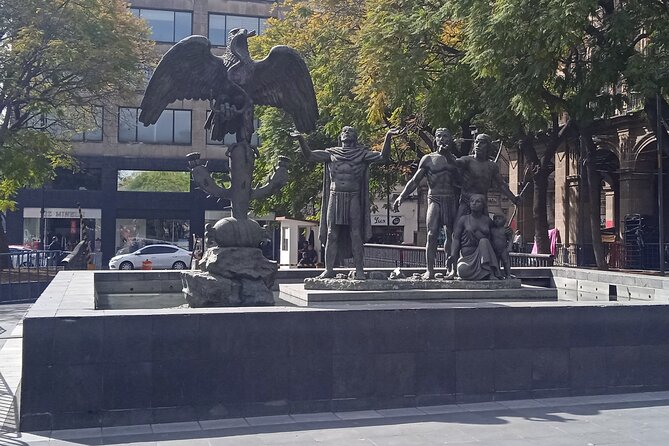
The Museo de la Ciudad de México occupies another short stop of about 10 minutes. The building is described as a place connected to the history of Mexico City.
Again, the emphasis is on context from outside rather than an interior museum visit. That distinction is important. If you want to see galleries, objects, or exhibitions, you will need a separate visit. On this tour, the building functions as a marker in the city’s long development.
I like including a stop such as this because it broadens the story beyond the conquest alone. Mexico City did not stop changing after the Spanish takeover. Its buildings and public spaces continued to reflect different periods, and this stop gives the guide a place to discuss the city as a whole.
A completely different kind of day in Mexico City:
- Teotihuacan pyramids morning or afternoon without tourist traps
★ 5.0 · 6,186 reviews - Teotihuacan Early Access Guided Tour with optional Lunch
★ 4.5 · 6,138 reviews - Balloon flight + pick up in CDMX + Breakfast in Cave + Pyramids
★ 5.0 · 5,651 reviews - Balloon Flight + Cave Breakfast + Pick Up from CDMX or We Fly
★ 5.0 · 4,410 reviews
Reading the Zócalo in 20 minutes
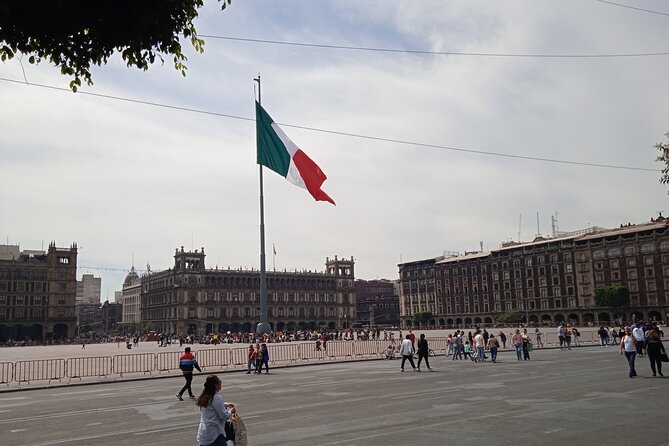
The Zócalo gets about 20 minutes. The guide points out important details of this famous square and explains why it matters.
Many people see the Zócalo as a huge open plaza and move on. A guided pause gives you time to consider the square as a place of power, ceremony, and change. The tour’s larger purpose is to help you connect this modern civic space with the earlier Mexica capital beneath it.
The limitation is simple: twenty minutes can only introduce the site. You will not receive every detail about the surrounding buildings or the full history of the square. Still, it is enough time to establish the Zócalo’s role before the route moves toward more specific archaeological evidence.
Because the Zócalo is one of the most recognizable places in the city, this stop also helps you get your bearings. It anchors the more subtle archaeological stops that follow.
Archaeological windows at the former archbishop’s palace
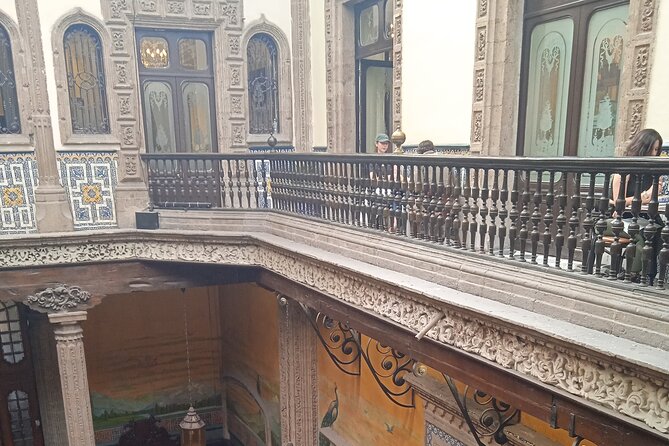
At the Museo de Arte SHCP Antiguo Palacio del Arzobispado, the guide shows a series of archaeological windows in the area. The stop lasts about 20 minutes.
This is one of the more distinctive parts of the route. An archaeological window can reveal how the city’s present buildings sit above older traces. You are not simply looking at a colonial structure as a finished object. You are being shown evidence of what came before.
The stop is especially useful for anyone who wants to understand how archaeology works in a dense historic center. Ancient remains may survive in small sections, incorporated into later construction or exposed through carefully placed openings. The guide’s explanation is what turns those details into a readable part of the city.
You will not go inside the palace or museum as part of this outing. Keep that in mind if you are hoping for an art collection or interior tour. This is an exterior explanation of the archaeological evidence.
The Templo Mayor area and the sacred center
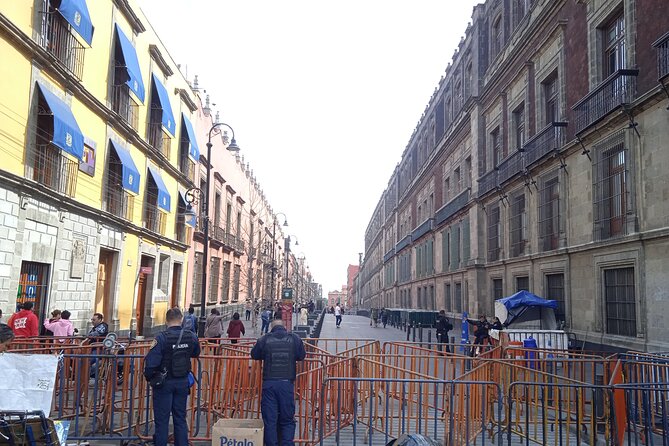
The Museo del Templo Mayor receives about 30 minutes, the longest single museum-related stop on the route. The guide explains how the sacred space of the Aztecs worked and what its structure was like.
The supplied details do not promise entry to the museum, and all sites are visited from outside. So you should expect to learn about the temple complex from the surrounding area rather than explore the museum galleries.
This is likely the central archaeological stop. The guide’s task is to help you understand the organization of the sacred precinct, not merely point to a ruin. That matters because the Templo Mayor was part of a larger ceremonial and political center. The explanation gives shape to the city that is no longer fully visible.
Thirty minutes is long enough for a useful introduction, though not enough for every feature. If Templo Mayor is a major reason for your visit, you may want to return separately for the indoor museum and excavation area. The private tour can serve as preparation, giving you a framework before you spend more time there on your own.
Centro Cultural España and the Mexica elite
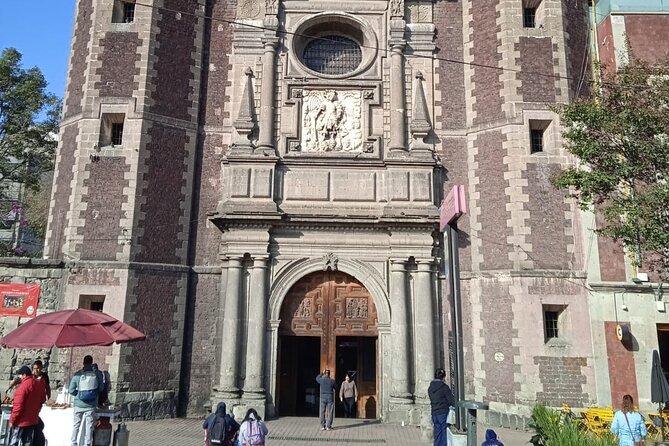
The Centro Cultural España en México receives about 20 minutes. Here, the guide discusses the former university of the Mexica elite.
This stop adds an important social layer. Archaeology is not only about temples and stones. It also helps explain who held power, how elite education worked, and how the city organized knowledge and authority.
The phrase former university should not lead you to expect a modern campus visit. The stop is an exterior explanation, with no admission included. Its value comes from the connection between a specific site and the people who shaped Mexica society.
I like this part of the route because it keeps the story from becoming a simple sequence of battles and monuments. You get a glimpse of institutions and education, which makes the old city feel more like a functioning society.
Casa de los Azulejos and the route toward Bellas Artes
The final named stop is Casa de los Azulejos, visited for about 15 minutes. It is described as one of the most beautiful houses in the Historic Center.
This is a change of mood from exposed archaeology. The building gives you a chance to appreciate the visual character of the historic center while keeping the focus on its layers of construction and history. The tour does not include interior access, so the stop is about the exterior and the guide’s commentary.
The tour ends at the Plaza del Palacio de Bellas Artes on Avenida Juárez. That is a practical finish in a central part of the city, and it leaves you near one of Mexico City’s best-known cultural buildings. The outing does not include a visit inside Bellas Artes, but the location makes it easy to continue exploring after the tour.
The route’s ending also helps connect the old center with the wider city. You begin near Izazaga and finish near Bellas Artes, moving through a dense concentration of historic sites along the way.
What the $30.49 price really gives you
At $30.49 per person, the value depends on how much you want interpretation rather than admission. Since every location is visited from outside and admission is listed as free, you are paying mainly for the private English-language guide, the route, and the explanations that connect scattered evidence.
That can be good value if you are new to Mexico City or find archaeological sites difficult to read without context. The private format is also useful for couples, families with older children, or friends who want to ask questions without waiting for a large group.
It is less compelling if you mainly want museum interiors or a self-guided walk. You will still need to pay for separate admission if you decide to visit indoor museums afterward, and the tour itself does not replace that experience.
The price is particularly reasonable for a full private outing, but reliability matters. One booking ended when the guide did not arrive, and the customer waited an hour without receiving a cancellation or delay message. The guide later explained that a family medical problem caused the failure and apologized.
That explanation gives useful context, but it does not erase the practical problem. Before you leave for the meeting point, confirm the appointment and the guide’s arrival. If the operator provides a contact number, save it in advance. This is the one serious concern I would weigh against the otherwise useful private format.
Who will get the most from this tour
I would choose this tour if you want a focused introduction to Mexico City’s oldest layers and prefer a private conversation to a large group. It suits first-time visitors, history fans, and anyone who has walked through the Historic Center and wondered what lies beneath the colonial streets.
It is also a good fit if you want to see several locations without planning the route yourself. The guide gives each stop a role in the larger story, from the former Mexica sacred center to colonial institutions and later city landmarks.
I would not choose it as your only activity if you want extensive museum time. The tour does not include interior visits, and several stops last only 10 to 20 minutes. It is better understood as a guided orientation to the archaeology and history of the center.
Families with babies should think carefully before booking because the activity is not recommended for them. Most other people can participate, according to the provided information, but you should still be comfortable with a four-hour outdoor city outing.
Free cancellation is available up to 24 hours before the start time for a full refund. Changes or cancellations made within 24 hours are not accepted for a refund, so keep the local cut-off time in mind.
Should you book the hidden archaeology tour?
Book it if you want the Historic Center explained as a layered city rather than a row of attractive buildings. The strongest parts are the archaeological windows, the Templo Mayor explanation, the Mexica education site, and the private format.
Do not book it expecting a museum crawl or guaranteed interior access. You will see all locations from outside, and the tour depends on the guide’s ability to make small remains and familiar plazas meaningful.
At $30.49, I think it offers a fair introduction, especially for a private English-language outing. Confirm the appointment before you go, bring comfortable shoes, and consider adding a separate visit to the Templo Mayor museum if archaeology is your main interest.
FAQ
How long does the tour last?
The tour lasts approximately four hours.
What language is the tour offered in?
The tour is offered in English.
Is this a private tour?
Yes. Only your group participates.
Where does the tour begin?
It begins at José María Izazaga 129 in the Centro Histórico of Mexico City.
Where does the tour end?
It ends in the Plaza del Palacio de Bellas Artes.
Can I go inside the museums and historic buildings?
No. All sites are visited from outside.
Is admission included?
Admission is listed as free for the stops, but the tour does not include interior museum visits.
Can I cancel for a full refund?
Yes, if you cancel at least 24 hours before the experience starts. Cancellations or changes made less than 24 hours in advance are not refunded.
Just added around Mexico City
- Xochimilco’s Wild Side: Mezcal, Insects & Culture★ 4.9 · 10 reviews
- Xochimilco: Food and Trajinera Ride with Local Women★ 5.0 · 5 reviews
- Xochimilco: Island of the Dolls Tour Games and Drinks★ 5.0 · 25 reviews
- Xochimilco Ecological Tour – Away From the Crowds (3 Hours)★ 5.0 · 15 reviews
- Xochimilco + Coyoacán Combo Full-Day Tour★ 5.0 · 3 reviews
- Xochimilco floating gardens, Coyoacan and UNAM murals★ 4.0 · 6 reviews
- Xochimilco: amanecer en kayak Ciudad de México★ 5.0 · 35 reviews
- Xochimilco: Eco Tour With Food★ 4.8 · 7 reviews