
Reviewed · MEXICO CITY
The Best of Santa Maria de la Ribera
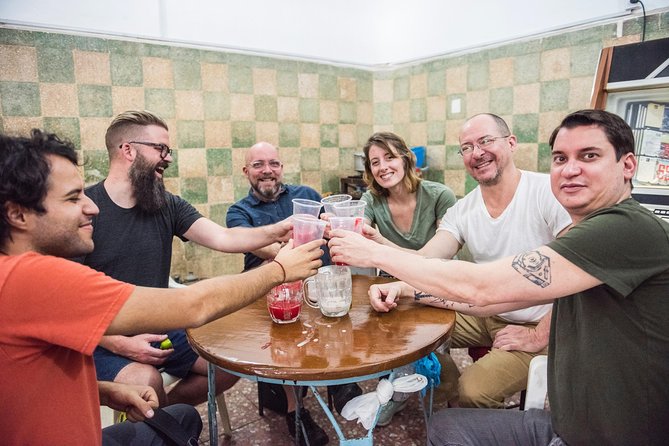
Mexico City has food tours in famous neighborhoods, but this one takes you to Santa María la Ribera, a 19th-century district where daily life still feels local. You’ll visit a working tamales factory with more than 20 varieties, then slip into a no-sign pulquería that has served the neighborhood for over a century.
I like the way guide Nico Garcia connects food with Mexican history and resilience. I also like the small-group format, which makes it easier to ask questions and linger over the tastings. The main consideration is timing: the tour begins at 1 p.m. and runs about three and a half hours, so it replaces a large breakfast and lunch rather than acting as a quick snack walk.
Key points to know before you book
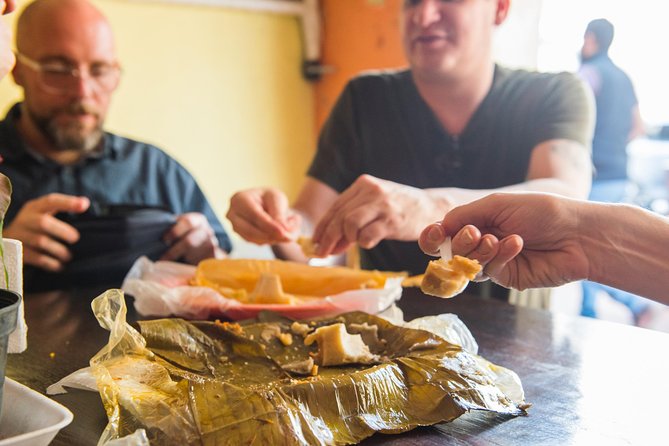
- A working tamales factory is the food centerpiece: You’ll see a local operation producing more than 20 varieties each day.
- The tour visits an unsigned pulquería: Expect a generous taste of pulque, the fermented drink with pre-Hispanic roots.
- You make herb-infused Mexican salt: This hands-on stop adds something to do, not just something to eat.
- Santa María la Ribera supplies the setting: You’ll see a neighborhood market, a century-old geology museum, a garden, and old local landmarks.
- The food is substantial: The included tastings are intended to cover a large breakfast and lunch combined.
- The group is capped at eight: That keeps the walk personal, though the experience is best for people who enjoy standing, strolling, and trying unfamiliar foods.
Why Santa María la Ribera makes a good food-tour setting
Santa María la Ribera was founded in the 1860s and still carries much of its turn-of-the-century character. It is not the Mexico City neighborhood most first-time visitors put at the top of their list, and that is exactly the point.
You get a look at a part of the city shaped by residents rather than sightseeing schedules. The route mixes food businesses, public spaces, and local landmarks, so you are not simply moving from one restaurant to the next. The neighborhood itself becomes part of the meal.
The tour begins at Alameda de Santa María, on Calle Salvador Díaz Mirón. That gives you a practical starting point in a public garden before the tasting begins. From there, Nico Garcia leads you through a compact area with a strong local feel.
I like this setup because the food has context. A tamale is not presented as an isolated dish. It is connected to the people who make it, the shops that sell it, and the neighborhood where it has a daily role.
Other Mexico City days people book alongside this one:
- Teotihuacan, Guadalupe Shrine & Tlatelolco Day Tour with Lunch
★ 5.0 · 11,603 reviews - Xochimilco, Coyoacan and Frida Kahlo with Optional Lunch
★ 4.5 · 7,320 reviews - Balloon flight + Breakfast in cave + Pyramids + Pick up CDMX.
★ 5.0 · 6,335 reviews
Making herb-infused salt in a local garden
One of the first unusual stops is a local garden where you make your own herb-infused Mexican salt. This is a small activity, but it gives the tour a welcome change of pace.
Many food walks ask you to sample one bite after another. Here, you get to handle an ingredient and see how a simple seasoning can carry flavor. It also creates a useful memory of the tour that is more personal than another restaurant plate.
The garden stop should appeal to cooks and curious eaters, but it is not a full cooking class. If you are looking for a long hands-on lesson, this part may feel brief. Its value is in showing you one modest piece of Mexican food culture before the larger tastings begin.
The tamales factory with more than 20 varieties
The working tamales factory is likely to be the most memorable food stop. It offers more than 20 varieties each day, giving you a chance to see how broad the tamale tradition can be.
The important detail here is that this is an operating neighborhood business, not a display made for tour groups. You are visiting a place that produces food for local customers. That makes the stop useful for understanding how traditional Mexican food remains part of ordinary city life.
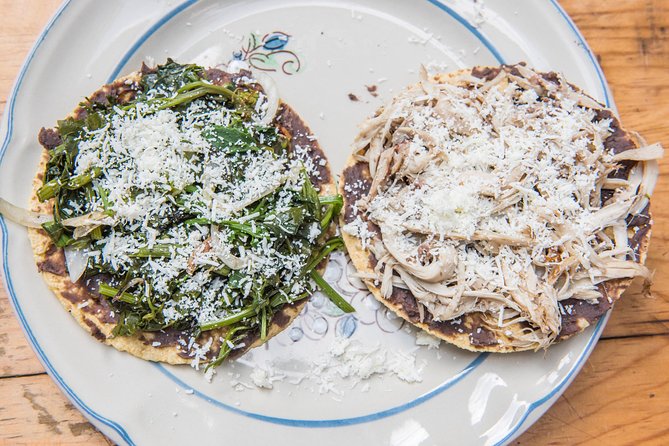
The tour includes enough food for what is described as a large breakfast and lunch combined. Tamales are filling, so pace yourself early. You may be tempted to try everything, but the later stops also matter.
The precise selection of tamales can change, and no fixed menu is provided. That is normal for a working food business, but it means you should book this tour for variety and local access rather than for one guaranteed flavor.
A quick walk through a traditional city market
The market stop is brief, but it adds another layer to the route. You will see how a traditional Mexico City market looks and feels, with the focus on local shopping rather than a formal market demonstration.
For you, the main benefit is comparison. A factory shows food production at scale, while a market shows how ingredients and everyday purchases fit into neighborhood life. The two stops work well together.
Do not expect a long shopping period or a chance to build a full market meal. The itinerary describes this as a quick stroll. If you want extensive time for photos or buying ingredients, you will need to keep your expectations modest.
A completely different kind of day in Mexico City:
- Teotihuacan pyramids morning or afternoon without tourist traps
★ 5.0 · 6,186 reviews - Teotihuacan Early Access Guided Tour with optional Lunch
★ 4.5 · 6,138 reviews - Balloon flight + pick up in CDMX + Breakfast in Cave + Pyramids
★ 5.0 · 5,651 reviews - Balloon Flight + Cave Breakfast + Pick Up from CDMX or We Fly
★ 5.0 · 4,410 reviews
A cooking school that supports local food businesses
The route also includes a neighborhood cooking school and restaurant that helps local people who want to start their own food businesses. This is one of the more thoughtful stops because it links eating with work, training, and economic opportunity.
You will not just hear about established restaurants. You will see a place focused on helping people develop food businesses of their own. That gives Nico a useful setting for explaining how culinary skills can support a family or neighborhood enterprise.
For me, this is where the tour moves beyond tasting. Food becomes a way to discuss opportunity and resilience without leaving the streets where those ideas matter. It is also a good stop for anyone who enjoys learning how a food culture is maintained, not just sampling its finished dishes.
Finding the unsigned pulquería
The pulquería is the tour’s most atmospheric stop. It has swinging saloon doors and no sign, and local residents have been coming there for more than 100 years.
You will taste a generous portion of pulque, a fermented Mexican drink with pre-Hispanic roots. The tour also includes one Mexican microbrew or mezcal, so you have another drink choice as part of the experience.
This stop is not ideal for someone who wants to avoid alcohol. The included pulque and additional drink are central parts of the route, and extra personal beverages are not included. The tour does not describe a nonalcoholic substitute.
If you are open to trying traditional drinks, the pulquería offers a rare look at a place that is easy to miss. Its lack of a sign is part of the character. You are not being led to a polished attraction with a large entrance. You are being shown a long-running local institution.
Santa María’s geology museum and old landmarks
Food is the main reason to book, but the route includes several neighborhood landmarks. You will see a century-old geology museum along with other features that help explain Santa María la Ribera’s older character.
The museum matters because it keeps the walk from becoming a string of unrelated bites. It gives you a reminder that this is a historic district with civic and cultural buildings, not just a convenient collection of eateries.
The tour does not promise a full museum visit or a detailed architectural tour. Think of these sights as part of the walk and the conversation. Nico uses the neighborhood to connect Mexican history and culture with the food in front of you.
That approach suits you if you prefer a food tour with some local history. If you want a dedicated art, architecture, or museum experience, you should set aside another part of your Mexico City schedule for that.
Buñuelos, coffee, and the final stop
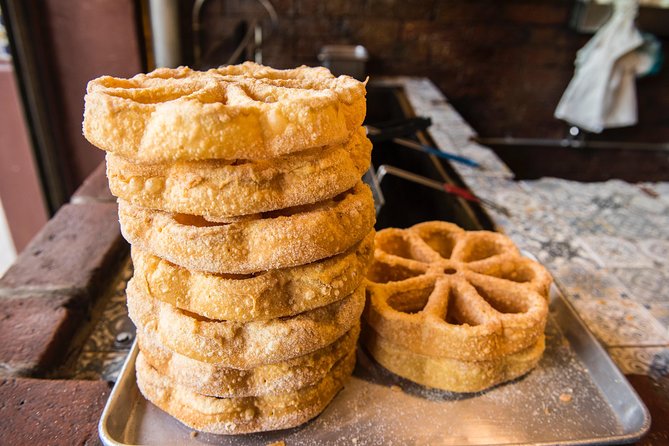
The sweet course is buñuelos, crunchy fried dough covered with sugar syrup. After the savory food and fermented drinks, this gives the tour a simple, satisfying finish.
The tour also includes one agua fresca and coffee or tea at the end. These are useful inclusions because the afternoon contains plenty of food and at least some alcohol. You can finish with a nonalcoholic drink even though the pulque and beer or mezcal are part of the tasting plan.
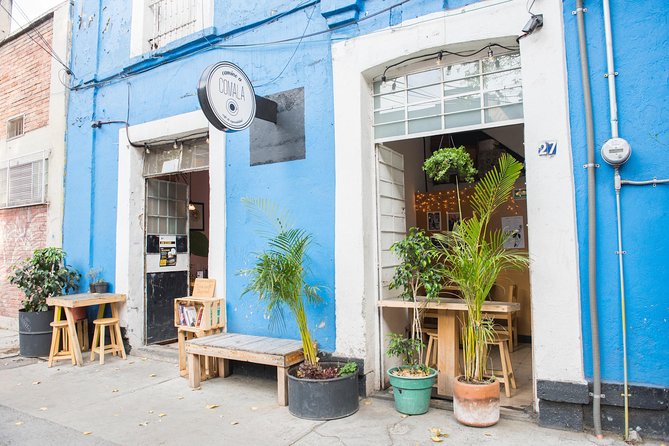
The final destination is Estanquillo El 32, at Calle Dr. Enrique González Martínez 32. It is a family-run restaurant and store selling craft beer, artisanal mezcal, coffee, honey, salsas, and other products.
This is a practical ending. You can browse local products after the meal, and you finish in a place that continues the food theme. Souvenirs are not included, so anything you buy there costs extra. Still, it is a convenient place to pick up a few Mexican pantry items if something catches your eye.
How much food do you really get for $122.46?
At $122.46 per person, this is not a budget snack walk. The value depends on how much you care about access, guidance, and variety.
You are paying for about three and a half hours, a small group capped at eight, a wide range of tastings, and a route that combines food with neighborhood history. The included food is substantial enough to replace a large breakfast and lunch combined. That makes the price easier to justify if you would otherwise pay for two meals and several separate tastings.
The working tamales factory and unsigned pulquería also add value because they are not generic stops you can easily reproduce by following a restaurant list. You are getting an introduction to places and traditions that may be difficult to find on your own, especially if you do not speak Spanish.
The price is less attractive if you eat very little, avoid alcohol, or prefer to choose each dish yourself. It is also not the best match for a person who wants a formal cooking class. This is a guided tasting walk, with one short hands-on salt activity, not a full-day culinary workshop.
Timing, group size, and getting there
The tour starts at 1 p.m. at Alameda de Santa María and ends at Estanquillo El 32. Transport to the meeting point and from the end point is not included, so plan those parts yourself.
The experience lasts approximately three hours and thirty minutes. The itinerary itself gives three hours for the main tour, so allow the full stated duration and a little breathing room when planning the rest of your afternoon.
The maximum group size is eight. That is small enough for direct conversation and quick questions, while still large enough that the exact feel may vary from one date to another. A smaller group will feel more personal. The supplied experience information also describes a particularly small group on one occasion, but you should book with the stated maximum in mind rather than expecting a private tour.
The tour is offered in English and uses a mobile ticket. It is near public transportation, and most people can participate. No special accessibility details are provided, so you should ask the provider directly if you have mobility concerns or need specific assistance.
Who will enjoy this tour most?
I would choose this tour for you if you want to see a less familiar part of Mexico City through food. It suits curious eaters who are happy to sample traditional dishes, fermented drinks, sweets, and whatever tamale selection is available that day.
It is also a good pick for people who value conversation. Nico Garcia’s approach ties Mexican history, culture, and resilience to the food, so you get more than a list of dish names.
You should think twice if you need a fixed menu, dislike alcohol, or want a relaxed restaurant meal at every stop. The route involves walking, quick visits, and changing food selections. It rewards curiosity more than control.
Families may find the food and market portions interesting, but the pulque and alcohol tasting make this less straightforward for children. The tour information says most people can participate, but it does not provide a child-specific format.
Booking and cancellation details
Confirmation is provided at booking, and the experience is offered in English. It is often booked about 28 days ahead, so you should not leave it until the last minute if your Mexico City dates are fixed.
Free cancellation is available until 24 hours before the local start time for a full refund. Cancellations or changes made within 24 hours are not refunded or accepted.
The tour requires good weather and a minimum number of participants. If poor weather or low enrollment cancels the experience, you will be offered another date or experience, or a full refund.
Should you book The Best of Santa Maria de la Ribera?
Book it if you want a generous, food-first afternoon in a neighborhood that many Mexico City schedules skip. The tamales factory, unsigned pulquería, herb-salt activity, and family-run final stop give the tour a clear personality.
I especially like the balance between eating and context. You get enough food to replace two meals, but you also see a market, garden, cooking school, geology museum, and older neighborhood landmarks. That makes the price easier to defend for a first or second visit to Mexico City.
Skip it if you want a low-cost tasting, a fixed menu, or a fully nonalcoholic route. For everyone else, the small group and Nico Garcia’s food-centered storytelling make this a strong choice for discovering Santa María la Ribera without treating it like a sightseeing backdrop.
FAQ
Where does the tour start?
It starts at Alameda de Santa María on Calle Salvador Díaz Mirón in Santa María la Ribera, Mexico City.
Where does the tour end?
It ends at Estanquillo El 32, a family-run restaurant and store at Calle Dr. Enrique González Martínez 32.
What time does the tour begin?
The start time is 1 p.m.
How long does the experience last?
The experience lasts approximately three hours and thirty minutes.
What language is the tour offered in?
The tour is offered in English.
How large is the tour group?
The maximum group size is eight travelers.
Is food included?
Yes. The included food is described as enough for a large breakfast and lunch combined.
Which drinks are included?
You receive one agua fresca and one coffee or tea at the end, a generous taste of pulque, and one Mexican microbrew or mezcal.
Is transportation included?
No. Transport to the meeting point and from the ending point is not included.
Can I cancel for a refund?
Yes. You can cancel at least 24 hours before the local start time for a full refund. Cancellations within 24 hours are not refunded.
Just added around Mexico City
- Xochimilco’s Wild Side: Mezcal, Insects & Culture★ 4.9 · 10 reviews
- Xochimilco: Food and Trajinera Ride with Local Women★ 5.0 · 5 reviews
- Xochimilco: Island of the Dolls Tour Games and Drinks★ 5.0 · 25 reviews
- Xochimilco Ecological Tour – Away From the Crowds (3 Hours)★ 5.0 · 15 reviews
- Xochimilco + Coyoacán Combo Full-Day Tour★ 5.0 · 3 reviews
- Xochimilco floating gardens, Coyoacan and UNAM murals★ 4.0 · 6 reviews
- Xochimilco: amanecer en kayak Ciudad de México★ 5.0 · 35 reviews
- Xochimilco: Eco Tour With Food★ 4.8 · 7 reviews