
Reviewed · WALKING TOURS
Mexico City: 1960s &1970s Mexican Architecture Walking Tour
Mexico City’s modern architecture makes the most sense when you see it beside Mexico’s older artistic traditions. This three-hour tour links the National Museum of Anthropology, Tamayo Museum, a Space Age-inspired building, the Modern Art Museum, and Hotel Camino Real to show how Mexico reshaped its public spaces from the 1960s into the 1980s.
I like the way the tour connects architecture with politics and indigenous ideas, rather than treating buildings as isolated objects. I also like the small-group format, with no more than 10 people and an academic guide such as Natalia, who is known for adapting her explanations to each group. The main drawback is the price: at $192 per person, this is a costly walking tour, especially if your main interest is simply seeing the buildings rather than studying their design.
Key points at a glance
- The Anthropology Museum is the main event: Learn how a 1960s building expresses pre-Hispanic ideas through its layout, sculpture, and symbolism.
- Chapultepec Park links the stops: You move through one of Mexico City’s best-known public spaces while comparing several major buildings.
- Natalia may be your guide: She brings art history, local knowledge, and flexibility to the experience, according to the available tour feedback.
- The tour reaches beyond architecture: Expect discussion of social change, politics, the 1968 Olympics, and Mexico’s artistic identity.
- The final stop is Hotel Camino Real: This Olympic-era hotel also contains modern Mexican art, making it more than a place to admire from outside.
- Bring light gear: Comfortable shoes, sunscreen, and rain protection matter, but leave luggage and large bags behind.
Why this Chapultepec architecture tour is different
Many Mexico City architecture tours focus on famous architects, polished façades, or the work of Luis Barragán. This experience takes another route. It uses a compact part of Chapultepec Park to explain how Mexican architects responded to national identity, modern technology, public culture, and international attention.
That gives you a stronger sense of why these buildings look the way they do. The tour begins with an institution devoted to Mexico’s pre-Hispanic civilizations, moves through museums of modern and contemporary art, and ends at a hotel built for the 1968 Olympic Games. The sequence is useful because it lets you compare buildings from different moments instead of studying one style in isolation.
You are not signing up for a long march across Mexico City. The walking is limited, although you should still wear comfortable shoes. The tour takes place rain or shine, and the park setting means sunscreen and rain gear are sensible additions to your day bag.
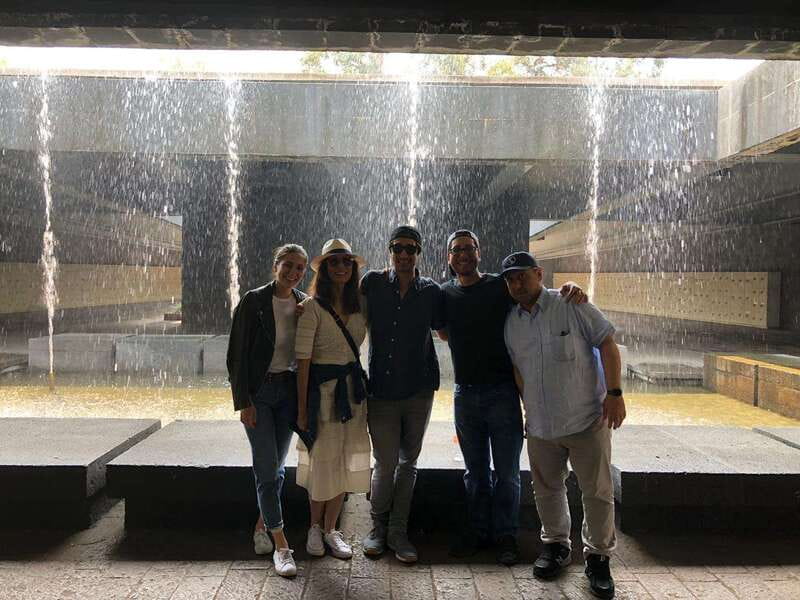
The small group size is a real advantage. With up to 10 participants, your guide has a fair chance to answer questions and adjust the discussion. On some departures, you may end up with an even smaller group. That can turn a scheduled group outing into something close to a private architectural lesson.
More Walking Tours in Mexico City:
- Historic Downtown Walking Tour
★ 5.0 · 1,289 reviews - Mexico City: Historic Downtown Walking Tour
★ 4.8 · 1,039 reviews - Frida Kahlo VIP [Museum Tickets Included] Walk, Markets & Churros
★ 5.0 · 982 reviews
Starting at the National Museum of Anthropology
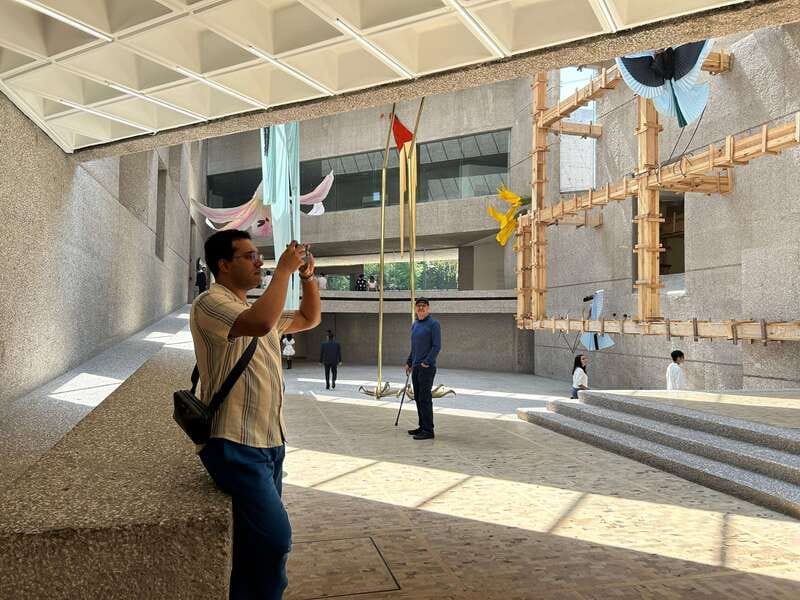
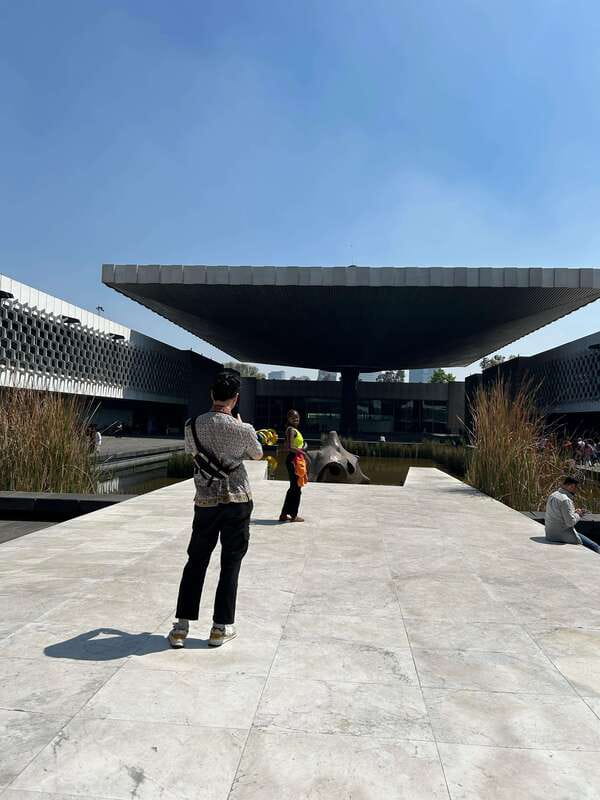
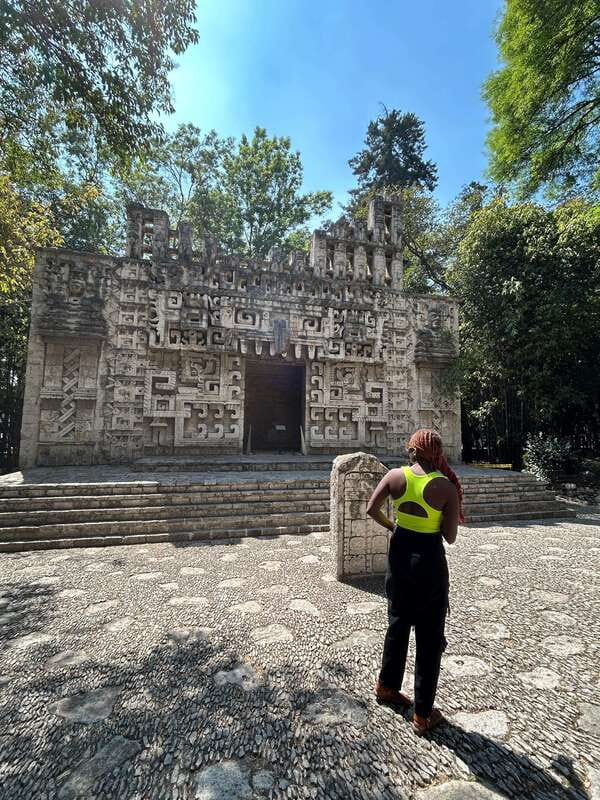
The National Museum of Anthropology is the strongest opening stop because it gives the whole tour its intellectual base. The building, designed in the 1960s by one of Mexico’s best-known architects of the period, was not intended as a neutral box for ancient objects.
Your guide explains how the museum’s design draws on pre-Hispanic ideas about the universe. That can change the way you read the building. Instead of seeing only a large modern museum with a famous courtyard, you begin to notice how its form and details refer to indigenous ways of understanding space, nature, and society.
The architecture also reflects an unusual partnership between the architect and prominent artists. Sculpture and design help bring indigenous worldviews into the building itself. This is one of the tour’s best features because the museum does not separate the structure from the objects and ideas it presents.
I would allow yourself time to look up, across, and around the spaces rather than focusing only on individual details. The guide’s interpretation is important here. Without it, you might admire the scale and craftsmanship but miss the connection between modern Mexican architecture and older Mesoamerican traditions.
This stop also explains why the tour is partly a history experience. One available assessment found it more historical than architectural, and that is a fair warning. You will study buildings, but you will also hear about Mexico’s past, national identity, and social changes. If you want a technical discussion of materials, floor plans, and construction methods alone, the balance may not suit you.
Tamayo Museum and the calmer side of modernism
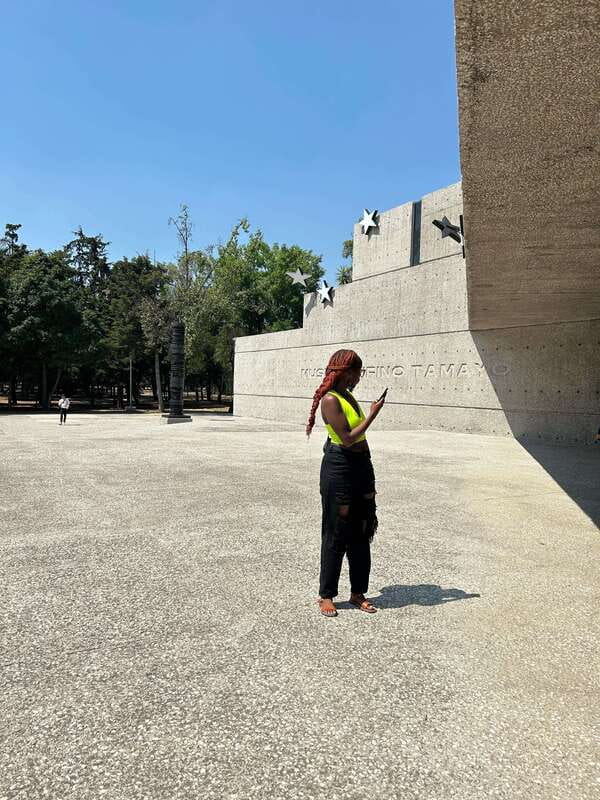
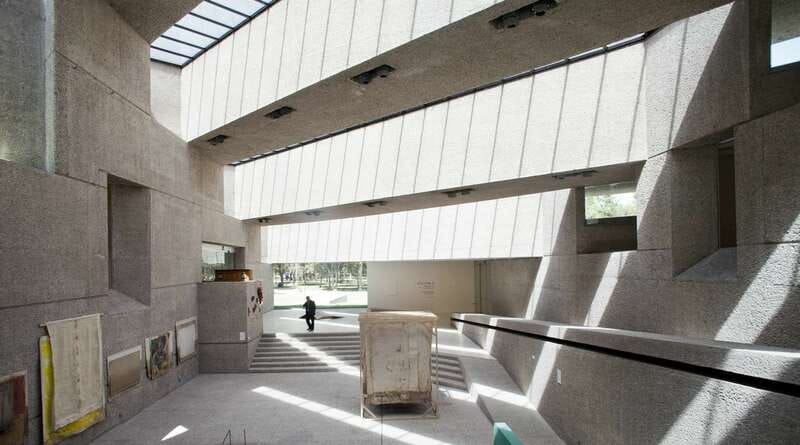
A short walk brings you to the Tamayo Museum of Contemporary Art, dedicated to Rufino Tamayo. The building was designed by two influential architects in the early 1980s, placing it slightly beyond the tour’s main 1960s and 1970s focus while showing how those ideas continued to develop.
The museum uses a modernist approach that responds to its natural surroundings. Your guide can help you consider how the building works with the park instead of competing with it. The result is a useful contrast with the large civic presence of the Anthropology Museum.
The Tamayo stop also shifts the conversation from archaeology and national identity toward modern Mexican art. Rufino Tamayo’s name gives the building a clear artistic purpose, while the architecture shows how a museum can honor that purpose without copying older forms.
You may find this part especially useful if you care about the relationship between art and buildings. The tour does not treat the museum as a simple container for exhibitions. It asks you to look at how the structure creates a setting for art and how Mexico’s cultural institutions presented a modern image in the late twentieth century.
One practical point: the tour includes museum admission for the Anthropology Museum, Tamayo Museum, and Modern Art Museum. That helps soften the high price, though the value still depends on your interest in guided interpretation. If you would rather move quickly through museums on your own, $192 is hard to justify.
A Space Age building near the museums
Not every stop is identified in detail before you book, but the route includes a nearby structure from the 1960s inspired by Space Age aesthetics. This is an appealing change of mood after the Anthropology Museum and Tamayo Museum.
The building reflects the period’s faith in new technology, flight, and the future. Its shape and function express the optimism of an era when modern design often looked forward rather than backward. Your guide places that futuristic quality within Mexico’s own cultural setting, rather than presenting it as a copy of American or European modernism.
This stop is a good reminder that Mexico City’s architecture of the period was not all monumental civic design. Architects were also responding to popular fascination with science and technology. You get to see how an international visual trend was interpreted in Mexico.
Because the supplied information does not identify the building by name, you should not book this tour expecting a fixed list of famous architect-designed houses or private interiors. Its appeal comes from the guide’s explanation of the structure and its place in the period, not from a long list of headline attractions.
A completely different kind of day in Mexico City:
- Teotihuacan, Guadalupe Shrine & Tlatelolco Day Tour with Lunch
★ 5.0 · 11,603 reviews - Xochimilco, Coyoacan and Frida Kahlo with Optional Lunch
★ 4.5 · 7,320 reviews - Balloon flight + Breakfast in cave + Pyramids + Pick up CDMX.
★ 5.0 · 6,335 reviews - Teotihuacan pyramids morning or afternoon without tourist traps
★ 5.0 · 6,186 reviews
The Modern Art Museum and the role of public culture
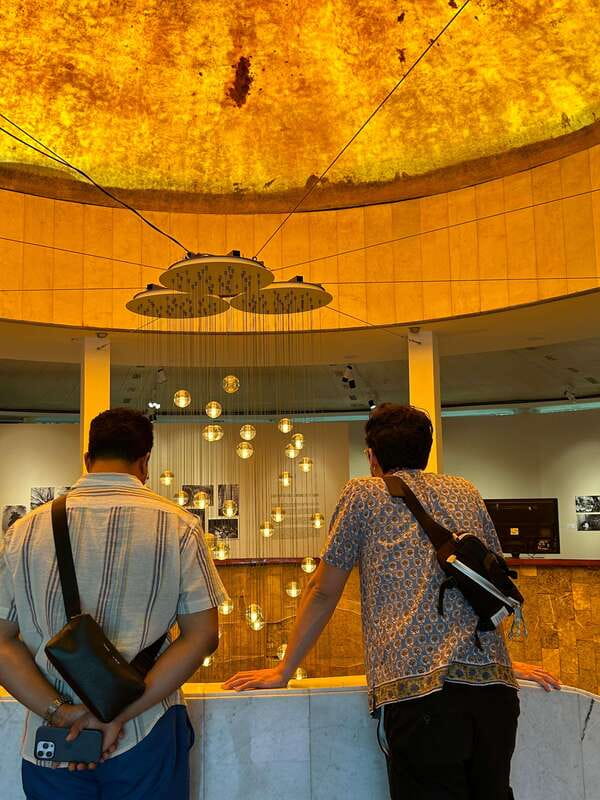
The Modern Art Museum is included in the admission package, and it adds another layer to the discussion. After seeing buildings linked to ancient civilizations, contemporary art, and futuristic design, you can place modern Mexican art within the same cultural story.
The tour uses museums to show how Mexico presented itself through art. That matters because the 1960s and 1970s were not just decades of new shapes and construction methods. They were also years when public institutions helped define Mexican identity for residents and international visitors.
The guide’s academic background should be useful here. The tour is led by someone with a graduate degree in art history, history, or architecture, and the best available feedback highlights clear explanations, local insight, and a willingness to tailor the discussion. Natalia receives especially strong praise for answering questions and adjusting the tour to a group’s interests.
For larger groups, headsets are provided so you can hear the guide clearly. Since the group limit is 10, you may not need them, but they are useful if the park is noisy or you prefer to stand back while looking at a building.
Ending at Hotel Camino Real and the 1968 Olympics
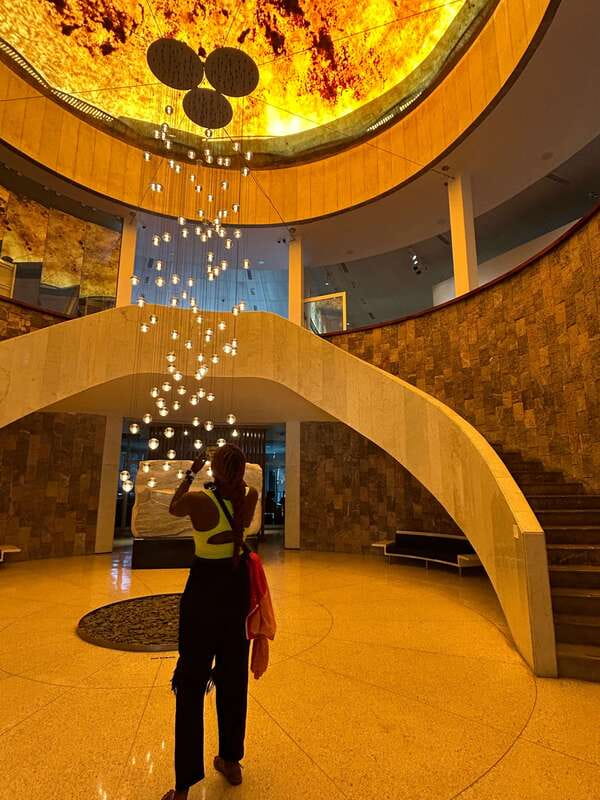
The final stop is Hotel Camino Real, built to host VIP guests during the 1968 Olympic Games. This gives the tour a strong ending because the building connects architecture with a major international event and with Mexico’s effort to present itself to the world.
The hotel is also described as an art hotel, with a substantial collection of modern Mexican art inside. That combination of hospitality, public image, and art makes the building more interesting than a standard luxury hotel. You are looking at a place designed not only for overnight stays but also for ceremony, visitors, and cultural display.
The Olympic connection adds useful political and social context. Your guide can explain how architecture served Mexico’s public ambitions during this period. The hotel’s role for VIP guests shows how design, art, and international relations could meet in a single building.
This final stop may be the most surprising part of the route. Museums are expected to contain art. A hotel that works partly as a gallery is less predictable, and it gives you a different idea of where modern Mexican art belongs.
How much walking and effort should you expect?
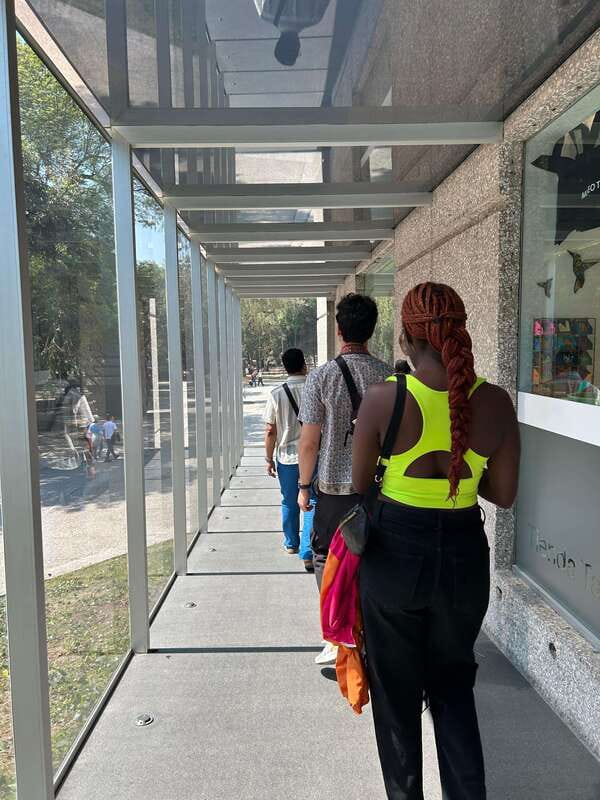
The tour lasts three hours and takes place mainly in and around Chapultepec Park. You will walk between the listed sites, but the experience is specifically described as requiring limited walking. That makes it easier than many full-day city walking tours.
Still, the tour is not suitable for people with mobility impairments according to the activity information. There is also a slight inconsistency in the description, which calls the tour wheelchair accessible while separately saying it is not suitable for people with mobility impairments. If access is important to you, contact Walk Mexico before booking and ask for current details about surfaces, museum access, seating, and distances.
The meeting point is the Porrua Bookstore in Chapultepec Park, near the ticket booth. Mexico City has many Porrua bookstores, so use the Chapultepec Park location, not a branch elsewhere. Your guide waits inside with the Walk Mexico project logo.
Leave large luggage at your hotel. Large bags are not allowed on the tour. Bring a camera, since the places on the route are considered safe and suitable for photography, along with sunscreen and rain protection.
Is $192 a fair price?
At $192 per person, this tour sits in the expensive range for a three-hour outing. The price includes an expert guide with a graduate academic degree, admission to three museums, and headsets for larger groups. It also gives you a small group, with no more than 10 participants.
That can be good value if you want serious interpretation and have a strong interest in art, architecture, or Mexico City’s cultural politics. A guide who can connect pre-Hispanic ideas, modernism, the Space Age, the Olympics, and Mexican art is offering more than a basic sightseeing walk.
The value is weaker if you mainly want photographs or a quick introduction. You may be able to visit some sites independently for less money, though you would lose the connections between them and the chance to ask questions as you go.
Natalia seems to be a particular strength. She is described as friendly, engaging, and able to shape the tour around a group’s interests. One participant who booked a group outing ended up with a private experience when the other participants did not appear. That will not be guaranteed, but it shows how the small-group setup can work in practice.
Who should book this experience?
I would recommend this tour to you if you enjoy museums but want help understanding the buildings around the art. It is also a good fit for amateur architecture fans who want historical and cultural context rather than a lecture filled only with architectural terms.
You should book it if you like asking questions. The guide’s flexibility appears to be one of the tour’s best qualities, and the small group makes conversation more realistic than on a large bus tour.
It may not suit you if you want a purely architectural route, a low-cost walk, or a fast list of landmarks. The experience spends real time on history, politics, indigenous ideas, and art. That is its strength, but it is also why one assessment found the tour more historical than architectural.
English and Spanish are available. The tour is offered rain or shine, and you can cancel up to 24 hours ahead for a full refund. You can also reserve now and pay later, which helps if your Mexico City plans are still changing.
Should you book the 1960s and 1970s architecture tour?
Book it if you want to understand how Mexico City’s modern buildings express national identity, cultural ambition, and changing ideas about the future. The Anthropology Museum gives you the strongest lesson, while the Tamayo Museum, Space Age structure, Modern Art Museum, and Hotel Camino Real broaden the story.
I would be more cautious if $192 feels steep or if you want architecture without much historical discussion. For the right audience, the fee buys access, context, and a highly personal guide-led experience. For everyone else, the route may be more rewarding when explored independently.
FAQ
How long does the tour last?
The tour lasts three hours.
Where do I meet the guide?
Meet inside the Porrua Bookstore in Chapultepec Park, near the ticket booth. Be sure to use the Chapultepec Park branch, since Mexico City has many Porrua bookstores.
Which museums are included?
Admission is included for the National Museum of Anthropology, the Tamayo Museum, and the Modern Art Museum.
What languages are available?
The tour is offered in English and Spanish.
Is the tour suitable for wheelchair users?
The activity information describes the tour as wheelchair accessible but also says it is not suitable for people with mobility impairments. Contact Walk Mexico before booking to confirm the current access arrangements for your needs.
Can I cancel the booking?
You can cancel up to 24 hours in advance for a full refund. The tour also offers a reserve-now, pay-later option.
Just added around Mexico City
- Xochimilco’s Wild Side: Mezcal, Insects & Culture★ 4.9 · 10 reviews
- Xochimilco: Island of the Dolls Tour Games and Drinks★ 5.0 · 25 reviews
- Xochimilco Ecological Tour – Away From the Crowds (3 Hours)★ 5.0 · 15 reviews
- Xochimilco: Food and Trajinera Ride with Local Women★ 5.0 · 5 reviews
- Xochimilco + Coyoacán Combo Full-Day Tour★ 5.0 · 3 reviews
- Xochimilco floating gardens, Coyoacan and UNAM murals★ 4.0 · 6 reviews
- Val´quirico And The City of Angels Puebla From Mexico City★ 5.0 · 3 reviews
- Xochimilco: amanecer en kayak Ciudad de México★ 5.0 · 35 reviews
Walking Tours, compared.
Frida Kahlo VIP [Museum Tickets Included] Walk, Markets & Churros
Read our review →
Anthropology Museum Private Experience Walking Tour
Read our review →
Walking Tour in Mexico City for Exploring their Cultural Heritage
Read our review →
Walking Tour – Impressive murals in Historical Center of Mexico City
Read our review →
Muralist Art Semi Private Walking Tour in Mexico City Downtown
Read our review →
Coyoacán Walking Tour: Access to Frida Kahlo Museum & Tacos
Read our review →Browse the lists this tour appears in