
Reviewed · MEXICO CITY COOKING CLASSES
Learn to Cook Mexican Bread
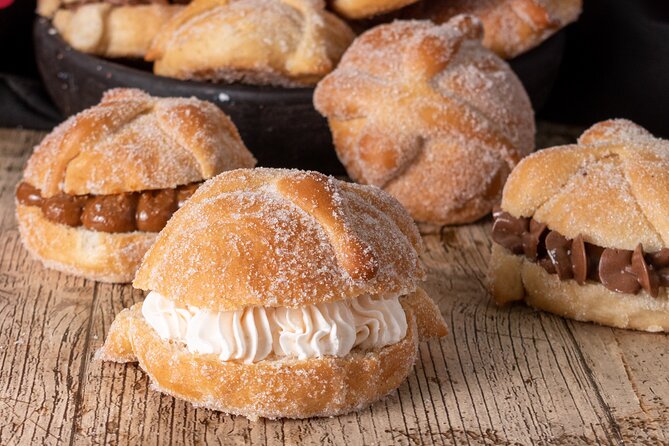
Pan de Muerto is not just a sweet roll. It is a piece of Mexico’s Day of the Dead tradition, and this three-hour class lets you work with the dough, hear why the bread is shaped as it is, and bake one to take home. You meet at Parroquia San Gabriel Arcángel, an old church in Tacuba, then move into the cooking experience.
I like two things right away: you get practical skills rather than a quick demonstration, and the class connects each ingredient to Mexican custom. Veronica and Natalia both receive special praise for their warm, clear teaching. The high-cacao hot chocolate is another smart touch. The main drawback is simple: this is not gluten free, and the class may be held in more than one language at once.
Key points to know
- Pan de Muerto from scratch: You work through ingredients, kneading, shaping, and baking rather than merely watching.
- A meaningful meeting point: The class begins at San Gabriel Arcángel Church in Tacuba, an area with history reaching back before the Spanish arrival.
- Orange, anise, and bone shapes: You learn what gives the bread its flavor and its Day of the Dead symbolism.
- Hot chocolate included: High-cacao chocolate is served with the freshly made bread.
- Small group format: The maximum is 10 people, which should allow room for questions and hands-on help.
- Local connection: Booking supports local commerce, and some versions may include contact with a neighborhood market.
Meeting at San Gabriel Arcángel in Tacuba
Your starting point is Parroquia San Gabriel Arcángel, at Calz México-Tacuba S/N in Tacuba, Miguel Hidalgo. The church sits near public transportation, so you do not need private transport arranged for you. Private transportation is not included, and the activity returns to this same meeting point at the end.
The location gives the class a better sense of place than a cooking school with no connection to the neighborhood. You begin beside an ancient church whose story reaches back before the Spanish arrived in the Americas. That does not turn the class into a full history tour, but it gives you a useful reminder: Mexican food traditions often carry layers of Indigenous, colonial, and modern life in the same dish.
I would arrive with enough time to find the church and confirm the meeting spot. The listing uses the Spanish name Parroquia San Gabriel Arcángel, so having that name and the address saved on your phone is sensible. The mobile ticket makes check-in easier, especially if you are moving around Mexico City without a printed voucher.
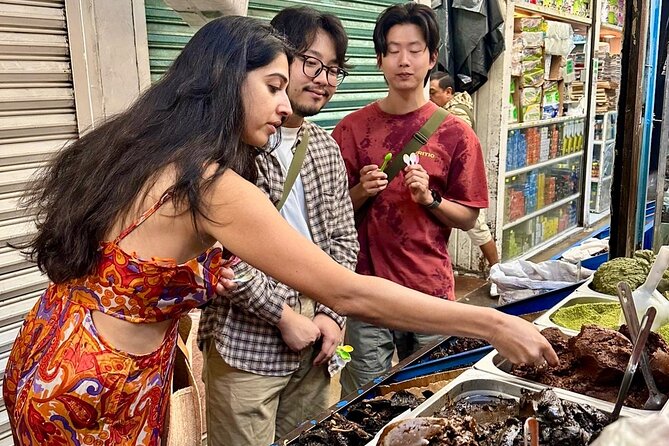
A market visit may also be part of the arranged experience. One account describes a market stop where local sellers were happy to show their goods. Since the main outline focuses on the bread class, I would treat the market as a possible added element rather than a guaranteed long market tour. If it is included on your date, it adds a useful look at the ingredients and everyday food culture behind the recipe.
More cooking classes in Mexico City:
- Mexican Cooking Class with Food Market Visit in Mexico City
★ 5.0 · 506 reviews - Essence of Mexico: Authentic Mexican Cooking Class & Market Tour
★ 5.0 · 289 reviews - Mexican Cooking Class & Cocktails in Mexico City
★ 5.0 · 134 reviews
The first lesson is the meaning of Pan de Muerto
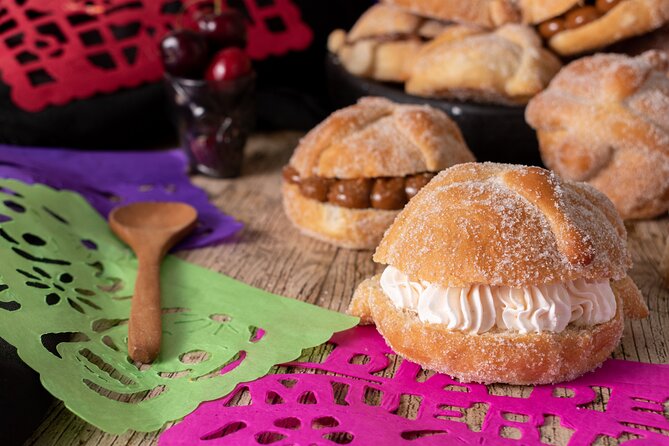
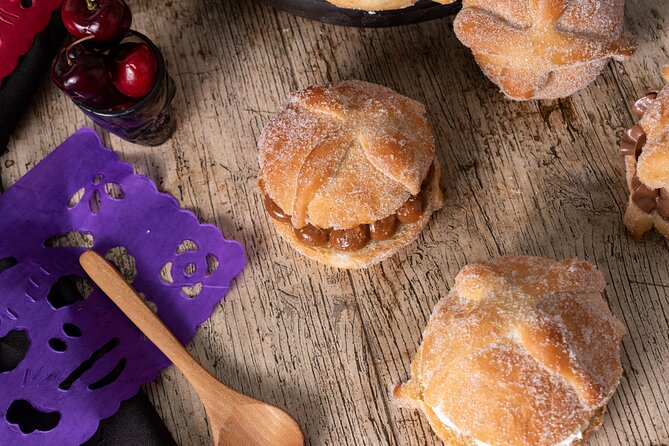
The central subject is Pan de Muerto, the sweet bread associated with Day of the Dead celebrations. The class does not treat it as an ordinary bakery item. You learn about the bread’s orange and anise flavors and the symbolic bone-shaped pieces placed across its surface.
That symbolism is one of the best reasons to choose this experience over a general baking lesson. You are not simply learning how to make a sweet loaf. You are learning why this particular bread appears during one of Mexico’s most important cultural celebrations.
The timing of the class matters. Pan de Muerto is closely linked with Day of the Dead, but the skills remain useful beyond the holiday. Once you understand the dough, flavoring, decoration, and baking process, you can recreate the bread for future celebrations at home.
The class also gives you something concrete to remember. Food memories tend to travel well, and a recipe you can repeat is more useful than a souvenir that sits on a shelf. You leave with your own finished bread and the recipe, so the experience continues after you return home.
Kneading and shaping the dough
The practical work covers the full process, starting with the ingredients and moving through kneading, shaping, and baking. That is important because bread often looks easy until you try to judge its texture. Working through each stage helps you understand what the dough should feel like and how the final shape is built.
You should expect to take part, not simply stand near an instructor. The equipment is included, and the class supplies the tools needed for the cooking work. The group limit of 10 is helpful here. A smaller class makes it more realistic to ask how to knead, how to form the decorations, or how to correct a shape that does not look quite right.
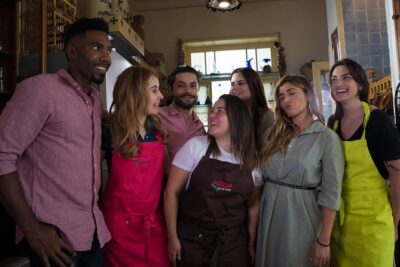
Veronica has been praised for explaining and demonstrating each step clearly. Natalia is also described as welcoming and enthusiastic, with an obvious interest in baking. Since either host may lead your session, the exact personality of the class can vary, but the teaching style is likely to be friendly and hands-on.
The bone-shaped decorations are the part I would pay closest attention to. They give the loaf its familiar appearance and carry the strongest symbolic meaning. The class lets you make them yourself, which turns a cultural detail into a physical skill.
You may also have the option of making a filled Pan de Muerto. The included food list identifies filled bread as optional, so I would confirm the exact choice and any extra details when booking. The basic class is not gluten free, and no gluten-free substitute is listed.
Orange, anise, and high-cacao chocolate
The bread’s flavor comes from more than sugar. Orange and anise give it a fragrant profile, with citrus brightness balanced by the warmer, more distinctive taste of anise. Those flavors help explain why Pan de Muerto feels different from a standard sweet bread.
The class pairs the bread with chocolate made with a high cacao content. That is a natural match. The chocolate adds a darker, more intense note beside the sweet, aromatic bread, and it makes the tasting feel like part of the lesson rather than an afterthought.
Snacks include Pan de Muerto, optional filled Pan de Muerto, and chocolate with cacao. You should not expect a full meal. This is a baking class with tasting, so eat accordingly if you need something substantial before or after the three-hour session.
I like this pairing because it gives you a chance to understand the flavors together. You can taste the bread on its own, then with the chocolate, and see how the stronger cacao changes the experience. It is a small detail, but it makes the class more complete.
A completely different kind of day in Mexico City:
- Teotihuacan, Guadalupe Shrine & Tlatelolco Day Tour with Lunch
★ 5.0 · 11,603 reviews - Xochimilco, Coyoacan and Frida Kahlo with Optional Lunch
★ 4.5 · 7,320 reviews - Balloon flight + Breakfast in cave + Pyramids + Pick up CDMX.
★ 5.0 · 6,335 reviews - Teotihuacan pyramids morning or afternoon without tourist traps
★ 5.0 · 6,186 reviews
What the three hours feel like
The stated duration is about three hours. That is enough time for instruction, hands-on preparation, shaping, baking, tasting, and discussion without turning the class into an all-day commitment.
The pace will depend on the group and on how much explanation you want. If everyone is new to bread making, the kneading and shaping stages may need extra attention. If you already bake, you may spend more time asking about the cultural meaning, flavor choices, or ways to repeat the recipe at home.
The class can be held in more than one language at the same time. This is worth noting before you book. A multilingual session may suit an international group, but it can also make explanations take a little longer. If language matters to you, ask about the language arrangement and request a different time or day if needed. The provider says alternate times and dates can be arranged.
The experience ends back at the church meeting point. Since private transportation is not included, plan your route onward from Tacuba yourself. The location is near public transportation, which keeps the logistics fairly simple, but you should still allow time to get across Mexico City after the class.
A small class with a local feel
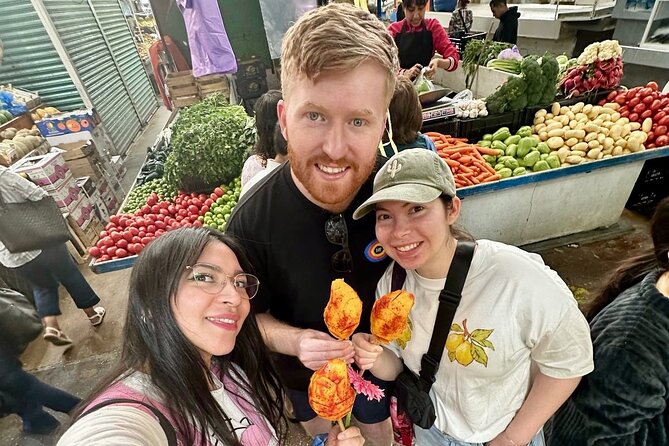
The maximum group size is 10 people. I see that as a good middle ground. You get the social side of a shared cooking activity, but the group should remain small enough for the host to notice how each person is working.
This is also an opportunity to interact with local people rather than only observe a prepared presentation. The hosts bring the local connection, while the church and possible market portion give the class a neighborhood setting.
The local commerce point matters, too. Your payment supports a locally run food experience rather than a large sightseeing operation. That does not guarantee a particular style of class, but it does make the activity feel tied to the people who host it and the place where it happens.
The friendly teaching is one of the strongest reasons to book. Veronica is described as warm and passionate about Mexican food, while Natalia is praised for creating a comfortable setting and showing real enthusiasm for baking. Another account calls the experience fun, professional, and worth recommending. Those details suggest that the human side of the class is at least as important as the recipe.
Is $65 a fair price?
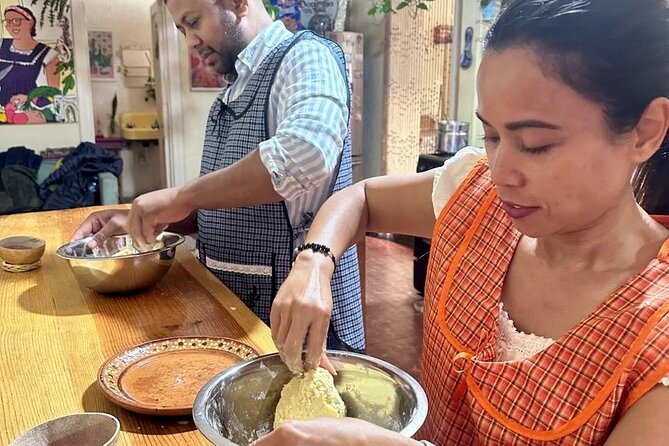
At $65 per person, this is not the cheapest way to learn a bread recipe. You are paying for more than flour, chocolate, and kitchen equipment, though. The price includes a three-hour guided class, cooking tools, snacks, chocolate, recipes, hands-on instruction, and a finished Pan de Muerto to take home.
For me, the value depends on what you want from a Mexico City activity. If you only want to eat Pan de Muerto, a bakery will cost less. If you want a cultural activity that gives you a recipe, a story, a local meeting point, and time with a small group, the price is easier to justify.
The class is especially good value for people who enjoy doing rather than collecting sights. You spend much of the time making something, and the recipe gives you a way to repeat the experience later. The optional filled bread and the market element, if offered on your date, can add more variety.
The value is weaker if you need a fully private class, a gluten-free menu, or a complete meal. None of those are promised. You should also ask about language before paying if you need instruction in one specific language.
Who should book this bread class?
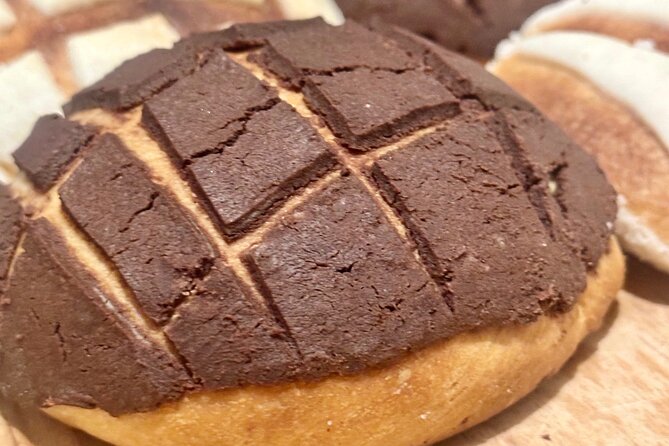
I would recommend it to home bakers, food-focused visitors, couples, families with an interest in cooking, and anyone visiting Mexico City around Day of the Dead season. You do not need to be an expert baker. The class is designed to teach the process from the ingredients onward.
It also suits someone who wants a quieter cultural activity away from the city’s biggest sights. You still get a sense of neighborhood life, especially if the market portion is included, but the focus stays on food and conversation.
I would be more cautious if you have dietary restrictions. The experience is explicitly not gluten free, and there is no stated alternative. I would also think twice if you want a long guided tour of Tacuba, because the church and possible market visit support the cooking class rather than replace it.
Service animals are allowed, and the meeting point is near public transportation. No other accessibility details are provided, so you should contact the provider with specific mobility questions before booking.
Booking and cancellation details
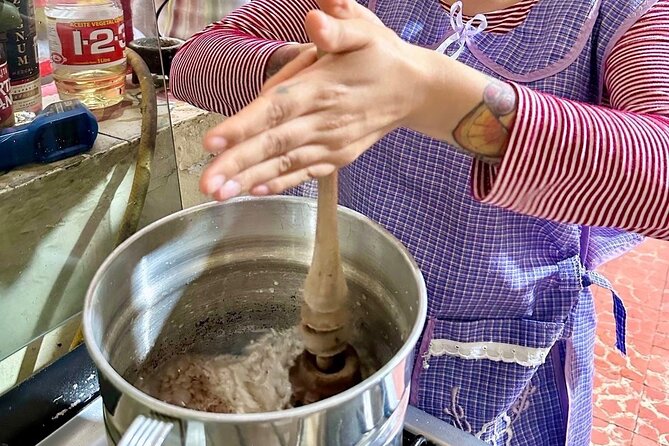
Confirmation is normally sent at booking. If you book within one hour of the start time, confirmation comes as soon as possible and depends on availability. The class requires a minimum number of participants, so an undersubscribed session may be moved or canceled.
You can cancel for a full refund up to 24 hours before the local start time. Cancellations or changes made within 24 hours are not refunded or accepted. If poor weather causes a cancellation, you are offered another date or a full refund.
Those terms are fair enough, but pay attention to the 24-hour cutoff. Mexico City plans can change quickly, and a last-minute adjustment will not protect your payment.
Should you book Learn to Cook Mexican Bread?
Book it if you want a hands-on introduction to Mexican food with a clear cultural focus. The combination of Pan de Muerto, bone-shaped decorations, orange and anise, high-cacao chocolate, and a neighborhood meeting point gives the class more character than a basic baking lesson.
I especially like that you take home both bread and a recipe. Veronica and Natalia add a personal touch, while the small group limit should keep the instruction useful. The main checks are the gluten-free restriction, the possible multilingual format, and the fact that private transportation and a full meal are not included.
If those points fit your plans, $65 is a reasonable price for three hours of cooking, tasting, and local contact. If you want a private or dietary-specific class, ask first, or choose another activity.
FAQ
How long does the Pan de Muerto class last?
The experience lasts approximately three hours.
Where does the experience begin?
It begins at Parroquia San Gabriel Arcángel, Calz México-Tacuba S/N, Tacuba, Miguel Hidalgo, 11490 Ciudad de México, CDMX, Mexico.
Where does the experience end?
The activity ends back at the meeting point at Parroquia San Gabriel Arcángel.
What is included in the price?
Cooking equipment, Pan de Muerto snacks, optional filled Pan de Muerto, chocolate with cacao, and recipes are included.
Is private transportation included?
No. Private transportation is not included.
Is the experience gluten free?
No. The experience is not gluten free.
How many people can join the class?
The maximum group size is 10 people.
Can the class be held in more than one language?
Yes. The experience can be held in more than one language at the same time.
Can I request another time or day?
Yes. A different time or day can be arranged if you prefer, subject to availability.
What is the cancellation policy?
You can cancel at least 24 hours before the local start time for a full refund. Cancellations or changes made less than 24 hours before the start are not accepted and are not refunded.
Just added around Mexico City
- Xochimilco’s Wild Side: Mezcal, Insects & Culture★ 4.9 · 10 reviews
- Xochimilco Ecological Tour – Away From the Crowds (3 Hours)★ 5.0 · 15 reviews
- Xochimilco: Food and Trajinera Ride with Local Women★ 5.0 · 5 reviews
- Xochimilco: Island of the Dolls Tour Games and Drinks★ 5.0 · 25 reviews
- Xochimilco + Coyoacán Combo Full-Day Tour★ 5.0 · 3 reviews
- Xochimilco floating gardens, Coyoacan and UNAM murals★ 4.0 · 6 reviews
- Val´quirico And The City of Angels Puebla From Mexico City★ 5.0 · 3 reviews
- Xochimilco: amanecer en kayak Ciudad de México★ 5.0 · 35 reviews
Mexico City Cooking Classes, compared.
Mexican Cooking Class with Food Market Visit in Mexico City
Read our review →
Essence of Mexico: Authentic Mexican Cooking Class & Market Tour
Read our review →
Mexican Cooking Class & Cocktails in Mexico City
Read our review →
Private Mexican Cooking Class with Gastronomic Historian, Lucia
Read our review →
3h Cooking Class in Mexico City: 8 Recipes & Bottomless Drinks
Read our review →
Private San Angel Tour & Cooking Class in Mexico City with Lucia
Read our review →Browse the lists this tour appears in