Reviewed · GUIDED
GUIDED TOUR PLUS in RUINS “TEMPLE MAJOR” with OFFICIAL GUIDES
The most compelling part of this tour is the sharp contrast between Mexico City’s cathedral and the remains of the Aztec ceremonial center next door. In about 90 minutes, an official guide trained by Mexico’s National School of Anthropology and History connects colonial faith, pre-Hispanic beliefs, architecture, astronomy, and old legends in one compact walk.
I like the specific cathedral details, especially the Door of Forgiveness, the famous pendulum, and the unusual stories attached to the chapels. I also like that the Templo Mayor portion takes you inside the ruins instead of stopping at a plaza viewpoint. The main consideration is time: 25 minutes at the cathedral and one hour at Templo Mayor leaves little room for a slow, independent look around.
Key points before you book
- Two major historic sites in one short outing: You begin at the Metropolitan Cathedral and finish inside the Templo Mayor archaeological area.
- ENAH-trained official guide: The guide is trained by Mexico’s National School of Anthropology and History, useful when you want context rather than a quick photo stop.
- Specific cathedral stories: Expect the Door of Forgiveness, the punished bell, three altars, and legends connected to several chapels.
- Templo Mayor focus: The guide covers architecture, mythology, astronomy, natural events, and the pre-Hispanic worldview.
- Small maximum group: The tour is limited to 15 people, which should make explanations easier to follow.
- Extra museum cost: The advertised price is $35.87 per person, but the MX$200 admission ticket is not included.
Why the cathedral and Templo Mayor work well together
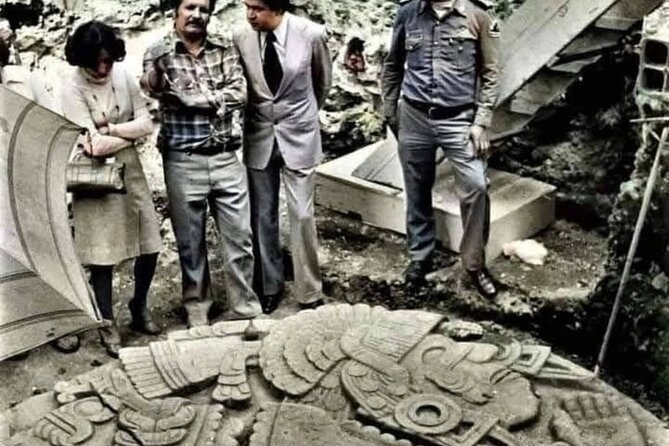
This tour uses one of Mexico City’s most striking historical juxtapositions. The cathedral occupies the center of the modern capital, while Templo Mayor preserves the remains of the Aztec religious center beneath and beside the colonial city. You do not need to travel across town to see both.
That pairing gives the guide a useful story to tell. The cathedral introduces the Spanish colonial period through its facade, chapels, altars, and religious traditions. Templo Mayor then shifts the focus to the city that existed before the Spanish conquest, including its architecture, ceremonies, myths, and view of the natural world.
I find this format more useful than treating the two sites as unrelated attractions. You can compare how power and belief were expressed in stone, how sacred spaces shaped the city, and how Mexico City grew over earlier layers. The short schedule does mean the guide must keep moving, so this is an introduction rather than a full archaeological study.
More guided tours in Mexico City:
- Teotihuacan Early Access Guided Tour with optional Lunch
★ 4.5 · 6,138 reviews - Anthropology Museum Guided Tour
★ 4.5 · 1,035 reviews - Mexico City: Anthropology Museum Guided Visit
★ 4.4 · 708 reviews
Starting at the Metropolitan Cathedral
The meeting point is Plaza de la Constitución 803, in the Centro Histórico. That places you at the Zócalo, one of the easiest spots in central Mexico City to identify. The end point is Templo Mayor Museum at Seminario 8, only a short walk from the cathedral.
The first stop lasts about 25 minutes. The guide explains the cathedral’s facade before taking you inside. This is a useful arrangement because the outside details make more sense once you know what to look for. You’ll hear about the Door of Forgiveness and the punished bell, two details that add human stories and old traditions to what could otherwise feel like a quick architectural glance.
Inside, the guide focuses on three altars. The Black Cross of Poison and the Altar of the Lord of Health introduce religious traditions and local devotion. The Lord of Health altar is also associated with a famous pendulum, an unusual detail that helps the visit feel more specific than a basic cathedral tour.
The Altar of the Kings receives attention as well, along with the Altar of the Coronation of the First Emperor of Mexico. These stops connect the church to major political and religious events, not just decoration. You’ll also hear stories from three of the cathedral’s fourteen chapels: the Chapel of Los Candados de San Ramón Nonato, the Chapel of the Lord of Cacao, and the chapel associated with the coronation altar.
The chapel names alone hint at the range of material covered. Some stories concern saints and popular devotion. Others reflect Mexico’s political past or the way legends develop around religious places. I like this part because it gives you memorable handles for the building. Instead of leaving with only the impression that the cathedral is large and ornate, you have a few particular places and stories to revisit.
Still, 25 minutes is brief. If you want to study the facade, spend time with every chapel, or sit quietly inside, you’ll need to return on your own. One piece of practical feedback is especially useful here: the cathedral can be visited independently, and some people may find a guide less essential for this portion than for Templo Mayor.
The Templo Mayor ruins in one focused hour
After the cathedral, the experience moves to Museo del Templo Mayor. The museum admission is not included, and the stated cost is MX$200 per person. Set that amount aside in addition to the tour price when comparing this experience with other guided walks.
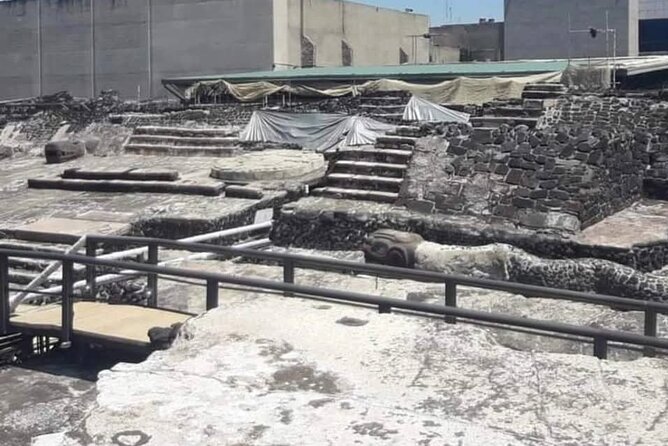
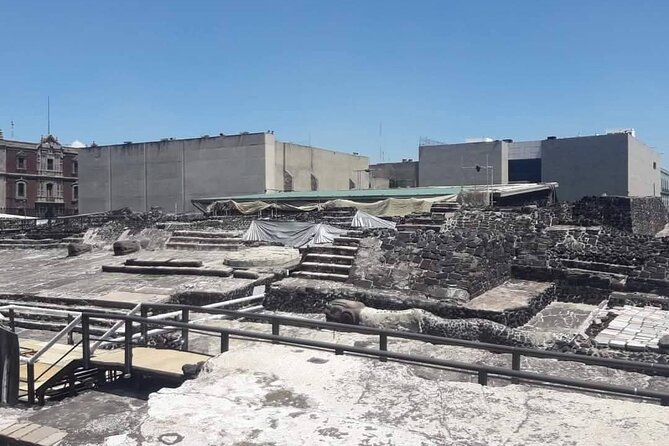
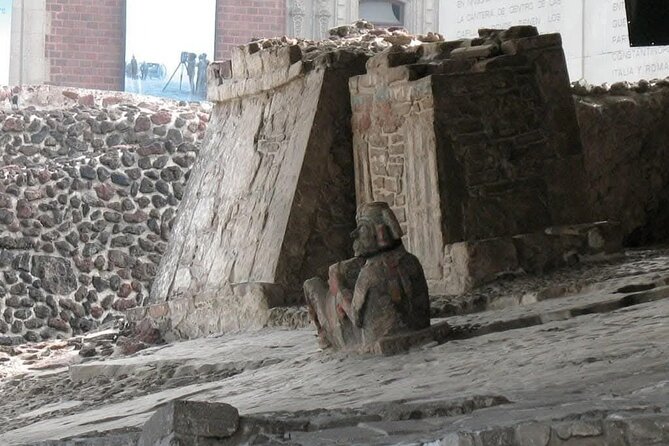
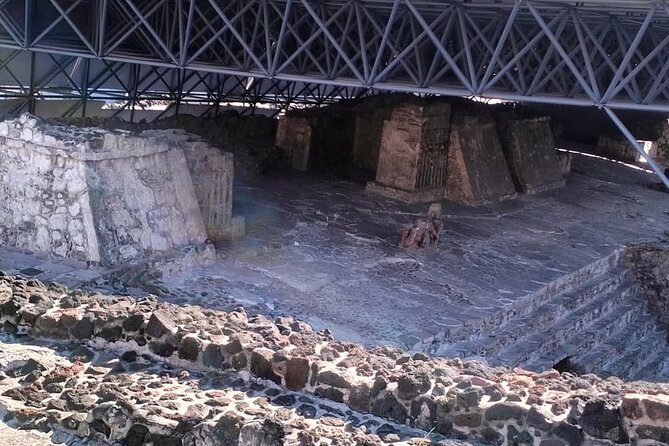
The guide takes you inside the archaeological ruins and explains the site in detail. The tour description specifically mentions the large model, a viewpoint, and a walk inside the ruins of the pyramid. Those features matter because Templo Mayor is easier to understand when you can see the reconstructed scale of the ceremonial center and then look across the actual excavated remains.
The guide’s subjects include astronomy, mythology, architecture, natural events, and the pre-Hispanic worldview. That is a strong range for one hour. You are not simply hearing a date and a name for each stone. You are being shown how the site related to the beliefs and observations of the people who built and used it.
The emphasis on natural events is particularly useful. Pre-Hispanic sacred architecture was not separate from the sky, seasons, landscape, and forces of nature. A guide who links those subjects can help you understand why the pyramid was organized as it was and why certain myths mattered.
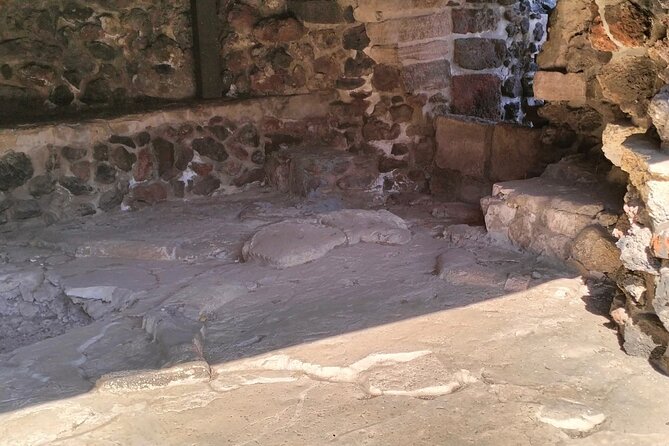
The ruins themselves can be visually confusing without help. Mexico City’s modern streets and buildings surround the site, while excavated walls, platforms, and temple remains appear in layers. I would not want to rely only on signs during a first visit. The official guide’s explanation gives you a framework for reading what you see.
An hour is enough for a guided introduction, but not for every museum display and archaeological detail. If Templo Mayor is one of your main interests in Mexico City, you may want additional time before or after the tour. The scheduled experience ends at the museum, so you can plan to continue exploring there if your admission and schedule allow.
What the guide adds to the experience
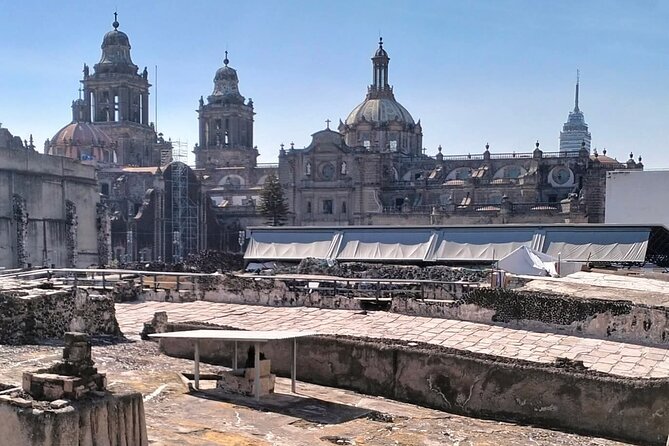
The guide is described as an official professional trained by ENAH, Mexico’s National School of Anthropology and History. That qualification matters most at Templo Mayor, where the meaning of the site is not always obvious from the exposed remains.
Named guides in the feedback include Beatrice and Bia. The descriptions of their style point to an easy, engaging approach, with history explained from an interesting angle rather than delivered as a dry list of facts. Individual guide assignments can vary, so you should not assume one particular person will lead your departure, but the names give you a sense of the personal tone associated with the service.
The guide also handles the transition between two very different sites. At the cathedral, you receive short explanations of facade features, altars, chapels, traditions, and legends. At Templo Mayor, the discussion becomes more archaeological and focused on the Aztec world. That change of subject could feel abrupt on a self-guided visit. With a guide, it becomes the central point of the outing.
The group limit is 15 people. That is not a private tour, but it is small enough that you should have a better chance of hearing the guide than in a large city group. It also suits a compact location where the guide needs to gather everyone at several points.
One practical caution is worth taking seriously. A booking problem once resulted in no guide arriving, with the reservation reportedly filtered as spam by the provider. The provider apologized and offered a future discount. This appears to have been an isolated communication failure rather than a normal feature of the tour, but I would still save the confirmation and check the meeting details before setting out.
A completely different kind of day in Mexico City:
- Teotihuacan, Guadalupe Shrine & Tlatelolco Day Tour with Lunch
★ 5.0 · 11,603 reviews - Xochimilco, Coyoacan and Frida Kahlo with Optional Lunch
★ 4.5 · 7,320 reviews - Balloon flight + Breakfast in cave + Pyramids + Pick up CDMX.
★ 5.0 · 6,335 reviews - Teotihuacan pyramids morning or afternoon without tourist traps
★ 5.0 · 6,186 reviews
Is $35.87 a fair price?
The listed price is $35.87 per person, and the tour includes the official guide but not the MX$200 Templo Mayor admission. The real cost is therefore the tour price plus the museum ticket. That is still reasonable if you want a guided explanation of both sites and prefer not to organize the route yourself.
The value depends on what you need. If you already know Mexico City’s history and mainly want to enter the museum, paying for the cathedral explanation may not feel essential. The cathedral can be viewed independently, and the first stop is only 25 minutes.
I see the price as more justified for a first visit, especially if Templo Mayor feels hard to interpret on your own. The guide covers subjects that are difficult to pick up from a quick walk around the ruins: mythology, astronomy, natural events, architecture, and the pre-Hispanic worldview. You are paying for structure and interpretation, not just admission.
The small group limit also helps the value. A group of up to 15 people is more manageable than a large crowd, though the experience is not advertised as private. If you want personal attention or a long question-and-answer session at every stop, this may feel too brisk.
The tour is often reserved about nine days ahead, so I would not leave it until the final morning of a short Mexico City visit. Confirmation is provided at booking, and free cancellation is available up to 24 hours before the start time. Changes or cancellations inside that 24-hour window are not refunded.
Timing, meeting points, and daily planning
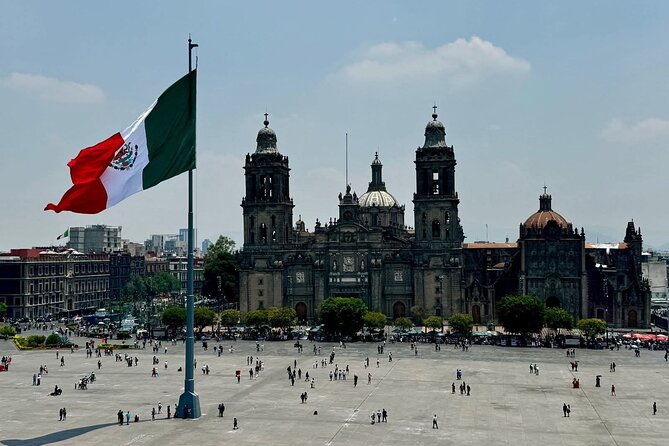
The tour begins at the Zócalo, at Plaza de la Constitución 803, and ends at Templo Mayor Museum, Seminario 8. Both points are in the Centro Histórico and are near public transportation. Because the experience is scheduled for about 90 minutes, you can fit it into a larger day of central Mexico City sightseeing.
Arrive with enough time to identify the meeting point. The cathedral and the surrounding square can be busy, and a short tour has little spare time for late arrivals. Keep your booking confirmation available on your phone since the ticket is mobile.
The tour is offered in English. Most people can participate, according to the supplied activity information, but the description does not provide specific details about wheelchair access, rest stops, or the surface conditions inside the archaeological area. If you need those arrangements, contact the provider before booking rather than assuming.
The ending point is useful. You do not have to retrace your steps to the cathedral, and you can continue with the Templo Mayor Museum area after the guided hour. A rooftop stop was included in one account of the day, but it is not part of the stated itinerary or inclusions, so treat that as an occasional extra rather than a promised feature.
Who will get the most from this tour?
I would choose this experience if you want a short, guided introduction to central Mexico City’s layered past. It suits first-time visitors who want the main ideas explained without committing half a day to a large museum or a longer walking route.
It also works well for anyone who likes stories. The cathedral portion includes legends, chapel traditions, the punished bell, the Door of Forgiveness, and the famous pendulum. The Templo Mayor portion adds mythology and the pre-Hispanic view of the world.
Families and mixed-interest groups may appreciate the variety. One person can focus on architecture, another on religious history, and another on Aztec mythology. The short format keeps the visit from becoming tiring, though children who need a slower pace may find the schedule quick.
I would hesitate to book it if your main goal is a long, detailed cathedral visit. I would also think twice if you want to explore every Templo Mayor display at your own speed. In those cases, use the tour as an introduction and reserve extra time for an independent return.
Should you book it?
Book this tour if you want the big picture of Mexico City’s historic center, with an official guide to explain why the cathedral and Templo Mayor belong in the same story. The strongest part is the Templo Mayor interpretation, while the cathedral stop adds useful details and memorable legends in a compact format.
Skip it if you only want admission to the ruins or prefer to read at your own pace. For most first-time visitors who value context, the combination of an ENAH-trained guide, a maximum group of 15, and a focused route makes the $35.87 price reasonable, provided you add the MX$200 museum ticket and accept the brisk timing.
FAQ
How long does the tour last?
The experience lasts approximately 1 hour and 30 minutes. About 25 minutes are spent at the Metropolitan Cathedral, followed by about 1 hour at the Templo Mayor Museum and archaeological ruins.
Is the Templo Mayor admission included?
No. The museum ticket is not included. The stated admission cost is MX$200 per person.
Is the tour offered in English?
Yes. English is listed as the available tour language.
Where does the tour begin and end?
It begins at Plaza de la Constitución 803 in the Centro Histórico, near the Metropolitan Cathedral and Zócalo. It ends at Templo Mayor Museum, Seminario 8.
How many people can join the tour?
The activity has a maximum group size of 15 people.
Can I cancel for a full refund?
Yes, if you cancel at least 24 hours before the experience start time. Cancellations or changes made less than 24 hours in advance are not refunded.
Just added around Mexico City
- Xochimilco’s Wild Side: Mezcal, Insects & Culture★ 4.9 · 10 reviews
- Xochimilco: Food and Trajinera Ride with Local Women★ 5.0 · 5 reviews
- Xochimilco: Island of the Dolls Tour Games and Drinks★ 5.0 · 25 reviews
- Xochimilco Ecological Tour – Away From the Crowds (3 Hours)★ 5.0 · 15 reviews
- Xochimilco + Coyoacán Combo Full-Day Tour★ 5.0 · 3 reviews
- Xochimilco floating gardens, Coyoacan and UNAM murals★ 4.0 · 6 reviews
- Val´quirico And The City of Angels Puebla From Mexico City★ 5.0 · 3 reviews
- Xochimilco: amanecer en kayak Ciudad de México★ 5.0 · 35 reviews
Guided, compared.
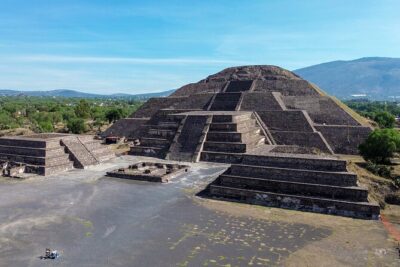
Teotihuacan Early Access Guided Tour with optional Lunch
Read our review →
Frida Kahlo Museum Entry Ticket w/Digital Guide
Read our review →
Guided Tour in Teotihuacan with Cave Breakfast and Transportation
Read our review →
Teotihuacan Private Tour with Expert Guide & Cultural Insights
Read our review →
Teotihuacan Early Morning Tour: Avoid Crowds, & Expert Guide
Read our review →