
Reviewed · HISTORICAL TOURS
Gay Side of History through Plazas & Temples
Mexico City’s central sights look different when you learn who was allowed to use them, who was punished in them, and who quietly found ways to live outside official rules. This 3.5-hour walk connects the Aztec capital, Spanish colonial power, and LGBTQ+ life through the plazas and temples of the Historic Center.
I especially like the opening coffee stop at Librería Porrúa, where you can look toward the Templo Mayor ruins from a rooftop balcony while guide Carlos sets the historical stage. I also like the useful take-home material: a digital LGBT+ map and the downloadable Rainbow Mexico e-book give you more than a few spoken anecdotes to carry into the rest of your trip.
The main consideration is the subject matter. The tour deals directly with persecution, including the Spanish Inquisition’s treatment of convicted homosexuals, so it is not a light sightseeing stroll. You will also want to confirm the tour shortly before departure, since at least one scheduled outing was canceled about an hour before its start.
Key points at a glance
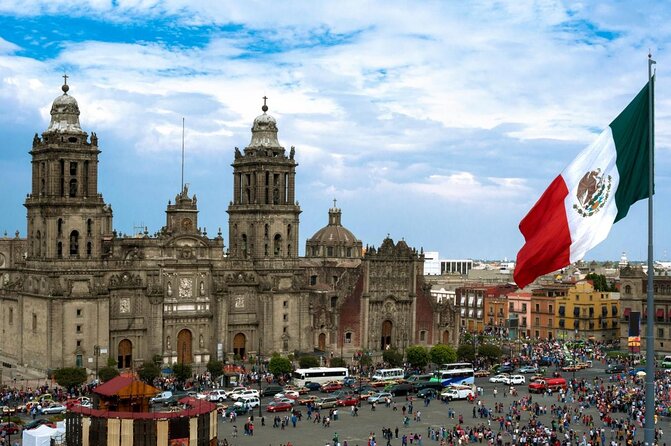
- Start with coffee above the Templo Mayor ruins: Librería Porrúa gives you a strong visual introduction to Mexico City’s layered past.
- Carlos shapes the walk around your interests: He is praised for answering questions and connecting broad Mexican history with LGBTQ+ stories.
- The route is only about one mile: The pace is leisurely, but you will be on your feet for roughly three and a half hours.
- The tour uses familiar sights in a different way: The Zócalo, Metropolitan Cathedral, National Palace, and Santo Domingo become evidence in a larger social story.
- Useful digital material is included: You receive an LGBT+ map of the Historic Center, extra resources, and the Rainbow Mexico PDF.
- Small groups matter here: The maximum is 10 people, which suits a discussion-based walk better than a large group lecture.
Why this walk adds something new to Mexico City’s center
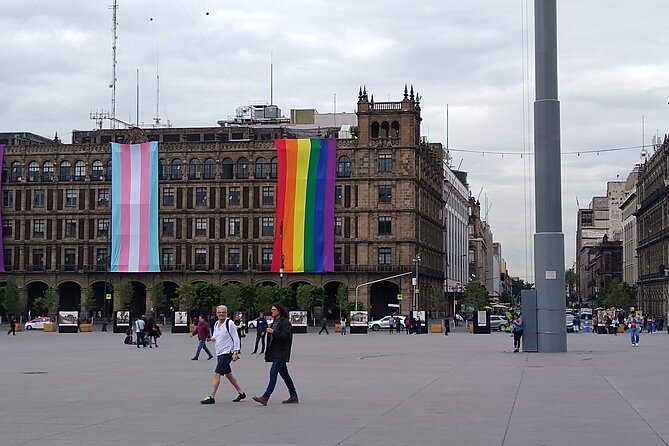
Many first visits to Mexico City’s Historic Center follow the standard route: Templo Mayor, the Metropolitan Cathedral, the Zócalo, the National Palace, then a few colonial plazas. This experience follows much of that same physical ground, but it asks different questions.
You will consider how Indigenous society, Spanish rule, Catholic authority, legal institutions, and later national politics shaped LGBTQ+ life. The focus is gay history in Mexico, yet the discussion reaches well beyond modern nightlife or present-day identity. You get a broad account of how Mexico City developed, with LGBTQ+ people included in the story instead of left in the margins.
That makes this a good choice if you already know the major monuments but want a new way to read them. It also works as an introduction to the city. Several parts of the discussion begin long before the colonial period, then move through conquest, the Inquisition, independence, the Revolution, and modern Mexico.
Carlos is the guide named in the strongest feedback, and his role seems central to the experience. He is described as personable, entertaining, and serious about the subject. The format allows him to ask about your interests and adjust the conversation. If you ask questions, expect the tour to grow beyond the advertised three and a half hours in some cases.
More Historical Tours in Mexico City:
- Historic Downtown Walking Tour
★ 5.0 · 1,289 reviews - Historic Center Food Tour in Mexico City
★ 5.0 · 1,263 reviews - Mexico City: Historic Downtown Walking Tour
★ 4.8 · 1,039 reviews
Coffee and Aztec ruins at Librería Porrúa
The tour begins at República de Argentina 15 and moves first to Librería Porrúa. The bookstore’s rooftop balcony looks over the Palace of the Royal Duty, the Hideaway Rooms of Frida Kahl, and the ruins of the Great Aztec Temple.
The view gives Carlos a useful stage for the opening talk. Before you walk through the modern streets, you can see several periods of the city at once. The Templo Mayor was the main temple of the Mexica people in their capital, and its ruins help explain the scale and importance of the settlement that existed before Spanish rule.
Coffee or tea and bottled water are included. That is a small benefit, but it matters because the opening conversation may be substantial. One especially detailed account describes Carlos beginning with the population of the Americas, then moving toward the Spanish conquest and the formation of Mexico. You are not simply handed a monument name and a date before being hurried along.
The limitation is that the experience is primarily an outdoor walking tour with discussion at selected locations. The information provided does not promise a full museum visit inside the Templo Mayor site. The admission ticket specifically listed for this first stop is at Librería Porrúa, so you should not book expecting an extended archaeological museum tour.
Templo Mayor and the layered center of Mexico City
The Templo Mayor is more than an archaeological stop. It is the point where the tour establishes the older city beneath the colonial one. The Mexica capital was reshaped after the Spanish conquest, and the current streets, churches, and government buildings occupy ground with a much longer story.
This is where the LGBTQ+ focus gains context. The tour does not treat gay history as a separate subject added to a sightseeing route. Instead, it connects sexuality and social rules to the institutions that controlled public life. You hear how power shifted from the Mexica world to Spanish colonial authority and later to the Mexican state.
That approach suits people who like history with a clear argument. You are encouraged to ask how official records were created, whose lives were recorded, and whose stories were erased or condemned. The included digital map and Rainbow Mexico e-book are useful here because they let you keep tracing those connections after the walk.
Wear shoes that are comfortable for uneven city sidewalks and long periods of standing. The total distance is only about one mile, but the time comes from discussion rather than constant walking.
The Cathedral, the Zócalo, and public power
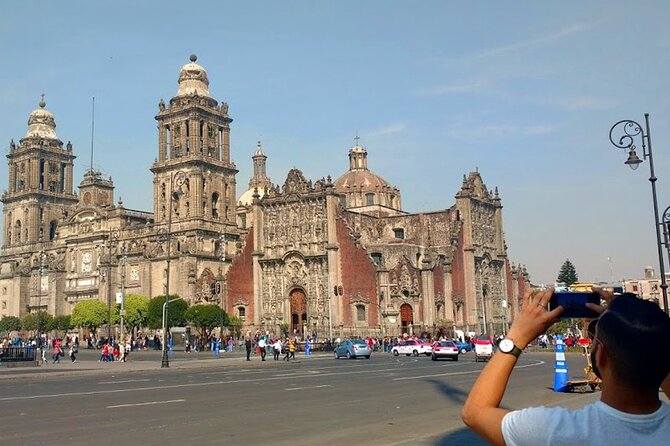
From the temple area, the route reaches the Metropolitan Cathedral of the Assumption of the Most Blessed Virgin Mary into Heaven. The cathedral is the seat of the Catholic Archdiocese of Mexico, and its location beside the city’s central plaza makes it an important part of the story.
The tour places religious authority alongside the treatment of homosexuality under colonial rule. That does not mean the cathedral is reduced to one subject. You will also hear how Catholic institutions helped shape Mexico City’s laws, customs, and public life. For anyone who has visited the cathedral only as an impressive building, this context can make the surrounding square more legible.
The Zócalo is next. This is the heart of the city and country, and it has been a meeting place since the sixteenth century. The tour allows about 30 minutes here, enough time to discuss the plaza’s political and social role without pretending that every part of its history can be covered.
The National Palace faces the Zócalo. It is the seat of Mexico’s federal executive and has served as the president’s official residence since 2018. Its presence gives the discussion a direct link to government power. You can expect the guide to use the square and palace as places to explain how authority changed over time, not simply as backdrops for photographs.
The strength of this section is its scale. You are standing in a space used for ceremony, protest, government business, and ordinary city life. The LGBTQ+ story becomes part of Mexico City’s public history rather than something confined to private venues.
More LGBTQ-Friendly in Mexico City:
- Mexico City: Gay Tales
★ 5.0 · 4 reviews - Discover Mexico City’s (CDMX) Gay (LGBTQ) Hotspots Guided Tour
★ 5.0 · 3 reviews
Centro Cultural de España and the restored colonial city
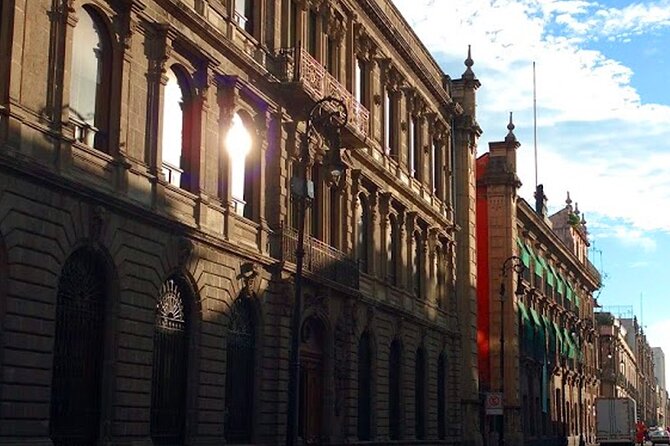
The route continues to the Centro Cultural de España at 18 Guatemala Street, just behind the cathedral. The building was an old mansion that had fallen into ruins in the late 1990s. Mexico City’s government ceded it to Spain, and restoration was completed in time for its inauguration by the King of Spain and Mexico’s president in 2002.
That detail makes the stop useful for more than architecture. It shows how the Historic Center is not frozen in the past. Old buildings are repaired, repurposed, and given new cultural roles. The center is now a place for cultural activity, linking Mexico and Spain in a building shaped by colonial history.
The stop is listed as free and lasts about 30 minutes. The information does not promise a specific exhibition or indoor program, so the value here comes from the guide’s interpretation and the surrounding setting. If you want a tour packed with formal museum admissions, this may feel modest. If you like using buildings to understand changing political relationships, it fits the route well.
Santo Domingo Plaza and the hard evidence of persecution
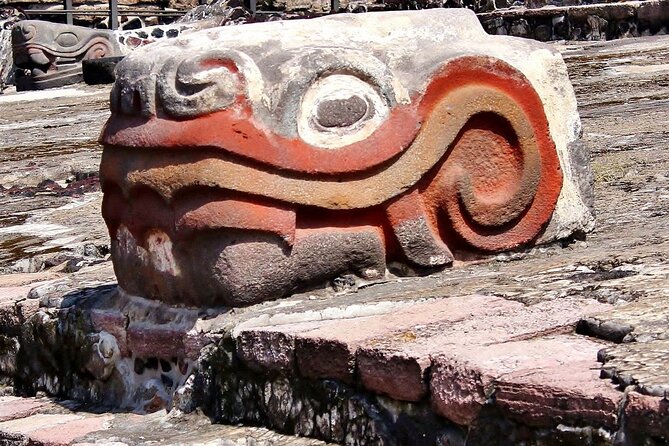
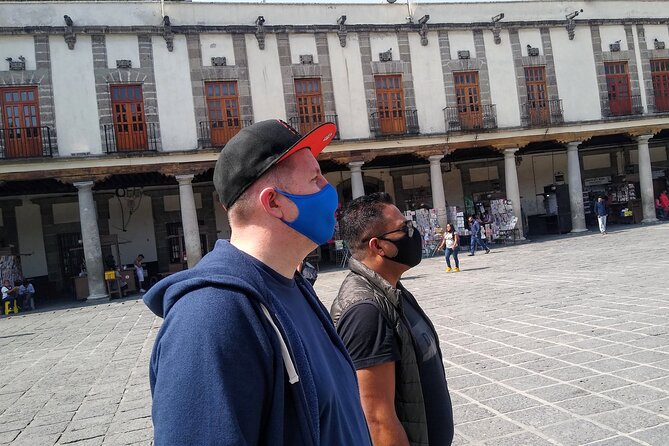
The walk ends at Plaza de Santo Domingo, the Historic Center’s second-largest plaza, at the corner of República de Venezuela and República de Brasil. The plaza is framed by the Old Customs Building, the Church of Santo Domingo, and the Portal de Evangelistas.
The Portal is a Tuscan colonnade with round arches where scribes, typewriters, and antique printing machines have traditionally been associated with document work. That detail gives the square a human scale. It is not only a grand colonial space. It is also a place connected with paperwork, communication, and the daily business of the city.
The Old Customs Building sits on the east side of the plaza. The Church of Santo Domingo is on the north side. The church is described as the starting point of El Camino Real, the trading route from Old Mexico to New Mexico, and as a safe haven for gay male couples. These are the kinds of specific connections that make the final section different from a conventional plaza tour.
The discussion of the Spanish Inquisition is likely the most difficult part of the walk. From 1521 to 1821, the civilian institution responsible for the Inquisition executed people convicted of homosexuality. The tour presents this not as an abstract footnote, but as part of the colonial institutions connected to the buildings around you.
You should come prepared for a serious conversation. Carlos is praised for making difficult history engaging and sometimes funny, but the subject itself remains heavy. That balance is one reason this experience suits adults who want more than a cheerful orientation walk.
What the guide’s style means for your experience
Carlos appears to be the key reason this tour works so well. His strengths are not limited to recalling dates. He puts events in order, explains how they connect, and leaves room for questions.
The format seems especially good for people who learn by conversation. One account describes Carlos sitting down to provide context before visitors examined the sites. Another describes a four-hour outing shaped by questions about the Aztecs, Isabella of Spain, the Inquisition, Benito Juárez, Porfirio Díaz, his son, and the 1910 Revolution.
That breadth can be a benefit or a drawback. If you want a tightly timed route with short facts at each stop, the discussion may feel expansive. If you enjoy history and want to follow an idea from one era into another, the flexible pace is a major advantage.
The small-group limit of 10 supports that style. You have a better chance to ask about personal interests, and the guide can explain a point rather than moving on because a large crowd is waiting. The tour is also suitable for an ally. Its focus is LGBTQ+ history, but the larger subject is Mexico City and Mexico itself.
Price, timing, and what you receive for $99
At $99 per person, this is not the cheapest way to see the Historic Center. You could walk through the Zócalo and Santo Domingo Plaza on your own for little money, and several stops do not charge admission.
The value comes from the interpretation. You are paying for a three-and-a-half-hour guided conversation, a small group, coffee or tea, bottled water, a digital LGBT+ map, extra resources, and the Rainbow Mexico e-book. The material is particularly useful if you want to continue exploring LGBTQ+ places and stories after the tour ends.
I would compare it with the cost of a standard private or small-group city tour, rather than with a free self-guided walk. You are paying for a specific point of view and for connections that are easy to miss when you only photograph the major sights.
The tour starts at 10:00 a.m. and ends at the former Palace of the Holy Inquisition, now identified as Antiguo Palacio de la Santa Inquisición, at República de Brasil 33. That ending point is at Plaza de Santo Domingo, near República de Venezuela and República de Brasil. The start and finish are different, so plan your next stop accordingly.
It operates in all weather. Bring suitable clothing, since the route is outdoors and includes about a mile of walking. A moderate level of physical fitness is advised. Service animals are allowed, and the route is near public transportation.
Who should book this experience?
I would choose this tour if you want LGBTQ+ history placed inside a larger account of Mexico City. It is especially suitable for:
- LGBTQ+ visitors seeking local history beyond nightlife
- Allies who want an informed, respectful introduction to gay history in Mexico
- Repeat visitors who already know the main Historic Center sights
- History enthusiasts who enjoy long-form explanation and questions
- Solo visitors or couples who prefer a small group
- Anyone interested in how religion, government, law, and public space shaped private lives
I would hesitate if you want a brisk photo tour, a museum-heavy itinerary, or a walk focused only on modern LGBTQ+ neighborhoods. This route concentrates on the Historic Center and gives substantial attention to colonial institutions and persecution.
The tour is for adults, with a minimum age of 18. The material can be serious, and the pace depends on conversation. You should also be comfortable walking and standing for several hours.
Should you book the Gay Side of History walk?
Book it if you want Mexico City’s grandest plazas and temples explained through stories that standard tours often leave out. The combination of Carlos’s broad historical approach, a maximum group of 10, and useful digital resources gives the experience lasting value beyond the morning itself.
The strongest reason to go is the link between place and memory. You are not only told that LGBTQ+ history exists in Mexico City. You are shown how it connects to the Templo Mayor, the Cathedral, the Zócalo, the National Palace, Santo Domingo Plaza, and the former Inquisition.
At $99, the tour asks you to pay for depth rather than admission tickets. For the right audience, that is a fair trade. Confirm the departure close to the start time, dress for the weather, and bring questions. If you do, this can become one of the most distinctive history walks in the city.
FAQ
How long is the Gay Side of History through Plazas & Temples tour?
The tour lasts approximately 3 hours and 30 minutes. The route covers about one mile, though the time is extended by historical discussion at each stop.
Where does the tour begin?
It begins at República de Argentina 15 in Mexico City’s Historic Center at 10:00 a.m. The first stop is Librería Porrúa.
Where does the tour end?
The walk ends at the Antiguo Palacio de la Santa Inquisición, República de Brasil 33, at the corner of República de Venezuela and República de Brasil beside Plaza de Santo Domingo.
What is included in the $99 price?
The price includes a local guide, coffee or tea, bottled water, a digital LGBT+ map of the Historic Center, extra resources, and a downloadable PDF copy of the Rainbow Mexico e-book.
Is there a minimum age?
Yes. The minimum age is 18.
Can I cancel for a full refund?
Yes, if you cancel at least 24 hours before the experience’s start time. Cancellations or changes made less than 24 hours before the start are not accepted for a refund.
Just added around Mexico City
- Xochimilco’s Wild Side: Mezcal, Insects & Culture★ 4.9 · 10 reviews
- Xochimilco: Food and Trajinera Ride with Local Women★ 5.0 · 5 reviews
- Xochimilco: Island of the Dolls Tour Games and Drinks★ 5.0 · 25 reviews
- Xochimilco Ecological Tour – Away From the Crowds (3 Hours)★ 5.0 · 15 reviews
- Xochimilco + Coyoacán Combo Full-Day Tour★ 5.0 · 3 reviews
- Xochimilco floating gardens, Coyoacan and UNAM murals★ 4.0 · 6 reviews
- Val´quirico And The City of Angels Puebla From Mexico City★ 5.0 · 3 reviews
- Xochimilco: amanecer en kayak Ciudad de México★ 5.0 · 35 reviews
Historical Tours, compared.
Mexico City Historical Centre Food Tour with 7 Authentic Tastings
Read our review →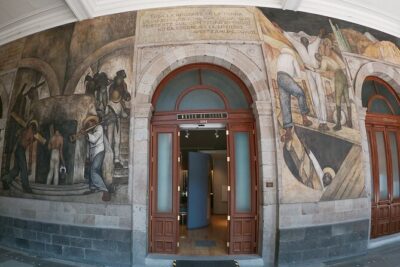
Walking Tour in Mexico City for Exploring their Cultural Heritage
Read our review →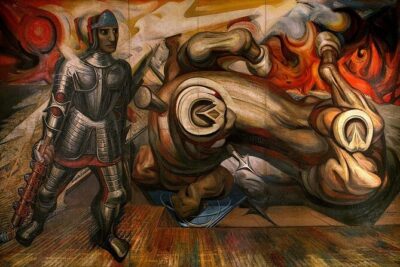
Walking Tour – Impressive murals in Historical Center of Mexico City
Read our review →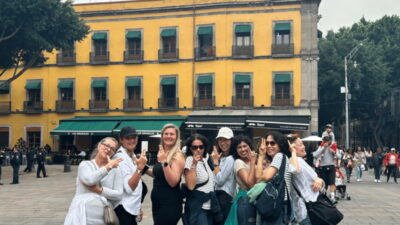
Guided walking tour through the most historic parts of the city.
Read our review →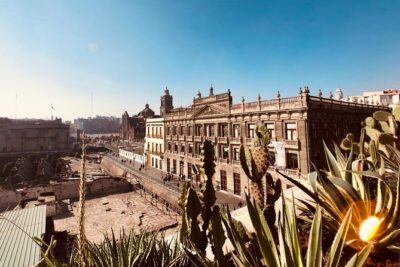
Private Walking Tour Gems of the Historic Center of Mexico City
Read our review →Browse the lists this tour appears in