Reviewed · GUIDED
Discover Mexico City: 3-Day Private Guided Tour
Teotihuacan’s great pyramids, Frida Kahlo’s blue-walled home, the Aztec Sun Stone, and Xochimilco’s colorful boats make this three-day private tour a fast, broad introduction to Mexico City. You get a guide, private vehicle, entrance fees, and a route that links places spread across a huge urban area.
I like the efficient mix of ancient sites and modern Mexican culture. I also like the personal touch: guides such as Alex and Carlos have helped guests adjust the pace, including making the day easier for an elderly parent. The drawback is simple: the schedule is packed, and the $450-per-person price is a serious outlay if you are traveling alone or as a couple.
Key points at a glance
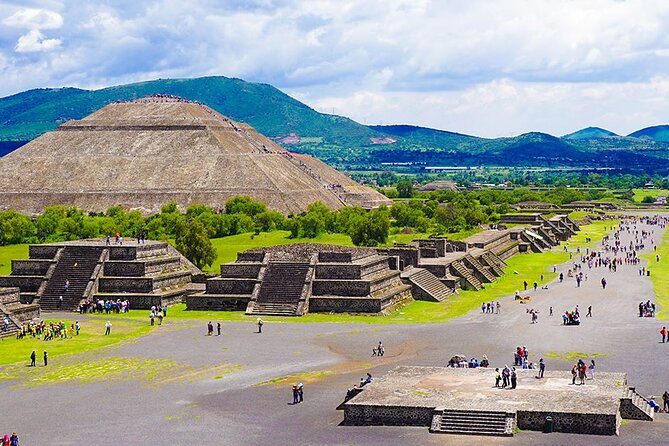
- Teotihuacan gets a full three-hour visit, with time for the Pyramids of the Sun and Moon, the Avenue of the Dead, and the Temple of Quetzalpapalotl.
- The private format keeps the experience personal, with only your group taking part and a guide able to shape explanations around your interests.
- Day Two joins Xochimilco, Coyoacán, UNAM, Anahuacalli, and Frida Kahlo, giving you art, daily life, canals, and university culture in one sweep.
- The National Museum of Anthropology deserves the full three hours, especially for the Aztec Sun Stone and Olmec works.
- Private transportation matters in Mexico City, since these sights are scattered across a vast metropolitan area.
- The $450 price includes major admissions and transport, but not meals, insurance, tips, or possible pickup surcharges.
What this three-day Mexico City route does well
This experience is best understood as a grand survey rather than a slow, single-subject tour. In three days, you move from the ceremonial center of the Aztec world to Spanish colonial Mexico, from Frida Kahlo’s personal rooms to the waterways of Xochimilco, and from ancient stonework to the murals of UNAM.
I like that the route does not treat Mexico City as only a museum destination. You walk through the Historic Center, see a living neighborhood in Coyoacán, ride a trajinera, and visit a basilica that remains one of the world’s most important religious destinations. Those stops add daily life and local traditions to the major monuments.
The private format is the real selling point. You are not simply following a guide with a large crowd. Only your group participates, and the guide can explain more when something catches your attention or adjust the pace when needed. Alex and Carlos are named as guides connected with particularly warm experiences, but guide assignment is not guaranteed, so ask before booking if a specific person matters to you.
The route is also practical for a first visit. Mexico City is enormous, and moving between Teotihuacan, the south side of the city, Chapultepec, and the central districts can take time. A private vehicle removes much of the planning burden. You still need patience with traffic, but you are not piecing together several long public-transit journeys each day.
Other Mexico City days people book alongside this one:
- Teotihuacan, Guadalupe Shrine & Tlatelolco Day Tour with Lunch
★ 5.0 · 11,603 reviews - Xochimilco, Coyoacan and Frida Kahlo with Optional Lunch
★ 4.5 · 7,320 reviews - Balloon flight + Breakfast in cave + Pyramids + Pick up CDMX.
★ 5.0 · 6,335 reviews
Day One: pyramids, pilgrimage, and the city center
Teotihuacan and the Avenue of the Dead
The first morning begins with a trip to Teotihuacan, about a three-hour visit once you are at the archaeological zone. That is enough time to get a real sense of the site rather than merely stop for a photograph.
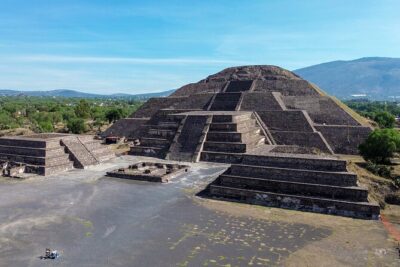
You walk along the Avenue of the Dead and see the Pyramids of the Sun and the Moon. The scale is the point. Teotihuacan was a major ancient city, and its broad ceremonial layout makes more sense when you move through it on foot. The Temple of Quetzalpapalotl adds carved detail to the larger view.
Admission is included, and the guide provides the historical frame that helps connect the separate structures. Wear comfortable shoes and plan for a lot of open-air walking. The itinerary calls this a leisurely exploration, but the pyramid zone is still a demanding morning if stairs, heat, or long walks are difficult for you.
Afterward, you return to the private vehicle for the ride back toward Mexico City. This is one place where private transport earns its keep. You can rest between stops instead of arranging another connection after a substantial archaeological visit.
Basilica of Santa Maria of Guadalupe
The Basilica of Santa Maria of Guadalupe gives the first day a different tone. The site is tied to the story of Juan Diego and the appearance of the Virgin Mary in 1531. His cloak, associated with the sacred image, has helped make this one of the most visited religious destinations in the world.
You have about two hours here, including time to walk around and hear about the devotion surrounding the Virgin of Guadalupe. Even if you are not religious, the visit helps explain an important part of Mexican identity and public life.
The stop is described as an orientation walk rather than a long museum visit. That is useful to know. You are coming for the setting, the religious meaning, and the guide’s explanation, not for an exhaustive study of every building on the grounds.
More private tours in Mexico City:
- Teotihuacan Private Tour from Mexico City
★ 5.0 · 1,890 reviews - Private Tour: Teotihuacan and Guadalupe Shrine
★ 5.0 · 938 reviews - Private City Tour in Frida Kahlo, Coyoacan, and Xochimilco
★ 5.0 · 626 reviews - Mexico City Custom Private Tour with a Local, Highlights & Hidden Gems
★ 5.0 · 582 reviews
Mexico City’s Historic Center
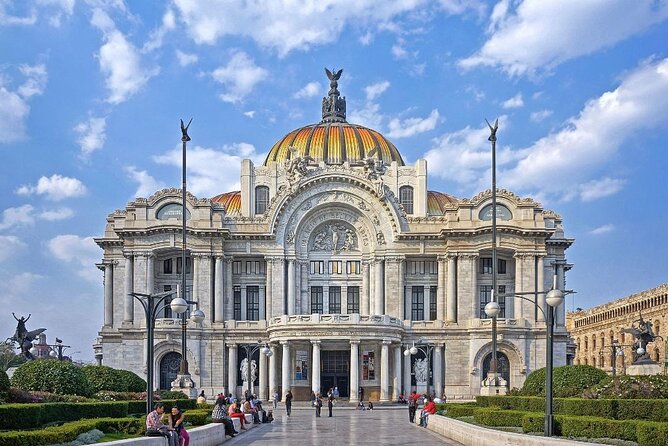
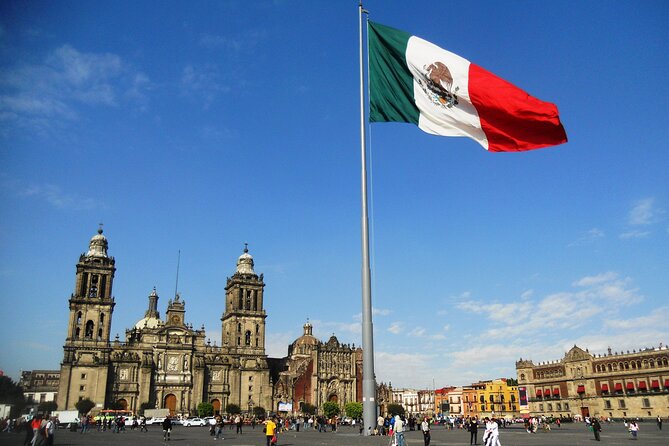
The Historic Center supplies the architectural and political heart of the first day. The route includes the Zocalo, the remains of Templo Mayor, Madero Avenue, the Palace of Fine Arts, and several museums.
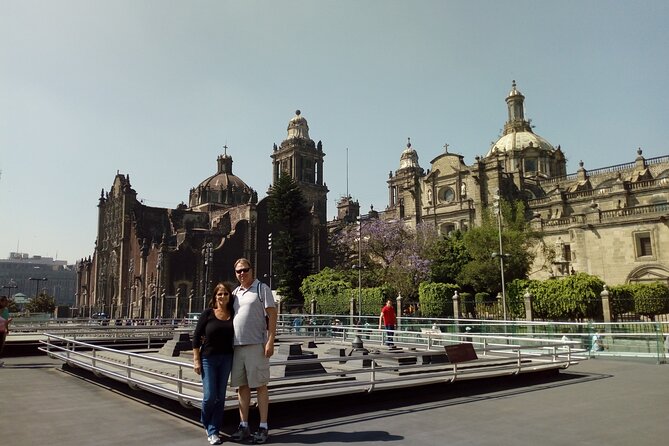
The Zocalo gives you a clear sense of the city’s layers. Modern Mexico City sits where Tenochtitlan once shaped the region, while Spanish colonial buildings mark the conquest and later growth of the capital. Templo Mayor is especially valuable because it puts the Aztec past directly beside the modern city.
Madero Avenue provides a pleasant contrast to the archaeological remains. It is one of the city’s best-known streets, leading through a dense urban setting toward the Palace of Fine Arts. The palace reflects European cultural influence in twentieth-century Mexico, while its location shows how the city keeps several eras in one frame.
You have about three hours for the Historic Center. That is long enough for a useful walk and orientation, though not enough to study every museum or monument in detail. I would treat this as your introduction to the central districts, then return independently if one museum or building catches your interest.
The first day is ambitious. Teotihuacan alone can feel like a major outing, and adding the basilica and central city creates a full schedule. The reward is range. By evening, you have seen ancient architecture, a major religious site, and the core of the modern capital.
Day Two: canals, murals, and Frida Kahlo’s Coyoacán
Xochimilco by trajinera
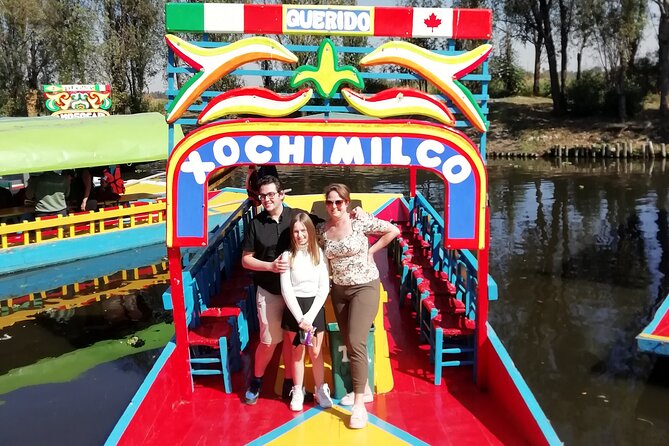
Xochimilco begins the second day with a boat ride through canals that date to the pre-Hispanic period, when much of the Valley of Mexico was covered by lakes and lagoons. The trajinera, often compared with a Mexican gondola, is the main attraction and is included in the tour.
The name Xochimilco means Field of Flowers in Nahuatl. The canals combine older agricultural traditions with music, celebrations, mariachis, and colorful boats. You get a side of Mexico City that is far removed from grand museums and central plazas.
The ride lasts about two hours. It is a good change of pace after the walking and monuments of Day One, though the atmosphere can be lively and social rather than quiet. If you want a purely historical site, this is not that. It is a cultural outing shaped by music, boating, and local customs.
Diego Rivera’s Anahuacalli Museum
The Anahuacalli Museum was designed by Diego Rivera to hold his large collection of pre-Hispanic art. Its name means house surrounded by water in Nahuatl, and the building uses volcanic rock from the area known as El Pedregal.
The architecture is a major part of the visit. The dark volcanic material gives the museum a strong, unusual character, and it connects the building to the geology of the southern city. Inside, Rivera’s collection offers another look at ancient Mexican art, this time through the eyes of one of Mexico’s most important twentieth-century artists.
You have about an hour here. That is enough for an introduction, but you should not expect a long museum study. The stop works well because it links Rivera’s modern artistic life with the pre-Hispanic objects that influenced him.
UNAM’s Central Library and its murals
The stop at UNAM’s central library is brief, about thirty minutes, but it offers a memorable visual lesson. The facade is covered with murals designed by Juan O’Gorman, turning the library into a large public artwork rather than a plain academic building.
The National Autonomous University of Mexico is a UNESCO-protected site, and the library is part of the Ciudad Universitaria campus. The visit is an orientation walk, not a full campus tour. You will have time to appreciate the exterior and hear why the building matters, but not to explore the university in depth.
This is a smart short stop in a packed day. It adds modern Mexican design and public art to a route otherwise focused on canals, homes, and museums.
Coyoacán and the Blue House
Coyoacán is one of the strongest parts of the second day. The neighborhood means place of coyotes in Nahuatl and is associated with artists, galleries, artisans, and public spaces. It gives you room to see Mexico City as a lived-in neighborhood rather than a series of official monuments.
The orientation walk lasts about two hours. That gives the guide time to explain the area’s connection with Frida Kahlo, Diego Rivera, and David Alfaro Siqueiros, along with the neighborhood’s place in everyday city life.
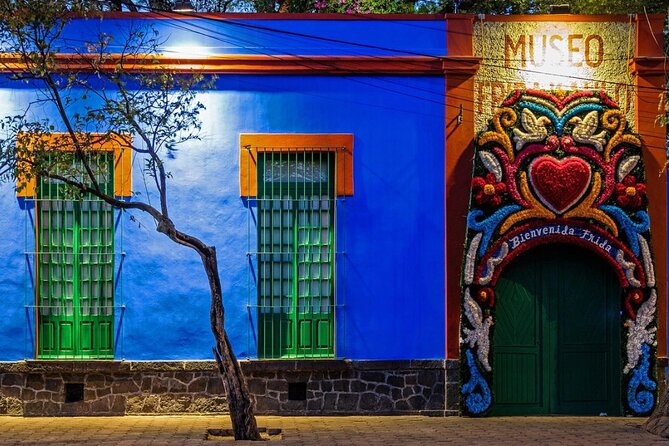
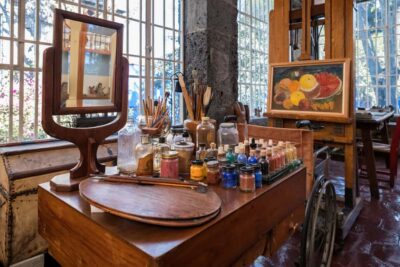
The Frida Kahlo Museum, known as the Blue House, is the main event. Kahlo lived there first with her family and later with Rivera. After her death, Rivera donated the house and its contents so it could become a museum.
You walk through rooms that remain much as they were in the 1950s. The collection includes work by Kahlo, Rivera, and other artists, along with Mexican folk art and pre-Hispanic objects. The appeal is not just the paintings. You are seeing the domestic setting tied to Kahlo’s life and work.
The scheduled visit lasts about an hour. That is enough to understand the house and its collection, but you may want more time if you are deeply interested in Kahlo. The tour keeps moving, so ask your guide how much flexibility is possible before the day begins.
Day Two has the widest mix of experiences. Xochimilco feels social and open-air. Anahuacalli is architectural and museum-focused. UNAM adds public art, while Coyoacán brings together neighborhood life and art history. It is a strong day, but the number of stops means you should expect short visits rather than long, quiet museum sessions.
Day Three: Chapultepec and Mexico’s great national collection
Chapultepec Castle and Paseo de la Reforma
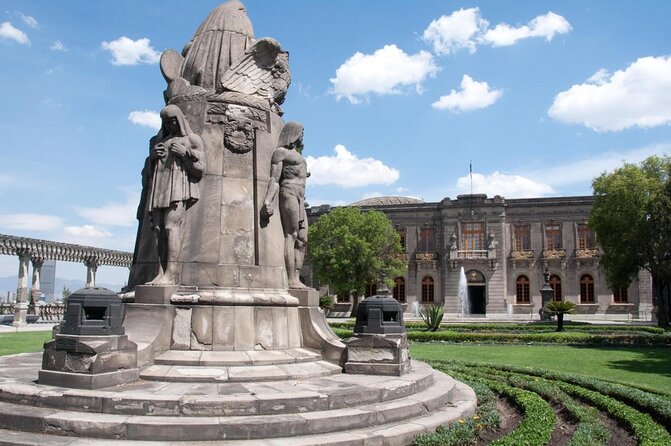
The final day starts with a drive along Paseo de la Reforma, one of Mexico City’s best-known avenues, before continuing into Chapultepec Park. You climb the hill to Chapultepec Castle, a major symbol of Mexico.
The castle has served as a residence for viceroys, Emperor Maximilian of Habsburg, and several Mexican presidents. Its rooms connect several important periods of Mexican political history, making the building more than a scenic overlook.
The supplied schedule lists three minutes for Chapultepec Castle, which is plainly inconsistent with the description of a castle visit. Treat that figure as a likely timing error and confirm the actual plan with the operator before paying. The castle is paired with the National Museum of Anthropology, and the day is designed around both sites.
The hill climb is worth noting. You should be comfortable walking uphill and through a large museum afterward. From the castle grounds, you also get a broad view across the city, although the main value here is the building and its historical rooms.
National Museum of Anthropology
The National Museum of Anthropology receives about three hours, and that is the right scale for a first visit. It contains the world’s largest collection of ancient Mexican art, along with ethnographic displays about Indigenous groups in present-day Mexico.
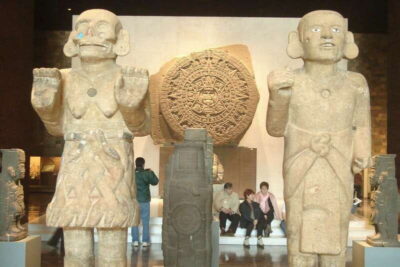
The two floors hold human remains, sculpture, and other art objects. The Olmec Group of Figures and the 22-ton Aztec Sun Stone are among the key pieces. The Sun Stone is particularly useful because it gives physical form to the Aztec understanding of time and the world.
Three hours lets your guide select the most important rooms rather than leaving you to wander without a plan. It still will not cover everything. This is a museum where you can spend half a day or more, so tell your guide early if you care most about the Aztec, Olmec, Maya, or ethnographic sections.
Ending with this museum makes sense. After seeing Templo Mayor and Teotihuacan, you have enough context to understand why the objects matter. You also finish with Mexico’s Indigenous cultures presented as living traditions, not only as artifacts from the past.
What the $450 price includes
At $450 per person, this is not a budget sightseeing option. Its value depends on how much you would otherwise spend arranging transport, admission tickets, and several separate guides.
The price includes private transportation with pickup and drop-off for the private option, an English-speaking local guide, and entrance tickets for Teotihuacan, the National Museum of Anthropology, Frida Kahlo Museum, Chapultepec Castle, and Anahuacalli. It also includes the Xochimilco trajinera ride, guided or orientation walks at the Historic Center, Coyoacán, UNAM, and the Basilica of Guadalupe, plus non-alcoholic drinks and snacks.
Meals are not included, and neither are insurance, personal expenses, or tips. Pickup outside the listed areas may add $10 to $40. Confirm the pickup details carefully, since the general meeting point is the Angel of Independence at Av. Paseo de la Reforma 342, with a 9:00 a.m. start, while hotel pickup is included only for the private option.
Group discounts may improve the per-person value. A family or small group can split the cost of the vehicle and guide, making the private format more sensible than it is for one person. The price also includes an online booking commission that can reach 30 percent, so do not expect much room for last-minute price reductions.
Pace, comfort, and practical concerns
You should plan for walking at Teotihuacan, in the Historic Center, around Coyoacán, and up to Chapultepec Castle. Most people can participate, but the schedule includes long days and several changes of setting.
The tour is offered in English. Most guides also speak Spanish, while other languages may be available by request with a possible extra fee. Confirm that before booking, rather than assuming a language can be arranged.
Give the operator a working phone number with the international prefix. The guide may need it for pickup, and the tour can be treated as a no-show if the guide cannot find or reach you. This is a small detail that matters on a private tour.
The experience is non-refundable and cannot be changed for any reason. If bad weather cancels the tour, you are offered another date or a full refund. The same applies if the minimum number of participants is not met, though this is a private activity and only your group takes part.
Who should book this private tour?
I would choose this tour if you have three days, want to see the major sights, and value having one person explain the connections between them. It suits first-time visitors who do not want to plan a large city’s transport system from scratch.
It is also a good fit for families and mixed-age groups. The private vehicle and ability to adjust explanations can make a major difference, and Carlos is specifically associated with helping an elderly parent enjoy the program.
I would hesitate if you prefer slow museum visits, long meals, or open afternoons. The schedule covers a great deal, but you will not have unlimited time at each stop. Art specialists may prefer separate visits to the Anthropology Museum and Blue House, while independent visitors may find the $450 price too high.
For most small groups, I see the value in the convenience and breadth. You get Mexico City’s major ancient, artistic, religious, and civic sights in three organized days, with transport and admissions handled for you. Just confirm the pickup plan, language, and Chapultepec timing before booking.
FAQ
How long is the Discover Mexico City tour?
The experience lasts approximately three days. The stated start time is 9:00 a.m., and the activity ends back at the meeting point.
Is this a private tour?
Yes. Only your group participates in the private activity. Private pickup and drop-off are included for the private option.
What language is the tour offered in?
The tour is offered in English. Most guides also speak Spanish, and other languages may be available by request for an additional fee.
Are entrance tickets included?
Yes. Tickets are included for Teotihuacan, the National Museum of Anthropology, Frida Kahlo Museum, Chapultepec Castle, and Anahuacalli Museum. The Xochimilco trajinera ride is also included.
Are meals included?
No. Meals, personal travel insurance, personal expenses, and tips are not included. Non-alcoholic drinks and snacks are included.
Can I cancel for a refund?
The experience is non-refundable and cannot be changed for any reason. If the operator cancels because of poor weather or because the minimum number of participants is not met, you are offered another date or a full refund.
Just added around Mexico City
- Xochimilco’s Wild Side: Mezcal, Insects & Culture★ 4.9 · 10 reviews
- Xochimilco: Food and Trajinera Ride with Local Women★ 5.0 · 5 reviews
- Xochimilco: Island of the Dolls Tour Games and Drinks★ 5.0 · 25 reviews
- Xochimilco Ecological Tour – Away From the Crowds (3 Hours)★ 5.0 · 15 reviews
- Xochimilco + Coyoacán Combo Full-Day Tour★ 5.0 · 3 reviews
- Xochimilco floating gardens, Coyoacan and UNAM murals★ 4.0 · 6 reviews
- Val´quirico And The City of Angels Puebla From Mexico City★ 5.0 · 3 reviews
- Xochimilco: amanecer en kayak Ciudad de México★ 5.0 · 35 reviews
Guided, compared.
Teotihuacan Early Access Guided Tour with optional Lunch
Read our review →
Frida Kahlo Museum Entry Ticket w/Digital Guide
Read our review →
Guided Tour in Teotihuacan with Cave Breakfast and Transportation
Read our review →
Teotihuacan Private Tour with Expert Guide & Cultural Insights
Read our review →
Teotihuacan Early Morning Tour: Avoid Crowds, & Expert Guide
Read our review →