
Reviewed · FOOD & DRINK
Cacao Chronicles: A Mexican Chocolate Tasting
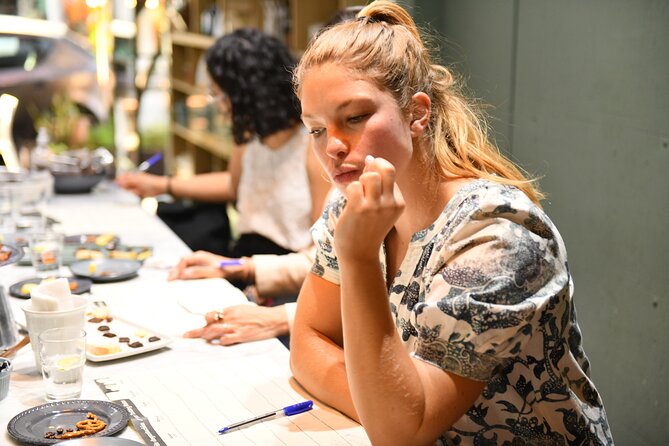
Mexico has treated cacao as far more than a sweet treat for centuries, and this two-hour tasting gives you a hands-on way to understand why. At Oscuro Puro in Roma Norte, chocolatier Paty and host Joss guide you through six chocolates, then encourage you to pair them with cheese, bacon, beetroot, vegetables, fruit, and sparkling wine.
I like the small maximum of eight people, which leaves room for questions and experimentation. I also like that the session treats chocolate as a savory ingredient, not just a dessert. The main drawback is the price: at $97, this is a focused specialty experience, not a quick snack stop.
Key points at a glance
- Six chocolates with different intensities: You taste across a range of flavors rather than sampling one basic chocolate.
- Paty and Joss lead the session: The hosts share cacao facts, production details, and pairing ideas in a personal setting.
- Savory pairings make this unusual: Cheese, bacon, beetroot, vegetables, and fruit show how flexible chocolate can be.
- Sparkling wine is included: Adults 18 and older can enjoy a flute as part of the tasting.
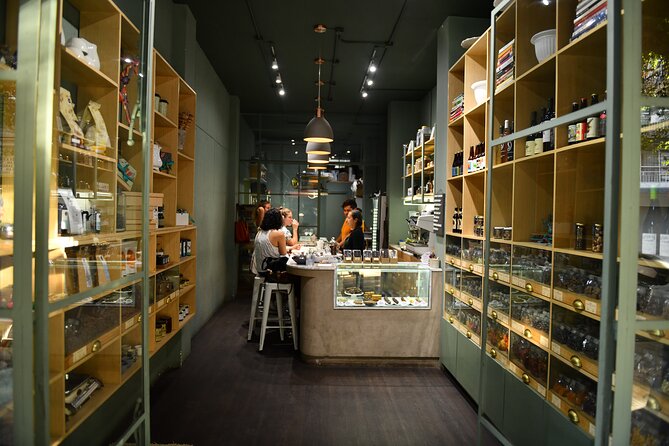
- Small group, central setting: The workshop meets at Oscuro Puro Chocolate y Semillas in Roma Norte and ends there.
- Chocolate-dipped strawberries finish the session: The final bite brings the tasting back to familiar sweet territory.
Why this Mexico City chocolate tasting feels different
Many chocolate activities stop at a few samples and a short explanation of cacao. This one asks you to compare, combine, and make your own judgments. That shift matters. You are not simply being handed sweets. You are learning how flavor changes when chocolate meets salt, fat, acidity, and earthy vegetables.
The tasting is built around six chocolates with different strengths and flavors. That gives you a useful framework for comparison. You can notice which chocolate feels mild or intense, which has a fruitier character, and which works better with savory foods.
I especially like the freedom to experiment. Cheese and bacon are easy enough to imagine, but beetroot and vegetables push the session into less familiar territory. You may find that a pairing you expect to dislike works surprisingly well, or that a favorite chocolate tastes completely different beside another ingredient.
The tone also sounds personal rather than formal. Paty, the owner, brings a strong interest in cacao and food combinations, while Joss helps host the experience. A group of no more than eight means you can ask questions without competing with a crowd or waiting for your turn at every plate.
More Dessert Tours in Mexico City:
- Mexico City: MUCHO Museum of Chocolate Entrance Ticket
★ 4.6 · 91 reviews - Bean to Beverage: Roast and grind cacao into chocolate
★ 5.0 · 7 reviews - Magic Teotihuacan and Chocolate
★ 5.0 · 4 reviews
Arriving at Oscuro Puro in Roma Norte
The meeting point is Oscuro Puro Chocolate y Semillas at Guanajuato 138, L3, in Colonia Roma Norte, Cuauhtémoc. This is a useful location for a Mexico City food itinerary because the activity begins and ends in the same place, with no additional transport between tasting stages.
You should plan to arrive with the address ready on your phone. The experience uses a mobile ticket, and confirmation is provided at booking. The supplied details do not give a separate walking route or a precise neighborhood landmark, so allow enough time to find the shop rather than cutting it close.
The setting is part of the appeal. You are not being taken through a large tourist attraction with dozens of other groups. You meet at a chocolate and seed shop, then settle into a workshop centered on cacao. That makes the experience feel more like a specialty food appointment than a standard sightseeing tour.
Because the session lasts about two hours, it fits neatly into a day in Roma Norte. You can schedule it between meals, but remember that six chocolate samples, snacks, pairings, wine, and strawberries add up. I would not place it immediately before a large lunch unless you plan to keep that meal light.
Starting with Mexican cacao and chocolate
The first part sets the stage by explaining the origins, processes, and characteristics of Mexican chocolate. This is important because chocolate flavor begins well before the finished bar reaches your hand. The guide’s introduction helps you understand what you are tasting instead of reducing every sample to simply dark, milk, or sweet.
Paty’s role is a major part of the experience. The information provided describes her as deeply interested in how cacao works with other foods, and that interest shapes the workshop. You can expect stories and facts from someone focused on flavor, not just a memorized talk about chocolate production.
The session also connects chocolate to Mexican culture. Cacao has longstanding cultural importance in Mexico, and the workshop uses that background to make the tasting more meaningful. You are not expected to study a long timeline or memorize dates. The value comes from seeing cacao as an ingredient with a place in food traditions and daily life.
I appreciate this balance. A chocolate tasting should still be delicious, but the explanations give your palate something to do. Instead of rushing from one sample to the next, you can think about texture, strength, and the way each chocolate behaves with another ingredient.
Six samples, six chances to compare
The core tasting includes six chocolates with different intensities and flavors. The exact selection is not fixed in the details provided, so you should expect variety without assuming a particular brand, cacao percentage, or origin for every sample.
That uncertainty is not necessarily a weakness. It means the point is comparison rather than collecting a predetermined checklist. You can focus on the differences placed in front of you and ask Paty or Joss about what makes each sample distinct.
For a more useful tasting, try to pause between samples. Notice the first aroma, the texture as it melts, and the flavor that remains. Then consider how the next chocolate changes your expectations. A strong sample may work well with a rich food, while a lighter one might pair better with fruit or a milder cheese.
You will also have the chance to talk through what you like. In a group of eight or fewer, your reactions can become part of the discussion. That social element matters. Chocolate can be personal, and hearing other people describe the same bite often makes you more aware of your own preferences.
This is also where the workshop earns part of its price. You could buy Mexican chocolate for less, but a shop purchase would not give you guided comparisons, food pairings, or a structured explanation of why the samples taste different.
More food tours in Mexico City:
- Historic Center Food Tour in Mexico City
★ 5.0 · 1,263 reviews - Lucha Libre Tickets & Tacos & Beer & Mezcal – BEST NIGHT EVER!
★ 5.0 · 1,077 reviews - Polanco Food Tour: The Bestselling Food Adventure in Mexico City
★ 5.0 · 881 reviews - Colonia Roma Food Tour
★ 5.0 · 838 reviews
Pairing chocolate with cheese, bacon, and beetroot
The most distinctive part of the activity is the pairing exercise. Chocolate is commonly linked with cake, ice cream, or fruit. Here, you are asked to try it with cheese, bacon, vegetables, beetroot, and other ingredients that are less obvious.
Cheese brings salt and creaminess. Bacon adds smoke, salt, and savory fat. Beetroot can bring an earthy sweetness. Vegetables and fruit add their own textures and levels of freshness. Each pairing gives you a new way to think about the chocolate in your hand.
You are encouraged to create combinations yourself, rather than simply watching a guide demonstrate them. That makes the workshop more active. You can mix ingredients, taste the result, and decide if the pairing works for your palate.
The word dare is useful here. Some combinations may sound odd before you try them. That is part of the fun, but it is also where expectations should stay realistic. Not every pairing will become a new favorite, and the experience is not designed to guarantee that every combination works. Its purpose is to show how broad chocolate can be as a food.
I would come with a willingness to experiment, even if you usually prefer chocolate in familiar forms. If you want a quiet tasting with no unusual ingredients, this may feel too playful. If you enjoy food workshops where the result is not fully predictable, this is likely to be the most memorable part.
The sparkling wine pairing and final strawberries
A flute of sparkling wine is included in the cost for adults 18 and older. The wine gives the tasting a celebratory touch, but it also serves a practical purpose: sparkling wine can refresh your palate between rich bites.
Alcohol is not required for the experience. The activity is suitable for people who do not drink, and the details specifically note that younger participants can attend even though wine and other alcoholic beverages are limited to those 18 and older. If you are booking for a mixed-age or mixed-drinking group, this makes the workshop easier to share.
The session ends with chocolate-dipped strawberries. After the savory experiments, this familiar pairing brings you back to a classic dessert combination. It is a pleasant finish and gives the experience a clear final course rather than ending abruptly after the last unusual sample.
The included food and drink help explain the $97 cost, though the value depends on your interests. If you love chocolate, food pairing, and guided tastings, the price is easier to justify. If you mainly want a sweet souvenir, buying chocolate at a shop will cost less and give you more product to take home.
What the small group changes
The maximum group size is eight people. That is one of the strongest practical features because tasting workshops work better when you can see the food, hear the explanation, and participate without a long wait.
A small group also gives the hosts room to adjust the conversation. The supplied feedback highlights Paty and Joss as warm hosts, with particular praise for their passion and the quality of the tasting. That matches the design of the activity: it depends on interaction, questions, and shared reactions.
You should still expect a social experience. The description emphasizes that chocolate tastes better among friends, and the format encourages people to compare impressions. It is a good pick for a couple, a small group of friends, or a business outing looking for something more engaging than a standard meal.
It may be less suitable if you prefer to explore alone or if you have strict food restrictions. The details do not list specific substitutions or allergy procedures, so you should ask the provider before booking if you need accommodations. Service animals are allowed, but the activity details do not provide further information about seating or other access needs.
Is $97 a fair price?
The $97 fee covers about two hours, six chocolate samples, snacks, a sparkling wine serving, water, creative pairings, and the guidance of a specialist host. It also buys the setting and structure. You do not have to research Mexican cacao, select six products, or figure out suitable combinations on your own.
That is reasonable for a small-group food workshop, but it is not a budget activity. The value is strongest when you care about the learning and the social format as much as the chocolate itself.
I would compare it with the cost of several separate food stops. A snack, a drink, and a few chocolate purchases can add up in Mexico City, but they will not provide the same focused discussion. On the other hand, if you already have a full food schedule and want only a quick taste, this may feel expensive.
Business groups may find the price easier to support because the activity gives everyone something to do. The small group keeps it manageable, and the tasting creates natural conversation without requiring a formal team-building program.
Who should book this workshop?
I would recommend it most strongly to chocolate fans, curious eaters, and visitors who enjoy learning through taste. It is also a good choice for anyone who wants a Mexico City food activity that goes beyond restaurant dining.
You will get the most from it if you are open to savory chocolate combinations and willing to describe what you taste. The workshop is not aimed only at dessert lovers. Its best moments come when you test a pairing that seems strange, then reconsider it after one bite.
The activity also suits adults who want a modest, social celebration with sparkling wine. Non-drinkers can join, and younger people are welcome under the stated age rules, though only those 18 and older may have alcohol.
I would think twice if you have a severe food allergy, dislike group participation, or expect a large amount of chocolate to take home. The supplied information does not promise take-home products, and the focus is clearly on tasting and learning during the session.
For flexibility, free cancellation is available when you cancel at least 24 hours before the start time. Cancellations or changes made within 24 hours are not refunded or accepted, so check your Mexico City schedule before committing.
The final call
Book Cacao Chronicles if you want a compact, unusual food workshop with strong personal hosting, thoughtful pairings, and a clear focus on Mexican cacao. Paty and Joss give the experience its human touch, while the six samples and savory ingredients keep it from feeling like a routine chocolate stop.
Skip it if you only want inexpensive sweets or if unfamiliar pairings sound unappealing. At $97, this is a specialty activity, but for the right food lover, the small group, sparkling wine, and chance to create your own combinations make it a worthwhile part of a Mexico City visit.
FAQ
Where does the chocolate tasting take place?
The experience begins and ends at Oscuro Puro Chocolate y Semillas, Guanajuato 138 L3, Colonia Roma Norte, Cuauhtémoc, 06700 Ciudad de México, CDMX, Mexico.
How long does the experience last?
The tasting lasts approximately two hours.
How many people can join the workshop?
The activity has a maximum of eight participants.
What chocolates will I taste?
You will sample six different chocolates with varying intensities and flavors. The specific selection is not stated in the provided details.
Is sparkling wine included?
Yes. A flute of sparkling wine is included in the cost for participants who are 18 or older.
Can someone who does not drink alcohol attend?
Yes. The experience is suitable for people who do not drink alcohol. Participants younger than 18 can also attend, but they cannot have wine or other alcoholic beverages.
What is the cancellation policy?
You can cancel at least 24 hours before the experience start time for a full refund. Cancellations or changes made less than 24 hours before the start time are not accepted and are not refunded.
Just added around Mexico City
- Xochimilco’s Wild Side: Mezcal, Insects & Culture★ 4.9 · 10 reviews
- Xochimilco: Food and Trajinera Ride with Local Women★ 5.0 · 5 reviews
- Xochimilco: Island of the Dolls Tour Games and Drinks★ 5.0 · 25 reviews
- Xochimilco Ecological Tour – Away From the Crowds (3 Hours)★ 5.0 · 15 reviews
- Xochimilco floating gardens, Coyoacan and UNAM murals★ 4.0 · 6 reviews
- Xochimilco + Coyoacán Combo Full-Day Tour★ 5.0 · 3 reviews
- Val´quirico And The City of Angels Puebla From Mexico City★ 5.0 · 3 reviews
- Xochimilco: amanecer en kayak Ciudad de México★ 5.0 · 35 reviews
Food & Drink, compared.

Lucha Libre Tickets & Tacos & Beer & Mezcal – BEST NIGHT EVER!
Read our review →
Mexico City Historical Centre Food Tour with 7 Authentic Tastings
Read our review →
Mexico City Boat Tour Food and Unlimited Drinks Priority Boarding
Read our review →
Lucha Libre Tour and Mezcal Tasting in Mexico City
Read our review →
Mexican Cooking Class with Food Market Visit in Mexico City
Read our review →
Browse the lists this tour appears in