
Reviewed · HISTORICAL TOURS
Architecture and History of Mexico City – Small Groups
Mexico City’s historic center makes far more sense when you can read its buildings as layers of time. This small-group walk links a skyscraper viewpoint, a Spanish-era church atrium, a tiled palace, grand public buildings, and an archaeological site before finishing in the Zócalo. Guide Raul brings those pieces together with stories about architecture, politics, art, and daily life.
I like the very small group, capped at six, because you can ask questions without shouting over a crowd. I also like the way the route moves beyond famous façades: you may look from a balcony at nearby buildings, step inside the Palacio Postal when timing allows, and discuss everything from muralism to the griffins and mermaids used as decoration.
The main drawback is pace. Eight stops in about three to three and a half hours means frequent standing and walking, and some visits depend on timing. Palacio de Bellas Artes admission is not included, and this is not the best choice if you want long museum visits or a slow architectural sketching tour.
Key points to know before you book
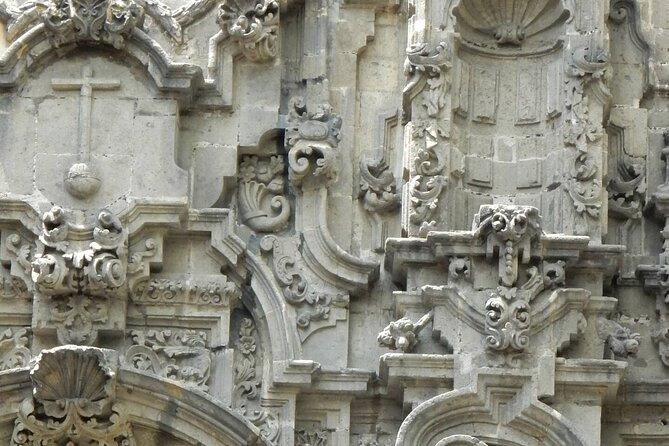
- A compact route through several eras: The walk connects Mexica remains, Spanish colonial construction, 19th-century eclectic design, Art Nouveau details, Art Deco influences, and modern Mexico City.
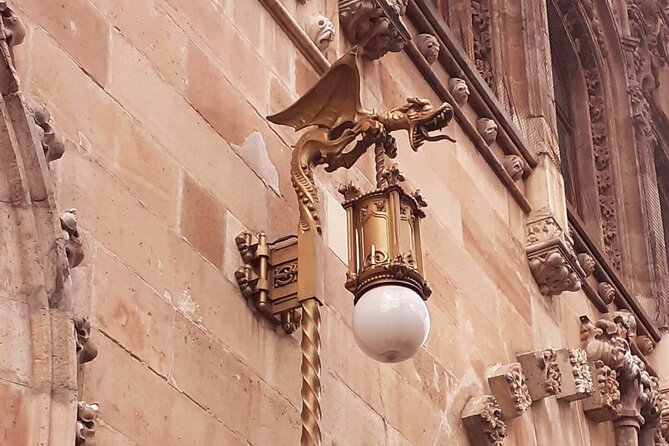
- Raul is the key part of the experience: His explanations link architecture with history, sociology, politics, and art rather than treating each building as an isolated photo stop.
- The group never exceeds six people: That makes it easier to ask questions and hear the guide in busy central streets.
- The House of Tiles offers more than a quick photograph: You’ll examine an artwork, use the balconies for views, and trace the building’s development over nearly 300 years.
- The tour ends in the Zócalo: Raul can answer questions and offer suggestions for the rest of your visit.
- Plan for moderate physical effort: Transportation time is already part of the three to three and a half hour schedule, but you’ll still be on foot for most of it.
Why this walk helps you read Mexico City
The strongest feature here is the connection between places. You are not simply collecting grand buildings. You are learning why the center looks the way it does, how materials shaped construction, and how different periods left their mark on the same streets.
That matters in Mexico City because the historic center brings together very different chapters. The route touches Mexica foundations, the Spanish period, the political and artistic forces of later centuries, and the modern city represented by Torre Latinoamericana. Raul’s approach, according to the information available about the experience, also includes muralism, mythical creatures such as griffins and mermaids, and the way architectural styles shifted over time.
I would take this walk early in a Mexico City visit. One person who took it on a first day found that it provided useful preparation for the National Museum of Anthropology. That makes sense: the tour gives you a framework for understanding pre-Spanish Mexico, colonial power, and the ways later artists and architects reworked earlier ideas.
The small group helps here. With no more than six people, Raul can respond to questions and adjust the discussion. If you want a guide who explains why a building matters rather than just naming its style, this format is a good fit.
More Historical Tours in Mexico City:
- Historic Downtown Walking Tour
★ 5.0 · 1,289 reviews - Historic Center Food Tour in Mexico City
★ 5.0 · 1,263 reviews - Mexico City: Historic Downtown Walking Tour
★ 4.8 · 1,039 reviews
Starting at Torre Latinoamericana
The meeting point is Torre Latinoamericana, at Eje Central Lázaro Cárdenas 2. The first stop lasts about 30 minutes and is meant to orient you to the city’s changing form.
This is a smart starting point because the tower gives you a way to think about scale. From this corner, you can compare the older buildings of the center with the high-rise city that grew around them. The focus is not simply on a view. Raul uses the location to explain how Mexico City developed and how different eras can appear side by side.
You should expect discussion rather than a formal tower visit. No admission ticket is included for this stop, and the supplied details describe it as a free viewpoint or meeting-area stop. Confirm the precise meeting position when you book, especially because the historic center has many nearby landmarks and one past participant went to the wrong meeting place before Raul helped sort it out.
San Francisco’s atrium and the materials of the city
The walk continues to the Atrium of the Temple of San Francisco for roughly 25 minutes. This stop shifts attention from city growth to construction and historical change.
The building is used to explain materials found in Mexico City and the processes that shaped the country. That is useful because architecture here is not only about decoration. What buildings are made from, how they were assembled, and who controlled construction all connect to larger political and social changes.
The atrium also gives you a break from the city street without turning the tour into a long interior visit. You’ll want comfortable shoes, since the route includes several stops where you may stand while looking closely at details and listening.
The House of Tiles and its layered story
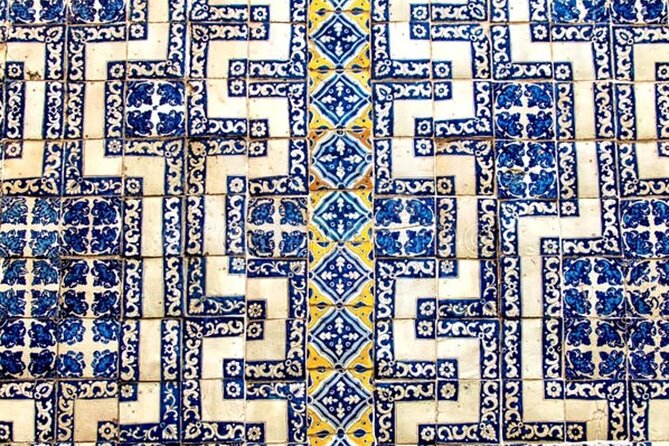
The House of Tiles is one of the most distinctive stops. You spend around 25 minutes looking at an artwork inside, using the balconies to view other buildings, and tracing the building’s evolution across almost 300 years.
This is where the tour’s method becomes especially clear. A famous façade can be reduced to a quick photograph, but Raul uses the building as a case study. You’ll consider how a structure changes as the city around it changes, and how design details carry ideas from different periods.
The balcony views add real value. Instead of looking only at the House of Tiles, you can use it as a frame for nearby architecture. That helps you compare styles and see how the center’s buildings relate to one another.
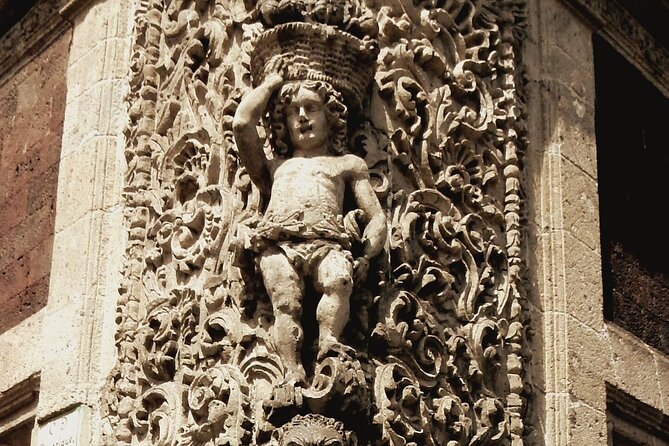
The stop is also a good place to ask questions. The small group means you can pause over details that interest you, including ornamental figures such as griffins and mermaids. If decorative symbolism matters to you, this may be one of the most rewarding parts of the walk.
A completely different kind of day in Mexico City:
- Teotihuacan, Guadalupe Shrine & Tlatelolco Day Tour with Lunch
★ 5.0 · 11,603 reviews - Xochimilco, Coyoacan and Frida Kahlo with Optional Lunch
★ 4.5 · 7,320 reviews - Balloon flight + Breakfast in cave + Pyramids + Pick up CDMX.
★ 5.0 · 6,335 reviews - Teotihuacan pyramids morning or afternoon without tourist traps
★ 5.0 · 6,186 reviews
Palacio de Bellas Artes and the politics of beauty
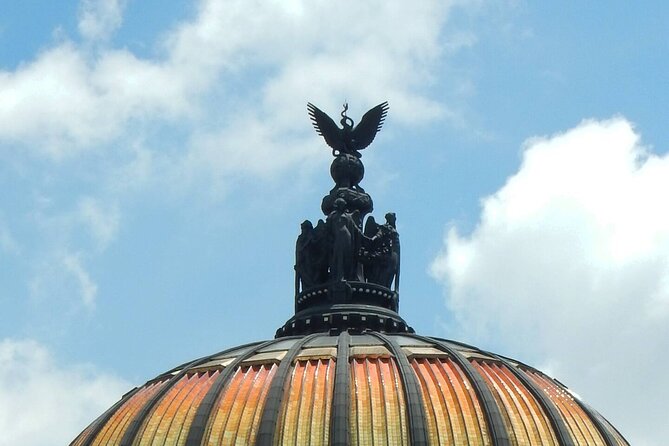
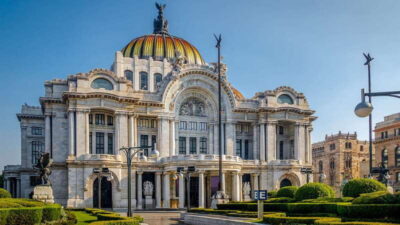
At Palacio de Bellas Artes, the discussion lasts about 20 minutes. The focus is on the historical, political, and artistic setting in which the building and its neighbors were created.
That broader frame is important. Bellas Artes is not just an elegant building to photograph. Its meaning changes when you look at the political forces, artistic ambitions, and public identity tied to it. Raul connects the building to its surroundings, helping you see the center as a conversation between institutions and styles.
Admission is not included here, so you should not assume this tour covers a full visit to the interior. The stop is best understood as an exterior and contextual discussion. If you want to see exhibitions or spend time inside, plan that separately and allow extra time after the walk.
Palacio Postal and the practical value of timing
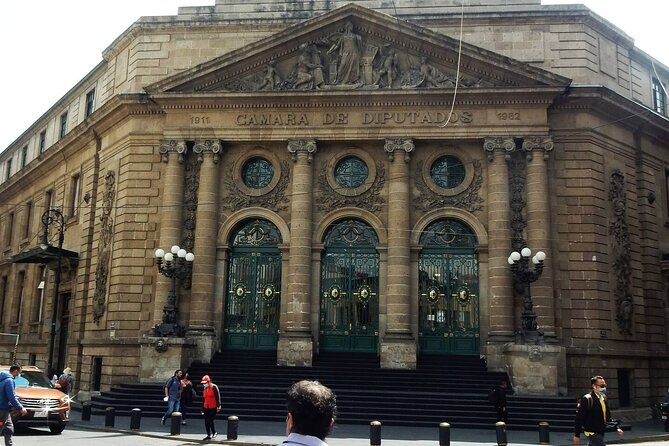
The Palacio Postal receives about 20 minutes. This early-20th-century post office is described as beautiful, and the group may visit the inside depending on the time of day.
That qualification matters. You should treat the interior visit as possible rather than guaranteed. The tour schedule, opening conditions, or timing may affect what you see. Even if you only discuss the building from outside, it fits the tour’s larger theme: public architecture can reveal what a city wanted to project about itself.
The stop also shows why this experience is not simply a list of fixed indoor admissions. Some places are explored through their public spaces, façades, courtyards, and nearby views. That keeps the route moving, but it means you should book a separate visit if one particular interior is a top priority.
Plaza Tolsá and Mexico City’s eclectic center
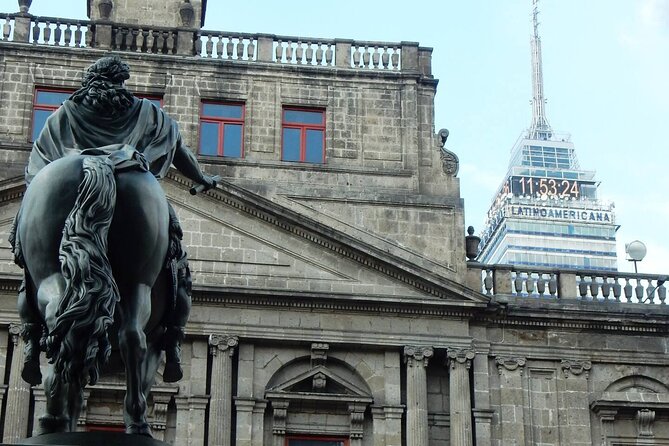
Plaza Tolsá takes around 20 minutes. Here, the focus is the mix of architectural styles around the statue of Charles IV of Spain.
This is a useful stop for visitors who find architectural labels confusing. Rather than offering one neat style for the entire square, Raul uses the buildings around it to explain eclectic design. You can compare façades and see how the city borrowed, adapted, and combined outside influences.
The statue also gives the discussion a political edge. Its subject and location provide a natural way to talk about Mexico’s colonial past and the changing meaning of public monuments. You are not asked to admire every building uncritically. The point is to understand what these objects and structures say about power, taste, and changing civic identity.
Templo Mayor and the city beneath the city
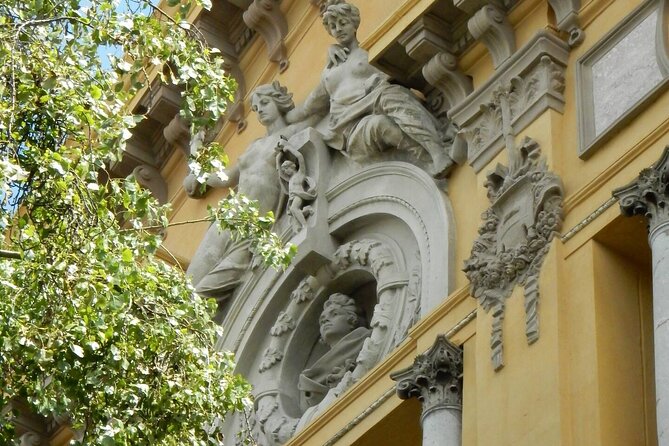
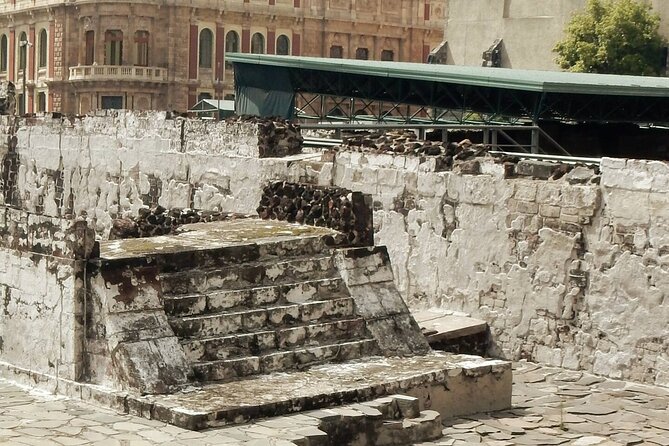
Near the end, the group visits the archaeological site of Templo Mayor for about 20 minutes. This is one of the most important transitions on the route because it brings the discussion back to the foundations of Mexico City.
The site helps you grasp that the modern center was built over an older Mexica capital. Seen after the colonial and later architectural stops, Templo Mayor gives the tour a strong sense of depth without relying on a single period as the whole story.
The supplied details identify this as an archaeological site in the center, not a full museum tour. If you want extensive time with the museum displays, you should schedule a separate visit. On this walk, the value comes from placing the site within the larger route and using it to connect the city’s earliest visible foundations with the streets around you.
Finishing in the Zócalo
The final stop is the Zócalo, Mexico City’s main square, with about 20 minutes set aside to bring the themes together. The route ends at Constitution Plaza, on the north side of the historic center.
This is a useful finish because the square gathers many of the tour’s ideas in one place: political power, religious authority, archaeology, public ceremony, and the continuing life of the city center. Raul can answer questions here and offer recommendations for the rest of your trip or a future visit.
I especially like this ending for first-time visitors. You finish with a clearer sense of direction and a list of places worth returning to at your own pace. Since the tour does not try to cover every interior in depth, the Zócalo conversation helps you decide what deserves more of your time.
Price, group size, and physical effort
At $83.59 per person, this is not the cheapest way to walk through downtown, but the price is reasonable if you want a three-hour guided explanation rather than a simple route between landmarks. The value depends heavily on how much you care about context and questions.
A group of six or fewer is a real advantage at this price. You are paying for access to a guide who can connect architecture with history, politics, art, and sociology, not for transportation or a long list of included admissions. Bottled water is provided, while private transportation is not.
The advertised length is about three to three and a half hours, including travel time between stops. Expect a steady walking experience with repeated periods of standing. A moderate fitness level is recommended, so wear practical shoes and avoid treating this as a relaxed café-to-café stroll.
The experience is offered in English and uses a mobile ticket. It is near public transportation, which makes the central meeting point practical, but you need to arrange your own way there and away from the final stop.
Who will get the most from this experience
I would choose this for a first or early visit to Mexico City, especially if you want an introduction to the historic center before exploring museums on your own. It suits readers who enjoy asking questions and hearing the story behind a building.
It is also a good match for anyone interested in architecture but not ready for a technical lecture. Raul’s explanations connect styles to people, politics, art, and social change, making the subject easier to follow.
You may want another option if you prefer a private tour, a very slow pace, or long interior visits. The route covers eight stops, and the schedule leaves limited time for lingering. Palacio de Bellas Artes admission is not included, and the Palacio Postal interior depends on the time of day.
The tour is highly weather-dependent. If poor weather cancels it, you are offered another date or a full refund. Otherwise, the booking is non-refundable and cannot be changed, so check your schedule and the forecast before committing.
Should you book it?
Book this walk if you want Mexico City’s center explained as a sequence of connected eras, and if you value a guide who can move from architecture to politics, muralism, symbolism, and social history. Raul’s warm, engaging style is the clearest reason to choose it, and the group limit of six keeps the experience personal.
Skip it if you mainly want museum entry, private transportation, or time for long photography stops. For most first-time visitors who want a strong foundation, the combination of Torre Latinoamericana, the House of Tiles, Palacio Postal, Templo Mayor, and the Zócalo offers good value and a useful way to get your bearings.
FAQ
How long does the architecture and history tour last?
The experience lasts approximately three to three and a half hours, including travel time between stops.
Where does the tour begin?
It begins at Torre Latinoamericana, located at Eje Central Lázaro Cárdenas 2 in Mexico City’s historic center.
Where does the tour end?
The walk ends at Constitution Plaza, also called the Zócalo, Mexico City’s main square.
How large is the group?
The group has a maximum of six travelers.
Is transportation included?
Private transportation is not included. The tour is near public transportation, and travel time between stops is already included in the total duration.
Is admission to Palacio de Bellas Artes included?
No. Admission to Palacio de Bellas Artes is not included. The group discusses the building and its surroundings during the stop.
Just added around Mexico City
- Xochimilco’s Wild Side: Mezcal, Insects & Culture★ 4.9 · 10 reviews
- Xochimilco: Food and Trajinera Ride with Local Women★ 5.0 · 5 reviews
- Xochimilco: Island of the Dolls Tour Games and Drinks★ 5.0 · 25 reviews
- Xochimilco Ecological Tour – Away From the Crowds (3 Hours)★ 5.0 · 15 reviews
- Xochimilco + Coyoacán Combo Full-Day Tour★ 5.0 · 3 reviews
- Xochimilco floating gardens, Coyoacan and UNAM murals★ 4.0 · 6 reviews
- Val´quirico And The City of Angels Puebla From Mexico City★ 5.0 · 3 reviews
- Xochimilco: amanecer en kayak Ciudad de México★ 5.0 · 35 reviews
Historical Tours, compared.


Mexico City Historical Centre Food Tour with 7 Authentic Tastings
Read our review →
Walking Tour in Mexico City for Exploring their Cultural Heritage
Read our review →
Walking Tour – Impressive murals in Historical Center of Mexico City
Read our review →
Guided walking tour through the most historic parts of the city.
Read our review →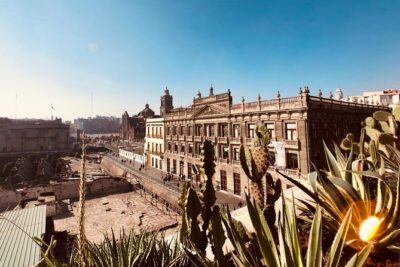
Private Walking Tour Gems of the Historic Center of Mexico City
Read our review →Browse the lists this tour appears in