
Reviewed · MEXICO CITY DAY OF THE DEAD TOURS
Tour cultural e inmersivo en Casa Dia de Muertos
Mexico City’s Casa Día de Muertos brings the country’s best-known celebration indoors, where you can see an authentic offering, artistic installations, and the work of artisans who make tequila decanter sets for export. It is a useful way to explore the holiday outside the short Day of the Dead season.
I like the one-hour format and the small maximum of 15 people. I also like that the visit connects ceremony with working craft, rather than presenting Day of the Dead as a staged photo display. The main drawback is that the house also functions as a craft business, so part of your time may include sales activity. If you visit Mexico City during the actual festival, the experience may feel less special than it does in the off-season.
Key points to know before booking
- A year-round look at Day of the Dead: You can see an offering and holiday-related artwork even when Mexico City is not celebrating in late October and early November.
- A working artisan space: The house is also a workshop producing tequila decanter sets exported to more than 20 countries.
- History in a compact format: The guide covers pre-Hispanic origins, Spanish influence, and present-day customs.
- A short visit in Xochimilco: Plan on about one hour at Rincón Pozo 42, with the tour returning to the same meeting point.
- A modest price: At $11.91 per person, the cost is easy to justify if you want cultural context without committing half a day.
- Small-group setting: The maximum group size is 15, and guiding is available in English and Spanish.
What Casa Día de Muertos adds to a Mexico City visit
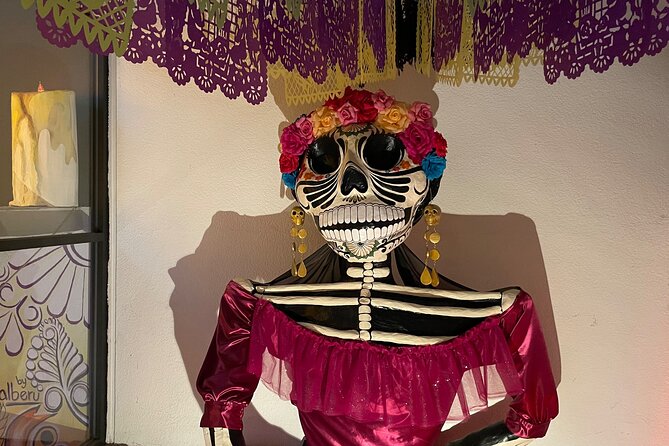
Day of the Dead is often reduced to painted faces, paper decorations, and colorful skeleton figures. Those elements are part of the celebration, but the meaning is larger. Families remember people who have died, prepare offerings, and use food, flowers, candles, photographs, and personal objects to welcome their loved ones.
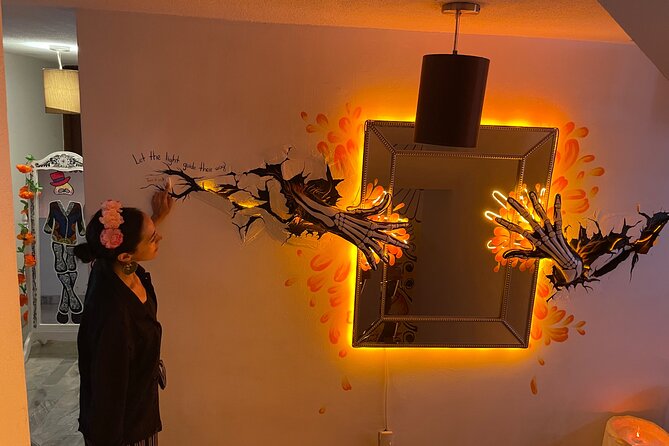
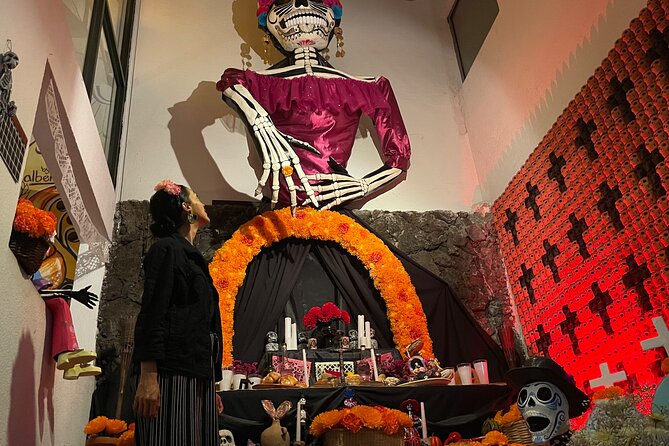
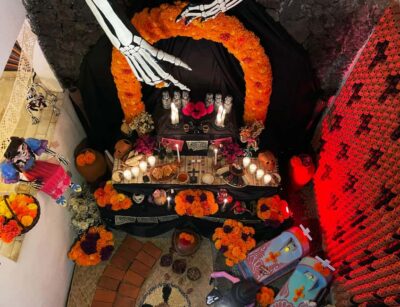
Casa Día de Muertos gives you a fixed place to consider those ideas outside the festival calendar. The home contains several artistic interventions connected with the holiday, along with an authentic altar offering. That combination matters because you are not looking only at decorative skulls. You are also hearing how the celebration developed and why it still carries emotional weight.
The visit covers three broad stages. You hear about the ancient origins of the celebration, the changes brought by the Spanish arrival, and the way Day of the Dead is practiced today. In one hour, the treatment has to be concise, but that structure gives the tour a clear purpose.
I would approach this as a cultural introduction, not as a full study of Mexican religious history. The setting lets you see and discuss the subject, while the short duration keeps the visit manageable for a busy day in Mexico City.
More Day of the Dead tours in Mexico City:
- Mexico City: Day of the Dead Guided Tour
★ 3.4 · 97 reviews - Day of the Dead Tour in Mexico City
★ 3.5 · 78 reviews - Day of the Dead Tour in San Andres Míxquic From Mexico City
★ 3.7 · 52 reviews
Entering the house and seeing the offering
The main stop is Casa Día de Muertos itself. The house has been altered with several art pieces connected to the holiday, creating a setting that feels more personal than a standard museum room. You can expect the guide to explain what you are seeing while placing it in the larger story of the celebration.
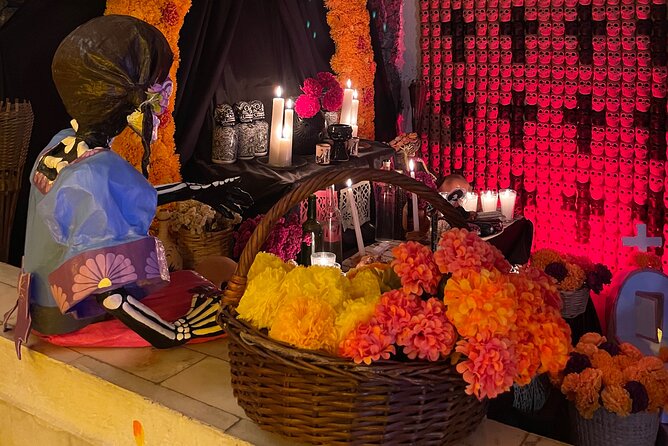
The authentic offering is the central cultural feature. An offering, or altar, is not simply a display of skeletons and flowers. It is connected to remembrance and hospitality, with objects chosen to honor the dead. The available information does not list every item on the altar, so you should not expect a fixed checklist of photographs, foods, candles, or flowers. The important point is that the visit includes a real offering as part of the house’s presentation.
This is also the part most likely to satisfy visitors who want Day of the Dead context outside festival dates. Mexico City during the holiday can be crowded, expensive, and full of public events. Here, you get a quieter and more contained look at the subject. The trade-off is scale. You will not see the citywide parades, cemetery traditions, or public decorations that make late October and early November so memorable.
The house setting may also make the holiday easier to discuss. A large event can give you plenty to photograph but little time to ask what the symbols mean. A one-hour guided visit gives the subject a clear frame, even if it cannot cover every regional variation.
From ancient roots to present-day customs
The historical explanation is one of the strongest reasons to book this activity. The guide traces Day of the Dead from its ancient origin through the period of Spanish influence and into current practice. That sequence helps you understand that the celebration is not a single imported custom or a simple holiday with one fixed form.
The Spanish arrival brought Catholic beliefs and feast days into contact with existing Indigenous traditions. The result was a form of cultural mixing, often called syncretism. The tour uses that history to explain why Day of the Dead can contain both Indigenous and Catholic elements without fitting neatly into only one category.
You should expect the explanation to be introductory rather than academic. The experience lasts about one hour and includes the house, the artwork, the offering, and the workshop. Still, a concise explanation can change the way you look at an altar or a skull image later in your trip.
I like this historical balance because it avoids treating Day of the Dead as a modern design trend. The celebration is now a major symbol of Mexico, but its meaning comes from older practices and later changes. The tour puts those layers together in a way that works for first-time visitors.
If you already have strong background knowledge of Mexican history and religious traditions, the information may feel familiar. In that case, the house and the artisan workshop will likely be more useful than the basic historical overview.
The artisan workshop and tequila decanter sets
Casa Día de Muertos is also an artesanía workshop. You can see the setting where artists produce tequila decanter sets that are exported to more than 20 countries. This adds an important practical angle to the tour: the house is not only presenting Mexican culture, it is also connected to a working craft business.
That distinction shapes the visit. You are looking at objects made for sale, and you may have a chance to see the people and production behind them. For someone interested in Mexican design, decorative arts, or the business side of handicrafts, this is a useful addition.
It also explains the one significant caution. The workshop includes sales. If you want a purely historical house tour with no commercial element, this may not be the right choice. If you are open to seeing how cultural imagery becomes a finished product, the sales component can feel relevant rather than intrusive.
Keep your expectations clear. The information does not promise a hands-on craft session, a private demonstration, or a purchase credit. It says you will have a chance to see the artists behind the production. That makes this an introduction to the workshop, not a full artisan class.
The connection between Day of the Dead imagery and tequila decanter sets may interest shoppers, but you do not need to buy anything to gain value from the visit. Consider the workshop a second subject alongside the altar and the historical talk.
A completely different kind of day in Mexico City:
- Teotihuacan, Guadalupe Shrine & Tlatelolco Day Tour with Lunch
★ 5.0 · 11,603 reviews - Xochimilco, Coyoacan and Frida Kahlo with Optional Lunch
★ 4.5 · 7,320 reviews - Balloon flight + Breakfast in cave + Pyramids + Pick up CDMX.
★ 5.0 · 6,335 reviews - Teotihuacan pyramids morning or afternoon without tourist traps
★ 5.0 · 6,186 reviews
Why the one-hour length works
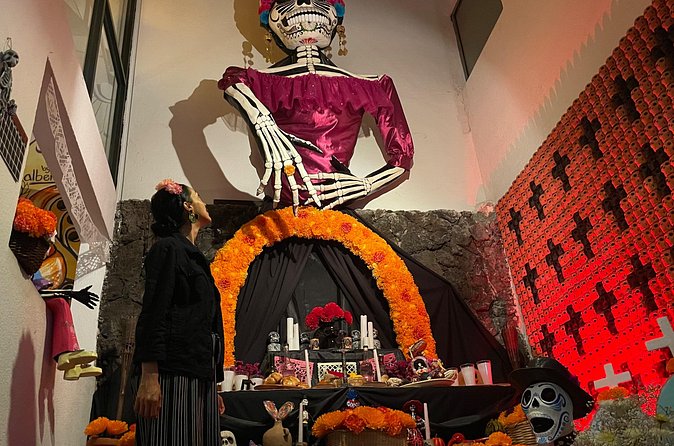
One hour is enough to give the experience a clear shape. You can see the house, discuss the celebration, look at the offering, and learn about the workshop without giving up most of your day. That makes the tour easy to place before or after another activity in southern Mexico City.
The short duration also limits fatigue. Day of the Dead symbolism can become repetitive when every stop presents the same skull motifs without explanation. Here, the guide has a defined amount of time to connect the art, the altar, the history, and the craft work.
The limitation is just as clear. You should not expect a long neighborhood walk, a visit to several altars, or a broad tour of Xochimilco. This activity begins and ends at Rincón Pozo 42 in Bosque del Sur. Private transportation is not included, so you need to arrange your own route to the meeting point.
The listing notes that public transportation is nearby, but it does not provide a route or travel time from central Mexico City. Check your departure point before booking and allow enough time to reach the house. The meeting point is in Xochimilco, so do not assume it is close to the historic center or the main museum districts.
Price and value at $11.91
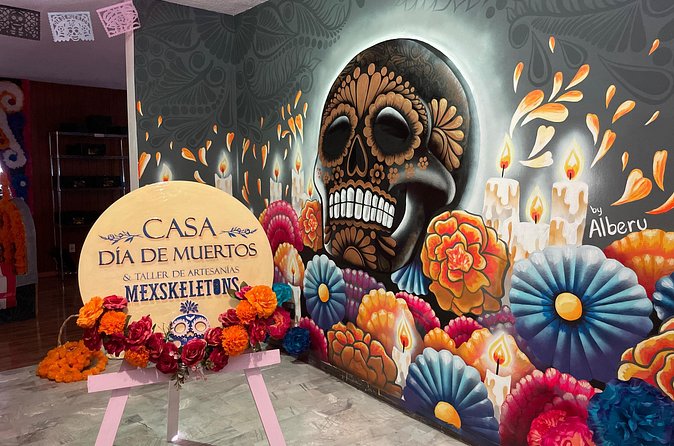
At $11.91 per person, this is a low-cost cultural stop. The price includes the guided visit and snacks, with dietary requirements to be noted when you book. It does not include private transportation, so your total cost will depend partly on how you get to Xochimilco.
I see the best value for someone who cannot visit Mexico City during the Day of the Dead season. The house offers a year-round version of the theme, which can save you from planning an entire trip around a specific holiday period. You get a focused introduction for about the price of a casual meal or a short museum visit.
The value is less obvious during the actual festival season. Mexico City then offers public altars, decorations, processions, and other events that give Day of the Dead a much wider setting. A house tour can still add historical explanation and a look at artisan production, but it may feel like a smaller supplement rather than the main event.
The sales element also affects your personal calculation. Some people enjoy seeing local products and may want to browse. Others prefer a cultural activity with no commercial purpose. I would book it if the workshop connection sounds interesting, but I would not choose it if you want a strictly noncommercial museum experience.
Group size, language, and comfort
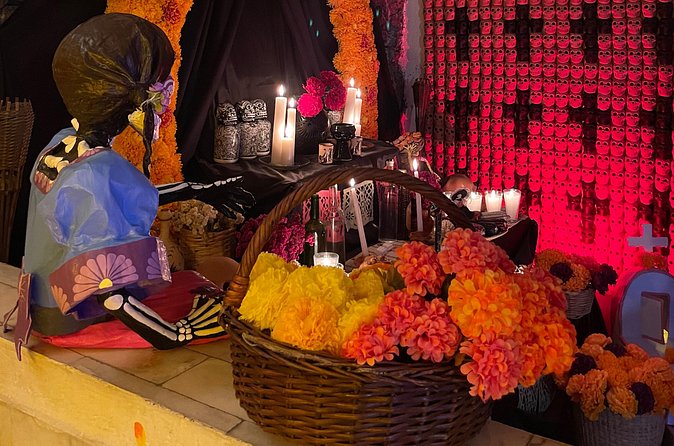
The maximum group size is 15 people. That is small enough to keep the visit more personal than a large coach excursion, though it is not a private tour. The group limit should also make it easier to hear the guide inside the house and ask a question if time allows.
English is offered, and the included guide languages are English and Spanish. If language matters to your booking decision, confirm your selected option at checkout. No individual guide names are provided, so you should not book this expecting a specific host.
Snacks are included. If you have dietary requirements, state them in the special requirements field when booking. The available details do not identify the snacks or promise a full meal, so think of this as a small refreshment rather than lunch.
Service animals are allowed, and most people can participate. The activity information does not describe stairs, narrow passages, or other physical details, so anyone with specific mobility needs should check directly before booking. The tour returns to the original meeting point, which keeps the end of the visit simple.
Who will get the most from this visit
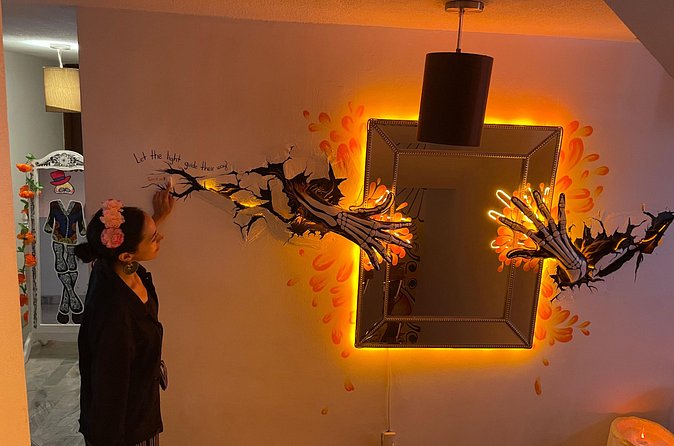
I would recommend Casa Día de Muertos to you if you want a short cultural activity with a strong visual subject. It suits first-time visitors who know the holiday mainly from films, costumes, or social media and want a basic explanation of what lies behind the imagery.
It also fits repeat visitors to Mexico City who have already seen the central museums and want a different kind of stop in Xochimilco. The workshop gives the visit a practical angle, especially if you are interested in Mexican crafts or decorative objects.
Families may appreciate the one-hour length, although the information does not specify a children’s program. Art students, design fans, and shoppers interested in tequila presentation pieces may find the artisan side especially useful.
I would be more cautious if you are visiting Mexico City during the main Day of the Dead period and already have access to several live celebrations. In that case, compare this house visit with the public events available on your dates. The tour adds context and an indoor setting, but it cannot reproduce the scale of the citywide holiday.
The tour is also not ideal if your main goal is Xochimilco’s canals. The meeting point is in the district, but the experience described here centers on the house, the artwork, the offering, and the craft workshop. Do not book it expecting a canal ride or a broad tour of the area.
Booking and cancellation details
You receive confirmation at the time of booking, and the activity is often reserved well in advance, with an average of 41 days. That advance demand suggests you should check availability early if your Mexico City dates are fixed, especially if you need an English-language departure.
Free cancellation is available until 24 hours before the start time for a full refund. Cancellations or changes made less than 24 hours before the start are not accepted for a refund, and the cutoff follows local Mexico City time.
The booking page lists mobile tickets, so you can keep the confirmation on your phone. Since private transportation is not provided, focus your planning on reaching Rincón Pozo 42, Bosque del Sur, 16010 Ciudad de México, before the scheduled start.
Should you book Casa Día de Muertos?
Book this tour if you want an affordable, compact introduction to Day of the Dead outside the main holiday season. The authentic offering, historical explanation, and working artisan setting give the hour more substance than a simple photo stop.
If you visit Mexico City during the festival, book it only if you also want the craft workshop and a quieter explanation of the tradition. The sales activity may not suit everyone, and the experience cannot replace public celebrations across the city.
At $11.91, the risk is small. I would choose it for an off-season visit, an interest in Mexican craft, or a first look at the meaning behind Day of the Dead imagery. I would pass if you need transportation, want a full-day Xochimilco experience, or prefer a cultural stop with no commercial side.
FAQ
Where does the Casa Día de Muertos tour start?
The tour starts at Rincón Pozo 42, Bosque del Sur, Xochimilco, 16010 Ciudad de México, CDMX, Mexico.
Where does the tour end?
The activity ends back at the original meeting point.
How long does the experience last?
The tour lasts approximately one hour.
Is transportation included?
No. Private transportation is not included. Public transportation is available nearby.
What languages are available?
English is offered, and the included guide languages are English and Spanish.
Can I cancel for a full refund?
Yes. You can cancel at least 24 hours before the scheduled start time for a full refund. Cancellations or changes made less than 24 hours before the start are not accepted for a refund.
Just added around Mexico City
- Xochimilco’s Wild Side: Mezcal, Insects & Culture★ 4.9 · 10 reviews
- Xochimilco: Food and Trajinera Ride with Local Women★ 5.0 · 5 reviews
- Xochimilco: Island of the Dolls Tour Games and Drinks★ 5.0 · 25 reviews
- Xochimilco Ecological Tour – Away From the Crowds (3 Hours)★ 5.0 · 15 reviews
- Xochimilco + Coyoacán Combo Full-Day Tour★ 5.0 · 3 reviews
- Xochimilco floating gardens, Coyoacan and UNAM murals★ 4.0 · 6 reviews
- Val´quirico And The City of Angels Puebla From Mexico City★ 5.0 · 3 reviews
- Xochimilco: amanecer en kayak Ciudad de México★ 5.0 · 35 reviews
Mexico City Day of the Dead Tours, compared.

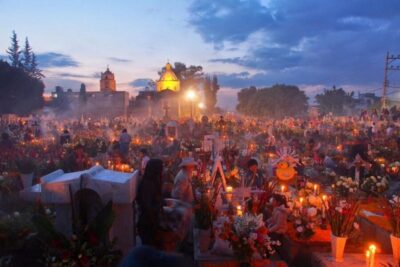
Day of the Dead Tour in San Andres Míxquic From Mexico City
Read our review →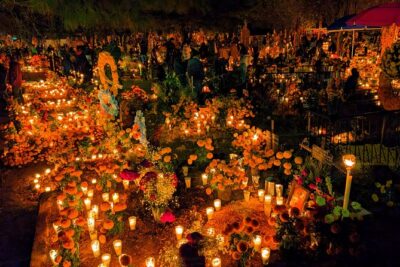
The real “Dia de muertos” tour in Mixquic + secret cemetery
Read our review →
Day of the Dead Tour in Mixquic from Mexico City
Read our review →
Browse the lists this tour appears in