
Reviewed · MEXICO CITY
Arrivals & Survival of Jews in Mexico from 1519
Mexico City’s Jewish story is told here through the old center’s streets, churches, marketplaces, and synagogues. You’ll trace how Jews arrived after 1519, lived under the shadow of the Spanish Inquisition, traded in the colonial city, and later built new communities.
I like the small maximum of 10 people, which gives the guide room to handle questions. I also like the unusual route, especially the stop at Justo Sierra Synagogue and the link between Diego Rivera, Frida Kahlo, and Mexico’s anti-Fascist movement. The main drawback is that the tour covers a large amount of Mexican, Spanish, Catholic, and Jewish history in three and a half hours, so some parts may feel broad rather than fully developed.
Key points to know before booking
- Start with an Aztec Temple view: The opening conversation takes place from the terrace of Librería Porrúa, with the ruins of the Great Aztec Temple below.
- Follow the Inquisition’s trail: Churches, the Palace of the Inquisition, living quarters, and a former prison help explain the dangers faced by Jews in colonial Mexico.
- See two major synagogue landmarks: The route ends near Mount Sinai and Nidjei Israel, then continues to the decommissioned Justo Sierra Synagogue.
- Hear the Rivera and Kahlo connection: The tour visits the outside of San Ildefonso, where the two artists met.
- Expect more than Jewish history: The guide also explains Spanish imperial power, Mexican history, religious control, Trotsky, and the anti-Semitic convention that Mexico opposed.
- Plan for a serious walking lesson: The route is not a strenuous hike, but you should be comfortable walking between historic sites and listening outdoors.
What this Mexico City Jewish history tour is really about
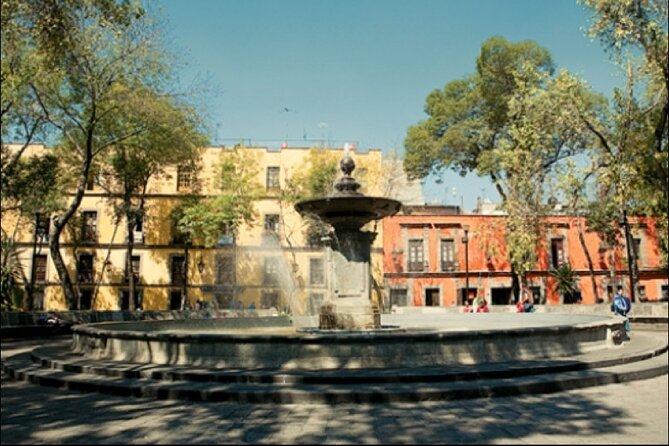
This is not a tour of a single Jewish neighborhood. It is a walk through Mexico City’s oldest center, using familiar monuments to explain a less visible story.
The route begins in the world of the Aztec capital and Spanish conquest, then moves through Catholic institutions that helped enforce religious conformity. From there, it reaches the Jewish communities that survived, rebuilt, and created new institutions in modern Mexico.
That structure gives the experience its strength. You are not simply shown a synagogue and told a few dates. You are asked to consider how Jewish life existed in a city shaped by conquest, the Spanish Inquisition, forced conversion, trade, migration, art, and politics.
Carlos is the guide most often associated with this experience, and his approach is broad. He connects Jewish history with Mexican and world events, then adds modern perspectives on the Jewish community in Mexico. If Carlos leads your walk, expect a talkative guide who welcomes questions and may spend extra time with a small group.
The tour is offered in English and lasts about three hours and 30 minutes. It begins at 10 a.m. near Librería Porrúa on República de Argentina and finishes on Justo Sierra Street, in front of Loreto Park. The route stays in the Centro Histórico, making it easy to pair with other sights in the historic center, though I would avoid scheduling another fixed appointment immediately afterward.
Other Mexico City days people book alongside this one:
- Teotihuacan, Guadalupe Shrine & Tlatelolco Day Tour with Lunch
★ 5.0 · 11,603 reviews - Xochimilco, Coyoacan and Frida Kahlo with Optional Lunch
★ 4.5 · 7,320 reviews - Balloon flight + Breakfast in cave + Pyramids + Pick up CDMX.
★ 5.0 · 6,335 reviews
Starting above the Great Aztec Temple at Librería Porrúa
The opening stop is more than a meeting point. From a terrace at Librería Porrúa, you look toward the ruins of the Great Aztec Temple while the guide sets up the story of religious coexistence in Mexico City.
This is a smart place to begin. The view puts several layers of the city in front of you at once: the pre-Hispanic capital, the colonial city built over it, and the modern metropolis that now contains many religious communities. It gives the rest of the walk a useful frame.
The first hour is spent here, so be prepared for an introductory discussion rather than an immediate march through the streets. That slower start suits people who want context before seeing monuments. It may feel long if you prefer a quick orientation and constant movement.
I would pay close attention to the timeline here. The tour reaches back to the arrival of Jews in Mexico after 1519, then explains how the Spanish empire and religious authorities shaped daily life. The point is not simply that Jews arrived, but that they arrived in a colony where identity, public belief, and political loyalty were closely watched.
Behind the Metropolitan Cathedral and the Chapel of the Souls
The walk continues behind the Metropolitan Cathedral to the Chapel of the Souls. The stop lasts about 20 minutes and focuses on teachings against heresy and other religions.
From this area, you can also appreciate the cathedral’s colonial design. The tour presents the architecture as part of a system intended to keep Jews away from Catholic religious power. That interpretation gives the building a different meaning from the standard cathedral visit.
You should expect a discussion of exclusion, not an interior art tour. The value is in seeing how religious authority was expressed through buildings, public teaching, and city planning.
This part may be challenging for anyone hoping for a simple sightseeing walk. The language around the Inquisition and anti-Semitism is serious, and the tour does not treat the cathedral as a neutral backdrop. I find that useful, but you may want to read a little about colonial Mexico beforehand if you prefer a more detailed historical discussion.
Plaza de Santo Domingo and the risks of colonial trade
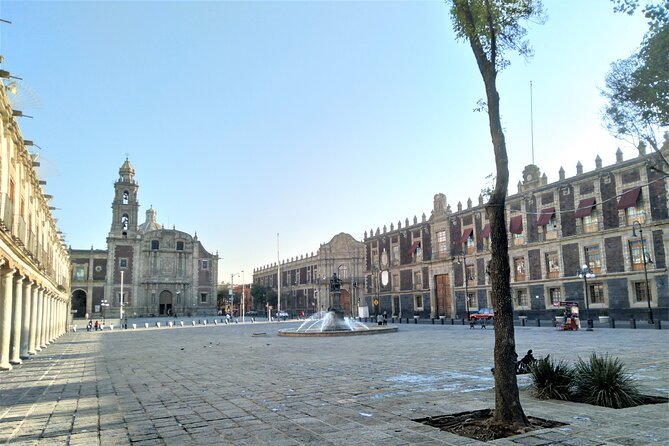
At Plaza de Santo Domingo, the story shifts from religious authority to commerce. This was a major trading marketplace from the 16th through the 19th centuries, and the guide explains how Jews in hiding had to bring merchandise there while being watched from the Palace of the Inquisition.
That detail helps you understand why trade mattered. Commerce could offer a way to earn a living and make contacts, but it also placed people in public view. The marketplace was both an opportunity and a risk.
The group also looks at hidden anti-Semitic messages associated with the Palace of the Inquisition and Santo Domingo Church. The tour links the church to the beginning of El Camino Real, described here as a safer route for Jewish traveling traders.
This is one of the stops where a strong guide makes a real difference. The buildings themselves do not announce every story connected to them. You need the explanation to understand what the marketplace meant to people living under suspicion.
The visit lasts about 20 minutes. It is a compact stop, so ask questions while you have the guide’s attention. In a larger group, the shorter stops could feel rushed, but the limit of 10 people should help keep the conversation manageable.
A completely different kind of day in Mexico City:
- Teotihuacan pyramids morning or afternoon without tourist traps
★ 5.0 · 6,186 reviews - Teotihuacan Early Access Guided Tour with optional Lunch
★ 4.5 · 6,138 reviews - Balloon flight + pick up in CDMX + Breakfast in Cave + Pyramids
★ 5.0 · 5,651 reviews - Balloon Flight + Cave Breakfast + Pick Up from CDMX or We Fly
★ 5.0 · 4,410 reviews
The Palace of the Inquisition and its Perpetual Prison
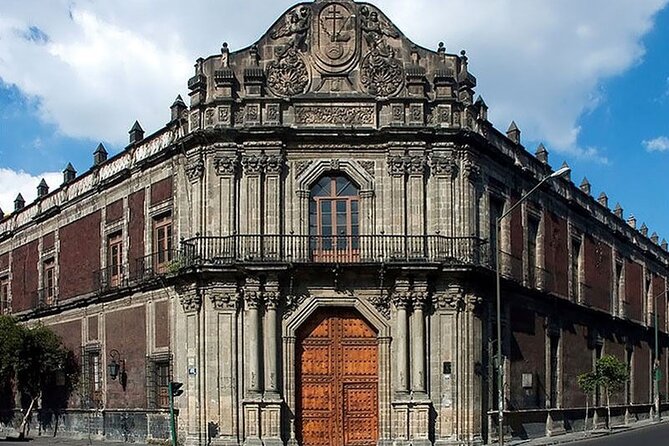
The next section passes the former administration building of the Inquisition, its living quarters, and the nearby Perpetual Prison. The tour explains that Jews were tortured and sentenced to death in this setting.
This is the darkest part of the route. It is also where the title of the experience becomes most literal. The walk is not only about Jewish arrival and survival in Mexico. It is about the danger created by religious persecution and the systems that enforced it.
You will spend about 20 minutes here. The stop is outside and focused on interpretation, so do not expect a museum-style visit with a long sequence of indoor exhibits.
I appreciate that the tour places this stop after Plaza de Santo Domingo. First, you see the marketplace where people had to appear in public. Then you see the institution that monitored and punished religious difference. That order makes the pressure easier to understand.
The subject matter is heavy, and the presentation may feel direct. If you are traveling with younger family members, consider how comfortable they are with discussions of torture, imprisonment, and executions.
San Ildefonso, Diego Rivera, and Frida Kahlo
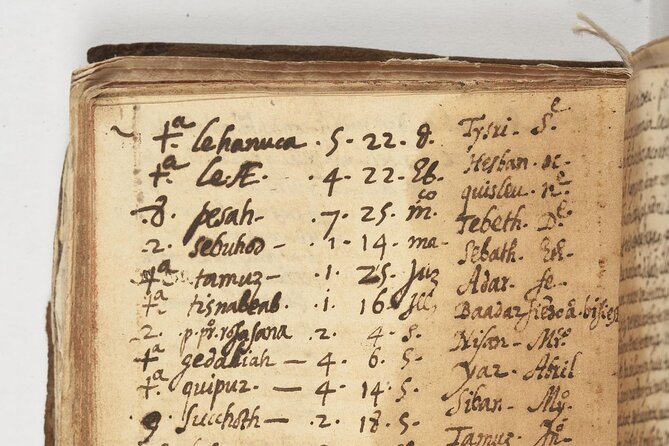
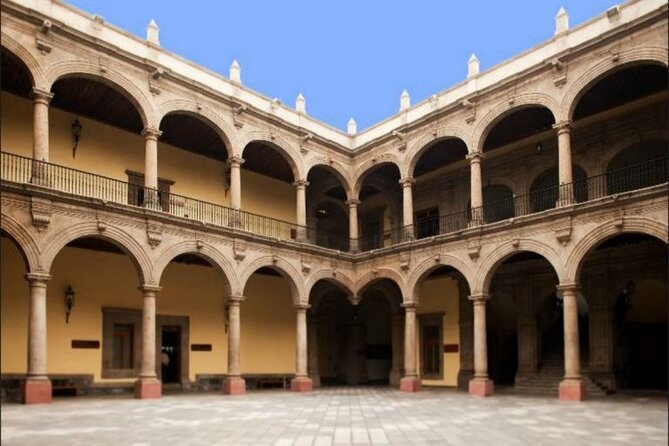
At Antiguo Colegio de San Ildefonso, the group stops outside for about 15 minutes. This is where the tour connects Diego Rivera, described here as being of Sephardic origin, with Frida Kahlo, described as being of Ashkenazi origin.
The focus is not simply on the artists’ personal story. The guide uses their meeting place to discuss Mexico’s anti-Fascist movement, the cancellation of the country’s first and only anti-Semitic national convention, and Mexico’s reception of Lev Davidovich Bronstein, better known as Leon Trotsky, as a refugee.
This is a good example of the tour’s wider method. Jewish history is treated as part of Mexico’s political and cultural story, not as a separate subject sealed off from the rest of the city.
You will see the building from the outside, so this stop will not satisfy you if you want a full San Ildefonso art visit. It works best as a historical connection between art, immigration, political resistance, and Jewish identity.
If you are already planning a visit to the Frida Kahlo Museum, this stop adds useful background, but it is not a substitute for that museum. It also gives you a reason to look at Rivera’s work elsewhere in Mexico City with a sharper eye.
Plaza Loreto and Mexico’s early purpose-built synagogues
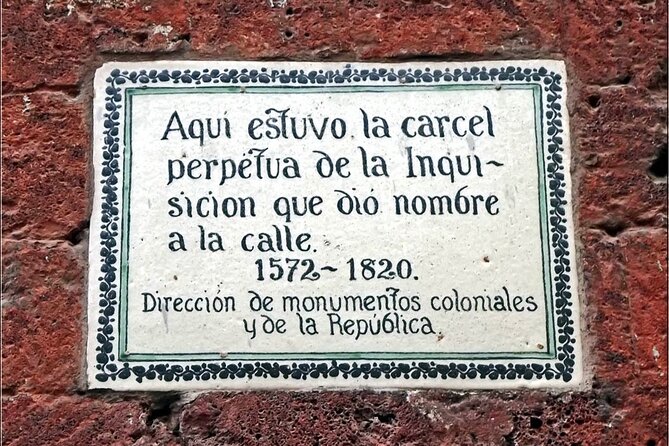
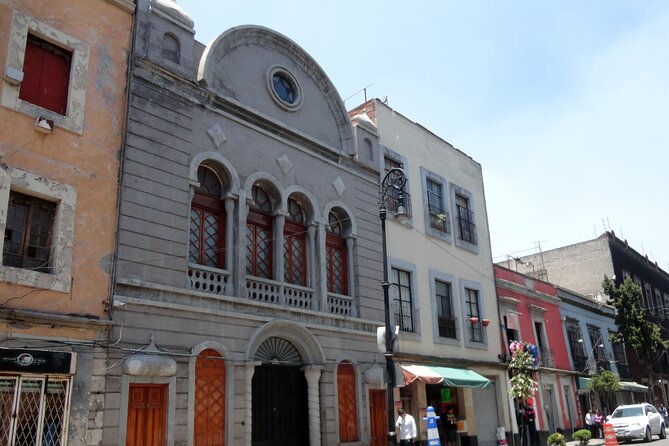
The route reaches Plaza Loreto near the end. Here, the guide points out Mount Sinai, described as the first purpose-built Sephardic synagogue in Mexico, and the neighboring Nidjei Israel, identified as the first Ashkenazi synagogue in the country.
This is where the history becomes more tangible. Earlier stops deal with hidden lives, surveillance, and persecution. These buildings represent organized communities creating places for worship and belonging.
The stop lasts about 15 minutes, so you will mainly examine the buildings from outside and hear their role in Mexico’s Jewish story. The exact condition and access arrangements can vary, but the experience includes agreed access to some public and private places when available.
The location is also practical. The tour ends right in front of Loreto Park, on the south side of Justo Sierra Street, so you are well placed to continue exploring the Centro Histórico afterward.
Justo Sierra Synagogue, the final and strongest stop
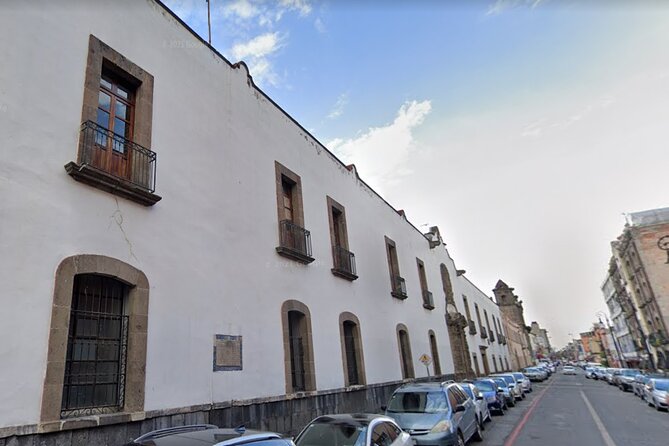
The final visit is to Justo Sierra Synagogue, a decommissioned Ashkenazi synagogue and one of the most important sites on the route. The visit lasts about 20 minutes.
For many people, this will be the payoff. After hearing about Jews living under pressure, you reach a physical place built for Jewish communal life. The old synagogue gives the story a human scale that monuments connected to the Inquisition cannot provide.
The synagogue is also a reminder that Mexico’s Jewish story did not end with colonial persecution. Sephardic and Ashkenazi communities developed institutions, maintained traditions, and became part of modern Mexico City.
I would save your questions for this final stop. Ask about the difference between Sephardic and Ashkenazi communities, the synagogue’s former use, and how the city’s Jewish population changed over time. The guide’s ability to explain both historical and modern perspectives is especially useful here.
The stop is described as a visit, but access can depend on the arrangements made for the day. It is wise to treat the synagogue as the tour’s intended final highlight while allowing for the possibility that the exact access experience may vary.
What the guide adds to the walk
The guide matters a great deal on this experience because many of the most important stories are not obvious from the street.
Carlos is praised for clear storytelling, careful answers, and a personal connection to the subject. He also brings in general Mexican history, the Spanish empire, the Catholic Church, world politics, and the modern Jewish community. That broad approach explains why some people consider this one of the strongest history experiences of their Mexico City visit.
At the same time, you should know what kind of presentation to expect. This is not a narrowly academic seminar with a reading list or a detailed source discussion at every stop. One past participant wanted more references and felt some explanations were basic or oversimplified. Another found the Socratic style less useful.
That criticism is worth taking seriously. If you already know Mexican and Jewish history well, you may want more nuance on certain topics. If you are starting from scratch, the wide-ranging narrative may be exactly what you need.
The experience has a rating of 4.6 from 87 reviews, with 90 percent recommending it. Most of the praise centers on the guide’s command of the subject, his warmth, and the way he connects personal stories to larger events. The main practical warning comes from several cancellations, including last-minute cancellations caused by health or security concerns. Those cases were handled through the provider or booking company, but they created refund and rescheduling frustration.
Price, pace, and who gets good value
At $99 per person, this is not a cheap city walk. You are paying for a small group, an English-speaking local guide, access arrangements, and a focused historical theme rather than a standard overview of the Centro Histórico.
I think the price makes sense if you want Jewish history explained in connection with Mexico’s wider past. The value is less clear if you mainly want to enter churches, see major artworks, or cover the city center quickly. Much of the experience takes place outside, and the listed admissions are free or included through arrangements.
The walking is described as requiring moderate physical fitness. The route contains several short stops rather than one long continuous hike, and the total walking is not considered excessive. Still, you should wear comfortable shoes and expect city pavements, standing, and outdoor listening.
Because the group can have no more than 10 people, the experience should feel more personal than a large bus tour. That matters here. You will want room to ask about family origins, religious traditions, the Inquisition, Rivera, Kahlo, or modern Jewish Mexico.
The tour is best suited to:
- People with a strong interest in Jewish history or Sephardic and Ashkenazi culture
- First-time visitors who want a different way to understand the Centro Histórico
- Families with older children or teenagers who can follow a serious historical discussion
- Art lovers curious about Rivera, Kahlo, and Jewish identity in Mexico
- Visitors who prefer a small walking group and time for questions
It is less suited to anyone wanting a light, casual stroll or a dedicated art tour. It also may not satisfy someone seeking a full scholarly treatment of every period.
Booking advice and final verdict
I would book this tour if Jewish history is one of your reasons for visiting Mexico City, especially if you want to connect the colonial period with modern Jewish life. The route offers something unusual: the first part shows what Jewish survival required, while the final synagogue stops show what community building made possible.
Book with a little flexibility in your schedule because several cancellations have occurred for health or security reasons. The stated cancellation policy gives you a full refund if you cancel at least 24 hours before the 10 a.m. start, but late changes are not accepted.
Before booking, check who is guiding the date you choose. Carlos receives the strongest praise, and his storytelling style seems central to the experience. If you want a quiet, tightly limited Jewish-history lecture with extensive academic references, this may feel too broad. If you want an engaging walk through Mexico City that links Jewish life to conquest, the Inquisition, trade, art, politics, and modern community life, it is a worthwhile choice.
FAQ
Where does the tour begin?
It begins at República de Argentina 15 in Mexico City’s Centro Histórico, near Librería Porrúa. The start time is 10 a.m.
Where does the tour finish?
It ends at Justo Sierra 71, directly in front of Loreto Park on the south side of Justo Sierra Street.
How long does the experience last?
The tour lasts approximately three hours and 30 minutes.
Is the tour offered in English?
Yes. The experience is offered in English and includes a local guide.
How large is the group?
The maximum group size is 10 people.
Can I cancel for a refund?
Yes. You can cancel at least 24 hours before the local start time for a full refund. Cancellations or changes made less than 24 hours before the start are not accepted for a refund.
Just added around Mexico City
- Xochimilco’s Wild Side: Mezcal, Insects & Culture★ 4.9 · 10 reviews
- Xochimilco: Food and Trajinera Ride with Local Women★ 5.0 · 5 reviews
- Xochimilco: Island of the Dolls Tour Games and Drinks★ 5.0 · 25 reviews
- Xochimilco Ecological Tour – Away From the Crowds (3 Hours)★ 5.0 · 15 reviews
- Xochimilco + Coyoacán Combo Full-Day Tour★ 5.0 · 3 reviews
- Xochimilco floating gardens, Coyoacan and UNAM murals★ 4.0 · 6 reviews
- Val´quirico And The City of Angels Puebla From Mexico City★ 5.0 · 3 reviews
- Xochimilco: amanecer en kayak Ciudad de México★ 5.0 · 35 reviews