
Reviewed · MEXICO CITY
THE REAL CDMX: Under the skin of the city
Mexico City reveals itself best one bite and one Metro ride at a time. This four-hour outing starts in non-touristy Guerrero, moves through a local market and neighborhood food stops, then reaches the grand buildings of the historic center. Along the way, you taste tamales, cecina tacos, blue-corn tlacoyos, pulque, and more.
I like the local-market start, which gives you a working view of the city before the famous monuments appear. I also like the way guides such as Olin and Fernando mix food with stories, architecture, language, and everyday customs instead of delivering a long lecture at one plaza.
The main consideration is stamina. You cover a lot of ground on foot, ride public transit, eat several times, and may run past the advertised four hours. This is not the best fit if you want a slow morning or prefer familiar food.
What makes this Mexico City food walk different
- Breakfast in Guerrero: Begin with family-prepared Oaxacan tamales and chocolate or atole, far from the standard tourist circuit.
- Four substantial food tastings: Expect tamales, cecina tacos, deep-fried quesadillas, and blue-corn tlacoyos with beans and cactus.
- A real Metro ride: Use Mexico City public transit as locals do while crossing between neighborhoods.
- Pulque and local drinks: Taste the ancient agave drink, along with other beverages during the route.
- History with personality: Hear about Mexico City, the Revolution, architecture, and local life from guides who use humor and personal stories.
- A rooftop ending: Finish near the Zócalo, with a drink and views over the city’s main square.
Guerrero gives you a more useful first look
The meeting point is at Lerdo 196 in Guerrero, with a 9 a.m. start. That location matters. You do not begin at a polished plaza surrounded by souvenir shops. You begin in a working neighborhood, where the first meal sets the tone for the day.
The opening dish is a tamal prepared by an Oaxacan family. It comes with chocolate, and past descriptions of the experience also mention atole, a warm corn-based drink. This is a hearty breakfast, not a token nibble. Take the advice seriously and skip your usual morning meal.
For me, this is one of the strongest parts of the route. Food becomes a way to understand place. You are not simply told that Mexico has regional cooking traditions. You taste one in a family-run setting, then continue through streets that most first-time visitors would not find by wandering around the Zócalo.
Guerrero can feel less familiar than the grand center, and that is part of the point. The route is designed to show you a side of Mexico City that sits outside the usual sightseeing loop. Keep your attention on the guide and the group, especially because the streets and transport stops are part of the working city rather than a controlled attraction.
Other Mexico City days people book alongside this one:
- Teotihuacan, Guadalupe Shrine & Tlatelolco Day Tour with Lunch
★ 5.0 · 11,603 reviews - Xochimilco, Coyoacan and Frida Kahlo with Optional Lunch
★ 4.5 · 7,320 reviews - Balloon flight + Breakfast in cave + Pyramids + Pick up CDMX.
★ 5.0 · 6,335 reviews
The market turns breakfast into a food lesson
The next phase brings you to a local market. Here, the experience shifts from one prepared meal to a broader look at ingredients, stalls, and daily shopping. You may see chiles, moles, fresh juices, and other products that shape Mexican cooking at home and in restaurants.
This section gives the food tastings some needed context. A taco is more interesting when you understand the ingredients around it. A mole stall says more about Mexican cooking than a quick explanation beside a museum display. You also get a better sense of how residents shop, eat, and move through their neighborhoods.
The market stop may include another taste and a freshly made green juice. If you are curious about Mexican food beyond tacos, pay attention here. The guide can help you understand what you are seeing and point out flavors you may want to seek out later in your trip.
The only drawback is that the food arrives at regular intervals. Even a hungry person can become full before the final taco stop. Picky eaters should plan ahead with a small snack for later, although vegetarian choices are available throughout the experience.
Pulque, quesadillas, and a ride like a chilango
One of the route’s most memorable changes of pace is the Metro ride. Mexico City’s subway is not just a practical way to get from one district to another. It is part of local life, and using it helps connect the food stops into a wider picture of the city.
The ride also keeps the outing from becoming a standard walk between monuments. You are not simply shown Mexico City. You use it. That difference matters if you want an orientation you can apply during the rest of your visit.
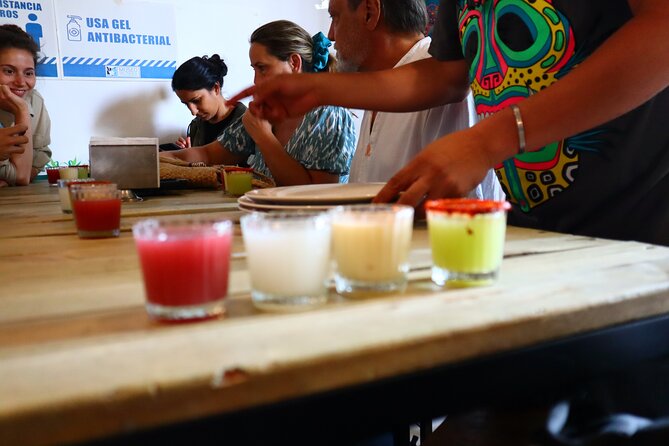
The route includes a pulquería stop, where you taste pulque, a fermented agave drink with roots reaching back to pre-Hispanic Mexico. Pulque can be unfamiliar in texture and flavor, so this is a chance to try it with an explanation rather than ordering blindly.
You also stop for a deep-fried quesadilla at a small street stand. In Mexico City, the question of whether a quesadilla must contain cheese can become a local language lesson, but the important point here is the contrast between a modest stall and the polished restaurants found around major sights. The food is simple, hot, and tied to the street.
The pace can feel slightly chaotic in a good way, though you should not expect a carefully timed museum tour. Bring water and wear comfortable walking shoes. Several people have found the route longer than expected, with some outings lasting more than five hours.
Monumento a la Revolución adds the city’s big stories
After the local food and public transit, the route brings in major historical and architectural sights. Monumento a la Revolución is a useful stop because it opens the door to Mexico’s political past without turning the morning into a formal history class.
The guides use stories and humor to keep the subject moving. Olin is often described as engaging the group with questions, while Fernando has led outings built around personal enthusiasm for Mexico City. Guide assignments can vary, but the format remains personal rather than scripted.
This is where the experience helps you get your bearings. You learn how parts of the city connect, hear about events that shaped Mexico, and begin to recognize the difference between the city’s monumental center and its everyday neighborhoods.
The history is not presented as an exhaustive course. If you want detailed museum-level analysis, you will need a separate visit to the city’s major cultural sites. Here, the benefit is a clear introduction that leaves you with places and ideas to explore later.
A completely different kind of day in Mexico City:
- Teotihuacan pyramids morning or afternoon without tourist traps
★ 5.0 · 6,186 reviews - Teotihuacan Early Access Guided Tour with optional Lunch
★ 4.5 · 6,138 reviews - Balloon flight + pick up in CDMX + Breakfast in Cave + Pyramids
★ 5.0 · 5,651 reviews - Balloon Flight + Cave Breakfast + Pick Up from CDMX or We Fly
★ 5.0 · 4,410 reviews
Bellas Artes and Torre Latinoamericana put the route on the postcard map
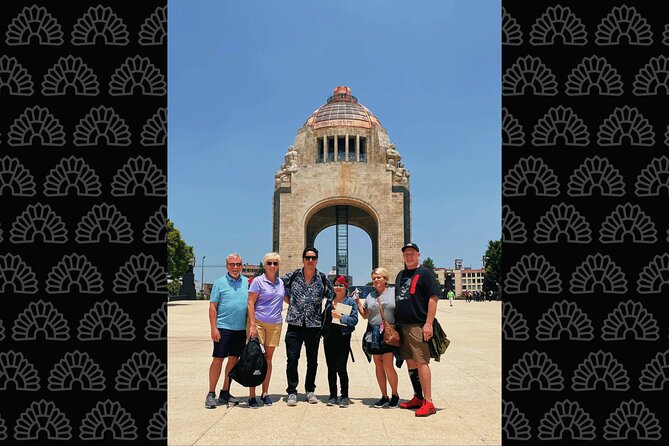
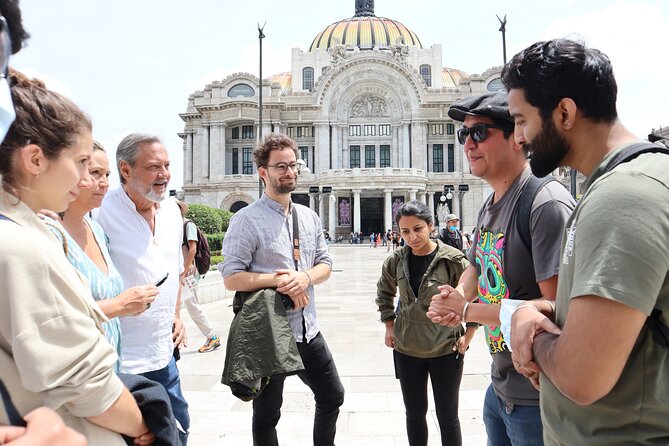
As the walk continues toward Centro Histórico, you pass Palacio de Bellas Artes and see Torre Latinoamericana. These are among the city’s most recognizable buildings, so their inclusion gives the outing a familiar frame after the less expected opening.
The route works well because it does not begin and end with postcard sights. You first see the city through food stalls, markets, and transport. Then the grand architecture arrives with more meaning. By this point, you have a sense of how the monumental center connects to ordinary neighborhoods.
Guides also add personal stories, including humorous tales about dating and life in Mexico City. That lighter touch helps during a long morning. You get facts about architecture and history, but you also hear how a local guide sees the city.
This balance is one of the tour’s most praised features. The food gives the morning energy, while the stories keep the route from feeling like a string of unrelated stops.
Cecina tacos and blue-corn tlacoyos
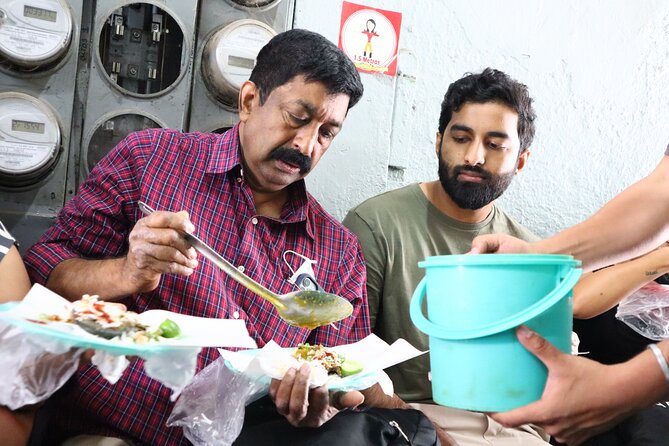
The food program is more than a series of samples. The cecina taco comes from an old taquería in the local market, giving you a chance to try seasoned meat in a setting tied to daily eating rather than a restaurant chosen for tourists.
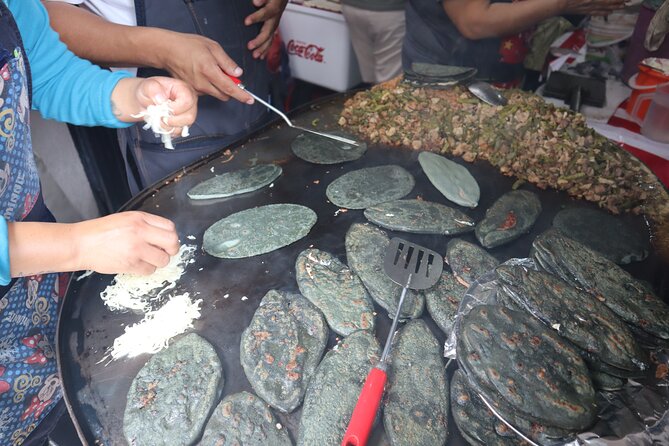
Later, the blue-corn tlacoyo brings another side of Mexican cooking. The tortilla is filled with beans and cactus, and it gives vegetarians a substantial option rather than a plate of side dishes. A deep-fried quesadilla rounds out the street-food portion of the route.
The listed tasting plan includes four dishes and three drinks. It is enough food to function as a full morning meal, especially when combined with tamales and drinks at the beginning. You should arrive hungry, but not so hungry that you rush through the explanations.
Vegetarian food is available, and the experience can accommodate different dietary needs according to the information provided. Still, you should state your needs when booking or before the food stops, since the exact substitutions are not specified.
The Zócalo rooftop finish gives you a useful launch point
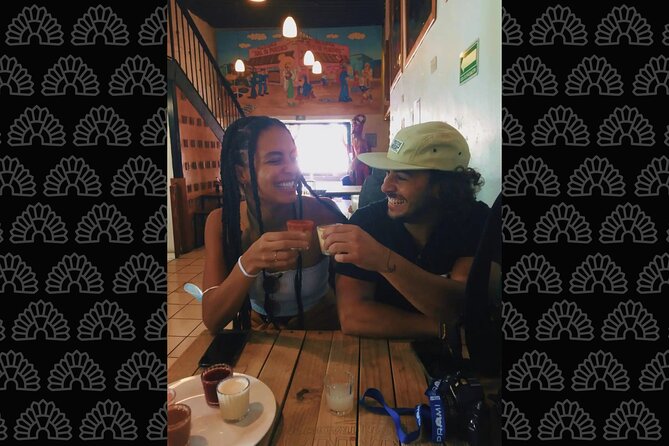
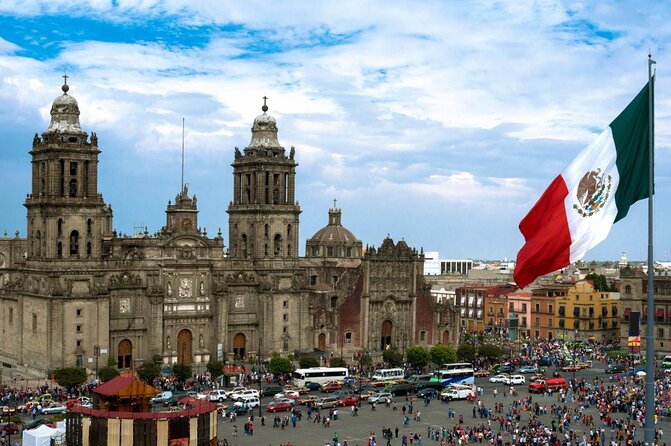
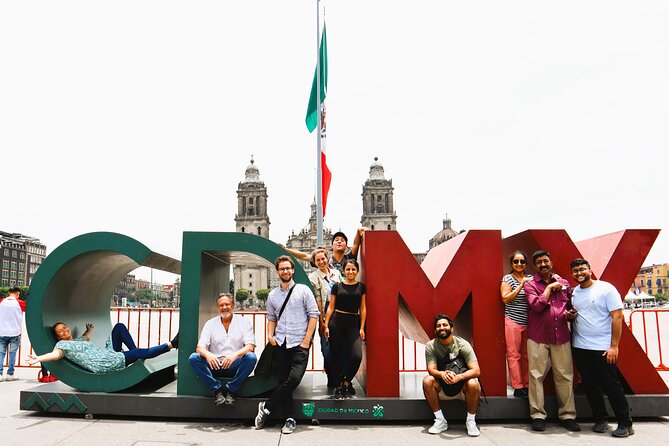
The final stop is near the Zócalo, officially Plaza de la Constitución, at P.za de la Constitución 58. The outing ends on a rooftop terrace overlooking the city’s main square, with drinks and time to take in the setting.
This is a smart finish. You have spent the morning moving from an ordinary neighborhood toward the historic center, and now you can see where many future walks will begin. From here, you are well placed to continue exploring the cathedral, the National Palace area, nearby streets, and other central sights on your own.
The rooftop stop also gives the group a natural pause after the walking and eating. Do not treat it as a long free period, since the activity is still a guided outing, but it is a pleasant way to close the route.
The endpoint is not the same as the starting point, so plan your day around finishing in Centro Histórico. That is an advantage if you want to keep sightseeing downtown. It is less convenient if you need to return quickly to Guerrero or reach an airport soon afterward.
What the $47.79 price buys you
At $47.79 per person, this is a strong value if you would otherwise pay separately for a food crawl, a city orientation, and a few drinks. The price covers a small-group experience capped at 10 people, several dishes, three drinks, a Metro ride, guiding, and access to places you might not locate on your own.
The value is not just the quantity of food. It comes from the route design. You are moved through several parts of the city, with the guide explaining what you are eating and why the neighborhoods matter.
A cheaper self-guided morning is possible. You could visit a market, order tacos, ride the Metro, and walk to Bellas Artes without paying a guide. But you would need to research the stops, manage the route, translate menus, and decide which food stands are worth your time. This experience removes much of that guesswork.
The price feels especially fair for a first day in Mexico City. It gives you practical orientation and a list of foods and neighborhoods to revisit. If you are already an experienced Mexico City eater and prefer to set your own pace, the guided structure may feel less necessary.
Who will enjoy it most
I would suggest booking this near the beginning of your stay. The route helps you understand the historic center, introduces local transport, and gives you food ideas for later meals. Several people have found it useful as a first major activity because it makes the city feel easier to approach afterward.
It suits you if you:
- Want local food rather than a restaurant-only tasting
- Like history delivered through stories and conversation
- Are happy using public transportation
- Can manage several hours of walking
- Enjoy trying unfamiliar dishes and drinks
- Want a small group rather than a large bus tour
Families can enjoy it, and the route has worked for mixed-age groups, including older adults and teenagers. Still, the walking and food schedule require reasonable mobility and interest in being out for most of the morning.
It may not suit you if you are a very selective eater, want a quiet luxury food tour, or need the outing to finish exactly at four hours. One person missed the end after the experience ran long to catch a flight, so do not schedule an important departure immediately afterward.
The tour is offered in English, uses a mobile ticket, and starts at 9 a.m. Most people can participate, but the description does not promise a fully accessible route. Ask the operator directly if you have specific mobility needs.
Booking, weather, and timing advice
You can cancel for a full refund up to 24 hours before the start time. Changes or cancellations inside that window are not refunded, and poor weather or failure to meet the minimum group size can lead to a new date or a full refund.
Book ahead if your dates are fixed. The experience is often reserved about 27 days in advance, and the small group limit can make popular dates less flexible.
One important warning concerns same-day reservations. A booking made very early on the day of the tour once led to a missed departure because the guide was not expecting a last-minute reservation. Avoid same-day booking if possible, and make sure your confirmation is clear.
Should you book The Real CDMX?
Book it if you want Mexico City explained through food, neighborhoods, public transport, and personal stories rather than only through major monuments. The mix of Guerrero, the market, pulque, Metro travel, street food, Bellas Artes, and the Zócalo gives you a useful first look at the city.
Skip it if you need a short, polished, predictable outing or if several food tastings sound like too much. For most visitors who want a friendly introduction with real local texture, the price is reasonable and the route is unusually practical. Wear good shoes, bring water, arrive hungry, and leave your afternoon open in case the morning runs long.
FAQ
How long does The Real CDMX experience last?
The stated duration is approximately four hours, beginning at 9 a.m. Some outings have lasted longer, so avoid scheduling an important appointment or flight immediately afterward.
Where does the tour start?
It starts at Lerdo 196, Guerrero, Cuauhtémoc, 06300 Ciudad de México, Mexico.
Where does the tour end?
It ends at P.za de la Constitución 58 in Centro Histórico, beside the Zócalo, Mexico City’s main square.
What food is included?
The tasting plan includes tamales with chocolate, a cecina taco, a deep-fried quesadilla, and a blue-corn tlacoyo filled with beans and cactus. The experience also includes three drinks.
Are vegetarian choices available?
Yes. Vegetarian options are available, and the blue-corn tlacoyo with beans and cactus is one listed meat-free dish.
Is the Metro part of the experience?
Yes. The route includes a ride on Mexico City’s Metro as part of the local city experience.
What is the cancellation policy?
You can cancel up to 24 hours before the start time for a full refund. Cancellations or changes made less than 24 hours before the experience are not refunded.
Just added around Mexico City
- Xochimilco’s Wild Side: Mezcal, Insects & Culture★ 4.9 · 10 reviews
- Xochimilco: Food and Trajinera Ride with Local Women★ 5.0 · 5 reviews
- Xochimilco: Island of the Dolls Tour Games and Drinks★ 5.0 · 25 reviews
- Xochimilco Ecological Tour – Away From the Crowds (3 Hours)★ 5.0 · 15 reviews
- Xochimilco + Coyoacán Combo Full-Day Tour★ 5.0 · 3 reviews
- Xochimilco floating gardens, Coyoacan and UNAM murals★ 4.0 · 6 reviews
- Val´quirico And The City of Angels Puebla From Mexico City★ 5.0 · 3 reviews
- Xochimilco: amanecer en kayak Ciudad de México★ 5.0 · 35 reviews