
Reviewed · MEXICO CITY
Urban Orchard in Desierto de los Leones in Mexico City
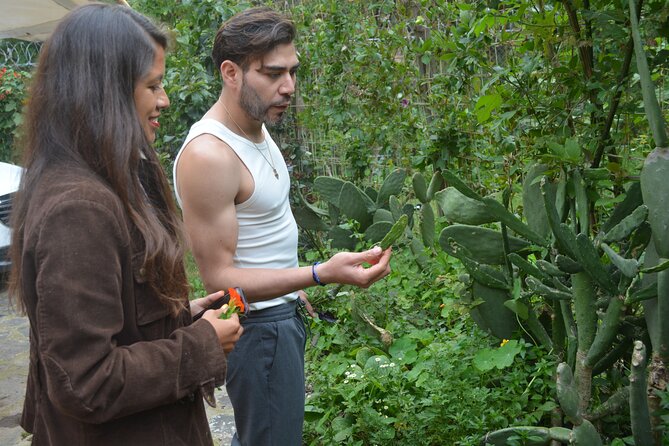
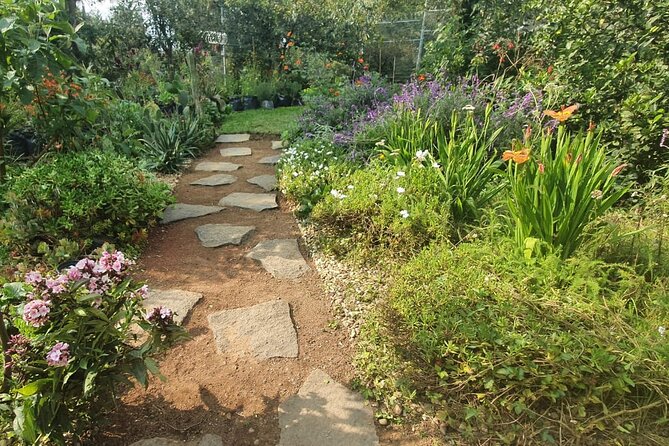
The best part of this experience is how quickly a garden becomes a lesson in daily life. Near Desierto de los Leones, Rubén and David show you how plants, soil, chickens, insects, birds, cooking, and people fit together in one small working orchard. You do not just walk past beds of vegetables. You touch leaves, smell them, taste them, and use what is growing.
I like two things here. First, the visit feels personal because it is a private tour, with only your group taking part. Second, the hands-on foraging and food preparation give the visit a clear purpose. You leave with more than plant names. You understand how fresh ingredients move from soil to plate.
The main drawback is the drive. The trip from Roma Norte can take 45 minutes to an hour, and Mexico City traffic can stretch that ride. At $75 per person for about five hours, this is not a cheap garden stroll, but it offers transport, food, and several hours of focused attention.
Key points at a glance
- A quiet orchard outside the city center: Escape Mexico City’s noise for a green space near Desierto de los Leones.
- Guides Rubén and David: Expect warm hosting, plant knowledge, local context, and practical lessons about gardening.
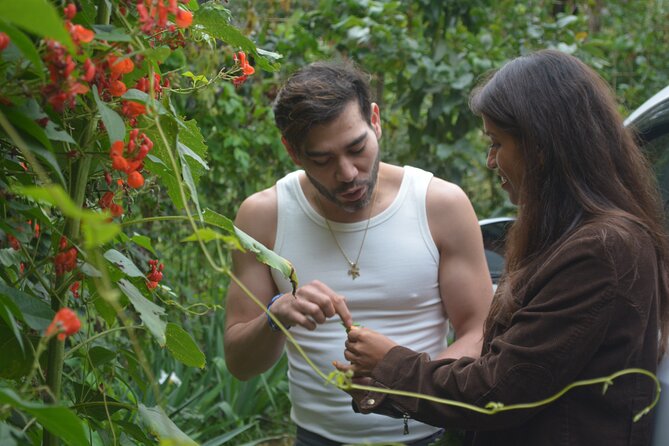
- All-senses learning: Crush leaves for fragrance, taste edible plants, listen for birds and insects, and examine how the garden works.
- Foraging becomes lunch: Gather what is available and help imagine or prepare something simple with fresh produce.
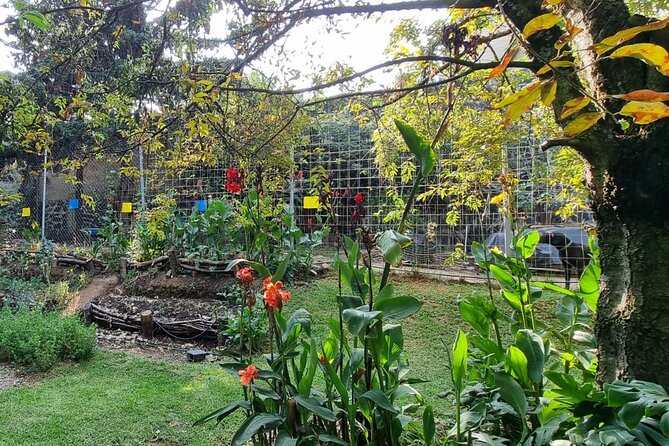
- A living garden system: See composting, chickens, native plants, flowers, and the creatures drawn to the orchard.
- Private and English-language: Your group has the experience to itself, and the tour is offered in English.
Leaving Roma Norte for the orchard
The meeting point is on Avenida Chapultepec in Roma Norte, Mexico City. From there, the air-conditioned vehicle heads toward the orchard, with the drive taking roughly 45 minutes to an hour depending on traffic.
That timing matters. You are committing most of a half-day, not squeezing in a quick stop between museum visits. I would schedule this on a morning or afternoon when you can let the trip unfold without a tight appointment afterward. The drive is part of the trade-off: you give up time in the city center to reach a quieter setting and a slower pace.
The tour runs Monday through Saturday, from 9:30 a.m. to 4 p.m. The activity returns you to the original meeting point, so you do not need to arrange a separate ride home. The vehicle is air-conditioned, a useful detail after time outside or during a warm Mexico City day.
One account also describes enjoying a cable-car ride while learning about the Desierto de los Leones area. The stated tour plan specifies an air-conditioned vehicle, so do not assume a cable car is included in every departure. If that part matters to you, confirm the exact transport plan before booking.
Other Mexico City days people book alongside this one:
- Teotihuacan, Guadalupe Shrine & Tlatelolco Day Tour with Lunch
★ 5.0 · 11,603 reviews - Xochimilco, Coyoacan and Frida Kahlo with Optional Lunch
★ 4.5 · 7,320 reviews - Balloon flight + Breakfast in cave + Pyramids + Pick up CDMX.
★ 5.0 · 6,335 reviews
Meeting Rubén and David in their urban orchard
Rubén and David are central to the experience. The garden is not presented as a formal botanical attraction with numbered signs and a fixed public path. It is their own carefully developed orchard and garden, so the visit feels closer to being invited into a working project.
Rubén is described as a welcoming host and a strong storyteller. David brings plant knowledge and cooking skill, including traditional Mexican food. That combination gives the tour two useful angles. Rubén helps you understand the people and ideas behind the space, while David connects plants to food, preparation, and everyday use.
The setting also has an interesting tension. This is an urban orchard, yet it sits near a large natural area associated with Desierto de los Leones. The garden offers a way to think about Mexico City’s ecology without leaving the subject at the level of scenery. You see how a small cultivated space can support birds, insects, hens, edible plants, flowers, and ornamental species.
Because the activity is private, you can ask questions without competing with a large group. That is especially useful if you have a serious interest in botany, sustainability, urban agriculture, cooking, or garden design. It should also work for a curious beginner because the teaching is built around direct observation rather than assumed expertise.
Learning the garden one plant at a time
The first part of the visit focuses on the orchard itself. You get to know the trees, plants, and vegetables growing there, along with the techniques used to build and care for the space.
The appeal is not simply the number of species. The useful question is why each plant is there and how it relates to the rest of the garden. The experience explains the role of selected species in relation to the soil and the wider garden system. That gives you a better way to look at any garden back home. Instead of asking only what a plant is called, you start asking what it does.
You may encounter edible flowers, local plants, medicinal uses, ornamental plants, and vegetables. The descriptions emphasize plants from the Mexico City region and the importance of local flora and fauna. The exact harvest changes with the season, so the garden will not offer an identical menu each time. That is a benefit if you like working with what is naturally available, but it means you should not book expecting one specific ingredient.
The guides also explain methods used, adapted, or developed while building the orchard. That practical angle is valuable. You are not just hearing general advice about sustainability. You are seeing how particular ideas have been applied in one real space.
Using smell, taste, and sound
This is a notably sensory visit. You might crush a leaf between your fingers to release its scent, taste a plant to discover a new flavor, and pay attention to the sounds of birds and insects moving through the orchard.
That approach makes the information easier to remember. A plant name can disappear from your mind by dinner, but a sharp fragrance or surprising flavor tends to stay with you. The tasting also connects the garden to cooking, which is where the experience becomes more than a nature walk.
The soundscape matters, too. Birds and insects visit the orchard throughout the day, and the garden’s plants help attract them. Hummingbirds have been seen among the flowers, and the presence of hens, bees, birds, and insects helps show that this is not just a collection of decorative beds.
I like that the tour treats people as part of the garden system rather than as separate observers. You are encouraged to use your hands and senses, but the visit also explains the care behind that abundance. The plants are not there by accident. Their placement and purpose relate to soil, food, biodiversity, and the animals that use the space.
A completely different kind of day in Mexico City:
- Teotihuacan pyramids morning or afternoon without tourist traps
★ 5.0 · 6,186 reviews - Teotihuacan Early Access Guided Tour with optional Lunch
★ 4.5 · 6,138 reviews - Balloon flight + pick up in CDMX + Breakfast in Cave + Pyramids
★ 5.0 · 5,651 reviews - Balloon Flight + Cave Breakfast + Pick Up from CDMX or We Fly
★ 5.0 · 4,410 reviews
Compost, chickens, and the work behind the calm
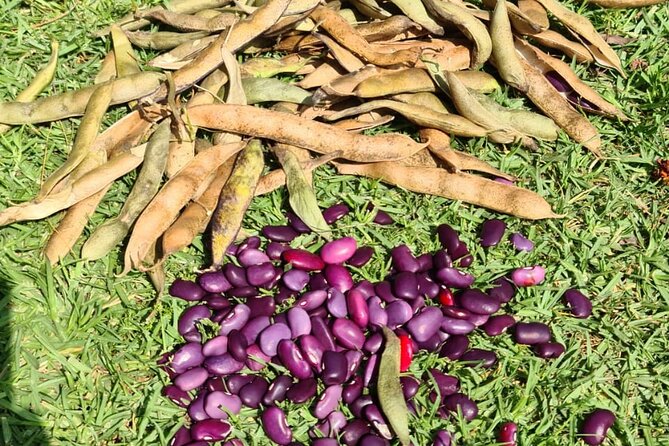
The peaceful feeling of an orchard can hide a fair amount of labor. Here, the tour includes lessons about composting and caring for a flock of chickens. Those details give you a clearer view of what keeps an urban garden productive.
Composting is easy to praise in theory. Seeing how it fits into a working garden is more useful. It shows how organic material can be treated as part of a cycle rather than simply thrown away. The chickens add another practical element to the story, linking animals to the daily life of the orchard.
This is also where the visit will appeal to people interested in urbanism and sustainability. The project suggests that food production does not have to be separated from city life, and that even a limited space can support plants and wildlife when it is planned with care.
You should keep your expectations realistic. This is a learning experience inside a private orchard, not a full farming course. You will see methods and discuss ideas, but the supplied details do not promise detailed instruction on building a garden from scratch or taking home materials. Think of it as a close look at one thoughtful example.
Foraging and making something fresh

The final food element gives the visit a satisfying direction. You forage among what the garden has available at that moment, then use your creativity to imagine something simple and tasty with the produce.
Coffee, tea, and snacks are included. Alcohol is not included. The description does not promise a formal multi-course meal, so plan on a light food experience rather than a restaurant lunch. The point is to shorten the distance between the garden and your plate.
David’s cooking background adds weight to this part of the visit. One particularly useful preparation described from the experience involves lemon oleocitrate, a way to make more use of the properties of the food rather than discarding parts too quickly. That is the kind of small idea you can carry into your own kitchen.
The food activity also changes how you view the plants. A flower is no longer only ornamental. A leaf is not merely something to identify. It may offer fragrance, flavor, or a practical use. For anyone who enjoys markets, Mexican cooking, or experimenting with ingredients, this is likely to be the most memorable part.
Since the harvest changes, you should arrive ready to adapt. The experience is about working with what is fresh and available, not selecting from a fixed menu. That uncertainty is part of the charm, though diners who prefer a predictable meal may find it less satisfying.
What $75 buys you
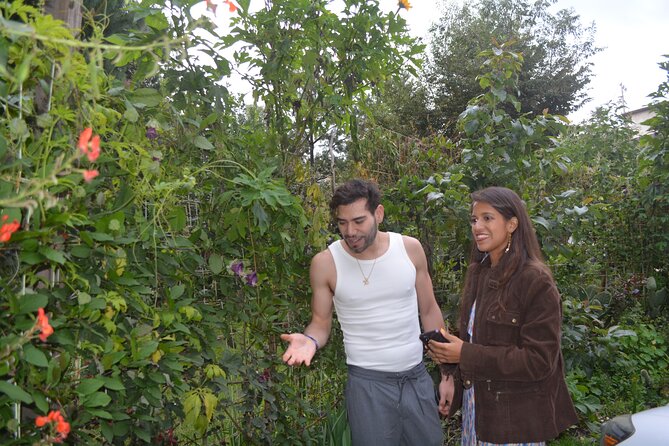
The price is $75 per person for about five hours. Value depends on how much you want from the day.
If you are only looking for a pretty garden and a short walk, the price may feel high. You are also spending time and money getting out to the orchard. But the fee includes private guiding, round-trip transport from the meeting point, coffee or tea, and snacks. You also receive several linked experiences: a garden tour, plant education, sensory tasting, foraging, and a food activity.
The private format is important when judging the cost. Your group is not joining a large public departure. You have space to ask about specific plants, gardening methods, cooking, local ecology, or the orchard’s history. For a couple, family, or small group with a shared interest, that personal attention can make the price reasonable.
I would especially consider it good value for people who already enjoy plants, cooking, sustainability, or urban agriculture. The tour has enough depth for someone with experience in those subjects, while the hands-on format keeps it accessible to a newcomer.
The activity is booked about 11 days ahead on average. That is not a rule, but it suggests you should avoid leaving it until the final morning of your Mexico City stay, especially if your schedule is short.
Who should book this experience
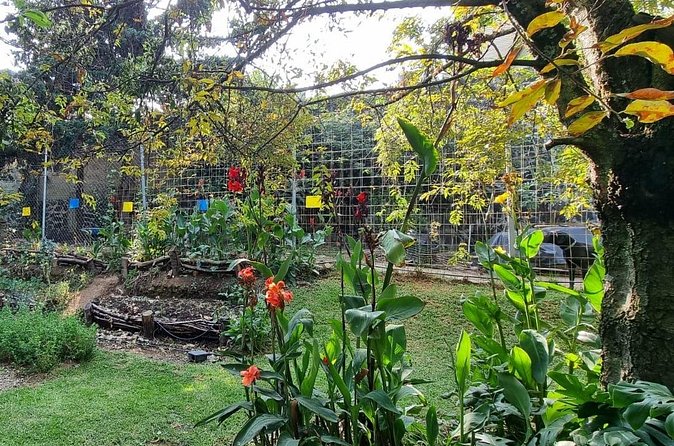
I would recommend it to plant lovers who want more than a photo stop. You will get the most from the tour if you enjoy asking why things grow, how food is produced, and how a garden can support wildlife.
It also suits visitors who need a quiet break from Mexico City’s busy streets. The trip takes time, but that is part of its value. You trade horns, pavement, and crowds for leaves, birds, insects, soil, and conversation.
The tour can appeal to cooks, gardeners, students of sustainability, and people curious about local biodiversity. It is also a good fit if you prefer private experiences with direct contact with the hosts rather than large group sightseeing.
I would think twice if your schedule cannot spare five hours, if traffic delays would cause stress, or if you expect a polished public attraction with a fixed route and guaranteed menu. Weather matters, too. The activity requires good conditions and may be moved or canceled if poor weather makes it impractical.
Booking confirmation arrives at the time of booking. Service animals are allowed, public transportation is nearby, and most people can participate. Free cancellation is available up to 24 hours before the start time. Inside that window, changes are not accepted and the payment is not refunded. If bad weather cancels the tour, you are offered another date or a full refund.
The right kind of Mexico City side trip
This orchard visit gives you a different way to understand Mexico City. It is not built around grand architecture, famous paintings, or a packed schedule. Instead, it asks you to notice small things: the smell released by a crushed leaf, the taste of a fresh plant, the movement of a hummingbird, the work behind compost, and the role of a chicken flock in a garden.
I like that the experience connects those details to local culture and food. Rubén and David bring the human side, while the orchard supplies the setting and the ingredients. The result is thoughtful but not overly formal.
Book it if you want a personal, hands-on half-day and are happy to spend time getting beyond the central neighborhoods. Skip it if you need a fast city-center activity or prefer a guaranteed meal and a tightly fixed itinerary. For the right visitor, $75 buys a calm setting, practical ideas, fresh food, and a memorable look at how a small garden can become a living urban ecosystem.
FAQ
Where does the Urban Orchard experience begin?
It begins at Avenida Chapultepec in Roma Norte, Mexico City, with the listed address ending in Roma Nte., 06700 Mexico City, CDMX, Mexico.
How long does the experience last?
The activity lasts approximately five hours.
How long is the ride to the orchard?
The ride usually takes between 45 minutes and one hour, depending on traffic.
Does the tour return to the starting point?
Yes. The activity ends back at the meeting point.
What is included in the price?
The price includes an air-conditioned vehicle, coffee or tea, and snacks.
Is alcohol included?
No. Alcoholic beverages are not included.
Is the experience private?
Yes. Only your group participates in the private tour or activity.
Is the tour offered in English?
Yes. The experience is offered in English.
What happens if the weather is poor?
The experience requires good weather. If it is canceled because of poor weather, you are offered a different date or a full refund. You can also cancel for a full refund up to 24 hours before the start time. Cancellations made less than 24 hours before the start time are not refunded.
Just added around Mexico City
- Xochimilco’s Wild Side: Mezcal, Insects & Culture★ 4.9 · 10 reviews
- Xochimilco: Food and Trajinera Ride with Local Women★ 5.0 · 5 reviews
- Xochimilco: Island of the Dolls Tour Games and Drinks★ 5.0 · 25 reviews
- Xochimilco Ecological Tour – Away From the Crowds (3 Hours)★ 5.0 · 15 reviews
- Xochimilco + Coyoacán Combo Full-Day Tour★ 5.0 · 3 reviews
- Xochimilco floating gardens, Coyoacan and UNAM murals★ 4.0 · 6 reviews
- Val´quirico And The City of Angels Puebla From Mexico City★ 5.0 · 3 reviews
- Xochimilco: amanecer en kayak Ciudad de México★ 5.0 · 35 reviews