
Reviewed · MEXICO CITY NIGHT TOURS
Night Tour of Mexico City Panoramic Ride on a Double-Decker Bus
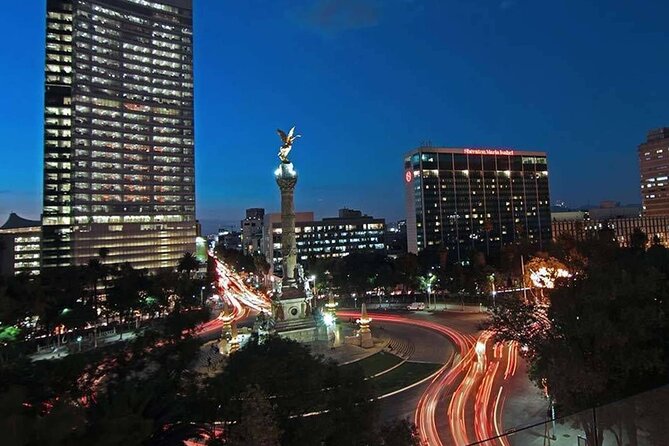
Mexico City looks different from the upper deck after dark. The route links the Zócalo, Paseo de la Reforma, and the Angel of Independence in one short ride, giving you a quick first look at the capital’s lights, monuments, traffic, and evening street life.
I like the low $10 price and the way the ride covers several major sights without asking you to walk long distances. I also like the slow-moving upper deck, which can be good for photographs. The main caution is the audio system: English is delivered through headphones, while Spanish may play over the bus speakers, and several passengers have had trouble hearing the translation.
Key points before you book
- The route begins at the Zócalo at 7:30 pm, then returns to the same meeting point.
- The upper deck gives you better views and photos, but it can feel cold and offers little shelter from rain.
- English, Spanish, and French audio are included, but you must request and connect the headphones for languages other than Spanish.
- Traffic can change the ride dramatically, especially during parades, demonstrations, holidays, and Día de Muertos events.
- This is a continuous sightseeing loop, not a hop-on hop-off bus, so you cannot use it as evening transportation.
- The $10 fare is good value for orientation, but less appealing if you want detailed guiding or a guaranteed full hour on the road.
A quick ride through Mexico City after dark
This Turibus outing is best understood as a city introduction, not a deep historical tour. You sit on a double-decker bus, listen to commentary, and watch Mexico City pass by from a higher viewpoint.
The advertised ride lasts approximately 45 minutes. Some descriptions and past departures have approached an hour, while other rides have felt closer to 30 or 35 minutes because of traffic, repeated sections, or an early return. I would plan for a short panoramic circuit rather than build your entire evening around a precise running time.
The route is especially useful on your first night. You get a broad sense of how the Historic Center connects with Reforma, and you can note places you may want to revisit on foot. At $10 per person, that orientation is inexpensive. It is also a practical break if you have spent the day walking.
Still, this is not a private guide with a flexible route. The commentary is largely recorded, and the bus does not stop so you can explore each landmark. You are seeing Mexico City from the road, with traffic, music, and city noise as part of the experience.
More nights out in Mexico City:
- Mexico City: Double Decker Bus Night Tour
★ 3.8 · 373 reviews - Hop-on Hop-off or Night Tour Tourist Bus in Mexico City
★ 3.0 · 127 reviews - Mexico City at Night Tour with Torre Latino
★ 4.0 · 45 reviews
Starting at the Zócalo at 7:30 pm
The meeting point is Turibus Tours on Calle de Monte de Piedad, beside Mexico City’s central plaza. Arrive with enough time to find the boarding area and show your mobile ticket. The booking confirmation is accepted on your phone, so you do not need a printed ticket.
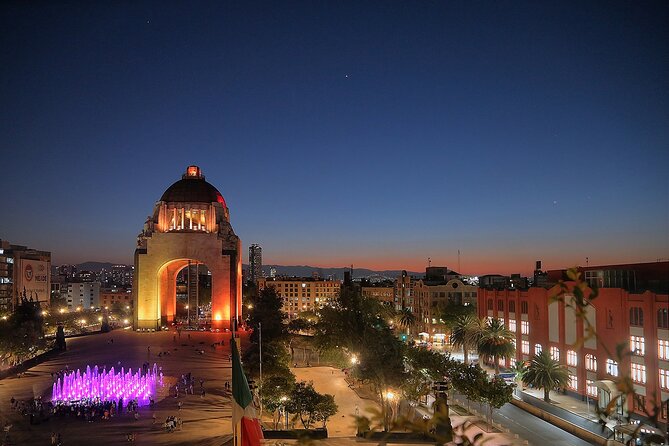
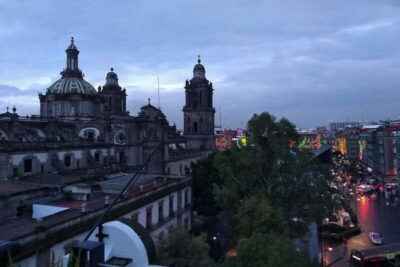
The Zócalo, formally Plaza de la Constitución, is one of the strongest places to begin a night ride. A huge Mexican flag occupies the middle of the plaza, with the Metropolitan Cathedral, Palacio Nacional, the former Government Palace, and the Government Building around it.
At night, the plaza can feel especially dramatic. It may also be crowded, and the center of Mexico City often has demonstrations, civic events, celebrations, or temporary street closures. Those events can delay departure, change the boarding arrangement, or affect the route. One cancellation connected with Día de Muertos involved street closures, and another evening was affected by a demonstration.
That does not make the tour unreliable every night, but it does mean you should avoid scheduling a tight dinner reservation immediately afterward. If the city is holding a major event, ask staff at the meeting point whether the bus is leaving from the normal location.
The ride is limited to a maximum of 30 people. That is a fairly small group for a double-decker bus, but the upper deck can fill quickly. If sitting upstairs matters to you, arrive early rather than assuming there will be an open seat.
Paseo de la Reforma, Mexico City’s grand evening avenue
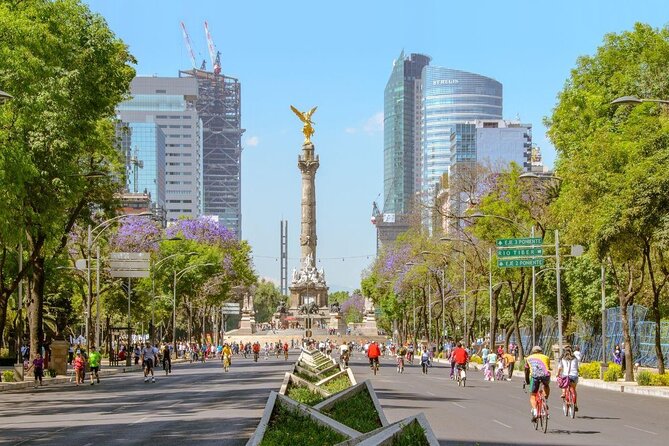
The route then reaches Paseo de la Reforma, Mexico City’s most important ceremonial avenue. It has hosted concerts, marches, protests, civic events, and other public gatherings, so it is more than a pretty boulevard. It is one of the main public stages of the capital.
From the upper deck, Reforma gives you a useful view of the city’s scale. The broad avenue, illuminated buildings, moving traffic, and passing pedestrians create the feeling of a living city rather than a string of isolated monuments. The bus moves slowly enough in places for photographs, although congestion can also reduce the distance covered.
This is where the tour’s viewpoint earns its fare. From street level, you may notice one building or monument at a time. From above, you can connect the road, towers, traffic lanes, and public spaces in a single view.
The drawback is that Reforma is also one of the places most affected by traffic and street events. If a march or celebration is underway, the bus may crawl or sit in place. That can make the ride longer, but it can also mean less sightseeing than you expected.
The three-tower modern complex
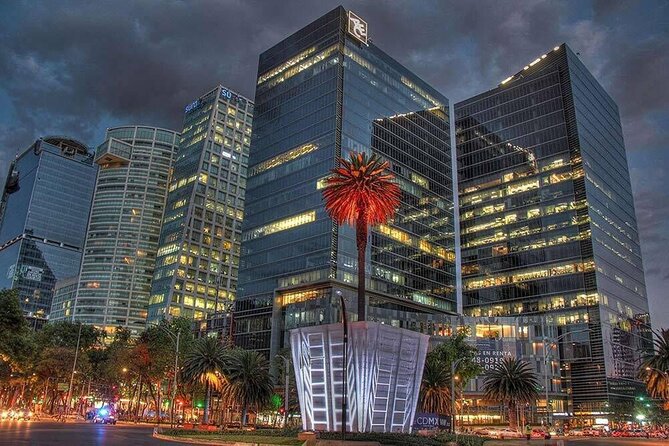
One stop on the route highlights a modern complex of three towers. The buildings helped change Mexico City’s skyline and are known for their contemporary design. The complex includes shops and movie theaters, so this part of the ride contrasts sharply with the colonial and republican buildings around the Zócalo.
You will not have time to go inside or shop during this outing. The value is visual: the towers show the modern side of the city and help explain how quickly the skyline has changed.
This contrast is one reason the circuit works well as an introduction. In less than an hour, you move from the historic center to a major modern avenue and then past contemporary high-rise construction. The commentary adds context, though its usefulness depends heavily on whether your audio channel works.
More evening outings in Mexico City:
- Lucha Libre Tickets & Tacos & Beer & Mezcal – BEST NIGHT EVER!
★ 5.0 · 1,077 reviews - A Night of Tacos and Mezcal in Mexico City
★ 5.0 · 262 reviews - Mexico City: Night City Tour in a Double Decker Bus
★ 4.2 · 235 reviews - Narvarte At Night: Tacos, Chelas & Mezcal
★ 5.0 · 216 reviews
The Angel of Independence after sunset
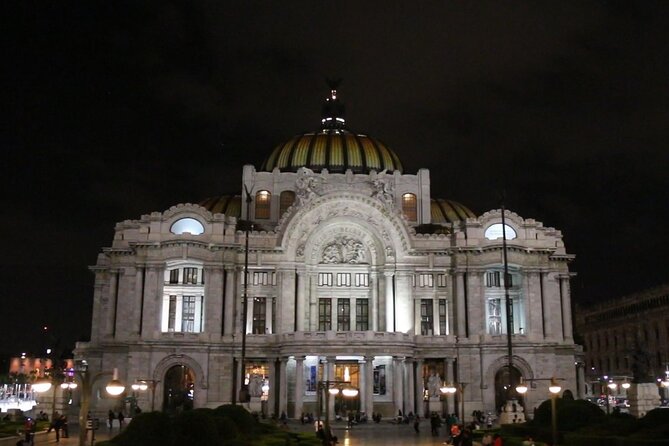
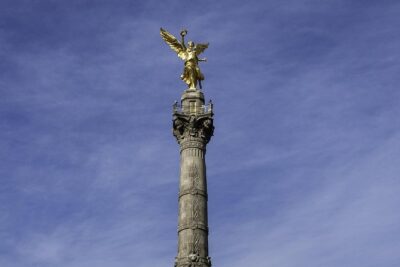
The monument inaugurated in 1910 to mark the centennial of Mexican independence is the Angel of Independence, one of Mexico City’s best-known symbols. It also serves as a mausoleum for heroes who died during the War of Independence.
At night, the illuminated column is an easy landmark to recognize from the bus. Its golden appearance makes it one of the strongest photo opportunities on the route, especially from the upper deck. Since the bus usually moves slowly near major sights, you may have a better chance at a clear photo than you would while walking beside a busy road.
The ride does not include an extended stop here. Think of this as a moving view and a chance to mark the monument for a later visit. If you want detailed information about the independence movement or access inside the monument, you will need a separate visit.
The Angel also gives the route a clear sense of place. Many visitors know the monument from photographs, but seeing it lit up along Reforma helps connect it to the avenue and the surrounding city.
The Hemiciclo a Juárez
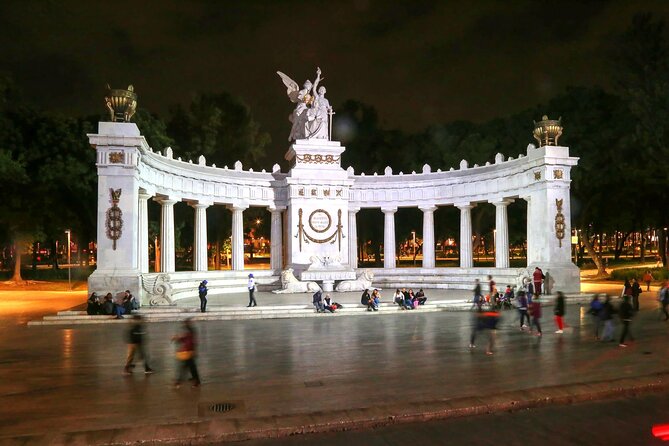
The final major landmark is the monument honoring Benito Juárez, a former Mexican president. Its neoclassical design uses 12 marble Doric columns, and the pale stone looks particularly striking under evening lighting.
This is a quieter sight than the Angel of Independence, but it adds another layer to the ride. The Zócalo represents the political and religious center of the Historic Center, while the Reforma monuments and the Hemiciclo a Juárez reflect later periods of Mexican public life.
You should listen carefully here if the audio is working. The route presents the monument as part of the city’s broader story rather than as an isolated photo stop. If your headphones fail, you may still enjoy the illuminated architecture, but you will lose much of the explanation.
The audio system is the tour’s biggest weak point
The bus plays Spanish narration through its speakers. English and French are available through the audio system, using earphones connected at your seat.
That arrangement is important to understand before boarding. If you expect the entire bus to be narrated in English, you may be disappointed. Ask the staff for headphones before the bus leaves, confirm the language channel, and test the connection as soon as you sit down.
Past equipment problems have included dead outlets, controls that did not change the channel, and Spanish narration playing so loudly that it drowned out the English audio. Those are not minor annoyances on a tour built around commentary. If the audio is not working, tell the driver or staff immediately rather than waiting until the ride is underway.
The commentary is recorded rather than a fully personal presentation from a named guide. That keeps the fare low, but it also means the experience can feel generic. The best moments come from the sights themselves, especially if you treat the audio as background information rather than the main event.
Choosing the upper deck, and preparing for the weather
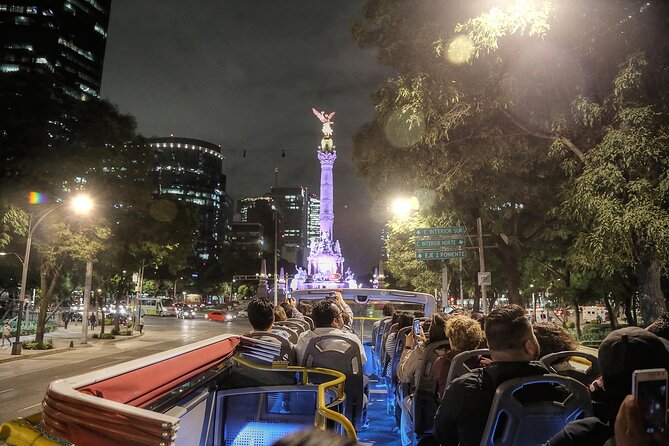
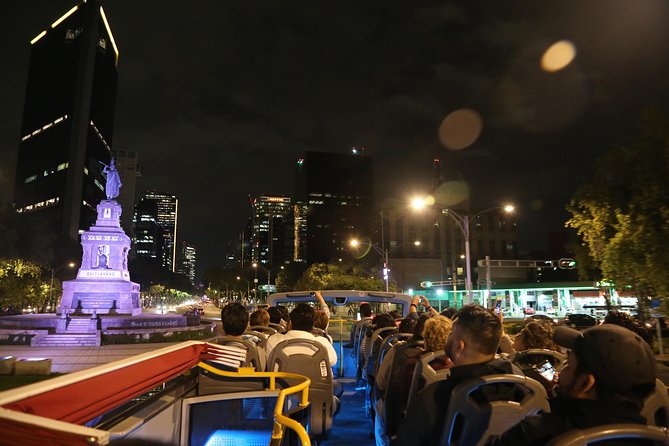
The open upper deck is the reason to choose this bus instead of a standard city transfer. You get a higher view of monuments and buildings, and the open sides make it easier to take pictures.
The same design creates two practical problems. Night air can feel cold, especially when the bus is moving, and rain can make the ride uncomfortable. Bring a warm layer even if the afternoon was mild. If rain is in the forecast, carry a poncho rather than assuming the bus will provide full shelter.
The upper deck also requires attention around overhead infrastructure. One rainy ride raised concerns about low-hanging electrical cables. The operator indicated that the route would be reviewed for safety, but you should still keep an eye on overhead obstacles and follow staff instructions.
There is no need to dress formally. Comfortable clothing, a light jacket, and a phone with enough battery for photographs are more useful than anything elaborate.
Traffic, delays, and route changes
Traffic is not a small detail on this tour. It shapes the experience.
A normal evening can include slow progress along Reforma. Holidays, Christmas crowds, Día de Muertos activities, demonstrations, and city celebrations can bring major delays or street closures. On one occasion, passengers spent longer in gridlock than on the actual sightseeing portion of the ride. On another, a bus failed to arrive at the expected location because streets had been closed and the departure point changed.
The operator may not control these events, but you still need to account for them. Keep your evening flexible, especially during October, major holidays, and public celebrations. If the bus is delayed, ask staff for current information rather than relying only on the booking message.
The tour ends back at the original meeting point. It is not a hop-on hop-off service, and it is not designed to leave you at your hotel or another stop along the way. That return requirement frustrated some people who expected to use the bus as transportation, so treat the ride as a closed sightseeing circuit.
What the $10 fare really buys you
At $10, this is one of the cheaper organized ways to see central Mexico City at night. You get a mobile ticket, a double-decker viewpoint, a route through several major districts, multilingual audio options, and earphones.
The value is strongest for three types of people:
- You have only one or two nights in Mexico City.
- You want a quick orientation before exploring independently.
- You need a low-effort activity after a long day of walking.
The value is weaker if you want a personal guide, frequent stops, or close access to each monument. A short walking tour around the Historic Center will give you more detailed contact with the buildings, while this ride lets you cover more ground with less effort.
I would also avoid comparing the price with a private vehicle tour. This is a shared bus ride with a fixed route and recorded commentary. Its appeal is the open upper deck and city view, not customized service.
Who should book this night ride
I would choose it for a first evening in Mexico City, particularly if you want to see the city lit up before deciding where to return during daylight. Families may appreciate the short length, and solo visitors can cover several major sights without navigating the city alone at night.
It also suits anyone who enjoys looking at architecture and street life more than collecting detailed historical facts. The traffic, music, noise, and people along Reforma are part of the scene.
I would think twice if reliable English narration is essential. The advertised languages are useful, but the delivery depends on headphones, seat outlets, channel controls, and speaker volume. You should also reconsider if you dislike cold open-air rides or have a strict schedule.
Should you book the Turibus night tour?
Book it if you want a cheap, quick overview with strong night views and you can tolerate delays, weather, and imperfect audio. The Zócalo, Reforma, Angel of Independence, modern towers, and Hemiciclo a Juárez give you a broad snapshot of Mexico City in a short time.
Skip it if you expect a polished one-hour guided presentation, guaranteed English narration, or a direct ride back to your hotel. For the best chance at a good experience, arrive early, aim for the upper deck, request English headphones before departure, test them, bring a warm layer, and leave extra time after the scheduled return.
The cancellation policy is simple: cancel at least 24 hours before the 7:30 pm start for a full refund. Changes or cancellations inside that window are not refundable. Service animals are allowed, the meeting point is near public transportation, and most people can participate.
FAQ
How long is the Mexico City night bus tour?
The stated duration is approximately 45 minutes. Actual timing can vary because of traffic, celebrations, demonstrations, and street closures. Some rides may feel shorter or longer.
What time does the tour start?
The scheduled start time is 7:30 pm.
Where does the tour begin and end?
It begins at Turibus Tours on Calle de Monte de Piedad near the Zócalo in Mexico City’s Historic Center. The activity ends back at the same meeting point.
Is the tour available in English?
Yes. English audio is available, along with Spanish and French. Spanish narration may play through the bus speakers, while English and French require headphones connected at your seat.
Is this a hop-on hop-off bus?
No. This is a continuous sightseeing ride. You cannot use it to get off at different points or travel directly to your hotel.
Are food and drinks included?
No. Food and drinks are not included in the price.
Can I cancel for a refund?
Yes, if you cancel at least 24 hours before the experience start time. Cancellations or changes made less than 24 hours before departure are not refunded.
Just added around Mexico City
- Xochimilco’s Wild Side: Mezcal, Insects & Culture★ 4.9 · 10 reviews
- Xochimilco: Food and Trajinera Ride with Local Women★ 5.0 · 5 reviews
- Xochimilco: Island of the Dolls Tour Games and Drinks★ 5.0 · 25 reviews
- Xochimilco Ecological Tour – Away From the Crowds (3 Hours)★ 5.0 · 15 reviews
- Xochimilco + Coyoacán Combo Full-Day Tour★ 5.0 · 3 reviews
- Xochimilco floating gardens, Coyoacan and UNAM murals★ 4.0 · 6 reviews
- Val´quirico And The City of Angels Puebla From Mexico City★ 5.0 · 3 reviews
- Xochimilco: amanecer en kayak Ciudad de México★ 5.0 · 35 reviews
Mexico City Night Tours, compared.


Night tour + tacos in Mexico City fully illuminated!
Read our review →
Browse the lists this tour appears in