
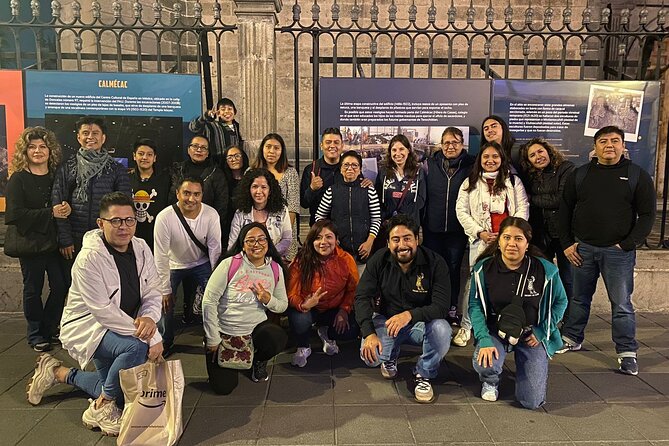
Reviewed · MEXICO CITY DAY OF THE DEAD TOURS
Special Pre-Hispanic Day of the Dead Tour
Mexico City’s Day of the Dead story is much older and more layered than painted skulls and flower-covered altars. This short walking tour links Diego Rivera’s sweeping view of Mexican history with colonial buildings and the Aztec worldview at Templo Mayor, giving you a useful path through the city’s past.
I like the focused route and the way it joins art, architecture, politics, and religion. I also like that the tour ends at the Templo Mayor Museum, where the connection between death, ritual, and pre-Hispanic culture comes into sharper view. The main drawback is the pace: with several stops packed into about two hours to two and a half hours, you will get a guided overview rather than a long museum visit.
Key points to know
- The route connects several eras: You move from pre-Hispanic Mexico to Spanish colonial rule and then toward modern Mexican identity.
- Diego Rivera’s mural sets the stage: The opening stop uses a major work of art to introduce the people and events that shaped Mexico.
- Ana has received special praise: If Ana leads your walk, expect a clear, detailed explanation of Mexican history as you go.
- The finish at Templo Mayor matters: The final stop explains Aztec ideas about life, death, gods, and ritual.
- It is a small-to-medium group experience: The maximum group size is 25 people, which is more manageable than a large city tour.
- The price is reasonable for a guided route: At $58.51 per person, the cost includes the guide and tickets, but not meals or tips.
Why this Day of the Dead route works
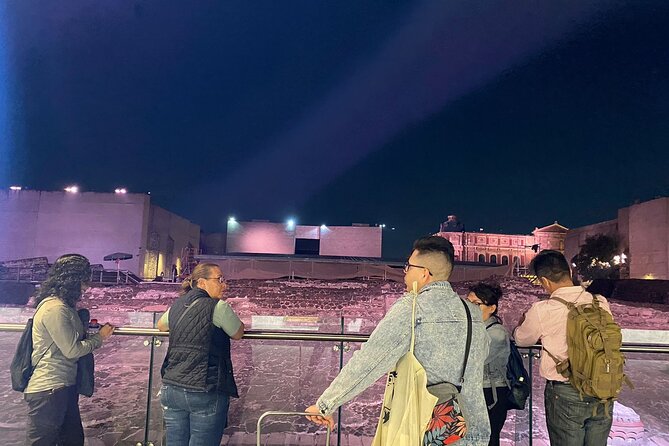
Many Mexico City tours treat Day of the Dead as a seasonal theme. This one takes a broader view. It helps you see the holiday as part of a long cultural story shaped by Aztec beliefs, Spanish Catholic rule, colonial institutions, and modern Mexican art.
That approach is useful because you are not simply looking for decorative skulls or festival scenes. You are learning why ideas about death have such a strong place in Mexican culture. The tour does this through buildings and artworks that remain in the historic center, rather than through a single temporary event.
The route also has a clear beginning and end. You start at the Diego Rivera Mural Museum and finish at the Templo Mayor Museum. Along the way, you pass through Alameda Central, the Palacio Postal, a historic theater linked to Esperanza Iris, and the former Palace of the Inquisition, now the Palace of Medicine.
The result is a compact city walk with a strong historical thread. I would think of it as an introduction to Mexico City’s past, not as a full museum tour or a long Day of the Dead festival experience.
More Day of the Dead tours in Mexico City:
- Mexico City: Day of the Dead Guided Tour
★ 3.4 · 97 reviews - Day of the Dead Tour in Mexico City
★ 3.5 · 78 reviews - Day of the Dead Tour in San Andres Míxquic From Mexico City
★ 3.7 · 52 reviews
Diego Rivera’s mural opens the story
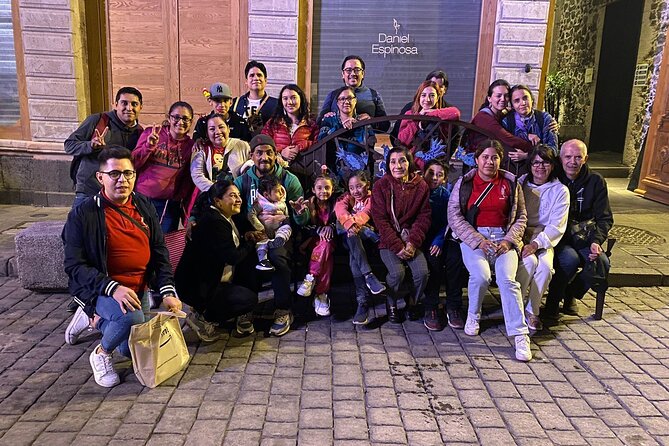
The tour begins at the Museo Mural Diego Rivera, where you spend about 25 minutes with admission included. The focus is Rivera’s mural and the figures within it, including people who changed Mexico’s history.
This is a smart starting point. A mural lets you see history as a group of connected people and conflicts rather than as a list of dates. Your guide can use the figures in the painting to explain the shift from early Spanish rule to later periods of Mexican history and the world that came after.
You should expect interpretation rather than a long period to study the museum on your own. Twenty-five minutes is enough to establish the main ideas, but not enough for a slow look at every detail. If you enjoy art, take a moment to notice how the mural compresses different periods into one scene.
The museum also gives the walk a strong visual opening. Instead of beginning with a street corner and a list of facts, you begin with a major work of Mexican art. That makes the rest of the route easier to follow.
One especially useful feature is the guide’s effort to connect the mural to the city outside. The history does not remain on the wall. It continues through the park, post office, theater, medical building, and archaeological site that follow.
Alameda Central and the city’s changing public life
From the mural museum, the route continues to Alameda Central for about 15 minutes. This is described as the first public park in the Americas, ordered in 1592 by Viceroy Luis de Velasco.
The stop focuses on the park’s classic sculptures and the way the space changed over time. That gives you a practical way to think about colonial Mexico. A public park is not only a place for trees and statues. It also reflects who held power, how people gathered, and how the city presented itself.
Fifteen minutes will not allow a full survey of every statue or corner. You will get the main historical frame and a look at the park’s role in Mexico City. If you are visiting on your own later, Alameda Central is easy to revisit because it sits close to several major sights in the Centro Histórico.
This is also where the tour shifts from museum interpretation to street-level history. You are no longer looking only at a curated work of art. You are seeing a public place that has been altered across centuries.
Palacio Postal puts architecture in the route
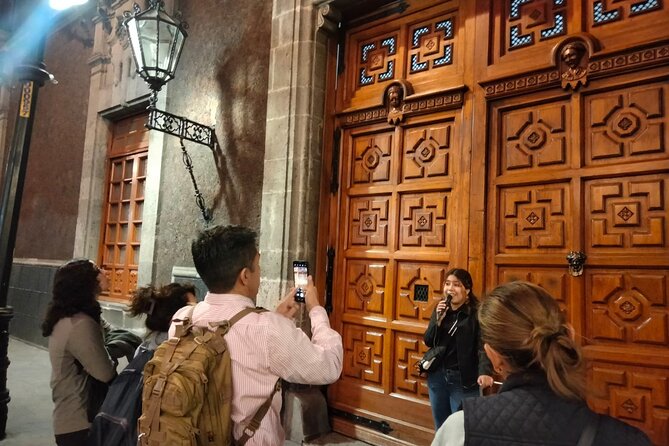
The Palacio Postal receives another 15-minute stop. The building is presented as one of the city’s most beautiful, with attention to its eclectic architecture and its legends.
This is a good change of pace after the mural and park. Instead of hearing only about political events, you get a close look at a building itself. The architectural details help show how Mexico City’s center carries several influences at once.
The word eclectic is important here. You should expect a mix of styles and decorative details rather than a simple, uniform design. The guide explains what to look for, which is useful in a building where visitors can easily glance around without understanding why its interior is important.
The stop is short, so do not expect an extended architectural lecture. Think of it as a guided introduction to the building, with a few legends added to make the place more memorable. You may want to keep your camera ready, but listen first. The value of this stop is in learning what the details mean, not simply taking a quick picture.
A completely different kind of day in Mexico City:
- Teotihuacan, Guadalupe Shrine & Tlatelolco Day Tour with Lunch
★ 5.0 · 11,603 reviews - Xochimilco, Coyoacan and Frida Kahlo with Optional Lunch
★ 4.5 · 7,320 reviews - Balloon flight + Breakfast in cave + Pyramids + Pick up CDMX.
★ 5.0 · 6,335 reviews - Teotihuacan pyramids morning or afternoon without tourist traps
★ 5.0 · 6,186 reviews
A theater linked to Esperanza Iris
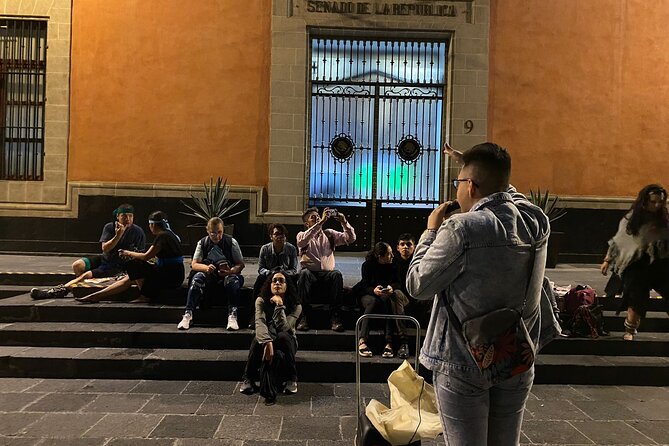
The route also includes one of the city’s early important theaters, created by Esperanza Iris, known as the queen of operetta.
This stop adds a cultural figure to the historical story. It shows that Mexico City’s identity was shaped not only by rulers, clergy, soldiers, and reformers, but also by performers and public entertainment.
The available details do not specify how much time you spend inside or whether admission is included at this particular stop. You should therefore treat it as a guided exterior or architectural stop unless your confirmation says otherwise.
Even with limited time, the theater helps widen the tour’s subject. Day of the Dead is often discussed through visual art and religious practice, but music, theater, and public performance are also part of how a city expresses its identity.
The former Palace of the Inquisition
Another stop explains a building that was the Palace of the Inquisition during the colonial period and is now the Palace of Medicine. The guide covers the Holy Office and the building’s changing role.
This is one of the heavier sections of the walk. The subject is not decorative colonial history. It concerns religious authority, punishment, and the institutions used to enforce belief during Spanish rule.
The building’s modern use also matters. A place associated with the Holy Office later became connected with medicine, showing how historic buildings can take on new roles as a city changes. The tour uses that shift to explain more than the exterior architecture.
Because the stop deals with the Inquisition, expect a serious turn in tone. It adds balance to the attractive plazas and ornate buildings. Mexico City’s center is beautiful, but its past also includes coercion and unequal power.
The supplied route does not give a separate duration for this stop. That suggests the guide keeps it compact as part of the larger walk. If this subject interests you most, you may want to ask your guide for the name of the building or museum so you can return later.
Templo Mayor brings life and death together
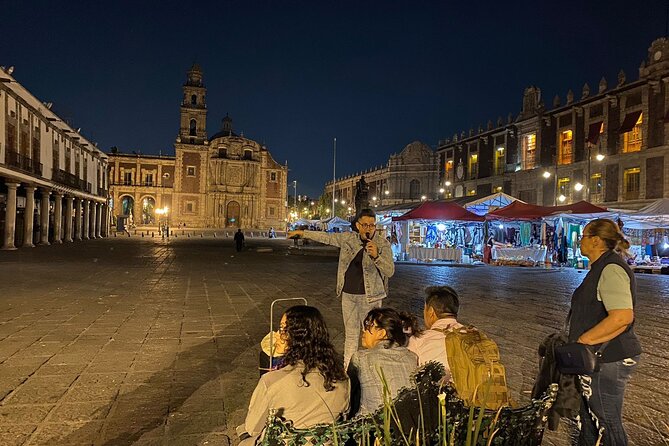
The final stop is the Museo del Templo Mayor, where the tour spends about 30 minutes. This is the key stop for the Day of the Dead theme.
Here, the guide explains the Aztec worldview, especially ideas about life and death and the rituals organized for the gods. That gives the tour its strongest connection to the pre-Hispanic traditions behind Mexico’s modern celebrations.
Do not expect the museum’s entire collection in half an hour. Templo Mayor is too important and too extensive for that. Instead, you get a guided explanation of the central ideas and the ritual world that shaped the city before Spanish conquest.
This final position works well. You have already heard about colonial rule, the Holy Office, public spaces, and Mexican art. At Templo Mayor, you can place the pre-Hispanic worldview at the beginning of that long story rather than treating it as a footnote.
The stop is also valuable because it avoids a simple explanation of Day of the Dead as either an ancient Aztec tradition or a Spanish Catholic tradition. The tour presents the subject through historical layers. The experience helps you understand that Mexican customs developed through contact, conflict, adaptation, and continued cultural memory.
The listed stop information describes admission as free, while the tour also includes tickets. In practical terms, your guide handles the planned admissions. Your confirmation should be the final word if the ticket details change.
What the guide adds
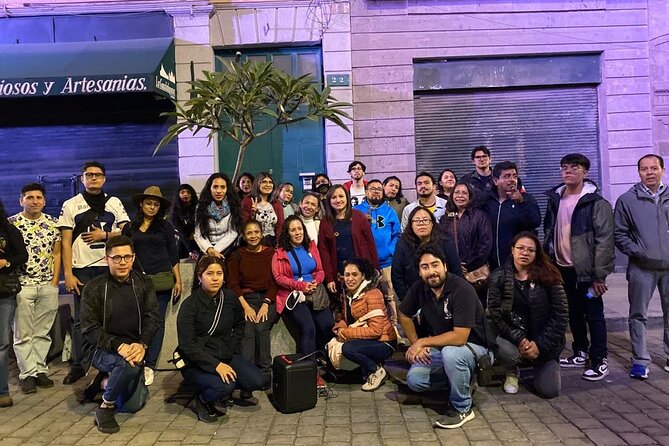
A walking route through the Centro Histórico is easy to follow physically, but it can be hard to understand without context. A building may look beautiful while its political or religious role remains unclear. A sculpture may seem decorative until someone explains why it was placed there.
That is where the guide matters most. Ana receives specific praise for giving a thorough, easy-to-follow account of Mexican history while walking through the city. Her approach, as described, connects the stops instead of treating them as isolated sights.
You should expect the guide to do more than point out buildings. The tour is designed around explanation: who changed Mexico, how colonial institutions worked, how public places evolved, and how Aztec beliefs addressed life and death.
The tour is offered in English. If you want a clear historical framework early in your Mexico City visit, this can be a useful choice. You will then recognize more of the city when you return to the same neighborhoods on your own.
Is $58.51 a fair price?
At $58.51 per person, this is not the cheapest way to walk through the historic center. You could see Alameda Central and the exterior of the Palacio Postal without paying for a tour. The value comes from the guide, the organized route, and the historical connections between the stops.
Tickets and the guide are included. Meals and tips are not. Since the experience lasts about two hours to two and a half hours, the price works best for you if you want a compact, guided introduction rather than a full-day excursion.
The group can include up to 25 people. That is not an intimate private walk, but it is still more manageable than a very large city group. You may not get long one-to-one conversations with the guide, especially at busy stops, but a group of this size should still allow you to hear the main explanations.
The tour is booked, on average, about 12 days ahead. That is useful planning information if your Mexico City schedule is fixed. Confirmation arrives at booking, and the meeting point is the Diego Rivera Mural Museum.
Timing, route, and practical planning
The tour starts at the Museo Mural Diego Rivera on Calle Colón Balderas in the Centro area and ends at the Templo Mayor Museum on Seminario Street. This point-to-point design is convenient if you plan to continue exploring the historic center after the tour.
You do not return to the starting point. Plan your next activity near Templo Mayor, or allow time to make your way back across the center. The route is near public transportation, which gives you more options after the final stop.
Most people can participate, and service animals are allowed. The tour is not presented as a specialized accessibility program, so you should ask the provider directly about any mobility concern that is important to you.
Wear practical walking shoes and bring water, since this is a street route with several stops. The supplied details do not state the exact walking distance, so do not assume that every stop is directly beside the next one.
Cancellation is free up to 24 hours before the start time. Inside that window, the cost is not refunded, and changes are not accepted. Mexico City plans can shift, so keep that deadline in mind before booking.
Who will get the most from this tour?
I would choose this experience if you want:
- A short introduction to Mexican history through several types of sights
- A guide who explains connections rather than giving only place names
- A Day of the Dead theme tied to Aztec ideas about life and death
- A route that combines art, architecture, colonial institutions, and archaeology
- A starting point for later independent visits in the Centro Histórico
It suits first-time visitors who want context before exploring more of Mexico City. It also suits you if you enjoy history but do not want to spend half a day in one museum.
You may want a different experience if you prefer a slow museum visit, a food tour, a festival event, or a highly personal private guide. The pace is efficient, and several stops receive only 15 minutes. That is useful for orientation, but limiting if you want detailed photography or extended time inside every site.
Should you book it?
Book this tour if you want the Day of the Dead theme explained through Mexico City’s long history, not just through seasonal decoration. The best parts are the mural opening, the clear historical storytelling associated with guide Ana, and the final explanation of Aztec views on life, death, and ritual at Templo Mayor.
At $58.51, it offers solid value for a guided two-hour-plus route with tickets included. Just keep your expectations in line: this is a compact overview, not a full museum day. For a first visit to Mexico City’s historic center, that balance makes it a sensible choice, especially if you want to understand what you are seeing before returning to explore the area on your own.
FAQ
How long does the Special Pre-Hispanic Day of the Dead Tour last?
The tour lasts approximately two hours to two hours and 30 minutes.
How much does the tour cost?
The listed price is $58.51 per person.
What language is the tour offered in?
The tour is offered in English.
Where does the tour begin?
The meeting point is the Museo Mural Diego Rivera at Calle Colón Balderas s/n, Colonia Centro, Centro, Cuauhtémoc, 06040 Ciudad de México, CDMX, Mexico.
Where does the tour end?
The tour ends at the Museo del Templo Mayor at Seminario 8, Centro Histórico de la Ciudad de México, Centro, Cuauhtémoc, 06060 Ciudad de México, CDMX, Mexico.
Are tickets included?
Yes. Tickets and the guide are included in the tour price.
Are meals or tips included?
No. Meals and tips are not included.
How many people can join the tour?
The maximum group size is 25 people.
Can I cancel for a full refund?
Yes. You can cancel up to 24 hours before the experience start time for a full refund. Cancellations or changes made less than 24 hours before the start time are not refunded or accepted.
Just added around Mexico City
- Xochimilco’s Wild Side: Mezcal, Insects & Culture★ 4.9 · 10 reviews
- Xochimilco: Food and Trajinera Ride with Local Women★ 5.0 · 5 reviews
- Xochimilco: Island of the Dolls Tour Games and Drinks★ 5.0 · 25 reviews
- Xochimilco Ecological Tour – Away From the Crowds (3 Hours)★ 5.0 · 15 reviews
- Xochimilco + Coyoacán Combo Full-Day Tour★ 5.0 · 3 reviews
- Xochimilco floating gardens, Coyoacan and UNAM murals★ 4.0 · 6 reviews
- Val´quirico And The City of Angels Puebla From Mexico City★ 5.0 · 3 reviews
- Xochimilco: amanecer en kayak Ciudad de México★ 5.0 · 35 reviews
Mexico City Day of the Dead Tours, compared.

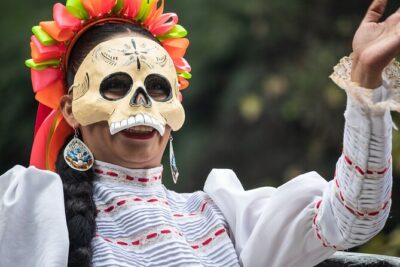
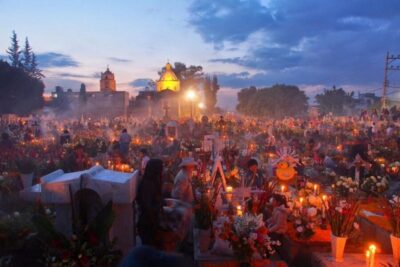
Day of the Dead Tour in San Andres Míxquic From Mexico City
Read our review →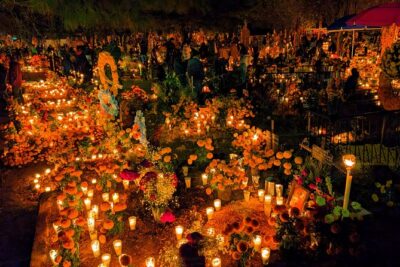
The real “Dia de muertos” tour in Mixquic + secret cemetery
Read our review →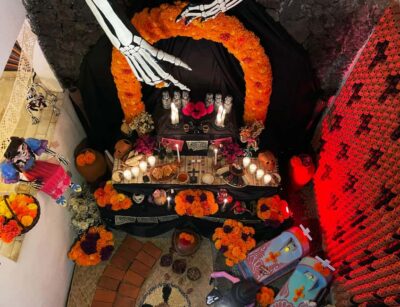

Day of the Dead Tour in Mixquic from Mexico City
Read our review →
Day of the Dead Night in Xochimilco: Dinner & beer tasting
Read our review →Browse the lists this tour appears in