
Reviewed · PUEBLA AND CHOLULA DAY TRIPS
Puebla, Cholula & Tonantzintla Day Trip with Optional Lunch
Cholula’s enormous pyramid base, Puebla’s graceful old center, and Tonantzintla’s astonishing church interior give this day trip a lot to work with. The real surprise is Santa María Tonantzintla, where Indigenous artistic ideas and Christian symbols share the same crowded, colorful interior.
I like the variety of the route and the fact that transport between three separate places is handled for you. I also like the guides’ role: Álvaro, Omar, Arantxa, and Rodrigo are repeatedly praised for making history clear, lively, and easy to follow.
The tradeoff is time. Mexico City traffic can turn the drive into two or three hours each way, and this is a church-heavy day with plenty of walking, uphill stretches, cobblestones, and stairs. The optional lunch has also been uneven, so I would think twice before adding it.
Key points to know before you book
- Cholula’s pyramid base: Walk up to a church built on top of the remains of one of the world’s largest pyramid platforms.
- Tonantzintla’s unusual interior: See Indigenous Baroque art where pre-Hispanic visual ideas and Catholic imagery appear together.
- Puebla’s old center: Walk around the Zócalo, cathedral, Rosario Church, and centuries-old streets in the City of Angels.
- A long Mexico City day: Plan on roughly 11 hours, with traffic sometimes stretching the day to 12 hours or more.
- Lunch is optional: The food stop has drawn mixed responses, while Puebla offers other places to eat.
- Bring the right gear: Wear sturdy walking shoes, carry water, and bring your passport or acceptable copy of your entry documents.
Why this Puebla day trip is worth the long ride
At $49 per person, this is priced as an efficient way to reach three major sights beyond Mexico City without arranging buses, taxis, or separate guides. You are paying for round-trip transport from the central meeting point, a certified guide, and a tightly planned route.
That value depends on your priorities. If you want an easy introduction to Puebla and Cholula, the price is attractive. If you prefer long meals, slow photography, and hours to wander on your own, the schedule will feel tight.
The route covers a lot in one day, but it does not pretend to be a leisurely country outing. You leave Mexico City, visit Cholula and Tonantzintla, tour Puebla, stop at a craft market, and return to the capital. That makes it useful during a short stay, especially if you want to see more than Mexico City without changing hotels.
You meet the group at Hostel Amigo on Isabel La Católica in the Centro Histórico. Hotel pickup is available only with the private option. The group tour can include up to 30 people, so expect a shared coach or van, fixed meeting times, and the usual need to keep an eye on the clock.
More Puebla and Cholula day trips:
- From Mexico City: Puebla, Cholula and Tonantzintla Day Trip
★ 4.3 · 1,191 reviews - Puebla and Cholula Day Trip from Mexico City
★ 4.0 · 274 reviews - From Mexico City: Puebla and Cholula Day Tour
★ 4.2 · 194 reviews
Cholula and the pyramid beneath the church
Cholula is the most visually unusual first stop. The route takes you to the town for about an hour and a half, where you learn about its many churches and have time for photos.
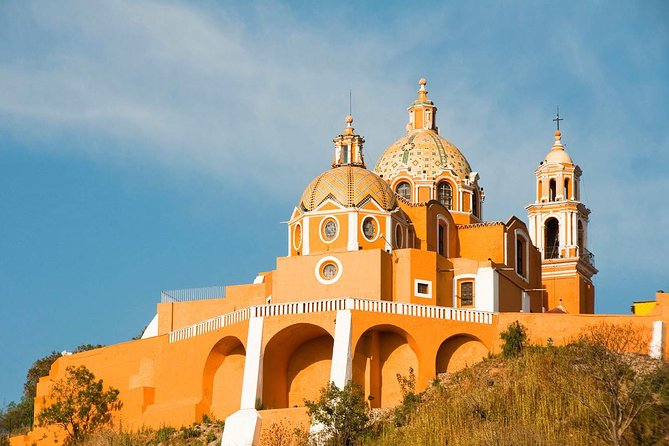
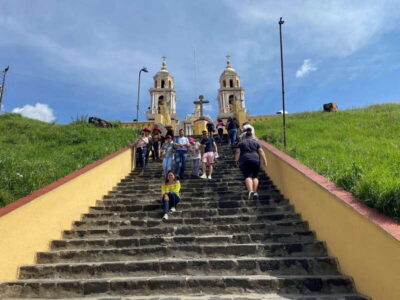
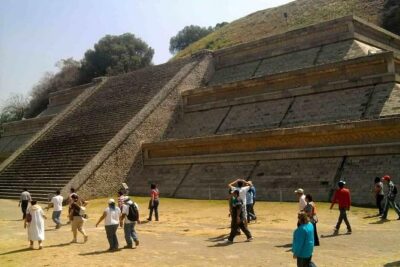
The key sight is the church positioned on the top of a huge pyramid base. From a distance, the hill looks natural. It is not. The structure beneath it gives the place its peculiar character, with a Catholic church occupying a high point created by an earlier Indigenous ceremonial complex.
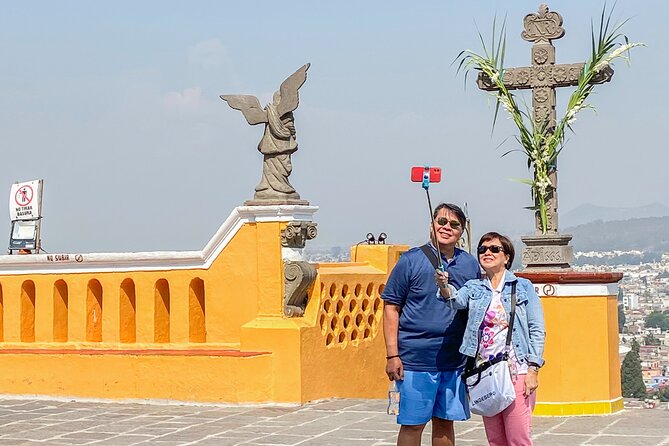
You should be ready for an uphill walk on uneven ground, cobblestones, and stairs. One useful tip from past tours is simple: choose comfort over style. The climb is not a technical hike, but it can be tiring, especially when combined with a full day of walking.
The stop is also a good place to get your first broad view of the area and take photographs. The schedule gives you enough time to see the main setting, but a large group can make photo stops feel short. If you want a picture without a crowd around you, move promptly when the guide releases you for free time.
Cholula is not only a photograph of a church on a hill. The point of the stop is the collision of religious traditions, changing political power, and the way older sacred sites were reused during the colonial period. The quality of the explanation matters here, and guides such as Rodrigo and Antonio have been praised for handling Nahuatl terms and local cultural details well.
Santa María Tonantzintla and Indigenous Baroque art
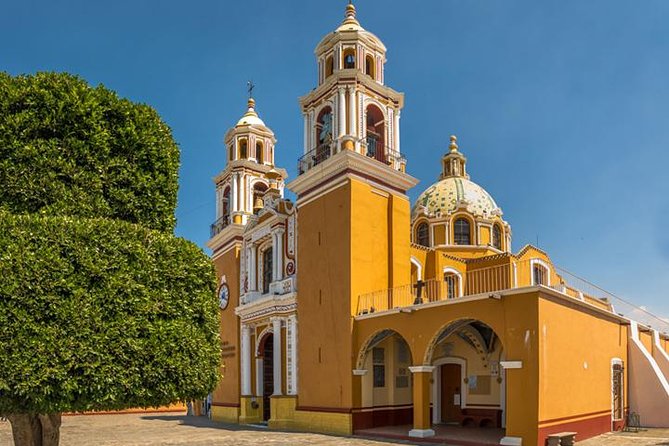
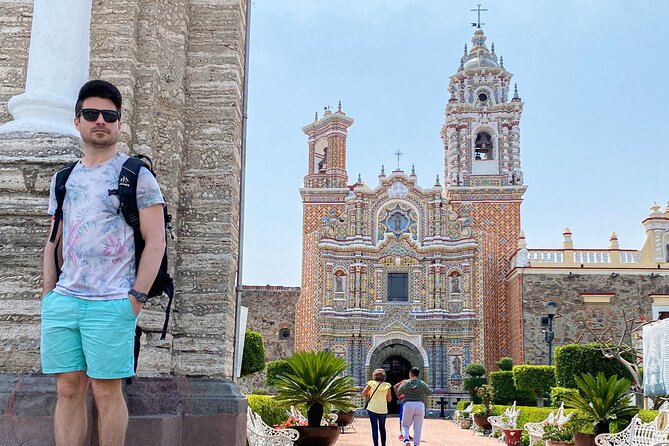
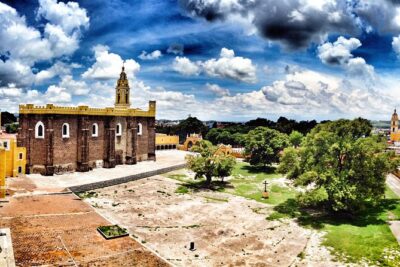
The visit to Santa María Tonantzintla lasts about 40 minutes, but it may be the most memorable stop for anyone interested in art or religious culture. The church is known for an interior that combines Christian themes with Indigenous artistic expression.
Do not expect a plain, quiet church. The decoration is dense and highly detailed. The visual effect comes from the meeting of two traditions rather than from a single European design. That is what makes Tonantzintla different from the more formal churches in Puebla’s center.
The church was declared a historic monument in 1933, and entrance is included. Your guide should help you look past the first burst of color and explain what makes the interior culturally important. Álvaro, in particular, has been praised for giving this stop extra meaning through his commentary.
There is a practical limitation: the time is short. Forty minutes allows for an explanation and a close look, but not a long period of quiet observation. Listen carefully at the beginning, then use any remaining time to look around at your own pace.
This stop also explains why the tour is more than a standard Puebla sightseeing ride. You are not simply checking off churches. You are seeing how religious spaces reflect the people who built, decorated, and continued using them.
Puebla’s cathedral, Zócalo, and Rosario Church
Puebla receives about an hour for a guided walk through the historic center. That is enough to introduce the main sights, but not enough to explore every side street or museum.
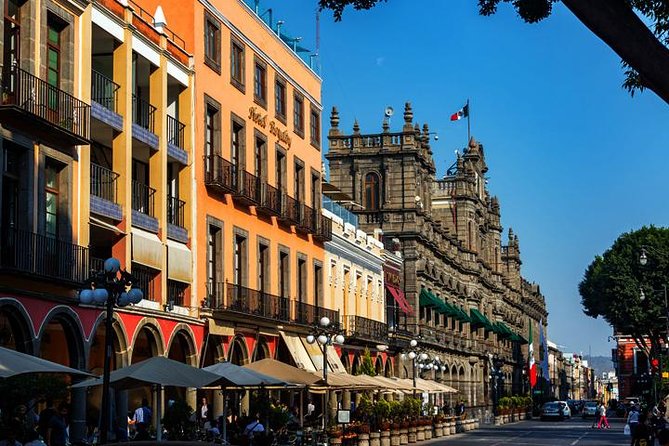
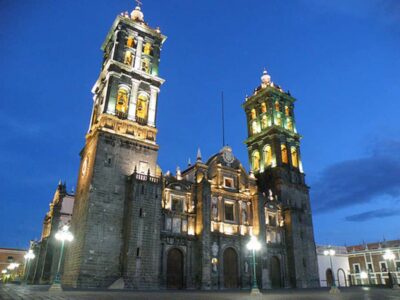
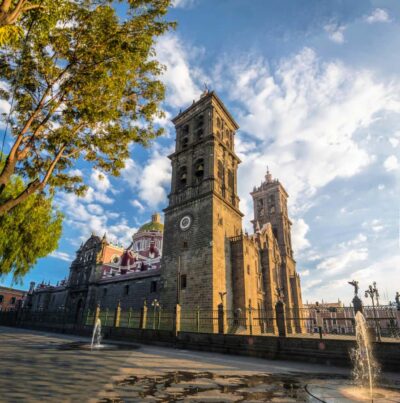
The walk includes the Zócalo, Puebla Cathedral, Rosario Church, and other notable buildings from the sixteenth through eighteenth centuries. The streets and facades give the center a formal, elegant feel, while the public square provides the best place to pause and take in the city’s layout.
The cathedral is a major reason to take the trip. Several guides have made it a highlight by explaining its design and religious importance. You should pay attention even if you are not usually interested in churches, because this is one of the clearest examples of Puebla’s colonial-era identity.
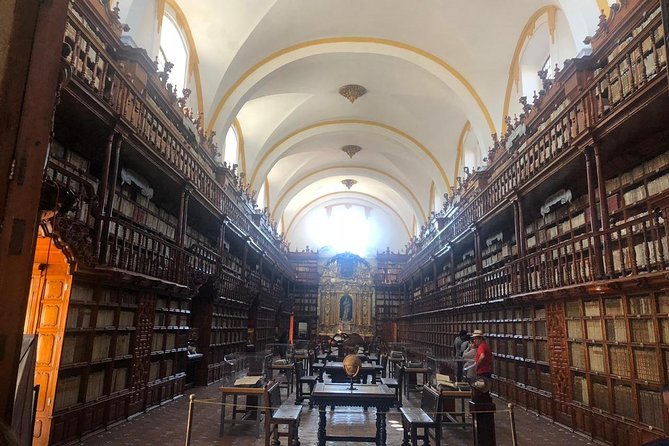
The Chapel of the Rosary inside Santo Domingo is another important sight. Its decoration is widely regarded as one of the finest religious interiors in the city, and the visit adds a more intimate counterpoint to the cathedral.
The main weakness is the clock. Puebla deserves more than an hour if you want to browse shops, sit in a café, take careful photographs, and visit interiors without rushing. Some guides manage the pace well, but a large group and late departures from Mexico City can squeeze the walking portion.
Still, this is the part of the day that makes the long drive feel worthwhile for many people. You get a clear first look at Puebla’s central streets, architecture, and food culture. If you fall for the city, you will probably want to return for an overnight stay rather than trying to see everything in this single visit.
More day trips from Mexico City:
- Mexico City: Hop-on Hop-off City Tour by Turibus 1-Day Pass
★ 4.1 · 691 reviews - One day tour to the Tolantongo Caves
★ 4.5 · 46 reviews - From Mexico City: Tolantongo Hot Springs Day Trip with Guide
★ 4.9 · 46 reviews - Private Tour: Tula and Tepotzotlan Day Trip from Mexico City
★ 5.0 · 27 reviews
El Parián market and Talavera shopping
The final listed stop is Mercado El Parián, where you have about 30 minutes to browse souvenirs and Talavera crafts. Talavera pottery is closely tied to Puebla, so this is a practical place to see the region’s ceramic tradition and consider a small purchase.
Half an hour is enough for a quick look, but it is not a relaxed shopping session. If you want to compare pieces, check prices, or choose something that will survive a flight home, use your time carefully.
The market also gives the day a change of rhythm after the churches and walking tour. You can browse independently, look at color and design, and buy something more meaningful than a generic souvenir.
Keep in mind that the group will have a departure time. Delays here affect everyone, and one late return can push an already long day later into the evening.
The lunch choice deserves careful thought
Lunch is included only if you select that option. Drinks and tips are not included.
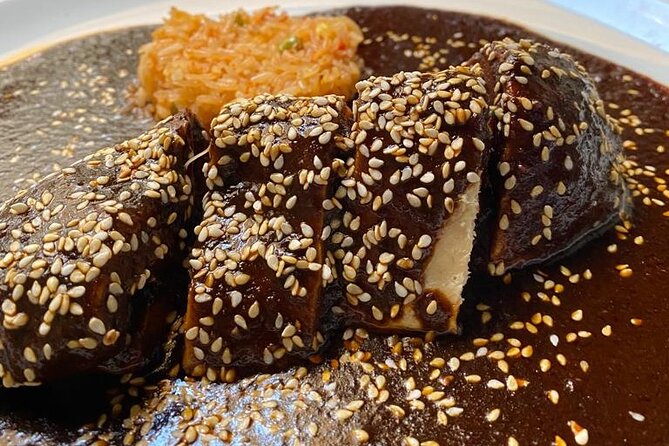
This is the least predictable part of the experience. Some meals have been praised for dishes such as mole poblano and chiles en nogada, while other meals have been described as poor in quality, badly organized, or served too late in the afternoon. One particularly serious complaint involved an undercooked fish dish followed by a burnt replacement.
That does not mean every meal will be bad, but it does mean I would not choose the lunch add-on automatically. Several people felt they would have preferred to eat independently in Puebla, where you can select your own restaurant or try a local street-food option.
The timing matters, too. Traffic and delays can push lunch toward mid-afternoon. If you need a reliable meal schedule, carry a snack and water. If you enjoy trying regional food and want the convenience of a prearranged stop, the lunch option may still be useful, but keep your expectations modest.
Mole poblano is a sensible dish to look for in Puebla. Chiles en nogada is another regional specialty, though availability and menus can vary. The tour information does not promise either dish, so treat them as suggestions rather than guaranteed choices.
Guides make a major difference
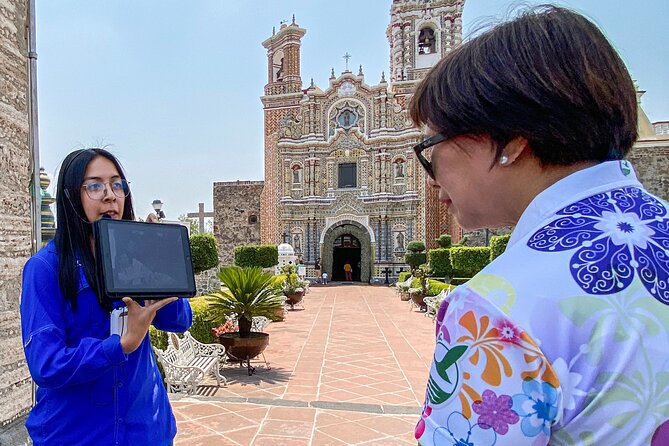
The tour is offered in English, and the guide can shape the whole day. Strong guides have included Álvaro, Omar, Arantxa, Rodrigo, Alex, and Antonio. Their strengths are described in practical terms: clear explanations, a good sense of pace, friendly communication, and the ability to keep a group together.
Rodrigo has been especially praised for explaining local history, Nahuatl language, and culture in both English and Spanish. Álvaro is known for humor and enthusiasm, while Omar has been singled out for giving detailed explanations and making sure the group had both information and free time.
That said, the level of cultural detail can vary. Some guiding may focus more on basic facts, architecture, and religious sights than on the wider Indigenous and colonial story. Tonantzintla is the stop where deeper explanation matters most, so it is worth asking questions if you want more than dates and building names.
The route can also be conducted in both Spanish and English. That may add time to explanations, but it makes the tour workable for a mixed-language group.
Transport, traffic, and the physical effort
The advertised duration is about 11 hours, but you should leave room for a longer day. The drive from Mexico City can take two to three hours each way, depending on traffic. A late departure or a second pickup in the city can have a domino effect on every later stop.
The vehicle has been described as a charter bus with a bathroom intended for emergencies. That is useful on a long ride, but do not treat it as a substitute for regular facilities.
Walking is moderate overall, but the day can feel strenuous because it combines distance, uneven surfaces, uphill sections, stairs, and repeated stops. Comfortable walking shoes are essential. Water is also a smart addition, especially if you are traveling with children or anyone who tires easily.
At the end, the activity returns to the meeting point. Group drop-off arrangements can vary with traffic and city restrictions, so stay aware of the exact return location and time.
The operator requires every passenger to carry a passport or an acceptable physical, digital, or photocopied document proving legal stay in Mexico. If you do not have the physical passport, you must show the relevant entry-stamp page and the page with your personal data.
Who should book this day trip
I would recommend it to you if you want:
- A simple way to see Puebla and Cholula without arranging your own transport
- A full day of churches, architecture, history, and local crafts
- A guide-led introduction rather than a completely independent visit
- A good-value trip during a short Mexico City stay
- A route that includes both major sights and a less familiar church interior
I would be cautious if you want a slow day, dislike long bus rides, or are mainly interested in food and shopping. The tour is also a poor fit if stairs, cobblestones, or prolonged walking are difficult for you.
Families can enjoy the variety, but young children may find the transport time and church visits tiring. Solo participants can join easily, though the optional lunch may feel awkward if few people choose it.
Should you book the Cholula and Puebla tour?
Book it if your main goal is to cover a lot of ground for $49 and you are happy to trade independent time for convenience. Cholula’s pyramid setting, Tonantzintla’s remarkable art, and Puebla’s cathedral make a strong combination, and a good guide can turn the route into a thoughtful introduction to the region.
Skip the lunch add-on unless convenience matters more to you than choice. Bring water, wear proper shoes, carry the required passport documents, and expect traffic to stretch the day.
For a first look at Puebla and Cholula from Mexico City, this is a solid value. Just see it for what it is: a long, efficient sightseeing day, not a relaxed weekend in Puebla.
FAQ
How long does the tour last?
The scheduled duration is about 11 hours. Traffic can make the day longer, and some experiences have lasted 12 hours or more.
Where does the group tour begin?
The group meets at Hostel Amigo, Isabel La Católica 61-A, in Mexico City’s Centro Histórico.
Is hotel pickup included?
Hotel pickup is available only when you select the private tour option. You must provide your hotel name to arrange it.
Is lunch included?
Lunch is included only if you select the lunch option. Drinks and tips are not included.
What should I wear?
Wear comfortable walking shoes. The route includes a moderate amount of walking, irregular ground, uphill sections, cobblestones, and stairs.
Do I need to bring my passport?
Yes. Every passenger must present a passport or a physical, digital, or photocopied document proving legal stay in Mexico. If you do not show the physical passport, you need the entry-stamp page and the personal-data page.
Can I cancel for a refund?
You can cancel at least 24 hours before the start time for a full refund. Cancellations or changes made within 24 hours are not refundable.
More Lunch Experiences in Mexico City
- Teotihuacan, Guadalupe Shrine & Tlatelolco Day Tour with Lunch
★ 5.0 · 11,603 reviews - Xochimilco, Coyoacan and Frida Kahlo with Optional Lunch
★ 4.5 · 7,320 reviews - Teotihuacan Early Access Guided Tour with optional Lunch
★ 4.5 · 6,138 reviews - Teotihuacan & Basilica Guadalupe Tour with lunch
★ 4.5 · 493 reviews
Just added around Mexico City
- Xochimilco’s Wild Side: Mezcal, Insects & Culture★ 4.9 · 10 reviews
- Xochimilco: Food and Trajinera Ride with Local Women★ 5.0 · 5 reviews
- Xochimilco: Island of the Dolls Tour Games and Drinks★ 5.0 · 25 reviews
- Xochimilco Ecological Tour – Away From the Crowds (3 Hours)★ 5.0 · 15 reviews
- Xochimilco + Coyoacán Combo Full-Day Tour★ 5.0 · 3 reviews
- Xochimilco floating gardens, Coyoacan and UNAM murals★ 4.0 · 6 reviews
- Val´quirico And The City of Angels Puebla From Mexico City★ 5.0 · 3 reviews
- Xochimilco: amanecer en kayak Ciudad de México★ 5.0 · 35 reviews
Puebla and Cholula Day Trips, compared.
6-Night Best of Central Mexico Tour: Teotihuacan Pyramids, Taxco, Cuernavaca and Puebla from Mexico City
Read our review →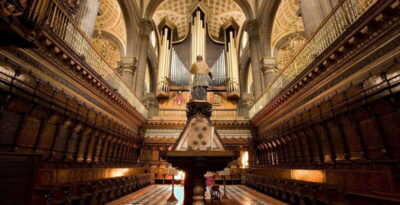
One-day adventure: Puebla, Cholula, and Tonantzintla
Read our review →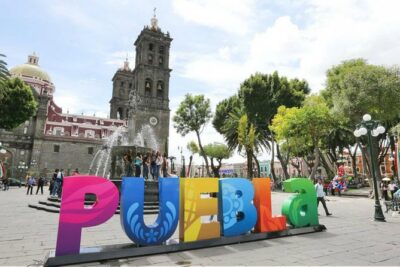
Small Group: Discover Puebla and Cholula from Mexico City
Read our review →Browse the lists this tour appears in